Adhyaya 53
Cavana’s Tests of Kuśika and the Queen (अध्याय ५३: च्यवन–कुशिक-परिक्षा)
Upa-parva: Dāna-Dharma and Vrata-Narratives (Cavana–Kuśika Episode)
Yudhiṣṭhira asks what Kuśika did after the sage vanished. Bhīṣma narrates that the king, ashamed and mentally shaken, returns home and finds Cavana resting there. The king and queen, astonished, attend the sage respectfully; Cavana requests oil massage and bathing arrangements, and they comply with costly, refined supplies. Cavana then dismisses these preparations and disappears again without eliciting anger or envy from the couple. Later, Cavana reappears, accepts offerings, and instructs Kuśika to prepare a fully equipped war-chariot; the king and queen are yoked to it and compelled to pull it slowly, while the king orders his attendants to give away wealth and valuables to passersby and Brahmins as requested. Despite wounds, hunger, and prolonged strain, the couple maintains composure. Observers remark on the ascetic’s power and the couple’s endurance. Satisfied, Cavana releases them, heals them by touch, grants a boon, and promises auspicious outcomes; the king returns home rejuvenated and radiant, while the sage establishes an extraordinary, jewel-like hermitage by his will.
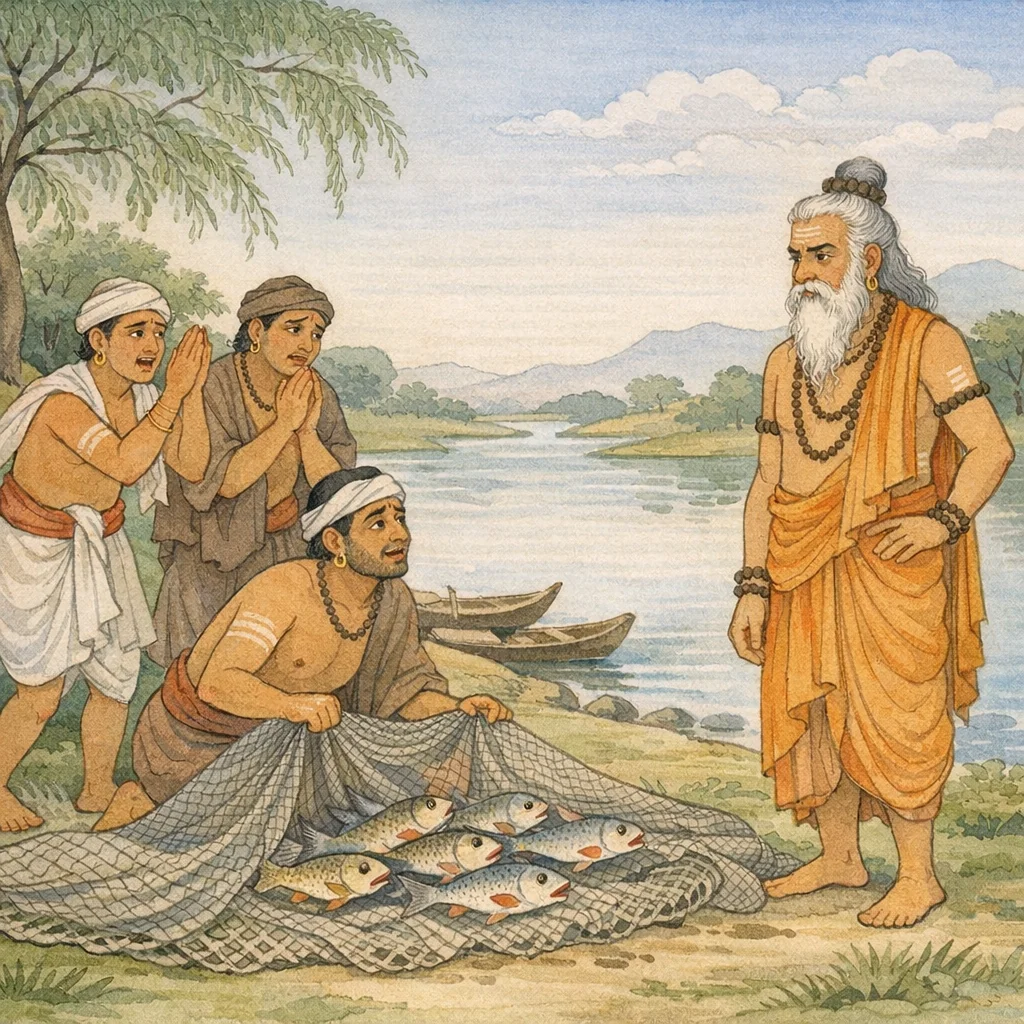
Chapter Arc: युधिष्ठिर के प्रश्न के उत्तर में भीष्म गौओं की महिमा के प्रसंग से एक प्राचीन वृत्तान्त छेड़ते हैं—नहुष और महर्षि च्यवन का संवाद, जिसमें करुणा और धर्म का असाधारण संगम होने वाला है। → महर्षि च्यवन, महान् व्रतधारी और सर्वभूतहितैषी, जलचरों तक को आश्रय देने वाले चन्द्रमा-सम शीतल स्वभाव से नदी-तट पर रहते हैं। उधर निषाद मछलियों के लिए विस्तृत, नव-सूत्रकृत जाल जल में डालते हैं; जलचर परस्पर संहृष्ट होकर उसमें फँसते जाते हैं। → जाल खींचे जाने पर मछलियाँ स्थल-संस्पर्श से त्रस्त होकर व्याकुल होने लगती हैं; उसी जाल के साथ महर्षि च्यवन भी नदी से बाहर आ जाते हैं। मुनि का निर्णायक वचन गूँजता है—वे जल में बसे इन मत्स्यों का साथ छोड़ने को तैयार नहीं: ‘मैं इन मछलियों के साथ ही प्राण-त्याग या प्राण-रक्षा करूँगा; इनके बिना नहीं रहूँगा।’ → मुनि के इस अद्भुत संकल्प से निषाद भय-कम्पित हो उठते हैं, विवर्ण मुख से जाकर राजा नहुष को समस्त घटना निवेदित करते हैं—अब राजधर्म की परीक्षा निकट है। → नहुष तक समाचार पहुँच चुका है; क्या वह मुनि और जलचरों के प्रति करुणा-धर्म निभाएगा, या राज्य-हित/आजीविका के तर्क से निषादों का पक्ष लेगा?
Shlokas
Verse 1
भीकम (2 अमान पज्चाशत्तमो<्ध्याय: गौओंकी महिमाके प्रसंगमें च्यवन मुनिके उपाख्यानका आरम्भ, मुनिका मत्स्योंके साथ जालमें फँसकर जलसे बाहर आना युधिछिर उवाच दर्शने कीदृश: स्नेह: संवासे च पितामह । महाभाग्यं गवां चैव तन्मे व्याख्यातुमरहसि,युधिष्ठिरने पूछा--पितामह! किसीको देखने और उसके साथ रहनेपर कैसा स्नेह होता है? तथा गौओंका माहात्म्य क्या है? यह मुझे विस्तारपूर्वक बतानेकी कृपा करें
Yudhiṣṭhira said: “Grandfather, what kind of affection arises merely by seeing someone, and what kind grows through living together? And what is the great blessedness and sacred excellence of cows? Please explain this to me in detail.”
Verse 2
भीष्म उवाच हन्त ते कथयिष्यामि पुरावृत्तं महाद्युते । नहुषस्य च संवादं महर्षेश््यवनस्य च,भीष्मजीने कहा--महातेजस्वी नरेश! इस विषयमें मैं तुमसे महर्षि च्यवन और नहुषके संवादरूप प्राचीन इतिहासका वर्णन करूँगा
Bhishma said: “Very well; O mighty one, I shall recount to you an ancient episode—namely, the dialogue between King Nahusha and the great sage Chyavana. Through this old account, the matter at hand will be clarified in the light of dharma.”
Verse 3
पुरा महर्षिक्ष्यवनो भार्गवों भरतर्षभ । उदवासकृतारम्भो बभूव स महाव्रत:,भरतश्रेष्ठ! पूर्वकालकी बात है, भृगुके पुत्र महर्षि च्यवनने महान् व्रतका आश्रय ले जलके भीतर रहना आरम्भ किया
Bhishma said: “In ancient times, O bull among the Bharatas, the great sage Cyavana of the Bhṛgu lineage undertook a mighty vow and began the observance of living immersed in water.”
Verse 4
निहत्य मान क्रोध॑ च प्रहर्ष शोकमेव च । वर्षाणि द्वादश मुनिर्जलवासे धृतव्रत:,वे अभिमान, क्रोध, हर्ष और शोकका परित्याग करके दृढ़तापूर्वक व्रतका पालन करते हुए बारह वर्षो-तक जलके भीतर रहे
Bhishma said: Having slain pride and anger, and likewise abandoning elation and grief, the sage—firm in his vow—lived in a watery abode for twelve years, steadfastly observing his discipline.
Verse 5
आदधत् सर्वभूतेषु विश्रम्भं॑ परमं शुभम् | जलेचरेषु सर्वेषु शीतरश्मिरिव प्रभु:,शीतल किरणोंवाले चन्द्रमाके समान उन शक्तिशाली मुनिने सम्पूर्ण प्राणियों, विशेषतः सारे जलचर जीवोंपर अपना परम मंगलकारी पूर्ण विश्वास जमा लिया था
Bhishma said: That mighty sage inspired the highest, auspicious confidence among all beings; and among all creatures that move in water, he was like the cool-rayed moon—soothing, trusted, and beneficent in his influence.
Verse 6
स्थाणुभूत: शुचिर्भूत्वा दैवते भ्य: प्रणम्य च । गंगायमुनयोर्मध्ये जलं सम्प्रविवेश ह,एक समय वे देवताओंको प्रणामकर अत्यन्त पवित्र होकर गंगा-यमुनाके संगममें जलके भीतर प्रविष्ट हुए और वहाँ काष्ठकी भाँति स्थिर भावसे बैठ गये
Bhishma said: “Once, having purified himself and bowed to the gods, he entered the waters at the confluence between the Ganga and the Yamuna, and there sat within the water, motionless like a log—steadfast in self-control and reverence.”
Verse 7
गंगायमुनयोवेंगं सुभीम॑ं भीमनि:स्वनम् | प्रतिजग्राह शिरसा वातवेगसमं जवे,गंगा-यमुनाका वेग बड़ा भयंकर था। उससे भीषण गर्जना हो रही थी। वह वेग वायुवेगकी भाँति दुःसह था तो भी वे मुनि अपने मस्तकपर उसका आघात सहने लगे
Bhishma said: “The torrent of the Gaṅgā and Yamunā was exceedingly dreadful, roaring with a fearsome sound. Though its rush was as swift and unbearable as the wind’s force, the sage received its удар upon his head and endured it.”
Verse 8
गंगा च यमुना चैव सरितश्न सरांसि च । प्रदक्षिणमृषिं चक्रुर्न चैनं पर्यपीडयन्,परंतु गंगा-यमुना आदि नदियाँ और सरोवर ऋषिकी केवल परिक्रमा करते थे, उन्हें वष्ट नहीं पहुँचाते थे
Bhishma said: “The rivers—Ganga and Yamuna—and other streams and lakes merely circumambulated the sage in reverence; they did not press upon him or cause him any harm.”
Verse 9
अन्तर्जलेषु सुष्वाप काष्ठ भूतो महामुनि: । ततश्रोर्ध्वस्थितो धीमानभवद् भरतर्षभ,भरतश्रेष्ठ! वे बुद्धिमान् महामुनि कभी पानीमें काठकी भाँति सो जाते और कभी उसके ऊपर खड़े हो जाते थे
Bhishma said: “That great sage would sleep within the waters, becoming like a piece of wood; and then, O bull among the Bharatas, the wise one would rise and stand above the water.”
Verse 10
जलौकसां स सत्त्वानां बभूव प्रियदर्शन: । उपाजिघ्रन्त च तदा तस्योष्ठ॑ हृष्टमानसा:
Bhīṣma said: “To those water-dwelling creatures he appeared pleasing to behold. Then, with delighted hearts, they came up and began to smell his lips.”
Verse 11
वे जलचर जीवोंके बड़े प्रिय हो गये थे। जल-जन्तु प्रसन्नचित्त होकर उनका ओठ सूँघा करते थे ।। तत्र तस्यासत: काल: समतीतो5भवन्महान् । ततः कदाचित् समये कसम्मिंश्वचिन्मत्स्यजीविन:
Bhīṣma said: “He became dear to those water-dwelling creatures; with glad hearts the water-beings would smell his lips. While he remained there, a long time passed. Then, at a certain time, some fishermen happened to come there.”
Verse 12
त॑ं देशं समुपाजग्मुर्जालहस्ता महाद्युते । निषादा बहवस्तत्र मत्स्योद्धरणनिश्चया:
Bhīṣma said: “O great-splendoured one, many Niṣādas—skilled with nets in their hands—came to that place, firmly resolved to seize and carry off the fish.”
Verse 13
महातेजस्वी नरेश! इस तरह उन्हें पानीमें रहते बहुत दिन बीत गये। तदनन्तर एक समय मछलियोंसे जीविका चलानेवाले बहुत-से मल्लाह मछली पकड़नेका निश्चय करके जाल हाथमें लिये हुए उस स्थानपर आये ।। व्यायता बलिन: शूरा: सलिलेष्वनिवर्तिन: । अभ्याययुश्च त॑ं देशं निश्चिता जालकर्मणि,वे मल्लाह बड़े परिश्रमी, बलवान, शौर्यसम्पन्न और पानीसे कभी पीछे न हटनेवाले थे। वे जाल बिछानेका दृढ़ निश्चय करके उस स्थानपर आये थे
Bhīṣma said: “O mighty king, after they had spent many days living in the water, a time came when numerous fishermen—whose livelihood depended on fish—arrived at that very spot, nets in hand, firmly resolved to cast their nets. They were men of hard exertion, strong and courageous, and they did not shrink from entering the waters; with unwavering intent to do the work of net-fishing, they approached that place.”
Verse 14
जालं॑ ते योजयामासुर्नि:शेषेण जनाधिप । मत्स्योदक॑ समासाद्य तदा भरतसत्तम,भरतवंशशिरोमणि नरेश! उस समय जहाँ मछलियाँ रहती थीं, उतने गहरे जलमें जाकर उन्होंने अपने जालको पूर्णरूपसे फैला दिया
Bhishma said: “O king, they then spread out their net completely. Reaching the deep waters where fish were found, they cast it in full—O best of the Bharatas.”
Verse 15
ततस्ते बहुभियोंगै: कैवर्ता मत्स्यकाड्क्षिण: । गंगायमुनयोरवारि जालैरभ्यकिरंस्तत:,मछली प्राप्त करनेकी इच्छावाले केवटोंने बहुत-से उपाय करके गंगा-यमुनाके जलको जालोंसे आच्छादित कर दिया
Bhishma said: “Then the fishermen, eager to catch fish, employed many stratagems and spread their nets so widely that the waters of the Ganga and the Yamuna were, as it were, covered over with meshes.”
Verse 16
जाल सुविततं तेषां नवसूत्रकृतं तथा । विस्तारायामसम्पन्नं यत् तत्र सलिले$क्षिपन्
Bhīṣma said: “They cast into the water a well-spread net, newly made with fresh cords, complete in both breadth and length.”
Verse 17
ततस्ते सुमहच्चैव बलवच्च सुवर्तितम् । अवतीर्य ततः सर्वे जालं चकृषिरे तदा
Bhīṣma said: “Then, having brought down that very large and strong, well-woven contrivance, they all descended and at that time drew in the net.”
Verse 18
अभीतरूपा: संहृष्टा अन्योन्यवशवर्तिन: । बबन्धुस्तत्र मत्स्यांश्व तथान्यान् जलचारिण:
Delighting in their own pleasing forms and exhilarated, they moved under one another’s sway; and there they bound fast the fishes, and likewise other creatures that move in the waters.
Verse 19
उनका वह जाल नये सूतका बना हुआ और विशाल था तथा उसकी लंबाई-चौड़ाई भी बहुत थी एवं वह अच्छी तरहसे बनाया हुआ और मजबूत था। उसीको उन्होंने वहाँ जलपर बिछाया था। थोड़ी देर बाद वे सभी मल्लाह निडर होकर पानीमें उतर गये। वे सभी प्रसन्न और एक-दूसरेके अधीन रहनेवाले थे। उन सबने मिलकर जालको खींचना आरम्भ किया। उस जालमें उन्होंने मछलियोंके साथ ही दूसरे जल-जन्तुओंको भी बाँध लिया था ।। १६-- १८ || तथा मत्स्यै: परिवृतं च्यवनं भृगुनन्दनम् । आकर्षयन्महाराज जालेनाथ यदृच्छया,महाराज! जाल खींचते समय मल्लाहोंने दैवेच्छासे उस जालके द्वारा मत्स्योंसे घिरे हुए भुगुके पुत्र महर्षि च्यवनको भी खींच लिया
Bhīṣma said: “O King, as the fishermen drew in their net, by sheer chance they also hauled up the sage Cyavana—son of Bhrigu—surrounded by fish.”
Verse 20
नदीशैवलदिग्धाडुं हरिश्मश्रुजटाधरम् । लग्नै: शड्खनखेैगत्रि क्रोडैश्वित्रिरिवार्पितम्,उनका सारा शरीर नदीके सेवारसे लिपटा हुआ था। उनकी मूँछ-दाढ़ी और जटाएँ हरे रंगकी हो गयी थीं और उनके अंगोंमें शंख आदि जलचरोंके नख लगनेसे चित्र बन गया था। ऐसा जान पड़ता था मानो उनके अंगोंमें शूकरके विचित्र रोम लग गये हों
Bhīṣma said: “His whole body was smeared with the river’s algae-slime. His moustache, beard, and matted locks had turned green; and his limbs, marked by the scratches of conches and other water-creatures, appeared as though adorned with variegated patterns—like the strange bristles of a boar.”
Verse 21
तं जालेनोद्धृतं दृष्टवा ते तदा वेदपारगम् । सर्वे प्राजजलयो दाशा: शिरोभि: प्रापतन् भुवि,वेदोंके पारंगत उन विद्वान महर्षिको जालके साथ खिंचा देख सभी मल्लाह हाथ जोड़ मस्तक झुका पृथ्वीपर पड़ गये
Bhīṣma said: “When they saw that Veda-knowing sage, drawn up in a net, all the fishermen at once folded their hands in reverence and, bowing their heads, fell down upon the earth.”
Verse 22
परिखेदपरित्रासाज्जालस्यथाकर्षणेन च । मत्स्या बभूवुर्व्यापन्ना: स्थलसंस्पर्शनेन च,उधर जालके आकर्षणसे अत्यन्त खेद, त्रास और स्थलका संस्पर्श होनेके कारण बहुत-से मत्स्य मर गये। मुनिने जब मत्स्योंका यह संहार देखा, तब उन्हें बड़ी दया आयी और वे बारंबार लंबी साँस खींचने लगे
Bhishma said: “From the severe exhaustion and panic caused by the net, from the very act of hauling it in, and also from contact with the dry ground, many fish perished. Seeing this slaughter of the fish, the sage was overcome with compassion and again and again heaved long sighs.”
Verse 23
स मुनिस्तत् तदा दृष्टवा मत्स्यानां कदनं कृतम् । बभूव कृपयाविष्टो नि:श्वसंश्व॒ पुन: पुन:,उधर जालके आकर्षणसे अत्यन्त खेद, त्रास और स्थलका संस्पर्श होनेके कारण बहुत-से मत्स्य मर गये। मुनिने जब मत्स्योंका यह संहार देखा, तब उन्हें बड़ी दया आयी और वे बारंबार लंबी साँस खींचने लगे
Bhishma said: When the sage saw that the fish had been cut down and destroyed, he was overcome with compassion and, again and again, he heaved deep sighs. The scene underscores an ethical sensitivity to needless harm and the awakening of mercy upon witnessing suffering.
Verse 24
निषादा ऊचु. अज्ञानाद् यत् कृतं पापं प्रसाद तत्र नः कुरु । करवाम प्रियं कि ते तन्नो ब्रूहि महामुने,यह देख निषाद बोले--महामुने! हमने अनजानमें जो पाप किया है, उसके लिये हमें क्षमा कर दें और हमपर प्रसन्न हों। साथ ही यह भी बतावें कि हमलोग आपका कौन-सा प्रिय कार्य करें?
The Nishadas said: “O great muni! Forgive us the sin we committed in ignorance, and be gracious toward us. Tell us also what deed, dear to you, we should do.”
Verse 25
इत्युक्तो मत्स्यमध्यस्थश्ष्यवनोवाक्यमत्रवीत् । यो मेडद्य परम: कामस्तं शृणुध्वं समाहिता:,मल्लाहोंके ऐसा कहनेपर मछलियोंके बीचमें बैठे हुए महर्षि च्यवनने कहा --“मल्लाहो! इस समय जो मेरी सबसे बड़ी इच्छा है, उसे ध्यान देकर सुनो
Thus addressed, the sage Cyavana, seated amid the fish, spoke: “Fishermen, listen with focused attention to what is, at this moment, my greatest wish.”
Verse 26
प्राणोत्सर्ग विसर्ग वा मत्स्यैर्यास्याम्यहं सह । संवासान्नोत्सहे त्यक्तुं सलिलेडध्युषितानहम्,“मैं इन मछलियोंके साथ ही अपने प्राणोंका त्याग या रक्षण करूँगा। ये मेरे सहवासी रहे हैं। मैं बहुत दिनोंतक इनके साथ जलमें रह चुका हूँ; अतः मैं इन्हें त्याग नहीं सकता”
Bhishma said: “Whether it be the giving up of my life or its preservation, I will go through it together with these fish. They have been my companions; I have lived with them in the water for a long time. Therefore, I do not have the heart to abandon them.”
Verse 27
जालके साथ नदीमेंसे निकाले गये महर्षि च्यवन इत्युक्तास्ते निषादास्तु सुभुशं॑ भयकम्पिता: । सर्वे विवर्णवदना नहुषाय न्यवेदयन्,मुनिकी यह बात सुनकर निषादोंको बड़ा भय हुआ। वे थर-थर काँपने लगे। उन सबके मुखका रंग फीका पड़ गया और उसी अवस्थामें राजा नहुषके पास जाकर उन्होंने यह सारा समाचार निवेदन किया
Bhishma said: When the Nishadas were told that the great sage drawn from the river along with the net was Cyavana, they were seized by intense fear. Trembling violently, their faces drained of color, they went at once to King Nahusha and reported the entire matter. The episode underscores the moral weight of harming the innocent and the dread that arises when one realizes one has wronged a venerable ascetic.
Verse 50
इति श्रीमहाभारते अनुशासनपर्वणि दानधर्मपर्वणि च्यवनोपाख्याने पज्चाशत्तमोडथध्याय:
Thus ends the fiftieth chapter of the Cyavana episode in the Dāna-dharma section of the Anuśāsana Parva of the Śrī Mahābhārata. (This is a colophon marking the close of the chapter.)
Frequently Asked Questions
Whether royal duty and ethical composure can be sustained when an authority figure imposes humiliating, costly, and physically punishing demands—testing the boundary between service and resentment.
Dharma is validated by inner steadiness: the chapter presents non-anger, non-envy, and disciplined giving as practices that convert trial into purification and social credibility, rather than as mere ideals.
A direct phalaśruti formula is not foregrounded; instead, the narrative itself supplies the result: restoration of youth and health, receipt of a boon, and the assurance of desired outcomes—framing ethical endurance as causally efficacious within the epic’s moral logic.