Adhyaya 48
Varṇasaṃkara: Causes, Classifications, and Conduct-based Recognition (वर्णसंकरः—हेतु-जाति-आचारनिर्णयः)
Upa-parva: Varṇasaṃkara–Dharma-निर्णय (Discourse on social mixture and dharma by conduct)
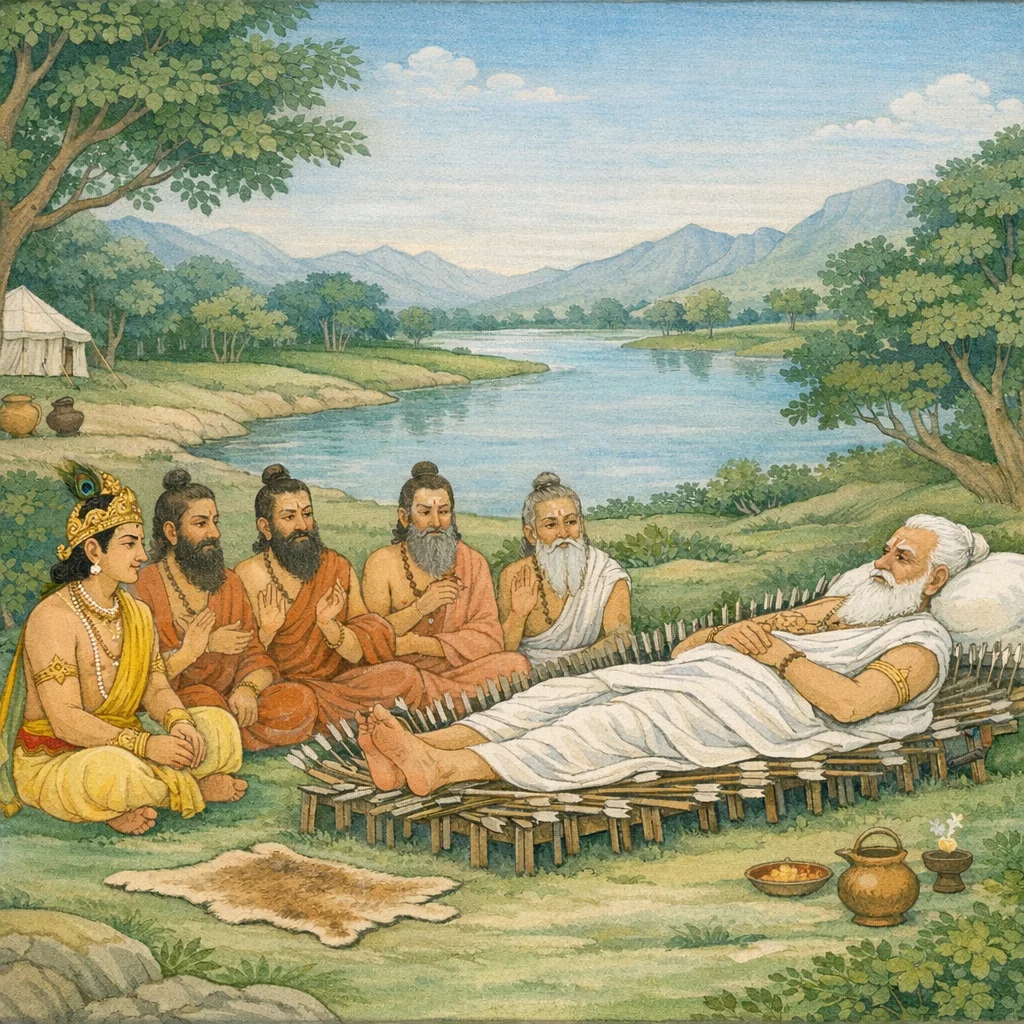
Yudhiṣṭhira opens by asking how varṇasaṃkara arises—through economic motives, desire, uncertainty about varṇa, or ignorance—and requests the dharma and proper occupations for those born in such mixture (1–2). Bhīṣma responds with a cosmogonic-ritual framing of cāturvarṇya and proceeds to enumerate mixed unions and their traditionally assigned designations and livelihoods, distinguishing anuloma/pratiloma tendencies and describing further proliferations (3–28). He then states that these mixed births arise from transgressions of paternal/maternal boundaries and may be known—whether concealed or public—by their characteristic actions (29). A restrictive claim is voiced that dharma properly belongs to the four varṇas, with boundary groups treated as outside normative ritual order, often associated with marginal spaces and crafts (30–32). Yet Bhīṣma simultaneously articulates virtues and social goods—assistance to cows and brāhmaṇas, compassion, truthfulness, forbearance, and protective service—that can lead to “siddhi” even for outsiders (33–34). The dialogue turns to epistemology: Yudhiṣṭhira asks how to recognize an unknown person of ‘impure’ origin who appears Ārya; Bhīṣma answers that purity is inferred from the conduct practiced by good people, while cruelty, non-ethical behavior, and inertia indicate degradation (38–40). He emphasizes inheritance of disposition from parents and the difficulty of overriding one’s embedded nature, concluding with a moral ranking: do not honor one lacking character even if socially senior; honor even a śūdra if well-conducted and dharma-knowing; a person reveals self and lineage through deeds, and a wise person avoids unions that would not “generate oneself” (41–49).
Chapter Arc: युधिष्ठिर के प्रश्न के उत्तर में भीष्म आठ प्रकार के विवाहों का स्मरण कराते हैं और तुरंत ही ‘शुल्क’ (दहेज/मूल्य) के नाम पर कन्या-दान को व्यापार बना देने की शंका उठाते हैं। → भीष्म उन प्रचलित आचरणों की परतें खोलते हैं जिनमें संतानहीन धनी द्वारा कन्या ‘खरीद’ ली जाती है, या पिता जीविका हेतु पुत्र/कन्या को मूल्य पर देता है—और पूछते हैं कि असदाचार का शास्त्रसम्मत अनुकीर्तन कैसे हो सकता है। → निर्णायक कथन आता है: जो व्यक्ति पुत्र को बेचकर धन चाहता है या कन्या को शुल्क लेकर देता है, वह धर्म के नाम पर अधर्म का व्यापार करता है; आर्ष-विवाह में गोमिथुन को ‘शुल्क’ मानना भी वस्तुतः विक्रय ही है—अल्प हो या बहु, विक्रय विक्रय ही रहता है। → भीष्म स्पष्ट करते हैं कि कुछ लोगों द्वारा किया गया आचरण सनातन धर्म नहीं बन जाता; मनुष्य का विक्रय ही निषिद्ध है, फिर अपनी संतान का तो और भी—अधर्ममूल धन से कोई धर्म-सिद्धि नहीं होती। → विवाह-धर्म के भीतर ‘लोकाचार बनाम शास्त्रधर्म’ की कसौटी पर आगे के नियमों/अपवादों की जिज्ञासा बनी रहती है।
Shlokas
Verse 1
/ अपन का बा | अपर ३-स्मृतियोंमें निम्नलिखित आठ विवाह बतलाये गये हैं--ब्राह्म, दैव, आर्ष, प्राजापत्य, गान्धर्व, आसुर, राक्षस और पैशाच। किंतु यहाँ १ ब्राह्म, २ प्राजापत्य, ३ गान्धर्व, ४ आसुर और ५ राक्षस--इन्हीं पाँच विवाहोंका उल्लेख किया गया है; अतः यहाँ जो ब्राह्म विवाह है उसीमें स्मृतिकथित दैव और आर्ष विवाहोंका भी अन्तर्भाव समझना चाहिये। इसी प्रकार यहाँ बताये हुए राक्षस विवाहमें उपर्युक्त पैशाच विवाहका समावेश कर लेना चाहिये। प्राजापत्यको ही 'क्षात्र” विवाह भी कहा गया है। २-सापिण्ड्य निवृत्तिके सम्बन्धमें स्मृतिका वचन है--वध्वा वरस्य वा तात: कूटस्थाद् यदि सप्तम: । पंचमी चेत्तयोर्माता तत्सापिण्ड्यं निवर्तते ।। अर्थात् “यदि वर अथवा कन्याका पिता मूल पुरुषसे सातवीं पीढ़ीमें उत्पन्न हुआ है तथा माता पाँचवी पीढ़ीमें पैदा हुई है तो वर और कनन््याके लिये सापिण्ड्यकी निवृत्ति हो जाती है। पिताकी ओरका सापिण्ड्य सात पीढ़ीतक चलता है और माताका सापिण्ड्य पाँच पीढ़ीतक। सात पीढ़ीमें एक तो पिण्ड देनेवाला होता है, तीन पिण्डभागी होते हैं और तीन लेपभागी होते हैं। > भीष्मजी काशिराजकी तीन कन्याओंको हरकर लाये थे, उनमेंसे दोको एक श्रेणीमें रखकर एकवचनका प्रयोग किया गया है, यह मानना चाहिये; तभी आदिपर्व अध्याय १०२ के वर्णनकी संगति ठीक लग सकती है। पजञज्चचत्वारिशो< ध्याय: कन्याके विवाहका तथा कन्या और दौहित्र आदिके उत्तराधिकारका विचार युधिछिर उवाच कन्याया: प्राप्तशुल्काया: पतिक्नैज्ञास्ति कश्नन । तत्र का प्रतिपत्ति: स्यात् तन्मे ब्रूहि पितामह,युधिष्ठिरने पूछा--पितामह! जिस कन्याका मूल्य ले लिया गया हो उसका ब्याह करनेके लिये यदि कोई उपस्थित न हो, अर्थात् मूल्य देनेवाला परदेश चला गया हो और उसके भयसे दूसरा पुरुष भी उस कनन््यासे विवाह करनेको तैयार न हो तो उसके पिताको क्या करना चाहिये? यह मुझे बताइये
Yudhiṣṭhira said: “Grandfather, if a maiden’s bride-price has already been accepted, yet no husband is now available—because the man who paid it has gone away to another land, and out of fear of him no other man is willing to marry her—what course of action should her father take? Please tell me.”
Verse 2
भीष्म उवाच या पुत्रकस्य ऋद्धस्य प्रतिपाल्या तदा भवेत् | अथ चेन्नाहरेच्छुल्क॑ क्रीता शुल्कप्रदस्य सा,भीष्मजीने कहा--युधिष्ठिर! यदि संतानहीन धनीसे कन्याका मूल्य लिया गया है तो पिताका कर्तव्य है कि वह उसके लौटनेतक कन्याकी हर तरहसे रक्षा करे। खरीदी हुई कन्याका मूल्य जबतक लौटा नहीं दिया जाता तबतक वह कन्या मूल्य देनेवालेकी ही मानी जाती है
Bhishma said: “If a wealthy man without a son has accepted a bride-price for a maiden, then until that payment is returned it is the father’s duty to protect the girl in every way. And if he does not repay the bride-price, the maiden—having been ‘purchased’—is regarded as belonging to the one who paid that price.”
Verse 3
तस्यार्थेडपत्यमीहेत येन न््यायेन शक्नुयात् । न तस्मान्मन्त्रवत्कार्य कश्चित् कुर्वीत किंचन,जिस न्यायोचित उपायसे सम्भव हो, उसीके द्वारा वह कन्या अपने मूल्यदाता पतिके लिये ही संतान उत्पन्न करनेकी इच्छा करे। अतःदूसरा कोई पुरुष वैदिक मन्त्रयुक्त विधिसे उसका पाणिग्रहण या और कोई कार्य नहीं कर सकता
Bhishma said: “Let her seek offspring only for him (the one who has rightful claim over her), and only by such means as are possible in accordance with justice and propriety. Therefore, no other man may perform any act for her—such as a Vedic, mantra-accompanied marriage rite—or anything else that would establish a competing marital claim.”
Verse 4
स्वयंवृत्तेन सा$ऊज्ञप्ता पित्रा वै प्रत्यपद्यत । तत् तस्यान्ये प्रशंसन्ति धर्मज्ञा नेतरे जना:,सावित्रीने पिताकी आज्ञा लेकर स्वयं चुने हुए पतिके साथ सम्बन्ध स्थापित किया था। उसके इस कार्यकी दूसरे धर्मज्ञ पुरुष प्रशंसा करते हैं; परंतु कुछ लोग नहीं भी करते हैं
Commanded by her father, she acted according to her own chosen course and accepted the outcome. Some—those who understand dharma—praise her conduct; yet other people do not.
Verse 5
एतत् तु नापरे चक्कुरपरे जातु साधव: । साधूनां पुनराचारो गरीयान् धर्मलक्षण:,कुछ लोगोंका कहना है कि दूसरे सत्पुरुषोंने ऐसा नहीं किया है और कुछ कहते हैं कि अन्य सत्पुरुषोंने भी कभी-कभी ऐसा किया है। अतः श्रेष्ठ पुरुषोंका आचार ही धर्मका सर्वश्रेष्ठ लक्षण है
Bhishma said: “Some maintain that other virtuous men have not acted in this way; others say that virtuous men have, at times, acted so. Therefore, the conduct (ācāra) of the truly good is the weightiest and most authoritative mark by which dharma is recognized.”
Verse 6
अस्मिन्नेव प्रकरणे सुक्रतुर्वाक्यमब्रवीत् । नप्ता विदेहराजस्य जनकस्य महात्मन:,इसी प्रसंगमें विदेहराज महात्मा जनकके नाती सुक्रतुने ऐसा कहा है
Bhishma said: “In this very context, Sukratu spoke these words—Sukratu, the grandson of the noble Janaka, king of Videha.”
Verse 7
असदाचरिते मार्गे कथं स्यादनुकीर्तनम् । अत्र प्रश्न: संशयो वा सतामेवमुपालभेत्,दुराचारियोंके मार्गका शास्त्रोंद्वारा कैसे अनुमोदन किया जा सकता है? इस विषयमें सत्पुरुषोंके समक्ष प्रश्न, संशय अथवा उपालम्भ कैसे उपस्थित किया जा सकता है?
Bhishma said: “How could the scriptures possibly endorse or commend a path marked by improper conduct? And in such a matter, how could one place before the righteous a question, a doubt, or even a reproach in this way?”
Verse 8
असदेव हि धर्मस्य प्रदानं धर्म आसुर: । नानुशुश्रुम जात्वेतामिमां पूर्वेषु कर्मसु,स्त्रियाँ सदा पिता, पति या पुत्रोंके संरक्षणमें ही रहती हैं, स्वतंत्र नहीं होतीं। यह पुरातन धर्म है। इस धर्मका खण्डन करना असत् कर्म या आसुर धर्म है। पूर्वकालके बड़े-बूढ़ोंमें विवाहके अवसरोंपर कभी इस आसुरी पद्धतिका अपनाया जाना हमने नहीं सुना है
Bhishma said: “To give away what is not one’s own is indeed unrighteous; it is an asuric form of ‘dharma.’ We have never heard of this practice being followed in the deeds of the elders of former times. In the traditional order, a woman remains under the protection of her father, or her husband, or her sons; she is not regarded as independent. This is the ancient rule of conduct. To violate it is a wrongful act—an asuric ‘dharma.’ In earlier ages, we have not heard that the venerable elders ever adopted such an asuric method at the time of marriage.”
Verse 9
भार्यापत्योर्हि सम्बन्ध: स्त्रीपुंसो: स्वल्प एव तु । रति: साधारणो धर्म इति चाह स पार्थिव:,पति और पत्नीका अथवा स्त्री और पुरुषका सम्बन्ध बहुत ही घनिष्ठ एवं सूक्ष्म है। रति उनका साधारण धर्म है। यह बात भी राजा सुक्रतुने कही थी
Bhishma said: “The bond between wife and husband—indeed, between woman and man—is subtle and limited in its scope. Sexual union (rati) is their common, shared duty; so declared that king as well.”
Verse 10
युधिछिर उवाच अथ केन प्रमाणेन पुंसामादीयते धनम् । पुत्रवद्धि पितुस्तस्य कन्या भवितुमहति,युधिष्ठिरने पूछा--पितामह! पिताके लिये पुत्री भी तो पुत्रके ही समान होती है; फिर उसके रहते हुए किस प्रमाणसे केवल पुरुष ही धनके अधिकारी होते हैं?
Yudhishthira said: “By what authoritative rule is wealth taken to belong only to men? For a daughter, with respect to her father, is fit to be regarded as equal to a son.”
Verse 11
भीष्म उवाच यथैवात्मा तथा पुत्र: पुत्रेण दुहिता समा । तस्यामात्मनि तिष्ठन्त्यां कथमन्यो धनं हरेत्,भीष्मजीने कहा--बेटा! पुत्र अपने आत्माके समान है और कन्या भी पुत्रके ही तुल्य है, अत: आत्मस्वरूप पुत्रके रहते हुए दूसरा कोई उसका धन कैसे ले सकता है?
Bhishma said: “As one’s own self is, so is one’s son; and a daughter is equal to a son. When that embodied ‘self’—in the form of one’s child—still stands present, how can anyone else rightfully take away that person’s wealth?”
Verse 12
मातुश्न यौतकं॑ यत् स्यात् कुमारी भाग एव सः । दौहित्र एव तद् रिक्थमपुत्रस्य पितुर्हरेत्,माताको दहेजमें जो धन मिलता है उसपर कनन््याका ही अधिकार है; अतः: जिसके कोई पुत्र नहीं है उसके धनको पानेका अधिकारी उसका दौहित्र (नाती) ही है। वही उस धनको ले सकता है
Bhishma said: “Whatever wealth comes as a mother’s yautaka (dowry) is, in truth, the maiden daughter’s own share. Therefore, when a man dies without a son, it is the daughter’s son (the dauhitra, the grandson through the daughter) who is entitled to take that inheritance.”
Verse 13
ददाति हि स पिण्डान् वै पितुर्मातामहस्य च । पुत्रदौहित्रयोरेव विशेषो नास्ति धर्मत:,दौहित्र अपने पिता और नानाको भी पिण्ड देता है। धर्मकी दृष्टिसे पुत्र और दौहित्रमें कोई अन्तर नहीं है
Bhishma said: “Indeed, he offers the piṇḍas (funeral rice-balls) to his father and also to his maternal grandfather. From the standpoint of dharma, there is no distinction between a son and a daughter’s son.”
Verse 14
अन्यत्र जामया सार्ध प्रजानां पुत्र ईहते । दुहितान्यत्र जातेन पुत्रेणापि विशिष्यते,अन्यत्र अर्थात् यदि पहले कन्या उत्पन्न हुई और वह पुत्ररूपमें स्वीकार कर ली गयी तथा उसके बाद पुत्र भी पैदा हुआ तो वह पुत्र उस कन्याके साथ ही पिताके धनका अधिकारी होता है। यदि दूसरेका पुत्र गोद लिया गया हो तो उस दत्तक पुत्रकी अपेक्षा अपनी सगी बेटी ही श्रेष्ठ मानी जाती है (अतः वह पैतृक धनके अधिक भागकी अधिकारिणी है)
Bhishma explained: “Ordinarily a son is sought for the continuation of the line; yet in certain exceptional cases a daughter—especially one acknowledged as fulfilling a son’s role—may be held superior in claim and standing. Even if a son is later born, that daughter remains a co-heir with him. Likewise, when the alternative is an adopted son, one’s own biological daughter is regarded as having the higher right and dignity in the father’s estate.”
Verse 15
दौहित्रकेण धर्मेण नाज पश्यामि कारणम् । विक्रीतासु हि ये पुत्रा भवन्ति पितुरेव ते,जो कन्याएँ मूल्य लेकर बेच दी गयी हों उनसे उत्पन्न होनेवाले पुत्र केवल अपने पिताके ही उत्तराधिकारी होते हैं। उन्हें दौहित्रक धर्मके अनुसार नानाके धनका अधिकारी बनानेके लिये कोई युक्तिसंगत कारण मैं नहीं देखता
Bhishma said: “I see no reasonable ground for applying the ‘dauhitraka’ rule here. For when daughters have been given away for a price, the sons born of them belong only to their father; therefore there is no just basis to make them heirs to the maternal grandfather’s wealth under the dauhitraka principle.”
Verse 16
असूयवस्त्वधर्मिष्ठा: परस्वादायिन: शठा: । आसुरादधिसम्भूता धर्माद् विषमवृत्तय:,आसुर विवाहसे जिन पुत्रोंकी उत्पत्ति होती है, वे दूसरोंके दोष देखनेवाले, पापाचारी, पराया धन हड़पनेवाले, शठ तथा धर्मके विपरीत बर्ताव करनेवाले होते हैं
Bhīṣma said: “Those who are born from an āsura form of marriage tend to be fault-finders, deeply unrighteous, appropriators of others’ wealth, deceitful, and inclined to conduct that runs contrary to dharma.”
Verse 17
अत्र गाथा यमोदगीता: कीर्तयन्ति पुराविद: । धर्मज्ञा धर्मशास्त्रेषु निबद्धा धर्मसेतुषु,इस विषयमें प्राचीन बातोंको जाननेवाले तथा धर्मशास्त्रों और धर्ममर्यादाओंमें स्थित रहनेवाले धर्मज्ञ पुरुष यमकी गायी हुई गाथाका इस प्रकार वर्णन करते हैं--
Here, the learned men who know the ancient traditions—those who are discerning in dharma and firmly grounded in the treatises on righteousness and in the established boundaries of moral order—recite a set of verses said to have been sung by Yama.
Verse 18
यो मनुष्य: स्वकं पुत्र विक्रीय धनमिच्छति । कन्यां वा जीवितार्थाय यः शुल्केन प्रयच्छति,“जो मनुष्य अपने पुत्रको बेचकर धन पाना चाहता है अथवा जीविकाके लिये मूल्य लेकर कन्याको बेच देता है, वह मूढ़ कुम्भीपाक आदि सात नरकोंसे भी निकृष्ट कालसूत्र नामक नरकमें पड़कर अपने ही मल-मूत्र और पसीनेका भक्षण करता है”
Bhīṣma said: “That man who, after selling his own son, seeks wealth—or who, for the sake of mere livelihood, gives away a maiden in exchange for a bride-price—acts in delusion and commits a grave moral wrong.”
Verse 19
सप्तावरे महाघोरे निरये कालसाह्वये । स्वेदं मूत्र पुरीषं च तस्मिन् मूढ: समश्ुते,“जो मनुष्य अपने पुत्रको बेचकर धन पाना चाहता है अथवा जीविकाके लिये मूल्य लेकर कन्याको बेच देता है, वह मूढ़ कुम्भीपाक आदि सात नरकोंसे भी निकृष्ट कालसूत्र नामक नरकमें पड़कर अपने ही मल-मूत्र और पसीनेका भक्षण करता है”
Bhīṣma said: “In the exceedingly dreadful hell called Kāla (Kālasūtra), which is even worse than the seven terrible hells, the deluded sinner is made to consume his own sweat, urine, and excrement.”
Verse 20
आर्षे गोमिथुनं शुल्क केचिदाहुर्मुषैव तत् । अल्पो वा बहु वा राजन् विक्रयस्तावदेव स:,राजन्! कुछ लोग आर्ष विवाहमें एक गाय और एक बैल--इन दो पशुओंको मूल्यके रूपमें लेनेका विधान बताते हैं, परंतु यह भी मिथ्या ही है; क्योंकि मूल्य थोड़ा लिया जाय या बहुत, उतनेहीसे वह कन्याका विक्रय हो जाता है
Bhīṣma said: “In the Ārṣa form of marriage, some claim that the prescribed bride-price is a pair of cattle—a cow and a bull. But that, O king, is in truth a false notion; for whether the payment is small or great, it amounts to the same thing: it becomes a sale of the maiden.”
Verse 21
यद्यप्याचरित: कैश्रिन्नैष धर्म: सनातन: । अन्येषामपि दृश्यन्ते लोकत: सम्प्रवृत्तय:,यद्यपि कुछ पुरुषोंने ऐसा आचरण किया है; परंतु यह सनातन धर्म नहीं है। दूसरे लोगोंमें भी लोकाचारवश बहुत-सी प्रवृत्तियाँ देखी जाती हैं
Bhishma said: Even if certain people have practiced such conduct, it is not the eternal law of dharma. Among others too, many patterns of behavior are seen arising merely from worldly custom and social convention.
Verse 22
वश्यां कुमारी बलतो ये तां समुपभुञज्जते । एते पापस्य कर्तारस्तमस्यन्धे च शेरते,जो किसी कुमारी कन्याको बलपूर्वक अपने वशमें करके उसका उपभोग करते हैं, वे पापाचारी मनुष्य अन्धकारपूर्ण नरकमें गिरते हैं
Bhishma said: Those who, by force, bring a maiden under their control and violate her are doers of grave sin; they lie in blind, darkness-filled hell.
Verse 23
अन्यो>5प्यथ न विक्रेयो मनुष्य: कि पुन: प्रजा: । अधर्ममूलैहि धनैस्तैर्न धर्मोडथ कश्नन,किसी दूसरे मनुष्यको भी नहीं बेचना चाहिये; फिर अपनी संतानको बेचनेकी तो बात ही क्या? अधर्ममूलक धनसे किया हुआ कोई भी धर्म सफल नहीं होता
Bhīṣma said: Even another human being should not be sold—how much less one’s own offspring or dependents. And no act called ‘dharma’ truly succeeds when it is performed with wealth rooted in adharma.
Verse 44
इस प्रकार श्रीमह्याभारत अनुशासनपर्वके अन्तर्गत दानधर्मपर्वमें विवाहधर्मका वर्णनविषयक चौवालीसवाँ अध्याय पूरा हुआ
Thus ends the forty-fourth chapter on the dharma of marriage, within the Dāna-dharma section of the Anuśāsana Parva of the revered Mahābhārata.
Verse 45
इति श्रीमहाभारते अनुशासनपर्वणि दानधर्मपर्वणि विवाहधर्मे यमगाथा नाम पज्चचत्वारिंशो5 ध्याय:,इस प्रकार श्रीमह्याभारत अनुशासनपर्वके अन्तर्गत दानधर्मपर्वमें विवाहधर्मसम्बन्धी यमगाथानामक पैंतालीसवाँ अध्याय पूरा हुआ
Thus, in the Śrī Mahābhārata, within the Anuśāsana Parva, in the Dāna-dharma section, in the subsection concerning the dharma of marriage, the forty-fifth chapter entitled “Yamagāthā” (“Yama’s Verses”) is concluded.
Frequently Asked Questions
How a polity should evaluate and place individuals when birth-status is mixed or unknown—whether honor and trust should follow asserted lineage/appearance or demonstrable ethical conduct and dharma-knowledge.
A person’s identity is made legible through karma and śīla: consistent good conduct, compassion, truthfulness, and restraint are the reliable indicators of worth, overriding superficial signs of status.
Yes: Bhīṣma frames deeds as self-revelatory—actions disclose both the individual and even a ‘lost’ lineage—and advises the wise to avoid unions/choices that cannot reproduce one’s ethical self (ātman) in continuity.