Adhyaya 31
Vītahavya’s Attainment of Brāhmaṇya (Vītahavya–Vipratva) | वीतहव्यस्य ब्राह्मण्यप्राप्तिः
Upa-parva: Vītahavya–Vipratva (Bhr̥gu-āśrama Episode) — Anuśāsana-parva Adhyāya 31
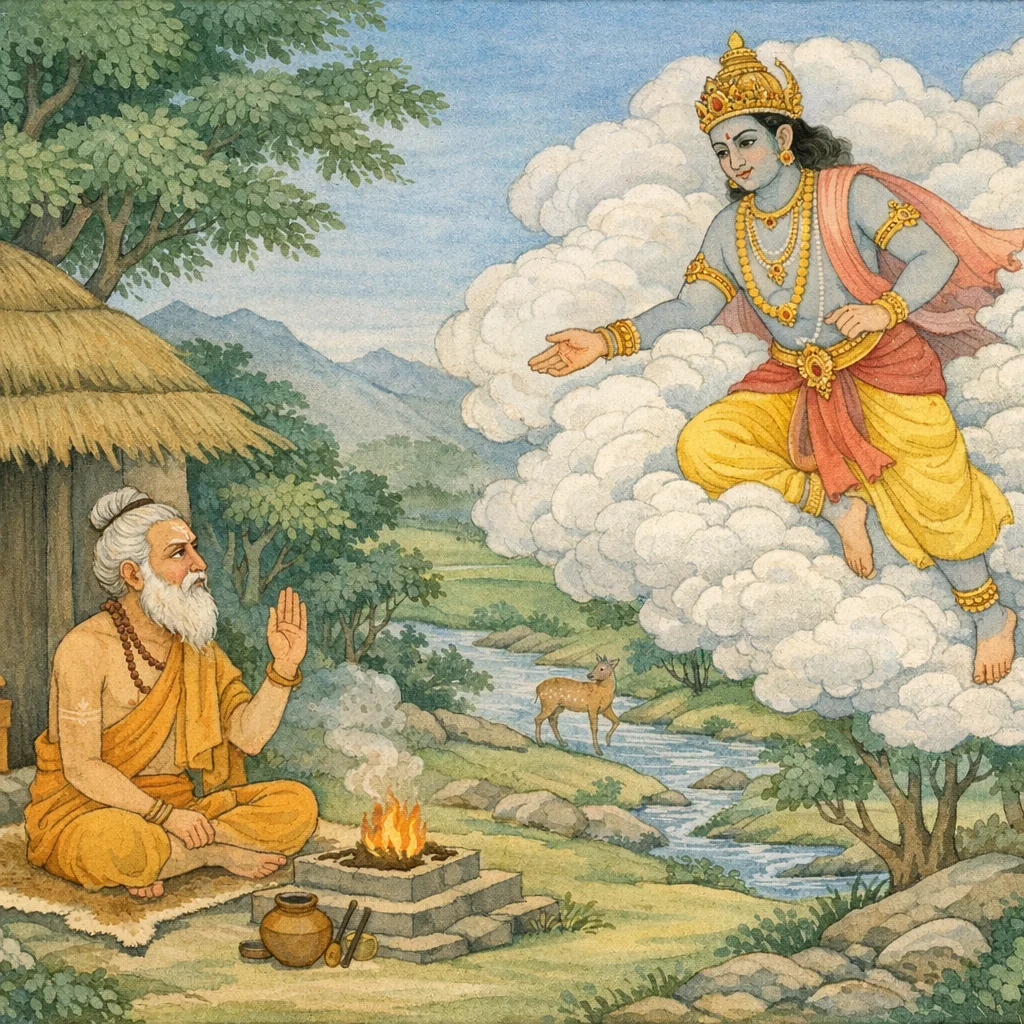
Yudhiṣṭhira questions Bhīṣma about the reputed difficulty of attaining brāhmaṇya, citing precedents such as Viśvāmitra and the king Vītahavya. Bhīṣma narrates a dynastic and political background: from Manu’s line through Śaryāti arise rulers including Hehaya and Tālajaṅgha; the Hehayas expand, while in Kāśī the ruler Haryaśva is slain by Vītahavya’s heirs. Successive Kāśī rulers—Sudeva and then Divodāsa—face repeated Hehaya pressure; Divodāsa establishes Vārāṇasī under Indra’s ordinance but is eventually weakened and seeks refuge with Bharadvāja. Bharadvāja performs a putrakāmya iṣṭi, producing Pratardana, who rapidly matures, masters Veda and dhanurveda, and restores Kāśī’s strategic position by defeating and eliminating Vītahavya’s sons. Vītahavya flees to Bhṛgu’s hermitage and receives protection. Pratardana arrives demanding Vītahavya’s surrender; Bhṛgu responds that no kṣatriya resides in the āśrama—only dvijas—thereby shielding the refugee. Pratardana accepts the hermitage norm, interprets the outcome as Vītahavya’s abandonment of kṣatriya identity, and departs. By Bhṛgu’s utterance alone, Vītahavya attains brahmarṣi status and becomes a progenitor of a Brahmin lineage, beginning with Gṛtsamada and continuing through a recorded genealogy (including Pramati, Ruru, Śunaka, and Śaunaka). Bhīṣma concludes by stating that the lineage has been related in detail and invites further inquiry.
Chapter Arc: Bhishma, speaking to Yudhishthira, opens a didactic tale: the ascetic Matanga presses Indra for the supreme boon—Brahmanhood—believing tapas alone can vault him into the highest varna. → Indra returns and warns him repeatedly: Brahmanatva is exceedingly rare and not seized by sheer insistence. He cautions Matanga that craving this ‘parama sthāna’ through obstinacy will ruin him, and that such audacity is not his dharma-path. Indra then lays out a long, grinding ladder of transformation—centuries of births and slow inner refinement—showing how difficult true spiritual eligibility is. → Indra’s decisive admonition lands: ‘Matanga, I told you this after due reflection—choose another boon; Brahmanhood is very hard to obtain.’ The climax is not a weapon’s strike but a moral strike: the shattering of Matanga’s assumption that desire + austerity equals entitlement. → The narrative resolves into instruction: spiritual status is not a prize to be demanded; it ripens through sustained purification, right conduct, and the conquest of inner enemies. Matanga is urged to abandon the perilous insistence and accept a boon aligned with his rightful path.
Shlokas
Verse 1
अफ्-#-राल जा अष्टाविशोश् ध्याय: ब्राह्मणत्व प्राप्त करनेका आग्रह छोड़कर दूसरा वर मॉगनेके लिये इन्द्रका मनड़को समझाना भीष्म उवाच एवमुक्तो मतड़स्तु संशितात्मा यतव्रत: । अतिष्ठदेकपादेन वर्षाणां शतमच्युत:,भीष्मजी कहते हैं--राजन्! इन्द्रके ऐसा कहनेपर मतंगका मन और भी दृढ़ हो गया। वह संयमपूर्वक उत्तम व्रतका पालन करने लगा। अपने धैर्यसे च्युत न होनेवाला मतंग सौ वर्षोतक एक पैरसे खड़ा रहा
Bhishma said: “O King, when Indra spoke to him in this way, Mataṅga became even more resolute. Self-controlled and steadfast in his vow, he stood on one foot for a hundred years, unwavering in endurance.”
Verse 2
तमुवाच तत: शक्र: पुनरेव महायशा: । ब्राह्मण्यं दुर्लभ तात प्रार्थयानो न लप्स्यसे,तब महायशस्वी इन्द्रने पुनः आकर उससे कहा--'तात! ब्राह्मणत्व दुर्लभ है। उसे माँगनेपर भी पा न सकोगे
Then the illustrious Śakra (Indra) spoke to him again: “Dear child, true Brahminhood is exceedingly hard to obtain; even if you beg for it, you will not gain it.”
Verse 3
मतज् परमं स्थान प्रार्थयन् विनशिष्यसि । मा कृथा: साहसं पुत्र नैष धर्मपथस्तव,मतंग! तुम इस उत्तम स्थानको माँगते-माँगते मर जाओगे। बेटा! दुःसाहस न करो। तुम्हारे लिये यह धर्मका मार्ग नहीं है
Bhīṣma said: “O Mataṅga, in your insistence on asking for that highest station, you will only come to ruin. My son, do not commit this rashness. This is not the path of dharma for you.”
Verse 4
न हि शबक््यं त्वया प्राप्तुं ब्राह्मण्यमिह दुर्मते । अप्राप्यं प्रार्थथानो हि नचिराद् विनशिष्यसि,“दुर्मते! तुम इस जीवनमें ब्राह्मणत्व नहीं पा सकते। उस अप्राप्य वस्तुके लिये प्रार्थना करते-करते शीघ्र ही कालके गालमें चले जाओगे
Bhīṣma said: “O misguided one, in this very life you are not capable of attaining the status and conduct of a true brāhmaṇa. By craving and pleading for what is in fact unattainable for you, you will soon come to ruin.”
Verse 5
मतड़ परम स्थानं वार्यमाणो5सकृन्मया । चिकीर्षस्येव तपसा सर्वथा न भविष्यसि,“मतंग! मैं तुम्हें बार-बार मना करता हूँ तो भी उस उत्कृष्ट स्थानको तुम तपस्याद्वारा प्राप्त करनेकी अभिलाषा करते ही जाते हो। ऐसा करनेसे सर्वथा तुम्हारी सत्ता मिट जायगी
Bhishma said: “O Mataṅga, though I have repeatedly tried to restrain you from it, you still persist in desiring that supreme state through austerity. If you proceed in this way, you will not remain as you are at all—your very existence will be extinguished.”
Verse 6
तिर्यग्योनिगत: सर्वो मानुष्यं यदि गच्छति । स जायते पुल्कसो वा चण्डालो वाप्यसंशय:,'पशु-पक्षीकी योनिमें पड़े हुए सभी प्राणी यदि कभी मनुष्ययोनिमें जाते हैं तो पहले पुल्कस या चाण्डालके रूपमें जन्म लेते हैं--इसमें संशय नहीं है
Bhīṣma said: Any being that has fallen into an animal or bird womb, if it later attains human birth, is first born as a Pulkaśa or as a Caṇḍāla—of this there is no doubt.
Verse 7
पुल्कस: पापयोनिर्वा यः कश्चिदिह लक्ष्यते स तस्यामेव सुचिरं मतड़ परिवर्तते,“मतंग! पुल्कस या जो कोई भी पापयोनि पुरुष यहाँ दिखायी देता है वह सुदीर्घधकालतक अपनी उसी योनिमें चक्कर लगाता रहता है
Bhīṣma said: “O Mataṅga, whoever is seen here as a Pulkaśa, or as any person born in a sinful womb, remains for a very long time revolving within that same condition of birth.”
Verse 8
ततो दशशते काले लभते शूद्रतामपि । शूद्रयोनावपि ततो बहुश: परिवर्तते,“तदनन्तर एक हजार वर्ष बीतनेपर वह चाण्डाल या पुल्कस शूद्रयोनिमें जन्म लेता है और उसमें भी अनेक जन्मोंतक चक्कर लगाता रहता है
Bhīṣma said: Thereafter, when a period of ten hundred years has passed, he attains even the state of a Śūdra. And even after entering a Śūdra womb, he continues to revolve through many births.
Verse 9
ततस्त्रिंशद्गुणे काले लभते वैश्यतामपि । वैश्यतायां चिरं कालं तत्रैव परिवर्तते,“तत्पश्चात् तीसगुना समय बीतनेपर वह वैश्य-योनिमें आता है और चिरकालतक उसीमें चक्कर काटता रहता है
Bhīṣma said: Thereafter, when a period thirtyfold has elapsed, he attains even birth among the Vaiśyas. And having become a Vaiśya, he remains there for a long time, revolving again and again within that very condition of life.
Verse 10
ततः षष्टिगुणे काले राजन्यो नाम जायते । ततः षष्टिगुणे काले लभते ब्रह्मबन्धुताम्,इसके बाद साठगुना समय बीतनेपर वह क्षत्रियकी योनिमें जन्म लेता है। फिर उससे भी साठगुना समय बीतनेपर वह गिरे हुए ब्राह्मणके घरमें जन्म लेता है
Bhīṣma said: “Then, after a period multiplied sixtyfold, he is born into the Kṣatriya order. Then again, after another sixtyfold span of time, he attains birth in the house of a ‘brahma-bandhu’—one who is Brahmin by lineage but fallen from Brahmin conduct.”
Verse 11
ब्रह्मबन्धुश्चिरं कालं॑ ततस्तु परिवर्तते । ततस्तु द्विशते काले लभते काण्डपृष्ठताम्,'दीर्घकालतक ब्राह्मणाधम रहकर जब उसकी अवस्था परिवर्तित होती है तब वह अस्त्र-शस्त्रोंसे जीविका चलानेवाले ब्राह्मणके यहाँ जन्म लेता है
Bhishma said: “For a long time he remains a mere brahmabandhu—Brahmin in name, not in conduct. Then, when his condition turns, after two hundred measures of time he attains the state called kāṇḍapṛṣṭha: he is born among Brahmins who make their living by arms and weapons.”
Verse 12
काण्डपृष्ठिश्चिरं काल॑ तत्रैव परिवर्तते । ततस्तु त्रिशते काले लभते जपतामपि,फिर चिरकालतक वह उसी योनिमें पड़ा रहता है। तदनन्तर तीन सौ वर्षका समय व्यतीत होनेपर वह गायत्री-मात्रका जप करनेवाले ब्राह्मणके यहाँ जन्म लेता है
Bhishma said: “For a long time he remains there itself, turning about in that very womb. Then, when three hundred years have passed, he is born in the house of a Brahmin who practices japa—even if only the recitation of the Gāyatrī.”
Verse 13
तं च प्राप्य चिरं काल॑ तत्रैव परिवर्तते | ततश्चतुःशते काले श्रोत्रियो नाम जायते । श्रोत्रियत्वे चिरं काल॑ तत्रैव परिवर्तते,उस जन्मको पाकर वह चिरकालतक उसी योनिमें जन्मता-मरता रहता है। फिर चार सौ वर्षोका समय व्यतीत होनेपर वह श्रोत्रिय (वेदवेत्ता) ब्राह्मणके कुलमें जन्म लेता है और उसी कुलमें चिरकालतक उसका आवागमन होता रहता है
Bhishma said: “Having attained that state (that particular birth), he continues for a long time revolving there alone, repeatedly taking birth and dying in the same condition. Then, when four hundred years have passed, he is born in a Brahmin family as a śrotriya—one learned in the Veda—and even in that status he continues for a long time to circulate within that very sphere of existence.”
Verse 14
तदेवं शोकहर्षो तु कामद्वेषौ च पुत्रक | अतिमानातिवादौ च प्रविशेते द्विजाधमम्,बेटा! इस प्रकार शोक-हर्ष, राग-द्वेष, अतिमान और अतिवाद आदि दोषोंका अधम द्विजके भीतर प्रवेश होता है
Bhishma said: “Thus, my son, grief and elation, desire and hatred, and also excessive pride and contentious overstatement—such faults find their way into a base-born Brahmin (dvijādhama).”
Verse 15
तांश्ेज्जयति शत्रून् स तदा प्राप्नोति सद्गतिम् । अथ ते वै जयन्त्येनं तालाग्रादिव पात्यते,यदि वह इन शत्रुओंको जीत लेता है तो सदगतिको प्राप्त होता है और यदि वे शत्रु ही उसे जीत लेते हैं तो ताड़के वृक्षके ऊपरसे गिरनेवाले फलकी भाँति वह नीचे गिरा दिया जाता है
Bhishma said: “If he conquers these enemies, he attains sadgati—the good course and blessed end. But if those enemies conquer him, he is cast down, like a fruit falling from the top of a palm tree.”
Verse 16
मतज़ सम्प्रधार्यवं यदहं त्वामचूचुदम् । वृणीष्व कामम-्यं त्वं ब्राह्मुण्यं हि सुदुर्लभम्,“मतंग! यही सोचकर मैंने तुमसे कहा था कि तुम कोई दूसरी अभीष्ट वस्तु माँग लो; क्योंकि ब्राह्मणत्व अत्यन्त दुर्लभ है”
Bhīṣma said: “O Mataṅga, after reflecting in this way, I told you: ‘Choose some other boon you desire; for true Brahminhood is indeed exceedingly difficult to obtain.’”
Verse 27
इस प्रकार श्रीमह्याभारत अनुशासनपर्वके अन्तर्गत दानधर्मपर्वमें इन्द्र और मतंगका संवादविषयक सत्ताईसवाँ अध्याय पूरा हुआ
Thus ends the twenty-seventh chapter of the Dāna-dharma section within the Anuśāsana Parva of the sacred Mahābhārata, dealing with the dialogue between Indra and Mataṅga. The closing formula signals the completion of a teaching episode centered on the ethics of giving and the standards by which true merit is judged.
Verse 28
इति श्रीमहाभारते अनुशासनपर्वणि दानधर्मपर्वणि इन्द्रमतड्रसंवादे अष्टाविंशोडध्याय:
Thus ends the twenty-eighth chapter in the Śrī Mahābhārata, within the Anuśāsana Parva, in the section on the dharma of gifts, in the dialogue concerning Indra and Mataḍrasa. (This is a colophon marking the close of the chapter rather than a spoken doctrinal verse.)
Frequently Asked Questions
The dilemma concerns competing duties: a ruler’s pursuit of retributive justice against an enemy versus the inviolability of hermitage asylum and the ethical constraint imposed by ṛṣi jurisdiction.
The chapter teaches that social-religious authority (brāhmaṇya) is validated through recognized ascetic-ritual legitimacy and ethical comportment, and that refuge under a ṛṣi reconfigures the moral landscape of pursuit and retaliation.
No explicit phalaśruti is stated; instead, the closing meta-commentary is genealogical and archival—Bhīṣma marks the lineage as fully narrated and positions the account as sufficient proof for the claimed transformation and its normative implications.