Adhyaya 30
Indra–Mataṅga Saṃvāda: On the rarity and responsibilities of Brāhmaṇya (इन्द्र-मतङ्ग संवादः)
Upa-parva: Brāhmaṇya-prāpti and Indra–Mataṅga Saṃvāda (Episode on the attainability of brāhmaṇya)
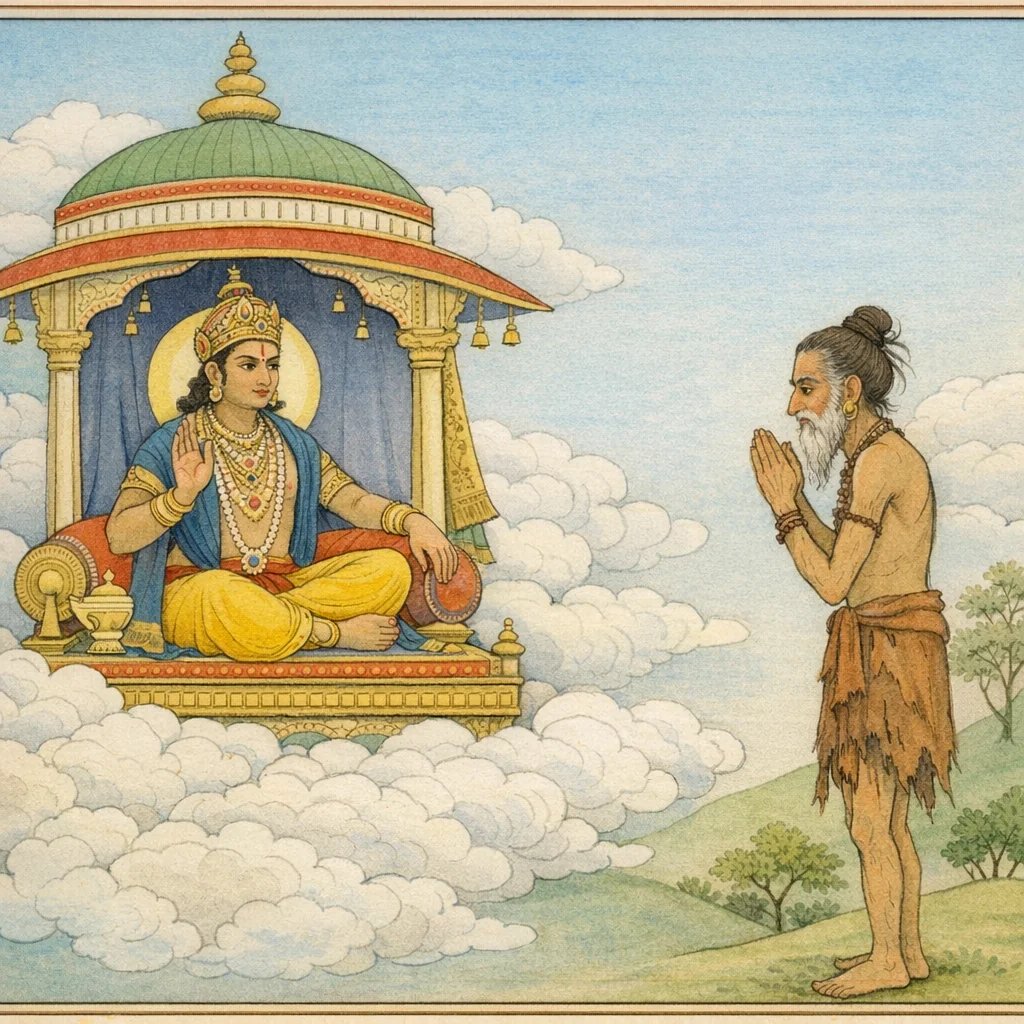
Bhīṣma recounts that Mataṅga, overwhelmed by sorrow, undertakes severe austerity at Gayā for a hundred years, becoming emaciated and near collapse. As he falls, Indra (Vāsava/Śakra), characterized as a beneficent granter of boons, catches him and addresses him: Mataṅga’s brāhmaṇatva is said to be obstructed by ‘paripanthins’ (hindrances), and Indra asserts a normative maxim—honoring brāhmaṇas yields happiness, while failing to honor them yields suffering; further, the welfare (yogakṣema) of beings is ‘collected’ in the brāhmaṇa, and ancestors and deities are satisfied through them. Indra adds that brāhmaṇya is attained only after many births. Mataṅga replies that Indra’s words intensify his distress; he laments those who obtain brāhmaṇya yet do not uphold it, calling such neglect a grave moral failure, and he argues from his own restrained life (non-violence, non-attachment) that he should qualify. He requests a form of free movement and recognition without antagonizing brāhmaṇa–kṣatra relations and seeks enduring fame. Indra grants a boon: Mataṅga will be known as ‘Chandodeva’ and be revered by women. Indra departs; Mataṅga relinquishes life and attains an excellent station. Bhīṣma concludes by reiterating brāhmaṇya as a supreme yet difficult-to-attain status, aligning with Indra’s statement.
Chapter Arc: युधिष्ठिर, भीष्म से एक तीखा प्रश्न करते हैं—क्या क्षत्रिय, वैश्य या शूद्र तपस्या आदि से ब्राह्मणत्व प्राप्त कर सकता है? और यदि हाँ, तो उसका मार्ग क्या है? → भीष्म ‘मतंग’ की कथा उठाते हैं: तपस्वी मतंग इन्द्र से ब्राह्मणत्व की याचना करता है। कथा में एक गधी अपने पुत्र गधे के नाक के असह्य घाव को देखकर कहती है कि उस पर ब्राह्मण नहीं, चाण्डाल सवार है—और यह संकेत मतंग के भीतर छिपे कर्म-दोष/जन्म-द्वंद्व को उभार देता है। गधा पूछता है कि उसे चाण्डाल कैसे जाना गया और किस कर्म से ब्राह्मणत्व नष्ट हुआ—कथा का नैतिक रहस्य गहराता जाता है। → इन्द्र मतंग से स्पष्ट कहते हैं कि ‘ब्राह्मणत्व’ केवल तप से अर्जित होने वाली वस्तु नहीं; वह सर्वभूत-श्रेष्ठता, परम पवित्रता और संस्कार-धर्म का उच्चतम पद है—और चाण्डाल-योनि में जन्मे के लिए उसे ‘कथंचन’ प्राप्त करना असंभव बताया जाता है। साथ ही चेतावनी दी जाती है कि इस दुर्लभ पद की हठी प्रार्थना में अति करने पर शीघ्र विनाश भी हो सकता है। → कथा का निष्कर्ष युधिष्ठिर के प्रश्न को कठोर उत्तर देता है: केवल बाह्य तप या आकांक्षा से ‘विप्रत्व’ नहीं मिलता; कर्म, संस्कार, शुद्धि और लोक-मान्य पवित्रता की मर्यादा निर्णायक है। भीष्म इस प्रसंग से वर्ण-धर्म की सीमाएँ और ‘श्रेष्ठता’ की परिभाषा को रेखांकित करते हैं। → युधिष्ठिर के मन में अगला प्रश्न उभरता है—यदि तप पर्याप्त नहीं, तो ‘श्रेष्ठता’ और ‘पवित्रता’ का वास्तविक मानदंड क्या है: जन्म, कर्म, या आचरण?
Shlokas
Verse 1
/ (दाक्षिणात्य अधिक पाठका १ श्लोक मिलाकर कुल १०७ श्लोक हैं) अपना छा अर: 2 सप्तविशो<्ध्याय: ब्राह्मणत्वके लिये तपस्या करनेवाले मतड़की इन्द्रसे बातचीत युधिछिर उवाच प्रज्ञाश्रुताभ्यां वृत्तेन शीलेन च यथा भवान् | गुणैश्व विविधै: सर्वर्वयसा च समन्वित:,युधिष्ठिरने पूछा--धर्मात्माओंमें श्रेष्ठ नरेश्वर! आप बुद्धि, विद्या, सदाचार, शील और विभिन्न प्रकारके सम्पूर्ण सदगुणोंसे सम्पन्न हैं। आपकी अवस्था भी सबसे बड़ी है। आप बुद्धि, प्रश्ञा और तपस्यासे विशिष्ट हैं; अत: मैं आपसे धर्मकी बात पूछता हूँ। संसारमें आपके सिवा दूसरा कोई ऐसा नहीं है जिससे सब प्रकारके प्रश्न पूछे जा सकें
Yudhiṣṭhira said: “O king among men, foremost among the righteous—just as you are endowed with discernment and learning, with upright conduct and good character, and furnished with every kind of virtue, so too you are advanced in age. Because you are distinguished by wisdom, insight, and austerity, I ask you about dharma. In this world, besides you there is no other from whom one may inquire into every kind of question.”
Verse 2
भवान् विशिष्टो बुद्ध्या च प्रज्ञया तपसा तथा । तस्माद् भवन्तं पृच्छामि धर्म धर्मभूतां वर । नान्यस्त्वदन्यो लोकेषु प्रष्टव्यो5स्ति नराधिप,युधिष्ठिरने पूछा--धर्मात्माओंमें श्रेष्ठ नरेश्वर! आप बुद्धि, विद्या, सदाचार, शील और विभिन्न प्रकारके सम्पूर्ण सदगुणोंसे सम्पन्न हैं। आपकी अवस्था भी सबसे बड़ी है। आप बुद्धि, प्रश्ञा और तपस्यासे विशिष्ट हैं; अत: मैं आपसे धर्मकी बात पूछता हूँ। संसारमें आपके सिवा दूसरा कोई ऐसा नहीं है जिससे सब प्रकारके प्रश्न पूछे जा सकें
Yudhiṣṭhira said: “You are distinguished by intellect, wisdom, and ascetic discipline. Therefore I ask you about dharma, O best among the upholders of righteousness. In all the worlds there is none other like you, O king, who is fit to be questioned.”
Verse 3
क्षत्रियो यदि वा वैश्य: शूद्रो वा राजसत्तम । ब्राह्म॒ण्यं प्राप्रुयाद् येन तन्मे व्याख्यातुमहसि,नृपश्रेष्ठ! यदि क्षत्रिय, वैश्य अथवा शाद्र ब्राह्मणत्व प्राप्त करना चाहे तो वह किस उपायसे उसे पा सकता है? यह मुझे बताइये
Yudhiṣṭhira said: “O best among kings, if a Kṣatriya, or a Vaiśya, or even a Śūdra wishes to attain the state of Brahminhood, by what means may he obtain it? O foremost of rulers, please explain this to me.”
Verse 4
तपसा वा सुमहता कर्मणा वा श्रुतेन वा । ब्राह्म॒ण्यमथ चेदिच्छेत् तन्मे ब्रूहि पितामह,पितामह! यदि कोई ब्राह्मणत्व पानेकी इच्छा करे तो वह उसे तपस्या, महान् कर्म अथवा वेदोंके स्वाध्याय आदि किस उपायसे प्राप्त कर सकता है?
Yudhiṣṭhira said: “O Grandsire, if someone desires to attain true Brahminhood, tell me by what means it is to be gained—by great austerity, by noble action, or by learning and sacred study.”
Verse 5
भीष्म उवाच ब्राह्म॒ण्यं तात दुष्प्राप्यं वर्ण: क्षत्रादिभिस्त्रिभि: । परं हि सर्वभूतानां स्थानमेतद् युधिछ्िर,भीष्मजीने कहा--तात युधिष्ठिर! क्षत्रिय आदि तीन वर्णोके लिये ब्राह्मणत्व प्राप्त करना अत्यन्त कठिन है, क्योंकि यह समस्त प्राणियोंके लिये सर्वोत्तम स्थान है
Bhīṣma said: “Dear Yudhiṣṭhira, Brahminhood is exceedingly hard to attain for the other three varṇas, such as the Kṣatriyas and the rest, for this station is the highest place for all beings.”
Verse 6
बद्दीस्तु संसरन् योनीर्जायमान: पुन: पुनः । पर्याये तात कम्मिंश्रिद् ब्राह्मणो नाम जायते,तात! बहुत-सी योनियोंमें बारंबार जन्म लेते-लेते कभी किसी समय संसारी जीव ब्राह्मणकी योनिमें जन्म लेता है
Bhīṣma said: “Bound by worldly existence, a being wanders through many wombs, being born again and again. Then, at some turn of the cycle—dear child—depending on the karma it has accumulated, it comes to be born in what is called the state of a brāhmaṇa.”
Verse 7
अत्राप्युदाहरन्तीममितिहासं पुरातनम् । मतड़स्य च संवादं गर्दभ्याश्व॒ युधिछिर,युधिष्ठिर! इस विषयमें जानकार मनुष्य मतड़् और गर्दभीके संवादरूप इस प्राचीन इतिहासका उदाहरण दिया करते हैं
Bhīṣma said: “Here too, O Yudhiṣṭhira, the learned cite an ancient precedent: the old narrative in the form of a dialogue between Mataṅga and a she-donkey.”
Verse 8
द्विजाते: कस्यचित् तात तुल्यवर्ण: सुतस्त्वभूत् । मतज़्े नाम नाम्ना वै सर्वे: समुदितो गुणै:,तात! पूर्वकालमें किसी ब्राह्मणके एक मतज् नामक पुत्र हुआ जो (अन्य वर्णके पुरुषसे उत्पन्न होनेपर भी ब्राह्मणोचित संस्कारोंके प्रभावसे) उनके समान वर्णका ही समझा जाता था, वह समस्त सदगुणोंसे सम्पन्न था
Bhīṣma said: “Dear child, there was once a son born to a certain twice-born man who was regarded as of the same social class as his father. His name was Mataṅga, and he was endowed with every virtue.”
Verse 9
स यज्ञकार: कौन्तेय पित्रोत्सृष्ट: परंतप । प्रायाद् गर्दभयुक्तेन रथेनाप्याशुगामिना,शत्रुओंको संताप देनेवाले कुन्तीकुमार! एक दिन अपने पिताके भेजनेपर मतंग किसी यजमानका यज्ञ करानेके लिये गधोंसे जुते हुए शीघ्रगामी रथपर बैठकर चला
Bhīṣma said: “O son of Kuntī, scorcher of foes—Matanga, a priest who performed sacrifices, once set out at his father’s bidding to officiate at a patron’s yajña. He departed seated in a swift-moving chariot yoked to donkeys, proceeding to the rite he had been commissioned to conduct.”
Verse 10
स बाल गर्दभं राजन् वहन्तं मातुरन्तिके । निरविध्यत् प्रतोदेन नासिकायां पुन: पुन:,राजन्! रथका बोझ ढोते हुए एक छोटी अवस्थाके गधेको उसकी माताके निकट ही मतंगने बारंबार चाबुकसे मारकर उसकी नाकमें घाव कर दिया
Bhīṣma said: “O King, a young donkey, carrying a load, was near its mother. A man repeatedly struck it with a goad, wounding its nostrils again and again.”
Verse 11
पुत्रका भला चाहनेवाली गधी उस गधेकी नाकमें दुस्सह घाव हुआ देख उसे समझाती हुई बोली--'बेटा! शोक न करो। तुम्हारे ऊपर ब्राह्मण नहीं, चाण्डाल सवार है
Bhīṣma said: A she-donkey, affectionately concerned for her young one, saw that the donkey had developed an unbearable sore on its nose. Trying to console and instruct him, she said, “My child, do not grieve. It is not a Brahmin who is riding you—it is a Chandala.”
Verse 12
ब्राह्मणे दारुणं नास्ति मैत्रो ब्राह्मण उच्यते । आचार्य: सर्वभूतानां शास्ता कि प्रहरिष्यति,'ब्राह्मणमें इतनी क्रूरता नहीं होती। ब्राह्मण सबके प्रति मैत्रीभाव रखनेवाला बताया जाता है। जो समस्त प्राणियोंको उपदेश देनेवाला आचार्य है, वह कैसे किसीपर प्रहार करेगा?
In a brāhmaṇa there is no such cruelty; a brāhmaṇa is said to bear friendship toward all beings. How could an ācārya—teacher and guide of every creature—strike at anyone?
Verse 13
अयं तु पापप्रकृतिर्बाले न कुरुते दयाम् | स्वयोनिं मानयत्येष भावो भावं नियच्छति,यह स्वभावसे ही पापात्मा है; इसीलिये दूसरेके बच्चेपर दया नहीं करता है। यह अपने इस कुकृत्यद्वारा अपनी चाण्डाल योनिका ही सम्मान बढ़ा रहा है। जातिगत स्वभाव ही मनोभावपर नियन्त्रण करता है
Bhīṣma said: “This one is of sinful disposition; therefore he shows no compassion toward the child. By such wrongdoing he only magnifies the repute of his own outcaste birth. Indeed, one’s inborn nature governs the movements of the mind.”
Verse 14
एतत् श्रुत्वा मतड़स्तु दारुणं रासभीवच: । अवतीर्य रथात् तूर्ण रासभीं प्रत्यभाषत,गधीका यह दारुण वचन सुनकर मतंग तुरंत रथसे उतर पड़ा और गधीसे इस प्रकार बोला--
Bhīṣma said: Hearing those harsh words spoken by the she-donkey, Mataṅga at once descended quickly from his chariot and addressed the she-donkey in reply—
Verse 15
ब्रूहि रासभि कल्याणि माता मे येन दूषिता । कथं मां वेत्सि चण्डालं क्षिप्रं रासभि शंस मे,“कल्याणमयी गर्दभी! बता, मेरी माता किससे कलंकित हुई है? तू मुझे चाण्डाल कैसे समझती है? शीघ्र मुझसे सारी बात बता
Bhīṣma said: “Speak, O auspicious she-donkey. By whom was my mother defiled? How do you take me to be a Caṇḍāla? Tell me quickly, O she-donkey—declare the whole matter to me.”
Verse 16
कथं मां वेत्सि चण्डालं ब्राह्माण्यं येन नश्यते । तत्त्वेनैतन्महाप्राज्ञे ब्रूहि सर्वमशेषत:
“How do you recognize me as a caṇḍāla—one whose conduct destroys the very status of a brāhmaṇa? O great sage of keen insight, tell me the truth of this matter completely, leaving nothing unsaid.”
Verse 17
गधी! तुझे कैसे मालूम हुआ कि मैं चाण्डाल हूँ? किस कर्मसे मेरा ब्राह्मणत्व नष्ट हुआ है? तू बड़ी समझदार है; अतः ये सारी बातें मुझे ठीक-ठीक बता” ।। गर्दभ्युवाच ब्राह्मण्यां वृषलेन त्वं मत्तायां नापितेन ह । जातस्त्वमसि चाण्डालो ब्राह्मणयं तेन तेडनशत्,गदही बोली--मतंग! तू यौवनके मदसे मतवाली हुई एक ब्राह्मणीके पेटसे शूद्रजातीय नाईद्वारा पैदा किया गया, इसीलिये तू चाण्डाल है और तेरी माताके इसी व्यभिचार कर्मसे तेरा ब्राह्मणत्व नष्ट हो गया है
Bhishma said, “Gadhi! How did you come to know that I am a Caṇḍāla? By what deed has my Brahmin status been destroyed? You are discerning—therefore tell me all of this exactly as it is.” The she-donkey replied, “Matanga, you were born from a Brahmin woman who, intoxicated by youthful passion, conceived by a Śūdra barber. Therefore you are a Caṇḍāla, and it is through your mother’s act of transgression that your Brahminhood has been ruined.”
Verse 18
एवमुक्तो मतड़स्तु प्रतिप्रायाद् गृहं प्रति । तमागतमभिप्रेक्ष्य पिता वाक्यमथाब्रवीत्,गदहीके ऐसा कहनेपर मतंग फिर अपने घरको लौट गया। उसे लौटकर आया देख पिताने इस प्रकार कहा--
Thus addressed, Mataṅga set out again toward his home. Seeing him return, his father then spoke these words—continuing the instruction that frames the moral direction of the episode.
Verse 19
मया त्वं यज्ञसंसिद्धौ नियुक्तो गुरुकर्मणि । कस्मात् प्रतिनिवृत्तोडसि कच्चिन्न कुशलं तव,बेटा! मैंने तो तुम्हें यज्ञ करानेके भारी कार्यपर लगा रखा था, फिर तुम लौट कैसे आये? तुम कुशलसे तो हो न?
Bhishma said: “I had appointed you to the weighty duty connected with bringing the sacrifice to completion. Why have you turned back? Is everything well with you, my son?”
Verse 20
मतंग उवाच अन्त्ययोनिरयोनिर्वा कथं स कुशली भवेत् । कुशल तु कुतस्तस्य यस्येयं जननी पित:,मतंगने कहा--पिताजी! जो चाण्डाल योनिमें उत्पन्न हुआ है, अथवा उससे भी नीच योनिमें पैदा हुआ है वह कैसे सकुशल रह सकता है। जिसे ऐसी माता मिली हो उसे कहाँसे कुशलता प्राप्त होगी
Mataṅga said: “O father, how could one be truly well or fortunate if he is born in an ‘end’ or despised birth—or even in a birth regarded as lower still? From where could well-being come to a person whose very parentage—his mother and father—is of such a kind?”
Verse 21
ब्राह्मण्यां वृषलाज्जातं पितर्वेदयतीव माम् | अमानुषी गर्दभीयं तस्मात् तप्स्ये तपो महत्,पिताजी! यह मानवेतर योनिमें उत्पन्न हुई गदही मुझे ब्राह्मणीके गर्भसे द्वारा पैदा हुआ बता रही है; इसलिये अब मैं महान् तपमें लग जाऊँगा
Matanga said: “Father, this she-donkey—born of a non-human womb—keeps declaring that I was born from a Brahmin woman’s pregnancy. Therefore, I shall now undertake great austerity.”
Verse 22
एवमुक्त्वा स पितरं प्रतस्थे कृतनिश्चय: । ततो गत्वा महारण्यमतपत् सुमहतु तपः,पितासे ऐसा कहकर मतंग तपस्याके लिये दृढ़ निश्चय करके घरसे निकल पड़ा और एक महान् वनमें जाकर वहाँ बड़ी भारी तपस्या करने लगा
Having spoken thus to his father, he set out with firm resolve. Then, going to a great forest, he undertook an exceedingly arduous austerity—choosing disciplined renunciation as the means to fulfill his purpose and uphold what he deemed right.
Verse 23
ततः स तापयामास विबुधांस्तपसान्वित: । मतड़: सुखसम्प्रेप्सु: स्थानं सुचरितादपि
Thereafter, Mataṅga—endowed with intense austerity—began to afflict the gods by the power of his tapas, seeking to attain a state of blessedness, even beyond what is gained through mere good conduct (sucarita).
Verse 24
तपस्यामें संलग्न हो मतंगने देवताओंको संतप्त कर दिया। वह भलीभाँति तपस्या करके सुखसे ही ब्राह्मणत्वरूपी अभीष्ट स्थानको प्राप्त करना चाहता था ।। त॑ तथा तपसा युक्तमुवाच हरिवाहन: । मतड़ तप्स्यसे कि त्वं भोगानुत्सृज्य मानुषान्,उसे इस प्रकार तपस्यामें संलग्न देख इन्द्रने कहा--“मतंग! तुम क्यों मानवीय भोगोंका परित्याग करके तपस्या कर रहे हो?
Absorbed in austerity, Matanga caused distress to the gods by the power of his penance. Through disciplined tapas, he sought—without resorting to violence or deceit—to attain the desired state of brahminhood. Seeing him thus steadfast in ascetic practice, Indra, the lord who rides the divine steed, addressed him: “Matanga, why do you undertake austerities, casting aside human enjoyments?”
Verse 25
वरं ददामि ते हन्त वृणीष्व त्वं यदिच्छसि । यच्चाप्यवाप्यं हृदि ते सर्व तद् ब्रूहि माचिरम्,मैं तुम्हें वर देता हूँ। तुम जो चाहते हो उसे प्रसन्नतापूर्वक माँग लो। तुम्हारे हृदयमें जो कुछ पानेकी अभिलाषा हो, वह सब शीघ्र बताओ'
“I grant you a boon—come, choose whatever you desire. Whatever attainable wish you hold in your heart, tell me all of it without delay.”
Verse 26
इस प्रकार श्रीमह्ााभारत अनुशासनपर्वके अन्तर्गत दानधर्मपर्वमें गंगाजीके माहात्म्यका वर्णनविषयक छब्बीसवाँ अध्याय पूरा हुआ,मतंग उवाच ब्राह्म॒ण्यं कामयानो5हमिदमारब्धवांस्तप: । गच्छेयं तदवाप्येह वर एष वृतो मया मतंगने कहा--मैंने ब्राह्मणत्व प्राप्त करनेकी इच्छासे यह तपस्या प्रारम्भ की है। उसे पा करके ही यहाँसे जाऊँ, मैं यही वर चाहता हूँ
Vaiśampāyana said: Mataṅga said—‘Desiring the status of a brāhmaṇa, I have begun this austerity. Only after attaining that here will I depart from this place; this alone is the boon I have chosen.’
Verse 27
भीष्म उवाच एतत् श्र॒ुत्वा तु वचनं तमुवाच पुरंदर: । मतड़ दुर्लभमिदं विप्रत्वं प्रार्थ्थते त्वया,भीष्मजी कहते हैं--भारत! मतंगकी यह बात सुनकर इन्द्रदेवने कहा--“मतंग! तुम जो ब्राह्मणत्व माँग रहे हो, यह तुम्हारे लिये दुर्लभ है” इति श्रीमहाभारते अनुशासनपर्वणि दानधर्मपर्वणि इन्द्रमतड्रसंवादे सप्तविंशोडध्याय:
Bhishma said: Hearing these words, Purandara (Indra) replied to him, “O Mataṅga, the state of Brahminhood that you are asking for is difficult for you to obtain.”
Verse 28
ब्राह्माण्यं प्रार्थयानस्त्वमप्राप्यमकृतात्मभि: । विनशिष्यसि दुर्बुद्धे तदुपारम माचिरम्,जिनका अन्तःकरण शुद्ध नहीं है अथवा जो पुण्यात्मा नहीं हैं, उनके लिये ब्राह्मणत्वकी प्राप्ति असम्भव है। दुर्बुद्धे! तुम ब्राह्मणत्व माँगते-माँगते मर जाओगे तो भी वह नहीं मिलेगा; अतः इस दुराग्रहसे जितना शीघ्र सम्भव हो निवृत्त हो जाओ
Bhishma said: “You are seeking the state and conduct of a true Brahmin, but for those whose inner self is unrefined and impure it is unattainable. O misguided one, you will perish while begging for ‘Brahminhood,’ yet you will not obtain it. Therefore abandon this stubborn insistence without delay.”
Verse 29
श्रेष्ठतां सर्वभूतेषु तपो<र्थ नातिवर्तते । तदग्रयं प्रार्थयानस्त्वमचिराद् विनशिष्यसि,“सम्पूर्ण भूतोंमें श्रेष्ठता ही ब्राह्मणत्व है और यही तुम्हारा अभीष्ट प्रयोजन है, परंतु यह तप उस प्रयोजनको सिद्ध नहीं कर सकता; अतः इस श्रेष्ठ पदकी अभिलाषा रखते हुए तुम शीघ्र ही नष्ट हो जाओगे
Bhīṣma said: “Among all beings, true pre-eminence is what constitutes the highest status (brahminhood); that is the goal you desire. But mere austerity cannot overstep and secure that end. Therefore, while craving that foremost rank, you will soon come to ruin.”
Verse 30
देवतासुरमर्त्येषु यत् पवित्र परं स्मृतम् चण्डालयोनौ जातेन न तत् प्राप्यं कथंचन,“देवताओं, असुरों और मनुष्योंमें भी जो परम पवित्र माना गया है उस ब्राह्मणत्वको चाण्डालयोनिमें उत्पन्न हुआ मनुष्य किसी तरह नहीं पा सकता”
Bhishma said: “Among gods, asuras, and human beings, that which is remembered as the highest purity—Brahminhood—cannot, in any way, be attained by one born from a Caṇḍāla womb.”
Verse 131
तत्र तीव्र व्रणं दृष्ट॒वा गर्दभी पुत्रगृद्धिनी । उवाच मा शुच: पुत्र चाण्डालस्त्वधितिष्ठति
Seeing there a severe wound, the she-donkey—eager for her foal—spoke: “Do not grieve, my child; a Caṇḍāla is attending to you (standing by you).”
Frequently Asked Questions
The tension is between aspiration to a revered social-religious status and the claim that such status is constrained by cumulative conditions (births, hindrances), while still being morally defined by conduct and the obligation to uphold discipline once obtained.
The instruction is that honoring disciplined, knowledge-bearing persons is treated as a welfare-producing practice for society, and that revered status is inseparable from responsibility; neglecting the duties of such status is framed as a serious ethical failure.
Rather than a formal phalaśruti, the chapter closes with Bhīṣma’s summarizing assertion that brāhmaṇya is a ‘supreme station’ yet difficult to attain, reinforcing the discourse’s evaluative conclusion and its intended normative weight.