Adhyaya 73
Ādi-parva, Adhyāya 73: Devayānī–Śarmiṣṭhā Dispute, Confinement in the Well, and Yayāti’s Rescue
Upa-parva: Sambhava Upa-Parva (Genealogies and Origins: Yayāti–Devayānī–Śarmiṣṭhā Episode)
Vaiśaṃpāyana narrates that, after Kaca’s successful acquisition of knowledge, the devas urge Indra toward action; the scene then shifts to a forest recreation where maidens bathe and their garments are disturbed, leading to mistaken appropriation. Śarmiṣṭhā takes Devayānī’s garment, and a status-laden verbal exchange follows: Devayānī asserts hierarchical and disciplinary claims, while Śarmiṣṭhā counters with rhetoric of dependency and patronage, escalating the dispute. The conflict culminates in Śarmiṣṭhā casting Devayānī into a well and departing without ensuring safety. Subsequently, King Yayāti, fatigued and seeking water, discovers Devayānī in the well; she identifies herself as Śukra’s daughter and requests rescue by his right hand. Yayāti lifts her out, then departs; Devayānī instructs her attendant to inform Śukra. Śukra learns of the event, searches, embraces Devayānī, and interprets the harm within a moral-causal frame, while Devayānī reports Śarmiṣṭhā’s insulting speech; Śukra affirms Devayānī’s status and alludes to the acknowledged scope of his power among rulers and gods.
Chapter Arc: गान्धर्व-विवाह के बाद वन-आश्रम में एक निर्णायक क्षण आता है—कण्व मुनि के सामने शकुन्तला का भविष्य, और दुष्यन्त के वचनों की धर्म-परख। → दुष्यन्त शकुन्तला को सुवर्णमाला, वस्त्र, कुण्डल, मणिरत्न आदि उपहार और राज्य-सम्पदा देने का वचन देता है, पर शकुन्तला धर्मपथ पर टिके रहने के लिए शर्त/समय (समय-प्रतिज्ञा) रखती है—विवाह का आधार केवल काम नहीं, धर्म-सम्मत वचन और उत्तरदायित्व है। → शकुन्तला का ‘समय’ सुनकर दुष्यन्त ‘एवमस्तु’ कहकर बिना विचार-विलम्ब के स्वीकार करता है—यह क्षण गान्धर्व-विवाह को नैतिक वैधता और सामाजिक दिशा देता है। → कण्व मुनि, धर्मभृतां वर, ‘एवमस्तु’ कहकर शकुन्तला के निर्णय और विवाह को अनुमोदित करते हैं; पिता-आचार्य के स्पर्श/आशीर्वाद से सम्बन्ध को आश्रम-धर्म की स्वीकृति मिलती है। → स्वीकृति के बाद भी आगे का प्रश्न हवा में रहता है—राज्य-सभा और लोक-व्यवहार में यह सम्बन्ध कैसे टिकेगा, और दुष्यन्त का वचन भविष्य में किस परीक्षा से गुज़रेगा?
Shlokas
Verse 1
(दाक्षिणात्य अधिक पाठके ५६ श्लोक मिलाकर कुल २४३ “लोक हैं) त्रिसप्ततितमो< ध्याय: शकुन्तला हा की ष्यन्तका गान्धर्व विवाह और महर्षि द्वारा उसका अनुमोदन दुष्यन्त उवाच सुव्यक्तं राजपुत्री त्वं यथा कल्याणि भाषसे । भार्या मे भव सुश्रोणि ब्रूहि कि करवाणि ते,दुष्यन्त बोले--कल्याणि! तुम जैसी बातें कह चुकी हो, उनसे भलीभाँति स्पष्ट हो गया कि तुम क्षत्रिय-कन्या हो (क्योंकि विश्वामित्र मुनि जन्मसे तो क्षत्रिय ही हैं)। सुश्रोणि! मेरी पत्नी बन जाओ। बोलो, मैं तुम्हारी प्रसन्नताके लिये क्या करूँ
Duṣyanta said: “It is now perfectly clear, noble lady, from the way you speak, that you are a princess of royal lineage. O fair-hipped one, become my wife. Tell me—what shall I do to please you?”
Verse 2
सुवर्णमालां वासांसि कुण्डले परिहाटके । नानापत्तनजे शुभ्रे मणिरत्ने च शोभने,सोनेके हार, सुन्दर वस्त्र, तपाये हुए सुवर्णके दो कुण्डल, विभिन्न नगरोंके बने हुए सुन्दर और चमकीले मणिरत्ननिर्मित आभूषण, स्वर्णपदक और कोमल मृगचर्म आदि वस्तुएँ तुम्हारे लिये मैं अभी लाये देता हूँ। शोभने! अधिक क्या कहूँ, मेरा सारा राज्य आजलसे तुम्हारा हो जाय, तुम मेरी महारानी बन जाओ
Duṣyanta said: “I will at once bring for you a golden garland, fine garments, and a pair of earrings of well-refined gold; also bright and auspicious jewel-ornaments fashioned in various cities—beautiful in their workmanship. O lovely one, what more need I say? Let my entire kingdom become yours today; become my chief queen.”
Verse 3
आहरामि तवाद्याहं निष्कादीन्यजिनानि च । सर्व राज्यं तवाद्यास्तु भार्या मे भव शोभने,सोनेके हार, सुन्दर वस्त्र, तपाये हुए सुवर्णके दो कुण्डल, विभिन्न नगरोंके बने हुए सुन्दर और चमकीले मणिरत्ननिर्मित आभूषण, स्वर्णपदक और कोमल मृगचर्म आदि वस्तुएँ तुम्हारे लिये मैं अभी लाये देता हूँ। शोभने! अधिक क्या कहूँ, मेरा सारा राज्य आजलसे तुम्हारा हो जाय, तुम मेरी महारानी बन जाओ
Duṣyanta said: “Even today I shall bring you niṣkas (gold ornaments) and other gifts, and deer-skins as well. Let my entire kingdom be yours from this very day. O lovely one—become my wife.”
Verse 4
गान्धर्वेण च मां भीरु विवाहेनैहि सुन्दरि । विवाहानां हि रम्भोरु गान्धर्व: श्रेष्ठ उच्यते,भीरु! सुन्दरि! गान्धर्व विवाहके द्वारा मुझे अंगीकार करो। रम्भोरु! विवाहोंमें गान्धर्व विवाह श्रेष्ठ कहलाता है
Duṣyanta said: “O timid one, O beautiful lady—accept me through a Gāndharva marriage. For, O fair-thighed one, among the forms of marriage, the Gāndharva is declared the best.”
Verse 5
शकुन्तलोवाच फलाहारो गतो राजन् पिता मे इत आश्रमात् | मुहूर्त सम्प्रतीक्षस्व स मां तुभ्यं प्रदास्यति,शकुन्तलाने कहा--राजन! मेरे पिता कण्व फल लानेके लिये इस आश्रमसे बाहर गये हैं। दो घड़ी प्रतीक्षा कीजिये। वे ही मुझे आपकी सेवामें समर्पित करेंगे
Śakuntalā said: “O King, my father has gone out from this hermitage to gather fruits. Wait here for a short while; he will return and formally give me to you.”
Verse 6
(पिता हि मे प्रभुर्नित्यं दैवतं परमं मतम् । यस्य वा दास्यति पिता स मे भर्ता भविष्यति ।। पिता रक्षति कौमारे भर्ता रक्षति यौवने । पुत्रस्तु स्थविरे भावे न स्त्री स्वातन्त्रयमर्हति ।। अमन्यमाना राजेन्द्र पितरं मे तपस्विनम् । अधर्मेण हि धर्मिषछ्ठ कथं वरमुपास्महे ।। महाराज! पिता ही मेरे प्रभु हैं। उन्हें ही मैं सदा अपना सर्वोत्कृष्ट देवता मानती हूँ। पिताजी मुझे जिसको सौंप देंगे, वही मेरा पति होगा। कुमारावस्थामें पिता, जवानीमें पति और बुढ़ापेमें पुत्र रक्षा करता है। अतः स्त्रीको कभी स्वतन्त्र नहीं रहना चाहिये। धर्मिष्ठ राजेन्द्र! मैं अपने तपस्वी पिताकी अवहेलना करके अधर्मपूर्वक पतिका वरण कैसे कर सकती हूँ? दुष्यन्त उवाच मा मैवं वद सुश्रोणि तपोराशिं दयात्मकम् | दुष्यन्त बोले--सुन्दरी! ऐसा न कहो। तपोराशि महात्मा कण्व बड़े ही दयालु हैं। शकुन्तलोवाच मत्युप्रहरणा विप्रा न विप्रा: शस्त्रपाणय: ।। अनिनिर्दहति तेजोभि: सूर्यो दहति रश्मिभि: । राजा दहति दण्डेन ब्राह्मणो मन्युना दहेत् ।। क्रोधितो मन्युना हन्ति वज़्पाणिरिवासुरान् ।) शकुन्तलाने कहा--राजन! ब्राह्मण क्रोथके द्वारा ही प्रहार करते हैं। वे हाथमें लोहेका हथियार नहीं धारण करते। अग्नि अपने तेजसे, सूर्य अपनी किरणोंसे, राजा दण्डसे और ब्राह्मण क्रोधसे दग्ध करते हैं। कुपित ब्राह्मण अपने क्रोधसे अपराधीको वैसे ही नष्ट कर देता है, जैसे वज्रधारी इन्द्र असुरोंको। दुष्यन्त उवाच इच्छामि त्वां वरारोहे भजमानामनिन्दिते । त्वदर्थ मां स्थितं विद्धि त्वद्गतं हि मनो मम,दुष्यन्त बोले--वरारोहे! तुम्हारा शील और स्वभाव प्रशंसाके योग्य है। मैं चाहता हूँ, तुम मुझे स्वेच्छासे स्वीकार करो। मैं तुम्हारे लिये ही यहाँ ठहरा हूँ। मेरा मन तुममें ही लगा हुआ है
Śakuntalā said: “O great King, my father is ever my lord; I hold him as my highest deity. Whomever my father gives me to—he shall be my husband. In childhood a father protects, in youth a husband protects, and in old age a son protects; therefore a woman is not fit for independence. O king, most steadfast in dharma—how could I, disregarding my ascetic father, choose a husband by an unrighteous act?” Duṣyanta said: “Do not speak so, fair-hipped one. Kaṇva, a treasury of austerity, is compassionate.” Śakuntalā said: “O King, brahmins strike with anger; they do not bear weapons in their hands. Fire burns by its heat, the sun burns by its rays, a king burns by punishment, and a brahmin burns by wrath. When enraged, he destroys the offender by anger, as Indra, wielder of the thunderbolt, destroys the asuras.” Duṣyanta said: “I desire you, O fair-thighed one, blameless in conduct. Know that I have remained here for your sake; my mind is fixed upon you alone.”
Verse 7
आत्मनो बन्धुरात्मैव गतिरात्मैव चात्मन: । आत्मनो मित्रमात्मैव तथा55त्मा चात्मन: पिता | आत्मनैवात्मनो दानं कर्तुमरहसि धर्मत:,आत्मा ही अपना बन्धु है। आत्मा ही अपना आश्रय है। आत्मा ही अपना मित्र है और वही अपना पिता है, अतः तुम स्वयं ही धर्मपूर्वक आत्मसमर्पण करनेयोग्य हो
Duṣyanta said: “For a person, one’s own self alone is one’s kinsman; one’s own self alone is one’s refuge and final course. One’s own self alone is one’s friend, and the self is, as it were, one’s father as well. Therefore, in accordance with dharma, you should be able to make the gift of yourself—commit yourself by your own will—for the self is truly the self’s own support.”
Verse 8
अष्टावेव समासेन विवाहा धर्मत:ः स्मृता: । ब्राह्मो दैवस्तथैवार्ष: प्राजापत्यस्तथासुर:,धर्मशास्त्रकी दृष्टिसे संक्षेपसे आठ प्रकारके ही विवाह माने गये हैं--ब्राह्म, दैव, आर्ष, प्राजापत्य, आसुर, गान्धर्व, राक्षस तथा आठवाँ पैशाच।- स्वायम्भुव मनुका कथन है कि इनमें बादवालोंकी अपेक्षा पहलेवाले विवाह धर्मानुकूल हैं
Duṣyanta said: “In brief, the tradition of Dharma recognizes eight forms of marriage: Brāhma, Daiva, Ārṣa, Prājāpatya, and Āsura—and, by implication, the remaining three: Gāndharva, Rākṣasa, and Paiśāca.” Thus marriage is set forth as a moral institution, ordered by śāstric classification, in which some forms are held to accord with dharma more than others.
Verse 9
गान्धर्वो राक्षसश्वैव पैशाचश्चाष्टम: स्मृत: । तेषां धर्म्यान् यथापूर्व मनु: स्वायम्भुवोडब्रवीत्,धर्मशास्त्रकी दृष्टिसे संक्षेपसे आठ प्रकारके ही विवाह माने गये हैं--ब्राह्म, दैव, आर्ष, प्राजापत्य, आसुर, गान्धर्व, राक्षस तथा आठवाँ पैशाच।- स्वायम्भुव मनुका कथन है कि इनमें बादवालोंकी अपेक्षा पहलेवाले विवाह धर्मानुकूल हैं
Duṣyanta said: “Gāndharva, Rākṣasa, and Paiśāca are also counted—Paiśāca being remembered as the eighth. Of these forms of marriage, Manu Svāyambhuva declared that those mentioned earlier, in due order, are the more dharmic, approved in both conduct and rite.”
Verse 10
प्रशस्तां श्वतुर: पूर्वान् ब्राह्मणस्योपधारय । षडानुपूर्व्या क्षत्रस्य विद्धि धर्म्याननिन्दिते,पूर्वकथित जो चार विवाह--ब्राह्म, दैव, आर्ष तथा प्राजापात्य हैं, उन्हें ब्राह्मणके लिये उत्तम समझो। अनिन्दिते! ब्राह्मसे लेकर गान्धर्वतक क्रमशः छः: विवाह क्षत्रियके लिये धर्मानुकूल जानो
Duṣyanta said: “For a brāhmaṇa, hold the earlier, praised forms to be the best. And, O blameless one, know that for a kṣatriya there are six forms, in proper sequence, that accord with dharma.”
Verse 11
रज्ञां तु राक्षसो<प्युक्तो विट्शूट्रेष्वासुर: स्मृत: । पज्चानां तु त्रयो धर्म्या अधर्म्यौं द्वौ स््मृताविह,राजाओंके लिये तो राक्षस विवाहका भी विधान है। वैश्यों और शूद्रोंमें आसुर विवाह ग्राह्म माना गया है। अन्तिम पाँच विवाहोंमें तीन तो धर्मसम्मत हैं और दो अधर्मरूप माने गये हैं
Duṣyanta said: “For kings, the Rākṣasa form is also declared permissible. Among Vaiśyas and Śūdras, the Āsura form is recognized. Of these five, three are held to accord with dharma, while two are remembered here as contrary to dharma.”
Verse 12
पैशाच आसुरश्चैव न कर्तव्यौ कदाचन । अनेन विधिना कार्यो धर्मस्यैषा गति: स्मृता,पैशाच और आसुर विवाह कदापि करनेयोग्य नहीं हैं। इस विधिके अनुसार विवाह करना चाहिये। यह धर्मका मार्ग बताया गया है
Duṣyanta said: “The Paiśāca and the Āsura forms should never be practiced. One should marry only by this proper rule; this is remembered as the rightful path of dharma.”
Verse 13
गान्धर्वराक्षसौ क्षत्रे धर्म्यों तो मा विशड्किथा: । पृथग् वा यदि वा मिश्रौ कर्तव्यौ नात्र संशय:,गान्धर्व और राक्षस--दोनों विवाह क्षत्रियजातिके लिये धर्मानुकूल ही हैं। अत: उनके विषयमें तुम्हें संदेह नहीं करना चाहिये। वे दोनों विवाह परस्पर मिले हों या पृथक्-पृथक् हों, क्षत्रियके लिये करनेयोग्य ही हैं, इसमें संशय नहीं है
Duṣyanta said: “For a kṣatriya, the Gāndharva and the Rākṣasa forms of marriage are both sanctioned by dharma; therefore do not doubt them. Whether practiced separately or in combination, they are to be undertaken by a kṣatriya—there is no uncertainty in this.”
Verse 14
सा त्वं मम सकामस्य सकामा वरवर्णिनि । गान्धर्वेण विवाहेन भार्या भवितुमहसि,अतः सुन्दरी! मैं तुम्हें पानेके लिये इच्छुक हूँ। तुम भी मुझे पानेकी इच्छा रखकर गान्धर्व विवाहके द्वारा मेरी पत्नी बन जाओ
Duṣyanta said: “O fair-complexioned lady, since I desire you and you too desire me, you ought to become my wife through a Gāndharva marriage.”
Verse 15
शकुन्तलोवाच यदि धर्मपथस्त्वेष यदि चात्मा प्रभुर्मम । प्रदाने पौरवश्रेष्ठ शृणु मे समयं प्रभो,शकुन्तलाने कहा--पौरवश्रेष्ठ! यदि यह गान्धर्व विवाह धर्मका मार्ग है, यदि आत्मा स्वयं ही अपना दान करनेमें समर्थ है तो इसके लिये मैं तैयार हूँ; किंतु प्रभो! मेरी एक शर्त है, उसे सुन लीजिये
Śakuntalā said: “O best of the Pauravas, if this indeed is a righteous course—if a woman’s own self has authority in the matter of giving herself in marriage—then I am willing. But, my lord, hear the condition I set.”
Verse 16
सत्यं मे प्रतिजानीहि यथा वक्ष्याम्यहं रह: । मयि जायेत य: पुत्र: स भवेत् त्वदनन्तर:,और उसका पालन करनेके लिये मुझसे सच्ची प्रतिज्ञा कीजिये। वह शर्त क्या है, यह मैं एकान्तमें आपसे कह रही हूँ--महाराज दुष्यन्त! मेरे गर्भसे आपके द्वारा जो पुत्र उत्पन्न हो, वही आपके बाद युवराज हो, ऐसी मेरी इच्छा है। यह मैं आपसे सत्य कहती हूँ। यदि यह शर्त इसी रूपमें आपको स्वीकार हो तो आपके साथ मेरा समागम हो सकता है
She said: “Pledge truthfully to me, for I shall speak to you in private what I intend. The son who is born from you in me must become the heir after you.”
Verse 17
युवराजो महाराज सत्यमेतद् ब्रवीमि ते । यद्येतदेवं दुष्पन्त अस्तु मे सड़मस्त्वया,और उसका पालन करनेके लिये मुझसे सच्ची प्रतिज्ञा कीजिये। वह शर्त क्या है, यह मैं एकान्तमें आपसे कह रही हूँ--महाराज दुष्यन्त! मेरे गर्भसे आपके द्वारा जो पुत्र उत्पन्न हो, वही आपके बाद युवराज हो, ऐसी मेरी इच्छा है। यह मैं आपसे सत्य कहती हूँ। यदि यह शर्त इसी रूपमें आपको स्वीकार हो तो आपके साथ मेरा समागम हो सकता है
Duṣyanta said: “O great king, I speak this to you in truth. If this condition is accepted exactly as stated, then let there be union between you and me.”
Verse 18
वैशम्पायन उवाच एवमस्त्विति तां राजा प्रत्युवाचाविचारयन् । अपि च वत्वां हि नेष्यामि नगरं स्वं शुचिस्मिते,वैशम्पायनजी कहते हैं--जनमेजय! शकुन्तलाकी यह बात सुनकर राजा दुष्यन्तने बिना कुछ सोचे-विचारे यह उत्तर दे दिया कि 'ऐसा ही होगा।” वे शकुन्तलासे बोले --शुचिस्मिते! मैं शीघ्र तुम्हें अपने नगरमें ले चलूँगा
Vaiśampāyana said: Without pausing to deliberate, the king replied to her, “So be it.” And he added, “Indeed, having said this, I shall take you to my own city, O you of pure smile.”
Verse 19
यथा त्वमर्हा सुश्रोणि सत्यमेतद् ब्रवीमि ते । एवमुक्त्वा स राजर्षिस्तामनिन्दितगामिनीम्,'सुश्रोणि! तुम राजभवनमें ही रहनेयोग्य हो। मैं तुमसे यह सच्ची बात कहता हूँ।” ऐसा कहकर राजर्षि दुष्यन्तने अनिन्द्यगामिनी शकुन्तलाका विधिपूर्वक पाणिग्रहण किया और उसके साथ एकान्तवास किया। फिर उसे विश्वास दिलाकर वहाँसे विदा हुए। जाते समय उन्होंने बार-बार कहा--'पवित्र मुसकानवाली सुन्दरी! मैं तुम्हारे लिये चतुरंगिणी सेना भेजूगा और उसीके साथ अपने राजभवनमें बुलवाऊँगा'
Vaiśampāyana said: “O fair-hipped lady, you are indeed fit to dwell in the royal palace; I tell you this truth.” Having spoken thus, the royal sage Duṣyanta then duly took the hand of Śakuntalā—whose conduct was beyond reproach—and lived with her in seclusion. Thereafter, reassuring her, he departed from that place. As he went, he repeatedly said: “O beautiful one with a pure smile, I will send a fourfold army for you and have you brought to my royal residence.”
Verse 20
जग्राह विधिवत् पाणायुवास च तया सह । विश्वास्य चैनां स प्रायादब्रवीच्च पुन: पुन:,'सुश्रोणि! तुम राजभवनमें ही रहनेयोग्य हो। मैं तुमसे यह सच्ची बात कहता हूँ।” ऐसा कहकर राजर्षि दुष्यन्तने अनिन्द्यगामिनी शकुन्तलाका विधिपूर्वक पाणिग्रहण किया और उसके साथ एकान्तवास किया। फिर उसे विश्वास दिलाकर वहाँसे विदा हुए। जाते समय उन्होंने बार-बार कहा--'पवित्र मुसकानवाली सुन्दरी! मैं तुम्हारे लिये चतुरंगिणी सेना भेजूगा और उसीके साथ अपने राजभवनमें बुलवाऊँगा'
Vaiśampāyana said: King Duṣyanta duly took Śakuntalā’s hand in the proper rite and lived with her in seclusion. Then, having reassured her, he departed from that place. As he went, he spoke again and again: “O fair-hipped one, you are fit to dwell in the royal palace. I tell you this truth.” He further promised that he would send an army escort and have her brought to his palace.
Verse 21
प्रेषयिष्ये तवार्थाय वाहिनी चतुरद्धिणीम् । तया त्वानाययिष्यामि निवासं स्व शुचिस्मिते,'सुश्रोणि! तुम राजभवनमें ही रहनेयोग्य हो। मैं तुमसे यह सच्ची बात कहता हूँ।” ऐसा कहकर राजर्षि दुष्यन्तने अनिन्द्यगामिनी शकुन्तलाका विधिपूर्वक पाणिग्रहण किया और उसके साथ एकान्तवास किया। फिर उसे विश्वास दिलाकर वहाँसे विदा हुए। जाते समय उन्होंने बार-बार कहा--'पवित्र मुसकानवाली सुन्दरी! मैं तुम्हारे लिये चतुरंगिणी सेना भेजूगा और उसीके साथ अपने राजभवनमें बुलवाऊँगा'
Vaiśampāyana said: “For your sake I shall dispatch a fourfold army. With it I will have you brought to my own residence, O you of pure smile, O fair-hipped one.”
Verse 22
(एवमुक्त्वा स राजर्षिस्तामनिन्दितगामिनीम् । सम्परिष्वज्य बाहुभ्यां स्मितपूर्वमुदैक्षत ।। प्रदक्षिणीकृतां देवीं राजा सम्परिषस्वजे । शकुन्तला हाश्रुमुखी पपात नृपपादयो: ।। तां देवीं पुनरुत्थाप्य मा शुचेति पुन: पुनः । शपेयं सुकृतेनैव प्रापयिष्ये नृपात्मजे ।।) अनिन्द्यगामिनी शकुन्तलासे ऐसा कहकर राजर्षि दुष्यन्तने उसे अपनी भुजाओंमें भर लिया और उसकी ओर मुसकराते हुए देखा। देवी शकुन्तला राजाकी परिक्रमा करके खड़ी थी। उस समय उन्होंने उसे हृदयसे लगा लिया। शकुन्तलाके मुखपर आँसुओंकी धारा बह चली और वह नरेशके चरणोंमें गिर पड़ी। राजाने देवी शकुन्तलाको फिर उठाकर बार-बार कहा--'राजकुमारी! चिन्ता न करो। मैं अपने पुण्यकी शपथ खाकर कहता हूँ, तुम्हें अवश्य बुला लूँगा।' वैशम्पायन उवाच इति तस्या: प्रतिश्रुत्य स नृूपो जनमेजय । मनसा चिन्तयन् प्रायात् काश्यपं प्रति पार्थिव:,वैशम्पायनजी कहते हैं--जनमेजय! इस प्रकार शकुन्तलासे प्रतिज्ञा करके नरेश्वर राजा दुष्यन्त आश्रमसे चल दिये। उनके मनमें महर्षि कण्वकी ओरसे बड़ी चिन्ता थी कि तपस्वी भगवान् कण्व यह सब सुनकर न जाने क्या कर बैठेंगे? इस तरह चिन्ता करते हुए ही राजाने अपने नगरमें प्रवेश किया
Vaiśaṃpāyana said: Having spoken thus, the royal sage embraced that blameless maiden with his arms and looked upon her with a gentle smile. Śakuntalā, like a goddess, stood after circumambulating the king; and the king clasped her to his heart. Tears streamed over Śakuntalā’s face, and she fell at the king’s feet. Lifting her up again, he said repeatedly, “Do not grieve, princess. I swear by my own merit: I will surely send for you, O daughter of a king.” Having thus promised her, O Janamejaya, the king departed, his mind troubled—thinking of Kāśyapa (Kaṇva) and what the ascetic might do upon hearing of these events. With such anxiety he entered his city.
Verse 23
भगवांस्तपसा युक्त: श्रुत्वा कि नु करिष्यति । एवं स चिन्तयन्नेव प्रविवेश स्वकं पुरम्,वैशम्पायनजी कहते हैं--जनमेजय! इस प्रकार शकुन्तलासे प्रतिज्ञा करके नरेश्वर राजा दुष्यन्त आश्रमसे चल दिये। उनके मनमें महर्षि कण्वकी ओरसे बड़ी चिन्ता थी कि तपस्वी भगवान् कण्व यह सब सुनकर न जाने क्या कर बैठेंगे? इस तरह चिन्ता करते हुए ही राजाने अपने नगरमें प्रवेश किया
Vaiśampāyana said: “The venerable sage, possessed of ascetic power—on hearing of this—what might he do? Thinking thus, the king entered his own city.”
Verse 24
मुहूर्तयाते तस्मिंस्तु कण्वो5प्याश्रममागमत् | शकुन्तला च पितरं द्विया नोपजगाम तम्,उनके गये दो ही घड़ी बीती थी कि महर्षि कण्व भी आश्रमपर आ गये; परंतु शकुन्तला लज्जावश पहलेके समान पिताके समीप नहीं गयी
Vaiśampāyana said: When only a short while had passed, the sage Kaṇva too returned to the hermitage. But Śakuntalā, overcome by modesty and shyness, did not go up to her father as she had done before.
Verse 25
(शड्कितैव च विप्रर्षिमुपचक्राम सा शनै: । ततो<स्य राजग्जग्राह आसनं चाप्यकल्पयत् ।। शकुन्तला च सव्रीडा तमृषिं नाभ्यभाषत । तस्मात् स्वधर्मात् स्खलिता भीता सा भरतर्षभ ।। अभवदू दोषदर्शित्वाद् ब्रह्मचारिण्ययन्त्रिता । स तदा व्रीडितां दृष्टवा ऋषिस्तां प्रत्यभाषत ।। तत्पश्चात् वह डरती हुई ब्रह्मर्षिके निकट धीरे-धीरे गयी। फिर उसने उनके लिये आसन लेकर बिछाया। शकुन्तला इतनी लज्जित हो गयी थी कि महर्षिसे कोई बाततक न कर सकी। भरतश्रेष्ठ! वह अपने धर्मसे गिर जानेके कारण भयभीत हो रही थी। जो कुछ समय पहलेतक स्वाधीन ब्रह्मचारिणी थी, वही उस समय अपना दोष देखनेके कारण घबरा गयी थी। शकुन्तलाको लज्जामें डूबी हुई देख महर्षि कण्वने उससे कहा। कण्व उवाच सव्रीडैव च दीर्घायु: पुरेव भविता न च । वृत्तं कथय रम्भोरु मा त्रासं च प्रकल्पय ।। कण्व बोले--बेटी! तू सलज्ज रहकर ही दीर्घायु होगी। अब पहले जैसी चपल न रह सकेगी। शुभे! सारी बातें स्पष्ट बता; भय न कर। वैशम्पायन उवाच ततः कृच्छादतिशुभा सव्रीडा श्रीमती तदा । सगद्गदमुवाचेदं काश्यपं सा शुचिस्मिता ।। वैशम्पायनजी कहते हैं--राजन्! पवित्र मुसकान-वाली वह सुन्दरी अत्यन्त सदाचारिणी थी; तो भी अपने व्यवहारसे लज्जाका अनुभव करती हुई महर्षि कण्वसे बड़ी कठिनाईके साथ गद्गदकण्ठ होकर बोली। शकुन्तलोवाच राजा ताताजगामेह दुष्यन्त इलिलात्मज: । मया पतिर्वृतों योडसौ दैवयोगादिहागत: ।। तस्य तात प्रसीदस्व भर्ता मे सुमहायशा: । अतः सर्व तु यद् वृत्तं दिव्यज्ञानेन पश्यसि । अभरयं क्षत्रियकुले प्रसाद कर्तुमहसि ।।) शकुन्तला बोली--तात! इलिलकुमार महाराज दुष्यन्त इस वनमें आये थे। दैवयोगसे इस आश्रमपर भी उनका आगमन हुआ और मैंने उन्हें अपना पति स्वीकार कर लिया। पिताजी! आप उनपर प्रसन्न हों। वे महायशस्वी नरेश अब मेरे स्वामी हैं। इसके बादका सारा वृत्तान्त आप दिव्य ज्ञानदृष्टिसे देख सकते हैं। क्षत्रियकुलको अभयदान देकर उनपर कृपादृष्टि करें। विज्ञायाथ च तां कण्वो दिव्यज्ञानो महातपा: । उवाच भगवान् प्रीत: पश्यन् दिव्येन चक्षुषा,महातपस्वी भगवान् कण्व दिव्यज्ञानसे सम्पन्न थे। वे दिव्य दृष्टिसे देखकर शकुन्तलाकी तात्कालिक अवस्थाको जान गये; अतः प्रसन्न होकर बोले--
Śakuntalā, anxious and hesitant, approached the brahmarṣi slowly. She brought a seat for him and arranged it. Overcome with shame, she could not speak to the sage. O best of the Bharatas, having slipped from the strictness of her former discipline, she felt afraid; once a self-directed brahmacāriṇī, she now trembled as she saw her own fault. Seeing her sunk in embarrassment, the sage addressed her: “My child, with modesty you will indeed be long-lived; you will not remain as carefree as before. O fair-thighed one, tell me plainly what has happened—do not give way to fear.” Then, with difficulty, that radiant young woman—though virtuous—spoke to Kaṇva with a choked voice and a pure smile: “Father, King Duṣyanta, son of Ilila, came here to this forest. By destiny he arrived at this hermitage, and I accepted him as my husband. Be pleased with him, Father; he is my lord, a king of great renown. As for all that has occurred thereafter, you can see it by your divine knowledge. Grant fearlessness and favor to the kṣatriya line.” Kaṇva, the great ascetic endowed with divine insight, understood her condition by his inner vision and, pleased, spoke to her.
Verse 26
त्वयाद्य भद्रे रहसि मामनादृत्य यः कृत: । पुंसा सह समायोगो न स धर्मोपघातक:,'भद्रे! आज तुमने मेरी अवहेलना करके जो एकान्तमें किसी पुरुषके साथ सम्बन्ध स्थापित किया है, वह तुम्हारे धर्मका नाशक नहीं है
Vaiśampāyana said: “O gentle lady, the secret union you have formed today with a man—disregarding me—does not, in itself, become a destroyer of your dharma.”
Verse 27
क्षत्रियस्य हि गान्धर्वो विवाह: श्रेष्ठ उच्चते । सकामाया: सकामेन निर्मन्त्रो रहसि स्मृत:,'क्षत्रियके लिये गान्धर्व विवाह श्रेष्ठ कहा गया है। स्त्री और पुरुष दोनों एक दूसरेको चाहते हों, उस दशामें उन दोनोंका एकान्तमें जो मन्त्रहीन सम्बन्ध स्थापित होता है, उसे गान्धर्व विवाह कहा गया है
Vaiśaṃpāyana said: For a kṣatriya, the Gāndharva form of marriage is declared the best. When a woman who desires and a man who desires unite privately, without the recitation of mantras or formal rites, that union is remembered as the Gāndharva marriage.
Verse 28
धर्मात्मा च महात्मा च दुष्यन्तः पुरुषोत्तम: । अध्यगच्छ: पतिं यत् त्वं भजमानं शकुन्तले,“शकुन्तले! महामना दुष्यन्त धर्मात्मा और श्रेष्ठ पुरुष हैं। वे तुम्हें चाहते थे। तुमने योग्य पतिके साथ सम्बन्ध स्थापित किया है; इसलिये लोकमें तुम्हारे गर्भसे एक महाबली और महात्मा पुत्र उत्पन्न होगा, जो समुद्रसे घिरी हुई इस समूची पृथ्वीका उपभोग करेगा
Vaiśampāyana said: “Dushyanta is righteous-souled and great-souled, a foremost among men. Since you, Śakuntalā, have obtained him as your husband—one who was devoted to you—you have entered into union with a worthy spouse. Therefore, a mighty and noble son will be born from your womb, and he will rule and enjoy this entire earth, girdled by the ocean.”
Verse 29
महात्मा जनिता लोके पुत्रस्तव महाबल: | य इमां सागरापाज़ीं कृत्स्नां भोक्ष्यति मेदिनीम्,“शकुन्तले! महामना दुष्यन्त धर्मात्मा और श्रेष्ठ पुरुष हैं। वे तुम्हें चाहते थे। तुमने योग्य पतिके साथ सम्बन्ध स्थापित किया है; इसलिये लोकमें तुम्हारे गर्भसे एक महाबली और महात्मा पुत्र उत्पन्न होगा, जो समुद्रसे घिरी हुई इस समूची पृथ्वीका उपभोग करेगा
Vaiśampāyana said: “A great-souled, mighty son will be born to you and become renowned in the world—one who will rule and enjoy this entire earth, girdled by the ocean.”
Verse 30
परं चाभिप्रयातस्य चक्र तस्य महात्मन: । भविष्यत्यप्रतिहतं सततं चक्रवर्तिन:,'शत्रुओंपर आक्रमण करनेवाले उस महामना चक्रवर्ती नरेशकी सेना सदा अप्रतिहत होगी। उसकी गतिको कोई रोक नहीं सकेगा”
Vaiśaṃpāyana said: As that great-souled ruler advanced, his imperial power would become ever-unchecked; the army of that cakravartin, ever intent on striking down enemies, would remain continually irresistible—none would be able to halt its onward course.
Verse 31
ततः प्रक्षाल्य पादौ सा विश्रान्तं मुनिमब्रवीत् । विनिधाय ततो भार संनिधाय फलानि च,तदनन्तर शकुन्तलाने उनके लाये हुए फलके भारको लेकर यथास्थान रख दिया। फिर उनके दोनों पैर धोये तथा जब वे भोजन और विश्राम कर चुके, तब वह मुनिसे इस प्रकार बोली
Then she washed his feet. After the sage had rested, she addressed him. Having taken the load of fruits he had brought, she set it down in its proper place and arranged the fruits nearby—thus fulfilling the duties of hospitality with attentive care and respect toward an ascetic guest.
Verse 32
शकुन्तलोवाच मया पतिर्वतो राजा दुष्यन्त: पुरुषोत्तम: | तस्मै ससचिवाय त्वं प्रसादं कर्तुमहसि,शकुन्तलाने कहा--भगवन! मैंने पुरुषोंमें श्रेष्ठ राजा दुष्यन्तका पतिरूपमें वरण किया है। अतः मन्त्रियोंसहित उन नरेशपर आपको कृपा करनी चाहिये
Śakuntalā said: “I, devoted to my husband, have chosen King Duṣyanta—best among men—as my lawful spouse. Therefore, you ought to show favor to that king, together with his ministers.”
Verse 33
कण्व उवाच प्रसन्न एव तस्याहं त्वत्कृते वरवर्णिनि । (ऋतवो बहवस्ते वै गता व्यर्था: शुचिस्मिते । सार्थक॑ साम्प्रतं होतन्न च पापो5स्ति तेडनघे ।।) गृहाण च वर मत्तस्त्वं शुभे यदभीप्सितम्,कण्व बोले--उत्तम वर्णवाली पुत्री! मैं तुम्हारे भलेके लिये राजा दुष्यन्तपर भी प्रसन्न ही हूँ। शुचिस्मिते! अबतक तेरे बहुत-से ऋतु व्यर्थ बीत गये हैं। इस बार यह सार्थक हुआ है। अनघे! तुम्हें पाप नहीं लगेगा। शुभे! तुम्हारी जो इच्छा हो, वह वर मुझसे माँग लो
Kaṇva said: “For your sake, O fair-complexioned maiden, I am indeed pleased with him (King Duṣyanta). Many seasons have passed for you in vain, O gently smiling one; now, at last, this time has become fruitful. And you, O blameless girl, will incur no sin. O auspicious one, accept a boon from me—ask whatever you desire.”
Verse 34
वैशम्पायन उवाच ततो धर्मिष्ठतां वव्रे राज्याच्चास्खलनं तथा । शकुन्तला पौरवाणां दुष्पन्तहितकाम्यया,वैशम्पायनजी कहते हैं--जनमेजय! तब शकुन्तलाने दुष्यन्तके हितकी इच्छासे यह वर माँगा कि पुरुवंशी नरेश सदा धर्ममें स्थिर रहें और वे कभी राज्यसे भ्रष्ट न हों
Vaiśampāyana said: Then Śakuntalā, desiring the welfare of Duṣyanta, asked for this boon—that the kings of the Paurava line should remain firmly established in dharma, and that they should never slip or fall away from their sovereignty.
Verse 72
इस प्रकार श्रीमह्याभारत आदिपर्वके अन्तर्गत सम्भवपर्वमें शकुन्तलोपाख्यानविषयक बहत्तरवाँ अध्याय पूरा हुआ
Thus ends the seventy-second chapter of the Śakuntalā episode within the Sambhava section of the Ādi Parva of the revered Mahābhārata.
Verse 73
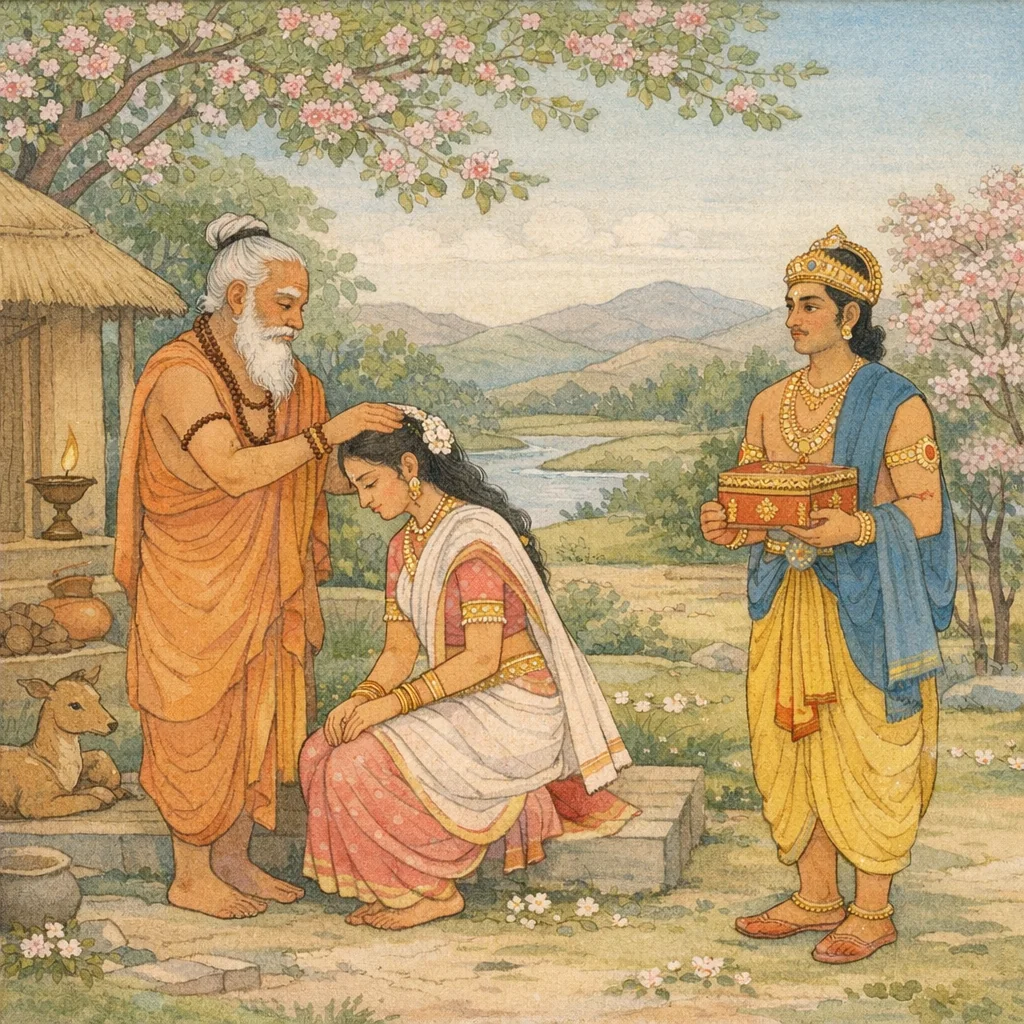
(एवमस्त्विति तां प्राह कण्वो धर्मभृतां वर: । पस्पर्श चापि पाणिभ्यां सुतां श्रीमिव रूपिणीम् ।। उस समय धर्मात्माओंमें श्रेष्ठ कण्वने उससे कहा--'एवमस्तु” (ऐसा ही हो)। यह कहकर उन्होंने मूर्तिमती लक्ष्मी-सी पुत्री शकुन्तलाका दोनों हाथोंसे स्पर्श किया और कहा। कण्व उवाच अद्यप्रभृति देवी त्वं दुष्पन्तस्य महात्मन: । पतिव्रतानां या वृत्तिस्तां वृत्तिमनुपालय ।।) कण्व बोले--बेटी! आजसे तू महात्मा राजा दुष्यन्तकी महारानी है। अतः पतिव्रता स्त्रियोंका जो बर्ताव तथा सदाचार है, उसका निरन्तर पालन कर। इति श्रीमहाभारते आदिपर्वणि सम्भवपर्वणि शकुन्तलोपाख्याने त्रिसप्ततितमोध्याय:
Kaṇva, the foremost among the upholders of dharma, said to her, “So be it.” Having spoken thus, he touched his daughter—radiant like embodied Śrī (Fortune)—with both hands in blessing. Kaṇva said: “Daughter, from today you are the queen of the great-souled King Duṣyanta. Therefore, continually maintain the conduct and disciplined way of life that belongs to devoted wives (pativratās).”
Frequently Asked Questions
The chapter tests whether rank and resentment justify harmful action: a dispute over garments becomes a crisis of protective duty when Devayānī is abandoned in a well, foregrounding the ethical breach of causing danger and refusing immediate remedy.
Speech and pride can generate disproportionate harm; conversely, timely assistance and recognition of responsibility stabilize social order. The narrative treats small lapses in conduct as seeds of larger dynastic consequences.
No explicit phalaśruti appears in this excerpt; the meta-commentary functions indirectly through Śukra’s moral-causal framing, which interprets suffering and restitution as linked to conduct and its consequences within the epic’s dharma logic.