Adhyaya 16
मन्दर-समुद्रमन्थन-वर्णनम् / Description of the Churning of the Ocean with Mount Mandara
Upa-parva: Astīka Parva (Contextual Episode: Samudra-manthana / Kṣīra-sāgara Manthana)
Sauti narrates the preparation and execution of the ocean-churning for amṛta. Mandara is portrayed as vast and adorned, yet the deva host cannot lift it; they seek counsel from Viṣṇu and Brahmā. Ananta raises Mandara; the coalition approaches the ocean, and the ocean’s lord acknowledges the strain of Mandara’s rotation. Kūrma offers his back as the base; Indra applies pressure to the mountain’s summit, and Mandara becomes the churning rod while Vāsuki becomes the rope. As devas and asuras pull from opposite ends, heat, smoke, wind, and storm-like effects arise; flowers and resins fall, beings of the sea are crushed, and friction ignites fires that Indra later quenches with rain. Medicinal essences and sap mix into the waters, described as contributing to the emergence of potent substances. With renewed force granted by Viṣṇu, further products arise: Soma, Śrī (Lakṣmī), Surā, a swift pale horse, the Kaustubha jewel, and finally Dhanvantari bearing amṛta. A dispute over ownership follows; Nārāyaṇa assumes Mohinī-form, and the daityas relinquish the amṛta to her under delusion, enabling controlled distribution.
Chapter Arc: शौनक ऋषि सूत से आग्रह करते हैं कि आस्तीक-उपाख्यान की कथा को फिर से विस्तारपूर्वक सुनाएँ—और सूत के वचन की मधुरता, कोमलता की प्रशंसा कर सभा को कथा-रस के लिए तैयार करते हैं। → उग्रश्रवा (सूत) अपने पिता से सुनी हुई परंपरा के अनुसार कद्रू और विनता की कथा उठाते हैं: दोनों बहनों को वरदान मिलता है, वे अंडे देती हैं; समय की दीर्घ प्रतीक्षा, संतान-लालसा और प्रतिस्पर्धा भीतर-भीतर तनाव रचती है। विनता के अंडों से अपेक्षित ‘मिथुन’ न दिखने से आशंका और अधीरता बढ़ती जाती है। → विनता की अधीरता/असमय हस्तक्षेप का फल प्रकट होता है—अंडे से अरुण अपूर्ण देह के साथ निकलता है और माता को शाप/कठोर वचन देता है: वह सूर्य-रथ का सारथी बनेगा, और दूसरा पुत्र ही भविष्य में विनता को दासीभाव से मुक्त करेगा—पर शर्त है कि माता धैर्य रखे और दूसरे अंडे को समय से पहले न तोड़े। → अरुण अंतरिक्ष में उड़कर आदित्य-रथ का सारथी बनता है; विनता को अपने कर्म का बोध होता है और वह दूसरे अंडे के लिए दीर्घ प्रतीक्षा का व्रत-सा धारण करती है—मुक्ति का आश्वासन मिलता है, पर वह संयम पर टिका है। → दूसरे अंडे में स्थित पुत्र (भविष्य का गरुड़) कब और कैसे जन्म लेगा, और किस प्रकार विनता को दास्य से छुड़ाएगा—यह प्रश्न कथा को आगे खींच ले जाता है।
Shlokas
Verse 1
ऑपनआ करा बा >> अं घोडशो< ध्याय: कद्रू और विनताको 582% : वरदानसे अभीष्ट पुत्रोंकी प्रा शौनक उवाच सौते त्वं कथयस्वेमां विस्तरेण कथां पुन: । आस्तीकस्य कवे: साधो: शुश्रूषा परमा हि न:,शौनकजी बोले--सूतनन्दन! आप ज्ञानी महात्मा आस्तीककी इस कथाको पुनः विस्तारके साथ कहिये। हमें उसे सुननेके लिये बड़ी उत्कण्ठा है इति श्रीमहाभारते आदिपर्वणि आस्तीकपर्वणि सर्पादीनामुत्पत्ती षोडशो<ध्याय: ।। २६ || इस प्रकार श्रीमह्योा भारत आदिपव॑के अन्तर्गत आस्तीकपवर्में सर्प आदिकी उत्पत्तिसे सम्बन्ध रखनेवाला सोलहवाँ अध्याय पूरा हुआ ॥/ १६ ॥। न२्च्स्स्स्सिस्सि ह्य £:ान्प्ट् सप्तदशो<् ध्याय: मेरुपर्वतपर अमृतके लिये विचार करनेवाले देवताओंको भगवान् नारायणका समुद्रमन्थनके लिये आदेश सौतिरुवाच एतस्मिन्नेव काले तु भगिन्यौ ते तपोधन । अपश्यतां समायाते उच्चै:अ्रवसमन्तिकात्
Śaunaka said: “O son of Sūta, recount to us once more, in fuller detail, this narrative. For we have the greatest eagerness to hear the story of the sage-poet Āstīka, that noble one.”
Verse 2
मधुरं कथ्यते सौम्य श्लक्ष्णाक्षरपदं त्वया । प्रीयामहे भूशं तात पितेवेदं प्रभाषसे,सौम्य! आप बड़ी मधुर कथा कहते हैं। उसका एक-एक अक्षर और एक-एक पद कोमल है। तात! इसे सुनकर हमें बड़ी प्रसन्नता होती है। आप अपने पिता लोमहर्षणकी भाँति ही प्रवचन कर रहे हैं
O gentle one, you narrate in a sweet manner; each syllable and each word you utter is smooth and pleasing. Dear child, we are greatly delighted to hear this—your discourse sounds like that of your father, Lomaharṣaṇa, as you speak before us.
Verse 3
अस्मच्छुश्रूषणे नित्यं पिता हि निरतस्तव । आचहष्टैतद् यथाख्यानं पिता ते त्वं तथा वद,आपके पिता सदा हमलोगोंकी सेवामें लगे रहते थे। उन्होंने इस उपाख्यानको जिस प्रकार कहा है, उसी रूपमें आप भी कहिये
Śaunaka said: “Your father was ever devoted to serving us. Just as he related this narrative in full, so you too should recount it in the same manner.”
Verse 4
सौतिरुवाच आयुष्मन्निदमाख्यानमास्तीकं॑ कथयामि ते । यथाश्रुतं कथयत: सकाशाद् वै पितुर्मया,उग्रश्रवाजीने कहा--आयुष्मन्! मैंने अपने कथावाचक पिताजीके मुखसे यह आस्तीककी कथा, जिस रूपमें सुनी है, उसी प्रकार आपसे कहता हूँ
Sauti said: “O long-lived one, I shall recount to you this narrative of Āstīka. I will tell it exactly as I heard it from my father’s own lips, as he was narrating it.”
Verse 5
पुरा देवयुगे ब्रह्मन् प्रजापतिसुते शुभे । आस्तां भगिन्यौ रूपेण समुपेते5द्भुतेडनघ
Śaunaka said: “In the ancient age of the gods, O Brahmin, there were two auspicious sisters, daughters of Prajāpati—blameless and wondrous—both endowed with extraordinary beauty.”
Verse 6
ते भायें कश्यपस्यास्तां कद्रश्न विनता च ह । प्रादात् ताभ्यां वरं प्रीत: प्रजापतिसम: पति:
Śaunaka said: “Those two were Kaśyapa’s wives—Kadrū and Vinatā. Pleased with them, their husband Kaśyapa, equal in stature to a Prajāpati, granted a boon to them both.”
Verse 7
कश्यपो धर्मपत्नीभ्यां मुदा परमया युत: । वरातिसर्ग श्रुत्वैवं कश्यपादुत्तमं च ते
Śaunaka said: “Kaśyapa, filled with supreme joy along with his righteous wives, heard in this manner of the granting of boons and the subsequent creation. And you have also heard what is excellent and preeminent from Kaśyapa.”
Verse 8
हर्षादप्रतिमां प्रीतिं प्रापतु: सम वरस्त्रियौ । वच्रे कद्ग: सुतान् नागान् सहस्र॑ तुल्यवर्चस:
Śaunaka said: “Out of joy, the two excellent women attained an incomparable delight. And there was a sword—equal in splendor to a thousand serpents—(as though) it blazed forth.”
Verse 9
ब्रह्म! पहले सत्ययुगमें दक्ष प्रजापतिकी दो शुभलक्षणा कन्याएँ थीं--कद्गू और विनता। वे दोनों बहिनें रूप-सौन्दर्यसे सम्पन्न तथा अद्भुत थीं। अनघ! उन दोनोंका विवाह महर्षि कश्यपजीके साथ हुआ था। एक दिन प्रजापति ब्रह्माजीके समान शक्तिशाली पति महर्षि कश्यपने अत्यन्त हर्षमें भरकर अपनी उन दोनों धर्मपत्नियोंको प्रसन्नतापूर्वक वर देते हुए कहा--'तुममेंसे जिसकी जो इच्छा हो वर माँग लो।' इस प्रकार कश्यपजीसे उत्तम वरदान मिलनेकी बात सुनकर प्रसन्नताके कारण उन दोनों सुन्दरी स्त्रियोंको अनुपम आनन्द प्राप्त हुआ। कद्भूने समान तेजस्वी एक हजार नागोंको पुत्ररूपमें पानेका वर माँगा || ५-- ८ ।। द्वौ पुत्री विनता वव्रे कद्रूपुत्राधिकौ बले | तेजसा वपुषा चैव विक्रमेणाधिकौ च तौ,विनताने बल, तेज, शरीर तथा पराक्रममें कट्रूके पुत्रोंसे श्रेष्ठ केवल दो ही पुत्र माँगे
Śaunaka said: “Vinatā asked for two sons—both of them superior to Kadrū’s sons in strength, in fiery splendor, in bodily excellence, and in valor. The episode shows that boons, though freely granted, mirror the recipient’s inner priorities: one seeks multitude, another seeks concentrated excellence.”
Verse 10
तस्यै भर्ता वरं प्रादादत्यर्थ पुत्रमीप्सितम् । एवमस्त्विति त॑ं चाह कश्यपं विनता तदा,विनताको पतिदेवने, अत्यन्त अभीष्ट दो पुत्रोंके होनेका वरदान दे दिया। उस समय विनताने कश्यपजीसे 'एवमस्तु “कहकर उनके दिये हुए वरको शिरोधार्य किया
Her husband granted her a boon—the one she most intensely desired: the gift of sons. Vinatā then addressed Kaśyapa, saying, “So be it,” and received his boon with reverence.
Verse 11
यथावत् प्रार्थितं लब्ध्वा वरं तुष्टाभवत् तदा | कृतकृत्या तु विनता लब्ध्वा वीर्याधिकौ सुतौ,अपनी प्रार्थनाके अनुसार ठीक वर पाकर वह बहुत प्रसन्न हुई। कद्रूके पुत्रोंसे अधिक बलवान् और पराक्रमी--दो पुत्रोंके होनेका वर प्राप्त करके विनता अपनेको कृतकृत्य मानने लगी
Having obtained the boon exactly as she had prayed for, she was filled with joy. Vinatā deemed her purpose fulfilled, for she had received the promise of two sons, greater in strength and valor than the sons of Kadrū.
Verse 12
कद्रूश्न लब्ध्वा पुत्राणां सहस्र॑ तुल्यवर्चसाम् । धार्यो प्रयत्नतो गर्भावित्युक्त्वा स महातपा:
Śaunaka said: Having obtained for Kadrū the boon of a thousand sons of equal splendor, that great ascetic declared, “This pregnancy must be guarded with utmost care.”
Verse 13
ते भारयें वरसंतुष्टे कश्यपो वनमाविशत् । समान तेजस्वी एक हजार पुत्र होनेका वर पाकर कद्भू भी अपना मनोरथ सिद्ध हुआ समझने लगी। वरदान पाकर संतुष्ट हुई अपनी उन धर्मपत्नियोंसे यह कहकर कि “तुम दोनों यत्नपूर्वक अपने-अपने गर्भकी रक्षा करना” महातपस्वी कश्यपजी वनमें चले गये || १२३ || सौतिरुवाच कालेन महता कढद्रूरण्डानां दशतीर्दश,जनयामास विष्रेन्द्र दे चाण्डे विनता तदा । उग्रश्रवाजीने कहा--ब्रह्मन! तदनन्तर दीर्घकालके पश्चात् कद्गूने एक हजार और विनताने दो अण्डे दिये
Śaunaka said: When both wives were satisfied with the boons they had received, Kaśyapa entered the forest. Kadrū, having obtained the boon of a thousand sons equal in splendor, deemed her desire fulfilled. The great ascetic Kaśyapa instructed his two lawful wives, “With careful effort, each of you protect your own pregnancy,” and then departed for the forest. Sauti said: After a long time had passed, Kadrū produced a thousand eggs, and Vinatā then produced two eggs.
Verse 14
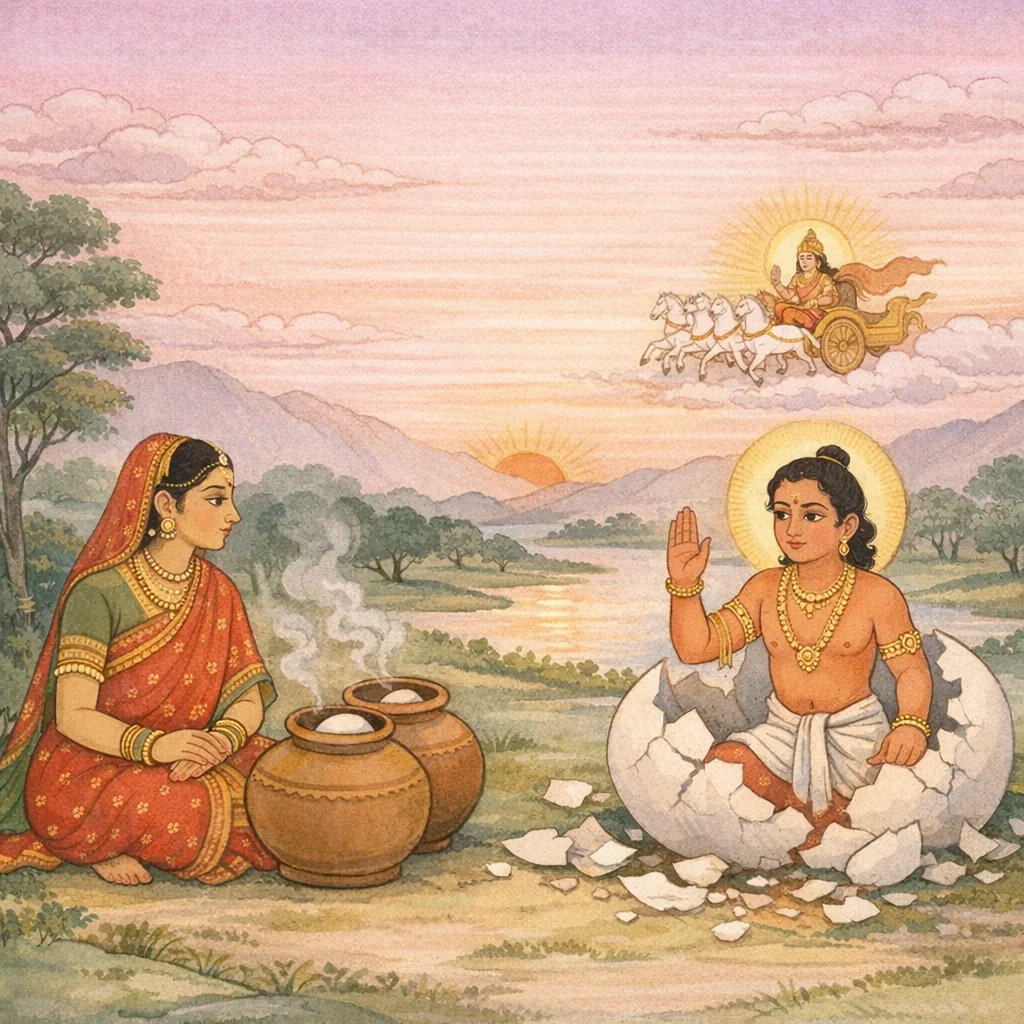
।। तयोरण्डानि निदधुः प्रहष्टाः: परिचारिका:,अण्डाभ्यां विनतायास्तु मिथुन न व्यदृश्यत । दासियोंने अत्यन्त प्रसन्न होकर दोनोंके अण्डोंको गरम बर्तनोंमें रख दिया। वे अण्डे पाँच सौ वर्षोतक उन्हीं बर्तनोंमें पड़े रहे। तत्पश्चात् पाँच सौ वर्ष पूरे होनेपर कद्भूके एक हजार पुत्र अण्डोंको फोड़कर बाहर निकल आये; परंतु विनताके अण्डोंसे उसके दो बच्चे निकलते नहीं दिखायी दिये
Śaunaka said: Delighted, the maidservants placed the two eggs in warm vessels. Yet from Vinatā’s eggs no pair of offspring was seen to emerge. (In the surrounding narrative, the eggs are kept for a long time; Kadrū’s thousand sons hatch, while Vinatā’s children do not appear.)
Verse 15
इस प्रकार श्रीमहाभारत आदिपर्वके अन्तर्गत आस्तीकपर्वमें सर्पोको मातृशाप प्राप्त होनेकी प्रस्तावनासे युक्त पंद्रहवाँ अध्याय पूरा हुआ,सोपस्वेदेषु भाण्डेषु पठचवर्षशतानि च । ततः पज्चशते काले कद्रूपुत्रा विनि:सृता:
After remaining confined in sweat-soaked vessels for five hundred years, and when another five hundred years had passed, the sons of Kadru—the serpents—were finally released. The narrative underscores the long, inescapable working-out of a mother’s curse and the moral weight carried by lineage and past deeds.
Verse 16
ततः पुत्रार्थिनी देवी ब्रीडिता च तपस्विनी,इससे पुत्रार्थनिी और तपस्विनी देवी विनता सौतके सामने लज्जित हो गयी। फिर उसने अपने हाथोंसे एक अण्डा फोड़ डाला। फूटनेपर उस अण्डेमें विनताने अपने पुत्रको देखा, उसके शरीरका ऊपरी भाग पूर्णरूपसे विकसित एवं पुष्ट था, किंतु नीचेका आधा अंग अभी अधूरा रह गया था
Then the goddess Vinatā—longing for a son, yet a woman of austerity—felt ashamed in Śaunaka’s presence. In her impatience she broke open one of her eggs with her own hands. When it split, she saw her son within: the upper part of his body was fully formed and strong, but the lower half remained unfinished. The episode underscores how desire and haste can disrupt the natural ripening of results, even for one devoted to tapas.
Verse 17
अणज्डं बिभेद विनता तत्र पुत्रमपश्यत । पूर्वार्धकायसम्पन्नमितरेणाप्रकाशता,इससे पुत्रार्थनिी और तपस्विनी देवी विनता सौतके सामने लज्जित हो गयी। फिर उसने अपने हाथोंसे एक अण्डा फोड़ डाला। फूटनेपर उस अण्डेमें विनताने अपने पुत्रको देखा, उसके शरीरका ऊपरी भाग पूर्णरूपसे विकसित एवं पुष्ट था, किंतु नीचेका आधा अंग अभी अधूरा रह गया था
Vinata broke open the egg and there she saw her son. His upper half was fully formed and strong, but the lower half was still undeveloped and not yet manifest. The episode underscores the ethical cost of impatience and premature action: by forcing what should mature in its own time, Vinata brings about an incomplete birth and sets in motion consequences that shape her fate and her son’s condition.
Verse 18
स पुत्र: क्रोधसंरब्ध: शशापैनामिति श्रुति: । यो5हमेवं कृतो मातस्त्वया लोभपरीतया,सुना जाता है, उस पुत्रने क्रोधके आवेशमें आकर विनताको शाप दे दिया--“माँ! तूने लोभके वशीभूत होकर मुझे इस प्रकार अधूरे शरीरका बना दिया--मैरे समस्त अंगोंको पूर्णतः: विकसित एवं पुष्ट नहीं होने दिया; इसलिये जिस सौतके साथ तू लाग-डाँट रखती है, उसीकी पाँच सौ वर्षोतक दासी बनी रहेगी
It is said that the son, inflamed with anger, cursed her: “Mother! Overcome by greed, you have made me thus—of incomplete body—denying my limbs their full growth and strength. Therefore you shall become the slave of that co-wife with whom you contend, for five hundred years.”
Verse 19
शरीरेणासमग्रेण तस्माद् दासी भविष्यसि । पञ्चवर्षशतान्यस्या यया विस्पर्धथसे सह,सुना जाता है, उस पुत्रने क्रोधके आवेशमें आकर विनताको शाप दे दिया--“माँ! तूने लोभके वशीभूत होकर मुझे इस प्रकार अधूरे शरीरका बना दिया--मैरे समस्त अंगोंको पूर्णतः: विकसित एवं पुष्ट नहीं होने दिया; इसलिये जिस सौतके साथ तू लाग-डाँट रखती है, उसीकी पाँच सौ वर्षोतक दासी बनी रहेगी
“Because my body is incomplete, you shall therefore be a slave. For five hundred years you will serve her—the one with whom you vie and quarrel.”
Verse 20
एष च त्वां सुतो मातर्दासीत्वान्मोचयिष्यति । यद्येनमपि मातस्त्वं मामिवाण्डविभेदनात्
“And this son too, O mother, will free you from the state of servitude. And if, O mother, you would spare him as well—just as you spared me—from the splitting (breaking open) of the egg….”
Verse 21
प्रतिपालयितव्यस्ते जन्मकालो<5स्थ धीरया
Śaunaka said: “Your time of birth must be carefully preserved and observed with steady composure.”
Verse 22
एवं शप्त्वा तत: पुत्रो विनतामन्तरिक्षग:,इस प्रकार विनताको शाप देकर वह बालक अरुण अन्तरिक्षमें उड़ गया। ब्रह्मन! तभीसे प्रातःकाल (प्राची दिशामें) सदा जो लाली दिखायी देती है, उसके रूपमें विनताके पुत्र अरुणका ही दर्शन होता है। वह सूर्यदेवके रथपर जा बैठा और उनके सारथिका काम सँभालने लगा
Having thus pronounced a curse upon his mother Vinatā, her son Aruṇa rose into the mid-air and flew away. From that time onward, the reddish glow seen at dawn in the eastern quarter is understood as the visible form of Aruṇa, Vinatā’s son. He took his seat upon the chariot of the Sun-god and assumed the duty of Sūrya’s charioteer—an episode that shows how a harsh act born of anger may still culminate in a cosmic role, while warning of the ethical weight of words spoken in wrath, especially toward one’s parents.
Verse 23
अरुणो दृश्यते ब्रह्मन् प्रभातसमये सदा । आदित्यरथमध्यास्ते सारथ्यं समकल्पयत्,इस प्रकार विनताको शाप देकर वह बालक अरुण अन्तरिक्षमें उड़ गया। ब्रह्मन! तभीसे प्रातःकाल (प्राची दिशामें) सदा जो लाली दिखायी देती है, उसके रूपमें विनताके पुत्र अरुणका ही दर्शन होता है। वह सूर्यदेवके रथपर जा बैठा और उनके सारथिका काम सँभालने लगा
Śaunaka said: “O Brahman, at the time of dawn a reddish glow is always seen. That very radiance is understood as the appearance of Aruṇa, Vinatā’s son. Having departed after the curse, he rose into the mid-air and thereafter took his seat upon the Sun-god’s chariot, assuming the duty of Sūrya’s charioteer.”
Verse 24
गरुडो5पि यथाकाल जज्ञे पन्नगभोजन: । स जातमात्रो विनतां परित्यज्य खमाविशत्,तदनन्तर समय पूरा होनेपर सर्पसंहारक गरुडका जन्म हुआ। भृगुश्रेष्ठ! पक्षिराज गरुड जन्म लेते ही क्षुधासे व्याकुल हो गये और विधाताने उनके लिये जो आहार नियत किया था, अपने उस भोज्य पदार्थको प्राप्त करनेके लिये माता विनताको छोड़कर आकाशमें उड़ गये
Śaunaka said: “In due time Garuḍa too was born—destined to feed upon serpents. The moment he was born, driven by hunger, he left his mother Vinatā and rose into the sky, setting out to obtain the food that the Ordainer had appointed for him.”
Verse 25
आदास्यन्नात्मनो भोज्यमन्न॑ विहितमस्य यत् । विधात्रा भृगुशार्दूल क्षुधित: पतगेश्वर:,तदनन्तर समय पूरा होनेपर सर्पसंहारक गरुडका जन्म हुआ। भृगुश्रेष्ठ! पक्षिराज गरुड जन्म लेते ही क्षुधासे व्याकुल हो गये और विधाताने उनके लिये जो आहार नियत किया था, अपने उस भोज्य पदार्थको प्राप्त करनेके लिये माता विनताको छोड़कर आकाशमें उड़ गये
Śaunaka said: “O tiger among the Bhṛgus, the lord of birds, tormented by hunger, set out to obtain the food that the Creator had ordained for him. Born as the destined destroyer of serpents, Garuḍa—driven by the urgency of hunger and fate—left his mother Vinatā and rose into the sky in search of his appointed sustenance.”
Verse 153
अण्डाभ्यां विनतायास्तु मिथुन न व्यदृश्यत । दासियोंने अत्यन्त प्रसन्न होकर दोनोंके अण्डोंको गरम बर्तनोंमें रख दिया। वे अण्डे पाँच सौ वर्षोतक उन्हीं बर्तनोंमें पड़े रहे। तत्पश्चात् पाँच सौ वर्ष पूरे होनेपर कद्भूके एक हजार पुत्र अण्डोंको फोड़कर बाहर निकल आये; परंतु विनताके अण्डोंसे उसके दो बच्चे निकलते नहीं दिखायी दिये
Śaunaka said: From Vinatā’s two eggs, however, no pair of offspring was seen to emerge. In contrast, the maidservants, delighted, kept the eggs warm in heated vessels, and they lay there for five hundred years. When five hundred years were completed, Kadru’s thousand sons broke open their eggs and came out; but from Vinatā’s eggs her two children still did not appear. The passage underscores how outcomes unfold according to time and destiny, and how impatience or unequal fortune can become the seed of later rivalry.
Verse 203
न करिष्यस्यनड़ू वा व्यज्रं वापि तपस्विनम् । और मा! यह जो दूसरे अण्डेमें तेरा पुत्र है, यही तुझे दासीभावसे छुटकारा दिलायेगा किंतु माता! ऐसा तभी हो सकता है जब तू इस तपस्वी पुत्रको मेरी ही तरह अण्डा फोड़कर अंगहीन या अधूरे अंगोंसे युक्त न बना देगी
Śaunaka said: “Do not do it—do not break the egg prematurely and do not injure the ascetic child. Mother, the son who is in your second egg will be the very one to free you from the condition of servitude. But, Mother, that will happen only if you do not, as you did with me, crack the egg and make this austere son crippled or born with incomplete limbs.”
Verse 216
विशिष्ट बलमीप्सन्त्या पञ्चवर्षशतात् पर: । “इसलिये यदि तू इस बालकको विशेष बलवान बनाना चाहती है तो पाँच सौ वर्षके बादतक तुझे धैर्य धारण करके इसके जन्मकी प्रतीक्षा करनी चाहिये"
Śaunaka said: “If you desire a son endowed with exceptional strength, then you must patiently endure and wait for his birth even after five hundred years.”
Frequently Asked Questions
The central dilemma concerns entitlement versus collective contribution: although devas and asuras cooperate to obtain amṛta, competing claims over the shared product create a distributive conflict requiring intervention to prevent breakdown of order.
High-value outcomes require stable foundations, coordinated roles, and governance of incentives; without mechanisms for fair or controlled allocation, collective enterprises can convert cooperation into conflict.
No explicit phalaśruti is stated in the provided verses; the chapter functions primarily as etiological narrative and thematic instruction, embedding a model of coalition dynamics and order-preservation within the epic’s broader dharma framework.