Adhyaya 155
Madātyaya Nidāna and Lakṣaṇa: Liquor’s Qualities, Tridoṣa Presentations, and Fainting Signs
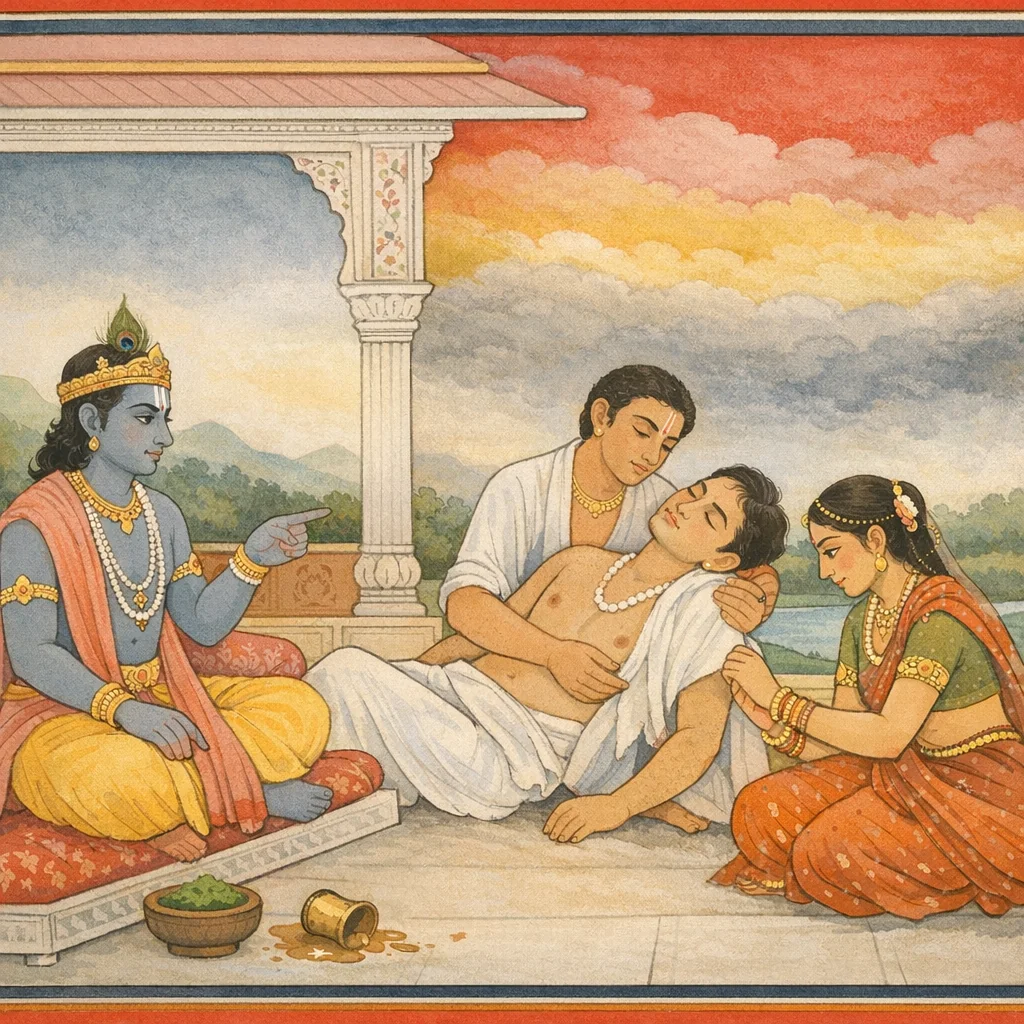
Continuing the medical-dharmic teaching attributed to Dhanvantari, this chapter defines liquor by its guṇas and warns that its seeming “brightness” conceals depletion of ojas and agitation of the mind. Intoxication is traced as a graded collapse of mind and conduct—restlessness, delusion (mada), shameless acts, and the fall of discernment—whose consequences may reach even beyond death. The text then turns clinical: madātyaya arises from vāta, pitta, kapha, or their combination, sharing signs such as confusion, pain in the cardiac region, diarrhoea, thirst, fever, fatigue, insomnia, sweating, and obstruction of the srotas. Distinct doṣic markers are noted, including changes of complexion, irritability, brooding, and mixed complications affecting blood and limbs. A detailed differential of fainting/“darkness” episodes follows, using perception-signs (the sky seen as red, yellow, or clouded) and post-episode features (sweat, burning, heaviness). The chapter closes by affirming that restraint and medicines can reverse doṣa surges, urging swift protective intervention so the afflicted do not fall into destructive acts, and thus bridging to the next guidance on therapy or conduct.
Shlokas
Verse 1
चतुः पञ्चाशदुत्तरशततमो ऽध्यायः धन्वन्तरिरुवाच / वक्ष्ये मदात्ययादेश्च निदानं मुनिभाषितम् / तीक्ष्णाम्लरूक्षसूक्ष्माम्लव्यवायासुकरं लघु
Dhanvantari said: “I shall explain, as taught by the sages, the causes (nidāna) of disorders such as madātyaya, intoxication. Liquor is sharp and sour, dry, subtly penetrating, intensely acidic; it incites sensual indulgence, is hard to endure, and is light—quick in its action.”
Verse 2
विकाशि विशदं मद्यं मेदसो ऽस्माद्विपर्ययः / तीक्ष्णोदयाश्च दिव्युक्ताश्चित्तोपप्लविनो गुणाः
Liquor is said to be opening and clear; yet from it arises the opposite effect—an increase of fat and other distortions. Its qualities are described as sharply surging and deceptively ‘divine’, but they agitate and unsettle the mind.
Verse 3
जीवितान्ताः प्रजायन्ते विषेणोत्कर्षवर्तिना / तीक्ष्णादिभिर्गुणैर्मद्यं मान्द्यदीनोजसो गुणान्
Life is driven toward its end by poison that works with overpowering force; and intoxicating liquor, by its sharp and other qualities, diminishes ojas—the vital essence—bringing on torpor and the like.
Verse 4
दशभिर्गुणैः संक्षोम्यं चेतो नयति चाक्रियम् / आद्ये मदे द्वितीये ऽपि प्रम (मो) दायतने स्थितः
Shaken by the ten qualities (of the senses), the mind is driven into agitation and becomes inactive in discernment. In the first state it abides in intoxication; in the second as well it remains lodged in a seat of delight and attachment.
Verse 5
दुर्विकल्पहतो मूढः सुखमित्यभिमुच्यते / मध्यमोत्तमयोः सन्धिं प्राप्य राजासनो मदः
Struck down by perverse imaginings, the deluded person clings to it as ‘happiness’. And upon reaching the junction between the middling and the superior states, the intoxication of kingship and the high seat (status) arises.
Verse 6
निरङ्कुश इव व्यालो न किञ्चिन्नाचरेत्ततः / इयं भूमिरवाच्यानां दौः शीलस्येदमास्पदम्
Like a wild beast without a goad, he then restrains himself in nothing and acts without shame; this world becomes a dwelling-place for the unspeakable and a seat of depraved conduct.
Verse 7
एको ऽयं बहुमार्गायाः दुर्गर् (म) तेर्दर्शकः परम् / निश्चेष्टः सन्नवाक्शेते तृतीये ऽत्र मदे स्थितः
This one being alone is the supreme guide for the many roads of the difficult journey. Yet, motionless, he lies face-down, without speech; here he remains established in the third state—delusive intoxication (mada).
Verse 8
मरणादपि पापात्मा गतः पापतरां दशाम् / धर्माधर्मं सुखं दुः खं मानानर्थं हिताहितम्
Even after death, the one of sinful mind falls into a still more grievous state, where he must face the fruits of righteousness and unrighteousness—happiness and sorrow, honor and disgrace, benefit and harm, what is wholesome and what is unwholesome.
Verse 9
न वेद शीकमोहार्तं शोष (क) मोहादिसंयुतः / सोन्मादभ्रममूर्छायां सापस्मारः पतत्यधः
Afflicted by blinding delusion and joined to the wasting weakness born of that delusion, a person loses discernment. Falling into madness, confusion, fainting, and apasmāra-like seizures, he goes downward to a lower state.
Verse 10
नाति माद्यन्ति बलिनः कृताहारा महाशनाः / वातात्पित्तात्कफात्सर्वैर्भवेद्रोगो मदात्ययः
Those who are strong, who eat properly, and whose digestive fire is great do not become excessively intoxicated. Yet from the disturbance of vāta, pitta, and kapha—singly or all together—arises the disease called madātyaya, the disorder born of drink.
Verse 11
सामान्यलक्षणं तेषां प्रमोहो हृदयव्यथा / विभेदं प्रसभं तृष्णा सौम्यो ग्लानिर्ज्वरो ऽरुचिः
Their common symptoms are: mental delusion, pain in the region of the heart, severe diarrhoea, intense thirst, a mild lingering condition, fatigue, fever, and loss of appetite.
Verse 12
पुरोविबन्धस्तिमिरं कासः श्वासः प्रजागरः / स्वेदो ऽतिमात्रं विष्टम्भः श्वयथुश्चित्तविभ्रमः
A sense of blockage in the front of the body, darkness of vision, cough, laboured breathing, sleepless wakefulness, excessive sweating, constipation or abdominal obstruction, swelling, and confusion of mind—these arise as symptoms.
Verse 13
स्वप्नेनेवाभिभवति न चोक्तश्च स भाषतेः / पित्ताद्दाहज्वरः स्वेदो मोहो नित्यं च विभ्रमः
He is overpowered as though in a dream; even when not addressed, he keeps speaking. From the aggravation of pitta arise burning fever and sweating, with constant delusion and confusion.
Verse 14
श्लेष्मणश्छर्दिर्हृल्लासो निद्रा चोदरगौरवम् / सर्वजे सर्वलिङ्गत्वं ज्ञात्वा मद्यं पिबेत्तु यः
Knowing that liquor provokes phlegm (śleṣman) disorders—vomiting, nausea, drowsiness, and heaviness of the abdomen—and that it gives rise to ailments of every kind and every symptom, whoever still drinks does so knowingly.
Verse 15
सहसा रुचिरं चान्यतरध्वंसकशोषिणौ / भवेतां?मारुतात्कष्टाद्भवेत्त स्य विशेषतः
If, all at once, something appears pleasing and attractive yet brings ruin and wasting away, then—especially—severe distress is to be expected from the agency of vāyu (the wind).
Verse 16
ध्वंसकश्लेष्मनिष्ठिवाः कण्ठशोषो ऽतिनिद्रता / शब्दासहत्वं तच्चित्तविक्षेपो ऽङ्गे हि वातरुक्
There is wasting and decline, phlegm and spitting, dryness of the throat, excessive sleep, intolerance to sound, and distraction of the mind; and in the limbs there is pain caused by vāta (the wind-humor).
Verse 17
हृत्कण्ठरोगः संमोहः श्वासतृष्णावमिज्वराः / निवर्तेद्यस्तु मद्येभ्यो जितात्मा बुद्धिपूर्वकृत्
Heart and throat ailments, delusion, breathlessness, intense thirst, vomiting, and fevers subside for the one who turns away from intoxicating drinks—self-controlled and acting with deliberate understanding.
Verse 18
विकारैः क्लिश्यते जातु न स शरीरमानसः / रजोमोहहिताहारपास्य स्युस्त्रयो गदाः
One who is not tormented by disorders is truly sound in body and mind. But when one partakes of food and drink that nourish rajas and delusion (tamas), three kinds of disease arise.
Verse 19
वसासृक्क्लेदनावाहिस्रोतोरोधः सुद्भवाः / मदमूर्छापसंन्यासा यथोत्तरबलोद्भवाः
Then obstructions arise in the body’s channels, whose flow is laden with fat, blood, and foul moisture. Thereafter, with increasing force, come stupor like intoxication, fainting, and a collapse into senselessness—each stronger than the last.
Verse 20
मदो ऽत्र दोषैः सर्वैस्तु रक्तमद्यविषैरपि / शक्त्यानन्त्याद्गताभासश्चलश्छलितवेष्टितः
Here, intoxication is entwined with every fault—along with blood, liquor, and poisons as well. Because its power is without end, it makes one lose true discernment; the mind becomes unsteady, deceived, and wholly entangled.
Verse 21
रूक्षश्यामारुणतनुर्मद्ये वातोद्भवे भवेत् / पित्तेन क्रोधनो रक्तपीताभः कलहप्रियः
When intoxication arises from vāta, one becomes dry-bodied, dark and reddish in complexion. When it arises from pitta, one becomes irritable and angry, appearing reddish-yellow, and inclined to quarrel.
Verse 22
स्वप्ने ऽसम्बद्धवाक्यादिः कफाद्ध्यानपरो हि सः / सर्वोत्थसन्निपातेन रक्तस्तम्भाङ्गदूषणम्
In dreams there are incoherent utterances and the like; due to a kapha disorder one becomes absorbed in brooding. And when a sannipāta arising from all causes (a full tridoṣic complication) occurs, it results in obstruction of the blood and vitiation of the limbs.
Verse 23
पित्तलिङ्गत्वमाद्येन विकृतेहा स्वराज्ञता / विसत्कम्पोतिनिद्रा च सर्वेभ्यो ऽभ्यधिकं श्रमः
First appears the state marked by pitta (bile); then the will and conduct become distorted and self-willed. There arise trembling, disturbed sleep, and an exhaustion greater than all others.
Verse 24
लक्षयेल्लक्षणोत्कर्षाद्वातादीञ्छोणितादिषु / अरुणं नीलकृष्णं वा सम्प्रविश्यन्विशेत्तमः
From the prominence of particular signs, one should discern disturbances of vāta and the other doṣa, as well as disorders of the blood and other humors. Entering the body as a reddish, bluish, or blackish influence, darkness then spreads through it.
Verse 25
शीघ्रं च प्रतिबुध्येत हृत्पीडा वेपथुर्भ्रमः / कासः श्यावारुणा च्छाया मूर्छायां मारुतात्मकः
One may suddenly regain consciousness; there may be oppression in the heart, trembling and dizziness. Coughing arises, and the complexion turns dark and reddish-brown—such fainting is of a vāta (wind) nature.
Verse 26
पित्तेन रक्तं पीतं वा नभः पश्यन्विशेत्तमः / विबुध्येत च सस्वेदो दाहतृष्णोपपीडितः
When pitta (bile) is aggravated, one may perceive the sky as red or yellow and then sink into darkness (faintness). On regaining awareness, one is drenched in sweat and tormented by burning heat and intense thirst.
Verse 27
भिन्नवत्पीतनीलाभो रक्तनीलाकुलेक्षणः / कफेन मेघसंकाशं पश्यत्याकाशमाविशेत्
When kapha (phlegm) is disturbed, one appears yellowish-blue, with eyes clouded in red and blue; and due to that kapha, one perceives the sky as though it were filled with clouds.
Verse 28
तमश्चिराच्च बुध्ये हृदुरः सुप्रसेकवान् / गुरुभिस्तिमितै (रै) रङ्गे राजधर्मावबन्धान् (वत्)
After a long time, that darkness is understood; the heart grows heavy and drenched. In the assembly, amid grave and motionless elders, the bonds of rāja-dharma—royal duty—are grasped, as though binding one fast.
Verse 29
सर्वाकृतिस्त्रिभिर्देषैरपस्मार इवापरः / पातयत्याशु निश्चेष्टं विना बीभत्सचेष्टितैः
Assuming every kind of form and appearing in three modes, he swiftly strikes a person down—like another kind of epilepsy—rendering him motionless, yet without grotesque convulsions.
Verse 30
दोषैस्तु मदमूर्छायां कृतवेगेषु देहिनाम् / स्वयमेवोपशाम्यन्ति संन्यासेनौषधैर्निवा
But when the doṣas—the bodily humors—are aggravated, bringing intoxication or fainting to embodied beings, they subside of themselves, either through saṃnyāsa (restraint and renunciation) or through medicines.
Verse 31
वाग्देहमनसां चेष्टामाक्षिप्यातिबलाबलाः / ससन्यासं निपतिताः प्राणाघातनसंश्रयाः
Overpowering them with superior force, they seize the movements of speech, body, and mind; and even those who have taken up saṃnyāsa are made to fall, taking refuge in acts that lead to the destruction of life.
Verse 32
भवन्ति तेन पुरुषाः काष्ठभूता मृतोपमाः / म्रियेत शीघ्रं शीघ्रं चेच्चिकित्सा न प्रयुज्यते
Because of that condition, people become like pieces of wood, appearing as if dead; and if treatment is not applied, one may die very quickly.
Verse 33
अगाधे ग्राहबहुले सलिलौघ इवार्णवे / संन्यासे विनिमज्जन्तं नरमाशु निवर्तयेत्
As one would swiftly pull back a man sinking in a deep ocean, crowded with crocodiles and swept by rushing currents, so too should one quickly restrain a person who is sinking into an unfit renunciation (saṃnyāsa).
Verse 34
मदमानरोषतोष प्रवृत्तिभिरितस्ततः / युक्तायुक्तं च समं युक्तिं युङ्क्ते न मद्येन
Driven this way and that by intoxication, pride, anger, and complacent pleasure, a person under the sway of liquor fails to apply right discernment, treating the proper and the improper as though they were the same.
Verse 35
बलकासदेशपात्रं प्रकृतिसहतामथवा वयांसि? / प्रविभज्ज्यात्तनुरूपं पिबति ततः पिबत्यमृत
According to the place, the vessel, and one’s innate capacity—or even according to the kinds of beings present—it is apportioned. Distributed in a form suited to each, one drinks it; thereafter one drinks what is like amṛta, nectar-like.
Frequently Asked Questions
The chapter lists shared features such as mental delusion/confusion, pain in the heart region, severe diarrhoea, intense thirst, fatigue, fever, loss of appetite, along with signs like cough, labored breathing, insomnia, sweating, constipation/obstruction, swelling, and visual darkness.
Vāta-type is associated with dryness, darker/reddish tones, tremor, dizziness and a vāta-nature fainting. Pitta-type shows heat, sweating, burning fever, irritability/anger, reddish-yellow appearance and quarrelsomeness. Kapha-type features heaviness, sleepiness, nausea/vomiting tendencies, brooding, and clouded/yellowish-blue appearance with ‘clouded sky’ perception.
Vāta fainting includes heart oppression, tremor, dizziness, cough, and dark reddish-brown complexion on recovery. Pitta fainting includes perceiving the sky as red/yellow, then darkness, followed by drenched sweating, burning heat, and intense thirst. Kapha fainting includes yellowish-blue appearance, clouded red/blue eyes, and perceiving the sky as filled with clouds, with heaviness afterward.
It advises swift restraint and timely treatment—likened to rescuing a sinking person from a dangerous current—because without intervention the person may become inert ‘like wood’ and can deteriorate rapidly, even toward death.