Adhyaya 26
विषङ्गपलायनम् (Viṣaṅga-palāyanam) — Aftermath of the First Battle Day
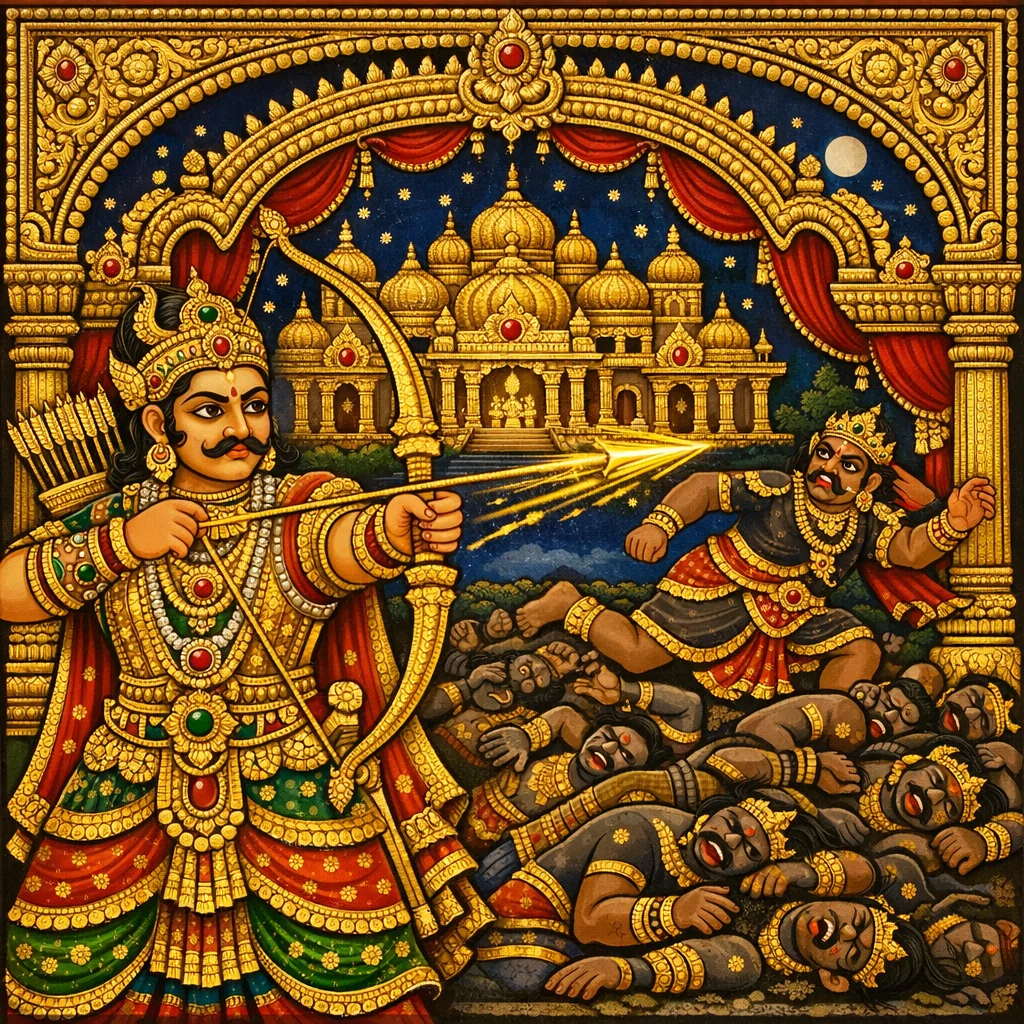
This chapter continues the Lalitopākhyāna within the Hayagrīva–Agastya dialogue. A report arrives of a deceitful night assault: though the asuras field a vast ten-akṣauhiṇī formation, they collapse—Kuṭilākṣa is routed by Daṇḍanātha’s keen arrows, and the army is destroyed in the night. Hearing this, Bhaṇḍa is shaken and turns to kapaṭa-saṃgrāma, treacherous warfare, against the devas. On the Goddess’s side, Śakti-commanders—especially Mantriṇī and Daṇḍanāyikā—grow concerned, assess the situation, and approach Lalitā (Mahārājñī/Ambikā) again to report, clarify tactical conditions, and reaffirm their reliance on her protection and command, re-centering her sovereignty over the Śakti-cakras and the chamu-nāthas.
Shlokas
Verse 1
इति श्रीब्रह्माण्डमहापुराणे उत्तरभागे हयग्रीवागस्त्यसंवादे ललितोपाख्याने विषङ्गपलायनं नाम पञ्चविंशो ऽध्याय प्रथमयुद्धदिवसः / दशाक्षौहिणिकायुक्तः कुटिलाक्षो ऽपि वीर्यवान् / दण्डनाथाशरैस्तीक्ष्णै रणे भग्नः पलायितः / दशाक्षौहिणिकं सैन्यं तया रात्रौ विनाशितम्
Thus, in the Śrī Brahmāṇḍa Mahāpurāṇa, in the latter section, in the dialogue of Hayagrīva and Agastya, within the Lalitā narrative, is the twenty-fifth chapter called “The Flight of Viṣaṅga,” the first day of battle. Kuṭilākṣa, though mighty and furnished with an army of ten akṣauhiṇīs, was broken in war by the sharp arrows of Daṇḍanātha and fled. That night, she destroyed that army of ten akṣauhiṇīs.
Verse 2
इमं वृत्तान्तमाकर्ण्य भण्डः क्षोभमथाययौ / रात्रौ कपटसंग्रामं दुष्टानां निर्जरद्रुहाम् / मन्त्रिणी दण्डनाथा च श्रुत्वा निर्वेदमापतुः
Hearing this account, Bhaṇḍa was seized by agitation and wrath: a deceitful night-battle waged by the wicked, traitors to the gods. Mantriṇī and Daṇḍanātha, on hearing it, fell into dismay and weariness.
Verse 3
अहो बत महत्कष्टं दैत्यैर्देव्याः समागतम् / उत्तानबुद्धिभिर्दूरमस्माभिश्चलितं पुरः
Alas, what a great calamity the Daityas have brought upon the Goddess! Through our shallow judgment, we have moved the fortress-city far away from the front.
Verse 4
महाचक्ररथेन्द्रस्य न जातं रक्षणं बलैः / एतं त्ववसरं प्राप्य रात्रौ दुष्टैः पराकृतम्
For the lord of the great wheel-chariot, no protection arose even from the armies. Seizing that very moment, the wicked struck by night and overpowered him.
Verse 5
को वृत्तान्तो ऽभवत्तत्र स्वामिन्या किं रणः कृतः / अन्या वा शक्तयस्तत्र चक्रुर्युद्धं महासुरैः
What account was there of that place? Did the Lady herself wage battle? Or did other Śaktis there engage in war with the great Asuras?
Verse 6
विम्रष्टव्यमिदं कार्यं प्रवृत्तिस्तत्र कीदृशी / महादेव्याश्च हृदये कः प्रसंगः प्रवर्तते
This matter must be carefully examined: what was the course of events there? And within the heart of the Mahādevī, what cause or connection is now stirring?
Verse 7
इति शङ्काकुलास्तत्र दण्डनाथापुरोगमाः / मन्त्रिणीं पुरतः कृत्वा प्रचेलुर्ललितां प्रति
Thus, filled with doubt, they stood there with the Dandanāthas at the fore. Setting the Mantriṇī in front, they proceeded toward Lalitā.
Verse 8
शक्तिचक्रचमूनाथाः सर्वास्ताः पूजिता द्रुतम् / व्यतीतायां विभावर्यां रथेन्द्रं पर्यवारयन्
All the commanders of the Śakti-Cakra host were swiftly honored with worship. When the night had passed, they surrounded the lord of the chariot and stood guard.
Verse 9
अवरुह्य स्वयानाभ्यां मन्त्रिणीदण्डनायिके / अधस्तात्सैन्यमावेश्य तदारुरुहतू रथम्
The two—Mantriṇī and Daṇḍanāyikā—alighted of their own accord from the chariot, arrayed the army below, and then mounted that chariot again.
Verse 10
क्रमेण नव पर्वाणि व्यतीत्य त्वरितक्रमैः / तत्तत्सर्वगतैः शक्तिचक्रैः सम्यङ् निवेदितैः
In due order, yet with swift progression, they passed beyond the nine stages; and the all-pervading wheels of Śakti in each sphere were rightly set forth.
Verse 11
अभजेतां महाराज्ञीं मन्त्रिणीदण्डनायिके / ते व्यजिज्ञपतां देव्या अष्टाङ्गस्पृष्टभूतले
Mantriṇī and Daṇḍanāyikā approached to attend the Great Queen; and, prostrating before the Goddess with the eight-limbed obeisance upon the earth, they made their petition.
Verse 12
महाप्रमादः समभूदिति नः श्रुतमंबिके / कूटयुद्धप्रकारेण दैत्यैरपकृतं खलैः
O Ambikā, we have heard that a great lapse occurred; and that the wicked Daityas wrought harm by the stratagems of deceitful war.
Verse 13
स दुरात्मा दुराचारः प्रकाशसमारात्त्रसन् / कुहकव्यवहारेण जयसिद्धिं तु काक्षति
That vile-souled one, of corrupt conduct, trembles at the manifest light drawing near; yet through deceitful dealings he longs for the attainment of victory.
Verse 14
दैवान्नः स्वामिनीगात्रे दुष्टानाममरद्रुहाम् / शरादिकपरामर्शो न जातस्तेन जीवति
By divine ordinance, no touch of arrows or other weapons befell the body of the Great Queen at the hands of the wicked who are hostile to the Devas; therefore she yet lives.
Verse 15
एकावलंबनं कृत्वा महाराज्ञि भवत्पदम् / वयं सर्वा हि जीवामः साधयामः समीहितम्
O Great Queen, making your feet our sole support, we all live and accomplish what we seek.
Verse 16
अतो ऽस्माभिः प्रकर्तव्यं श्रीमत्यङ्गस्य रक्षणम् / मायाविनश्च दैत्येन्द्रास्तत्र मन्त्रो विधीयताम्
Therefore we must undertake the protection of that glorious person; and against the Daitya lords skilled in māyā, let a mantra-rite be ordained there.
Verse 17
आपत्कालेषु जेतव्या भण्डाद्या दानवाधमाः / कूटयुद्धं न कुर्वन्ति न विशन्ति चमूमिमाम्
In times of peril, the base Dānavas such as Bhaṇḍa and the rest must be conquered; they do not wage deceitful war, nor do they enter this host.
Verse 18
तथा महेन्द्रशैलस्य कार्यं दक्षिणदेशतः / शिबिरं बहुविस्तारं योजनानां शतावधि
Likewise, to the south of Mount Mahendra the task must be done: establish a vast encampment, spreading to a hundred yojanas.
Verse 19
वह्लिप्राकारवलयं रक्षणार्थं विधीयताम् / अस्मत्सेनानिवेशस्य द्विषां दर्पशमाय च
Let a ring of fire-walls be ordained for protection, to guard the encampment of our army and to quell the pride of our foes.
Verse 20
शतयोजनमात्रस्तु मध्यतेशः प्रकल्प्यताम् / वह्निप्राकाराचक्रस्य द्वारन्दक्षिणतो भवेत्
Let the central tract be laid out to the measure of a hundred yojanas, and let the gate of the circle of fire-walls be on the southern side.
Verse 21
यतो दक्षिणदेशस्थं शून्यकं विद्विषां पुरम् / द्वारे च बहवः कल्प्याः परिवारा उदायुधाः
For to the south lies the foes’ empty city; therefore at the gate let many armed attendants be stationed, weapons raised and ready.
Verse 22
निर्गच्छतां प्रविशतां जनानामुपरोधकाः / अनालस्या अनिद्राश्च विधेयाः सततोद्यताः
Over those who go out and come in, appoint guards to stop and scrutinize; let them be without sloth and without sleep, ever vigilant and ready.
Verse 23
एवं च सति दुष्टानां कूटयुद्धं चिकीर्षितम् / अवेलासु च संध्यासु मध्यरात्रिषु च द्विषाम् / अशक्यमेव भवति प्रौढमाक्रमणं हठात्
When matters are thus arranged, the wicked ones’ intended deceitful warfare—at improper hours, at the twilights, and even at midnight—becomes altogether impossible; the foes cannot, in rashness, launch a bold and forceful assault.
Verse 24
नो चेद्दुराशया दैत्या बहुमायापरिग्रहाः / पश्यतोहरवत्सर्वं विलुठन्ति महद्बलम्
Otherwise, the Daityas—driven by wicked hopes and armed with many māyās—will plunder everything before our very eyes, like Hara (Śiva), with mighty strength.
Verse 25
मन्त्रिण्या दण्डनाथाया इति श्रुत्वा वचस्तदा / शुचिदन्तरुचा मुक्ता वहन्ती ललिताब्रवीत्
Then, hearing the words of Mantriṇī and Daṇḍanātha, Lalitā—pure of heart, her inner radiance unbound—spoke thus.
Verse 26
भवतीनामयं मन्त्रश्चारुबुद्ध्या विचारितः / अयं कुशलधीमार्गोनीतिरेषा सनातनी
This counsel of yours is like a mantra, weighed with noble discernment; this is the path of skillful wisdom—this is the eternal nīti.
Verse 27
स्वचक्रस्य पुरो रक्षां विधाय दृढसाधनैः / परचक्राक्रमः कार्यो जिगीषद्भिर्महाजनैः
Those great ones who seek victory must first, with steadfast means, secure the front of their own host; only then should they advance against the enemy’s host.
Verse 28
इत्युक्त्वा मन्त्रिणीदण्डनाथे सा ललितेश्वरी / ज्वालामालिनिकां नित्यामाहूयेदमुवाच ह
Having thus spoken to Mantriṇī and Daṇḍanātha, Laliteśvarī summoned the ever-present Jvālāmālinikā and said this.
Verse 29
वत्से त्वं वह्निरूपासि ज्वालामालामयाकृतिः / त्वया विधीयतां रक्षा बलस्यास्य महीयसः
O dear child, you are in the form of Fire, your body made of garlands of flame; by you let the protection of this mighty host be ordained.
Verse 30
शतयोजनविस्तारं परिवृत्य महीतलम् / त्रिंशद्योजनमुन्नद्धं ज्वालाकारत्वमाव्रज
Encompass the earth’s surface for a span of a hundred yojanas, rising to a height of thirty yojanas; assume the very form of flame.
Verse 31
द्वारयोजनमात्रं तु मुक्त्वान्यत्र ज्वलत्तनुः / वह्निज्वालात्वमापन्ना संरक्ष सकलं बलम्
Leave only a gateway of two yojanas; elsewhere let your body blaze. Having become the flame of Agni, protect the entire host.
Verse 32
इत्युक्त्वा मन्त्रिणीदण्डनाथे सा ललितेश्वरी / महेन्द्रोत्तरभूभागं चलितुं चक्र उद्यमम्
Having spoken thus to Mantriṇī and Daṇḍanātha, Laliteśvarī set her resolve in motion to proceed to the northern region of Mahendra.
Verse 33
सा च नित्यानित्यमयी ज्वलज्ज्वा लामयाकृतिः / चतुर्दशीतिथिमयी तथेति प्रणनाम ताम्
She was of the nature of both the eternal and the transient, formed as blazing flames; being the very essence of the fourteenth tithi, he bowed to her, saying, “So be it.”
Verse 34
तयैव पूर्वनिर्दिष्टं महेन्द्रोत्तरभूतलम् / कुण्डलीकृत्य जज्वालशालरूपेण सा पुनः
She herself, as had been ordained before, coiled up the ground to the north of Mahendra, and once again blazed forth in the form of a fire-bright sāla tree.
Verse 35
नभोवलयजंबालज्वालामालामयाकृतिः / बभासे दण्डनाथाया मन्त्रिनाथचमूरपि
Her form was like a garland of flame-wreaths born of the circle of the sky, like a cloud of fire; and the host of Daṇḍanātha too—together with Mantrinātha and Camūra—shone forth.
Verse 36
अन्या सामपि शक्तीनां महतीनां महद्बलम् / विशङ्कटोदरं सालं प्रविवेश गतक्लमा
Another Śakti among the great Powers, of vast might, entered without weariness into the sāla whose interior was wide and unobstructed.
Verse 37
राजचक्ररथेन्द्रं तु मध्ये संस्थाप्य दण्डिनी / वामपक्षे रथं स्वीयं दक्षिणे श्यामलारथम्
Daṇḍinī set the imperial chariot of Cakrarāja in the midst; on the left she placed her own chariot, and on the right the chariot of Śyāmalā.
Verse 38
पश्चाद्भागे सम्पदेशीं पुरस्ताश्च हयासनाम् / एवं संवेश्य परितश्चक्रराजरथस्य च
To the rear she assigned Sampadeśī, and to the front Hayāsanā; thus were they stationed on every side around the chariot of Cakrarāja.
Verse 39
द्वारे निवेशयामास विंशत्यक्षौहिणीयुताम् / ज्वलद्दण्डायुधोदग्रां स्तम्भिनीं नाम देवताम्
At the gate she stationed the Goddess named Stambhinī, towering and fierce, bearing a blazing staff-weapon, endowed with the might of twenty akṣauhiṇī armies.
Verse 40
या देवी दण्डनाथाया विघ्नदेवीति विश्रुता / एवं सुरक्षितं कृत्वा शिबिरं योत्रिणी तथा / पूषण्युदितभूयिष्ठे पुनर्युद्धमुपाश्रयत्
That Goddess, famed as Vighnadevī under the lordship of Daṇḍanātha, thus made the camp secure; and then Yotriṇī again took refuge in battle when Pūṣan’s radiance rose to its height.
Verse 41
कृत्वा किलकिलारावं ततः शक्तिमहाचमूः / अग्निप्राकारकद्वारान्निर्जगाम् महारवा
Then Śakti’s great host raised the “kilakilā” war-cry; with a thunderous roar it surged forth through the gate of the fiery rampart.
Verse 42
इत्थं सुरक्षितं श्रुत्वा ललिताशिबिरोदरम् / भूयः संज्वरमापन्नः प्रचण्डो भण्डदानवः
Hearing that Lalitā’s camp within was guarded in such a manner, the fierce Dānava Bhaṇḍa was again seized by a burning fever of wrath.
Verse 43
मन्त्रयित्वा पुनस्तत्र कुटिलाक्षपुरोगमैः / विषङ्गेण विशुक्रेणासममात्मसुतैरपि
Then, there, he took counsel once more, with Kuṭilākṣa in the lead, together with Viṣaṅga and Viśukra, and also with his own sons.
Verse 44
एकौघस्य प्रसारेण युद्धं कर्तुं महाबलः / चतुर्बाहुमुखान्पुत्रांश्चतुर्जलधिसन्निभान्
With his host spreading forth like a single mighty flood, the great‑strong one resolved to wage war; and he had four sons, four‑armed and four‑faced, vast as the four oceans.
Verse 45
चतुरान्युद्धकृत्येषु समाहूय स दानवः / प्रेषयामास युद्धाय भण्डश्चण्डक्रुधा ज्वलन्
That Dānava summoned four who were skilled in the works of war and sent them forth to battle; and Bhaṇḍa blazed, aflame with fierce wrath.
Verse 46
त्रिंशत्संख्याश्च तत्पुत्रा महाकाया महाबलाः / तेषां नामानि वक्ष्यामि समाकर्णय कुम्भज
His sons were thirty in number, vast of body and mighty in strength. Now I shall speak their names—listen well, O Kumbhaja.
Verse 47
चतुर्बाहुश्चकोराक्षस्तृतीयस्तु चतुः शिराः / वज्रघोषश्चोर्ध्वकेशो महाकायो महाहनुः
They were: Caturbāhu, Cakorākṣa; the third was Catuḥśirā; then Vajraghoṣa, Ūrdhvakeśa, Mahākāya, and Mahāhanu.
Verse 48
मखशत्रुर्मखस्कन्दीसिंहघोषः सिरालकः / लडुनः पट्टसेनश्च पुराजित्पूर्वमारकः
Makhaśatru, Makhaskandī, Siṃhaghoṣa, Sirālaka; Laḍuna, Paṭṭasena; Purājit and Pūrvamāraka.
Verse 49
स्वर्गशत्रुः स्वर्गबलो दुर्गाख्यः स्वर्गकण्टकः / अतिमायो बृहन्माय उपमायश्च वीर्यवान्
Enemy of heaven, mighty with heaven’s strength, called Durga, the thorn of the celestial realm; Ati-māyā, Bṛhan-māyā, and Upamāyā too—each a valiant one of great power.
Verse 50
इत्येते दुर्मदाः पुत्रा भण्डदैत्यस्य दुर्द्धियः / पितुः सदृशदोर्वीर्याः पितुः सदृशविग्रहाः
Thus were those sons—fierce with arrogance and of perverse counsel—of Bhaṇḍa the Daitya: their arm-strength like their father’s, and their very forms like their father’s.
Verse 51
आगत्य भण्डचरणावभ्यवन्दत भक्तितः / तानुद्वीक्ष्य प्रसन्नाभ्यां लोचनाभ्यां स दानवः / सगौरवमिदं वाक्यं बभाषे कुलघातकः
They came and, in devotion, bowed at Bhaṇḍa’s feet. The Dānava, gazing on them with eyes bright with pleasure, spoke these words with solemn honor—he, the slayer of his own clan.
Verse 52
भो भो मदीयास्तनया भवतां कः समो भुवि / भवतामेव सत्येन जितं विश्वं मया पुरा
O, O my sons! Who on earth could be your equal? Truly, by your very truth and steadfastness, I once conquered the whole world.
Verse 53
शक्रस्या ग्नेर्यमस्यापि निरृतेः पाशिनस्तथा / कचेषु कर्षणं कोपात्कृतं युष्माभिराहवे
In battle, in a surge of wrath, you dragged by the hair Śakra (Indra), Agni, Yama, Nirṛti, and even the noose-bearer Varuṇa.
Verse 54
अस्त्राण्यपि च शस्त्राणि जानीथ निखिलान्यपि / जाग्रत्स्वेव ही युष्मासु कुलभ्रंशो ऽयमागतः
Know also, without omission, all astras and all weapons. Stay ever wakeful, for upon you has come this ruin of the lineage.
Verse 55
मायाविनी दुललिता काचित्स्त्री युद्धदुर्मदा / बहुभिः स्वसमानाभिः स्त्रीभिर्युक्ता हिनस्ति नः
There is a certain woman, skilled in illusion, delicate and fair, yet in battle maddened with pride. Joined by many women her equals, she is afflicting us.
Verse 56
तदेनां समरे ऽवश्यमात्मवश्यां विधास्यथ / जीवग्राहं च सा ग्राह्या भवद्भिर्ज्वलदायुधैः
Therefore, in battle you must surely bring her under your control. And you must seize her alive with your blazing weapons.
Verse 57
अप्रमेयप्रकोपान्धान्युष्मानेकां स्त्रियं प्रति / सम्प्रेषणमनौचित्यं तथाप्येष विधेः क्रमः
You, blinded by immeasurable wrath—sending you against a single woman is not fitting. Yet even so, this is the ordained course of rule and rite.
Verse 58
इममेकं सहध्वं च शौर्यकीतिविपर्ययम् / इत्युक्त्वा भण्डदैत्येन्द्रस्तान्प्रहैषीद्रणं प्रति / द्विशतं चाक्षौहिणीनां तत्सहायतयाहिनोत्
“Join together and subdue this single one, and erase this reversal of valor and renown.” So spoke Bhaṇḍa, lord of the Daityas, and sent them toward the battlefield, dispatching as aid two hundred akṣauhiṇī armies to destroy the foe.
Verse 59
द्विशत्यक्षौहिणीसेना मुख्यस्य तिलकायिता / बद्धभ्रुकुटयः शस्त्रपाणयो निर्ययुर्गृहात्
The host of two hundred akṣauhiṇīs stood like a tilaka upon the leader’s brow; with brows knit and weapons in hand, they marched forth from their homes.
Verse 60
निर्गमे भण्डपुत्राणां भूः प्रकम्पमलम्बत / उत्पाता विविधा जाता वित्रस्तं चाभवज्जगत्
As the sons of Bhaṇḍa set forth, the earth shook violently; manifold portents arose, and the whole world was struck with dread.
Verse 61
तान्कुमारान्महासत्त्वांल्लाजवर्षैरवाकिरन् / विथीषु यानैश्चलितान्पौरवृद्धपुरन्ध्रयः
The city’s elders and its matrons showered those mighty Kumāras with rains of lājā (parched rice), as they moved along the streets upon their vehicles.
Verse 62
बन्दिनो मागधाश्चैव कुमाराणां स्तुतिं व्यधुः / मङ्गलारार्तिकं चक्रुर्द्वारेद्वारे पुराङ्गनाः
The bards and the Māgadha singers raised hymns of praise to the Kumāras; and at every doorway the women of the city performed auspicious rites and offered ārati.
Verse 63
भिद्यमानेव वसुधा कृष्यमाणमिवाबरम् / आसीत्तेषां विनिर्याणे घूर्णमान इवार्णवः
At their departure, the earth seemed to split apart and the sky as though dragged downward; even the ocean appeared to whirl in tumult.
Verse 64
द्विशत्यक्षौहिणीसेनां गृहीत्वा भण्डसूनवः / क्रोधोद्यद्भ्रुकुटीक्रूरवदना निर्ययुः पुरात्
The sons of Bhaṇḍa, having mustered two hundred akṣauhiṇī armies, went forth from the ancient city with cruel faces and brows knit and raised in wrath.
Verse 65
शक्तिसैन्यानि सर्वाणि भक्षयामः क्षणाद्रणे / तेषामायुधचक्राणि चूर्णयामः शितैशरैः
In battle, in but a moment, we shall devour all the armies of Śakti; and with keen arrows we shall shatter the circles of their weapons.
Verse 66
अग्निप्राकारवलयं शमयामश्च रंहसा / दुर्विदग्धां तां ललितां बन्दीकुर्मश्च सर्वरम्
Swiftly we shall quench the ring of fire-walls; and Lalitā, so hard to consume, we shall bind as a captive through the whole night.
Verse 67
इत्यन्योन्यं प्रवल्गन्तो वीरभाषणघोषणैः / आसेदुरग्निप्राकारसमीपं भण्डसूनवः
Thus, leaping about and shouting boasts of warrior-speech to one another, the sons of Bhaṇḍa drew near to the fiery rampart.
Verse 68
यौवनेन मदेनान्धा भूयसा रुद्धदृष्टयः / भ्रुकुटीकुटिलाश्चक्रुः सिंहनादंमहात्तरम्
Blinded by the intoxication of youth, their sight all the more obstructed, they twisted their furrowed brows and uttered a mighty, thunderous lion-roar.
Verse 69
विदीर्णमिव तेनासीद्ब्रह्माण्ड चण्डिमस्पृशा / उत्पातवारिदोत्सृष्टघोरनिर्घातरंहसा
Touched by that fierce might, the Brahmāṇḍa seemed as though it were split apart, as dreadful thunderbolts—cast forth by clouds of ill omen—rushed on with terrifying speed.
Verse 70
एतस्याननुभूतस्य महाशब्दस्य डम्बरः / क्षोभयामास शक्तीनां श्रवांसि च मनांसि च
The tumult of that mighty sound, never before experienced, shook the ears and the minds of the Śaktis.
Verse 71
आगत्य ते कलकलं चक्रुःसार्धं स्वसैनिकैः / विविधायुधसम्पातमूर्च्छद्वैमानिकच्छटम्
They arrived with their own troops and raised a clamorous din; and as a rain of varied weapons poured down, the splendor of those upon the vimānas surged in waves.
Verse 72
चतुर्बाहुमखान्भूत्वा भण्डदैत्यकुमारकान् / आगतान्युद्धकृत्याय बाला कौतूहलं दधे
Seeing the sons of the Daitya Bhaṇḍa—four-armed and horse-headed—arrive to wage war, the young maiden was filled with wonder and curiosity.
Verse 73
कुमारी ललितादेव्यास्तस्या निकटवासिनी / समस्तशक्तिचक्राणां पूज्य विक्रमशालिनी
That Kumārī dwelt close to Lalitā Devī; revered by all the circles of Śakti, she was radiant with valor and mighty prowess.
Verse 74
ललितासदृशाकारा कुमारी कोपमादधे / या सदा नववर्षेव सर्वविद्यामहाखनिः
The Kumārī, whose form resembled Lalitā, was seized by wrath; ever like a nine‑year‑old maiden, she is the great mine of all sacred knowledges.
Verse 75
बालारुणतनुः श्रोणीशोणवर्णवपुर्लता / महाराज्ञी पादपीठे नित्यमाहितसंनिधिः
Her body was tenderly crimson like a young girl at dawn; her form, like a supple creeper, glowed red at the hips. At the footstool of the Great Queen’s feet she ever remained, reverently near.
Verse 76
तस्या बहिश्चराः प्राणा या चतुर्थं विलोचनम् / तानागतान्भण्डसुतान्संहरिष्यामि सत्वरम्
By her outward-moving prāṇas and by her fourth eye, I shall swiftly destroy those sons of Bhaṇḍa who have come.
Verse 77
इति निश्चित्य बालांबा महाराज्ञ्यै व्यजिज्ञपत् / मातर्भण्डमहादैत्यसूनवो योद्धुमागताः
Having thus resolved, Bālāmbā reported to the Great Queen: “Mother, the sons of Bhaṇḍa, that mighty Daitya, have come to wage war.”
Verse 78
तैः समं योद्धुमिच्छामि कुमारित्वात्सकौतुका / सफुरन्ताविव मे बाहू युद्धकण्डूययानया
I long to fight them; for I am yet a Kumārī, filled with eager wonder. My two arms seem to quiver, stirred by this battle-itch within me.
Verse 79
क्रीडा ममैषा हन्तव्या न भवत्या निवारणैः / अहं हि वालिका नित्यं क्रीडनेष्वनुरागिणी
This play is mine; it should not be slain by your restraints. I am Vālikā, ever devoted to games and sport.
Verse 80
क्षणं रणक्रीडया च प्रीतिं यास्यामि चैतसा / इति विज्ञापिता देवी प्रत्युवाच कुमारिकाम्
“For a moment, by the sport of battle, my heart will find delight.” Thus entreated, the Goddess replied to the maiden.
Verse 81
वत्से त्वमतिमृद्वङ्गी नववर्षा नवक्रमा / नवीनयुद्धशिक्षा च कुमारी त्वं ममैकिका
My child, your limbs are exceedingly tender; you are but nine years old, your ways still new. Your training in the arts of war is also but recent; you are my only maiden.
Verse 82
त्वां विना क्षणमात्रं मे न निश्वासः प्रवर्तते / ममोच्छ्वसितमेवासि न त्वं याहि महाहवम्
Without you, even for a moment, my breath does not flow. You are my very breathing; therefore do not go to the great battle.
Verse 83
दण्डिनी मन्त्रिणी चैव शक्तयो ऽन्याश्च कोटिशः / संत्येव समरे कर्तुं वत्से त्वं किं प्रमाद्यसि
There are Daṇḍinī and Mantriṇī, and countless other Śaktis by the koṭi, able to act upon the battlefield. My child, why are you so heedless?
Verse 84
इति श्रीललितादेव्या निरुद्धापि कुमारिका / कौमारकौतुकाविष्टा पुनर्युद्धमयाचत
Thus, though restrained by Śrī Lalitā Devī, the maiden Kumārikā—seized by the ardor of youthful maidenhood—again begged for battle.
Verse 85
सुदृढं निश्चयं दृष्ट्वा तस्याः श्रीललितांबिका / अनुज्ञां कृतवत्येव गाढमाश्लिष्य बाहुभिः
Seeing her steadfast resolve, Śrī Lalitāmbikā granted permission, clasping her tightly in both arms.
Verse 86
स्वकीयकवचादेकमाच्छिद्य कवचं ददौ / स्वायुधेभ्यश्चायुधानि वितीर्यविससर्ज ताम्
She tore away a piece of her own armor and gave it as a cuirass; and from her own weapons she bestowed weapons, then sent her forth.
Verse 87
कर्णीरथं महाराज्ञ्या चापदण्डात्समुद्धृतम् / हंसयुग्यशतैर्युक्तमारुरोह कुमारिका
The Kumārikā mounted the Karṇīratha, the chariot the Great Queen drew forth from the bow-staff, yoked to hundreds of pairs of haṃsas.
Verse 88
तस्यां रणे प्रवृत्तायां सर्वपर्वस्थदेवताः / बद्धाञ्जलिपुटा नेमुः प्रधृतासिपरंपराः
As she advanced into battle, all the deities stationed upon every mountain-peak bowed with hands joined in añjali, holding aloft their swords in unbroken ranks.
Verse 89
ताभिः प्रणम्यमाना सा चक्रराजरथोत्तमात् / अवरुह्य तले सैन्यं वर्तमानमगाहत
As they bowed in reverence to her, she descended from the finest chariot of the Wheel-King and entered the army drawn up below.
Verse 90
तामायान्तीमथो दृष्ट्वा कुमारीं कोपपाटलाम् / मन्त्रिणीदण्डनाथे च सभये वाचमूचतुः
Seeing the maiden approaching, her face flushed with anger, the lady minister and the commander (daṇḍanātha) spoke in the assembly.
Verse 91
किं भर्तृदारिके युद्धे व्यवसायः कृतस्त्वया / अकाण्डे किं महाराज्ञ्या प्रेषितासि रणं प्रति
“O daughter of the lord, why have you resolved upon the work of war? Why has the great queen sent you, without cause, toward the battlefield?”
Verse 92
तदेतदुचितंनैव वर्तमाने ऽपि सैनिके / त्वं मूर्तं जीवितमसि श्रीदेव्या बालिके यतः
“This is not fitting at all, even though the army stands ready; for, O girl, you are the very life of Śrīdevī made manifest in form.”
Verse 93
निवर्तस्व रणोत्साहात्प्रणामस्ते विधीयते / इति ताभ्यां प्रार्थितापि प्राचलद्दृढनिश्चया
“Turn back from the fervor of battle; we offer you our reverent homage.” Though entreated by them both, she went on, steadfast in resolve.
Verse 94
अत्यन्तं विस्मयाविष्टे मन्त्रिणीदण्डनायिके / सहैव तस्या रक्षार्थं चेलतुः पार्श्वयोर्द्वयोः
Seized by utmost wonder, the ministeress and the mistress of punishment walked with her for her protection, keeping to both her sides.
Verse 95
अथाग्निवरणद्वारा ताभ्यामनुगता सती / प्रभूतसेनायुक्ताभ्यां निर्जगाम कुमारिका
Then, through the gate screened by the sacred veil of fire, the virtuous maiden came forth, followed by those two; and she emerged with them, for both were attended by a mighty host.
Verse 96
सनाथशक्तिसेनानां सर्वासामनुगृह्णती / प्रणामाञ्जलिजालानि कर्णीरथकृतासना
Showing favor to all the armies endowed with strength and support, she sat upon the seat arranged by Karṇīratha’s chariot, receiving a flood of obeisance and hands joined in añjali.
Verse 97
भण्डस्य तनयान्दुष्टानभ्यद्रवदरिन्दमा / तस्याः प्रादेशिकं सैन्यं कुमार्या न हि विद्यते
The vanquisher of foes charged upon Bhaṇḍa’s wicked sons; yet the maiden had no local army of her own at all.
Verse 98
सर्वं हि ललितासैन्यं तत्सैन्यं समजायत / ततः प्रववृते युद्धमत्युद्धतापराक्रमम्
Indeed, all of Lalitā’s host became her host; then the war commenced, with exceedingly fierce valor and might.
Verse 99
ववर्ष शरजालानि दैत्येन्द्रेषु कुमारिका / भण्डासुरकुमारैस्तैर्महाराज्ञीकुमारिका / यद्युद्धमतनोत्तत्तु स्पृहणीयं सुरासुरैः
The maiden rained down nets of arrows upon the lords of the Daityas; the maiden of the Great Queen fought those princes, the sons of Bhaṇḍāsura. As that battle flared up, it became a sight longed for by devas and asuras alike.
Verse 100
अत्यन्तविस्मिता दैत्यकुमारा नववर्षिणीम् / कर्मीरथस्थामालोक्य किरन्तींशरमण्डलम्
The Daitya princes were utterly astonished when they beheld the nine-year-old girl upon her war-chariot, ceaselessly scattering a circle of arrows.
Verse 101
क्षणेक्षणे बालिकया क्रियमाणं महारणम् / व्यजिज्ञपन्महाराज्ञ्यै भ्रमन्त्यः परिचारिकाः
Moment after moment, the little girl wrought a mighty battle; the attendants, hurrying to and fro, reported it to the Great Queen.
Verse 102
मन्त्रिणीदण्डनाथे च न तां विजहतू रणे / प्रेक्षकत्व मनुप्राप्ते तृष्णीमेव बभूवतुः
Mantriṇī and Daṇḍanātha did not forsake her in the battle; yet when they were left only as spectators, they remained silent.
Verse 103
सर्वेषां दैत्यपुत्राणामेकरूपा कुमारिका / प्रत्येकभिन्ना ददृशे बिंबमालेव भास्वतः
To all the sons of the Daityas the maiden seemed of one single form; yet to each one she appeared distinct—like a radiant garland of reflections, shining with many images.
Verse 104
सायकैरग्निचूडालैस्तेषां मर्माणि भिन्दती / रक्तोत्पलमिव क्रोधसंरक्तं बिभ्रती मुखम्
With arrows whose tips were like tongues of fire, she pierced their vital points; her face, reddened by wrath, shone like a crimson lotus steeped in anger.
Verse 105
आश्चर्यं ब्रुवतो व्योम्नि पश्यतां त्रिदिवौकसाम् / साधुवादैर्बहुविधैर्मत्रिणीदण्डनाथयोः
In the sky, as the devas of the three heavens looked on, they cried, “A wonder!”; and Matriṇī and Daṇḍanātha were praised with many kinds of “Sādhu!” acclamations.
Verse 106
अर्च्यमाना रणं चक्रे लघुहस्ता कुमारिका / द्वितीयं युद्धदिवसं समस्तमपि सा रणे
The swift-handed maiden, though honored with reverence, waged the battle; and on the second day of war as well, she remained in the fray for the whole day.
Verse 107
प्रकाशयामास बलं ललितादुहिता निजम् / अस्त्रप्रत्यस्त्रमोक्षेण तान्सर्वानपि भिन्दती
Lalitā’s daughter made her own might shine forth; by releasing counter-weapons against their weapons, she pierced and shattered them all.
Verse 108
नारायणास्त्रमोक्षेण महराज्ञीकुमारिका / द्विशत्यक्षौहिणीसैन्यं भस्मसादकरोत्क्षणात्
By releasing the Nārāyaṇāstra, the great queen’s daughter reduced an army of two hundred akṣauhiṇīs to ashes in an instant.
Verse 109
अक्षौहिणीनां क्षयतः क्षणात्कोपमुपागताः / आकृष्टगुरुधन्वानस्ते ऽपतन्नेकहेलया
Enraged by the instant destruction of their Akshauhini armies, they drew their massive bows and attacked simultaneously.
Verse 110
ततः कलकले जाते शक्तीनां च दिवौकसाम् / युगपत्त्रिंशतो बाणानसृजत्सा कुमारिका
Then, amidst the tumultuous uproar of the Shaktis and the celestials, the young maiden Kumari released thirty arrows at once.
Verse 111
हस्तलाघवमाश्रित्य मुक्तैश्चन्द्रार्धसायकैः / त्रिंशता त्रिंशतो भण्डपुत्राणा साहतं शिरः
Relying on the dexterity of her hand, she fired thirty crescent-tipped arrows, severing the heads of Bhanda's thirty sons.
Verse 112
इति भण्डस्य पुत्रेषु प्राप्तेषु यमसादनम् / अत्यन्तविस्मयाविष्टा वबृषुः पुष्पमभ्रगाः
Thus, as the sons of Bhanda reached the abode of Yama, the sky-dwellers, filled with extreme wonder, rained down flowers.
Verse 113
सा च पुत्री महाराज्ञ्याः विध्वस्तासुरमैनिका / मन्त्रिणीदण्डनाथाभ्यामालिङ्ग्यत भृशं मुदा
And that daughter of the Great Queen, having destroyed the demon army, was embraced tightly with joy by Mantrini and Dandanatha.
Verse 114
तस्याः पराक्रमोन्मेषैर्नृत्यन्त्योजयदायिभिः / शक्तयस्तुमुलं चक्रुः साधुवादैर्जगत्त्रयम्
At the flashing forth of her valor, the Śaktis—dancing and bestowing strength—raised a mighty tumult, and the three worlds rang with cries of praise: “Sādhu! Sādhu!”
Verse 115
सर्वाश्च शक्तिसेनान्यो दण्डनाथापुरःसराः / तदाश्चर्यं महाराज्ञ्यै निवेदयितुमुद्गताः
Then all the commanders of the Śakti-hosts, with Daṇḍanātha at their fore, set forth to report that marvel to the Great Queen.
Verse 116
ताभिर्निवेद्यमानानि सा देवी ललितांबिका / पुत्रीभुजावदानानि श्रुत्वा प्रीतिं समाययौ
As they made their report, the Goddess Lalitāmbikā, hearing those exploits—like the mighty arms of her daughters—was filled with delight.
Verse 117
समस्तमपि तच्चक्रं शक्तीनां तत्पराक्रमैः / अदृष्टपूर्वैर्देवेषु विस्मयस्य वशं गतम्
That entire circle of Śaktis, by their prowess never before beheld even among the gods, was brought under the spell of wonder.
Frequently Asked Questions
A major asura force is broken: Kuṭilākṣa flees after being struck by Daṇḍanātha’s arrows, and the large army formation is described as being destroyed during the night, prompting strategic reassessment.
Bhaṇḍa is said to become agitated and to resort toward kapaṭa/kūṭa-yuddha—deceit-based tactics—framing the conflict as not merely martial but also ethical.
They seek to verify the situation, report the enemy’s treachery, and reaffirm that their success and safety depend on Lalitā’s authority—re-centering the command hierarchy of the Śakti-cakras around the Goddess.