Adhyaya 14
Śrāddha-kalpa: Dāna-phala, Medhya/Amedhya Dravya, and Uparāga (Eclipse) Observances (श्राद्धकल्पः—दानफल-मेध्यामेध्य-उपरागविधिः)
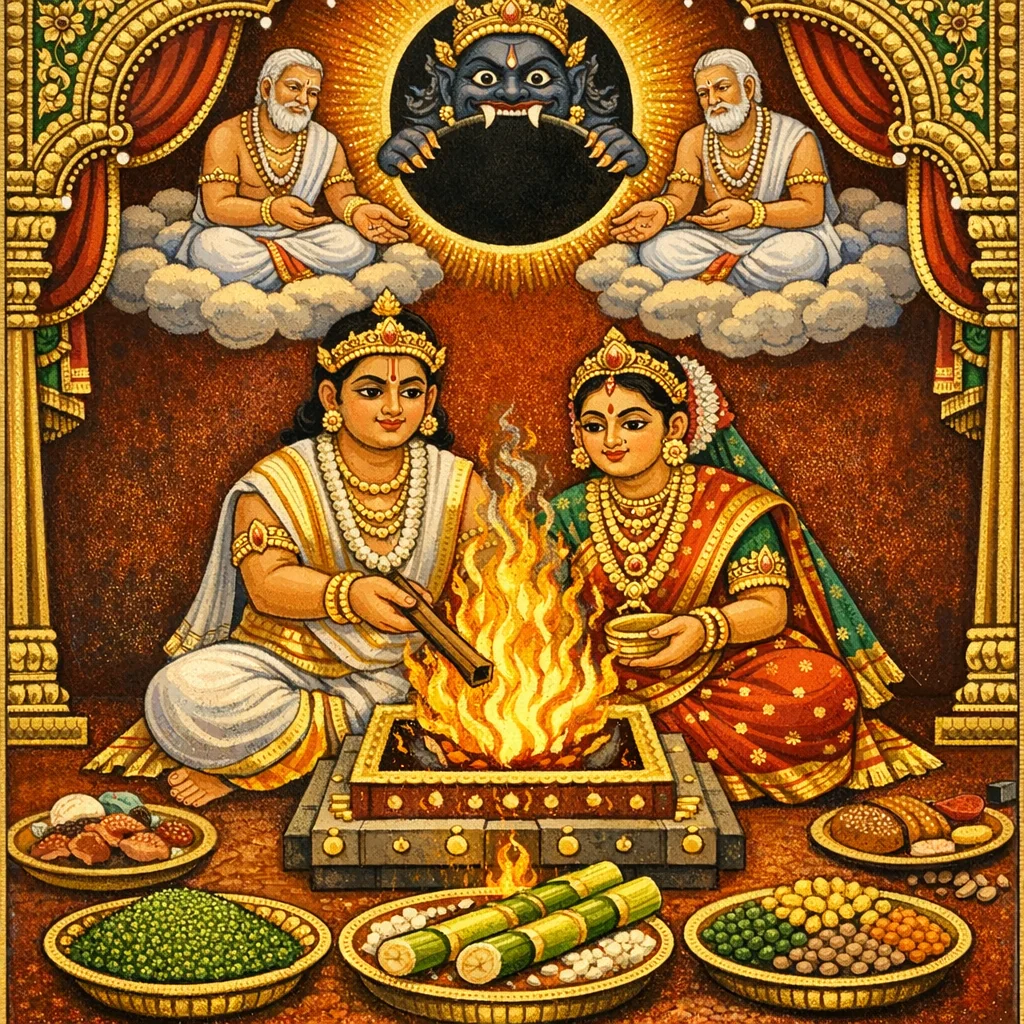
This chapter, framed as a didactic discourse attributed to Bṛhaspati, moves from general statements on the fruits of all gifts (sarva-dāna-phala) to detailed regulations for performing śrāddha. It highlights three technical clusters: (1) ritual timing—night śrāddha is generally avoided, yet an eclipse (Rāhu-darśana / uparāga) creates an urgent exception in which the rite becomes highly efficacious; (2) purity and life-sustaining rites—agnihotra is praised as purifying and longevity-bestowing; (3) taxonomy of offerings—grains, pulses, and plant products are classified as recommended, equivalent, or censured for ancestor rites (e.g., śyāmāka and sugarcane are lauded, while certain legumes/grains are marked garhya/varya). The chapter thus reads like a śrāddha “decision manual,” integrating cosmological phenomena (eclipse) with dharma-technical lists of permitted and prohibited dravyas, and grounding these rules in exemplary mythic references (such as Indra/Śacīpati drinking soma) and etiological notes on the origin and merit of particular crops.
Shlokas
Verse 1
इति श्रीब्रह्माण्डे महापुराणे वायुप्रोक्ते मध्यभागे तृतीय उपोद्धातपादे श्राद्धकल्पे पुण्यदेशानुकीर्त्तनं नाम त्रयोदशो ऽध्यायः // १३// बृहस्पतिरुवाच अतः परं प्रवक्ष्यामि सर्वदानफलानि च / श्राद्धकर्मणि मेध्यानि वर्जनीयानि यानि च
Thus, in the Śrī Brahmāṇḍa Mahāpurāṇa, in the middle section spoken by Vāyu, in the third upoddhāta-pāda, within the Śrāddha-kalpa, is the thirteenth chapter called “The Recital of Holy Lands.” Bṛhaspati said: Hereafter I shall declare the fruits of all gifts, and what is pure in the śrāddha rite and what must be avoided.
Verse 2
हिमप्रपतने कुर्यादा हरेद्वा हिमं ततः / अग्निहोत्रमुपायुष्यं पवित्रं परमं हितम्
At the time of snowfall, one should perform it as one is able, or else remove the snow thereafter. The Agnihotra prolongs life, is supremely purifying, and brings the highest good.
Verse 3
नक्तं तु वर्जयेच्छ्राद्धं राहोरन्यत्र दर्शनात् / सर्वस्वेनापि कर्त्तव्यङ्क्षिप्रं वै राहुदर्शने
One should avoid performing śrāddha at night, except upon the sighting of Rāhu. But when Rāhu is seen, śrāddha should indeed be done swiftly, even with one’s entire means.
Verse 4
उपरागे न कुर्याद्यः पङ्के गौरिव सीदति / कुर्वाणस्तत्तरेत्पापं सती नौरिव सागरे
He who does not perform (śrāddha) at the time of an eclipse sinks like a cow mired in mud. But he who performs it crosses beyond that sin, like a steadfast boat upon the ocean.
Verse 5
वैश्वदेवं च सौम्यं च खड्गमांसं परं हविः / विषाणवर्जं खड्गस्य मात्सर्यान्नाशयामहे
In the Vaiśvadeva and Saumya rites, the flesh of the khaḍga is the highest oblation; with the hornless part of the khaḍga we destroy envy and spite.
Verse 6
त्वाष्ट्रा वै यजमानेन देवेशेन महात्मना / पिबञ्छचीपतिः सोमं पृथिव्यां मध्यगः पुरा
In the Tvaṣṭṛ sacrifice, performed by the great-souled yajamāna, the Lord of the gods, Śacīpati Indra once stood in the midst of the earth and drank the Soma.
Verse 7
श्यामाकास्तत्र उत्पन्नाः पित्रर्थमपरजिताः / विप्रुषस्तस्य नासाभ्यामासक्ताभ्यां तथेक्षवः
There, for the sake of the Pitṛs, the unconquered śyāmāka grains arose; and from the drops clinging to his two nostrils, sugarcane (ikṣu) likewise came forth.
Verse 8
श्रेष्मलाः शीतलाः स्निग्धा मधुराश्च तथेक्षवः / श्यामाकैरिक्षुभिश्चैव पितॄणां सर्वकामिकम्
Sugarcane (ikṣu) is phlegm-increasing, cooling, unctuous, and sweet; with śyāmāka and sugarcane, the rite for the Pitṛs becomes a fulfiller of every wish.
Verse 9
कुर्यादाग्रयणं यस्तु स शीघ्रं सिद्धिमाप्नुयात् / श्यामाकास्तु द्विनामानो विहिता यजनेस्मृते
Whoever performs the Āgrayaṇa rite swiftly attains accomplishment; in the Yajña-smṛti, śyāmāka is enjoined as a grain known by two names.
Verse 10
यस्मात्तेदेवसृष्टास्तु तस्मात्ते चाक्षयाः स्मृताः / प्रसातिकाः प्रियङ्गुश्च मुद्गाश्च हरितास्तथा
Since these are said to be created by the Devas, they are remembered as “akṣaya”, unfailing: prasātikā, priyaṅgu, mudga (green gram), and likewise the harita grains.
Verse 11
एतान्यपि समानानि श्यामाकानां गुणैस्तु तैः / कृष्णमाषास्तिलाश्चैव श्रेष्ठास्तु यवशालयः
These too are equal to śyāmāka in those very qualities; so also black māṣa and sesame—yet barley (yava) is declared the most excellent.
Verse 12
महायवाश्च निष्पावास्तथैव च मधूलिकाः / कृष्णाश्चैवान्नलोहाश्च गर्ह्याः स्युः श्राद्धकर्मणि
Mahāyava, niṣpāva, and madhūlikā; and also kṛṣṇā and annaloha—are said to be blameworthy in the rites of śrāddha.
Verse 13
राजमाषास्तथान्ये वै वर्जनीयाः प्रयत्नतः / मसूराश्चैव पुण्याश्च कुसुंभं श्रीनिकेतनम्
Rājamāṣa and certain other grains should be carefully avoided; but masūr is meritorious, and kusumbha is praised as an abode of Śrī.
Verse 14
वर्षास्वतियवा नित्यं तथा वृषकवासकौ / बिल्वामलकमृद्वीकापनसाम्रातदाडिमाः
In the rainy season, atiyava is ever fitting; so too are vṛṣaka and vāsaka; and also bilva, āmalaka, mṛdvīkā (raisins), panasa (jackfruit), āmra (mango), āta, and dāḍima (pomegranate).
Verse 15
तवशोलंयताक्षौद्रखर्जूराम्रलानि च / खशेरुकोविदार्यश्च तालकन्दं तथा विसम्
Tavaśolaṃyatā, the akṣaudra honey, dates and mangoes; and also khaśeru, kovidārī, the tala-tuber, and poison—these are all spoken of as sacred substances.
Verse 16
तमालं शतकन्दं च मद्वसूचान्तकान्दिकी / कालेयं कालशाकं च भूरिपूर्णा सुवर्चला
Tamāla and śatakanda; madvasūcā-antakāndikī; kāleya and kālaśāka; and bhūripūrṇā and suvarcalā—these are remembered as meritorious, sacred substances.
Verse 17
मांसाक्षं दुविशाकं च बुबुचेता कुरस्तथा / कफालकं कणा द्राक्षा लकुचं चोचमेव च
Māṃsākṣa, duviśāka, bubucetā and kura; and also kaphālaka, kaṇā, grapes, lakuca and coca—these substances are enumerated.
Verse 18
अलाबुं ग्रीवकं वीरं कर्कन्धूमधुसाह्वयम् / वैकङ्कतं नालिकेरशृङ्गज पकरूषकम्
Alābu, grīvaka, vīra, karkandhū (called madhu); and also vaikaṅkata, nālikera (coconut), śṛṅgaja and pakarūṣaka—these too are specified.
Verse 19
पिप्पली मरिचं चैव पठोलं बृहतीफलम् / सुगन्धमांसपीवन्ति कषायाः सर्व एव च
Pippalī, marica, paṭhola, and the fruit of bṛhatī; sugandhamāṃsapīvanti—and all the kaṣāya preparations—are said to be wholly of astringent (kaṣāya) taste.
Verse 20
एवमादीनि चान्यानि वराणि मधुराणि च / नागरं चात्र वै देयं दीर्घमूलकमव च
In like manner, other excellent and sweet offerings should be given; and here, surely, dry ginger (nāgara) and the long-rooted radish (dīrghamūlaka) are also to be offered.
Verse 21
वंशः करीरः सुरसः सर्जकं भूस्तृणानि च / वर्जनीयानि वक्ष्यामि श्राद्धकर्मणि नित्यशः
Bamboo, karīra, surasā, sarjaka, and the grasses of the ground—these are ever to be avoided in the śrāddha rite; I shall declare what must always be shunned.
Verse 22
लशुनं गृञ्जनं चैव तथा वै पल्वलोदकम् / करंभाद्यानि चान्यानि हीनानि रसगन्धतः
Garlic, gṛñjana (onion and the like), and water from a pond; karaṃbha and other such items too—being inferior in taste and fragrance—are unfit (for śrāddha).
Verse 23
श्राद्धकर्मणि वर्ज्यानि कारणं चात्र वक्ष्यते / पुरा देवासुरे युद्धे निर्जितस्य बलेः सुरैः
In the śrāddha rite these are to be avoided; and the reason is told here: long ago, in the war between devas and asuras, when Bali was defeated by the gods.
Verse 24
शरैस्तु विक्षतादङ्गात्पतिता रक्तबिन्दवः / तत एतानि जातानि लशुनादीनि सर्वशः
From his body, torn by arrows, drops of blood fell; from those drops, everywhere, garlic and the like came into being.
Verse 25
तथैव रक्तनिर्यासा लवणान्यौषरणि च / श्रद्धकर्मणि वर्ज्यानि याश्च नार्यो रजस्वलाः
Likewise, exudations of blood, salt and alkaline substances, and women who are in their monthly course—are to be avoided in the rite of Śrāddha.
Verse 26
दुर्गन्धं फेनिलं चैव तथा वै पल्वलोदकम् / लभेद्यत्र न गौस्तृप्तिं नक्तं यच्चैव गुह्यते
What is foul-smelling and frothy, as well as water from a muddy pool; what is obtained where a cow finds no satisfaction; and whatever is concealed at night—should not be accepted.
Verse 27
आविकं मार्गमौष्ट्रं च सर्वमेकशफं च यत् / माहिषं चामरं चैव पयो वर्ज्यं विजानता
The milk of sheep, deer, camel, and of all single-hoofed animals; and likewise the milk of buffalo and of the chamara (yak)—is to be avoided by one who knows.
Verse 28
अतः परं प्रवक्ष्यामि वर्ज्यान्देशान्प्रयत्नतः / न द्रष्टव्यं च यैः श्राद्धं शौचाशौचं च कृत्स्नशः
Hereafter I shall carefully declare the lands to be avoided—where neither Śrāddha is seen, nor the full observance of purity and impurity.
Verse 29
वन्यमूलफलैर्भक्ष्यैः श्राद्धं कुर्यात्तु श्रद्धया / राजनिष्ठामवाप्नोति स्वर्गमक्षयमेव च
With foods of forest roots and fruits, one should perform Śrāddha with faith; thereby one gains royal favor and also the imperishable heaven.
Verse 30
अनिष्टशब्दां संकीर्णां जन्तुप्याप्तामथाविलाम् / पूतिगन्धां तथा भूमिं वर्जयेच्छ्राद्धकर्मणि
In the Śrāddha rite, one should avoid ground that is filled with inauspicious sounds, overrun by creatures, impure, and foul-smelling.
Verse 31
नद्यः सागरपर्यन्ता द्वारं दक्षिणपूर्वतः / त्रिशङ्कोर्वर्जयेद्देशं सर्वं द्वादश योजनम्
Where the rivers run all the way to the ocean and the gateway lies to the southeast, the entire land of Triśaṅku should be avoided for twelve yojanas.
Verse 32
उत्तरेण महानद्या दक्षिणेन च वैकटम् / देशास्त्रिशङ्कवो नाम वर्ज्या वै श्राद्धकर्मणि
The lands called Triśaṅkava, lying north of the Mahānadī and south of Vaikaṭa, are indeed to be avoided in the Śrāddha rite.
Verse 33
कारस्कराः कलिङ्गश्च सिधोरुत्तरमेव च / प्रनष्टाश्रमधर्माश्च वर्ज्या देशाः प्रयत्नतः
Kārasakara, Kaliṅga, the lands north of the Sindhu, and those regions where the āśrama-dharma has perished—such countries should be carefully avoided.
Verse 34
नग्नादयो न पश्येयुः श्राद्धकर्म व्यवस्थितम् / गच्छन्त्येतैस्तु दृष्टानि न पितॄंश्च पितामहांन
The naked and other unfit persons should not behold the Śrāddha duly performed; for when it is seen by them, it does not reach the Pitṛs nor the Pitāmahas.
Verse 35
शंयुरुवाच नग्नादीन्भगवन्सम्यगाचक्ष्व परिपृच्छतः / बृहस्पतिरुवाच सर्वेषामेव भूतानां त्रयीसंवरणं स्मृतम्
Śaṃyu said: O Bhagavān, explain rightly about the naked ones and such; I ask. Bṛhaspati said: For all beings, the Triad of the Vedas is remembered as their covering and protection.
Verse 36
तां ये त्यजन्ति संमोहात्ते वै नग्नादयो जनाः / प्रलीयते वृषो यस्मिन्निरालंबश्च यो बृषे
Those who, through delusion, abandon that (Tri-Veda) are indeed the naked ones and such. Where Dharma (Vṛṣa) is dissolved, there one becomes without support for Dharma.
Verse 37
वृषं यस्तु परित्यज्य मोक्षमन्यत्र मार्गति / वृषो वेदाश्रमस्तस्मिन्यो वै सम्यङ्न पश्यति
Whoever abandons Dharma (Vṛṣa) and seeks liberation elsewhere—Dharma itself is the Vedic path and the law of the āśramas; one who does not see this rightly goes astray.
Verse 38
ब्राह्मणः क्षत्रियो वैश्यो वृषलः स न संशयः / पुरा देवासुरे युद्धे निर्जितैरसुरैस्तथा
Whether brāhmaṇa, kṣatriya, or vaiśya—he is a vṛṣala, without doubt. In ancient times, in the war of devas and asuras, it was so even through the defeated asuras.
Verse 39
पाशण्डा वै कृतास्तात तेषां सृष्टिः प्रजायते / वृद्धश्रावकिनिर्ग्रन्थाः शाक्या जीवककार्पटाः
O child, the pāṣaṇḍas—doctrines opposed to the Veda—were fashioned, and from them their own lineages arose: the elder śrāvakas, the nirgranthas, the śākyas, the jīvakas, the kārpaṭas, and the like.
Verse 40
ये धर्मं नानुवर्त्तन्ते ते वै नग्नादयो जनाः / वृथा जटी वृथा मुण्डी वृथा नग्नश्च यो द्विजः
Those who do not follow Dharma are indeed known as the 'Nagna' (naked/apostate) ones. Vain is the matted hair, vain is the shaven head, and vain is the nudity of a Twice-born who lacks Dharma.
Verse 41
वृथा व्रती वृथा जापी ते वै नग्नादयो जनाः / कुलधर्मातिगाः शश्वद्वृथा वृत्तिकलत्रकाः
Vain is the observer of vows, vain is the chanter of mantras; they are indeed the 'Nagna' people. For those who transgress family traditions, their livelihood and wives are eternally in vain.
Verse 42
कृतकर्मदिशस्त्वेते कुपथाः परिकीर्त्तिताः / एतैर्हि दत्तं दृष्टं वै श्राद्धं गच्छति दानवान्
These people who advertise their own deeds are proclaimed as followers of evil paths. Indeed, the ancestral offering (Shraddha) given or seen by them goes to the Danavas (demons).
Verse 43
ब्रह्मघ्नश्च कृतघ्नश्च नास्तिको गुरुतल्पगः / दस्युश्चैव नृशंसश्च दर्णने तान्विसर्जयेत्
The slayer of a Brahmin, the ungrateful, the atheist, the defiler of the Guru's bed, the robber, and the cruel person—one should shun them from one's sight.
Verse 44
पतिताः क्रूरकर्माणः सर्वांस्तान्परिवर्जयेत् / देवतानामृषीणां च विवादे प्रवदन्ति ये
One should avoid all those who are fallen and perform cruel deeds, as well as those who speak controversially or disrespectfully about the gods and sages.
Verse 45
देवांश्च ब्राह्मणांश्चैव आम्नायं यस्तु निन्दति / असुरान्यातुधानांश्च दृष्टमेभिर्व्रजत्युत
Whoever reviles the Devas, the Brahmanas, and the Vedic tradition (āmnāya) indeed goes to the realm of the Asuras and the Yātudhānas.
Verse 46
ब्राह्मं कृतयुगं प्रोक्तं त्रेता तु क्षत्र्रियं युगम् / वैश्यं द्वापरमित्याहुः शूद्रं कलियुगं स्मृतम्
Kṛtayuga is declared the age of the Brahmanas; Tretā, the age of the Kṣatriyas. Dvāpara is said to be the age of the Vaiśyas; and Kaliyuga is remembered as the age of the Śūdras.
Verse 47
कृते ऽपूज्यन्त पितरस्त्रेतायां तु सुरास्तथा / युद्धानि द्वापरे नित्यं पाखण्डाश्च कलौ युगे
In Kṛta-yuga the Pitṛs (ancestors) are worshipped; in Tretā, the Devas likewise. In Dvāpara there are constant wars; and in Kali-yuga pākhaṇḍas—false creeds—abound.
Verse 48
अपमानापविद्धश्च कुक्कुटो ग्रामसूकरः / श्वा चैव हन्ति श्राद्धानि दर्शनादेव सर्वशः
A rooster driven away in disgrace, a village pig, and a dog—by their mere sight they wholly spoil the śrāddha rites.
Verse 49
श्वसूकरोप संसृष्टं दीर्घरोगिभिरेव च / पतितैर्मलिनैश्चैव न द्रष्टव्यं कथञ्चन
Those who consort with dogs and pigs, the chronically ill, the fallen (patita), and the impure—should not be looked upon in any manner.
Verse 50
अन्नं पश्येयुरेते यत्तन्नार्हं हव्यकव्ययोः / उत्स्रष्टव्याः प्रधा नार्थैः संस्कारस्त्वापदो भवेत्
Food that has been looked upon by such persons is not fit for havya and kavya offerings (to the Devas and the Pitṛs). It should be cast away; only in distress may a rite of purification be performed.
Verse 51
हविषां संहतानां च पूर्वमेव विवर्जयेत् / सृष्टं युक्ताभिरद्भिश्च प्रोक्षणं च विधीयते
Havis offerings that have clumped together should be rejected beforehand. But what has been prepared with proper water is prescribed to be purified by prokṣaṇa, the ritual sprinkling.
Verse 52
सिद्धार्थकैः कृष्णतिलैः कार्यं वाप्यपवारणम् / गुरुसूर्याग्निवास्राणां दर्शनं वापि यत्नतः
Let apavāraṇa, the warding off of fault, be done with mustard seed (siddhārtha) and black sesame; or else, with care, seek the darśana of the Guru, the Sun, Agni, and pure sacred garments.
Verse 53
आसनारूढमन्नाद्यं पादोपहतमेव च / अमेध्यैर्जङ्गमैर्दृष्टं शुष्कं पर्युषितं च यत्
Food that has been placed upon a seat, or struck by the foot; that has been seen or touched by impure roaming creatures; that is dried out or left overnight—such food should be rejected.
Verse 54
अस्विन्नं परिदग्धं च तथैवाग्नावलेहितम् / शर्कराकीटपाषाणैः केशैर्यच्चाप्यु पाहृतम्
Food that is undercooked, burnt, or singed as though licked by fire; and food mixed with grit, insects, stones, or hair—this too should be rejected.
Verse 55
पिण्याकं मथितं चैव तथा तिलयवादिषु / सिद्धीकृताश्च ये भक्ष्याः प्रत्यक्षलवणीकृताः
Oil-cake, churned mixtures, foods made from sesame, barley, and the like, and any eatables cooked after adding salt openly before one’s eyes—these are to be avoided in the śrāddha rite.
Verse 56
दृष्ट्वा चैव तथा दोषोपात्तश्वोपहतं तथा / वाससा चावधूतानि वर्ज्यानि श्राद्धकर्मणि
Whatever is seen to be tainted by fault or touched/ruined by a dog, and whatever has fallen after being brushed off with a cloth—these are to be avoided in the śrāddha rite.
Verse 57
संति वेदविरोधेन केचिद्विज्ञाभिमानिनः / अयज्ञय तयो नाम ते ध्वंसंति यथा रजः
There are some who, opposing the Veda, pride themselves on being learned; they are called ‘ayajñaya’, and they perish like dust.
Verse 58
दधिशाकं तथा भक्ष्यं तथा चौषधिवर्जितम् / वार्त्ताकं वर्जयेच्छ्राद्धे सर्वानभिषवानपि / सैन्धवं लवणं चैव तथा मानससंभवम्
Curd-based greens (dadhiśāka) and other eatables, and foods devoid of medicinal herbs; in śrāddha one should avoid vārttāka (eggplant) and all abhiṣava (intoxicating/fermented drinks). Saindhava salt and salt said to arise from Mānasa are also (to be avoided).
Verse 59
पवित्रे परमे ह्येते प्रत्यक्षमपि वर्तिते / अग्नौ प्रक्षिप्य गृङ्णीयाद्धस्तौ प्रक्षिप्य यत्नतः
These two are supremely purifying, declared pure even in plain sight. Having cast them into the fire, one should then accept them, and carefully place them in both hands (for use).
Verse 60
गमयेन्मस्तकं चैव ब्रह्मतीर्थं हि तत्स्मृतम् / द्रव्याणां प्रोक्षणं कार्यं तथैवावपनं पुनः
Let the crown of the head be touched there; that is remembered as the Brahma-tīrtha. The articles should be purified by sprinkling with water, and likewise be re-coated/treated again.
Verse 61
निधाय चाद्भिः सिंचेत्त त्तथा चासु निवेशनम् / अश्ममूलफलेक्षूणां रज्जूनां चर्मणामपि
Having set them down, one should moisten them with water and then place them back in their proper position—stones, roots, fruits, sugarcane, ropes, and also articles of leather.
Verse 62
वैदलानां च सर्वेषां पूर्ववच्छौचमिष्यते / तथा दन्तास्थि दारुणां शृङ्गाणां चावलेखनम्
The purification of all bamboo and reed articles (vaidalā) is as stated before. Likewise, teeth, bones, wood, and horns should be cleansed by scraping (avalekhana).
Verse 63
सर्वेषां मृन्मयानां च पुनर्दाहो विधीयते / मणिमुक्ताप्रवालानां जलजानां च सर्वशः
For all earthenware, re-firing in the fire (punardāha) is prescribed. Likewise, for gems, pearls, corals, and all things born of the waters, there is a rule of purification in every case.
Verse 64
सिद्धार्थकानां कल्केन तिलकल्केन वा पुनः / स्याच्छौचं सर्वबालानामाविकानां च सर्वशः
Purity is attained with a paste of mustard seed (siddhārthaka) or with a paste of sesame. By this, all hair-bearing articles and all woollen (āvika) items are cleansed in every way.
Verse 65
द्विपदां चैव सर्वेषां मृद्भिरद्भिर्विधीयते / आद्यन्तयोस्तु शौचानामद्भिः प्रक्षालनं विधिः
For all two‑footed beings, purification is ordained with earth and with water; and at the beginning and at the end of cleansing, the rule is washing with water.
Verse 66
तथा कार्पासिकानां च भस्मना समुदाहृतम् / फलपुष्पपलाशानां प्लावनं चाद्भिरिष्यते
Likewise, the purification of cotton cloth is declared to be by ash; and for fruits, flowers, and leaves, cleansing by rinsing with water is approved.
Verse 67
प्रोक्षणं ह्युपलेपश्च भूमेश्चैवावलेखनम् / निषेको गोक्रमो दाहः खननं शुद्धिरिष्यते
Sprinkling, smearing, scraping the ground, pouring water, the passing of a cow’s footsteps (gokrama), burning, and digging—these are accepted as means of purification.
Verse 68
निष्क्रमो ऽध्वगतो ग्रामाद्वायुपूता वसुंधरा / पुंसां चतुष्पदां चव मृद्भिः शौचं विधीयते
Having gone out from the village onto the road, one finds earth purified by the wind; with that earth, cleansing is prescribed for men and for four‑footed beings.
Verse 69
एवमेव समुद्दिष्टः शौचानां विधिरुत्तमः / अनिर्दिष्टमतो यद्यत्तन्मे निगदतः शृणु
Thus has the highest rule of purifications been set forth; now, whatever has not been specified, listen as I declare it to you.
Verse 70
प्रातर्गृहाद्दक्षिणपश्चिमेन गत्वा चेषुक्षेपमात्रं पदं वै / कुर्यात्पुरीषं हि शिरो ऽवगुण्ठ्य न वै स्पृशेज्जातु शिरः करेण
In the morning, go from the house toward the southwest and step forward the distance of an arrow’s cast. Cover the head while relieving oneself, and never touch the head with the hand.
Verse 71
शुक्लैस्तृणैर्वा कार्ष्ठैर्वा पर्णैर्वेणुदलैन च / सुसंवृत्ते प्रदेशे च णन्तर्धाय वसुंधराम्
With white grass, wood, leaves, or pieces of bamboo, in a well-covered spot, one should cover the earth and conceal (the impurity).
Verse 72
उद्धृत्योदकमादाय मृत्तिकां चैव वाग्यतः / दिवा उदङ्मुखः कुर्याद्रात्रौ वै दक्षिणामुखः
Having drawn water and taken earth, one should restrain speech. By day it is done facing north; by night, facing south.
Verse 73
दक्षिणेन तु हस्तेन गृहीत्वाथ कमण्डलुम् / शौचं वामेन हस्तेन गुदे तिस्रस्तु मृत्तिकाः
Holding the kamaṇḍalu in the right hand, one should cleanse with the left; at the anus apply earth three times.
Verse 74
दश चापि शनैर्दद्याद्वामहस्ते क्रमेण तु / उभाभ्यां वा पुनर्दद्याद्द्वाभ्यां सप्त तु मृत्तिकाः
Upon the left hand, one should apply earth in order, slowly, even ten times. Or one may do it again with both hands—then, with the two, seven applications of earth.
Verse 75
मृदा प्रक्षाल्य पादौ तु आचम्य च यथाविधि / आपस्त्वाद्यास्त्रयश्चैव सुर्याग्न्यनिलदेवताः
Having washed the feet with earth and performed ācaman according to rule, one should recite the three mantras beginning with “Āpastvā,” remembering the deities of Sun, Fire, and Wind.
Verse 76
कुर्यात्संनिहितो नित्यमच्छिद्रे द्वे कमण्डलू / ःंसवार्यवनैरेव यथावत्पादधावनम्
Staying ever nearby, one should keep two unbroken, leakless kamaṇḍalus, and duly wash the feet with water such as that called “haṃsavāryavana.”
Verse 77
आचमनं द्वितीयं च देवकार्ये ततो ऽपरम् / उपवासस्त्रिरात्रं तु दुष्टमुक्ते ह्युदात्दृतः
In divine rites one should perform a second ācaman, and thereafter yet another; and for one who has uttered wicked speech, a fast of three nights is declared a lofty expiation.
Verse 78
विप्रकृष्टेषु कृच्छ्रं च प्राय श्चित्तमुदाहृतम् / स्पृष्ट्वा श्वानं श्वपाकं च तप्तकृच्छ्रं समाचरेत्
For distant circumstances (such as aśauca), the expiation called kṛcchra is taught; and upon touching a dog or a śvapāka (caṇḍāla), one should undertake the taptakṛcchra.
Verse 79
मानुषास्थीनि संस्पृश्य उपोष्यं शुचिकारणात् / त्रिरात्रमुक्तं सस्नेहान्येकरात्रमतो ऽन्यथा
Having touched human bones, one should fast for the sake of purity; if there is oily residue (sneha), three nights are prescribed, otherwise one night.
Verse 80
कारस्कराः कलिङ्गाश्च तथान्ध्रशबरादयः / पीत्वा चापोभूतिलपा गत्वा चापि युगं धरम्
The Kāraskaras, the Kaliṅgas, and likewise the Āndhra–Śabaras and others, having drunk the water-like sacred remedy, went on bearing the dharma of the age (yuga).
Verse 81
सिंधोरुत्तरपर्यन्तं तथोदीच्यन्तरं नरः / पापदेशाश्च ये केचित्पापैरध्युषिता जनैः
Up to the northern limit of the Sindhu, and within the northern regions, there are sinful lands—places inhabited by people given over to sin.
Verse 82
शिष्टैस्तु वर्जिता ये वै ब्राह्मणैल्वेदपारगैः / गच्छतां रागसंमोहात्तेषां पापं न गच्छति
As for the lands shunned by the righteous and by brahmins who have mastered the Vedas—those who go there out of passion and delusion do not leave their sin behind; they fall into sin’s bondage.
Verse 83
गत्वा देशानपुण्यांस्तु कृत्स्नं पापं समश्नुते / आरुह्य भृगुतुङ्गं तु गत्वा पुण्यां सरस्वतीम्
By going to unholy lands, a person partakes of sin in full; but by ascending Bhṛgutunga and reaching the blessed Sarasvatī, one attains purification and merit.
Verse 84
आपगां च नदीं रम्यां गङ्गां देवीं महानदीम् / हिमवत्प्रभवा नद्यो याश्चान्या ऋषिपूचिताः
That lovely river—the Goddess Gaṅgā, the great river—and the rivers born of Himavat, as well as other streams revered by the ṛṣis.
Verse 85
सरस्तीर्थानि सर्वाणि नदीः प्रस्रवणानि च / गत्वैतान्मुच्यते पापैः स्वर्गे चात्यन्तमश्नुते
One who goes to all the sacred tīrthas of lakes, rivers, and springs is freed from sins and attains supreme bliss in heaven.
Verse 86
दशरात्रमशौचं तु प्रोक्तं मृतकमूतके / ब्रह्मणस्य द्वादशाहं क्षत्रियस्य विधीयते
Ritual impurity (aśauca) due to death or birth (mṛtaka-mūtaka) is said to last ten nights; for a brāhmaṇa it is prescribed as twelve days, and for a kṣatriya it is likewise ordained.
Verse 87
अर्द्धमासं तु वैश्यस्य मासं शूद्रस्य चैव ह / उदक्या सर्ववर्णानां चतूरात्रेण शुध्यति
For a vaiśya, impurity lasts half a month; for a śūdra, a full month. But in the case of udakyā (menstruation), all varṇas are purified in four nights.
Verse 88
उदक्यां सूतिकां चैव श्वानमन्तावसायिनम् / नग्नादीन्मृतहारांश्च स्पृष्ट्वा शौचं विधीयते
If one touches a menstruating woman (udakyā), a woman after childbirth (sūtikā), a dog, an outcaste such as a caṇḍāla, a naked person, or a bearer of the dead, purification (śauca) is enjoined.
Verse 89
स्नात्वा सचैलो मृद्भिस्तु शुद्धो द्वादशभिर्द्विजः / एतदेव भवेच्छौचं मैथुने वमने तथा
A dvija becomes pure by bathing while clothed and cleansing with earth twelve times; the same purification is prescribed after sexual union and after vomiting as well.
Verse 90
मृदा प्रक्षाल्यहस्तौ तु कुर्याच्छौचं च मानवः / प्रक्षाल्य चाद्भिः स्नात्वा तु हस्तौ चैव पुनर्मृदा
Let a man wash his hands with earth and perform the rite of purity. Then, bathing with water, let him wash his hands and again cleanse them with earth.
Verse 91
त्रिः कृत्वा द्वादशान्तानि यथा लेपस्तथा भवेत् / एवं शौचविधिर्दृष्टः सर्वकृत्येषु नित्यदा
Doing it three times up to the twelve points, let it be as though a coating were applied. Thus is the rule of purification taught, for all duties, at all times.
Verse 92
परिदद्यान्मृदस्तिस्रस्तिस्रः पादावसेचने / अरण्ये शौचमेतत्तु ग्राम्यं वक्ष्याम्यतः परम्
For washing the feet, let earth be applied three times. This is the purification prescribed in the forest; next I shall speak of the rule for the village.
Verse 93
मृदः पञ्चदशामेध्या हस्तादीनां विशेषतः / अतिरिक्तमृदं दद्यान्मृदन्ते त्वद्भिरेव च
Especially for the hands and the like, fifteen applications of earth are held to purify. If needed, use more earth, and at the end wash with water alone.
Verse 94
अद्भिरव्यक्तके शौचमेतच्चैतेषु कृत्स्नशः / कण्ठं शिरो वा आवृत्य रथ्यापणगतो ऽपि वा
In all these matters, when impurity is not evident, complete purification is accomplished with water alone—whether one has covered the throat or the head, even if one has gone to the street or the market.
Verse 95
अकृत्वा पादयोः शौचमाचान्तो ऽप्यशुचिर्भवेत् / पक्षाल्य पात्रं निक्षिप्य आचम्याभ्युक्षणं ततः
Without cleansing the feet, even one who has performed ācamana remains impure. Having washed the vessel and set it down, one should sip water and then sprinkle it with purifying water.
Verse 96
द्रव्यस्यान्यस्य तु तथा कुर्यादभ्युक्षणं ततः / पुष्पादीनां तृणानां च प्रोक्षणं हविषां तथा
Other substances too should be purified in the same way by sprinkling. Flowers and the like, grasses, and the havis (sacrificial offering) should likewise be sanctified by aspersion.
Verse 97
परात्दृतानां द्रव्याणां निधायाभ्युक्षणं तथा / नाप्रोक्षितं स्पृशेत्किञ्चिच्छ्रद्धे दैवे ऽथ वा पुनः
Items brought from elsewhere should likewise be set down and purified by sprinkling. In śrāddha or in rites for the gods, one should not touch anything that has not been sprinkled.
Verse 98
उत्तरोणाहरेद्द्रव्यं दक्षिणेन विसर्जयेत् / संवृते यजमानस्तु सर्वश्राद्धे समाहरेत्
With the left (northern) hand one should bring the items, and with the right (southern) hand one should offer or release them. The yajamāna, composed and properly covered, should gather the requisites throughout the entire śrāddha.
Verse 99
उच्छिष्टे स्याद्विपर्यासोदैवे पित्र्येतथैव च / दक्षिणेन तु हस्तेन दक्षिणां वेदिमालभेत्
In a state of ucchiṣṭa (remnants), the procedure is reversed; so too in rites for the gods and for the ancestors. With the right hand one should touch or place the dakṣiṇā upon the vedi (altar).
Verse 100
कराभ्यामेव देवानां पितॄणां विकरं तथा / क्षरणं स्वप्नयोश्चैव तथा मूत्रपुरीषयो
Concerning the Devas and the Pitṛs, the ordinance of purification is taught for impurity arising through the hands, for emission in sleep, and likewise for urine and feces.
Verse 101
निष्ठीविते तथाभ्यङ्गे भुत्क्वा विपरिधाय च / उच्छिष्टानां च संस्पर्शे तथा पादावसेचने
Purification is likewise prescribed for spitting, for oil-anointing (abhyanga), for changing garments after eating, for touching food-remnants (ucchiṣṭa), and for washing the feet.
Verse 102
उच्छिष्टस्य च संभाषादशित्वा प्रयतस्य वा / संदेहेषु च सर्वेषु शिखां मुक्त्वा तथैव च
If one speaks with a person in a state of ucchiṣṭa, or after a purity-observant person has eaten, and in all cases of doubt—even upon loosening the śikhā—purification should be performed.
Verse 103
विना यज्ञोपवीतेन मोघं तत्समुपस्पृशेत् / उष्ट्रस्यावेश्च संस्पर्शे दर्शने ऽवाच्यवाचिनाम्
Ācamana performed without the yajñopavīta is fruitless; and purification is prescribed upon touching a camel or a sheep, and upon seeing those who utter unutterable, impure speech.
Verse 104
जिह्वया चैव संस्वृश्य देतासक्तं तथैव च / सशब्दमेगुलीभिर्वा पतितं वा विलोकयन्
Purification is also enjoined for touching with the tongue, for attachment to semen, for making indecorous finger-gestures with sound, and for gazing upon the fallen (patita).
Verse 105
स्थितो यश्चाचमेन्मोहदाचान्तो ऽप्यशुचिर्भवेत् / उपविश्य शुचौ देशे प्रयतः प्रागुदङ्मुखः
He who performs ācaman while standing, out of delusion, becomes impure even though he has sipped. Seated in a clean place, disciplined, let him face east or north.
Verse 106
पादौ प्रक्षाल्य हस्तौ च अन्तर्जानु त्वपः स्पृशेत् / प्रसन्नस्त्रिः पिबेद्वारि प्रयतः सुसमाहितः
Having washed the feet and the hands, let him touch the water between the knees. With a serene mind, disciplined and well-collected, let him sip the water three times.
Verse 107
द्विरेव मार्जनं कुर्यात्सकृदभ्युक्षणं ततः / खानि मूर्द्धानमात्मानं हस्तौ पादौ तथैव च
Let him perform mārjana (cleansing) twice, and then abhyukṣaṇa (sprinkling) once. Let him purify the sense-openings, the head, his whole body, and likewise the hands and feet.
Verse 108
अभ्युक्षयेत्ततस्तस्य यद्यन्मीमांसित भवेत् / एवमाचमतस्तस्य वेदा यज्ञास्तपांसि च
Thereafter, whatever is to be examined and deliberated upon, let it be purified by abhyukṣaṇa. For one who performs ācaman in this manner, the Vedas, sacrifices, and austerities all bear fruit.
Verse 109
दानानि व्रतचर्याश्च भवन्ति सफलानि वै / क्रियां यः कुरुते मोहादनासम्येह नास्तिकः
Gifts of charity and the observance of vows indeed become fruitful. But one who, out of delusion, performs rites at an improper time is, on this path of dharma, like a nāstika (one who denies the sacred order).
Verse 110
भवन्ति हि वृथा तस्य क्रिया ह्येता न संशयः / वाक्कायबुद्धिपूतानि अस्पृष्टं वाप्यनिन्दितम्
Without doubt, such acts become futile for him. What is purified in speech, body, and mind remains untouched by defilement and is beyond reproach.
Verse 111
ज्ञेयान्येतानि मेध्यानि दुष्टमेध्यो विपर्यये / मनोवाक्कायमग्निश्च कालश्चैवोपलेखनम्
Know these as ‘medhya’—that which purifies; in the opposite case are the ‘duṣṭa-medhya’. Mind, speech, body, fire, and time are the instruments of cleansing.
Verse 112
विख्यापनं च शौचानां नित्यमज्ञानमेव वा / अतो ऽन्यथा तु यः कुर्यान्मोहाच्छौचस्य संकरम्
To proclaim the disciplines of purity—or to remain ever in ignorance—may likewise come to pass (as a result). Therefore, one who in delusion confounds the laws of purity goes astray.
Verse 114
पिशाचान्यातुधानांश्च फलं गच्छत्यसंशयम् / शौचे चाश्रद्दधानो हि म्लेच्छजातिषु जायते १४।११३// अयज्वा चैव पापश्च तिर्यग्योनिगतो ऽपि च / शौचेन मोक्षं कुर्वाणः स्वर्गवासी भवेन्नरः
Without doubt, its fruit goes to the piśācas and yātudhānas. One who lacks faith in purity is born among the mleccha peoples. Even one who performs no yajña, a sinner, or one fallen into an animal womb—if he seeks liberation through purity, that person becomes a dweller in heaven.
Verse 115
शुचिकामा हि देवा वै देवैश्चैतदुदाहृतम् / बीभत्सानशुचींश्चैव वर्जयन्ति सुराः सदा
The gods indeed desire purity—so the devas themselves have declared. The suras ever shun those who are foul and impure.
Verse 116
त्रीणि शौचानि कुर्वन्ति न्यायतः शुभकर्मिणः / ब्रह्मण्यायाति थेयाय शौचयुक्ताय धीमते
Those who perform auspicious deeds in accordance with justice observe three kinds of purity; to the wise one endowed with purity comes the radiance of brahmanic virtue and the spirit of dharma.
Verse 117
पितृभक्ताय दान्ताय सानुक्रोशाय च द्विजाः / तस्मै देवाः प्रयच्छन्ति पितरः श्रीविवर्द्धनाः / मनसाकाङ्क्षितान्कामांस्त्रैलोक्यप्रवरानपि
O dvijas, to one devoted to the Pitṛs, self-controlled, and compassionate, the gods and the prosperity-bestowing ancestors grant the heart’s desired wishes—even those most excellent in the three worlds.
Frequently Asked Questions
Night śrāddha is generally discouraged, but eclipse visibility is treated as an exceptional, high-merit window where prompt performance is strongly enjoined.
Śyāmāka (a millet) and ikṣu (sugarcane) are praised as pleasing and wish-fulfilling for Pitṛs, while certain grains/legumes are flagged as garhya or to be avoided with care in śrāddha contexts.
These references function etiologically and authoritatively: exemplary divine ritual scenes are used to validate the sanctity/efficacy of particular rites and substances, grounding prescriptive lists in sacred precedent.