Adhyaya 19
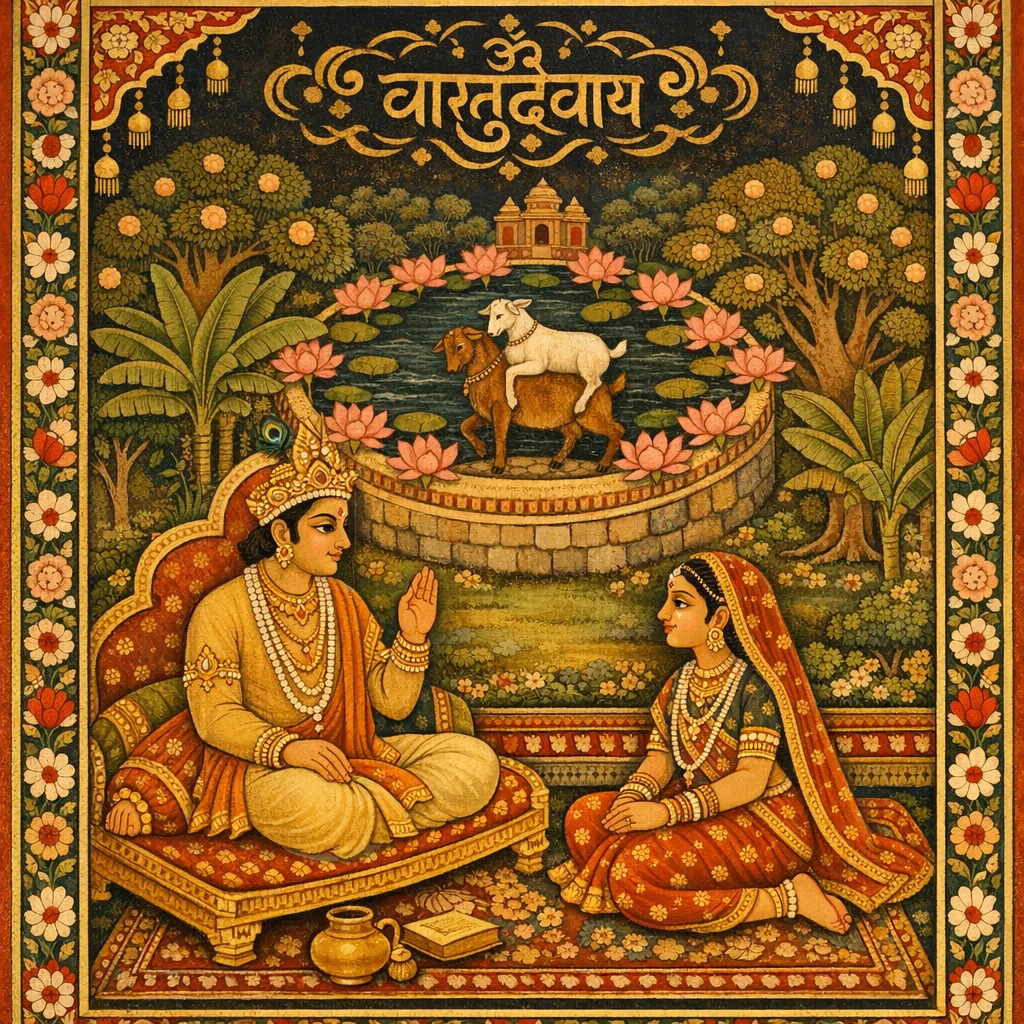
Yayāti’s Renunciation: The Allegory of the He-Goat and She-Goat
Continuing Yayāti’s story, Śukadeva describes how the king, once fiercely attached to sensual pleasure, becomes disgusted with its results and instructs Devayānī through an allegory. Yayāti tells of a lust-driven he-goat who rescues a she-goat from a well (karma’s predicament) but then becomes enslaved by sexual rivalry and forgets self-realization. Jealousy and rupture follow; a brāhmaṇa punishes the goat by cutting off his testicles and later restores them by yogic power—yet even after “restoration,” satisfaction never comes. Applying the parable to himself, Yayāti teaches that lust is insatiable (like ghee poured into fire) and that true happiness requires voluntary renunciation, restraint, and meditation on Vāsudeva. He then acts: exchanging old age for youth with Pūru, distributing realms to his sons, enthroning Pūru, and instantly abandoning enjoyment. Surrendering to Vāsudeva, he attains purity and the Lord’s association. Devayānī awakens, sees social bonds as māyā-like (like a hotel or a dream), fixes her mind on Kṛṣṇa, and attains liberation, as the narrative turns toward the dynasty under Pūru’s imperial rule.
Shlokas
Verse 1
श्रीशुक उवाच स इत्थमाचरन् कामान् स्त्रैणोऽपह्नवमात्मन: । बुद्ध्वा प्रियायै निर्विण्णो गाथामेतामगायत ॥ १ ॥
Śrī Śukadeva Gosvāmī said: O Mahārāja Parīkṣit, Yayāti was deeply attached to women; but in due course, becoming disgusted with sensual pleasure and its harmful effects, he renounced that way of life and sang this sacred tale to his beloved wife.
Verse 2
शृणु भार्गव्यमूं गाथां मद्विधाचरितां भुवि । धीरा यस्यानुशोचन्ति वने ग्रामनिवासिन: ॥ २ ॥
My beloved Bhārgavī, daughter of Śukrācārya, hear this gāthā about the life of someone in this world just like me. Hearing of such a householder’s course, even sober souls dwelling in the forest lament.
Verse 3
बस्त एको वने कश्चिद् विचिन्वन् प्रियमात्मन: । ददर्श कूपे पतितां स्वकर्मवशगामजाम् ॥ ३ ॥
Wandering in the forest to gratify his senses, a he-goat happened upon a well and saw within it a she-goat who had fallen there, helpless under the force of her own karmic results.
Verse 4
तस्या उद्धरणोपायं बस्त: कामी विचिन्तयन् । व्यधत्त तीर्थमुद्धृत्य विषाणाग्रेण रोधसी ॥ ४ ॥
Devising a way to rescue her, the lusty he-goat used the tip of his horns to dig away the earth at the well’s edge, making a gentle path by which she could come out with ease.
Verse 5
सोत्तीर्य कूपात् सुश्रोणी तमेव चकमे किल । तया वृतं समुद्वीक्ष्य बह्व्योऽजा: कान्तकामिनी: ॥ ५ ॥ पीवानं श्मश्रुलं प्रेष्ठं मीढ्वांसं याभकोविदम् । स एकोऽजवृषस्तासां बह्वीनां रतिवर्धन: । रेमे कामग्रहग्रस्त आत्मानं नावबुध्यत ॥ ६ ॥
When the she-goat with lovely hips climbed out of the well, she desired that very he-goat as her husband. Seeing her choose him, many other beautiful, lustful she-goats also longed for him, for he was strong-bodied, adorned with mustache and beard, dear to the eye, potent in seed, and skilled in the art of union. Thus the best of the he-goats, surrounded by many, seized by the ghost of desire, sported in erotic pleasure and forgot his true work of self-realization.
Verse 6
सोत्तीर्य कूपात् सुश्रोणी तमेव चकमे किल । तया वृतं समुद्वीक्ष्य बह्व्योऽजा: कान्तकामिनी: ॥ ५ ॥ पीवानं श्मश्रुलं प्रेष्ठं मीढ्वांसं याभकोविदम् । स एकोऽजवृषस्तासां बह्वीनां रतिवर्धन: । रेमे कामग्रहग्रस्त आत्मानं नावबुध्यत ॥ ६ ॥
When the she-goat, who had very nice hips, got out of the well and saw the very handsome he-goat, she desired to accept him as her husband. Seeing his virility and expertise, many other she-goats also desired him. Therefore, just as a person haunted by a ghost exhibits madness, the he-goat engaged in erotic activities and forgot his real business of self-realization.
Verse 7
तमेव प्रेष्ठतमया रममाणमजान्यया । विलोक्य कूपसंविग्ना नामृष्यद् बस्तकर्म तत् ॥ ७ ॥
When the she-goat who had fallen into the well saw her beloved goat engaged in sexual affairs with another she-goat, she could not tolerate the goat’s activities.
Verse 8
तं दुर्हृदं सुहृद्रूपं कामिनं क्षणसौहृदम् । इन्द्रियाराममुत्सृज्य स्वामिनं दु:खिता ययौ ॥ ८ ॥
Realizing he was a hardhearted enemy in the guise of a friend, lusty, and possessing only momentary affection, the aggrieved she-goat abandoned that sense-gratifier and returned to her master.
Verse 9
सोऽपि चानुगत: स्त्रैण: कृपणस्तां प्रसादितुम् । कुर्वन्निडविडाकारं नाशक्नोत् पथि सन्धितुम् ॥ ९ ॥
Being very sorry and subservient to his wife, the he-goat followed her on the road, trying his best to flatter her with bleating sounds, but he could not pacify her.
Verse 10
तस्यतत्र द्विज: कश्चिदजास्वाम्यच्छिनद् रुषा । लम्बन्तं वृषणं भूय: सन्दधेऽर्थाय योगवित् ॥ १० ॥
The brāhmaṇa owner of the she-goat angrily cut off the he-goat’s dangling testicles. However, later, at the goat's request, the brāhmaṇa, who was expert in mystic yoga, rejoined them.
Verse 11
सम्बद्धवृषण: सोऽपि ह्यजया कूपलब्धया । कालं बहुतिथं भद्रे कामैर्नाद्यापि तुष्यति ॥ ११ ॥
My dear wife, when that he-goat regained his testicles, he enjoyed the she-goat obtained from the well; yet though he indulged for many, many years, even now he has not become fully satisfied.
Verse 12
तथाहं कृपण: सुभ्रु भवत्या: प्रेमयन्त्रित: । आत्मानं नाभिजानामि मोहितस्तव मायया ॥ १२ ॥
O my wife of beautiful eyebrows, I am just like that he-goat—poor in discernment, bound by the rope of your love; deluded by your māyā, I do not know my true self.
Verse 13
यत् पृथिव्यां व्रीहियवं हिरण्यं पशव: स्त्रिय: । न दुह्यन्ति मन:प्रीतिं पुंस: कामहतस्य ते ॥ १३ ॥
Even if one has on this earth rice and barley, gold, animals, and women, the mind of a man struck by lust cannot be satisfied; nothing can truly content him.
Verse 14
न जातु काम: कामानामुपभोगेन शाम्यति । हविषा कृष्णवर्त्मेव भूय एवाभिवर्धते ॥ १४ ॥
Lust never subsides by indulging in its objects; like fire fed with ghee, it does not diminish but only grows more and more.
Verse 15
यदा न कुरुते भावं सर्वभूतेष्वमङ्गलम् । समदृष्टेस्तदा पुंस: सर्वा: सुखमया दिश: ॥ १५ ॥
When a man harbors no ill will toward any being and, free from envy, remains equipoised, then all directions appear to him filled with happiness.
Verse 16
या दुस्त्यजा दुर्मतिभिर्जीर्यतो या न जीर्यते । तां तृष्णां दु:खनिवहां शर्मकामो द्रुतं त्यजेत् ॥ १६ ॥
That craving, hard to abandon for the misguided and not worn away even by old age, is a heap of sorrows. One who truly seeks happiness should swiftly renounce that unsatisfied thirst, the cause of all tribulation.
Verse 17
मात्रा स्वस्रा दुहित्रा वा नाविविक्तासनो भवेत् । बलवानिन्द्रियग्रामो विद्वांसमपि कर्षति ॥ १७ ॥
One should not sit in seclusion on the same seat even with one’s mother, sister, or daughter, for the host of senses is powerful and can draw away even the learned.
Verse 18
पूर्णं वर्षसहस्रं मे विषयान् सेवतोऽसकृत् । तथापि चानुसवनं तृष्णा तेषूपजायते ॥ १८ ॥
For a full thousand years I repeatedly enjoyed the objects of the senses, yet even so, my craving for them arises day after day and only increases.
Verse 19
तस्मादेतामहं त्यक्त्वा ब्रह्मण्यध्याय मानसम् । निर्द्वन्द्वो निरहङ्कारश्चरिष्यामि मृगै: सह ॥ १९ ॥
Therefore I shall now abandon all these desires and fix my mind upon the Supreme Personality of Godhead, the Paramatma. Free from dualities and false pride, I shall wander in the forest with the animals.
Verse 20
दृष्टं श्रुतमसद्बुद्ध्वा नानुध्यायेन्न सन्दिशेत् । संसृतिं चात्मनाशं च तत्र विद्वान् स आत्मदृक् ॥ २० ॥
One who knows that all material happiness—seen or heard of, in this life or the next—is temporary and worthless, and therefore neither dwells on it nor speaks of it, understanding that attachment to it brings samsara and forgetfulness of one’s true nature, is truly a seer of the Self.
Verse 21
इत्युक्त्वा नाहुषो जायां तदीयं पूरवे वय: । दत्त्वा स्वजरसं तस्मादाददे विगतस्पृह: ॥ २१ ॥
Having thus spoken to his wife Devayānī, King Yayāti, son of Nahusha, now free from worldly desire, summoned his youngest son Pūru and, giving him his own old age, accepted Pūru’s youth in exchange.
Verse 22
दिशि दक्षिणपूर्वस्यां द्रुह्युं दक्षिणतो यदुम् । प्रतीच्यां तुर्वसुं चक्र उदीच्यामनुमीश्वरम् ॥ २२ ॥
King Yayāti gave the southeast to Druhyu, the south to Yadu, the west to Turvasu, and the north to Anu; thus he divided his kingdom.
Verse 23
भूमण्डलस्य सर्वस्य पूरुमर्हत्तमं विशाम् । अभिषिच्याग्रजांस्तस्य वशे स्थाप्य वनं ययौ ॥ २३ ॥
Yayāti enthroned his youngest son Pūru as emperor of the entire earth and master of all its riches, placed the elder sons under Pūru’s rule, and then departed for the forest.
Verse 24
आसेवितं वर्षपूगान् षड्वर्गं विषयेषु स: । क्षणेन मुमुचे नीडं जातपक्ष इव द्विज: ॥ २४ ॥
O Parīkṣit, though Yayāti had long been accustomed to sense enjoyment for many years, he renounced it entirely in a moment, like a bird that leaves its nest as soon as its wings have grown.
Verse 25
स तत्र निर्मुक्तसमस्तसङ्ग आत्मानुभूत्या विधुतत्रिलिङ्ग: । परेऽमले ब्रह्मणि वासुदेवे लेभे गतिं भागवतीं प्रतीत: ॥ २५ ॥
Having fully surrendered to Vāsudeva, the Supreme Personality of Godhead, King Yayāti was freed from the taint of the three modes of nature. By self-realization he fixed his mind upon the spotless Parabrahman, Vāsudeva, and ultimately attained bhāgavata-gati—the status of an associate of the Lord.
Verse 26
श्रुत्वा गाथां देवयानी मेने प्रस्तोभमात्मन: । स्त्रीपुंसो: स्नेहवैक्लव्यात् परिहासमिवेरितम् ॥ २६ ॥
Hearing Mahārāja Yayāti’s tale of the he‑goat and she‑goat, Devayānī understood that, though spoken like a playful jest between husband and wife, it was meant to awaken her to her true, constitutional position.
Verse 27
सा सन्निवासं सुहृदां प्रपायामिव गच्छताम् । विज्ञायेश्वरतन्त्राणां मायाविरचितं प्रभो: ॥ २७ ॥ सर्वत्र सङ्गमुत्सृज्य स्वप्नौपम्येन भार्गवी । कृष्णे मन: समावेश्य व्यधुनोल्लिङ्गमात्मन: ॥ २८ ॥
Thereafter Devayānī, the daughter of Śukrācārya, understood that material association with husband, friends, and relatives is like meeting in an inn crowded with travelers—temporary and fleeting. The ties of society, friendship, and love are fashioned by the Supreme Lord’s māyā, just as in a dream. Renouncing all attachment and fixing her mind upon Kṛṣṇa, she cast off the gross and subtle bodies and attained liberation.
Verse 28
सा सन्निवासं सुहृदां प्रपायामिव गच्छताम् । विज्ञायेश्वरतन्त्राणां मायाविरचितं प्रभो: ॥ २७ ॥ सर्वत्र सङ्गमुत्सृज्य स्वप्नौपम्येन भार्गवी । कृष्णे मन: समावेश्य व्यधुनोल्लिङ्गमात्मन: ॥ २८ ॥
Thereafter Devayānī, the daughter of Śukrācārya, understood that material association with husband, friends, and relatives is like meeting in an inn crowded with travelers—temporary and fleeting. The ties of society, friendship, and love are fashioned by the Supreme Lord’s māyā, just as in a dream. Renouncing all attachment and fixing her mind upon Kṛṣṇa, she cast off the gross and subtle bodies and attained liberation.
Verse 29
नमस्तुभ्यं भगवते वासुदेवाय वेधसे । सर्वभूताधिवासाय शान्ताय बृहते नम: ॥ २९ ॥
O Bhagavān Vāsudeva, O Creator, I offer my obeisances unto You. You dwell as the Paramātmā within the hearts of all beings; subtler than the subtlest, yet greater than the greatest, all‑pervading. You appear silent and inactive only because You are everywhere and complete in all opulences; therefore I bow to You with reverence.
Frequently Asked Questions
It is Yayāti’s mirror: the he-goat represents the conditioned soul who ‘rescues’ and then becomes trapped in erotic entanglement, mistaking stimulation for fulfillment. The well signifies karmic predicament; the expanding harem signifies proliferating desires; and the continuing dissatisfaction after ‘restoration’ shows that enjoyment does not cure craving. The allegory functions as vairāgya-upadeśa—teaching that only deliberate withdrawal and remembrance of Vāsudeva can end bondage.
Because kāma is portrayed as self-amplifying: like pouring ghee into fire, repeated indulgence strengthens the underlying saṁskāras (impressions) and increases demand. Therefore the text recommends voluntary cessation, inner discipline, and higher taste through meditation and devotion, rather than attempting to ‘finish’ desire by feeding it.
Pūru is Yayāti’s youngest son who accepts his father’s old age (and gives his youth), becoming the rightful heir. The enthronement of Pūru secures dynastic continuity (vaṁśa) while highlighting Bhagavata ethics: humility and service qualify one for sovereignty, and renunciation can coexist with responsible political transition.
By insight and grace: she recognizes relationships rooted in material identity as temporary, māyā-constructed (like tourists in a hotel or a dream), gives up possessiveness and false designation, and fixes the mind on Kṛṣṇa. The text attributes her release from gross and subtle bodies to Kṛṣṇa’s grace combined with awakened discernment.