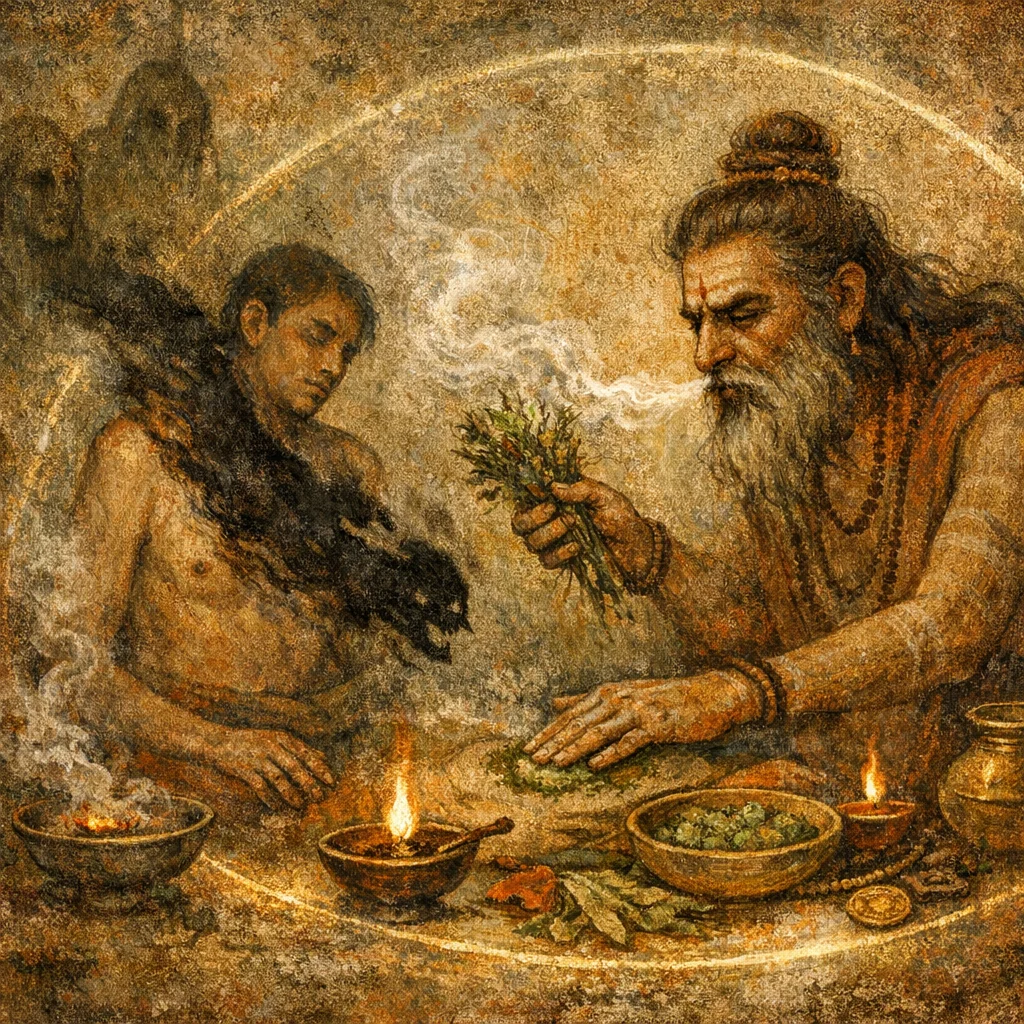
Sukta 39
Rishi: Atharvanic tradition (often transmitted under Atharvan/Angiras lineages for oṣadhi-sūktas; specific r̥ṣi attribution requires pada-anukramaṇī confirmation).
Devata: Kuṣṭha (oṣadhi as devatā); secondarily Takmán (as adversary) and Yātudhānīs (as adversaries).
Chandas: Anuṣṭubh (predominant in AV healing charms; to be metrically verified per pāda).
Mantras
Mantra 1
कुष्ठनाशनम्। ऐतु देवस्त्रायमाणः कुष्ठो हिमवतस्परि । तक्मानं सर्वं नाशय सर्वाश्च यातुधान्यः
Let the god Kuṣṭha come, a saviour, from about the Himavat. Destroy every Takmán-fever, and all the Yātudhānī demonesses.
Mantra 2
त्रीणि ते कुष्ठ नामानि नद्यमारो नद्यारिषः । नद्यायं पुरुषो रिषत्। यस्मै परिब्रवीमि त्वा सायंप्रातरथो दिवा
Three are thy names, O Kuṣṭha: River-slayer, River-unharmed. At the river a man is injured; for whom I speak thee round about—at eve, at morn, and also by day.
Mantra 3
जीवला नाम ते माता जीवन्तो नाम ते पिता। नद्यायं पुरुषो रिषत्। यस्मै परिब्रवीमि त्वा सायंप्रातरथो दिवा
Jīvalā by name is thy mother; Jīvantá by name is thy father. At the river a man is injured; for whom I speak thee round about—at eve, at morn, and also by day.
Mantra 4
उत्तमो अस्योषधीनामनड्वान् जगतामिव व्याघ्रः श्वपदामिव । नद्यायं पुरुषो रिषत्। यस्मै परिब्रवीमि त्वा सायंप्रातरथो दिवा
Thou art the highest of herbs: a bull, as it were, among creatures that move; a tiger, as it were, among wild beasts. At the river a man is injured; for whom I speak thee round about—at eve, at morn, and also by day.
Mantra 5
त्रिः शाम्बुभ्यो अङ्गिरेभ्यस्त्रिरादित्येभ्यस्परि । त्रिर्जातो विश्वदेवेभ्यः । स कुष्ठो विश्वभेषजः साकं सोमेन तिष्ठति । तक्मानं सर्वं नाशय सर्वाश्च यातुधान्यः
Thrice from the Śambhus, from the Aṅgirases; thrice from about the Ādityas; thrice born from the All-Gods. That Kuṣṭha, the universal medicine, abides together with Soma. Destroy every Takmán-fever, and all the Yātudhānī demonesses.
Mantra 6
अश्वत्थो देवसदनस्तृतीयस्यामितो दिवि। तत्रामृतस्य चक्षणं ततः कुष्ठो अजायत । स कुष्ठो विश्वभेषजः साकं सोमेन तिष्ठति । तक्मानं सर्वं नाशय सर्वाश्च यातुधान्यः
The Aśvattha, a seat of Gods, in the third, the boundless heaven—there is the visible station of Immortality: thence Kuṣṭha was born. That Kuṣṭha, the universal remedy, standeth together with Soma. Destroy thou every fever, and all the Yātudhānī witches.
Mantra 7
हिरण्ययी नौरचरद्धिरण्यबन्धना दिवि। तत्रामृतस्य चक्षणं ततः कुष्ठो अजायत । स कुष्ठो विश्वभेषजः साकं सोमेन तिष्ठति । तक्मानं सर्वं नाशय सर्वाश्च यातुधान्यः
A golden ship went moving in the heaven, gold-bound. There is the visible station of Immortality: thence Kuṣṭha was born. That Kuṣṭha, the universal remedy, standeth together with Soma. Destroy thou every fever, and all the Yātudhānī witches.
Mantra 8
यत्र नावप्रभ्रंशनं यत्र हिमवतः शिरः । तत्रामृतस्य चक्षणं ततः कुष्ठो अजायत । स कुष्ठो विश्वभेषजः साकं सोमेन तिष्ठति । तक्मानं सर्वं नाशय सर्वाश्च यातुधान्यः
Where is the ship’s slipping-down, where the head of Himavat—there is the visible station of Immortality: thence Kuṣṭha was born. That Kuṣṭha, the universal remedy, standeth together with Soma. Destroy thou every fever, and all the Yātudhānī witches.
Mantra 9
यं त्वा वेद पूर्व इक्ष्वाको यं वा त्वा कुष्ठ काम्यः । यं वा वसो यमात्स्यस्तेनासि विश्वभेषजः
Whom ancient Ikṣvāku knew—yea, whom the seeker knew thee, O Kuṣṭha; whom Vasu knew, whom Mātsya knew—thereby thou art the universal remedy.
Mantra 10
शीर्षलोकं तृतीयकं सदन्दिर्यश्च हायनः । तक्मानं विश्वधावीर्याधराञ्चं परा सुव
To the head-world, to the third realm—Sadan-di and Hāyana: the fever, O world-ranging noble, drive thou downward, send it forth away.
Frequently Asked Questions
Kuṣṭha is a medicinal herb treated as a divine person—invited like a god—whose healing power is praised and activated to remove fever and protect the patient.
Takmán is fever personified as an attacking force; yātudhānīs are hostile, witch-like beings linked with illness and misfortune. The hymn uses command-formulas to expel both the symptom (fever) and its perceived occult causes.
A healer recites it over Kuṣṭha (and water/medicine), applies the herb as an amulet, fumigation, or paste, and performs a downward/outward banishing gesture while commanding the fever to depart and not return.