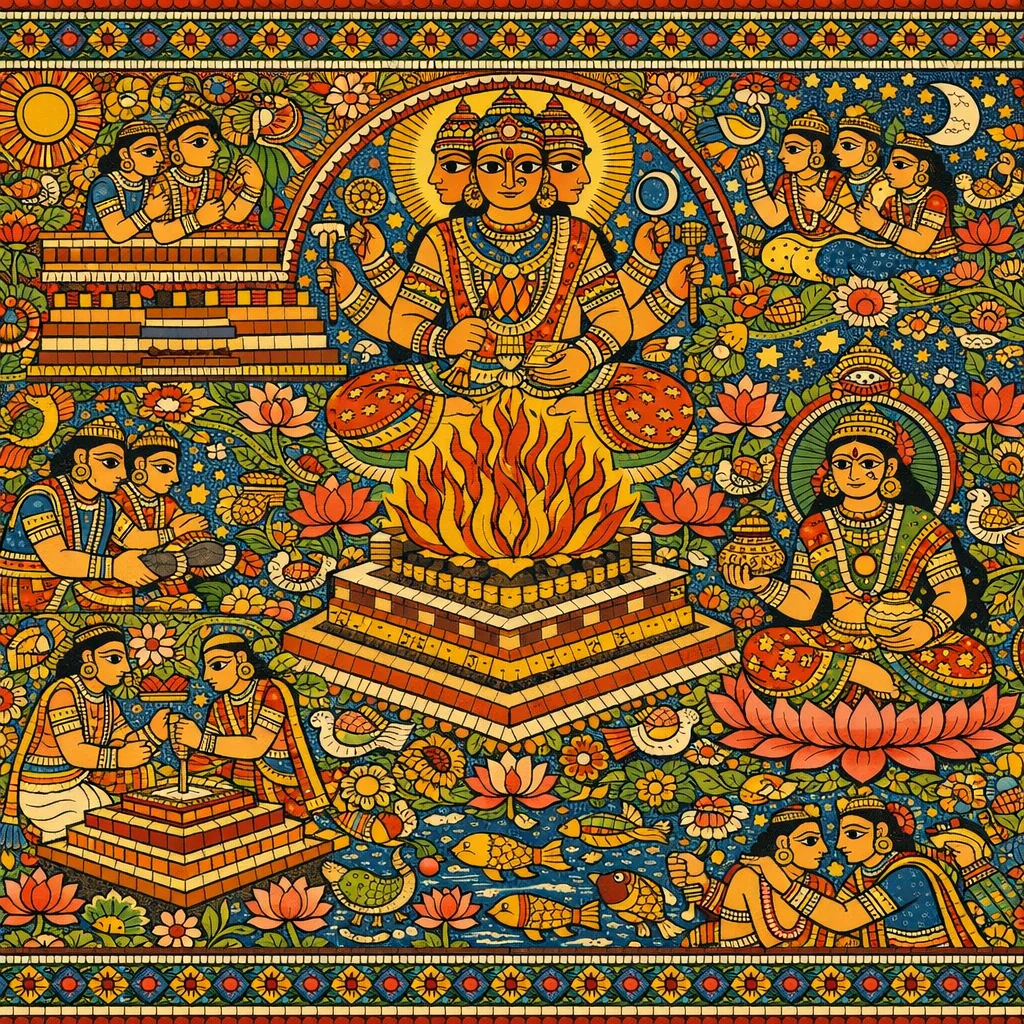
Adhyaya 13
Second and third layers of the fire altar.
Mantras
Mantra 1
मयि॑ गृह्णा॒म्यग्रे॑ अ॒ग्निᳪ रा॒यस्पोषा॑य सुप्रजा॒स्त्वाय॑ सु॒वीर्या॑य । मामु॑ दे॒वता॑: सचन्ताम्
In me, at the outset, I take Agni, for the fostering of wealth, for the obtaining of good offspring, for the gaining of excellent manly vigour. May the deities, moreover, cleave unto me.
Mantra 2
अ॒पां पृ॒ष्ठम॑सि॒ योनि॑र॒ग्नेः स॑मु॒द्रम॒भित॒: पिन्व॑मानम् । वर्ध॑मानो म॒हाँ२ आ च॒ पुष्क॑रे दि॒वो मात्र॑या वरि॒म्णा प्र॑थस्व
Thou art the surface of the waters, the womb of Agni, the ocean swelling on every side. Growing great, do thou spread forth also in the lotus, by the measure of heaven, by breadth of space.
Mantra 3
ब्रह्म॑ जज्ञा॒नं प्र॑थ॒मं पु॒रस्ता॒द्वि सी॑म॒तः सु॒रुचो॑ वे॒न आ॑वः । स बु॒ध्न्या॒ उप॒मा अ॑स्य वि॒ष्ठाः स॒तश्च॒ योनि॒मस॑तश्च॒ वि व॑:
Brahman, born first in the beginning, the fair-shining Vena hath disclosed it from the boundary. Its stations are the deep foundations; it hath revealed the womb of the existent and of the non-existent.
Mantra 4
हि॒र॒ण्य॒ग॒र्भः सम॑वर्त॒ताग्रे॑ भू॒तस्य॑ जा॒तः पति॒रेक॑ आसीत् । स दा॑धार पृथि॒वीं द्यामु॒तेमां कस्मै॑ दे॒वाय॑ ह॒विषा॑ विधेम
The Golden Germ arose in the beginning; born as the sole lord of what hath come to be. He upheld this earth and yonder heaven: to what god shall we offer worship with oblation?
Mantra 5
द्र॒प्सश्च॑स्कन्द पृथि॒वीमनु॒ द्यामि॒मं च॒ योनि॒मनु॒ यश्च॒ पूर्व॑: । स॒मा॒नं योनि॒मनु॑ स॒ञ्चर॑न्तं द्र॒प्सं जु॑हो॒म्यनु॑ स॒प्त होत्रा॑:
The drop hath leapt along the earth, along yonder heaven, and along this womb, and that which was of old. Moving along the self-same womb, that drop I offer, following the seven priestly functions.
Mantra 6
नमो॑ऽस्तु स॒र्पेभ्यो॒ ये के च॑ पृथि॒वीमनु॑ । ये अ॒न्तरि॑क्षे॒ ये दि॒वि तेभ्य॑: स॒र्पेभ्यो॒ नम॑:
Obeisance be unto the Serpents, whatsoever (serpents) there are that range along the earth; and those that are in the mid-air, and those that are in heaven—to those Serpents be obeisance.
Mantra 7
या इष॑वो यातु॒धाना॑नां॒ ये वा॒ वन॒स्पतीँ॒१ रनु॑ । ये वा॑व॒टेषु॒ शेर॑ते॒ तेभ्य॑: स॒र्पेभ्यो॒ नम॑:
Those missiles of the Yātudhānas, and those (serpents) that follow along the trees, and those that lie in pits—to those Serpents be obeisance.
Mantra 8
ये वा॒मी रो॑च॒ने दि॒वो ये वा॒ सूर्य॑स्य र॒श्मिषु॑ । येषा॑म॒प्सु सद॑स्कृ॒तं तेभ्य॑: स॒र्पेभ्यो॒ नम॑:
Whether those (serpents) are in the bright realm of heaven, or whether in the rays of the Sun, or those whose abode is made in the waters—to those Serpents be obeisance.
Mantra 9
कृ॒णु॒ष्व पाज॒: प्रसि॑तिं॒ न पृ॒थ्वीं या॒हि राजे॒वाम॑वाँ॒२ इभे॑न । तृ॒ष्वीमनु॒ प्रसि॑तिं द्रूणा॒नोऽस्ता॑सि॒ विध्य॑ र॒क्षस॒स्तपि॑ष्ठैः
Put forth thy might; advance, as it were, across the earth; go like a king, strong, with an elephant. Following thy eager onset, rushing on, thou art an archer: pierce thou the Rakṣas with thy most burning (shafts)!
Mantra 10
तव॑ भ्र॒मास॑ आशु॒या प॑त॒न्त्यनु॑स्पृश धृष॒ता शोशु॑चानः । तपू॑ᳪष्यग्ने जु॒ह्वा॒ पत॒ङ्गानस॑न्दितो॒ वि सृ॑ज॒ विष्व॑गु॒ल्काः
Thy swift whirlings fly forth; boldly, blazing, sweep thou along. With thy ladle, O Agni, scorch the flying (pests/fiends); unfettered, send forth thy firebrands on every side!
Mantra 11
प्रति॒ स्पशो॒ वि सृ॑ज॒ तूर्णि॑तमो॒ भवा॑ पा॒युर्वि॒शो अ॒स्या अद॑ब्धः । यो नो॑ दू॒रे अ॒घश॑ᳪसो॒ यो अन्त्यग्ने॒ मा कि॑ष्टे॒ व्यथि॒रा द॑धर्षीत्
Drive thou back the spies; disperse them: be thou the swiftest; be the unbeguiled protector of this folk. Whoso maligneth us from far, or whoso is nigh, O Agni—let none that would unsettle us dare to assail thee.
Mantra 12
उद॑ग्ने तिष्ठ॒ प्रत्या त॑नुष्व॒ न्यमित्राँ॑२ ओषतात्तिग्महेते । यो नो॒ अरा॑तिᳪ समिधान च॒क्रे नी॒चा तं ध॑क्ष्यत॒सं न शुष्क॑म्
Rise up, O Agni; stretch thyself against them; smite down the foes, O thou of keen-edged weapon. Whoso, when thou art kindled, worketh us ill-will—him, brought low, shalt thou burn up, as one burneth dry fuel.
Mantra 13
ऊ॒र्ध्वो भ॑व॒ प्रति॑ वि॒ध्याध्य॒स्मदा॒विष्कृ॑णुष्व॒ दैव्या॑न्यग्ने । अव॑ स्थि॒रा त॑नुहि यातु॒जूनां॑ जा॒मिमजा॑मिं॒ प्र मृ॑णीहि॒ शत्रू॑न् । अ॒ग्नेष्ट्वा॒ तेज॑सा सादयामि
Be thou upright; smite back; above us make thou manifest the divine powers, O Agni. Cast down the steadfast bands of sorcerers; crush thou the foe, whether kinsman or stranger. O Agni, having worshipped, with thy splendour do I cause thee to be firmly seated.
Mantra 14
अ॒ग्निर्मू॒र्धा दि॒वः क॒कुत्पति॑: पृथि॒व्या अ॒यम् । अ॒पाᳪ रेता॑ᳪसि जिन्वति । इन्द्र॑स्य॒ त्वौज॑सा सादयामि
Agni is the head of heaven, the lord of the world’s high ridge, even this (fire) of the earth; he quickeneth the seeds of the waters. With Indra’s might do I cause thee to be firmly seated.
Mantra 15
भुवो॑ य॒ज्ञस्य॒ रज॑सश्च ने॒ता यत्रा॑ नि॒युद्भि॒: सच॑से शि॒वाभि॑: । दि॒वि मू॒र्धानं॑ दधिषे स्व॒र्षां जि॒ह्वाम॑ग्ने चकृषे हव्य॒वाह॑म्
Leader thou art of the sacrifice, of earth and of the mid-region, wherewith, with auspicious yoked teams, thou movest. In heaven thou settest the head; the tongue that reacheth Svah hast thou fashioned, O Agni, as the bearer of oblations.
Mantra 16
ध्रु॒वाऽसि॑ ध॒रुणाऽऽस्तृ॑ता वि॒श्वक॑र्मणा । मा त्वा॑ समु॒द्र उद्व॑धी॒न्मा सु॑प॒र्णोऽव्य॑थमाना पृथि॒वीं दृ॑ᳪह
Thou art the Firm One, a support well spread by Viśvakarman. Let not the Ocean heave thee up; let not the fair-winged one, without distress, loosen thee: make thou the Earth steadfast.
Mantra 17
प्र॒जाप॑तिष्ट्वा सादयत्व॒पां पृ॒ष्ठे स॑मु॒द्रस्येम॑न् । व्यच॑स्वतीं॒ प्रथ॑स्वतीं॒ प्रथ॑स्व पृथि॒व्य॒सि
May Prajāpati cause thee to settle here, upon the back of the Waters, upon the Ocean. Wide-spreading and broad-spreading—spread thou forth: thou art the Earth.
Mantra 18
भूर॑सि॒ भूमि॑र॒स्यदि॑तिरसि वि॒श्वधा॑या॒ विश्व॑स्य॒ भुव॑नस्य ध॒र्त्री । पृ॒थि॒वीं य॑च्छ पृथि॒वीं दृ॑ᳪह पृथि॒वीं मा हि॑ᳪसीः
Thou art Bhūr; thou art Earth; thou art Aditi, all-sustaining, the bearer of every being. Hold fast the Earth; make firm the Earth; injure not the Earth.
Mantra 19
विश्व॑स्मै प्रा॒णाया॑पा॒नाय॑ व्या॒नायो॑दा॒नाय॑ प्रति॒ष्ठायै॑ च॒रित्रा॑य । अ॒ग्निष्ट्वा॒ऽभि पा॑तु म॒ह्या स्व॒स्त्या छ॒र्दिषा॒ शन्त॑मेन॒ तया॑ दे॒वत॑याऽङ्गिर॒स्वद् ध्रु॒वा सी॑द
For the All— for in-breath and out-breath, for pervading breath and upward breath, for firm standing and for ordered course—may Agni guard thee on every side with mighty welfare, with the most gracious shelter: with that deity, Aṅgiras-like, sit thou firm.
Mantra 20
काण्डा॑त्काण्डात्प्र॒रोह॑न्ती॒ परु॑षः परुष॒स्परि॑ । ए॒वा नो॑ दूर्वे॒ प्र त॑नु स॒हस्रे॑ण श॒तेन॑ च
From stalk to stalk springing, from joint to joint spreading—thus, O Dūrvā, stretch thyself forth for us with a thousand, yea with a hundred (shoots).
Mantra 21
या श॒तेन॑ प्रत॒नोषि॑ स॒हस्रे॑ण वि॒रोह॑सि । तस्या॑स्ते देवीष्टके वि॒धेम॑ ह॒विषा॑ व॒यम्
Thou who with a hundred dost spread thyself abroad, and with a thousand dost spring upward,—to thee, O divine brick, of her (the altar’s) substance, would we render due ordinance with oblation.
Mantra 22
यास्ते॑ अग्ने॒ सूर्ये॒ रुचो॒ दिव॑मात॒न्वन्ति॑ र॒श्मिभि॑: । ताभि॑र्नो अ॒द्य सर्वा॑भी रु॒चे जना॑य नस्कृधि
Those splendours of thine, O Agni, in the Sun, which with their rays stretch out the heaven,—with all of them, even to-day, make us for brightness; make us to beget (and win) splendour.
Mantra 23
या वो॑ दे॒वाः सूर्ये॒ रुचो॒ गोष्वश्वे॑षु॒ या रुच॑: । इन्द्रा॑ग्नी॒ ताभि॒: सर्वा॑भी॒ रुचं॑ नो धत्त बृहस्पते
What splendours are yours, O Gods, in the Sun, what splendours in kine and in horses,—O Indra and Agni, with all those splendours bestow ye splendour upon us, O Bṛhaspati.
Mantra 24
वि॒राड्ज्योति॑रधारयत्स्व॒राड्ज्योति॑रधारयत् । प्र॒जाप॑तिष्ट्वा सादयतु पृ॒ष्ठे पृ॑थि॒व्या ज्योति॑ष्मतीम् । विश्व॑स्मै प्रा॒णाया॑पा॒नाय॑ व्या॒नाय॒ विश्वं॒ ज्योति॑र्यच्छ । अ॒ग्निष्टेऽधि॑पति॒स्तया॑ दे॒वत॑याऽङ्गिर॒स्वद् ध्रु॒वा सी॑द
The all-ruling Light upheld (thee); the self-ruling Light upheld (thee). Let Prajāpati cause thee to sit upon the back of the Earth, as one endowed with light. Unto the universal Prāṇa, Apāna, and Vyāna do thou yield universal light. Agni is thy overlord: with that deity, in Angiras-wise fashion, sit thou down, O steadfast one.
Mantra 25
मधु॑श्च॒ माध॑वश्च॒ वास॑न्तिकावृ॒तू अ॒ग्नेर॑न्तः श्ले॒षो॒ऽसि॒ कल्पे॑तां॒ द्यावा॑पृथि॒वी कल्प॑न्ता॒माप॒ ओष॑धय॒: कल्प॑न्ताम॒ग्नय॒: पृथ॒ङ्नम॒ ज्यैष्ठ्या॑य॒ सव्र॑ताः । ये अ॒ग्नय॒: सम॑नसोऽन्त॒रा द्यावा॑पृथि॒वी इ॒मे | वास॑न्तिकावृ॒तू अ॑भि॒कल्प॑माना॒ इन्द्र॑मिव दे॒वा अ॑भि॒संवि॑शन्तु॒ तया॑ दे॒वत॑याऽङ्गिर॒स्वद् ध्रु॒वे सी॑दतम्
Madhu and Mādhava, the two vernal seasons, thou art the inner joint of Agni. Let Heaven and Earth be duly fitted; let the Waters be fitted; let the Plants be fitted; let the Fires be fitted—separate obeisance (be) to the eldest, to those of one ordinance. Those Fires which, of one mind, are between this Heaven and Earth—let the two vernal seasons, being duly adjusted, enter in and settle, as the Gods (settle) upon Indra. With that deity, Angiras-wise, upon the steadfast (place) do ye sit down.
Mantra 26
अषा॑ढाऽसि॒ सह॑माना॒ सह॒स्वारा॑ती॒ः सह॑स्व पृतनाय॒तः । स॒हस्र॑वीर्याऽसि॒ सा मा॑ जिन्व
Unconquered art thou, enduring; overcome thou the hostilities; overcome thou the assailant in battle. Of a thousand powers art thou: do thou invigorate me.
Mantra 27
मधु॒ वाता॑ ऋताय॒ते मधु॑ क्षरन्ति॒ सिन्ध॑वः । माध्वी॑र्नः स॒न्त्वोष॑धीः
Sweet be the winds unto him that walketh in the Order; sweet flow the rivers: honeyed be our plants.
Mantra 28
मधु॒ नक्त॑मु॒तोषसो॒ मधु॑म॒त्पार्थि॑व॒ᳪ रज॑: । मधु॒ द्यौर॑स्तु नः पि॒ता
Sweet be the night and also the dawns; honeyed be the earthly region; sweet be the heaven, our Father.
Mantra 29
मधु॑मान्नो॒ वन॒स्पति॒र्मधु॑माँ२ अस्तु॒ सूर्य॑: । माध्वी॒र्गावो॑ भवन्तु नः
Honeyed be for us the lord of the forest; honeyed be the Sun; honeyed be our cows.
Mantra 30
अ॒पां गम्भ॑न्त्सीद॒ मा त्वा॒ सूर्यो॒ऽभि ता॑प्सी॒न्माऽग्निर्वै॑श्वान॒रः । अच्छि॑न्नपत्राः प्र॒जा अ॑नु॒वीक्ष॒स्वानु॑ त्वा दि॒व्या वृष्टि॑: सचताम्
In the depth of the waters do thou settle; let not the Sun scorch thee, nor Agni Vaiśvānara. With leaves unshorn, look thou upon the creatures; and may the heavenly rain attend upon thee.
Mantra 31
त्रीन्त्स॑मु॒द्रान्त्सम॑सृपत् स्व॒र्गान॒पां पति॑र्वृष॒भ इष्ट॑कानाम् । पुरी॑षं॒ वसा॑नः सुकृ॒तस्य॑ लो॒के तत्र॑ गच्छ॒ यत्र॒ पूर्वे॒ परे॑ताः
He streamed together over the three oceans, unto the heavenly regions—Lord of the waters, the Bull of the altar-bricks. Clothed in the filling-earth, in the world of the well-doer—go thou thither, where the former have departed.
Mantra 32
म॒ही द्यौः पृ॑थि॒वी च॑ न इ॒मं य॒ज्ञं मि॑मिक्षताम् । पि॒पृ॒तां नो॒ भरी॑मभिः
May mighty Heaven and Earth together make this sacrifice to thrive for us; may they fill us with sustaining supports.
Mantra 33
विष्णो॒: कर्मा॑णि पश्यत॒ यतो॑ व्र॒तानि॑ पस्प॒शे । इन्द्र॑स्य॒ युज्य॒: सखा॑
Behold the deeds of Viṣṇu, whence he hath looked upon the sacred ordinances—Indra’s meet companion, yoked for the work.
Mantra 34
ध्रु॒वाऽसि॑ ध॒रुणे॒तो ज॑ज्ञे प्रथ॒ममे॒भ्यो योनि॑भ्यो॒ अधि॑ जा॒तवे॑दा: । स गा॑य॒त्र्या त्रि॒ष्टुभा॑ऽनु॒ष्टुभा॑ च दे॒वेभ्यो॑ ह॒व्यं व॑हतु प्रजा॒नन्
Thou art firm; as a support from hence was Jātavedas born, first of these wombs, from above. May he, with Gāyatrī and Triṣṭubh and Anuṣṭubh, knowing, bear the oblation unto the Gods.
Mantra 35
इ॒षे रा॒ये र॑मस्व॒ सह॑से द्यु॒म्न ऊ॒र्जे अप॑त्याय । स॒म्राड॑सि स्व॒राड॑सि सारस्व॒तौ त्वोत्सौ॒ प्राव॑ताम्
For nourishment, for wealth, take thou thy delight; for might, for splendour, for strength, for offspring. Thou art universal ruler, thou art self-ruler: may the two Sarasvatī-springs protect and prosper thee.
Mantra 36
अग्ने॑ यु॒क्ष्वा हि ये तवाश्वा॑सो देव सा॒धव॑: । अरं॒ वह॑न्ति म॒न्यवे॑
O Agni, yoke thou, for those horses of thine, O god, being good and meet, bear duly onward for the impelling ardour (Manyu).
Mantra 37
यु॒क्ष्वा हि दे॑व॒हूत॑माँ२ अश्वाँ॑२ अग्ने र॒थीरि॑व । नि होता॑ पू॒र्व्यः स॑दः
Yoke thou, forsooth, thy horses, most called of the gods, O Agni, like a charioteer; sit down—the primeval Hotṛ—upon the Sadas-seat.
Mantra 38
स॒म्यक् स्र॑वन्ति स॒रितो॒ न धेना॑ अ॒न्तर्हृ॒दा मन॑सा पू॒यमा॑नाः । घृ॒तस्य॒ धारा॑ अ॒भि चा॑कशीमि हिर॒ण्ययो॑ वेत॒सो मध्ये॑ अ॒ग्नेः
Rightly they flow, like rivers, like milch-cows, being purified by mind with inward heart; the streams of ghee I steadfastly behold—golden—in the midst of the reed, in Agni.
Mantra 39
ऋ॒चे त्वा॑ रु॒चे त्वा॑ भा॒से त्वा॒ ज्योति॑षे त्वा । अभू॑दि॒दं विश्व॑स्य॒ भुव॑नस्य॒ वाजि॑नम॒ग्नेर्वै॑श्वान॒रस्य॑ च
For the Ṛc I take thee; for splendour I take thee; for radiance I take thee; for light I take thee. This hath become the vigorous power of the whole world’s being—of Agni Vaiśvānara as well.
Mantra 40
अ॒ग्निर्ज्योति॑षा॒ ज्योति॑ष्मान् रु॒क्मो वर्च॑सा॒ वर्च॑स्वान् । स॒ह॒स्र॒दा अ॑सि स॒हस्रा॑य त्वा
Agni, by light, is luminous; as gold, by lustre, is lustrous. Thou art a giver of a thousand: for a thousand (fold increase) I take thee/appoint thee.
Mantra 41
आ॒दि॒त्यं गर्भं॒ पय॑सा॒ सम॑ङ्धि स॒हस्र॑स्य प्रति॒मां वि॒श्वरू॑पम् । परि॑ वृङ्धि॒ हर॑सा॒ माऽभि म॑ᳪस्थाः श॒तायु॑षं कृणुहि ची॒यमा॑नः
Anoint with milk the Āditya-embryo, the universal-formed image of the thousand. Encompass it with glowing ardour; press not upon me: as thou art being built up, make it of a hundred years’ duration.
Mantra 42
वात॑स्य जू॒तिं वरु॑णस्य॒ नाभि॒मश्वं॑ जज्ञा॒नᳪ स॑रि॒रस्य॒ मध्ये॑ । शिशुं॑ न॒दीना॒ᳪ ह॒रि॒मद्रि॑बुध्न॒मग्ने॒ मा हि॑ᳪसीः पर॒मे व्यो॑मन्
The wind’s impetuous force, Varuṇa’s navel— a horse born in the body’s midst; like an infant of the rivers, tawny, rock-based: O Agni, injure it not in the highest heaven.
Mantra 43
अज॑स्र॒मिन्दु॑मरु॒षं भु॑र॒ण्युम॒ग्निमी॑डे पू॒र्वचि॑त्तिं॒ नमो॑भिः । स पर्व॑भिरृतु॒शः कल्प॑मानो॒ गां मा हि॑ᳪसी॒रदि॑तिं वि॒राज॑म्
Unceasing, bright, ruddy, swiftly-moving—Agni, the ancient-minded, I adore with reverences. As he is being fitted together, joint by joint, season by season, injure not the Cow—Aditi, the wide-ruling.
Mantra 44
वरू॑त्रीं॒ त्वष्टु॒र्वरु॑णस्य॒ नाभि॒मविं॑ जज्ञा॒नाᳪ रज॑स॒: पर॑स्मात् । म॒हीᳪ सा॑ह॒स्रीमसु॑रस्य मा॒यामग्ने॒ मा हि॑ᳪसीः पर॒मे व्यो॑मन्
The protecting form of Tvaṣṭṛ, Varuṇa’s navel—an ewe brought forth from beyond the region; the great, thousandfold power of the Asura: O Agni, injure it not in the highest heaven.
Mantra 45
यो अ॒ग्निर॒ग्नेरध्यजा॑यत॒ शोका॑त्पृथि॒व्या उ॒त वा॑ दि॒वस्परि॑ । येन॑ प्र॒जा वि॒श्वक॑र्मा ज॒जान॒ तम॑ग्ने॒ हेड॒: परि॑ ते वृणक्तु
That Agni who was born from Agni, from the burning heat, from the earth, or again from around the sky—he by whom Viśvakarman generated creatures—may that, O Agni, avert from thee the hurtful wrath.
Mantra 46
चि॒त्रं दे॒वाना॒मुद॑गा॒दनी॑कं॒ चक्षु॑र्मि॒त्रस्य॒ वरु॑णस्या॒ग्नेः । आऽप्रा॒ द्यावा॑पृथि॒वी अ॒न्तरि॑क्ष॒ᳪ सूर्य॑ आ॒त्मा जग॑तस्त॒स्थुष॑श्च
The bright face of the Gods hath risen aloft,—the eye of Mitra, Varuṇa, and Agni. He hath filled heaven and earth and the mid-air: the Sun is the very Self of all that moveth and that standeth.
Mantra 47
इ॒मं मा हि॑ᳪसीर्द्वि॒पादं॑ प॒शुᳪ स॑हस्रा॒क्षो मेधा॑य ची॒यमा॑नः । म॒युं प॒शुं मेध॑मग्ने जुषस्व॒ तेन॑ चिन्वा॒नस्त॒न्वो नि षी॑द । म॒युं ते॒ शुगृ॑च्छतु॒ यं द्वि॒ष्मस्तं ते॒ शुगृ॑च्छतु
Injure thou not this two-footed victim, whilst thou art being built for sacred power, O thousand-eyed! Accept, O Agni, the mayu-beast, meet for sacrifice; with it, as we build thee, sit down within our body. Let the mayu bear away thy hurtful heat; whom we hate, on him let thy hurtful heat fall.
Mantra 48
इ॒मं मा हि॑ᳪसी॒रेक॑शफं प॒शुं क॑निक्र॒दं वा॒जिनं॒ वाजि॑नेषु । गौ॒रमा॑र॒ण्यमनु॑ ते दिशामि॒ तेन॑ चिन्वा॒नस्त॒न्वो नि षी॑द । गौ॒रं ते॒ शुगृ॑च्छतु॒ यं द्वि॒ष्मस्तं ते॒ शुगृ॑च्छतु
Injure thou not this single-hoofed victim, the neighing racer, victorious among the strong. The wild gaura of the forest I assign unto thee: with it, as we build thee, sit down within our body. Let the gaura bear away thy hurtful heat; whom we hate, on him let thy hurtful heat fall.
Mantra 49
इ॒मᳪ सा॑ह॒स्रᳪ श॒तधा॑र॒मुत्सं॑ व्य॒च्यमा॑नᳪ सरि॒रस्य॒ मध्ये॑ । घृ॒तं दुहा॑ना॒मदि॑तिं॒ जना॒याग्ने॒ मा हि॑ᳪसीः पर॒मे व्यो॑मन् । ग॒व॒यमा॑र॒ण्यमनु॑ ते दिशामि॒ तेन॑ चिन्वा॒नस्त॒न्वो नि षी॑द । ग॒व॒यं ते॒ शुगृ॑च्छतु॒ यं द्वि॒ष्मस्तं ते॒ शुगृ॑च्छतु
Injure thou not this thousandfold, hundred-streamed spring, spreading within the midst of the body,—Aditi for men, milking forth ghee: O Agni, injure thou not, in the highest heaven. The wild gavaya of the forest I assign unto thee; with it, as we build thee, sit down within our body. Let the gavaya bear away thy hurtful heat; whom we hate, on him let thy hurtful heat fall.
Mantra 50
इ॒ममू॑र्णा॒युं वरु॑णस्य॒ नाभिं॒ त्वचं॑ पशू॒नां द्वि॒पदां॒ चतु॑ष्पदाम् । त्वष्टु॑: प्र॒जानां॑ प्रथ॒मं ज॒नित्र॒मग्ने॒ मा हि॑ᳪसीः पर॒मे व्यो॑मन् । उष्ट्र॑मार॒ण्यमनु॑ ते दिशामि॒ तेन॑ चिन्वा॒नस्त॒वो नि षी॑द । उष्ट्रं॑ ते॒ शुगृ॑च्छतु॒ यं द्वि॒ष्मस्तं ते॒ शुगृ॑च्छतु
Injure thou not this woolly one,—Varuṇa’s navel, the skin of beasts, of bipeds and of quadrupeds,—Tvaṣṭṛ’s first begetter of creatures: O Agni, injure thou not, in the highest heaven. The wild camel I assign unto thee; with it, as we build thee, sit down within our body. Let the camel bear away thy hurtful heat; whom we hate, on him let thy hurtful heat fall.
Mantra 51
अ॒जो ह्य॒ग्नेरज॑निष्ट॒ शोका॒त्सो अ॑पश्यज्जनि॒तार॒मग्रे॑ । तेन॑ दे॒वा दे॒वता॒मग्र॑मायँ॒स्तेन॒ रोह॑माय॒न्नुप॒ मेध्या॑सः । श॒र॒भमा॑र॒ण्यमनु॑ ते दिशामि॒ तेन॑ चिन्वा॒नस्त॒न्वो नि षी॑द । श॒र॒भं ते॒ शुगृ॑च्छतु॒ यं द्वि॒ष्मस्तं ते॒ शुगृ॑च्छतु
Unborn, indeed, from Agni was he generated out of burning grief; and he beheld at the beginning the Begetter. Therewith the Gods went unto the foremost Godhead; therewith the consecrated drew nigh unto the ascent. A wild Śarabha do I assign after thee: therewith, as he buildeth up his body, do thou sit down. May the Śarabha, the piercing hurt, go unto him whom we hate; yea, may that piercing hurt go unto him.
Mantra 52
त्वं य॑विष्ठ दा॒शुषो॒ नॄँ: पा॑हि शृणु॒धी गिर॑: । रक्षा॑ तो॒कमु॒त त्मना॑
Thou, youngest (Agni), do thou protect the men of the worshipper; hearken thou unto our utterances. Guard thou the offspring, yea, with thine own self.
Mantra 53
अ॒पां त्वेम॑न्त्सादयाम्य॒पां त्वोद्म॑न्त्सादयाम्य॒पां त्वा॒ भस्म॑न्त्सादयाम्य॒पां त्वा॒ ज्योति॑षि सादयाम्य॒पां त्वाऽय॑ने सादयाम्यर्ण॒वे त्वा॒ सद॑ने सादयामि समु॒द्रे त्वा॒ सद॑ने सादयामि सरि॒रे त्वा॒ सद॑ने सादयाम्य॒पां त्वा॒ क्षये॑ सादयाम्य॒पां त्वा॒ सधि॑षि सादयाम्य॒पां त्वा॒ सद॑ने सादयाम्य॒पां त्वा॑ स॒धस्थे॑ सादयाम्य॒पां त्वा॒ योनौ॑ सादयाम्य॒पां त्वा॒ पुरी॑षे सादयाम्य॒पां त्वा॒ पाथ॑सि सादयामि गाय॒त्रेण॑ त्वा॒ छन्द॑सा सादयामि॒ त्रै॑ष्टुभेन त्वा॒ छन्द॑सा सादयामि॒ जाग॑तेन त्वा॒ छन्द॑सा सादया॒म्यानु॑ष्टुभेन त्वा॒ छन्द॑सा सादयामि॒ पाङ्क्ते॑न त्वा॒ छन्द॑सा सादयामि
In the waters’ this (seat) do I cause thee to settle; in the waters’ swelling do I cause thee to settle; in the waters’ ash do I cause thee to settle; in the waters’ light do I cause thee to settle; in the waters’ course do I cause thee to settle. In the flood do I cause thee to settle in a seat; in the sea do I cause thee to settle in a seat; in the stream do I cause thee to settle in a seat. In the waters’ dwelling do I cause thee to settle; in the waters’ support do I cause thee to settle; in the waters’ seat do I cause thee to settle; in the waters’ firm station do I cause thee to settle; in the waters’ womb do I cause thee to settle; in the waters’ moist packing do I cause thee to settle; in the waters’ path do I cause thee to settle. With the Gāyatrī metre do I cause thee to settle; with the Triṣṭubh metre do I cause thee to settle; with the Jagatī metre do I cause thee to settle; with the Anuṣṭubh metre do I cause thee to settle; with the Paṅkti metre do I cause thee to settle.
Mantra 54
अ॒यं पु॒रो भुव॒स्तस्य॑ प्रा॒णो भौ॑वाय॒नो व॑स॒न्तः प्रा॑णाय॒नो गा॑य॒त्री वा॑स॒न्ती गा॑य॒त्र्यै गा॑य॒त्रं गा॑य॒त्रादु॑पा॒ᳪशुरु॑पा॒ᳪशोस्त्रि॒वृत् त्रि॒वृतो॑ रथन्त॒रं वसि॑ष्ठ॒ ऋषि॑: प्र॒जाप॑तिगृहीतया॒ त्वया॑ प्रा॒णं गृ॑ह्णामि प्र॒जाभ्य॑:
This is the fore-part, the ‘Bhuvas’: thereof the breath is the Bhauvāyana; spring is the course of the breath; the Gāyatrī is verily spring; for the Gāyatrī is the Gāyatra; from the Gāyatra is the Upāṃśu; from the Upāṃśu the Trivṛt; from the Trivṛt the Rathantara. Vasiṣṭha is the seer. With thee, taken by Prajāpati, do I take the breath for offspring.
Mantra 55
अ॒यं द॑क्षि॒णा वि॒श्वक॑र्मा॒ तस्य॒ मनो॑ वैश्वकर्म॒णं ग्री॒ष्मो मा॑न॒सस्त्रिष्टुब्ग्रै॒ष्मी॑ त्रि॒ष्टुभ॑: स्वा॒रᳪ स्वा॒राद॑न्तर्या॒मो॒ऽन्तर्या॒मात्प॑ञ्चद॒शः प॑ञ्चद॒शाद् बृ॒हद् भ॒रद्वा॑ज॒ ऋषि॑: प्र॒जाप॑तिगृहीतया॒ त्वया॒ मनो॑ गृह्णामि प्र॒जाभ्य॑:
This is the right (side), Viśvakarman: thereof the mind is the Viśvakarman’s; summer is of the mind; the Triṣṭubh is summer; from the Triṣṭubh is the Svāra; from the Svāra the Antaryāma; from the Antaryāma the Pañcadaśa; from the Pañcadaśa the Bṛhat. Bharadvāja is the seer. With thee, taken by Prajāpati, do I take the mind for offspring.
Mantra 56
अ॒यं प॒श्चाद्वि॒श्वव्य॑चा॒तस्य॒ चक्षु॑र्वैश्वव्यच॒सं व॒र्षाश्चाक्षु॑ष्यो जग॑ती वा॒र्षी जग॑त्या॒ ऋक्स॑म॒मृक्स॑माच्छु॒क्रः शु॒क्रात्स॑प्तद॒शः स॑प्तद॒शाद्वै॑रू॒पं ज॒मद॑ग्नि॒रृषि॑: प्र॒जाप॑तिगृहीतया॒ त्वया॒ चक्षु॑र्गृह्णामि प्र॒जाभ्य॑:
This, in the rear (the western region), is the All-pervading: thereof the Eye is the All-pervading. The Rains are of the eye; Jagatī is the rainy (metre). From Jagatī is the Ṛk and Sāman in concord; from the Ṛk and Sāman in concord is the Bright one; from the Bright one the Seventeen; from the Seventeen the Vairūpa. Jamadagni is the seer. With thee, seized by Prajāpati, I take the eye for progeny.
Mantra 57
इ॒दमु॑त्त॒रात् स्व॒स्तस्य॒ श्रोत्र॑ᳪ सौ॒वᳪ श॒रच्छ्रौ॒त्र्य॒नु॒ष्टुप् शा॑र॒द्य॒नु॒ष्टुभ॑ ऐ॒डमै॒डान्म॒न्थी म॒न्थिन॑ एकवि॒ᳪश ए॑कविᳪशाद्वै॑रा॒जं वि॒श्वामि॑त्र॒ ऋषि॑: प्र॒जाप॑तिगृहीतया॒ त्वया॒ श्रोत्रं॑ गृह्णामि प्र॒जाभ्य॑:
This, from the north, is Heaven: thereof the Ear is the heavenly. Autumn is of the ear; Anuṣṭubh is the autumnal (metre). From Anuṣṭubh is the Aiḍa; from the Aiḍa the Manthin; from the Manthin the Twenty-one; from the Twenty-one the Vairāja. Viśvāmitra is the seer. With thee, seized by Prajāpati, I take the ear for progeny.
Mantra 58
इ॒यमु॒परि॑ म॒तिस्तस्यै॒ वाङ्मा॒त्या हे॑म॒न्तो वा॒च्यः प॒ङ्क्तिर्है॑म॒न्ती प॒ङ्क्त्यै नि॒धन॑वन्नि॒धन॑वत आग्रय॒ण आ॑ग्रय॒णात् त्रि॑णवत्रयस्त्रि॒ᳪशौ त्रि॑णवत्रयस्त्रि॒ᳪशाभ्या॑ᳪ शाक्वररैव॒ते वि॒श्वक॑र्म॒ ऋषि॑: प्र॒जाप॑तिगृहीतया॒ त्वया॒ वाचं॑ गृह्णामि प्र॒जाभ्यो॑ लो॒कं ता इन्द्र॑म्
This above is Thought: thereof Speech is the measured utterance. Winter is of speech; Paṅkti is the wintry (metre). For Paṅkti there is the nidhana-bearing (chant); from the nidhana-bearing is the Āgrayaṇa; from the Āgrayaṇa the Thirty-nine and Thirty-three; from the Thirty-nine and Thirty-three the Śākvara and Raivata. Viśvakarman is the seer. With thee, seized by Prajāpati, I take speech for progeny—(and) a world; those (lead) to Indra.
Frequently Asked Questions
It primarily supports the Agnicayana by forming and stabilizing the middle layers of the fire-altar, establishing the ground as firm Earth and aligning the altar with cosmic order and protection.
They ritually “sweeten” time-joints and elemental supports (wind, waters, plants, earth/heaven), making the sacrificer’s world favorable and harmonious with ṛta, so the rite yields auspicious continuity.
Through rakṣā formulas—especially those invoking Agni as guardian of the breaths and those placing the sacred element in the depth of the Waters—along with general appeasement (e.g., serpents) and invocations of unconquered strength for rite-objects.