Adhyaya 81
Kurukṣetra–Sarasvatī Tīrtha-Māhātmya (Pilgrimage Merits and Sacred Geography)
Upa-parva: Tīrtha-yātrā (Pilgrimage Itinerary on Sarasvatī–Kurukṣetra Circuit)
Pulastya addresses Yudhiṣṭhira with an extended tīrtha itinerary centered on Kurukṣetra, Sarasvatī, and associated sites. The chapter asserts that even verbal intention toward Kurukṣetra reduces pāpa, while embodied pilgrimage with śraddhā yields high ritual merit. A long sequence names tīrthas and prescribes actions—bathing, worship of Hari/Śiva, tarpaṇa for pitṛs, regulated fasting, and overnight stays—each paired with stated results (e.g., go-sahasra fruit, agnīṣṭoma/atirātra, rājasūya/aśvamedha equivalences, and attainment of specific lokas). An embedded exemplum narrates Paraśurāma’s Rāma-hradās and his dialogue with the pitṛs, establishing those lakes as tīrthas. Another embedded episode recounts the siddha Maṅkaṇaka’s ecstatic dance and Śiva’s intervention, culminating in assurance of Śiva’s presence at Saptasārasvata. The chapter closes by elevating Kurukṣetra as uniquely salvific among the three worlds and defining ‘Samantapañcaka’ as Pitāmaha’s northern altar-region.
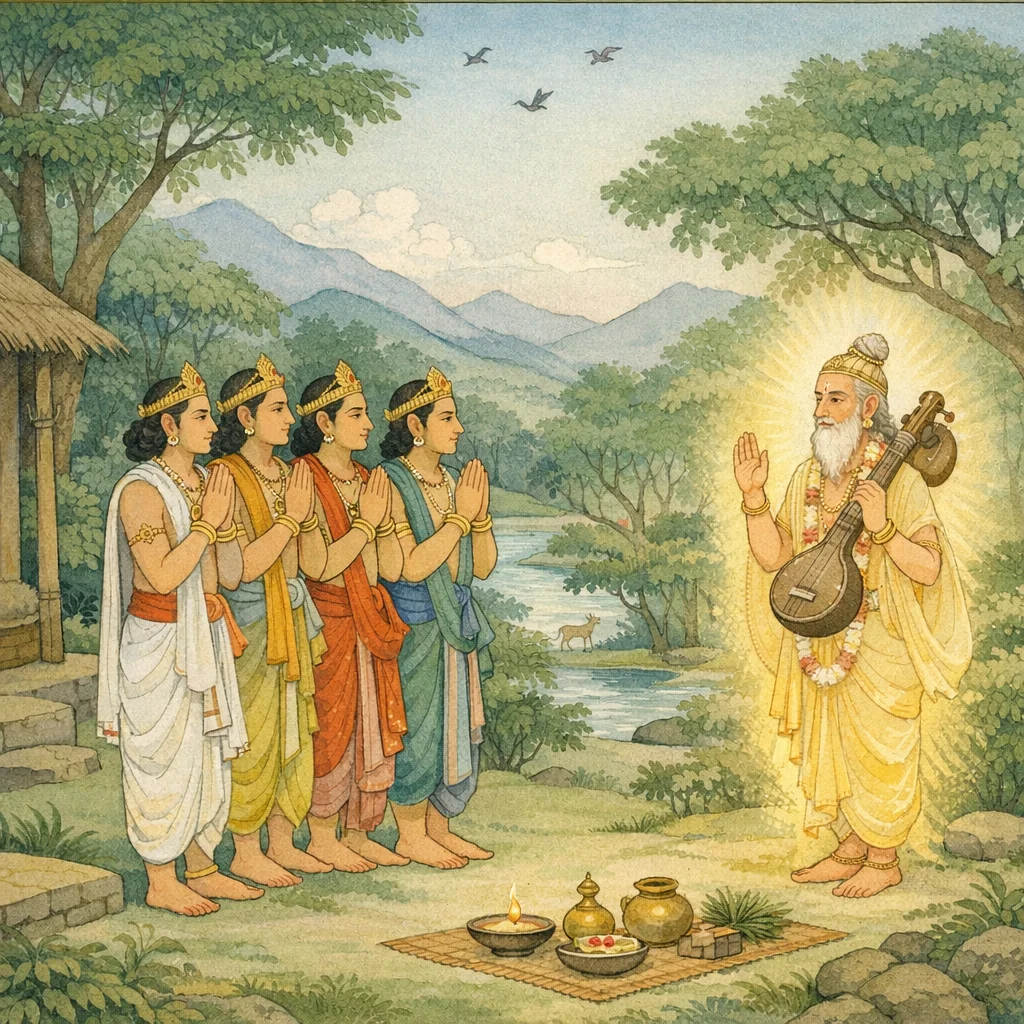
Chapter Arc: वनवास के एकांत में पाण्डवों के आश्रम पर देवर्षि नारद का तेजस्वी आगमन—हुतार्चिषि अग्नि-सा दीप्त, ब्राह्म-श्री से प्रकाशित। → धर्मराज युधिष्ठिर भाइयों सहित उठकर शास्त्रोक्त पूजन करते हैं और नारद के प्रसाद को ही अपने लिए सिद्धि मानते हैं; संवाद का भार ‘धर्म’ और ‘तीर्थ-यात्रा’ की दिशा पर टिकता है—किस प्रकार का संग, कौन-सा आचरण, और किससे पवित्रता आती है। → नारद के देवतुल्य सान्निध्य में युधिष्ठिर का विनयपूर्ण निवेदन—उनकी तुष्टि को ही सर्वलोक-पूज्य फल मानकर—धर्म-मार्ग के सूक्ष्म संकेतों को ग्रहण करने का क्षण; अध्याय का शिखर ‘महात्मा के दर्शन/पूजन से पावनता’ की अनुभूति में है। → अतिथि-सत्कार, अर्घ्य-पूजन, प्रणाम और प्रांजलि—इन विधियों द्वारा पाण्डवों का धर्म-आचरण पुष्ट होता है; संवाद की भूमि तैयार होकर अध्याय ‘पार्थ-नारद संवाद’ के रूप में स्थिर हो जाता है। → नारद के उपदेश/वृत्तांत की अगली कड़ी—तीर्थ, पवित्रता और धर्म-निर्णय के विस्तृत निर्देश आगे के अध्यायों में खुलने को छोड़ दिए जाते हैं।
Shlokas
Verse 1
हि आय न [हुक है ० - जिनके मारनेपर मारनेवाला पवित्र हो जाय, ऐसे हिंसक सिंह-व्याप्रादि पशुओंको पवित्र मृग कहा जाता है। एकाशीतितमो<ध्याय: युधिष्ठटिरके पास देवर्षि नारदका आगमन और तीर्थयात्राके फलके सम्बन्धमें पूछनेपर नारदजीद्वारा भीष्म-पुलस्त्य- संवादकी प्रस्तावना वैशम्पायन उवाच धनंजयोत्सुकानां तु भ्रातृणां कृष्णया सह । श्रुत्वा वाक्यानि विमना धर्मराजो5प्यजायत,वैशम्पायनजी कहते हैं-जनमेजय! धनंजयके लिये उत्सुक द्रौपदीसहित सब भाइयोंके पूर्वोक्त वचन सुनकर धर्मराज युधिष्ठिरका भी मन बहुत उदास हो गया
Vaiśampāyana said: “O Janamejaya, when Dharmarāja Yudhiṣṭhira heard the earlier words spoken by his brothers—together with Kṛṣṇā (Draupadī)—all of them eager for Dhanañjaya (Arjuna), his own mind too became downcast.”
Verse 2
अथापश्यन्महात्मान देवर्षि तत्र नारदम् । दीप्यमानं श्रिया ब्राह्म्या हुतार्चिषमिवानलम्,इतनेमें ही उन्होंने देखा, महात्मा देवर्षि नारद वहाँ उपस्थित हैं, जो अपने ब्राह्म तेजसे देदीप्यमान हो घीकी आहुतिसे प्रज्वलित हुई अग्निके समान प्रकाशित हो रहे हैं
Verse 3
तमागतमभिप्रेक्ष्य भ्रातृभि: सह धर्मराट् । प्रत्युत्थाय यथान्यायं पूजां चक्रे महात्मने,उन्हें आया देख भाइयोंसहित धर्मराजने उठकर उन महात्माका यथायोग्य सत्कार किया
Seeing that great-souled person arrive, Dharmarāja (Yudhiṣṭhira), together with his brothers, rose to receive him and, in accordance with proper custom and righteousness, offered him due honor and hospitality. The scene underscores the ethic of reverence toward the worthy and the duty of courteous reception even amid hardship.
Verse 4
स तै: परिवृतः श्रीमान् भ्रातृभि: कुरुसत्तम: । विबभावतिदीप्तौजा देवैरिव शतक्रतु:,अपने भाइयोंसे घिरे हुए अत्यन्त तेजस्वी कुरुश्रेष्ठ श्रीमान् युधिष्ठिर देवताओंसे घिरे हुए देवराज इन्द्रकी भाँति सुशोभित हो रहे थे
Vaiśaṃpāyana said: Surrounded by his brothers, the illustrious best of the Kurus shone with surpassing brilliance—like Śatakratu (Indra) radiant amid the gods. The image underscores righteous leadership: a king’s splendor is heightened not by solitary power, but by harmony, loyalty, and shared purpose with those bound to him by duty.
Verse 5
यथा च वेदान् सावित्री याज्ञसेनी तथा पतीन् | न जहीौ धर्मत: पार्थान् मेरुमर्कप्रभा यथा,जैसे गायत्री चारों वेदोंका और सूर्यकी प्रभा मेरु पर्वतका त्याग नहीं करती, उसी प्रकार याज्ञसेनी द्रौपदीने भी धर्मतः अपने पति कुन्तीकुमारोंका परित्याग नहीं किया
Vaiśampāyana said: Just as the Sāvitrī (Gāyatrī) does not abandon the Vedas, and as the sun’s radiance does not forsake Mount Meru, so too Yājñasenī (Draupadī), acting in accordance with dharma, did not renounce her husbands—the Pārthas, the sons of Kuntī.
Verse 6
प्रतिगृह्य च तां पूजां नारदो भगवानृषि: । आश्वासयद् धर्मसुतं युक्तरूपमिवानघ,निष्पाप जनमेजय! उनकी वह पूजा ग्रहण करके देवर्षि भगवान् नारदने धर्मपुत्र युधिष्ठिरको उचित सान्त्वना दी
Having accepted that act of reverent worship, the divine seer Nārada consoled Dharmasuta (Yudhiṣṭhira) with words that were fitting and well-reasoned—O blameless, sinless Janamejaya. The narrative underscores that true consolation is not mere comfort, but guidance aligned with dharma and sound judgment.
Verse 7
उवाच च महात्मानं धर्मराजं युधिष्ठिरम् । ब्रृहि धर्मभृतां श्रेष्ठ केनार्थ: कि ददानि ते,तत्पश्चात् वे महात्मा धर्मराज युधिष्ठिरसे इस प्रकार बोले--:धर्मात्माओंमें श्रेष्ठ नरेश! बोलो, तुम्हें किस वस्तुकी आवश्यकता है? मैं तुम्हें क्या दूँ?”
Vaiśampāyana said: Then he addressed the great-souled Dharmarāja Yudhiṣṭhira: “O best among upholders of dharma, speak—what do you need? What shall I give you?” The verse highlights a respectful, dharma-centered offer of aid, inviting Yudhiṣṭhira to state his rightful need rather than acting from impulse.
Verse 8
अथ धर्मसुतो राजा प्रणम्य भ्रातृभि: सह । उवाच प्राज्जलि र्भूत्वा नारदं देवसम्मितम्,तब भाइयोंसहित धर्मनन्दन राजा युधिष्ठिरने देवतुल्य नारदजीको प्रणाम करके हाथ जोड़कर कहा--
Then King Yudhiṣṭhira, the son of Dharma, having bowed down together with his brothers, spoke with folded hands to Nārada—revered as the equal of the gods—thus setting a tone of humility, reverence, and disciplined inquiry before receiving counsel.
Verse 9
त्वयि तुष्टे महाभाग सर्वलोकाभिपूजिते । कृतमित्येव मन्ये5हं प्रसादात् तव सुव्रत,“महाभाग! उत्तम व्रतका पालन करनेवाले सहर्षे! सम्पूर्ण विश्वके द्वारा पूजित आप महात्माके संतुष्ट होनेपर मैं ऐसा समझता हूँ कि आपकी कृपासे मेरा सब कार्य पूरा हो गया
When you, O noble one—revered and worshipped by all the worlds—are pleased, I deem my purpose already accomplished. By your gracious favor, O steadfast observer of excellent vows, my undertaking is fulfilled.
Verse 10
यदि त्वहमनुग्राह्मो भ्रातृभि: सहितो5नघ । संदेहं मे मुनिश्रेष्ठ तत्त्वतश्छेत्तुमहसि,“निष्पाप मुनिश्रेष्ठी यदि भाइयोंसहित मैं आपकी कृपाका पात्र होऊँ तो आप मेरे संदेहको सम्यक् प्रकारसे नष्ट कर दीजिये”
If I, together with my brothers, am worthy of your favor, O sinless one, then, O best of sages, you should truly dispel my doubt in accordance with reality. (He appeals to the sage’s compassion and authority, seeking a truthful resolution rather than mere reassurance.)
Verse 11
प्रदक्षिणां यः कुरुते पृथिवीं तीर्थतत्पर: । कि फल तस्य कार्त्स्न्येन तद्भवान् वक्तुमहति,“जो मनुष्य तीर्थयात्रामें तत्पर होकर इस पृथ्वीकी परिक्रमा करता है, उसे क्या फल मिलता है? यह आप पूर्णरूपसे बतानेकी कृपा करें”
Vaiśaṃpāyana said: “What complete reward does a person obtain who, devoted to pilgrimage, makes a circumambulation of the entire earth? Please be so kind as to explain that fruit in full.”
Verse 12
नारद उवाच शृणु राजन्नवहितो यथा भीष्मेण धीमता । पुलस्त्यस्य सकाशाद् वै सर्वमेतदुपश्रुतम्,नारदजीने कहा--राजन्! सावधान होकर सुनो, बुद्धिमान् भीष्मजीने महर्षि पुलस्त्यके मुखसे ये सब बातें जिस प्रकार सुनी थीं, वह सब मैं तुम्हें बता रहा हूँ
Narada said: “O King, listen attentively. I shall relate to you all this exactly as the wise Bhishma heard it from the sage Pulastya.”
Verse 13
पुरा भागीरथीतीरे भीष्मो धर्मभूतां वर: । पित्र्यं ब्रतं समास्थाय न्यवसन्मुनिभि: सह,महाभाग! पहलेकी बात है, देवताओं और गन्धर्वोसे सेवित गंगाद्वार (हरिद्वार)-तीर्थमें भागीरथीके पवित्र, शुभ एवं देवर्षिसेवित तट-प्रदेशमें श्रेष्ठ धर्मात्मा भीष्मजी पितृसम्बन्धी (श्राद्ध, तर्पण आदि) व्रतका आश्रय ले महर्षियोंके साथ रहते थे
Narada said: Long ago, on the bank of the Bhāgīrathī (the Gaṅgā), Bhīṣma—foremost among those established in dharma—undertook the ancestral observance (rites for the Pitṛs such as śrāddha and tarpana) and lived there in the company of sages. The verse frames Bhīṣma’s ethical stature through his disciplined care for lineage-duty and reverence toward the ancestors, presented as a model of dharmic conduct.
Verse 14
शुभे देशे तथा राजन पुण्ये देवर्षिसेविते । गड्ाद्वारे महाभाग देवगन्धर्वसेविते,महाभाग! पहलेकी बात है, देवताओं और गन्धर्वोसे सेवित गंगाद्वार (हरिद्वार)-तीर्थमें भागीरथीके पवित्र, शुभ एवं देवर्षिसेवित तट-प्रदेशमें श्रेष्ठ धर्मात्मा भीष्मजी पितृसम्बन्धी (श्राद्ध, तर्पण आदि) व्रतका आश्रय ले महर्षियोंके साथ रहते थे
Nārada said: “O king, in a fair and holy region—at Gaṅgādvāra, frequented by divine seers and attended by gods and Gandharvas—there once lived the noble Bhīṣma. Dwelling on the pure, auspicious banks of the Bhāgīrathī in the company of great ṛṣis, he had undertaken observances connected with the ancestors (such as śrāddha and libations), grounding his conduct in dharma.”
Verse 15
स पितृस्तर्पयामास देवांश्व॒ परमद्युतिः । ऋषींश्व॒ तर्पपामास विधिदृष्टेन कर्मणा,परम तेजस्वी भीष्मजीने वहाँ शास्त्रीय विधिके अनुसार देवताओं, ऋषियों तथा पितरोंका तर्पण किया
Narada said: “That supremely radiant one performed the prescribed rites of satisfaction (tarpana), duly offering libations to the Pitṛs, and likewise to the gods and the seers, in accordance with the procedure sanctioned by scripture. Thus he upheld the discipline of dharma through correct ritual conduct.”
Verse 16
कस्यचित् त्वथ कालस्य जपन्नेव महायशा: । ददर्शाद्भुतसंकाशं पुलस्त्यमृषिसत्तमम्,कुछ समयके बाद जब महायशस्वी भीष्मजी जपमें लगे हुए थे, अपने पास ही उन्होंने अद्भुत तेजस्वी मुनिश्रेष्ठ पुलस्त्यजीको देखा
After some time had passed, the illustrious Bhīṣma, absorbed in the practice of japa, beheld nearby the sage Pulastya—foremost among seers—radiant with a wondrous splendor. The scene underscores how disciplined devotion and inner stillness prepare one to receive the presence and guidance of the truly wise.
Verse 17
सतं दृष्टवोग्रतपसं दीप्यमानमिव श्रिया । प्रहर्षमतुलं लेभे विस्मयं परमं ययौ,वे उग्र तपस्वी महर्षि तेजसे देदीप्यमान हो रहे थे। उन्हें देखकर भीष्मजीको अनुपम प्रसन्नता प्राप्त हुई तथा वे बड़े आश्वर्यमें पड़ गये
Nārada said: Seeing that holy sage—of fierce austerities—shining as though with splendor itself, Bhīṣma was filled with incomparable joy and was carried into the highest wonder. The scene underscores how true spiritual power (tapas) naturally commands reverence and awakens humility and awe in even the greatest of warriors and elders.
Verse 18
उपस्थितं महाभागं पूजयामास भारत । भीष्मो धर्मभृतां श्रेष्ठो विधिदृष्टेन कर्मणा
Nārada said: O descendant of Bharata, Bhīṣma—foremost among the upholders of dharma—honoured the illustrious guest who had arrived, performing the rites exactly as prescribed. The scene underscores that true greatness is shown in disciplined reverence and faithful observance of proper conduct toward the worthy.
Verse 19
भारत! धर्मात्माओंमें श्रेष्ठ भीष्मने वहाँ उपस्थित हुए महाभाग महर्षिका शास्त्रोक्त विधिसे पूजन किया ।। शिरसा चार्घ्यमादाय शुचि: प्रयतमानस: । नाम संकीर्तयामास तस्मिन् ब्रह्मर्षिसत्तमे,उन्होंने पवित्र एवं एकाग्रचित्त होकर (पुलस्त्यजीके दिये हुए) अर्घ्यको सिरपर धारण करके जन ब्रह्मर्षिश्रेष्ठ पुलस्त्यजीको अपने नामका इस प्रकार परिचय दिया--
O Bhārata, the noble Bhīṣma—foremost among the righteous—honoured the great sage who was present there, performing worship according to the scriptural rule. Pure and with a disciplined, focused mind, he lifted the arghya with reverence upon his head and, before that best of Brahmarṣis (Pulastya), formally proclaimed his own name in introduction.
Verse 20
भीष्मो5हमस्मि भद्रं ते दासो5स्मि तव सुव्रत । तव संदर्शनादेव मुक्तो5हं सर्वकिल्बिषै:
“I am Bhīṣma—blessings upon you. I am your servant, O steadfast in vows. Merely by beholding you, I have been freed from all sins.”
Verse 21
'सुवत्रत! आपका भला हो, मैं आपका दास भीष्म हूँ। आपके दर्शनमात्रसे मैं सब पापोंसे मुक्त हो गया” ।। एवमुक्त्वा महाराज भीष्मो धर्मभूतां वर: । वाग्यत: प्राउ्जलिर्भूत्वा तृष्णीमासीदू युधिष्ठिर,महाराज युधिष्छिर! धनुर्धारियोंमें श्रेष्ठ एवं वाणीको संयममें रखनेवाले भीष्म ऐसा कहकर हाथ जोड़े चुप हो गये
“O Suvrata, may good befall you. I am Bhishma, your servant. By the mere sight of you I have been freed from all sins.” Having spoken thus, King Bhishma—foremost among the righteous—restrained his speech, folded his hands in reverence, and fell silent. O King Yudhishthira, the best of bowmen, Bhishma, after saying this, joined his palms and became quiet.
Verse 22
त॑ दृष्टवा नियमेनाथ स्वाध्यायाम्नायकर्शितम् | भीष्म कुरुकुलश्रेष्ठ मुनि: प्रीतमनाभवत्,कुरुकुलशिरोमणि भीष्मको नियम, स्वाध्याय तथा वेदोक्त कर्मोंके अनुष्ठानसे दुर्बल हुआ देख पुलस्त्य मुनि मन-ही-मन बड़े प्रसन्न हुए
Seeing Bhīṣma—best of the Kuru line—worn down by strict observances and by the disciplined burden of Vedic study and traditional recitation, the sage became inwardly pleased. The verse highlights approval of austerity and self-discipline when undertaken in accordance with rule and sacred duty.
Verse 81
इति श्रीमहाभारते वनपर्वणि तीर्थयात्रापर्वणि पार्थनारदसंवादे एकाशीतितमो< ध्याय:,इस प्रकार श्रीमह्याभारत वनपर्वके अन्तर्गत तीर्थयात्रापर्वमें युधिष्टिरनारदसंवादाविषयक इकक््यासीवाँ अध्याय पूरा हुआ
Thus, in the Śrī Mahābhārata, within the Vana Parva, in the section on the pilgrimage to sacred fords (Tīrtha-yātrā Parva), in the dialogue between Pārtha and Nārada, the eighty-first chapter concludes. This closing colophon marks the completion of the chapter and situates the teaching within the ethical frame of pilgrimage, counsel, and reflective instruction.
Frequently Asked Questions
How a person burdened by past wrongdoing or misfortune can pursue purification without political power: the chapter answers by relocating ethical agency to intention, restraint, and disciplined ritual action within a sacred geography.
Merit is framed as accessible through regulated conduct—śraddhā, self-control, and reverent practice—so that inner disposition (even mental resolve) and outer discipline together generate moral transformation.
Yes. Repeated phala statements (yajña-equivalences, loka-attainments, and pāpa-removal) serve as meta-commentary that ranks sites, standardizes expected outcomes, and integrates pilgrimage into a broader soteriological vocabulary.