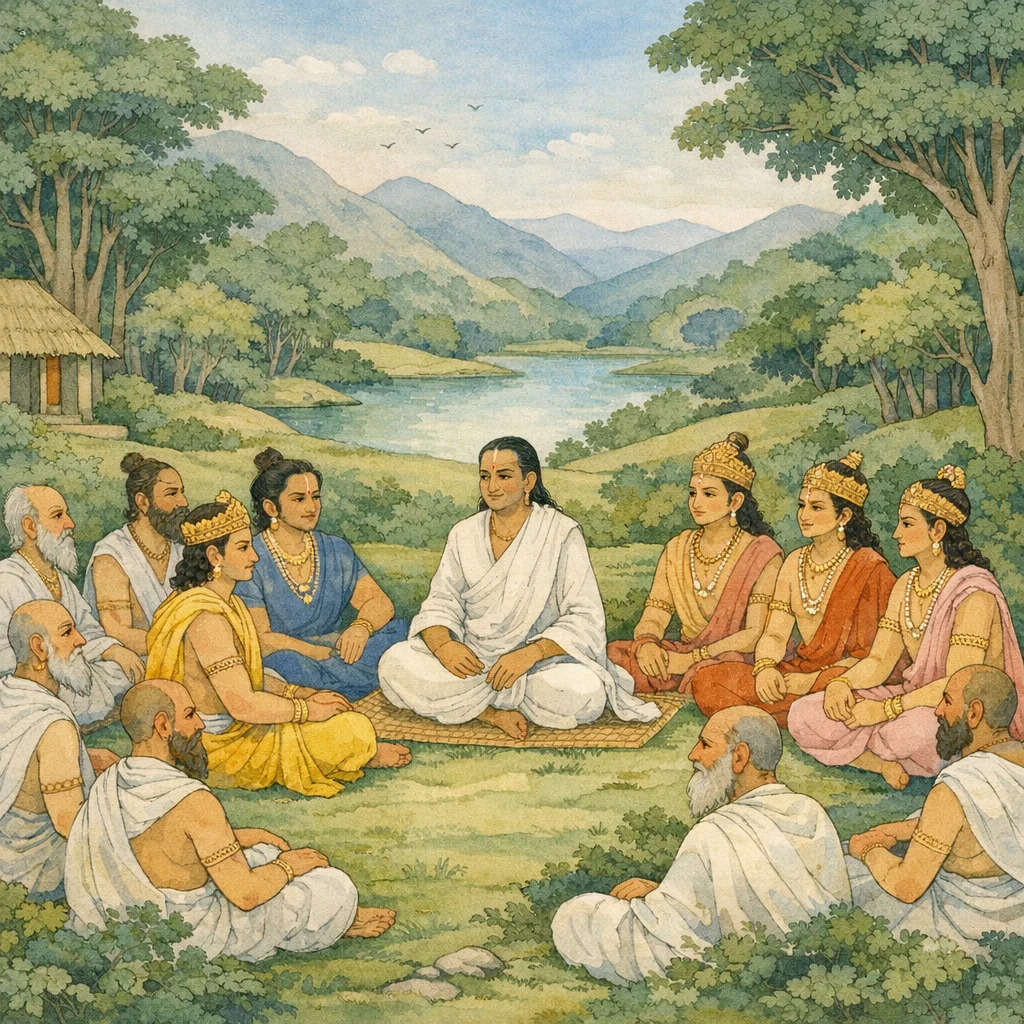
Adhyaya 6
Kāmyaka-vane Pāṇḍava-nivāsaḥ — Vidurasya āgamanam ca (कamyake वने पाण्डवनिवासः—विदुरस्य आगमनं च)
Upa-parva: Kāmyaka-vana (Vidurāgamana Episode)
Vaiśaṃpāyana narrates the Pandavas’ westward movement from the Gaṅgā bank, traveling along Sarasvatī, Dṛṣadvatī, and Yamunā, and their arrival at the Kāmyaka forest—praised as level, wind-swept terrain and dear to ascetics. They establish residence amid abundant game and birds, attended and consoled by sages. Vidura, desiring to see the sons of Pāṇḍu, comes alone by chariot and meets Yudhiṣṭhira seated in a secluded place with Draupadī, the brothers, and brāhmaṇas. Yudhiṣṭhira anticipates the political import of Vidura’s arrival, expressing concern about renewed invitations to hazardous court dynamics and the uncertainty of future sovereignty. The Pandavas receive Vidura with honor and inquire about his purpose. Vidura reports that Dhṛtarāṣṭra privately honored him and asked him to speak what is beneficial; Vidura offered what he judged salutary for the Kauravas and the king, but Dhṛtarāṣṭra did not accept it. Vidura characterizes rejected advice through medical and domestic similes—wholesome counsel being unpalatable to the afflicted—and warns of likely institutional ruin when corrective speech cannot ‘remain’ in the ruler’s mind. Angered, Dhṛtarāṣṭra dismisses Vidura, who then comes to instruct Yudhiṣṭhira. Vidura articulates nīti principles: patient endurance under distress, gradual strengthening of one’s position like tending a small fire, the necessity of allies who share in both wealth and suffering, and the ruler’s growth through truth, non-frivolous speech, and equitable provision. Yudhiṣṭhira accepts the guidance, committing to attentive, context-sensitive action.
Chapter Arc: विदुर के वनगमन के बाद, राजसभा में धृतराष्ट्र पर पश्चात्ताप का अंधकार उतर आता है—उन्हें स्मरण होता है कि जिस धर्मज्ञ भ्राता को उन्होंने क्रोध में निकाल दिया, वही राज्य-नीति का दीपक था। → धृतराष्ट्र विदुर के प्रभाव और संधि-विग्रह की उनकी कुशलता को याद कर भयभीत होते हैं कि पाण्डवों का भविष्य-बल बढ़ेगा और कौरव-पक्ष नीति-विहीन हो जाएगा। विदुर-स्मरण से वे सभा-द्वार पर मूर्छित-से गिर पड़ते हैं और करुण विलाप करते हुए संजय को आदेश देते हैं कि विदुर को शीघ्र खोजकर लाया जाए—यदि वे अभी जीवित हों और मेरे पाप से आहत होकर दूर न चले गए हों। → काम्यकवन में संजय विदुर को पाण्डवों और सहस्र ब्राह्मणों के बीच सुरक्षित, पुरंदर-सम देव-रक्षित-सा देखता है; फिर विदुर धृतराष्ट्र के प्रति क्षमा और गुरु-भाव प्रकट करते हैं—‘धर्मचेतस पुरुष दीनों पर करुणा करते हैं; यहाँ विचार की आवश्यकता नहीं।’ → विदुर स्पष्ट करते हैं कि उनके लिए पाण्डु-पुत्र और धृतराष्ट्र के पुत्र समान हैं, पर पाण्डव इस समय दीन अवस्था में हैं—इसलिए उनका हृदय उनकी ओर अधिक झुकता है। दोनों भ्राता परस्पर अनुनय-विनय कर परम मुदिता प्राप्त करते हैं और कटुता का बंधन ढीला पड़ता है। → विदुर की क्षमा के बाद भी प्रश्न शेष रहता है—क्या धृतराष्ट्र इस पश्चात्ताप को नीति-परिवर्तन में बदल पाएँगे, या दरबार की पुरानी प्रवृत्तियाँ फिर उन्हें जकड़ लेंगी?
Shlokas
Verse 1
#2:8 #:23:.7 () हि २ 7 षष्ठो5 ध्याय: धृतराष्ट्रका संजयको भेजकर विदुरको वनसे बुलवाना और उनसे क्षमा-प्रार्थना वैशम्पायन उवाच गते तु विदुरे राजन्नाश्रमं पाण्डवान् प्रति । धृतराष्ट्रो महाप्राज्ञ: पर्यतप्यत भारत,वैशम्पायनजी कहते हैं--राजन्! जब विदुरजी पाण्डवोंके आश्रमपर चले गये, तब महाबुद्धिमान् राजा धृतराष्ट्रको बड़ा पश्चात्ताप हुआ
Vaiśampāyana said: O King (Janamejaya), when Vidura had departed for the Pāṇḍavas’ hermitage, the wise Dhṛtarāṣṭra was seized by deep remorse, O descendant of Bharata. The episode frames repentance as the moral consequence of failing to heed righteous counsel and of allowing attachment to kin to eclipse dharma.
Verse 2
विदुरस्य प्रभावं च संधिविग्रहकारितम् । विवृद्धि च परां मत्वा पाण्डवानां भविष्यति,उन्होंने सोचा, विदुर संधि और विग्रह आदिकी नीतिको अच्छी तरह जानते हैं, जिसके कारण उनका बहुत बड़ा प्रभाव है। वे पाण्डवोंके पक्षमें हो गये तो भविष्यमें उनका महान् अभ्युदय होगा
Verse 3
स सभाद्वारमागम्य विदुरस्मारमोहितः । समक्ष॑ पार्थिवेन्द्राणां पपाताविष्टचेतन:,विदुरका स्मरण करके वे मोहित-से हो गये और सभाभवनके द्वारपर आकर सब राजाओंके देखते-देखते अचेत होकर पृथ्वीपर गिर पड़े
Having reached the doorway of the royal assembly, he became bewildered as the memory of Vidura surged within him; and, before the very eyes of the assembled kings, his mind overwhelmed, he collapsed senseless to the ground. The scene underscores how remembrance and grief can overpower even the composed, and how public life in a royal court does not exempt one from the force of inner moral and emotional bonds.
Verse 4
स तु लब्ध्वा पुन: संज्ञां समुत्थाय महीतलात् | समीपोपस्थितं राजा संजयं वाक्यमब्रवीत्,फिर होशमें आनेपर वे पृथ्वीसे उठ खड़े हुए और समीप आये हुए संजयसे इस प्रकार बोले--
Having regained consciousness, he rose up from the ground. Then the king, seeing Saṃjaya standing close by, addressed him with words—signaling a return from shock to deliberate speech and the resumption of responsible action.
Verse 5
इस प्रकार श्रीमह्ाभारत वनपवके अन्तर्गत अरण्यपर्वमें विदुरनिवासनविषयक पाँचवाँ अध्याय पूरा हुआ,भ्राता मम सुदहृच्चैव साक्षाद् धर्म इवापर: । तस्य स्मृत्याद्य सुभृशं हृदयं दीर्यतीव मे “संजय! विदुर मेरे भाई और सुहृद् हैं। वे साक्षात् दूसरे धर्मके समान हैं। उनकी याद आनेसे आज मेरा हृदय अत्यन्त विदीर्ण-सा होने लगा है
Yudhiṣṭhira said: “Sañjaya, Vidura is my brother and my well-wisher—indeed, he is like Dharma himself in another form. Today, as I remember him, my heart feels as though it is being torn apart.”
Verse 6
तमानयस्व धर्मज्ञं मम भ्रातरमाशु वै । इति ब्रुवन् स नृपति: कृपणं पर्यदेवयत्,“तुम मेरे धर्मज्ञ भ्राता विदुरको शीघ्र यहाँ बुला लाओ।” ऐसा कहते हुए राजा धुृतराष्ट्र दीनभावसे फूट-फ़ूटकर रोने लगे इति श्रीमहा भारते वनपर्वणि अरण्यपर्वणि विदुरप्रत्यागमने षष्ठो5ध्याय:
Vaiśampāyana said: “Bring here at once my brother Vidura, who knows dharma.” Saying this, King Dhṛtarāṣṭra, overcome with helpless grief, lamented piteously and broke down in tears—his words revealing both dependence on Vidura’s moral clarity and the king’s inner collapse amid the crisis.
Verse 7
पश्चात्तापाभिसंतप्तो विदुरस्मारमोहित: । भ्रातृस्नेहादिदं राजा संजयं वाक्यमब्रवीत्,महाराज धुृतराष्ट्र विदुरकी याद आनेसे मोहित हो पश्चात्तापसे खिन्च हो उठे और भ्रातृस्नेहवश संजयसे पुन: इस प्रकार बोले--
Vaiśampāyana said: Tormented by remorse and bewildered as memories of Vidura surged within him, the king—moved by brotherly affection—spoke these words again to Sañjaya. The verse frames Dhṛtarāṣṭra’s inner conflict: conscience-stricken regret and familial attachment together drive his next response.
Verse 8
गच्छ संजय जानीहि भ्रातरं विदुरं मम । यदि जीवति रोषेण मया पापेन निर्धुत:,संजय! जाओ, मेरे भाई विदुरका पता लगाओ। मुझ पापीने क्रोधवश उन्हें निकाल दिया। वे जीवित तो हैं न?
Vaiśampāyana said: “Go, Sañjaya—find out about my brother Vidura. In anger I, sinful as I am, drove him away. Is he still alive?”
Verse 9
न हि तेन मम क्षात्रा सुसूक्ष्ममपि किंचन । व्यलीकं कृतपूर्व वै प्राज्ञेनामितबुद्धिना,“अपरिमित बुद्धिवाले मेरे उन विद्वान भाईने पहले कभी कोई छोटा-सा भी अपराध नहीं किया है
Vaiśaṃpāyana said: “For my part, that wise man of immeasurable understanding has never before committed toward me—even in the slightest degree—any deceit or wrongdoing. Such has been his conduct.”
Verse 10
स व्यलीकं पर प्राप्तो मत्त: परमबुद्धिमान् । त्यक्ष्यामि जीवितं प्राज्ञ तं गच्छानय संजय,“बुद्धिमान् संजय! मुझसे परम मेधावी विदुरका बड़ा अपराध हुआ। तुम जाकर उन्हें ले आओ, नहीं तो मैं प्राण त्याग दूँगा”
Vaiśampāyana said: “That supremely intelligent man has incurred a grave offence against me. O wise Sañjaya, go and bring him here; otherwise I shall renounce my life.”
Verse 11
तस्य तदू वचन श्रुत्वा राज्ञस्तमनुमान्य च | संजयो बाढमित्युक्त्वा प्राद्रवत् काम्यकं प्रति,राजाका यह वचन सुनकर संजयने उनका आदर करते हुए “बहुत अच्छा” कहकर काम्यकवनको प्रस्थान किया। जहाँ पाण्डव रहते थे, उस वनमें शीघ्र ही पहुँचकर संजयने देखा, राजा युधिष्छिर मृगचर्म धारण करके विदुरजी तथा सहमों ब्राह्मणोंके साथ बैठे हुए हैं। और देवताओंसे घिरे हुए इन्द्रकी भाँति अपने भाइयोंसे सुरक्षित हैं
Vaiśampāyana said: Hearing the king’s words and respectfully assenting to them, Sañjaya replied, “So be it,” and hurried toward the Kāmyaka forest. Reaching the woodland where the Pāṇḍavas were staying, he soon beheld King Yudhiṣṭhira seated in deerskin, with Vidura and many brāhmaṇas, protected by his brothers like Indra surrounded by the gods—an image that underscores steadfast dignity and dharma even in exile.
Verse 12
सो<5चिरेण समासाद्य तद् वन यत्र पाण्डवा: । रौरवाजिनसंवीतं ददर्शाथ युधिष्िरम्,राजाका यह वचन सुनकर संजयने उनका आदर करते हुए “बहुत अच्छा” कहकर काम्यकवनको प्रस्थान किया। जहाँ पाण्डव रहते थे, उस वनमें शीघ्र ही पहुँचकर संजयने देखा, राजा युधिष्छिर मृगचर्म धारण करके विदुरजी तथा सहमों ब्राह्मणोंके साथ बैठे हुए हैं। और देवताओंसे घिरे हुए इन्द्रकी भाँति अपने भाइयोंसे सुरक्षित हैं
Vaiśampāyana said: Not long after, he reached that forest where the Pāṇḍavas were staying. There he saw King Yudhiṣṭhira, clad in a ruru-deer skin, seated in the company of Vidura and many brāhmaṇas—protected by his brothers, and radiant like Indra surrounded by the gods. The scene underscores the Pāṇḍavas’ disciplined endurance in exile and the ethical dignity with which Yudhiṣṭhira bears hardship while remaining anchored in counsel, learning, and dharma.
Verse 13
विदुरेण सहासीन ब्राह्मणैश्व सहस्रश: । भ्रातृभिश्चाभिसंगुप्तं देवैरिव पुरंदरम्,राजाका यह वचन सुनकर संजयने उनका आदर करते हुए “बहुत अच्छा” कहकर काम्यकवनको प्रस्थान किया। जहाँ पाण्डव रहते थे, उस वनमें शीघ्र ही पहुँचकर संजयने देखा, राजा युधिष्छिर मृगचर्म धारण करके विदुरजी तथा सहमों ब्राह्मणोंके साथ बैठे हुए हैं। और देवताओंसे घिरे हुए इन्द्रकी भाँति अपने भाइयोंसे सुरक्षित हैं
Vaiśampāyana said: Sanjaya soon beheld King Yudhiṣṭhira seated together with Vidura and thousands of brāhmaṇas, protected on all sides by his brothers—like Indra (Purandara) surrounded by the gods. The scene underscores the king’s steadfast dignity in exile: though deprived of a kingdom, he remains upheld by righteous counsel, learned company, and fraternal guardianship.
Verse 14
युधिष्ठिरमुपागम्य पूजयामास संजय: । भीमार्जुनयमाश्चापि तद्युक्त प्रतिपेदिरे,युधिष्ठिरके पास पहुँचकर संजयने उनका सम्मान किया। फिर भीम, अर्जुन और नकुल-सहदेवने संजयका यथोचित सत्कार किया
Vaiśampāyana said: Approaching Yudhiṣṭhira, Sañjaya paid him due honor. Then Bhīma, Arjuna, and the twins Nakula and Sahadeva as well received him appropriately, observing the courtesies owed to a respected messenger and elder—an act that reflects disciplined conduct (dharma) even amid hardship.
Verse 15
राज्ञा पृष्ट: स कुशलं सुखासीनश्न संजय: । शशंसागमने हेतुमिदं चैवाब्रवीद् वच:,राजा युधिष्ठिरके कुशल-प्रश्न करनेके पश्चात् जब संजय सुखपूर्वक बैठ गया, तब अपने आनेका कारण बताते हुए उसने इस प्रकार कहा
When the king had inquired after his welfare, Sañjaya sat down at ease. Then, explaining the reason for his arrival, he spoke these words—setting in motion the message that would shape the course of events.
Verse 16
संजय उवाच राजा स्मरति ते क्षत्तर्धुतराष्ट्रो अम्बिकासुत: । त॑ पश्य गत्वा त्वं क्षिप्रं संजीवय च पार्थिवम्,संजयने कहा--विदुरजी! अम्बिकानन्दन महाराज धृतराष्ट्र आपको स्मरण करते हैं। आप जल्दी चलकर उनसे मिलिये और उन्हें जीवनदान दीजिये
Sañjaya said: “O Kṣattṛ (Vidura), King Dhṛtarāṣṭra, the son of Ambikā, is remembering you. Go quickly to see him and revive the king—restore his spirit and steadiness.”
Verse 17
सो<नुमान्य नरश्रेष्ठान् पाण्डवान् कुरुनन्दनान् । नियोगाद् राजसिंहस्य गन्तुमरहसि सत्तम,साधुशिरोमणे! आप कुरुकुलको आनन्दित करनेवाले इन नरश्रेष्ठ पाण्डवोंसे आदरपूर्वक विदा लेकर महाराजके आदेशसे शीघ्र उनके पास चलें
Sañjaya said: “Having duly honored and respectfully taken leave of those foremost of men—the Pāṇḍavas, delight of the Kuru line—you should now go without delay, for such is the command of the lion-like king. O best of men, crest-jewel among the virtuous, it is fitting that you proceed.”
Verse 18
वैशम्पायन उवाच एवमुक्तस्तु विदुरो धीमान् स््वजनवल्लभ: । युधिष्ठटिरस्यानुमते पुनरायाद् गजाह्वयम्,वैशम्पायनजी कहते हैं--जनमेजय! स्वजनोंके परम प्रिय बुद्धिमान् विदुरजीसे जब संजयने इस प्रकार कहा, तब वे युधिष्ठिरकी अनुमति लेकर फिर हस्तिनापुरमें आये। वहाँ महातेजस्वी अम्बिकानन्दन धृतराष्ट्रने उनसे कहा--'धर्मज्ञ विदुर! तुम आ गये, यह मेरे बड़े सौभाग्यकी बात है। अनघ! यह भी मेरे सौभाग्यकी बात है कि तुम मुझे भूले नहीं
Vaiśampāyana said: When Sañjaya had spoken to him in this manner, the wise Vidura—beloved of his own people—took Yudhiṣṭhira’s permission and returned once again to Gajāhvaya (Hastināpura). The passage underscores Vidura’s loyalty and moral steadiness: even amid exile and political rupture, he acts with consent, propriety, and concern for the welfare of the family and kingdom.
Verse 19
तमब्रवीन्महातेजा धृतराष्ट्रो3म्बिकासुत: । दिष्ट्या प्राप्तोडसि धर्मज्ञ दिष्ट्या स्मरसि मेडनघ,वैशम्पायनजी कहते हैं--जनमेजय! स्वजनोंके परम प्रिय बुद्धिमान् विदुरजीसे जब संजयने इस प्रकार कहा, तब वे युधिष्ठिरकी अनुमति लेकर फिर हस्तिनापुरमें आये। वहाँ महातेजस्वी अम्बिकानन्दन धृतराष्ट्रने उनसे कहा--'धर्मज्ञ विदुर! तुम आ गये, यह मेरे बड़े सौभाग्यकी बात है। अनघ! यह भी मेरे सौभाग्यकी बात है कि तुम मुझे भूले नहीं
Vaiśampāyana said: Then the mighty Dhṛtarāṣṭra, son of Ambikā, addressed him: “Fortune indeed has favored me, O knower of dharma, that you have returned. And fortune again, O blameless one, that you have not forgotten me.”
Verse 20
अद्य रात्रौ दिवा चाहं त्वत्कृते भरतर्षभ । प्रजागरे प्रपश्यामि विचित्र देहमात्मन:,“भरतकुलभूषण! मैं आज दिन-रात तुम्हारे लिये जागते रहनेके कारण अपने शरीरकी विचित्र दशा देख रहा हूँ!
Vaiśampāyana said: “O bull among the Bharatas, today—by night and by day—because I have kept vigil for your sake, I behold my own body in a strange, altered condition.”
Verse 21
सो<ड्कमानीय विदुरं मूर्थन्याप्राय चैव ह । क्षम्यतामिति चोवाच यदुक्तोडसि मयानघ,ऐसा कहकर राजा धृतराष्ट्रने विदुरको अपने हृदयसे लगा लिया और उनका मस्तक सूँघते हुए कहा--“निष्पाप विदुर! मैंने तुमसे जो अप्रिय बात कह दी है, उसके लिये मुझे क्षमा करो”
Vaiśampāyana said: Having brought Vidura back, King Dhṛtarāṣṭra embraced him from the heart and, smelling the crown of his head in affection, said, “Forgive me, O sinless Vidura, for the harsh and unwelcome words I spoke to you.”
Verse 22
|| १ । 4 || हे एक सजा " हि ््क््ट विदुर उवाच क्षान्तमेव मया राजन गुरुर्मे परमो भवान् | एषो5हमागत: शीघ्र त्वद्दर्शनपरायण:,विदुरने कहा--राजन्! मैंने तो सब क्षमा कर ही दिया है। आप मेरे परम गुरु हैं। मैं शीघ्रतापूर्वक आपके दर्शनके लिये आया हूँ। नरश्रेष्ठ! धर्मात्मा पुरुष दीन जनोंकी ओर अधिक झुकते हैं। आपको इसके लिये मनमें विचार नहीं करना चाहिये
Vidura said: “O King, I have indeed forgiven everything. You are my highest teacher. I have come quickly, intent only on seeing you.” The statement underscores an ethic of forbearance and reverence: the virtuous do not cling to injury, and they approach elders with humility rather than resentment.
Verse 23
भवन्ति हि नरव्याप्र पुरुषा धर्मचेतस: । दीनाभिपातिनो राजन् नात्र कार्या विचारणा,विदुरने कहा--राजन्! मैंने तो सब क्षमा कर ही दिया है। आप मेरे परम गुरु हैं। मैं शीघ्रतापूर्वक आपके दर्शनके लिये आया हूँ। नरश्रेष्ठ! धर्मात्मा पुरुष दीन जनोंकी ओर अधिक झुकते हैं। आपको इसके लिये मनमें विचार नहीं करना चाहिये
For men who are earnest in human duty and whose minds are set on dharma naturally incline toward the distressed. Therefore, O King, there is no need for deliberation or doubt in this matter—showing favor to the afflicted is itself the right course.
Verse 24
पाण्डो: सुता यादृशा मे तादृशास्तव भारत । दीना इतीव मे बुद्धिरभिपन्नाद्य तान् प्रति,भारत! मेरे लिये जैसे पाण्डुके पुत्र हैं, वैसे ही आपके भी। परंतु पाण्डव इन दिनों दीन दशामें हैं, अतः उनके प्रति मेरे हृदयका झुकाव हो गया
Vidura said: “O Bhārata, the sons of Pāṇḍu are to me exactly as your own sons are. Yet today my mind has come to feel that the Pāṇḍavas are in a pitiable condition; therefore my heart inclines toward them.”
Verse 25
वैशम्पायन उवाच अन्योन्यमनुनीयैवं भ्रातरौ द्वौ महाद्युती । विदुरो धृतराष्ट्रश्न लेभाते परमां मुदम्,वैशम्पायनजी कहते हैं--जनमेजय! वे दोनों महातेजस्वी भाई विदुर और धूृतराष्ट्र एक-दूसरेसे अनुनय-विनय करके अत्यन्त प्रसन्न हो गये
Vaiśampāyana said: O Janamejaya, the two illustrious brothers—Vidura and Dhṛtarāṣṭra—having mutually conciliated one another with gentle persuasion, attained the highest joy. The passage highlights the ethical power of reconciliation: even amid strained family bonds, humility and respectful speech can restore harmony.
Frequently Asked Questions
The tension lies between acting impulsively in response to provocation and practicing disciplined patience: Yudhiṣṭhira weighs uncertainty and risk while choosing counsel-guided restraint over reactive escalation.
Vidura teaches that durable rule depends on truth, measured speech, equitable sharing with allies, and strategic endurance—strengthening one’s position gradually rather than through rash moves.
No explicit phalaśruti is stated in this adhyāya; its meta-function is instructional, embedding nīti principles through dialogue and exempla rather than promising a textual merit formula.