Adhyaya 291
Kuntī–Sūrya-saṃvāda: Autonomy, Reputation, and the Promise of Karṇa
Upa-parva: Kuntī–Sūrya-saṃvāda (Upākhyāna on Kuntī and the Sun-god)
Vaiśaṃpāyana describes the young Kuntī’s inability to refuse Sūrya, coupled with fear of curses and the consequences of offending a radiant, ascetic power. Kuntī internally reasons that even an unintended affront to a powerful being can generate peril, and she articulates a principle of restraint toward tejas and tapas. Addressing Sūrya with embarrassment and anxiety, she argues that if her father, mother, and kin are present as protectors, an irregular union would constitute a breach of propriety and could damage her family’s public renown. She then offers conditional assent: if Sūrya deems the act dharmic, she will comply, but seeks a framework that preserves social order. Sūrya responds by asserting her independence in this context, denies any intent of adharma, and frames the encounter as aligned with cosmic norms. He promises that after union she will again be a maiden, and that she will bear a celebrated, mighty son. Kuntī requests confirmation that the son will possess divine earrings and armor; Sūrya affirms and pledges to bestow them. The narrative concludes with Sūrya’s yogic entry that does not “dūṣayati” (defile) her; Kuntī faints from the intensity, then regains consciousness, and the assurances regarding son and restored status are reiterated.
Chapter Arc: मार्कण्डेय युधिष्ठिर से कहते हैं—रणभूमि में इन्द्रजित के दिव्य वर-प्राप्त बाणों से श्रीराम और लक्ष्मण दोनों भूमि पर गिर पड़े; देव-दानवों को कंपा देने वाला क्षण आ पहुँचा। → शर-बन्धन से जकड़े दोनों वीर पिंजरे में फँसे सिंहों-से शोभित होते हैं; उन्हें सैकड़ों बाणों से व्याप्त और निश्चेष्ट देख सुग्रीव वानर-सेना सहित घेरकर खड़ा रह जाता है—आशा और भय एक साथ काँपते हैं। इसी बीच अदृश्य शक्तियों/भूत-प्रेतों की उपस्थिति का संकेत मिलता है और कुबेर-प्रदत्त जल का रहस्य खुलता है—जिससे नेत्र धोकर अदृश्य प्राणियों को देखा जा सकता है। → कुबेर के जल का विधान निर्णायक बनता है—दृष्टि का परदा हटाने की क्षमता युद्ध को केवल बाहुबल नहीं, ‘दर्शन’ का युद्ध बना देती है; साथ ही शत्रु-वध के विषय में कठोर सत्य उभरता है कि कुछ असुर-प्रकृतियों का नाश देह-भेद से नहीं, मूल-कारण/आश्रय के विनाश से होता है। → अविन्ध्य रावण के क्रोध को अनेक वचनों से शांत करता है, उसे नीति और समयोचित निर्णय की ओर मोड़ता है; रावण युद्ध-प्रस्थान का निश्चय कर तलवार रख देता है और रथ तैयार करने की आज्ञा देता है—लंकापक्ष फिर संगठित होता है। → रावण का रथ सजने लगता है—अब वह स्वयं रण में उतरेगा; राम-लक्ष्मण की स्थिति और अदृश्य शक्तियों का अगला प्रहार सामने खड़ा है।
Shlokas
Verse 1
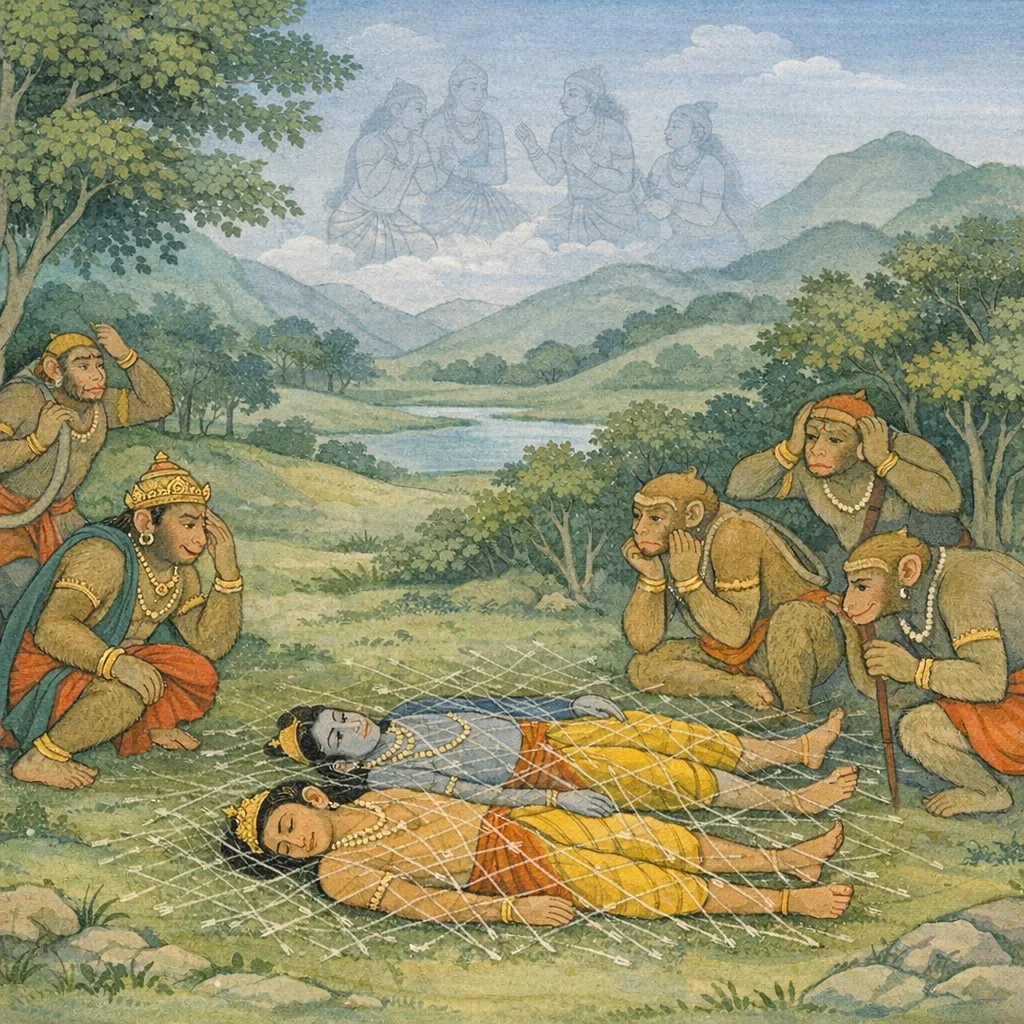
मार्कण्डेयजी कहते हैं--युधिष्ठिर! उन दोनों भाई श्रीराम और लक्ष्मणको पृथ्वीपर पड़े देख रावणकुमार इन्द्रजितने जिनके लिये देवताओंका वर प्राप्त था, उन बाणोंद्वारा उन्हें सब ओरसे बाँध लिया
Mārkaṇḍeya said: “O Yudhiṣṭhira, seeing the two brothers—Śrī Rāma and Lakṣmaṇa—fallen upon the earth, Indrajit, the son of Rāvaṇa, bound them on every side with those arrows for which he had obtained a boon from the gods.”
Verse 2
तौ वीरौ शरबन्धेन बद्धाविन्द्रजिता रणे । रेजतु: पुरुषव्यापत्रौ शकुन्ताविव पञ्जरे,इन्द्रजितद्वारा बाणोंके बन्धनसे बँधे हुए वे दोनों वीर पुरुषसिंह श्रीराम और लक्ष्मण पिंजड़ेमें बंद हुए दो पक्षियोंकी भाँति शोभा पा रहे थे
Mārkaṇḍeya said: In the midst of battle, those two heroic warriors—Rāma and Lakṣmaṇa, lions among men—were bound fast by Indrajit’s net of arrows; yet they still shone with a grave splendor, like two birds confined within a cage. The verse underscores a dharmic ideal of steadfastness: even when restrained and seemingly overpowered, true valor and inner dignity do not collapse into despair.
Verse 3
तौ दृष्टवा पतितौ भूमौ शतश: सायकैश्चितौ । सुग्रीवः कपिभि: सार्थ परिवार्य ततः स्थित:,उन दोनोंको सैकड़ों बाणोंसे व्याप्त एवं पृथ्वीपर पड़े देख वानरोंसहित सुग्रीव उन्हें सब ओरसे घेरकर खड़े हो गये
Mārkaṇḍeya said: Seeing those two lying fallen upon the earth, their bodies pierced and heaped over with hundreds of arrows, Sugrīva—together with the monkey hosts—surrounded them on all sides and then stood firm. The scene underscores the grim finality of battle and the strategic duty of securing the field once adversaries are brought down.
Verse 4
सुषेणमैन्दद्विविदै: कुमुदेनाड्देन च । हनुमन्नीलतारैश्वन नलेन च कपीश्वर:,सुषेण, मैन्द, द्विविद, कुमुद, अंगद, हनुमान, नील, तार तथा नलके साथ कपिराज सुग्रीव उन दोनों बन्धुओंकी रक्षा करने लगे
Mārkaṇḍeya said: Sugrīva, lord of the Vānaras, together with Suṣeṇa, Mainda, Dvivida, Kumuda, Aṅgada, Hanumān, Nīla, Tārā, and Nala, set about protecting those two kinsmen. The scene underscores the ethic of loyalty and guardianship: strength is gathered not for conquest but for the righteous duty of safeguarding one’s own.
Verse 5
ततस्तं देशमागम्य कृतकर्मा विभीषण: । बोधयामास तौ वीरी प्रज्ञास्त्रेण प्रबोधितो,तदनन्तर अपने कर्तव्य कर्मको पूरा करके विभीषण उस स्थानपर आये। उन्होंने प्रज्ञास्त्रद्वारा उन दोनों वीरोंको होशमें लाकर जगाया
Then Vibhīṣaṇa, having completed the duty that lay before him, came to that place. Using the Prajñā-astra, he restored the two heroic warriors to awareness and awakened them—an act that underscores timely responsibility and the ethical use of power to revive, not to harm.
Verse 6
विशल्यौ चापि सुग्रीव: क्षणेनैता चकार ह । विशल्यया महौषध्या दिव्यमन्त्रप्रयुक्तया,फिर सुग्रीवने दिव्य मन्त्रोंद्वारा अभिमन्त्रित विशल्या नामक महौषधिद्वारा उनके अंगोंसे बाण निकालकर उन्हें क्षणभरमें स्वस्थ कर दिया
Mārkaṇḍeya said: “Sugrīva, too, made them free of arrows in an instant. By applying the great herb called Viśalyā—empowered through divine mantras—he drew out the shafts from their limbs and restored them at once.” The episode highlights the righteous use of sacred knowledge: power is directed not toward harm, but toward protection and healing.
Verse 7
तौ लब्धसंज्ञौ नृवरौ विशल्यावुदतिष्ठताम् । गततन्द्रीक्लमौ चापि क्षणेनैती महारथौ,होशमें आ जानेपर वे दोनों नरश्रेष्ठ महारथी वीर बाणोंसे रहित हो आलस्य और थकावट त्यागकर क्षणभरमें उठ खड़े हुए
Markandeya said: When they regained consciousness, those two best of men—now free of the arrows that had pierced them—rose up at once. Casting off both drowsiness and fatigue, the two great chariot-warriors stood up again within a moment, showing the steadfast resilience expected of noble fighters even amid extreme trial.
Verse 8
ततो विभीषण: पार्थ राममिक्ष्वाकुनन्दनम् । उवाच विज्वरं दृष्टवा कृताञ्जलिरिदं वच:,युधिष्ठिर! तदनन्तर विभीषणने इक्ष्वाकुकुलनन्दन श्रीरामचन्द्रजीको नीरोग एवं स्वस्थ देख हाथ जोड़कर इस प्रकार कहा--
Then Vibhīṣaṇa, seeing Rāma—the delight of the Ikṣvāku line—free from fever and fully restored, addressed him with folded hands. In this, Mārkaṇḍeya narrates to Yudhiṣṭhira a moment of reverent counsel: when a righteous leader is relieved of suffering, the proper response is gratitude, humility, and speech guided by devotion and dharma.
Verse 9
इदमम्भो गृहीत्वा तु राजराजस्य शासनात् | गुहाको< भ्यागत: श्वेतात् त्वत्सकाशमरिन्दम,'शत्रुदमन! राजाधिराज कुबेरकी आज्ञासे एक गुह्यक यह जल लिये हुए श्वेतपर्वतसे चलकर आपके समीप आया है
“Having taken this water on the command of the King of kings, a Guhyaka has come from the White Mountain to your presence, O subduer of foes.”
Verse 10
इदमम्भ: कुबेरस्ते महाराज: प्रयच्छति । अन्तर्तहितानां भूतानां दर्शनार्थ परंतप,/ | | 0 ४ 'परंतप! महाराज कुबेर आपको यह जल इस उद्देश्यसे समर्पित कर रहे हैं कि आप इसे नेत्रोंमें लगाकर मायासे अदृश्य हुए प्राणियोंको देख सकें
Mārkaṇḍeya said: “O Parantapa, King Kubera grants you this water. Its purpose is to enable the sight of beings who have been concealed—so that, by applying it to your eyes, you may perceive those hidden by illusion.”
Verse 11
उन्होंने कहा है कि आप इस जलसे अपने दोनों नेत्र धोकर अदृश्य प्राणियोंको भी देख सकेंगे और आप जिसे यह जल अर्पित करेंगे, वह मनुष्य भी अदृश्य भूतोंको देखनेमें समर्थ होगा”
Mārkaṇḍeya said: “It has been declared that by washing both your eyes with this water, you will be able to see even beings that are ordinarily invisible. And any person to whom you offer this water will likewise gain the capacity to perceive those unseen spirits.”
Verse 12
तथेति रामस्तद् वारि प्रतिगृह्माभिसंस्कृतम् । चकार नेत्रयो: शौचं लक्ष्मणश्ष महामना:,“बहुत अच्छा” कहकर श्रीरामचन्द्रजीने वह अभिमन्त्रित जल ले लिया। फिर उन्होंने तथा महामना लक्ष्मणने भी उससे अपने दोनों नेत्र धोये
Markandeya said: Saying, “So be it,” Rama accepted the water that had been ritually empowered with mantras. Then he cleansed his eyes with it; and the great-minded Lakshmana also washed both his eyes with the same water. The episode highlights reverence for sacred rites and the ethical ideal of purity—receiving a consecrated gift with trust and using it for self-purification before further action.
Verse 13
अनेन मृष्टनयनो भूतान्यन्तर्हितान्युत । भवान् द्रक्ष्यति यस्मै च प्रदास्यति नर: स तु,सुग्रीवजाम्बवन्ती च हनुमानड्रदस्तथा । मैन्दद्विविदनीलाश्च प्राय: प्लवगसत्तमा: सुग्रीव, जाम्बवान, हनुमान, अंगद, मैन्द, द्विविद तथा नील आदि प्रायः: सभी प्रमुख वानरोंने उस जलसे अपनी-अपनी आँखें धोयीं
Mārkaṇḍeya said: “By this (water), with your eyes cleansed, you will indeed behold even beings that are hidden from sight; and that man to whom it will be granted will truly gain such vision. Thus Sugrīva and Jāmbavān, Hanumān and Aṅgada, and also Mainda, Dvivida, and Nīla—indeed, nearly all the foremost of the monkey-heroes—washed their eyes with that water.”
Verse 14
तथा समभवच्चापि यदुवाच विभीषण: । क्षणेनातीन्द्रियाण्येषां चक्षूंषप्पासन् युधिष्ठिर,युधिष्ठि!! जैसा विभीषणने बताया था, उसका वैसा ही प्रभाव देखनेमें आया। इन सबकी आँखें क्षणभरमें अतीन्द्रिय वस्तुओंका साक्षात्कार करनेवाली हो गयीं
Mārkaṇḍeya said: “And it happened exactly as Vibhīṣaṇa had declared. In an instant, O Yudhiṣṭhira, their eyes became capable of beholding what lies beyond the ordinary senses.”
Verse 15
इन्द्रजित् कृतकर्मा च पित्रे कर्म तदा55त्मन: । निवेद्य पुनरागच्छत् त्वरया55जि शिर:प्रति,इन्द्रजितने उस दिन युद्धमें जो पराक्रम कर दिखाया था, अपने उस वीरोचित कर्मको पितासे बताकर वह पुनः युद्धके मुहानेकी ओर लौटने लगा
Mārkaṇḍeya said: Indrajit, having accomplished his deed, reported to his father the valorous act he had performed that day. Then, in haste, he returned again toward the very front of the battle, eager to rejoin the fight.
Verse 16
तमापततन्तं संक्रुद्धं पुनरेव युयुत्सया । अभिदुद्राव सौमित्रिर्विभीषणमते स्थित:,उसे क्रोधमें भरकर पुनः युद्धकी इच्छासे आते देख विभीषणकी सम्मतिसे लक्ष्मणने उसपर धावा किया
Seeing him rushing in again, inflamed with anger and eager to fight once more, Saumitri (Lakṣmaṇa)—acting in accordance with Vibhīṣaṇa’s counsel—charged straight at him. The moment underscores a warrior’s duty to meet renewed aggression, yet to do so under prudent guidance rather than mere rage.
Verse 17
अकृताह्लिकमेवैनं जिघांसुर्जितकाशिनम् । शरैर्जघान संक्रुद्ध: कृतसंज्ञोडथ लक्ष्मण:,इन्द्रजित् विजयके उललाससे सुशोभित हो रहा था। अभी उसने नित्यकर्म भी नहीं किया था, उसी अवस्थामें सचेत हुए लक्ष्मणने कुपित होकर उसे मार डालनेकी इच्छासे उसपर बाणोंद्वारा प्रहार करना आरम्भ किया
Markandeya said: Seeing him still without having performed his daily rites, Lakshmana—now fully conscious—became enraged and, intent on killing the conqueror of Kashi, began to strike him with volleys of arrows. The scene underscores the harsh ethics of war: when a foe threatens the righteous cause, immediate action can override ordinary ritual proprieties, even as the text notes the moral tension by explicitly mentioning the neglected daily duty.
Verse 18
तयो: समभवद् युद्ध तदान्योन्यं जिगीषतो: । अतीव चित्रमाश्चर्य शक्रप्रह्लादयोरिव,वे दोनों ही एक-दूसरेको जीतनेके लिये उत्सुक थे। उस समय उनमें इन्द्र और प्रह्नादकी भाँति अत्यन्त अद्भुत तथा आश्चर्यजनक युद्ध होने लगा
Markandeya said: Then a battle arose between the two, as each strove to conquer the other. It became a supremely wondrous and astonishing combat—like the famed clash between Śakra (Indra) and Prahlāda—evoking the moral tension of rival powers contending for supremacy.
Verse 19
अविध्यदिन्द्रजित् तीक्ष्णैः सौमित्रिं मर्मभेदिभि: । सौमित्रिश्वानलस्पर्शरविध्यद् रावर्णिं शरै:,इन्द्रजितने तीखे तथा मर्मभेदी बाणोंद्वारा सुमित्रा-कुमार लक्ष्मणको बींध डाला। इसी प्रकार लक्ष्मणने भी अग्निके समान दाहक स्पर्शवाले तीखे सायकोंद्वारा रावणकुमार इन्द्रजित्कों घायल कर दिया
Mārkaṇḍeya said: Indrajit pierced Saumitri (Lakṣmaṇa), the son of Sumitrā, with sharp arrows that struck the vital points. Saumitri, in turn, wounded Rāvaṇa’s son Indrajit with keen shafts whose touch burned like fire—each warrior answering the other in the fierce exchange of battle.
Verse 20
सौमित्रिशरसंस्पर्शाद् रावणि: क्रोधमूर्च्छित: । असृजल्लक्ष्मणायाष्टौ शरानाशीविषोपमान्,लक्ष्मणके बाणोंकी चोट खाकर रावणकुमार क्रोधसे मूर्च्छित हो उठा। उसने उनके ऊपर विषधर साँपोंके समान विषैले आठ बाण छोड़े
Mārkaṇḍeya said: Struck by the touch of Saumitri’s arrows, Rāvaṇa’s son, overcome and as if fainting with rage, released eight shafts at Lakṣmaṇa—poisonous like venom-bearing serpents. The scene underscores how anger, when it seizes a warrior’s mind, turns skill into reckless escalation and intensifies the violence of battle.
Verse 21
तस्यासून् पावकस्पर्श: सौमित्रि: पत्त्रिभिस्त्रिभि: । यथा निरहरद् वीरस्तन्मे निगदत: शूणु,वीर सुमित्राकुमारने अग्निके समान दाहक तीन बाणोंद्वारा जिस प्रकार इन्द्रजित॒के प्राण लिये, वह बताता हूँ; सुनो
Mārkaṇḍeya said: “Listen as I recount how the heroic Saumitri, with three arrows whose touch was like fire, drew out (took away) his life-breath.”
Verse 22
एकेनास्य धनुष्मन्तं बाहुं देहादपातयत् । द्वितीयेन सनाराचं भुजं भूमौ न््यपातयत्,एक बाणठद्धारा उन्होंने इन्द्रजित्ुकी धनुष धारण करनेवाली भुजाको काटकर शरीरसे अलग कर दिया। दूसरे बाणद्वारा नाराच लिये हुए शत्रुकी दूसरी भुजाको धराशायी कर दिया
Mārkaṇḍeya said: “With a single arrow he severed the enemy’s bow-bearing arm, cutting it away from the body. With a second arrow he struck down the other arm—still holding a barbed shaft—so that it fell upon the ground.” The verse underscores the grim precision of battle: prowess is shown not by rage but by controlled, decisive action that disables an opponent.
Verse 23
तृतीयेन तु बाणेन पृथुधारेण भास्वता । जहार सुनसं चापि शिरो भ्राजिष्णुकुण्डलम्,तत्पश्चात् मोटी धारवाले और चमकीले तीसरे बाणसे उन्होंने सुन्दर नासिका और शोभाशाली कुण्डलोंसे विभूषित शत्रुके मस्तकको भी धड़से अलग कर दिया
Mārkaṇḍeya said: Then, with a third arrow—broad-edged and blazing—he struck and severed the enemy’s head from the body, a head marked by a handsome nose and adorned with shining earrings. The episode underscores the grim decisiveness of combat, where prowess is exercised without hesitation once the contest has entered the violent logic of battle.
Verse 24
विनिकृत्तभुजस्कन्धं कबन्धं भीमदर्शनम् | त॑ हत्वा सूतमप्यस्त्रर्णघान बलिनां वर:,भुजाओं और कंधोंके कट जानेसे उसका धड़ बड़ा भयंकर दिखायी देता था। इन्द्रजित्को मारकर बलवानोंमें श्रेष्ठ लक्ष्मणने अपने अस्त्रोंद्वारा उसके सारथिको भी मार गिराया
Verse 25
लड़कां प्रवेशयामासुस्तं रथं वाजिनस्तदा । ददर्श रावणस्तं च रथं पुत्रविनाकृतम्,उस समय घोड़ोंने उस ही खाली रथको लंकापुरीमें पहुँचाया। रावणने देखा, मेरे पुत्रका रथ उसके बिना ही लौट आया है। तब पुत्रको मारा गया जान भयके मारे रावणका मन उदभ्रान्त हो उठा। वह शोक और मोहसे आतुर होकर विदेहनन्दिनी सीताको मार डालनेके लिये उद्यत हो गया
Then the horses brought that chariot into Laṅkā—empty. Rāvaṇa saw it returning without his son. Concluding in fear that his son had been slain, his mind became unsteady; overwhelmed by grief and delusion, he prepared to kill Sītā, the princess of Videha. The passage highlights how unchecked sorrow and panic can drive a ruler toward an adharma-born act against an innocent person.
Verse 26
स पुत्र निहतं ज्ञात्वा त्रासात् सम्भ्रान्तमानस: । रावण: शोकमोहार्तों वैदेहीं हन्तुमुद्यतः,उस समय घोड़ोंने उस ही खाली रथको लंकापुरीमें पहुँचाया। रावणने देखा, मेरे पुत्रका रथ उसके बिना ही लौट आया है। तब पुत्रको मारा गया जान भयके मारे रावणका मन उदभ्रान्त हो उठा। वह शोक और मोहसे आतुर होकर विदेहनन्दिनी सीताको मार डालनेके लिये उद्यत हो गया
Markandeya said: When Ravana realized that his son had been slain, his mind reeled in panic. Overwhelmed by grief and delusion, he became intent on killing Vaidehi (Sita). Ethically, the verse highlights how fear and sorrow, when unchecked by dharma, can harden into retaliatory cruelty against the innocent.
Verse 27
अशोकवनिकास्थां तां रामदर्शनलालसाम् । खड्गमादाय दुष्टात्मा जवेनाभिपपात ह,दुष्टात्मा दशानन हाथमें तलवार लेकर अशोक-वाटिकामें श्रीरामचन्द्रजीके दर्शनकी लालसासे बैठी हुई सीताजीके पास बड़े वेगसे दौड़ा गया
Mārkaṇḍeya said: Taking up a sword, the wicked-souled Ten-headed one rushed with great speed toward Sītā, who was seated in the Aśoka grove, yearning for the sight of Rāma. The scene underscores the clash between lustful aggression and steadfast fidelity: violence is mobilized to violate dharma, while Sītā’s longing remains anchored in devotion and righteousness.
Verse 28
त॑ं दृष्टवा तस्य दुर्बुद्धेरविन्ध्य: पापनिश्चयम् । शमयामास संक्रुद्धं श्रूयतां येन हेतुना,दूषित बुद्धिवाले उस निशाचरके इस पापपूर्ण निश्चयकों जानकर मन्त्री अविन्ध्यने समझा-बुझाकर उसका क्रोध शान्त किया। किस मुक्तिसे उसने रावणको शान्त किया, यह बताता हूँ, सुनो--
Markandeya said: Seeing the wicked resolve of that evil-minded one, the minister Avindhya pacified him when he was inflamed with anger. Listen as I explain the reason by which he was calmed—how counsel restrained a sinful intention and turned wrath away from its destructive course.
Verse 29
महाराज्ये स्थितो दीप्ते न स्त्रियं हन्तुमहसि । हतैवैषा यदा स्त्री च बन्धनस्था च ते वशे,'राक्षसराज! आप लंकाके समुज्ज्वल सम्राट-पदपर विराजमान होकर एक अबलाको न मारें। यह स्त्री होकर आपके वशमें पड़ी है, आपके घरमें कैद है; ऐसी दशामें यह तो मरी हुई है
Mārkaṇḍeya said: “Seated in the blazing splendor of sovereign power, you ought not to kill a woman. For when she is a woman and is already held in bondage under your control, she is as good as slain—her freedom and honor have already been taken.”
Verse 30
न चैषा देहभेदेन हता स्यादिति मे मति: । जहि भर्तारमेवास्या हते तस्मिन् हता भवेत्,“इसके शरीरके टुकड़े-टुकड़े कर देनेसे ही इसका वध नहीं होगा, ऐसा मेरा विचार है। इसके पतिको ही मार डालिये। उसके मारे जानेपर यह स्वतः मर जायगी
Mārkaṇḍeya said: “In my judgment, she will not be slain merely by cutting her body into pieces. Kill her husband instead; when he is killed, she will die of herself.” The statement underscores a grim ethical calculus: the woman’s life is portrayed as bound to her husband’s life, so the proposed ‘means’ of killing shifts from direct violence against her body to targeting the relational bond that sustains her.
Verse 31
नहि ते विक्रमे तुल्य: साक्षादपि शतक्रतुः । असबृद्धि त्वया सेन्द्रास्त्रासितास्त्रिदशा युधि,'साक्षात् इन्द्र भी पराक्रममें आपकी समानता नहीं कर सकते। आपने अनेक बार युद्धमें इन्द्रसहित संपूर्ण देवताओंको भयभीत (एवं पराजित) किया है”
Mārkaṇḍeya said: “In prowess none equals you—not even Śatakratu (Indra) himself. Again and again, in battle, you have struck fear into the gods, even with Indra among them, and have overcome them.”
Verse 32
एवं बहुविधैर्वाक्यैरविन्ध्यो रावणं तदा । क़ुद्धं संशमयामास जगृहे च स तद्गच:,इस तरह अनेक प्रकारके वचनोंद्वारा अविन्ध्यने रावणका क्रोध शान्त किया और रावणने भी उसकी बात मान ली
Thus, with many kinds of well-chosen words, Avindhya then soothed the angered Rāvaṇa; and Rāvaṇa, in turn, accepted his counsel. The episode underscores how timely, reasoned speech can restrain wrath and restore right judgment even in the powerful.
Verse 33
निर्याणे स मतिं कृत्वा निधायासिं क्षपाचर: । आज्ञापयामास तदा रथो मे कल्प्यतामिति,फिर उस निशाचरने युद्धके लिये प्रस्थान करनेका निश्चय करके तलवार रख दी और आज्ञा दी--'मैरा रथ तैयार किया जाय'
Mārkaṇḍeya said: Having resolved to set out for battle, the night-roaming rākṣasa set down his sword and then issued an order: “Let my chariot be made ready.” The verse highlights deliberate resolve before action and the disciplined shift from personal weapon to organized preparation for war.
Verse 289
इति श्रीमहाभारते वनपर्वणि श्रीरामोपाख्यानपर्वणि इन्द्रजिद्वथे एकोननवत्यधिकद्विशततमो<ध्याय:
Thus, in the revered Mahābhārata, within the Vana Parva, in the section known as the Śrī Rāma-Upākhyāna, in the episode concerning the slaying of Indrajit, ends the two-hundred-and-ninety-first chapter. (This is a colophon marking the close of the chapter rather than a spoken narrative verse.)
Frequently Asked Questions
Kuntī faces a dharma-saṅkaṭa between resisting a powerful divine presence (risking curse and disorder) and protecting kula-kīrti by avoiding a union perceived as outside accepted vidhi and guardianship.
The chapter models prudential ethics: one should approach extraordinary power with restraint, seek procedurally legitimate pathways for intimate and social acts, and recognize that dharma is negotiated amid competing risks.
No explicit phalaśruti appears here; the meta-significance is etiological—explaining Karṇa’s exceptional endowments and establishing interpretive ground for later debates on lineage, honor, and moral responsibility.