Adhyaya 255
जयद्रथविमोचन–पलायनवृत्तान्तः (Recovery of Draupadī and Jayadratha’s flight)
Upa-parva: Draupadī-haraṇa–Jayadratha-saṃyoga (Abduction episode and pursuit)
Vaiśaṃpāyana narrates a concentrated engagement in which Jayadratha urges allied forces to press the fight. The battlefield intensifies: Bhīma advances with an iron mace; Arjuna and Yudhiṣṭhira inflict rapid losses; Nakula and Sahadeva execute targeted actions against mounted and elephant forces. The opposing formations fragment as casualties mount, and the field imagery shifts to aftermath and scavengers. Jayadratha, alarmed, releases Draupadī and attempts flight. Arjuna restrains Bhīma from indiscriminate pursuit, insisting the principal offender be sought. A triadic ethical debate follows: Bhīma vows he will not release Jayadratha; Yudhiṣṭhira counsels sparing him due to Duḥśalā and Gāndhārī; Draupadī argues that an abductor and aggressor is not fit to be spared. The chapter closes with Bhīma and Arjuna accelerating the chase as Jayadratha refuses to turn back despite being addressed.
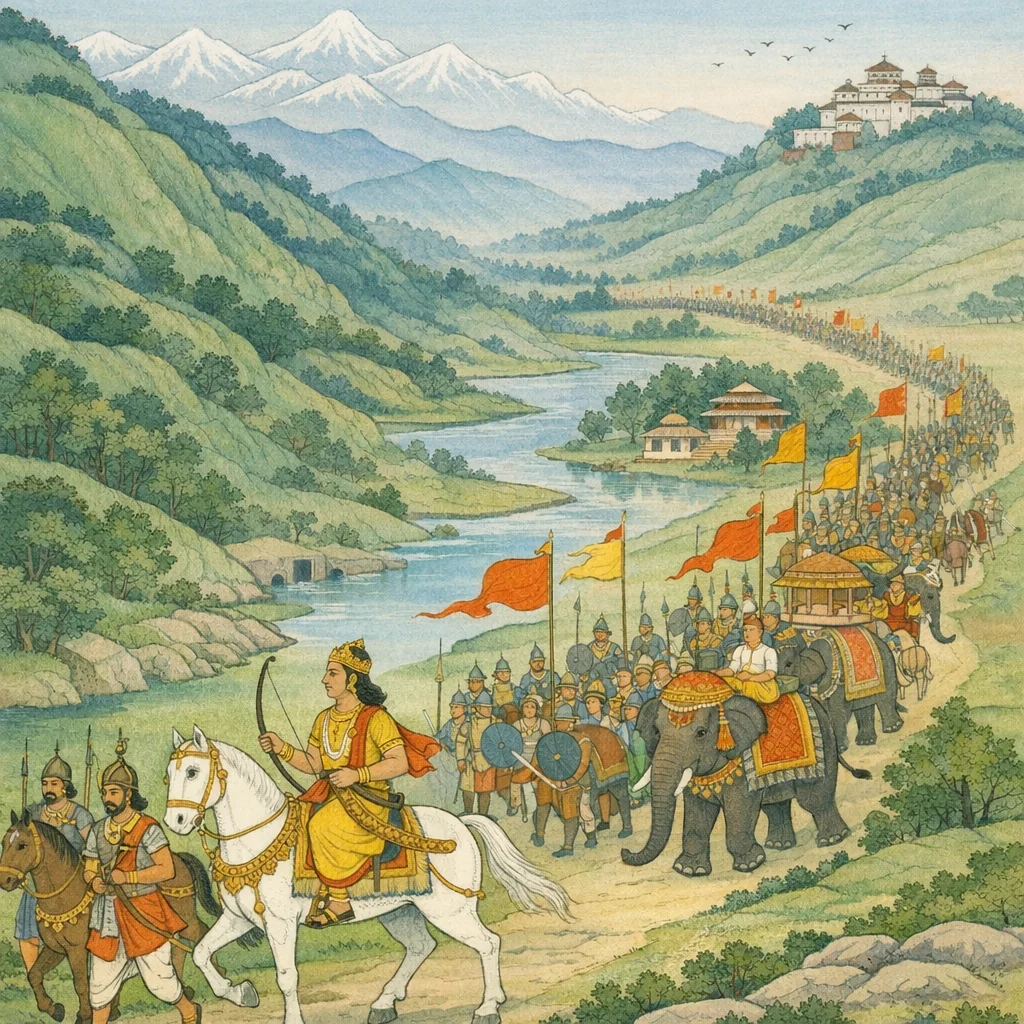
Chapter Arc: वैशम्पायन जनमेजय को बताते हैं कि महाधनुर्धर कर्ण दुर्योधन के प्रयोजन से विशाल सेना लेकर द्रुपद के रमणीय नगर को चारों ओर से घेर लेता है—यह केवल युद्ध नहीं, एक संदेश है कि हस्तिनापुर की शक्ति अब दूर-दूर तक पहुँचेगी। → कर्ण महायुद्ध करके द्रुपद को वश में करता है, कर (tribute) दिलवाता है, और फिर एक के बाद एक राजाओं को जीतता चलता है—नेपाल-प्रदेश के नरेश, पर्वतीय क्षेत्र, पूर्व दिशा की ओर धावा, फिर दक्षिण में पाण्ड्य-देश और श्रीशैल, आगे केरल; पश्चिम में अवन्ती को साम-नीति से झुकाता है और वृष्णियों से संगम कर पश्चिम दिशा में भी विजय-यात्रा बढ़ाता है। मार्ग में कहीं स्वेच्छा से दान मिलता है (रुक्मी का ‘जितना सोना चाहो’), कहीं बल से अधीनता; और राजाओं की प्रतिक्रियाएँ बँटी रहती हैं—कोई प्रशंसा, कोई निन्दा, कोई मौन। → चारों दिशाओं में विजय का चरम तब आता है जब सूतनन्दन कर्ण शशक, यवन आदि म्लेच्छ-समूहों तक को जीतकर ‘समूची पृथ्वी’ को अपने अभियान के अधीन दिखाता है—और इस व्यापक दिग्विजय का राजनीतिक फल यह बनता है कि दुर्योधन और शकुनि कर्ण के बल पर पाण्डवों को युद्ध में पहले ही पराजित मान बैठते हैं। → कर्ण की दिग्विजय से धन-रत्न, स्वर्ण-रजत, और कर-राशि एकत्र होती है; अनेक राजाओं की अधीनता स्थापित होती है; और कौरव-पक्ष के भीतर आत्मविश्वास दृढ़ हो जाता है कि अब पाण्डवों का प्रतिरोध टिक नहीं पाएगा। → दुर्योधन-शकुनि का यह अति-आत्मविश्वास—कि ‘पाण्डव पराजित ही समझो’—आगामी टकराव की भूमि तैयार करता है: क्या यह विजय-यात्रा धर्म-नीति की कसौटी पर टिकेगी, या अहंकार भविष्य में विनाश का द्वार खोलेगा?
Shlokas
Verse 1
वैशम्पायनजी कहते हैं--भरतश्रेष्ठ जनमेजय! तदनन्तर महाथनुर्धर कर्णने अपनी विशाल सेनाके साथ जाकर राजा द्रुपदके रमणीय नगरको चारों ओरसे घेर लिया
Vaiśampāyana said: “O Janamejaya, best of the Bharatas! Thereafter, Karṇa—the mighty archer—advanced with his vast army and surrounded King Drupada’s delightful city on all sides.” The episode underscores how martial prowess, when joined to political purpose, turns swiftly into siege and coercion, setting the stage for questions of rightful conduct in war and kingship.
Verse 2
युद्धेन महता चैनं चक्रे वीर॑ वशानुगम् । सुवर्ण रजतं चापि रत्नानि विविधानि च
Vaiśaṃpāyana said: By means of a great battle he brought that hero under his control. He also obtained gold and silver, and many kinds of precious gems—spoils that mark the worldly fruits of conquest, even as the narrative hints at the moral weight carried by victory won through force.
Verse 3
करं च दापयामास द्रुपदं नृपसत्तम । त॑ विनिर्जित्य राजेन्द्र राजानस्तस्य येडनुगा:
Vaiśampāyana said: Having subdued Drupada, the best of kings compelled him to pay tribute. And after decisively defeating him, O king, he likewise brought under control the other rulers who were allied with Drupada and followed his cause—an assertion of sovereignty framed in the political duty of kingship.
Verse 4
तानू सर्वान् वशगांक्षक्रे करं चैनानदापयत् । फिर महान् युद्ध करके उसने वीर द्रुपदको अपने वशमें कर लिया और उन्हें सोना, चाँदी, भाँति-भाँतिके रत्न एवं कर देनेके लिये विवश किया। नृपश्रेष्ठ महाराज जनमेजय! इस प्रकार द्रपदको जीतकर कर्णने उनके अनुयायी नरेशोंको भी अपने अधीन कर लिया और उन सबसे भी कर वसूल किया ।। २-३ $ || अशीोत्तरां दिशं गत्वा वशे चक्रे नराधिपान्,तत्पश्चात् उसने उत्तर दिशामें जाकर वहाँके राजाओंको अपने वशमें कर लिया। भगदत्तको जीतकर राधानन्दन कर्ण शत्रुओंसे युद्ध करता हुआ महान् पर्वत हिमालयपर आरूढ़ हुआ। वहाँसे सब दिशाओंमें जाकर उसने समस्त राजाओंको अपने अधीन किया और हिमालयप्रदेशके समस्त भूपालोंको जीतकर उनसे कर लिया
Vaiśampāyana said: He brought all of them under his control and compelled them to pay tribute. In the narrative frame, this verse highlights the political ethic of conquest in which a victorious king asserts sovereignty not merely by defeating opponents in battle but by establishing an ongoing obligation of revenue and submission. The episode presents the tension between kṣatriya valor and the moral ambiguity of coercive domination: power is consolidated through war, and legitimacy is expressed through the extraction of kara (tribute).
Verse 5
भगदत्तं च निर्जित्य राधेयो गिरिमारुहत् । हिमवन्तं महाशैलं युध्यमानश्व शत्रुभि:,तत्पश्चात् उसने उत्तर दिशामें जाकर वहाँके राजाओंको अपने वशमें कर लिया। भगदत्तको जीतकर राधानन्दन कर्ण शत्रुओंसे युद्ध करता हुआ महान् पर्वत हिमालयपर आरूढ़ हुआ। वहाँसे सब दिशाओंमें जाकर उसने समस्त राजाओंको अपने अधीन किया और हिमालयप्रदेशके समस्त भूपालोंको जीतकर उनसे कर लिया
Vaiśaṃpāyana said: Having conquered Bhagadatta, Rādheya (Karna) ascended the mountain. Fighting against his enemies, he reached the mighty peak of Himavān (the Himalaya). From there he proceeded through the regions, bringing the kings under his control—an episode that highlights the Kṣatriya ideal of conquest and the extraction of tribute as a political instrument, even as it foreshadows the moral tensions of power gained through force.
Verse 6
प्रययौ च दिश: सर्वान् नृपतीन् वशमानयत् | स हैमवतिकान् जित्वा करं सर्वानदापयत्,तत्पश्चात् उसने उत्तर दिशामें जाकर वहाँके राजाओंको अपने वशमें कर लिया। भगदत्तको जीतकर राधानन्दन कर्ण शत्रुओंसे युद्ध करता हुआ महान् पर्वत हिमालयपर आरूढ़ हुआ। वहाँसे सब दिशाओंमें जाकर उसने समस्त राजाओंको अपने अधीन किया और हिमालयप्रदेशके समस्त भूपालोंको जीतकर उनसे कर लिया
Vaiśampāyana said: He set out in every direction and brought the kings under his control. Having subdued the rulers of the Himalayan region, he made them all pay tribute. The passage portrays a campaign of conquest in which political dominance is consolidated through victory and the formal extraction of revenue, reflecting the royal ethic of establishing sovereignty by force and then regularizing it through tribute.
Verse 7
नेपालविषये ये च राजानस्तानवाजयत् । अवतीर्य ततः शैलात् पूर्वां दिशमभिद्रुत:,तदनन्तर नेपालदेशमें जो राजा थे, उनपर भी विजय प्राप्त की, फिर हिमालय पर्वतसे उतरकर उसने पूर्व दिशाकी ओर धावा किया
Vaiśampāyana said: He also subdued the kings who were in the region of Nepal. Then, descending from that mountain, he surged onward toward the eastern quarter—continuing his campaign of conquest and expansion of dominion.
Verse 8
अड्डान् वज्ान् कलिंगांश्व शुण्डिकान् मिथिलानथ । मागधान् कर्कखण्डांश्व निवेश्य विषये55त्मन:,अंग, वंग, कलिंग, शुण्डिक, मिथिला, मगध और कर्कखण्ड--इन सब देशोंको अपने राज्यमें मिलाकर कर्णने आवशीर, योध्य और अहिक्षत्र देशको भी जीत लिया। इस प्रकार पूर्व दिशापर विजय प्राप्त करके उसने वत्सभूमिमें पदार्पण किया
Vaiśampāyana said: Having brought under his own dominion the peoples of Aṅga, Vaṅga, Kaliṅga, Śuṇḍika, Mithilā, Magadha, and Karkakhaṇḍa, Karṇa consolidated these eastern realms into his sphere of rule. The narrative frames this as a campaign of expansion and political absorption—an assertion of power that, while presented as conquest, also raises the ethical tension between royal ambition and the burdens imposed upon subdued lands.
Verse 9
आवशीरांश्व योध्यांश्व अहिक्षत्रं च निर्जयत् । पूर्वा दिशं विनिर्जित्य वत्सभूमिं तथागमत्,अंग, वंग, कलिंग, शुण्डिक, मिथिला, मगध और कर्कखण्ड--इन सब देशोंको अपने राज्यमें मिलाकर कर्णने आवशीर, योध्य और अहिक्षत्र देशको भी जीत लिया। इस प्रकार पूर्व दिशापर विजय प्राप्त करके उसने वत्सभूमिमें पदार्पण किया
Vaiśampāyana said: Having subdued the lands of Āvaśīra, Yodhyā, and Ahikṣatra, Karṇa completed his conquest of the eastern quarter and then advanced into the country of Vatsa. The passage underscores the outward success of imperial expansion—victory and annexation—while implicitly pointing to the Mahābhārata’s ethical tension: political might and territorial gain do not by themselves establish righteousness (dharma), and conquest often foreshadows the larger moral and human costs that culminate in war.
Verse 10
वत्सभूमिं विनिर्जित्य केवलां मृत्तिकावतीम् | मोहन पत्तनं चैव त्रिपुरीं कोसलां तथा
Vaiśampāyana said: Having subdued Vatsabhūmi—now left as a mere tract of earth—he also took Mohana, the city called Patthana, Tripurī, and likewise Kosalā. The narration emphasizes the sweeping reach of conquest: places are reduced from thriving realms to bare ground, underscoring how political ambition can strip lands of their former prosperity and security.
Verse 11
दक्षिणां दिशमास्थाय कर्णो जित्वा महारथान्,दक्षिण दिशामें पहुँचकर कर्णने बड़े-बड़े महारथियोंको जीता। दाक्षिणात्योंमें रुक्मीके साथ कर्णने युद्ध किया। रुक्मीने पहले तो बड़ा भयंकर युद्ध किया, फिर उसने सूतपुत्र कर्णसे कहा
Vaiśampāyana said: Turning toward the southern quarter, Karṇa overcame many great chariot-warriors. Having reached the southern region, he subdued renowned fighters there. Among the southern kings he fought with Rukmī. Rukmī at first waged a fierce and dreadful battle; then he addressed Karṇa, the son of a charioteer—hinting at the ethical tension between martial merit and social insult that often accompanies rivalry in war.
Verse 12
रुक्मिणं दाक्षिणात्येषु योधयामास सूतज: । स युद्ध तुमुलं कृत्वा रुक्मी प्रोवाच सूतजम्,दक्षिण दिशामें पहुँचकर कर्णने बड़े-बड़े महारथियोंको जीता। दाक्षिणात्योंमें रुक्मीके साथ कर्णने युद्ध किया। रुक्मीने पहले तो बड़ा भयंकर युद्ध किया, फिर उसने सूतपुत्र कर्णसे कहा
Vaiśaṃpāyana said: In the southern regions, the charioteer’s son (Karna) engaged Rukmī in battle. After waging a tumultuous and fierce fight, Rukmī addressed Karna. The episode frames conquest and martial prowess within the larger Mahābhārata ethic: even in victory-seeking campaigns, speech and conduct after combat reveal a warrior’s intent—whether driven by dharma, rivalry, or pride.
Verse 13
प्रीतो5स्मि तव राजेन्द्र विक्रमेण बलेन च । न ते विघ्नं करिष्यामि प्रतिज्ञां समपालयम्,“राजेन्द्र! मैं तुम्हारे बल और पराक्रमसे बहुत प्रसन्न हूँ। अतः तुम्हारे कार्यमें विघ्न नहीं डालूँगा। थोड़ी देर युद्ध करके मैंने केवल क्षत्रियधर्मका पालन किया है
Verse 14
प्रीत्या चाहं प्रयच्छामि हिरण्यं यावदिच्छसि । समेत्य रुक्मिणा कर्ण: पाण्ड्यंशैलं च सोडगमत्
Vaiśampāyana said: “Out of goodwill, I will gladly give you as much gold as you desire.” Having joined with Rukmī, Karṇa then set out and reached the Pāṇḍya mountain—an episode that underscores how gifts offered in affection and alliance-building can shape the course of journeys and political ties.
Verse 15
“तुम जितना सोना ले जाना चाहो उतना मैं प्रसन्नतापूर्वक दे रहा हूँ।” इस प्रकार रुकमीसे मिलकर कर्णने पाण्ड्यदेश तथा श्रीशैलकी ओर प्रस्थान किया ।। स केरलं रणे चैव नील॑ चापि महीपतिम् । वेणुदारिसुतं चैव ये चान्ये नृपसत्तमा:
‘Take as much gold as you wish; I gladly give it.’ Having thus met with Rukmi, Karna set out toward the Pāṇḍya country and toward Śrīśaila. There, in battle, he confronted the king of Kerala, and also King Nīla, and the son of Veṇudāri, along with other foremost rulers. The passage underscores Karna’s public identity as a lavish giver and the way generosity, alliance, and martial ambition intertwine in the politics of kings.
Verse 16
दक्षिणस्यां दिशि नृपान् करान् सर्वानदापयत् | उसने रणभूमिमें केरल नरेश, राजा नील तथा वेणुदारिपुत्रको हराया और दक्षिण दिशामें अन्य जितने प्रमुख भूपाल थे, उन सबको जीतकर उनसे कर वसूल किया ।। १५६ || शैशुपालिं ततो गत्वा विजिग्ये सूतनन्दन:
Vaiśampāyana said: In the southern quarter he compelled all the kings to render tribute. Then, proceeding to the land of the Śaiśupālas, the son of the charioteer (Karna) conquered it as well. The passage underscores the political ethic of imperial expansion in which victory is measured not only by battle but by the establishment of acknowledged overlordship through the payment of taxes—an act that both asserts power and imposes obligations on ruler and ruled.
Verse 17
आव्न्त्यांश्व॒ वशे कृत्वा साम्ना च भरतर्षभ । वृष्णिभि: सह संगम्य पश्चिमामपि निर्जयत्,भरतश्रेष्ठ] तदनन्तर उसने सामनीतिके द्वारा अवन्तीदेशके राजाओंको वशमें करके वृष्णिवंशी यादवोंसे हिल-मिलकर पश्चिम दिशापर भी विजय प्राप्त की
Vaiśaṃpāyana said: “O bull among the Bharatas, after bringing the rulers of Avanti under his control through conciliation and prudent diplomacy, and then joining in alliance with the Vṛṣṇi Yādavas, he also went on to subdue the western quarter.”
Verse 18
वारुणीं दिशमागम्य यवनान् बर्बरांस्तथा | नृपान् पश्चिमभूमिस्थान् दापयामास वै करान्,इसके बाद पश्चिम दिशामें जाकर यवन तथा बर्बर राजाओंको, जो पश्चिम देशके ही निवासी थे, पराजित करके उनसे कर लिया
Vaiśampāyana said: Having proceeded to the Varuṇa-ward (the western quarter), he subdued the Yavanas and the Barbaras, and also the kings dwelling in the western lands, and caused them to pay tribute. The episode underscores the kingly duty of establishing political order and securing revenue through conquest, while also hinting at the Mahābhārata’s moral tension between righteous governance and coercive expansion.
Verse 19
विजित्य पृथिवीं सर्वा स पूर्वापरदक्षिणाम् । सम्लेच्छाटविकान् वीर: सपर्वतनिवासिन:,शशकान् यवनांश्चैव विजिग्ये सूतनन्दन: । इस प्रकार पूर्व, पश्चिम, उत्तर, दक्षिण सब दिशाओंकी समूची पृथ्वीको जीतकर म्लेच्छ, वनवासी, पर्वतीय, भद्गर, रोहितक, आग्रेय तथा मालव आदि समस्त गणराज्योंको परास्त किया। इसके बाद नीतिके अनुसार काम करनेवाले सूतनन्दन कर्णने हँसते-हँसते शशक और यवन राजाओंको भी जीत लिया
Vaiśampāyana said: Having conquered the whole earth in every direction—east, west, and south—the heroic Sūta’s son (Karna) subdued the mlecchas, the forest-dwellers, and those who lived in the mountains. He also overcame the Śaśakas and the Yavanas. The passage frames Karna’s campaign as a sweeping digvijaya, presenting conquest as an exercise of royal policy and disciplined conduct rather than mere violence, even as it highlights the subjugation of frontier peoples and republic-like clans.
Verse 20
भद्रान् रोहितकांश्वैव आग्रेयान् मालवानपि । गणान् सर्वान् विनिर्जित्य नीतिकृत् प्रहसन्निव
Vaiśampāyana said: Having subdued all those bands—Bhadrāns, Rohitakas, the Āgreyas, and the Mālavas—he, a maker of policy and order, seemed almost to smile, as if victory and governance were to him a matter of disciplined strategy rather than mere force.
Verse 21
नग्नजित्प्रमुखांश्नैव गणान् जित्वा महारथान्,इस प्रकार पुरुषसिंह महारथी कर्ण नग्नजित् आदि महारथी नरेशसमुदायोंको जीतकर सारी पृथ्वीको पराजित करके अपने वशमें कर लेनेके पश्चात् हस्तिनापुरको लौट आया
Vaiśampāyana said: Having conquered the great chariot-warriors led by Nagnajit, Karṇa—lion among men and foremost of warriors—defeated those assemblies of kings such as Nagnajit, subdued the whole earth, brought it under his control, and then returned to Hastināpura. The passage highlights the political ethic of conquest and consolidation: victory is presented not merely as personal prowess but as the expansion of dominion, raising implicit questions about the righteous limits of power and the costs of imperial ambition.
Verse 22
एवं स पृथिवीं सर्वा वशे कृत्वा महारथ: । विजित्य पुरुषव्याप्रो नागसाह्कयमागमत्,इस प्रकार पुरुषसिंह महारथी कर्ण नग्नजित् आदि महारथी नरेशसमुदायोंको जीतकर सारी पृथ्वीको पराजित करके अपने वशमें कर लेनेके पश्चात् हस्तिनापुरको लौट आया /
Vaiśampāyana said: Having brought the whole earth under his control, that great chariot-warrior—lion among men—after conquering the assemblies of kings such as Nagnajit and other mighty rulers, returned to Nāgasāhvya (Hastināpura). The verse underscores the political ethic of kingship in which sovereignty is asserted through conquest, yet it also hints at the moral tension of imperial ambition and the burdens such victories place upon dharma.
Verse 23
तमागतं महेष्वासं धार्तराष्ट्री जनाधिप: । प्रत्युदूग्म्य महाराज सभ्रातृपितृबान्धव:
Vaiśampāyana said: When that mighty archer arrived, the Dhārtarāṣṭra king—O great ruler—went forth to receive him, accompanied by his brothers, elders (as fathers), and kinsmen. The scene underscores the public etiquette of honoring a formidable guest and the political weight of welcoming a warrior in the presence of one’s entire family circle.
Verse 24
अर्चयामास विधिना कर्णमाहवशोभिनम् | आश्रावयच्च तत् कर्म प्रीयमाणो जनेश्वर:
Vaiśampāyana said: The king, pleased at heart, duly honored Karṇa—whose presence lent splendor to the battlefield—and caused that deed to be publicly proclaimed, so that all might hear of it.
Verse 25
4. ५ ढ़ है५ $ 2 ऐ कक प 282 श् पे | हट | गा २, | ५ + $ 7 यन्न भीष्मान्न च द्रोणान्न कृपान्न च बाह्नविकात् | प्राप्तवानस्मि भद्ठं ते त्वत्त: प्राप्त मया हि तत्,तत्पश्चात् उसने कर्णसे कहा--“वीरवर! तुम्हारा कल्याण हो। मुझे भीष्मजीसे, आचार्य द्रोणसे, कृपाचार्यसे तथा बाह्लिकसे भी जो वस्तु नहीं मिली थी, वह तुमसे प्राप्त हो गयी
Vaiśampāyana said: “O best of heroes, may you be well. What I could not obtain from Bhīṣma, nor from Droṇa, nor from Kṛpa, nor from Bāhlika—indeed that very thing I have obtained from you.” (Thus he spoke to Karṇa, acknowledging that Karṇa granted him a boon or benefit that even the foremost elders and teachers had not given—highlighting gratitude, patronage, and the moral weight of generosity.)
Verse 26
बहुना च किमुक्तेन शूणु कर्ण वचो मम | सनाथो<स्मि महाबाहो त्वया नाथेन सत्तम,“महाबाहु कर्ण! अधिक कहनेसे क्या लाभ? तुम मेरी बात सुनो। सत्पुरुषरत्न! तुम्हें अपना नाथ (सहायक) पाकर ही मैं सनाथ हूँ
Vaiśampāyana said: “What is the use of saying much more? Listen, Karṇa, to my words. O mighty-armed one, best among the good—having you as my protector, I am no longer helpless; I am supported.”
Verse 27
न हि ते पाण्डवा: सर्वे कलाम्हन्ति षोडशीम् । अन्ये वा पुरुषव्याप्र राजानो5भ्युदितोदिता:,'पुरुषसिंह! वे समस्त पाण्डव अथवा अन्य श्रेष्ठठटम नरेश तुम्हारी सोलहवीं कलाके बराबर भी नहीं हो सकते
Vaiśaṃpāyana said: “Indeed, all those Pāṇḍavas together are not worthy of even a sixteenth part of your excellence. Nor are other kings—though famed and celebrated—your equals, O tiger among men.”
Verse 28
स भवान् धृतराष्ट्र तं गान्धारीं च यशस्विनीम् । पश्य कर्ण महेष्वास अदितिं वज्रभूद् यथा,“महाधनुर्धर कर्ण! अब तुम मेरे पूज्य पिता धृतराष्ट्र तथा यशस्विनी माता गान्धारीका उसी प्रकार दर्शन करो, जैसे वज्रधारी इन्द्र माता अदितिका दर्शन करते हैं!
Vaiśampāyana said: “O mighty-armed Karṇa, behold now my revered father Dhṛtarāṣṭra and the illustrious mother Gāndhārī—just as Indra, bearer of the thunderbolt, pays reverent audience to his mother Aditi.” The line frames respectful darśana of elders as a model of dharma, urging Karṇa to honor parental authority and maternal dignity even amid political and martial tensions.
Verse 29
ततो हलहलाशब्द: प्रादुरासीद् विशाम्पते । हाहाकाराश्न बहवो नगरे नागसाह्नये,जनमेजय! तदनन्तर हस्तिनापुर नगरमें सब ओर बड़ा भारी कोलाहल मच गया। अनेक प्रकारके हाहाकार सुनायी देने लगे
Vaiśampāyana said: Then, O lord of the people, a clamorous uproar suddenly arose. Many cries of distress—shouts of “Alas! Alas!”—were heard throughout the city called Nāgasāhvaya (Hastināpura), O Janamejaya. The scene signals a community shaken at once, where fear and confusion spread faster than counsel, testing the steadiness and responsibility of rulers and citizens alike.
Verse 30
केचिदेनं प्रशंसन्ति निन्दन्ति सम तथापरे । तूष्णीमासंस्तथा चान्ये नृपास्तत्र जनाधिप,राजन! कोई तो कर्णकी प्रशंसा करते थे और दूसरे उसकी निन्दा। अन्य कितने ही राजा निन्दा और प्रशंसा कुछ भी न करके मौन थे
Vaiśampāyana said: There, O king, some rulers praised him, while others censured him; and yet others remained silent, neither praising nor blaming. Thus the assembly revealed how divided judgment becomes when reputation, rivalry, and personal interest color what is spoken aloud.
Verse 31
एवं विजित्य राजेन्द्र कर्ण: शस्त्रभूतां वर: । सपर्वतवनाकाशां ससमुद्रां सनिष्कुटाम्,महाराज! इस प्रकार शस्त्रधारियोंमें श्रेष्ठ सूतपुत्र कर्णने पर्वत, वन, खुले स्थान, समुद्र, उद्यान, ऊँचे-नीचे देश, पुर और नगर, द्वीप और जलयुक्त प्रदेशोंसे युक्त सारी पृथ्वीको जीतकर थोड़े ही समयमें समस्त राजाओंको वशमें कर लिया और उनसे अटूट धनराशि लेकर वह राजा धृतराष्ट्रके समीप आया
Vaiśampāyana said: “O best of kings, having thus conquered, Karṇa—the foremost among those who wield weapons—subdued the entire earth: with its mountains and forests, open tracts and skies, its seas and pleasure-groves.” (In context, the narrative continues that he quickly brought many kings under his control, extracted vast, unbroken tribute, and then approached King Dhṛtarāṣṭra—highlighting the political ethic of conquest and the moral tension between prowess, ambition, and the burdens imposed on other rulers.)
Verse 32
देशैरुच्चावचै: पूर्णा पत्तनैर्नगरैरपि । दीपैश्वानूपसम्पूर्ण: पृथिवीं पृथिवीपते,महाराज! इस प्रकार शस्त्रधारियोंमें श्रेष्ठ सूतपुत्र कर्णने पर्वत, वन, खुले स्थान, समुद्र, उद्यान, ऊँचे-नीचे देश, पुर और नगर, द्वीप और जलयुक्त प्रदेशोंसे युक्त सारी पृथ्वीको जीतकर थोड़े ही समयमें समस्त राजाओंको वशमें कर लिया और उनसे अटूट धनराशि लेकर वह राजा धृतराष्ट्रके समीप आया
Vaiśampāyana said: “O lord of the earth, O great king! The whole world—filled with lands of every kind, with ports and cities, and with islands and marshy, water-rich regions—was brought under Karṇa’s sway. Having swiftly subdued the kings and extracted from them an unbroken stream of wealth, that ruler then came into the presence of Dhṛtarāṣṭra.”
Verse 33
कालेन नातिदीर्घेण वशे कृत्वा तु पार्थिवान् । अक्षयं धनमादाय सूतजो नृपमभ्ययात्,महाराज! इस प्रकार शस्त्रधारियोंमें श्रेष्ठ सूतपुत्र कर्णने पर्वत, वन, खुले स्थान, समुद्र, उद्यान, ऊँचे-नीचे देश, पुर और नगर, द्वीप और जलयुक्त प्रदेशोंसे युक्त सारी पृथ्वीको जीतकर थोड़े ही समयमें समस्त राजाओंको वशमें कर लिया और उनसे अटूट धनराशि लेकर वह राजा धृतराष्ट्रके समीप आया
Vaiśampāyana said: In no very long time, having brought the kings under his control, the charioteer’s son (Karna) collected inexhaustible wealth and then approached the king. The verse underscores swift political subjugation and the extraction of tribute as a means to consolidate power and win royal favor—an ethically charged act in which prowess and ambition are joined to the acquisition of resources from conquered rulers.
Verse 34
प्रविश्य च गृहं राजन्नभ्यन्तरमरिंदम । गान्धारीसहितं वीरो धृतराष्ट्रं ददर्श सः
Vaiśampāyana said: “O king, the hero—crusher of foes—entered the house and went into the inner quarters. There he saw Dhṛtarāṣṭra, with Gāndhārī by his side.”
Verse 35
पुत्रवच्च नरव्यात्र पादौ जग्राह धर्मवित् | धृतराष्ट्रेण चाश्लिष्य प्रेमणा चापि विसर्जित:
Vaiśampāyana said: Then the knower of dharma, like a son, clasped the feet of that tiger among men. Dhṛtarāṣṭra embraced him in affection and then, with love, let him go.
Verse 36
शत्रुसूदन_ जनमेजय! धर्मज्ञ वीर कर्णने अन्तःपुरमें प्रवेश करके गान्धारीसहित धृतराष्ट्रका दर्शन किया और पुत्रकी भाँति उसने उनके दोनों चरण पकड़ लिये। धृतराष्ट्रने भी उसे प्रेमपूर्वक हृदयसे लगाकर विदा किया ।। तदा प्रभूृति राजा च शकुनिश्चापि सौबल: । जानते निर्जितान् पार्थान् कर्णेन युधि भारत
From that time onward, O Bhārata, both the king (Dhṛtarāṣṭra) and Śakuni, the son of Subala, came to regard the Pāṇḍava brothers as already defeated in battle—concluding that Karṇa would overcome them. The passage underscores how confidence born of partial counsel and wishful certainty can harden into moral blindness, shaping decisions that ignore dharma and the true balance of strength.
Verse 103
एतान् सर्वान् विनिर्जित्य करमादाय सर्वश: । वत्सभूमिको जीतकर कर्णने केवला, मृत्तिकावती, मोहन, पत्तन, त्रिपुरी तथा कोसला --इन सब देशोंको अपने अधिकारमें किया और सबसे कर लेकर (दक्षिण दिशाकी ओर) प्रस्थान किया
Vaiśampāyana said: Having conquered all these realms and exacted tribute in full, he brought under his control Vatsabhūmika, Jītakara, Karṇane, Kevalā, Mṛttikāvatī, Mohana, Pattana, Tripurī, and Kosalā. After collecting revenues from every quarter, he set out toward the southern direction—an image of expanding sovereignty through force, where political success is measured by submission and the payment of dues.
Verse 163
पार्श्वस्थांश्वापि नृपतीन् वशे चक्रे महाबल: । इसके बाद सूतपुत्र महाबली कर्णने चेदिदेशमें जाकर शिशुपालके पुत्रको हराया और उसके पार्श्ववर्ती नरेशोंको भी अपने अधीन कर लिया
Vaiśampāyana said: The mighty one also brought the neighboring kings under his control. In the narrative context, this line underscores the expanding reach of royal power through conquest and subjugation—an ethically charged motif in the Mahābhārata, where political success is often weighed against the demands of dharma and the consequences of coercive rule.
Verse 206
शशकान् यवनांश्चैव विजिग्ये सूतनन्दन: । इस प्रकार पूर्व, पश्चिम, उत्तर, दक्षिण सब दिशाओंकी समूची पृथ्वीको जीतकर म्लेच्छ, वनवासी, पर्वतीय, भद्गर, रोहितक, आग्रेय तथा मालव आदि समस्त गणराज्योंको परास्त किया। इसके बाद नीतिके अनुसार काम करनेवाले सूतनन्दन कर्णने हँसते-हँसते शशक और यवन राजाओंको भी जीत लिया
Vaiśampāyana said: The son of the charioteer (Karna) conquered the Śaśakas and the Yavanas as well. Thus, having subdued the entire earth in all directions—east, west, north, and south—he defeated the Mleccha peoples and many republican clans and frontier groups such as forest-dwellers and mountain tribes, including the Bhadragaras, Rohitakas, Āgreyas, and Mālavas. Thereafter, acting in accordance with political prudence (nīti), Karna, the son of the sūta, overcame even the Śaśaka and Yavana kings with effortless confidence.
Verse 254
भारत! तबसे राजा दुर्योधन तथा सुबलपुत्र शकुनि युद्धमें कर्णद्वारा पाण्डवोंको पराजित हुआ ही समझने लगे ।। इति श्रीमहाभारते वनपर्वणि घोषयात्रापर्वणि कर्णदिग्विजये चतुष्पठ्चाशदधिकद्विशततमो<ध्याय:
Vaiśampāyana said: “O Bhārata, from that point onward King Duryodhana, along with Śakuni the son of Subala, came to regard the Pāṇḍavas as already defeated in war—so confident were they in Karṇa’s prowess.”
Frequently Asked Questions
Whether the principal offender (Jayadratha), after releasing Draupadī in fear, should be executed as deterrence and retributive justice, or spared due to kinship ties and the broader ethics of restraint.
Crisis response must balance immediate protective action with disciplined targeting and ethical review; even amid strategic engagement, the text foregrounds deliberation on proportional consequence, social bonds, and future political stability.
No explicit phalaśruti appears in this adhyāya; its meta-function is narrative-ethical, using the pursuit and counsel sequence to situate punitive power within rājadharma and relational obligations.