Adhyaya 233
Āraṇyaka Parva, Adhyāya 233 — Pandavas Mobilize; Arjuna’s Conciliation and the Onset of Combat
Upa-parva: Gandharva–Pandava Encounter (Duryodhana Captivity Episode) — within Āraṇyaka Parva
Vaiśaṃpāyana reports that, upon hearing Yudhiṣṭhira’s words, the Pandavas—led by Bhīma—rise in coordinated readiness and don protective armor. They appear with standards, chariots, and bows, departing swiftly on well-equipped vehicles drawn by fast horses. Observing their movement, the opposing force produces a great tumult and rapidly assembles in the forest; the Gandharvas regroup and arrange themselves in formation, perceiving the four Pandava warriors mounted on chariots. Following the dharmic king’s instruction, the Pandavas initiate engagement in a controlled, gradual manner, but the Gandharva troops are described as unreceptive to gentle persuasion. Arjuna (Savyasācī) then addresses them with conciliatory speech, censuring conduct deemed improper—especially violations involving others’ spouses and inappropriate contact with humans—and issues a directive to release Dhṛtarāṣṭra’s sons and their women under Yudhiṣṭhira’s authority. The Gandharvas respond that they obey only a single sovereign (a divine overlord) and recognize no other commander. With diplomacy rejected, Arjuna escalates: he vows to effect release by his own valor if necessary and begins the exchange of arrow volleys, producing a fierce battle between the Gandharvas and the Pandavas.
Chapter Arc: युधिष्ठिर के प्रश्न-प्रसंग में, ऋषियों की सभा के बीच महातपा मार्कण्डेय स्कन्द के जन्म-वृत्तान्त की कड़ी को आगे बढ़ाते हुए अचानक देवसेनापति के अनेक नामों का उद्घोष करते हैं—मानो एक ही देवता में असंख्य तेजों का समाहार हो। → नाम-गणना साधारण परिचय नहीं रहती; वह स्तुति में बदलती जाती है—स्कन्द को ‘महिषार्दन’, ‘भूतेश’, ‘षण्मुख’, ‘शरवणोद्धव’, ‘ब्रह्मचारी’, ‘शत्रुजेता’ कहकर उनके विराट् रूप, युद्ध-शक्ति और तप-चर्या को एक साथ बाँधा जाता है। श्रोता के मन में प्रश्न उठता है: यह देवता केवल युद्ध-नायक है या धर्म-रक्षक भी? → स्तुति का शिखर तब आता है जब स्कन्द को सर्वव्यापी सेनाधिपति और विश्व-धारणकर्ता के रूप में संबोधित किया जाता है—‘त्वमेव सेनाधिपतिः… सहस्रभूस्त्वं धरणी त्वमेव…’ तथा ‘षण्मुख’ के बहुरूपी, कुक्कुट-खेल, और देव-तत्त्वों (सोम, मरुत, वायु, इन्द्र) से उनकी एकात्मता का घोष होता है। → मार्कण्डेय स्तुति को ‘फलश्रुति’ में बाँध देते हैं—जो द्विज एकाग्रचित्त होकर स्कन्द के जन्म-वृत्तान्त/स्तव का पाठ, श्रवण या श्रावण करता है, उसे धन, आयु, यश, पुत्र, शत्रुजय, पुष्टि-तुष्टि और अंततः ‘स्कन्द-सालोक्य’ की प्राप्ति होती है।
Shlokas
Verse 1
इस प्रकार श्रीमहाभारत वनपरव्वके अन्तर्गत मार्कण्डेयसमास्यापर्वमें अंगिरसोपाख्यानके प्रसंगमें स््कन्दकी उत्पत्ति तथा महिषायुरवधविषयक दो सौ एकतीसवाँ अध्याय पूरा हुआ ॥/ २३१ ॥ (दाक्षिणात्य अधिक पाठका ३ “लोक मिलाकर कुल ११३ ६ “लोक हैं) बह. “+( 9) #2<.3 #23५:१ - रथका वह अग्रभाग जहाँ जूआ बाँधा जाता है, कूबर कहलाता है। ग्राम्य भाषामें उसे “नकेला” या “सबुनी” कहते हैं। द्वात्रिशर्दाधिकद्विशततमो< ध्याय: कार्तिकेयके प्रसिद्ध नामोंका वर्णन तथा उनका स्तवन युधिछिर उवाच भगवन् श्रोतुमिच्छामि नामान्यस्य महात्मन: । त्रिषु लोकेषु यान्यस्य विख्यातानि द्विजोत्तम,युधिष्ठिर बोले--भगवन्! विप्रवर! तीनों लोकोंमें महामना कार्तिकेयके जो-जो नाम विख्यात हैं, मैं उन्हें सुनना चाहता हूँ
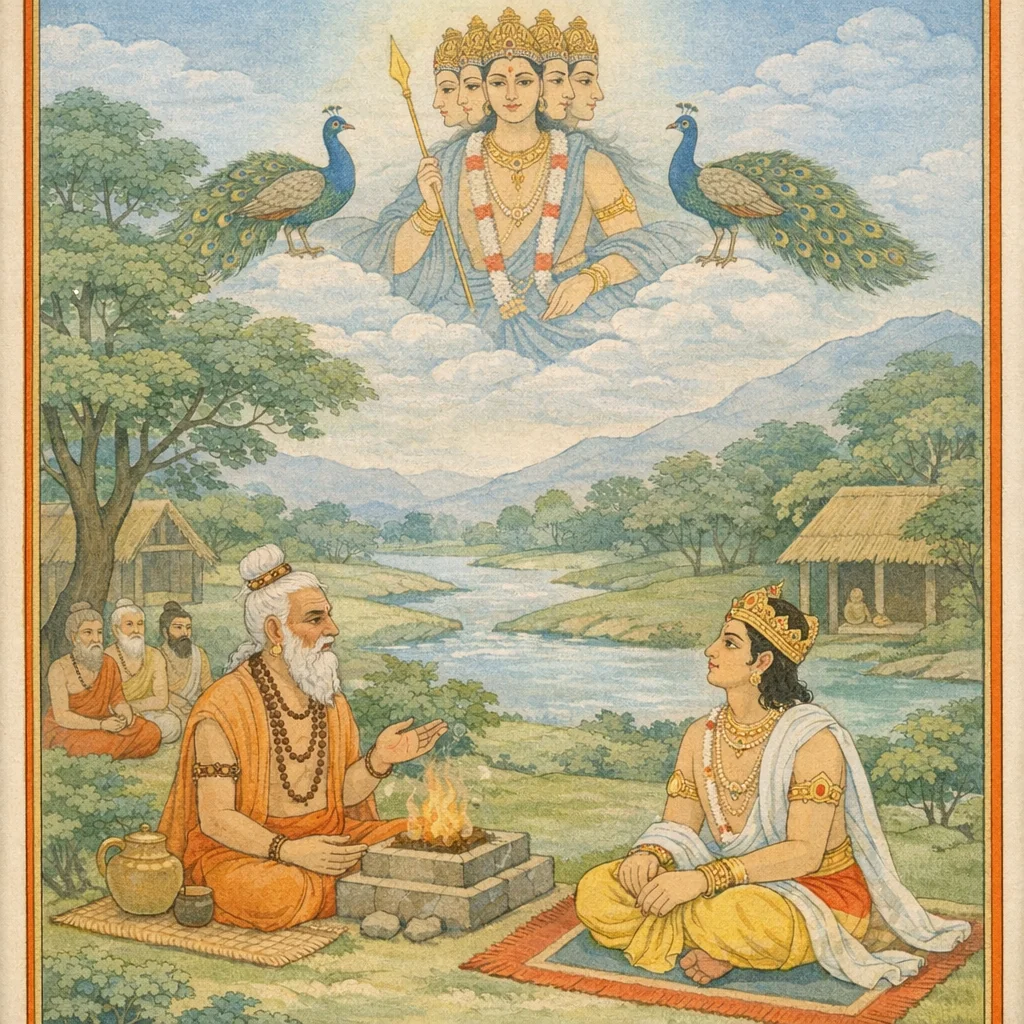
Yudhiṣṭhira said: “Revered sir, best of the twice-born, I wish to hear the names of that great-souled one—those by which he is renowned throughout the three worlds.”
Verse 2
वैशम्पायन उवाच इत्युक्त: पाण्डवेयेन महात्मा ऋषिसंनिधौ । उवाच भगवांस्तत्र मार्कण्डेयो महातपा:,वैशम्पायनजी कहते हैं--जनमेजय! पाण्डुनन्दन युधिष्ठिरके इस प्रकार कहनेपर महातपस्वी महात्मा भगवान् मार्कण्डेयने ऋषियोंके समीप इस प्रकार कहा--
Vaiśampāyana said: When the noble son of Pāṇḍu had spoken thus in the presence of the assembled sages, the venerable and greatly austere seer Mārkaṇḍeya then replied there. The scene frames a dharmic inquiry: a righteous king seeks guidance, and an authoritative sage answers before witnesses, grounding the forthcoming teaching in tradition and ethical accountability.
Verse 3
मार्कण्डेय उवाच आग्नेयश्चैव स्कन्दश्न दीप्तकीर्तिरनामय: । मयूरकेतुर्धर्मात्मा भूतेशो महिषार्दन:,मार्कण्डेयजी बोले--राजन्! आग्नेय, स्कन्द, दीप्तकीर्ति, अनामय, मयूरकेतु, धर्मात्मा, भूतेश, महिषमर्दन, कामजित, कामद, कान्त, सत्यवाक्, भुवनेश्वर, शिशु, शीघ्र, शुचि, चण्ड, दीप्तवर्ण, शुभानन, अमोघ, अनघ, रौद्र, प्रिय, चन्द्रानन, दीप्तशक्ति, प्रशान्तात्मा, भद्गरकृत, कूटमोहन, षष्ठीप्रिय, धर्मात्मा, पवित्र, मातृवत्सल, कन्याभर्ता, विभक्त, स्वाहेय, रेवतीसुत, प्रभु, नेता, विशाख, नैगमेय, सुदुश्चर, सुव्रत, ललित, बाल- क्रीडनकप्रिय, आकाशचारी, ब्रह्मचारी, शूर, शंखणोद्धव, विश्वामित्रप्रिय, देवसेनाप्रिय, वासुदेवप्रिय, प्रिय और प्रियकृत--ये कार्तिकेयजीके दिव्य नाम हैं। जो इनका पाठ करता है, वह धन, कीर्ति तथा स्वर्गलोक प्राप्त कर लेता है; इसमें संशय नहीं है
Markandeya said: “O King, the divine son of Fire—Skanda—who is famed with blazing renown and free from affliction; who bears the peacock as his emblem; who is righteous-souled; who is Lord of beings; and who is the slayer of the buffalo-demon—these are (among) the sacred epithets by which Karttikeya is praised.”
Verse 4
कामजित् कामद: कान्तः सत्यवाग भुवनेश्वर: । शिशु: शीघ्र: शुचिश्नण्डो दीप्तवर्ण: शुभानन:,मार्कण्डेयजी बोले--राजन्! आग्नेय, स्कन्द, दीप्तकीर्ति, अनामय, मयूरकेतु, धर्मात्मा, भूतेश, महिषमर्दन, कामजित, कामद, कान्त, सत्यवाक्, भुवनेश्वर, शिशु, शीघ्र, शुचि, चण्ड, दीप्तवर्ण, शुभानन, अमोघ, अनघ, रौद्र, प्रिय, चन्द्रानन, दीप्तशक्ति, प्रशान्तात्मा, भद्गरकृत, कूटमोहन, षष्ठीप्रिय, धर्मात्मा, पवित्र, मातृवत्सल, कन्याभर्ता, विभक्त, स्वाहेय, रेवतीसुत, प्रभु, नेता, विशाख, नैगमेय, सुदुश्चर, सुव्रत, ललित, बाल- क्रीडनकप्रिय, आकाशचारी, ब्रह्मचारी, शूर, शंखणोद्धव, विश्वामित्रप्रिय, देवसेनाप्रिय, वासुदेवप्रिय, प्रिय और प्रियकृत--ये कार्तिकेयजीके दिव्य नाम हैं। जो इनका पाठ करता है, वह धन, कीर्ति तथा स्वर्गलोक प्राप्त कर लेता है; इसमें संशय नहीं है
Mārkaṇḍeya said: “O King, he is the conqueror of desire and the giver of desired boons; he is lovely, truthful in speech, and a lord of the worlds. He is ever-youthful, swift, pure, fierce in righteous power, radiant in hue, and auspicious in countenance.” In context, this verse forms part of a litany of divine epithets—praise that cultivates devotion, steadies the mind, and aligns the listener with truthfulness, purity, and disciplined strength.
Verse 5
अमोघस्त्वनघो रौद्र: प्रियश्रन्द्राननस्तथा । दीप्तशक्ति: प्रशान्तात्मा भद्गरकृत् कूटमोहन:,मार्कण्डेयजी बोले--राजन्! आग्नेय, स्कन्द, दीप्तकीर्ति, अनामय, मयूरकेतु, धर्मात्मा, भूतेश, महिषमर्दन, कामजित, कामद, कान्त, सत्यवाक्, भुवनेश्वर, शिशु, शीघ्र, शुचि, चण्ड, दीप्तवर्ण, शुभानन, अमोघ, अनघ, रौद्र, प्रिय, चन्द्रानन, दीप्तशक्ति, प्रशान्तात्मा, भद्गरकृत, कूटमोहन, षष्ठीप्रिय, धर्मात्मा, पवित्र, मातृवत्सल, कन्याभर्ता, विभक्त, स्वाहेय, रेवतीसुत, प्रभु, नेता, विशाख, नैगमेय, सुदुश्चर, सुव्रत, ललित, बाल- क्रीडनकप्रिय, आकाशचारी, ब्रह्मचारी, शूर, शंखणोद्धव, विश्वामित्रप्रिय, देवसेनाप्रिय, वासुदेवप्रिय, प्रिय और प्रियकृत--ये कार्तिकेयजीके दिव्य नाम हैं। जो इनका पाठ करता है, वह धन, कीर्ति तथा स्वर्गलोक प्राप्त कर लेता है; इसमें संशय नहीं है
Mārkaṇḍeya said: “O King, he is unfailing and sinless; fierce in righteous wrath, yet dear to his devotees; moon-faced; endowed with blazing power; inwardly tranquil; a doer of auspicious deeds; and one who confounds deceit and hypocrisy.”
Verse 6
षष्ठीप्रियश्व धर्मात्मा पवित्रो मातृवत्सल: । कन्याभर्ता विभक्तश्च स्वाहेयो रेवतीसुत:,मार्कण्डेयजी बोले--राजन्! आग्नेय, स्कन्द, दीप्तकीर्ति, अनामय, मयूरकेतु, धर्मात्मा, भूतेश, महिषमर्दन, कामजित, कामद, कान्त, सत्यवाक्, भुवनेश्वर, शिशु, शीघ्र, शुचि, चण्ड, दीप्तवर्ण, शुभानन, अमोघ, अनघ, रौद्र, प्रिय, चन्द्रानन, दीप्तशक्ति, प्रशान्तात्मा, भद्गरकृत, कूटमोहन, षष्ठीप्रिय, धर्मात्मा, पवित्र, मातृवत्सल, कन्याभर्ता, विभक्त, स्वाहेय, रेवतीसुत, प्रभु, नेता, विशाख, नैगमेय, सुदुश्चर, सुव्रत, ललित, बाल- क्रीडनकप्रिय, आकाशचारी, ब्रह्मचारी, शूर, शंखणोद्धव, विश्वामित्रप्रिय, देवसेनाप्रिय, वासुदेवप्रिय, प्रिय और प्रियकृत--ये कार्तिकेयजीके दिव्य नाम हैं। जो इनका पाठ करता है, वह धन, कीर्ति तथा स्वर्गलोक प्राप्त कर लेता है; इसमें संशय नहीं है
Mārkaṇḍeya said: “O King, (Skanda) is called ‘He who loves the sixth (lunar day)’, ‘righteous-souled’, ‘pure’, and ‘affectionate to mothers’. He is also known as ‘protector of maidens’, ‘the distinct/separate one’, ‘son of Svāhā’, and ‘son of Revatī’.”
Verse 7
प्रभुनेता विशाखश्न नैगमेय: सुदुश्चर: । सुव्रतो ललितश्वैव बालक्रीडनकप्रिय:,मार्कण्डेयजी बोले--राजन्! आग्नेय, स्कन्द, दीप्तकीर्ति, अनामय, मयूरकेतु, धर्मात्मा, भूतेश, महिषमर्दन, कामजित, कामद, कान्त, सत्यवाक्, भुवनेश्वर, शिशु, शीघ्र, शुचि, चण्ड, दीप्तवर्ण, शुभानन, अमोघ, अनघ, रौद्र, प्रिय, चन्द्रानन, दीप्तशक्ति, प्रशान्तात्मा, भद्गरकृत, कूटमोहन, षष्ठीप्रिय, धर्मात्मा, पवित्र, मातृवत्सल, कन्याभर्ता, विभक्त, स्वाहेय, रेवतीसुत, प्रभु, नेता, विशाख, नैगमेय, सुदुश्चर, सुव्रत, ललित, बाल- क्रीडनकप्रिय, आकाशचारी, ब्रह्मचारी, शूर, शंखणोद्धव, विश्वामित्रप्रिय, देवसेनाप्रिय, वासुदेवप्रिय, प्रिय और प्रियकृत--ये कार्तिकेयजीके दिव्य नाम हैं। जो इनका पाठ करता है, वह धन, कीर्ति तथा स्वर्गलोक प्राप्त कर लेता है; इसमें संशय नहीं है
Mārkaṇḍeya said: “O King, he is the Lord and the Leader; he is Viśākha; he is Naigameya; he is most difficult to overcome. He is steadfast in sacred vows, graceful in form and conduct, and fond of the innocent playthings and games of children.” In context, this verse continues the litany of divine epithets of Kārttikeya (Skanda), presenting him as both a formidable protector and a gentle, auspicious presence—encouraging reverent remembrance as a source of merit and well-being.
Verse 8
खचारी ब्रह्मचारी च शूर: शरवणोद्धव: । विश्वामित्रप्रियश्वैव देवसेनाप्रियस्तथा,मार्कण्डेयजी बोले--राजन्! आग्नेय, स्कन्द, दीप्तकीर्ति, अनामय, मयूरकेतु, धर्मात्मा, भूतेश, महिषमर्दन, कामजित, कामद, कान्त, सत्यवाक्, भुवनेश्वर, शिशु, शीघ्र, शुचि, चण्ड, दीप्तवर्ण, शुभानन, अमोघ, अनघ, रौद्र, प्रिय, चन्द्रानन, दीप्तशक्ति, प्रशान्तात्मा, भद्गरकृत, कूटमोहन, षष्ठीप्रिय, धर्मात्मा, पवित्र, मातृवत्सल, कन्याभर्ता, विभक्त, स्वाहेय, रेवतीसुत, प्रभु, नेता, विशाख, नैगमेय, सुदुश्चर, सुव्रत, ललित, बाल- क्रीडनकप्रिय, आकाशचारी, ब्रह्मचारी, शूर, शंखणोद्धव, विश्वामित्रप्रिय, देवसेनाप्रिय, वासुदेवप्रिय, प्रिय और प्रियकृत--ये कार्तिकेयजीके दिव्य नाम हैं। जो इनका पाठ करता है, वह धन, कीर्ति तथा स्वर्गलोक प्राप्त कर लेता है; इसमें संशय नहीं है
Mārkaṇḍeya said: “O King, (Kārttikeya) is called ‘Sky-goer’, ‘Brahmacārin’, ‘Hero’, ‘Born from the reed-bed’, ‘Beloved of Viśvāmitra’, and ‘Beloved of Devasenā’.” In context, these are honorific epithets that praise Skanda’s disciplined conduct, valor, and divine origins; the recitation of such names is presented as a devotional act that cultivates merit, fame, and auspicious destiny.
Verse 9
वासुदेवप्रियश्वैव प्रिय: प्रियकृदेव तु । नामान्येतानि दिव्यानि कार्तिकेयस्य य: पठेत् । स्वर्ग कीर्ति धनं चैव स लभेन्नात्र संशय:,मार्कण्डेयजी बोले--राजन्! आग्नेय, स्कन्द, दीप्तकीर्ति, अनामय, मयूरकेतु, धर्मात्मा, भूतेश, महिषमर्दन, कामजित, कामद, कान्त, सत्यवाक्, भुवनेश्वर, शिशु, शीघ्र, शुचि, चण्ड, दीप्तवर्ण, शुभानन, अमोघ, अनघ, रौद्र, प्रिय, चन्द्रानन, दीप्तशक्ति, प्रशान्तात्मा, भद्गरकृत, कूटमोहन, षष्ठीप्रिय, धर्मात्मा, पवित्र, मातृवत्सल, कन्याभर्ता, विभक्त, स्वाहेय, रेवतीसुत, प्रभु, नेता, विशाख, नैगमेय, सुदुश्चर, सुव्रत, ललित, बाल- क्रीडनकप्रिय, आकाशचारी, ब्रह्मचारी, शूर, शंखणोद्धव, विश्वामित्रप्रिय, देवसेनाप्रिय, वासुदेवप्रिय, प्रिय और प्रियकृत--ये कार्तिकेयजीके दिव्य नाम हैं। जो इनका पाठ करता है, वह धन, कीर्ति तथा स्वर्गलोक प्राप्त कर लेता है; इसमें संशय नहीं है
Mārkaṇḍeya said: “And (he is) also ‘Beloved of Vāsudeva’, ‘Beloved’, and ‘Doer of what is dear’. Whoever recites these divine names of Kārttikeya attains heaven, fame, and wealth—of this there is no doubt.”
Verse 10
स्तोष्यामि देवैर्क्रषिशि श्र जुष् शकक््त्या गुहं नामभिरप्रमेयम् । षडाननं शक्तिधरं सुवीरं निबोध चैतानि कुरुप्रवीर
Mārkaṇḍeya said: “I shall praise that immeasurable one—Guha—whose power is honored by the gods and the seers, invoking him by his sacred names. He is the six-faced bearer of the spear, a most valiant hero. O foremost of the Kurus, listen attentively to these (names and praises).”
Verse 11
स्कन्ददेव! आप ब्राह्मणहितैषी, ब्रह्मात्मज, ब्रह्मवेत्ता, ब्रह्मनिष्ठ, ब्रह्मज्ञानियोंमें श्रेष्ठ, ब्राह्मणप्रिय, ब्राह्मणोंके समान व्रतधारी, ब्रह्मज्ञ तथा ब्राह्मणोंके नेता हैं
Markandeya said: “O Lord Skanda! You are a well-wisher of the Brahmins—born of Brahmā, a knower of Brahman, steadfast in Brahman, foremost among those who possess Brahman-knowledge. You are dear to the Brahmins, you observe vows like the Brahmins, you are yourself a knower of Brahman, and you stand as a leader and protector of the Brahmin community.”
Verse 12
स्वाहा स्वधा त्वं परमं पवित्र मन्त्रस्तुतस्त्वं प्रथित: षडर्चि: । संवत्सरस्त्वमृतवश्च षड् वै मासार्धमासावयनं दिशश्व,आप स्वाहा, स्वधा, परम पवित्र, मन्त्रोंद्वारा प्रशंसित और सुप्रसिद्ध षडर्चि (छ: ज्वालाओंसे युक्त) अग्नि हैं। आप ही संवत्सर, छः ऋतुएँ, पक्ष, मास, अयन और दिशाएँ हैं
Mārkaṇḍeya said: “You are Svāhā and you are Svadhā—the supremely purifying principle. You are the famed six-flamed Fire, praised by sacred mantras. You are the Year itself, and the six seasons; you are the month and the half-month, the solstitial courses (ayanas), and the directions—indeed, you are also the Waters. Thus the whole order of time, space, and ritual offering is gathered into you.”
Verse 13
कुरुकुलके प्रमुख वीर युधिष्ठिर! अब मैं देवताओं तथा ऋषियोंसे सेवित, असंख्य नामों तथा अनन्त शक्तिसे सम्पन्न, शक्ति नामक अस्त्र धारण करनेवाले वीरवर षडानन गुहकी स्तुति करता हूँ, तुम ध्यान देकर सुनो ।। ब्रह्मण्यो वै ब्रह्मजो ब्रह्म॒विच्च ब्रह्मेशयो ब्रह्म॒वतां वरिष्ठ: । ब्रह्मप्रियो ब्राह्मणसव्रती त्वं ब्रद्माज्ञो वै ब्राह्मणानां च नेता,त्वं पुष्कराक्षस्त्वरविन्दवक्त्र: सहस्रवक्त्रोडसि सहस्रबाहु: । त्वं लोकपाल: परम हविश्व त्वं भावन: सर्वसुरासुराणाम् आप कमलनयन, कमलमुख, सहस्रवदन और सहसख़बाहु हैं। आप ही लोकपाल, सर्वोत्तम हविष्य तथा सम्पूर्ण देवताओं और असुरोंके पालक हैं
Mārkaṇḍeya said: “O foremost hero of the Kuru line, Yudhiṣṭhira—now I shall praise Guha, the six-faced supreme warrior, bearer of the weapon called Śakti, served by gods and seers, possessed of countless names and limitless power. Listen with focused attention. You are devoted to the Brahman (the sacred order), born of Brahmā, a knower of Brahman, a lord among those established in Brahman, and the best of the Brahman-abiding. You are dear to the Veda and to the brāhmaṇas, steadfast in brāhmaṇa vows, a knower of sacred ordinance, and a leader of brāhmaṇas. You are lotus-eyed and lotus-faced; you are thousand-faced and thousand-armed. You are the protector of the worlds, the supreme oblation, and the sustainer of all gods and asuras.”
Verse 14
त्वमेव सेनाधिपति: प्रचण्ड: प्रभुर्विभुश्वाप्यथ शत्रुजेता । सहस्र भूस्त्वं धरणी त्वमेव सहस्रतुष्टिश्न सहस्रभुक् च,आप ही सेनापति, अत्यन्त कोपवान, प्रभु, विभु और शत्रुविजयी हैं। आप ही सहस्रभू और पृथ्वी हैं। आप ही सहस्रों प्राणियोंको संतोष देनेवाले तथा सहस्रभोक्ता हैं
Mārkaṇḍeya said: You alone are the fierce commander of hosts—sovereign, all-pervading, and the conqueror of enemies. You are the thousand-footed One; you are the very Earth. You are the giver of satisfaction to thousands of beings, and you are the thousandfold enjoyer who receives their offerings and sustains their lives.
Verse 15
सहस्रशीर्षस्त्वमनन्तरूप: सहस्रपात् त्वं गुह शक्तिधारी । गड्जासुतस्त्वं स्वमतेन देव स्वाहामहीकृत्तिकानां तथैव,आपके सहसीरों मस्तक हैं। आपके रूपका कहीं अन्त नहीं है। आपके सहसीरों चरण हैं। गुह! आप शक्ति धारण करते हैं। देव! आप अपने इच्छानुसार गंगा, स्वाहा, पृथ्वी तथा कृत्तिकाओंके पुत्ररूपसे प्रकट हुए हैं
Mārkaṇḍeya said: “You are the thousand-headed one, of endless forms; you are the thousand-footed. O Guha, bearer of the divine spear-power! O god, by your own will you have manifested as the son of Gaṅgā, and likewise as the son of Svāhā, of the Earth, and of the Kṛttikās.”
Verse 16
त्वं क्रीडसे षण्मुख कुक्कुटेन यथेष्टनानाविधकामरूपी । दीक्षासि सोमो मरुत: सदैव धर्मोडसि वायुरचलेन्द्र इन्द्र:,षडानन! आप मुर्गेसे खेलते हैं तथा इच्छानुसार नाना प्रकारके कमनीय रूप धारण करते हैं। आप सदा ही दीक्षा, सोम, मरुद्गण, धर्म, वायु, गिरिराज तथा इन्द्र हैं
Verse 17
सनातनानामपि शाश्रृतस्त्वं प्रभु: प्रभूणामपि चोग्रधन्वा । ऋतस्य कर्ता दितिजान्तकस्त्व॑ जेता रिपूणां प्रवर: सुराणाम्,आप सनातनोंमें भी सनातन हैं। प्रभुओंके भी प्रभु हैं। आपका धनुष भयंकर है। आप सत्यके प्रवर्तक, दैत्योंका संहार करनेवाले, शत्रुविजयी तथा देवताओंमें श्रेष्ठ हैं
Mārkaṇḍeya said: “You are eternal even among the eternals; you are the lord even of lords, O wielder of the terrible bow. You are the establisher of ṛta (the true cosmic order), the destroyer of the Diti-born demons, the conqueror of foes, and the foremost among the gods.”
Verse 18
सूक्ष्मं तपस्तत् परम॑ त्वमेव परावरज्ञोडसि परावरस्त्वम् । धर्मस्य कामस्य परस्य चैव त्वत्तेजसा कृत्स्नमिदं महात्मन्,जो सर्वोत्कृष्ट सूक्ष्म तप है, वह आप ही हैं। आप ही कार्य-कारण-तत्त्वके ज्ञाता तथा कार्यकारणस्वरूप हैं। धर्म, काम तथा इन दोनोंसे परे जो मोक्षतत्त्व है, उसके भी आप ही ज्ञाता हैं। महात्मन्! यह सम्पूर्ण जगत् आपके तेजसे प्रकाशित होता है
Mārkaṇḍeya said: “That most subtle and supreme austerity is none other than you. You are the knower of both cause and effect, and you yourself are the very reality of cause and effect. Of dharma, of kāma, and also of that which lies beyond them—liberation—you are the one who truly knows. O great-souled one, this entire world is illumined by your radiance.”
Verse 19
व्याप्तं जगत् सर्वसुरप्रवीर शक््त्या मया संस्तुत लोकनाथ । नमोस्तु ते द्वादशनेत्रबाहो अतः: परं वेझि गति न तेडहम्,समस्त देवताओंके प्रमुख वीर! आपकी शक्तिसे यह सम्पूर्ण जगत् व्याप्त है। लोकनाथ! मैंने यथाशक्ति आपका स्तवन किया है। बारह नेत्रों और भुजाओंसे सुशोभित देव! आपको नमस्कार है। इससे परे आपका जो स्वरूप है, उसे मैं नहीं जानता
Mārkaṇḍeya said: “O foremost hero among all the gods, by your power this entire world is pervaded. O Lord of the worlds, I have praised you to the best of my ability. Salutations to you, O deity adorned with twelve eyes and arms. As for what lies beyond this—your higher, transcendent state—I do not know it.”
Verse 20
स्कन्दस्य य इदं विप्र: पठेज्जन्म समाहित: । श्रावयेद् बाह्मणेभ्यो य: शृणुयाद् वा द्विजेरितम्,जो ब्राह्मण एकाग्रचित्त हो स्कन्ददेवके इस जन्म-वृत्तान्तको पढ़ता है, ब्राह्मणोंको सुनाता है अथवा स्वयं ब्राह्मणके मुखसे सुनता है, वह धन, आयु, उज्ज्वल यश, पुत्र, शत्रुविजय तथा तुष्टि-पुष्टि पाकर अन्तमें स्कन्दके लोकमें जाता है
Mārkaṇḍeya said: “O brāhmaṇa, whoever, with a collected mind, recites this account of Skanda’s birth—whoever causes it to be heard by brāhmaṇas, or himself listens to it as recited by a twice-born—he attains wealth, long life, radiant fame, sons, victory over enemies, and inner contentment and nourishment; and in the end he goes to the world of Skanda.”
Verse 21
धनमायुर्यशो दीप्त॑ पुत्राउछत्रुजयं तथा । स पुष्टितुष्टी सम्प्राप्प स्कन्दसालोक्यमाप्नुयात्,जो ब्राह्मण एकाग्रचित्त हो स्कन्ददेवके इस जन्म-वृत्तान्तको पढ़ता है, ब्राह्मणोंको सुनाता है अथवा स्वयं ब्राह्मणके मुखसे सुनता है, वह धन, आयु, उज्ज्वल यश, पुत्र, शत्रुविजय तथा तुष्टि-पुष्टि पाकर अन्तमें स्कन्दके लोकमें जाता है
Mārkaṇḍeya said: “He who, with a focused mind, recites this account of Skanda’s life in this very birth, or causes brāhmaṇas to hear it, or himself listens to it from the mouth of a brāhmaṇa—such a man attains wealth, long life, radiant fame, sons, victory over enemies, and the twin blessings of nourishment and contentment; and in the end he reaches Skanda’s world.”
Verse 232
इति श्रीमहाभारते वनपर्वणि मार्कण्डेयसमास्यापर्वणि आद्धिरसे कार्तिकेयस्तवे द्वात्रिंशयदधिकद्वधिशततमो<ध्याय:
Thus ends, in the Śrī Mahābhārata, within the Vana Parva, in the section called the Mārkaṇḍeya-samāsya Parvan, in the (subsection) Āddhirasa, the two-hundred-and-thirty-second chapter: the Hymn of Praise to Kārtikeya. (This is a colophon marking the close of the chapter.)
Frequently Asked Questions
Whether dharmic objectives (release of captives and protection of social norms) can be achieved through conciliatory speech when the opposing party denies the speaker’s jurisdiction, and when escalation to force becomes ethically warranted.
Ethical action is procedural as well as intentional: begin with restraint and reasoned admonition, but accept that dharma may require decisive protection when persuasion fails and harm or unlawful detention persists.
No explicit phalaśruti appears in the provided passage; the chapter functions primarily as narrative-ethical framing, positioning the battle as a consequence of rejected conciliation within the broader exile arc.