Adhyaya 18
Pradyumna–Śālva Missile-Exchange at Saubha (Āraṇyaka Parva, Adhyāya 18)
Upa-parva: Saubha–Śālva–Yuddha Episode (Pradyumna’s Engagement with Śālva)
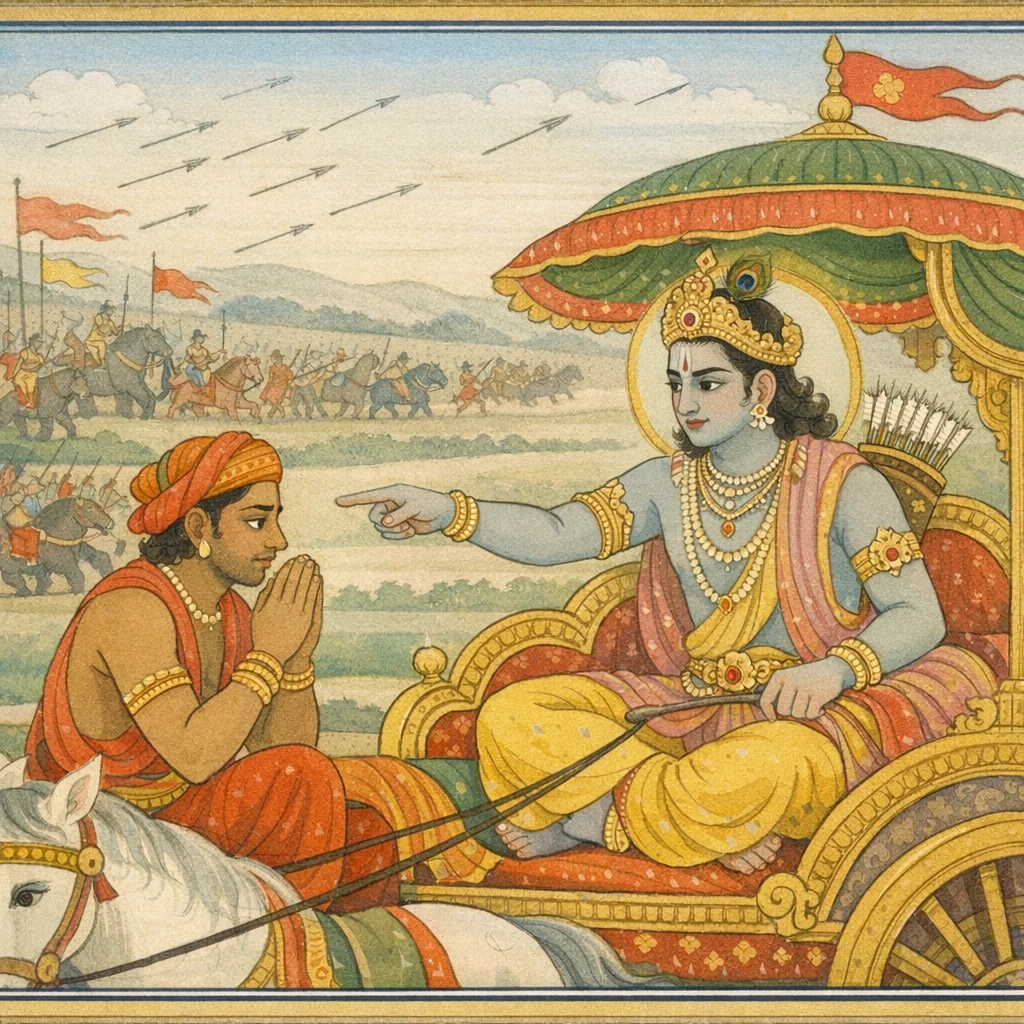
Vāsudeva’s narration describes Pradyumna (Raukmiṇeya) mounting a golden chariot harnessed with swift horses and marked by a makara-banner. He displays exceptional archery—constant bow-play, seamless aiming, and steady bodily composure—creating confusion among Saubha-associated opponents. Pradyumna then rapidly closes on Śālva to initiate direct combat. Śālva, angered, descends to fight and the two engage in a highly contested chariot battle likened to mythic exemplars. Śālva employs a splendid, illusion-associated chariot and releases heavy arrow volleys; Pradyumna responds with a forceful rain of arrows. Pradyumna’s piercing shot breaches Śālva’s armor and strikes the heart-region, causing Śālva to fall and lose consciousness; Śālva’s forces panic. Śālva soon regains awareness and retaliates, striking Pradyumna at the clavicular/neck region; Pradyumna becomes stunned, and further difficult-to-resist arrows render him motionless on the battlefield by the chapter’s close.
Chapter Arc: सौभवधोपाख्यान की रण-धूल में वृष्णि-अन्धक सेना का हाहाकार उठता है—प्रद्युम्न पर मोह छा गया है और शत्रु-पक्ष उल्लसित है। → प्रद्युम्न को मोहित देखकर उसका सुशिक्षित सारथि (दारुकि/दारुक-पुत्र) तीव्र वेग से रथ को रण से हटाने लगता है। यह ‘रण-त्याग’ नहीं, ‘प्राण-रक्षा’ का उपाय है—पर वीर-धर्म की कसौटी पर यह क्षण आग बनकर चढ़ता है। → प्रद्युम्न सारथि को कठोर वचन कहकर रोकता है: ‘पीठ पर बाण खाकर भयभीत होकर भागने वाले का जीवन मैं नहीं मानता; क्या तू मुझे कापुरुषों की भाँति रण छोड़ता हुआ जानता है?’—और उसे आदेश देता है कि रथ को फिर युद्ध की ओर मोड़े। → सारथि अपनी स्थिति स्पष्ट करता है—‘जनार्दनकुमार! न मुझे मोह है, न भय; मैं तो शाल्व के अतिभार (अत्यन्त प्रबल आक्रमण) को देखकर हटाया।’ प्रद्युम्न उसे धैर्य देता/आज्ञा देता है कि जीवित रहते हुए वह रण से पीछे न हटे; कृतवर्मा आदि के बाहर निकलने/शाल्व-निवारण की चर्चा से वृष्णि-पक्ष का संकल्प पुनः दृढ़ होता है। → शंख-चक्र-गदा-धारी पुण्डरीकाक्ष (कृष्ण) के रण में अग्रसर होने का संकेत उभरता है—अब शाल्व के विरुद्ध निर्णायक प्रत्याघात किस रूप में होगा?
Shlokas
Verse 1
इस प्रकार श्रीमह्याभारत वनपर्वके अन्तर्गत अर्जुनाभियगमनपर्वमें सौभवधोपाख्यानविषयक सत्रहवाँ अध्याय पूरा हुआ ॥/ १७ ॥। अप: हर () है ० - रथके नीचे पहियेके ऊपर लगा रहनेवाला काष्ठ। अष्टादशो< ध्याय: मूर्च्ाावस्थामें सारथिके द्वारा रणभूमिसे बाहर लाये जानेपर प्रद्युम्नका अनुताप और इसके लिये सारथिको उपालम्भ देना वायुदेव उवाच शाल्वबाणार्दिते तस्मिन् प्रद्युम्ने बलिनां वरे । वृष्णयो भग्नसंकल्पा विव्यथु: पृतनागता:,भगवान् श्रीकृष्ण कहते हैं--बलवानोंमें श्रेष्ठ प्रद्यम्म जब शाल्वके बाणोंसे पीड़ित हो (मूर्च्छित हो) गये, तब सेनामें आये हुए वृष्णिवंशी वीरोंका उत्साह भंग हो गया। उन सबको बड़ा दुःख हुआ
Vāyudeva said: When Pradyumna—foremost among the mighty—was struck and tormented by Śālva’s arrows, the Vṛṣṇi warriors who had come to the battlefield lost their resolve. Their confidence broke, and they were shaken with distress at the sight of their champion brought low.
Verse 2
हाहाकृतमभूत् सर्व वृष्ण्यन्धकबलं तत: । प्रद्ुम्ने मोहिते राजन् परे च मुदिता भूशम्,राजन! प्रद्युम्मके मोहित होनेपर वृष्णि और अन्धकवंशकी सारी सेनामें हाहाकार मच गया और शत्रुलोग अत्यन्त प्रसन्नतासे खिल उठे
Vāyu said: “Then the entire army of the Vṛṣṇis and Andhakas was thrown into a tumult of cries and confusion. O King, when Pradyumna was deluded, the opposing side became exceedingly delighted.”
Verse 3
तं॑ तथा मोहितं दृष्टवा सारथिर्जवनै्यै: । रणादपाहरत् तूर्ण शिक्षितो दारुकिस्तदा,दारुकका पुत्र प्रद्युम्नका सुशिक्षित सारथि था। वह प्रद्युम्नको इस प्रकार मूर्च्छित देख वेगशाली अअश्रोंद्वारा उन्हें तुरंत रणभूमिसे बाहर ले गया
Seeing him thus bewildered and overcome, the charioteer—swift with his horses—quickly drew him away from the battlefield. At that time the charioteer, trained and skilled, acted with presence of mind, prioritizing the warrior’s preservation over reckless persistence in combat.
Verse 4
नातिदूरापयाते तु रथे रथवरप्रणुत् । धनुर्गृहीत्वा यन्तारं लब्धसंज्ञो5ब्रवीदिदम्,अभी वह रथ अधिक दूर नहीं जाने पाया था, तभी बड़े-बड़े रथियोंको परास्त करनेवाले प्रद्युम्म सचेत हो गये और हाथमें धनुष लेकर सारथिसे इस प्रकार बोले --
Before the chariot could be driven very far, Pradyumna—celebrated as a vanquisher of mighty chariot-warriors—regained consciousness. Taking up his bow, he addressed his charioteer, issuing instructions. The moment underscores the warrior’s duty to recover composure, resume self-command, and act with resolve rather than panic in the midst of danger.
Verse 5
सौते कि ते व्यवसितं कस्माद् यासि पराड्मुख: । नैष वृष्णिप्रवीराणामाहवे धर्म उच्यते,'सूतपुत्र! आज तूने कया सोचा है? क्यों युद्धसे मुँह मोड़कर भागा जा रहा है? युद्धसे पलायन करना वृष्णिवंशी वीरोंका धर्म नहीं है
Vāyu said: “O Sūta’s son, what resolve have you formed that you turn away and flee? To withdraw from battle is not declared to be the dharma of the foremost heroes of the Vṛṣṇi line.”
Verse 6
कच्चित् सौते न ते मोह: शाल्वं दृष्टवा महाहवे । विषादो वा रण दृष्टवा ब्रूहि मे त्वं यथातथम्,'सूतनन्दन! इस महासंग्राममें राजा शाल्वको देखकर तुझे मोह तो नहीं हो गया है? अथवा युद्ध देखकर तुझे विषाद तो नहीं होता है? मुझसे ठीक-ठीक बता (तेरे इस प्रकार भागनेका क्या कारण है?)'
Verse 7
सौतिर्वाच जानार्दने न मे मोहो नापि मां भयमाविशत् | अतिभारं तु ते मन्ये शाल्वं केशवनन्दन,सूतपुत्रने कहा--जनार्दनकुमार! न मुझे मोह हुआ है और न मेरे मनमें भय ही समाया है। केशवनन्दन! मुझे ऐसा मालूम होता है कि यह राजा शाल्व आपके लिये अत्यन्त भार- सा हो रहा है
Sauti said: “O son of Janārdana, I have not been overcome by delusion, nor has fear entered me. Yet, O Keśava’s son, I consider that Śālva has become an excessive burden upon you.”
Verse 8
सो<5पयामि शनैर्वीर बलवानेष पापकृत् । मोहितश्न रणे शूरो रक्ष्य: सारथिना रथी,वीरवर! मैं धीरे-धीरे रणभूमिसे दूर इसलिये जा रहा हूँ कि यह पापी शाल्व बड़ा बलवान है। सारथिका यह धर्म है कि यदि शूरवीर रथी संग्राममें मूर्च्छिंत हो जाय तो वह किसी प्रकार उसके प्राणोंकी रक्षा करे
Vāyu said: “O hero, I am withdrawing slowly, for this sinful man is exceedingly strong. And when a valiant chariot-warrior is bewildered or faints in battle, it is the charioteer’s duty to protect his life by any means.”
Verse 9
आयुष्म॑स्त्वं मया नित्यं॑ रक्षितव्यस्त्वयाप्यहम् । रक्षितव्यो रथी नित्यमिति कृत्वापयाम्यहम्,आयुष्मन्! मुझे आपकी और आपको मेरी सदा रक्षा करनी चाहिये। रथी सारथिके द्वारा सदा रक्षणीय है, इस कर्तव्यका विचार करके ही मैं रणभूमिसे लौट रहा हूँ
O long-lived one, you must always be protected by me, and I too must be protected by you. Reflecting on this duty—that a chariot-warrior must ever be safeguarded by his charioteer—I am therefore withdrawing from the battlefield, O blessed one.
Verse 10
एकश्नासि महाबाहो बहवश्चापि दानवा: । न सम॑ रौक्मिणेयाहं रणे मत्वापयामि वै,महाबाहो! आप अकेले हैं और इन दानवोंकी संख्या बहुत है। रुक्मिणीनन्दन! इस युद्धमें इतने विपक्षियोंका सामना करना अकेले आपके लिये कठिन है; यह सोचकर ही मैं युद्धसे हट रहा हूँ
Vāyu said: “Mighty-armed one, you stand alone, while these Dānavas are many. O son of Rukmiṇī, judging that in this battle it is not an equal contest for me to face so many opponents, I withdraw from the fight.”
Verse 11
एवं ब्रुवति सूते तु तदा मकरकेतुमान् । उवाच सूतं कौरव्य निवर्तय रथं पुन:,कुरुनन्दन! सूतके ऐसा कहनेपर मकरथ्वज प्रद्युम्नने उससे कहा--“दारुककुमार! तू रथको पुनः युद्धभूमिकी ओर लौटा ले चल। सूतपुत्र! आजसे फिर कभी किसी प्रकार भी मेरे जीते-जी रथको रणभूमिसे न लौटाना
Verse 12
दारुकात्मज मैवं त्वं पुनः कार्षी: कथंचन । व्यपयानं रणात् सौते जीवतो मम कहिचित्,कुरुनन्दन! सूतके ऐसा कहनेपर मकरथ्वज प्रद्युम्नने उससे कहा--“दारुककुमार! तू रथको पुनः युद्धभूमिकी ओर लौटा ले चल। सूतपुत्र! आजसे फिर कभी किसी प्रकार भी मेरे जीते-जी रथको रणभूमिसे न लौटाना
Vāyu said: “O son of Dāruka, do not ever do this again. O charioteer, never at any time, while I am still alive, withdraw from the battlefield.” The utterance frames retreat as a moral failure in the face of one’s vowed duty, insisting that steadfastness in battle—when undertaken as an obligation—must not be abandoned out of fear or wavering resolve.
Verse 13
न स वृष्णिकुले जातो यो वै त्यजति संगरम् | यो वा निपतितं हन्ति तवास्मीति च वादिनम्,वृष्णिवंशमें ऐसा कोई (वीर पुरुष) नहीं पैदा हुआ है, जो युद्ध छोड़कर भाग जाय अथवा गिरे हुएको तथा “मैं आपका हूँ यह कहनेवालेको मारे
“In the Vṛṣṇi lineage, no man is born who would abandon the battle and flee; nor one who would strike down a fallen foe—especially one who declares, ‘I am yours’ (seeking refuge).”
Verse 14
तथा स्त्रियं च यो हन्ति बाल॑ वृद्ध तथैव च । विरथं विप्रकीर्ण च भग्नशस्त्रायुधं तथा,“इसी प्रकार स्त्री, बालक, वृद्ध, रथहीन, अपने पक्षसे बिछुड़े हुए तथा जिसके अस्त्र- शस्त्र नष्ट हो गये हों, ऐसे लोगोंपर जो हथियार उठाता हो, ऐसा मनुष्य भी वृष्णिकुलमें नहीं उत्पन्न हुआ है
Verse 15
त्वं च सूतकुले जातो विनीत:ः सूतकर्मणि । धर्मज्ञश्षासि वृष्णीनामाहवेष्वपि दारुके,“दारुककुमार! तू सूतकुलमें उत्पन्न होनेके साथ ही सूतकर्मकी अच्छी तरह शिक्षा पा चुका है। वृष्णिवंशी वीरोंका युद्धमें क्या धर्म है, यह भी भली-भाँति जानता है
Vāyu said: “You too were born in the lineage of charioteers and have been well trained in the duties of a sūta. And, O Dāruka, you also understand what is righteous conduct for the Vṛṣṇi heroes—even amid the turmoil of battle.”
Verse 16
स जानंश्वरितं कृत्स्नं वृष्णीनां पृतनामुखे । अपयानं पुन: सौते मैवं कार्षी: कथंचन,'सूतनन्दन! युद्धके मुहानेपर डटे हुए वृष्णिकुलके वीरोंका सम्पूर्ण चरित्र तुझसे अज्ञात नहीं है; अतः तू फिर कभी किसी तरह भी युद्धसे न लौटना
Vāyu said: “You know well, O charioteer’s son, the entire prowess and conduct of the Vṛṣṇi heroes when they stand at the very front of battle. Therefore do not ever again turn back in retreat from the fight—do not do so in any manner.”
Verse 17
अपयातं हत॑ पृषछ्े भ्रान्तं रणपलायितम् | गदाग्रजो दुराधर्ष: कि मां वक्ष्यति माधव:,'युद्धसे लौटने या भ्रान्तचित्त होकर भागनेपर जब मेरी पीठमें शत्रुके बाणोंका आघात लगा हो, उस समय किसीसे परास्त न होनेवाले मेरे पिता गदाग्रज भगवान् माधव मुझसे क्या कहेंगे?
Vāyu said: “If, turning away, I am struck in the back—confused in mind and fleeing from the battle—what will Mādhava, my invincible father, the elder brother of Gadā, say to me then?” The line frames retreat as a moral failure: to be wounded from behind signifies abandoning one’s duty and inviting the reproach of one’s divine exemplar.
Verse 18
केशवस्याग्रजो वापि नीलवासा मदोत्कट: । किं वक्ष्यति महाबाहुर्बलदेव: समागत:,“अथवा पिताजीके बड़े भाई नीलाम्बरधारी मदोत्कट महाबाहु बलरामजी जब यहाँ पधारेंगे, तब वे मुझसे क्या कहेंगे? इति श्रीमहाभारते वनपर्वणि अर्जुनाभिगमनपर्वणि सौभवधोपाख्याने अष्टादशो< ध्याय: इस प्रकार श्रीमह्याभारत वनपर्वके अन्तर्गत अजुनाथिगमनपर्वमें सौभवधोपाख्यानविषयक अठारहवाँ अध्याय पूरा हुआ
Vāyu said: “And when Keśava’s elder brother—Baladeva, the mighty-armed one, clad in blue and fierce with intoxicated ardor—arrives here, what will he say to me?”
Verse 19
कि वक्ष्यति शिनेर्नप्ता नरसिंहो महाधनु: । अपयातं रणात् सूत साम्बश्न समितिंजय:,'सूत! युद्धसे भागनेपर मनुष्योंमें सिंहके समान पराक्रमी महाधनुर्धर सात्यकि तथा समरविजयी साम्ब मुझसे क्या कहेंगे?
Vāyu said: “O charioteer, having turned back from the battlefield, what will Śini’s grandson—Sātyaki, lion-like among men and a mighty archer—and what will Sāmba, the conqueror of hostile encounters, say to me?”
Verse 20
चारुदेष्ण श्व दुर्धर्षस्तथैव गदसारणौ । अक्रूरश्व महाबाहु: किं मां वक्ष्यति सारथे,'सारथे! दुर्धर्ष वीर चारुदेष्ण, गद, सारण और महाबाहु अक्रूर मुझसे क्या कहेंगे?
Vāyu said: “What will the charioteer say to me—when the formidable hero Cārudeṣṇa, along with Gada and Sāraṇa, and the mighty-armed Akrūraśva, confront this situation?” The line conveys Vāyu’s concern for how his conduct and decisions will be judged by capable warriors and by the one responsible for guiding the chariot—highlighting accountability, reputation, and the ethical weight of action in a tense martial context.
Verse 21
शूरं सम्भावितं शान्तं नित्यं पुरुषमानिनम् | स्त्रियश्न वृष्णिवीराणां कि मां वक्ष्यन्ति संहता:,“मैं शूरवीर, सम्भावित (सम्मानित), शान्तस्वभाव तथा सदा अपनेको वीर पुरुष माननेवाला समझा जाता हूँ। (युद्धसे भागनेपर) मुझे देखकर झुंड-की-झुंड एकत्र हुई वृष्णिवीरोंकी स्त्रियाँ मुझे क्या कहेंगी?
Vāyu said: “I am known as a hero—honoured, self-controlled, and ever regarding myself as a true man of valour. If I were to turn back from battle, what would the wives of the Vṛṣṇi warriors, gathering together in groups, say of me when they see me?”
Verse 22
प्रद्युम्नोडयमुपायाति भीतस्त्यक्त्वा महाहवम् । धिगेनमिति वक्ष्यन्ति न तु वक्ष्यन्ति साथ्विति,“सब लोग यही कहेंगे--“यह प्रद्युम्म भयभीत हो महान् संग्राम छोड़कर भागा आ रहा है; इसे धिक््कार है।” उस अवस्थामें किसीके मुखसे मेरे लिये अच्छे शब्द नहीं निकलेंगे
Verse 23
धिग्वाचा परिहासो5पि मम वा मद्विधस्य वा । मृत्युनाभ्यधिक: सौते स त्वं मा व्यपया: पुनः:,'सूतकुमार! मेरे अथवा मेरे-जैसे किसी भी पुरुषके लिये धिक्कारयुक्त वाणीद्वारा कोई परिहास भी कर दे तो वह मृत्युसे भी अधिक कष्ट देनेवाला है; अतः तू फिर कभी युद्ध छोड़कर न भागना
Vāyu said: “Even a jest spoken with a contemptuous ‘dhik!’—whether aimed at me or at any man like me—wounds more than death itself, O son of a sūta. Therefore, do not ever again turn away and flee from battle.”
Verse 24
भारं हि मयि संन्यस्य यातो मधुनिहा हरि: । यज्ञ भारतसिंहस्य न हि शक्योउ्द्य मर्षितुम्,“मेरे पिता मधुसूदन भगवान् श्रीहरि यहाँकी रक्षाका सारा भार मुझपर रखकर भरतवंशशिरोमणि धर्मराज युधिष्ठिरके यज्ञमें गये हैं। (आज मुझसे जो अपराध हो गया है,) इसे वे कभी क्षमा नहीं कर सकेंगे
“Hari, the slayer of Madhu, has entrusted the entire burden of protection here to me and has gone to the sacrifice of Yudhiṣṭhira, the lion among the Bhāratas. Therefore, the offense that has occurred today through me is not something he will be able to forgive.”
Verse 25
कृतवर्मा मया वीरो निर्यास्यन्नेव वारित: । शाल्व॑ निवारयिष्ये5हं तिष्ठ त्वमिति सूतज,'सूतपुत्र! वीर कृतवर्मा शाल्वका सामना करनेके लिये पुरीसे बाहर आ रहे थे; किंतु मैंने उन्हें रोक दिया और कहा--“आप यहीं रहिये। मैं शाल्वको परास्त करूँगा”
Vāyu said: “The hero Kṛtavarmā, just as he was about to ride out, was restrained by me. ‘I shall check Śālva myself; you stay here,’ I told him, O son of a charioteer.” The passage highlights a protector’s resolve to assume the burden of combat, preventing a valiant ally from rushing into danger and asserting responsibility for confronting the aggressor.
Verse 26
सच सम्भावयन् मां वै निवृत्तो हृदिकात्मज: । त॑ समेत्य रणं त्यक्त्वा कि वक्ष्यामि महारथम्,“कृतवर्मा मुझे इस कार्यके लिये समर्थ जानकर युद्धसे निवृत्त हो गये। आज युद्ध छोड़कर जब मैं उन महारथी वीरसे मिलूँगा, तब उन्हें क्या जवाब दूँगा?
Vāyu said: “And he—trusting in me and deeming me capable for this task—has withdrawn from the battle. Now, having abandoned the fight, when I go to meet that great chariot-warrior, what answer shall I give him?”
Verse 27
उपयान्तं दुराधर्ष शडुखचक्रगदाधरम् । पुरुष पुण्डरीकाक्ष॑ कि वक्ष्यामि महाभुजम्,“शंख, चक्र और गदा धारण करनेवाले कमलनयन महाबाहु एवं अजेय वीर भगवान् पुरुषोत्तम जब यहाँ मेरे निकट पदार्पण करेंगे, उस समय मैं उन्हें क्या उत्तर दूँगा?
Vāyu said: “When that invincible Lord—bearing conch, discus, and mace, the Supreme Person with lotus-like eyes and mighty arms—draws near to me here, what reply shall I be able to give Him?”
Verse 28
सात्यकिं बलदेवं च ये चान्येडन्धकवृष्णय: । मया स्पर्थन्ति सततं कि नु वक्ष्यामि तानहम्,'सात्यकिसे, बलरामजीसे तथा अन्धक और वृष्णिवंशके अन्य वीरोंसे, जो सदा मुझसे स्पर्धा रखते हैं, मैं क्या कहूँगा?
Vāyu said: “As for Sātyaki, Baladeva, and the other heroes of the Andhaka and Vṛṣṇi line—who are ever in rivalry with me—what, indeed, can I say about them?”
Verse 29
त्यक्त्वा रणमिमं सौते पृष्ठतो5भ्याहतः शरै: । त्वयापनीतो विवशो न जीवेयं कथंचन,“'सूतपुत्र! तेरे द्वारा रणसे दूर लाया हुआ मैं इस युद्धको छोड़कर और पीठपर बाणोंकी चोट खाकर विवशतापूर्ण जीवन किसी प्रकार भी नहीं धारण करूँगा
Vāyu said: “O charioteer’s son, if I abandon this battle—dragged away by you against my will—and am struck by arrows from behind, I will not, under any circumstance, consent to live on in such helpless disgrace. Better death than a life sustained after turning one’s back on the fight.”
Verse 30
स निवर्त रथेनाशु पुनर्दारुकनन्दन । न चैतदेवं कर्तव्यमथापत्सु कथंचन,“दारुकनन्दन! अतः तू शीघ्र ही रथके द्वारा पुनः संग्रामभूमिकी ओर लौट। आजसे मुझपर आपत्ति आनेपर भी तू किसी तरह ऐसा बर्ताव न करना
Vāyu said: “O son of Dāruka, turn back at once with your chariot and return to the field of action. And never again should you behave in this way—under any circumstances, even in times of distress.”
Verse 31
न जीवितमहं सौते बहु मनन््ये कथंचन । अपयातो रणाद् भीत: पृष्ठतो5भ्याहत: शरै:,'सूतपुत्र! पीठपर बाणोंकी चोट खाकर भयभीत हो युद्धसे भागनेवालेके जीवनको मैं किसी प्रकार भी अधिक आदर नहीं देता
Vāyu said: “O Sūta’s son, I do not, in any way, hold in high regard the life of one who, frightened, turns away from battle and flees—only to be struck by arrows from behind. Such a life, preserved by cowardly retreat, is not worthy of honor.”
Verse 32
कदापि सूतपुत्र त्वं जानीषे मां भयार्दितम् । अपयातं रणं हित्वा यथा कापुरुषं तथा,'सूतपुत्र! क्या तू मुझे कायरोंकी तरह भयसे पीड़ित और युद्ध छोड़कर भागा हुआ समझता है?
Vāyu said: “O son of a charioteer, do you ever imagine me to be one stricken with fear—one who has abandoned the battlefield and fled, like a coward?”
Verse 33
न युक्त भवता त्यक्तुं संग्रामं दारुकात्मज । मयि युद्धार्थिनि भूशं स त्वं याहि यतो रणम्,“दारुककुमार! तुझे संग्रामभूमिका परित्याग करना कदापि उचित नहीं था। विशेषत: उस अवस्थामें, जब कि मैं युद्धकी अभिलाषा रखता था। अतः जहाँ युद्ध हो रहा है, वहाँ चल”
Vāyu said: “O son of Dāruka, it was not proper for you to abandon the battlefield. All the more so when I myself was eager for combat. Therefore, go at once to where the fighting is taking place.”
Frequently Asked Questions
The implicit dilemma is how a warrior maintains ethical steadiness and role-duty while facing destabilizing tactics (fear, spectacle, and rapid reversals) without collapsing into panic or cruelty.
The chapter models disciplined attention: technical excellence and emotional regulation are portrayed as inseparable prerequisites for effective and accountable action in high-stakes encounters.
No explicit phalaśruti appears in this excerpted chapter segment; its significance is primarily narrative and exemplary, functioning as a case-study in martial steadiness and tactical contingency.