Adhyaya 124
च्यवन-यज्ञे अश्विनोः सोमग्रहण-विवादः (Cyavana’s Sacrifice and the Aśvins’ Soma Dispute)
Upa-parva: Tīrtha-yātrā / Lomāśa-saṃvāda (Śaryāti–Cyavana–Aśvin Episode)
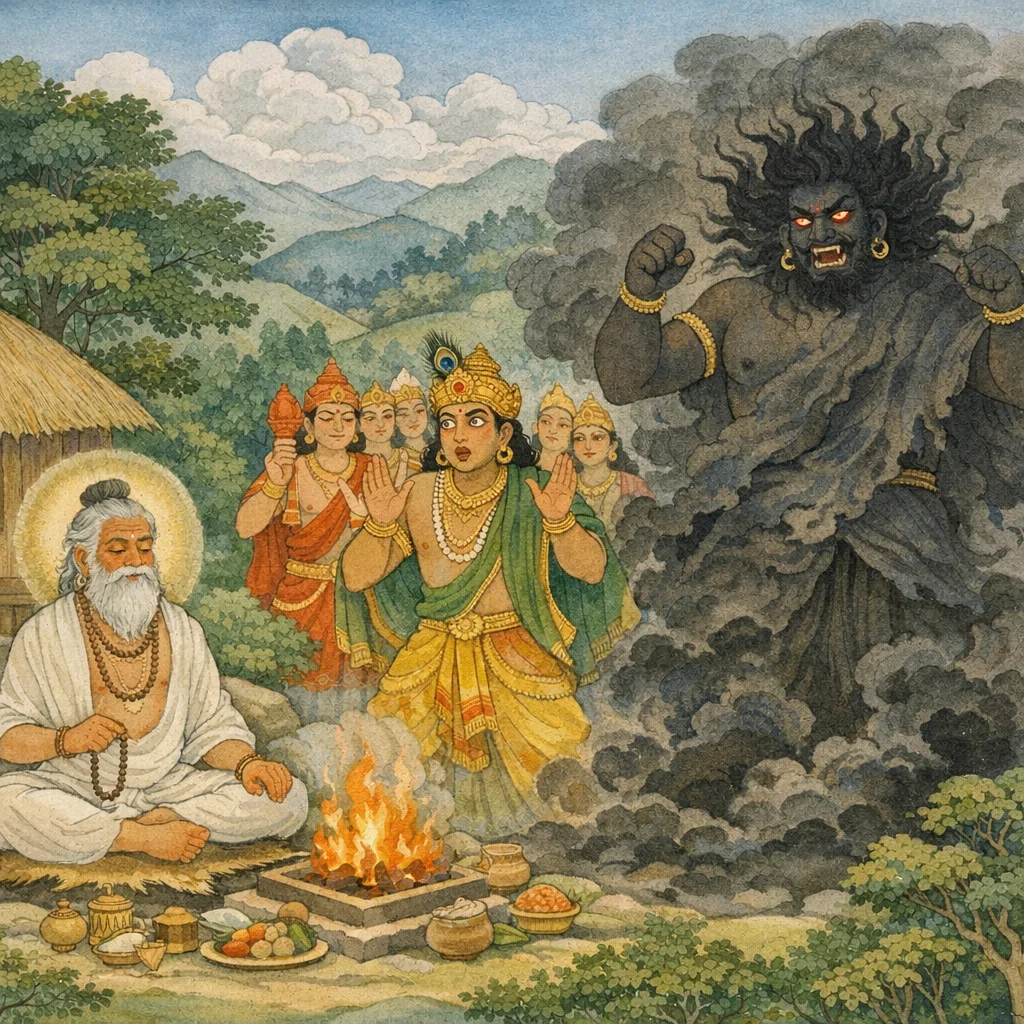
Lomāśa recounts how King Śaryāti, pleased to see Cyavana and Sukanyā, is honored at the Bhārgava hermitage. Cyavana proposes to officiate a yajña for the king and instructs preparations; Śaryāti establishes an auspicious sacrificial ground. During the rite, Cyavana takes Soma on behalf of the Aśvin twins. Indra objects, arguing the Aśvins are not entitled to Soma because they function as physicians/attendants among gods and mortals. Cyavana rebukes the disparagement, asserting their divinity and pointing to their benefaction (including restoring him). Indra threatens to strike Cyavana with the vajra if he proceeds; Cyavana calmly completes the Soma-grasping. Indra hurls the vajra, but Cyavana immobilizes Indra’s arm and, invoking fire with mantra, produces a formidable being—Mada—described with immense, terrifying anatomy, who rushes toward Indra as if to consume him. The chapter’s thematic center is the collision of sovereign force with ritual-ascetic authority and the adjudication of sacrificial rights.
Chapter Arc: च्यवन और सुकन्या को देवकुमारों-सा तेजस्वी और सुखी देखकर राजा शर्याति विस्मित-प्रसन्न होता है; ऋषि के सत्कार के बीच कथा का रुख देवताओं की ओर मुड़ता है—यह सौभाग्य किस मूल्य पर टिका है? → इन्द्र को शंका और रोष घेर लेते हैं: कामरूपधारी, चिकित्सा-कर्म में निपुण अश्विनीकुमार कैसे सोमपान के अधिकारी बने? देव-सभा की मर्यादा और अधिकार-सीमा पर प्रश्न उठता है, और इन्द्र प्रत्यक्ष विरोध के लिए उतर आता है। → इन्द्र के प्रतिवाद पर च्यवन मुस्कराकर विधिवत सोम ग्रहण करते हैं; फिर इन्द्र की भुजाएँ स्तम्भित कर मन्त्रबल से अग्नि में आहुति देते हुए ‘मद’ नामक घोर देव-रूप को प्रकट करते हैं—पर्वत-सम भुजाएँ, सूर्य-चन्द्र-से नेत्र, कालाग्नि-सा मुख, बिजली-सी चंचल जिह्वा—जो क्रुद्ध होकर शतक्रतु को निगलने दौड़ पड़ता है। → देव-लोक में हाहाकार के बीच इन्द्र को अपनी हठ का परिणाम दिखता है; च्यवन के तपोबल के आगे देवाधिपत्य भी सीमित सिद्ध होता है, और सोमाधिकार/सम्मान का विवाद समझौते की ओर झुकता है—मर्यादा बल से नहीं, धर्म-संगत मान्यता से टिकती है। → मद इन्द्र को ग्रसने को अग्रसर है—क्या इन्द्र झुकेगा, और अश्विनों का अधिकार किस शर्त पर स्थिर होगा?
Shlokas
Verse 1
इस प्रकार श्रीमहाभारत वनपर्वके अन्तर्गत तीर्थयात्रापर्चमें लोमशती'र्थयात्राप्रसंगमें युकन्योपाख्यानविषयक एक सौ तेईसवाँ अध्याय पूरा हुआ ॥/ १२३ ॥। (दाक्षिणात्य अधिक पाठके २ श्लोक मिलाकर कुल २६ श्लोक हैं) #::73:.7 #::3:.7 (0) हि २ 7 चतुर्विशर्त्याधेकशततमो< ध्याय: शर्यातिके यज्ञमें च्यवनका इन्द्रपर कोप करके वज्ञको स्तम्भित करना और उसे मारनेके लिये मदासुरको उत्पन्न करना लोगश उवाच ततः शुश्राव शर्यातिर्वयस्थं च्यवनं कृतम् । सुद्ृष्ट: सेनया सार्धमुपायाद् भार्गवाश्रमम्,लोमशजी कहते हैं--युधिष्ठिर! तदनन्तर राजा शर्यातिने सुना कि महर्षि च्यवन युवावस्थाको प्राप्त हो गये; इस समाचारसे उन्हें बड़ी प्रसन्नता हुई। वे सेनाके साथ महर्षि च्यवनके आश्रमपर आये
Lomaśa said: Then King Śaryāti heard that the sage Cyavana had been restored to youthful vigor. Greatly pleased by this good fortune, he set out together with his army and approached the Bhārgava hermitage. The episode frames royal power as properly directed toward honoring ascetic merit and acknowledging the transformative fruits of tapas.
Verse 2
च्यवनं च सुकन्यां च दृष्टवा देवसुताविव । रेमे सभार्य: शर्याति: कृत्स्नां प्राप्प महीमिव,च्यवन और सुकनन््याको देवकुमारोंके समान सुखी देखकर पत्नीसहित शर्यातिको महान् हर्ष हुआ, मानो उन्हें सम्पूर्ण पृथ्वीका राज्य मिल गया हो। च्यवन ऋषिने रानियोंसहित राजाका बड़ा आदर-सत्कार किया और उनके पास बैठकर मनको प्रिय लगनेवाली कल्याणमयी कथाएँ सुनायीं
Seeing Cyavana and Sukanyā thriving like the sons of the gods, King Śaryāti—together with his queen—rejoiced greatly, as though he had obtained sovereignty over the entire earth. The scene underscores the king’s relief and gratitude on finding his daughter and the sage in auspicious well-being, and it frames the ethical ideal of honoring ascetics and safeguarding familial duty through respectful conduct.
Verse 3
ऋषिणा सत्कृतस्तेन सभार्य: पृथिवीपति: । उपोपविष्ट: कल्याणी: कथाश्षक्रे मनोरमा:,च्यवन और सुकनन््याको देवकुमारोंके समान सुखी देखकर पत्नीसहित शर्यातिको महान् हर्ष हुआ, मानो उन्हें सम्पूर्ण पृथ्वीका राज्य मिल गया हो। च्यवन ऋषिने रानियोंसहित राजाका बड़ा आदर-सत्कार किया और उनके पास बैठकर मनको प्रिय लगनेवाली कल्याणमयी कथाएँ सुनायीं
Thus honored by the sage, the king—lord of the earth—sat down together with his wife. The sage then spoke auspicious, heart-delighting tales to him. Seeing Cyavana and Sukanyā living happily like divine youths, King Śaryāti was filled with great joy, as though he had obtained sovereignty over the whole earth; and Cyavana, having respectfully received the king along with his queens, conversed with him in wholesome and pleasing discourse.
Verse 4
अथीैनं भार्गवो राजन्नुवाच परिसान्त्वयन् । याजयिष्यामि राजंस्त्वां सम्भारानवकल्पय,युधिष्ठिर! तत्पश्चात् भृूगुनन्दन च्यवनने उन्हें सान्त्वना देते हुए कहा--'राजन्! मैं आपसे यज्ञ कराऊँगा। आप सामग्री जुटाइये”
Then the Bhārgava sage, consoling him, said: “O King, I shall have you perform a sacrifice. O king Yudhiṣṭhira, make ready the requisite materials.”
Verse 5
ततः परमसंदहृष्ट: शर्यातिरवनीपति: । च्यवनस्य महाराज तदू वाक्यं प्रत्यपूजयत्,महाराज! यह सुनकर राजा शर्याति बड़े प्रसन्न हुए और उन्होंने च्यवन मुनिके उस वचनकी बड़ी सराहना की
Then King Śaryāti, the lord of the earth, became exceedingly delighted. O King, he warmly welcomed and honored the words spoken by the sage Cyavana—showing due respect to wise counsel and the authority of ascetic insight.
Verse 6
प्रशस्ते5हनि यज्ञीये सर्वकामसमृद्धिमत् । कारयामास शर्यातिर्यज्ञायतनमुत्तमम्,तदनन्तर यज्ञके लिये उपयोगी शुभ दिन आनेपर शर्यातिने एक उत्तम यज्ञमण्डप तैयार करवाया, जो सम्पूर्ण मनोवाञ्छित समृद्धियोंसे सम्पन्न था
On an auspicious day fit for sacrificial rites, King Śaryāti had an excellent sacrificial enclosure constructed—one endowed with every desired prosperity. The narrative underscores that sacred action (yajña) is to be begun at a proper time and with due preparation, aligning intention, resources, and ritual order toward welfare and abundance.
Verse 7
तत्रैनं च्यवनो राजन् याजयामास भार्गव: । अद्भुतानि च तत्रासन् यानि तानि निबोध मे,राजन! भृगुपुत्र च्यवनने उस यज्ञमण्डपमें राजासे यज्ञ करवाया। उस यज्ञमें जो अद्भुत बातें हुई थीं, उन्हें मुझसे सुनो
There, O King, the Bhārgava sage Cyavana officiated and had him perform the sacrifice. And in that sacrificial enclosure, wondrous events occurred—listen from me, O King, to what they were.
Verse 8
अगृलह्लाच्च्यवन: सोममश्रिनोर्देवयोस्तदा । तमिन्द्रो वारयामास गृह्नानं स तयोग्रहम्,महर्षि च्यवनने उस समय दोनों अश्विनीकुमारों-को देनेके लिये सोमरसका भाग हाथमें लिया। उन दोनोंके लिये सोमका भाग ग्रहण करते समय इन्द्रने मुनिको मना किया
At that time the great sage Cyavana took in his hand the allotted share of Soma to offer it to the two divine Aśvin twins. As he was taking up that portion for them, Indra tried to restrain the sage—objecting to their receiving a Soma share—thus setting up a conflict between established privilege and the sage’s insistence on rightful inclusion.
Verse 9
इन्द्र उवाच उभावेतौ न सोमार्हौ नासत्याविति मे मति: । भिषजोौ दिवि देवानां कर्मणा तेन नाहत:,इन्द्र बोले--मुने! मेरा यह सिद्धान्त है कि ये दोनों अश्विनीकुमार यज्ञमें सोमपानके अधिकारी नहीं हैं; क्योंकि ये द्युलोकनिवासी देवताओंके वैद्य हैं और उस वैद्यवृत्तिके कारण ही इन्हें यज्ञमें सोमपानका अधिकार नहीं रह गया है
Indra said: “In my considered judgment, these two Nāsatyas (the Aśvin twins) are not entitled to drink the Soma in a sacrifice. For they serve as physicians to the gods in heaven; and because of that professional activity, their eligibility for Soma in the rite is, in my view, impaired.”
Verse 10
च्यवन उवाच महोत्साहौ महात्मानौ रूपद्रविणवत्तरौ । यौ चक्रतुर्मा मघवन् वृन्दारकमिवाजरम्,च्यवनने कहा--मघवन! ये दोनों अश्विनीकुमार बड़े उत्साही और महान् बुद्धिमान हैं। रूप-सम्पत्तिमें भी सबसे बढ़-चढ़कर हैं। इन्होंने ही मुझे देवताओंके समान दिव्य रूपसे युक्त और अजर बनाया है। देवराज! फिर तुम्हारे या अन्य देवताओंके सिवा इन्हें यज्ञमें सोमरसका भाग पानेका अधिकार क्यों नहीं है? पुरंदर! इन अश्विनीकुमारोंको भी देवता ही समझो
Cyavana said: “O Maghavan (Indra), those two Aśvin twins are of great energy and noble spirit, and they excel in beauty and wealth. It is they who made me, as it were like a god of heaven, endowed with a divine form and freed from old age. Therefore, why should they not have the right to receive a share of Soma in the sacrifice—who, besides you and the other gods, could deny it? O Purandara, regard these Aśvins too as gods.”
Verse 11
ऋते त्वां विबुधांश्वान्यान् कथं वै नाहत: सवम् | अश्रिनावपि देवेन्द्र देवौ विद्धि पुरंदर,च्यवनने कहा--मघवन! ये दोनों अश्विनीकुमार बड़े उत्साही और महान् बुद्धिमान हैं। रूप-सम्पत्तिमें भी सबसे बढ़-चढ़कर हैं। इन्होंने ही मुझे देवताओंके समान दिव्य रूपसे युक्त और अजर बनाया है। देवराज! फिर तुम्हारे या अन्य देवताओंके सिवा इन्हें यज्ञमें सोमरसका भाग पानेका अधिकार क्यों नहीं है? पुरंदर! इन अश्विनीकुमारोंको भी देवता ही समझो
Cyavana said: “O Devendra, apart from you and the other gods, how could anyone have remained unharmed after striking down the sacrifice? Know that the Aśvins too are gods, O Purandara. Since they are spirited, wise, and foremost in beauty—and since it is they who restored to me a divine, ageless form—why should they not have the right to a share of Soma in the sacrifice? Therefore, regard the Aśvinīkumāras as deities as well.”
Verse 12
इन्द्र वाच चिकित्सकौ कर्मकरौ कामरूपसमन्वितौ । लोके चरन्तौ मर्त्यानां कथं सोममिहाहत:,इन्द्र बोले--ये दोनों चिकित्सा-कार्य करते हैं और मनमाना रूप धारण करके मृत्युलोकमें भी विचरते रहते हैं, फिर इन्हें इस यज्ञमें सोमपानका अधिकार कैसे प्राप्त हो सकता है?
Indra said: “These two are physicians and attendants who move about among mortals, even assuming forms at will. How, then, can they be entitled to drink Soma here in this sacrifice?”
Verse 13
लोगश उवाच एतदेव यदा वाक्यमाम्रेडयति देवराट् । अनादृत्य ततः शक्रं ग्रह जग्राह भार्गव:,लोमशजी कहते हैं--युधिष्ठटिर! जब देवराज इन्द्र बार-बार यही बात दुहराने लगे तब भृगुनन्दन च्यवनने उनकी अवहेलना करके अश्विनीकुमारोंको देनेके लिये सोमरसका भाग ग्रहण किया
Lomaśa said: When the lord of the gods (Indra) kept repeating these very words again and again, the Bhārgava (Cyavana), disregarding Śakra, seized the Soma-offering portion in order to allot it to the Aśvin twins. The episode highlights a sage’s steadfastness in what he deems just, even when opposed by divine authority.
Verse 14
ग्रहीष्यन्तं तु तं सोममश्रिनोरुत्तमं तदा । समीक्ष्य बलभिद् देव इदं वचनमब्रवीत्
But just then, as he was about to seize that Soma—supreme and radiant—Balabhid, the god who shatters strength, observed him and spoke these words. The moment frames a moral turning-point: divine power intervenes not merely to display might, but to check an act of wrongful appropriation and to reassert rightful order.
Verse 15
उस समय देववैद्योंके लिये उत्तम सोमरस ग्रहण करते देख इन्द्रने च्यवन मुनिसे इस प्रकार कहा-- ।। आशभ्यामर्थाय सोम॑ त्वं ग्रहीष्यसि यदि स्वयम् । वज्ं ते प्रहरिष्पामि घोररूपमनुत्तमम्,ब्रह्म! यदि तुम इन दोनोंके लिये स्वयं सोमरस ग्रहण करोगे तो मैं तुमपर अपना परम उत्तम भयंकर वज्र छोड़ दूँगा
Seeing the finest Soma being taken for the divine physicians, Indra addressed the sage Cyavana: “If you yourself take Soma on behalf of the Aśvins, I will hurl at you my unrivalled, terrifying thunderbolt, O Brahmin.” The scene frames a moral conflict between established divine privilege and the sage’s insistence on just inclusion for the Aśvins.
Verse 16
एवमुक्त: स्मयन्निन्द्रमभिवीक्ष्य स भार्गव: । जग्राह विधिवत् सोममश्रिभ्यामुत्तमं ग्रहम्,उनके ऐसा कहनेपर च्यवन मुनिने मुसकराते हुए इन्द्रकी ओर देखकर अश्विनीकुमारोंके लिये विधिपूर्वक उत्तम सोमरस हाथमें लिया
When Indra had spoken thus, the Bhārgava sage (Cyavana), smiling and looking toward Indra, duly took up the Soma—an excellent libation-cup—for the Aśvin twins. The scene underscores the ethical tension between established privilege and rightful inclusion: the sage calmly upholds ritual propriety and fairness even in the face of divine resistance.
Verse 17
ततोअस्मै प्राहरद् वज्ज॑ घोररूपं शचीपति: । तस्य प्रहरतो बाहुं स्तम्भयामास भार्गव:,तब शचीपति इन्द्र उनके ऊपर भयंकर वज्र छोड़ने लगे, परंतु वे जैसे ही प्रहार करने लगे, भृगुनन्दन च्यवनने उनकी भुजाको स्तंभित कर दिया
Then Śacī’s lord, Indra, hurled at him a dreadful thunderbolt. But as Indra was striking, the Bhārgava sage (Cyavana), restraining him, immobilized Indra’s arm—showing that spiritual power and self-restraint can check even divine force when it is used in anger or excess.
Verse 18
त॑ स्तम्भयित्वा च्यवनो जुहुवे मन्त्रतो5नलम् । कृत्यार्थी सुमहातेजा देवं हिंसितुमुद्यत:,इस प्रकार उनकी भुजा स्तंभित करके महातेजस्वी च्यवन ऋषिने मन्त्रोच्चारणपूर्वक अग्निमें आहुति दी। वे देवराज इन्द्रको मार डालनेके लिये उद्यत होकर कृत्या उत्पन्न करना चाहते थे
Having immobilized them, the mighty sage Cyavana poured oblations into the fire with the prescribed mantras. Burning with the intent to accomplish a hostile rite, he was preparing to bring forth a kṛtyā—set on harming the god (Indra). The episode highlights the grave ethical tension in Vedic power: ritual efficacy can be turned toward protection or toward injury, and the will to harm a deity marks a dangerous escalation of anger and pride.
Verse 19
ततः कृत्याथ संजज्ञे मुनेस्तस्य तपोबलात् । मदो नाम महावीर्यों बृहत्कायो महासुर:
Then, by the power of that sage’s austerities, a magical being (kṛtyā) came into existence—an immensely valorous great demon named Mada, huge of body and formidable in might. The episode underscores how ascetic power, when directed toward a purpose, can manifest potent forces that must be governed by restraint and right intent.
Verse 20
शरीर यस्य निर्देप्टमशक््यं तु सुरासुरै: । तस्यास्थमभवद् घोरं तीक्ष्णाग्रदशनं महत्
Lomaśa said: “His body could not be described even by the gods and the asuras. Yet his mouth was terrifying—vast, with sharp-pointed teeth.”
Verse 21
हनुरेका स्थिता त्वस्य भूमावेका दिवं गता । चतस्त्रश्नायता दंष्टा योजनानां शतं शतम्
Lomaśa said: “One of his jaws rested upon the earth, while the other rose up to the heavens. His four extended tusks each measured a hundred yojanas.”
Verse 22
च्यवन ऋषिके तपोबलसे वहाँ कृत्या प्रकट हो गयी। उस कृत्याके रूपमें महापराक्रमी विशालकाय महादैत्य मदका प्रादुर्भाव हुआ। जिसके शरीरका वर्णन देवता तथा असुर भी नहीं कर सकते। उस असुरका विशाल मुख बड़ा भयंकर था। उसके आगेके दाँत बड़े तीखे दिखायी देते थे। उसका ठोड़ीसहित नीचेका ओषछ्ठ धरतीपर टिका हुआ था और दूसरा स्वर्गलोकतक पहुँच गया था। उसकी चार दाढ़ें सौ-मौ योजनतक फैली हुई थीं || १९-- २१ || इतरे तस्य दशना बभूवुर्दशयोजना: । प्रासादशिखराकारा: शूलाग्रसमदर्शना:,उस दैत्यके दूसरे दाँत भी दस-दस योजन लम्बे थे। उनकी आकृति महलोंके कँगूरोंके समान थी। उनका अग्रभाग शूलके समान तीखा दिखलायी देता था
Lomasha said: By the power of the sage Cyavana’s austerities, a magical creation suddenly manifested there. Taking the form of that rite-born apparition, a mighty, gigantic great demon named Madaka came into being—so vast that even gods and asuras could not adequately describe his body. His enormous mouth was terrifying; his front teeth looked exceedingly sharp. His lower lip, together with his chin, rested upon the earth, while the upper reached up to the heavenly world. Four of his great fangs spread for a hundred yojanas, and his other teeth were each ten yojanas long—shaped like the pinnacles of palaces, their tips appearing as sharp as spear-points. The episode underscores how tapas (austerity) can generate formidable, morally charged power, capable of protection or destruction depending on its purpose and restraint.
Verse 23
बाहू पर्वतसंकाशावायतावयुतं समौ | नेत्रे रविशशिप्रख्ये वकत्रं कालाग्निसंनिभम्,दोनों भुजाएँ दो पर्वतोंके समान प्रतीत होती थीं। दोनोंकी लंबाई एक समान दस-दस हजार योजनकी थी। उसके दोनों नेत्र चन्द्रमा और सूर्यके समान प्रज्वलित हो रहे थे। उसका मुख प्रलयकालकी अग्निके समान जाज्वल्यमान जान पड़ता था। उसकी लपलपाती हुई चञ्चल जीभ विद्युतके समान चमक रही थी और उसके द्वारा वह अपने जबड़ोंको चाट रहा था। उसका मुख खुला हुआ था और दृष्टि भयंकर थी; ऐसा जान पड़ता था, मानो वह सारे जगत्को बलपूर्वक निगल जायगा। वह दैत्य कुपित हो अपनी अत्यन्त भयंकर गर्जनासे सम्पूर्ण जगत॒को गुँजाता हुआ इन्द्रको खा जानेके लिये उनकी ओर दौड़ा
Lomaśa said: “His two arms looked like mountains—vast and outstretched, equal in measure, each extending ten thousand yojanas. His eyes blazed like the sun and the moon, and his mouth seemed like the fire at the end of time.”
Verse 24
लेलिहज्जिह्नया वक्त्रं विद्युच्चपललोलया । व्यात्ताननो घोरदृष्टिग्रसन्निव जगद् बलात्,दोनों भुजाएँ दो पर्वतोंके समान प्रतीत होती थीं। दोनोंकी लंबाई एक समान दस-दस हजार योजनकी थी। उसके दोनों नेत्र चन्द्रमा और सूर्यके समान प्रज्वलित हो रहे थे। उसका मुख प्रलयकालकी अग्निके समान जाज्वल्यमान जान पड़ता था। उसकी लपलपाती हुई चञ्चल जीभ विद्युतके समान चमक रही थी और उसके द्वारा वह अपने जबड़ोंको चाट रहा था। उसका मुख खुला हुआ था और दृष्टि भयंकर थी; ऐसा जान पड़ता था, मानो वह सारे जगत्को बलपूर्वक निगल जायगा। वह दैत्य कुपित हो अपनी अत्यन्त भयंकर गर्जनासे सम्पूर्ण जगत॒को गुँजाता हुआ इन्द्रको खा जानेके लिये उनकी ओर दौड़ा
With a flickering tongue, restless and wavering like lightning, he kept licking his gaping mouth. His jaws were stretched wide, his gaze terrifying; he looked as though he would forcibly swallow the entire world. Enraged, that demon thundered so dreadfully that the whole realm seemed to resound, and he rushed forward to devour Indra—an image of unbridled wrath and predatory power set against the cosmic order that the gods are sworn to uphold.
Verse 25
स भक्षयिष्यन् संक्रुद्ध: शतक्रतुमुपाद्रवत् । महता घोररूपेण लोकाउञ्छब्देन नादयन्,दोनों भुजाएँ दो पर्वतोंके समान प्रतीत होती थीं। दोनोंकी लंबाई एक समान दस-दस हजार योजनकी थी। उसके दोनों नेत्र चन्द्रमा और सूर्यके समान प्रज्वलित हो रहे थे। उसका मुख प्रलयकालकी अग्निके समान जाज्वल्यमान जान पड़ता था। उसकी लपलपाती हुई चञ्चल जीभ विद्युतके समान चमक रही थी और उसके द्वारा वह अपने जबड़ोंको चाट रहा था। उसका मुख खुला हुआ था और दृष्टि भयंकर थी; ऐसा जान पड़ता था, मानो वह सारे जगत्को बलपूर्वक निगल जायगा। वह दैत्य कुपित हो अपनी अत्यन्त भयंकर गर्जनासे सम्पूर्ण जगत॒को गुँजाता हुआ इन्द्रको खा जानेके लिये उनकी ओर दौड़ा
Enraged and intent on devouring him, the demon rushed at Śatakratu (Indra). Assuming a vast and terrifying form, he filled the worlds with a thunderous roar, as though he would swallow creation itself by force. The passage underscores how unchecked wrath and predatory desire become a threat to cosmic order, against which the gods stand as guardians of dharma.
Verse 124
इति श्रीमहाभारते वनपर्वणि तीर्थयात्रापर्वणि लोमशतीर्थयात्रायां सौकन्ये चतुर्विशत्यधिकशततमो<ध्याय:
Thus ends the one-hundred-and-twenty-fourth chapter of the Vana Parva of the Śrī Mahābhārata, within the section on pilgrimage (Tīrtha-yātrā Parva), in the narrative of Lomāśa’s pilgrimage, in the episode concerning Sukanyā. This closing colophon signals the completion of a unit of teaching framed through sacred travel—where ethical reflection, restraint, and the fruits of righteous conduct are conveyed through tīrtha narratives.
Frequently Asked Questions
A conflict between hierarchical divine authority (Indra’s enforcement of status) and procedural-ritual dharma (Cyavana’s claim that benefaction and divinity warrant Soma participation), testing whether power can override sacrificial rule.
Legitimacy is anchored in dharmic procedure and earned merit; ascetic discipline and truthful ritual action can function as a counterweight to coercive power when defending inclusion and right order.
No explicit phalaśruti appears in the provided verses; the implicit meta-teaching is exemplary: understanding the episode clarifies how the epic encodes ritual jurisprudence and the ethics of recognition within its broader mokṣa-oriented moral economy.