Adhyaya 123
Sukanyā’s Encounter with the Aśvins and Cyavana’s Rejuvenation (लोमश–सुकन्या–च्यवनोपाख्यानम्)
Upa-parva: Lomāśa–Sukanyā–Cyavana Ākhyāna (Aśvinī-kumāra Episode)
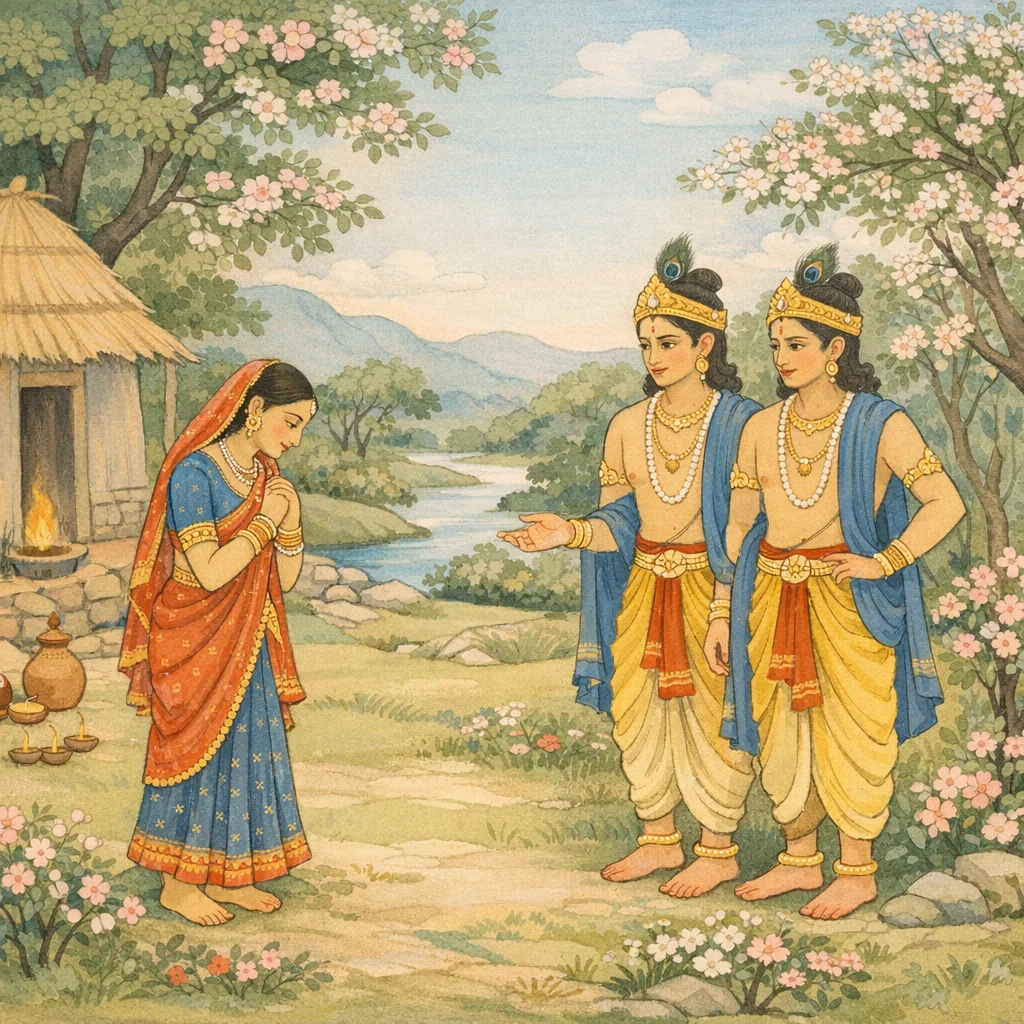
Lomāśa narrates how the Aśvinī-kumāras see Sukanyā adorned and radiant in the forest and question her identity and purpose. She identifies herself as Śaryāti’s daughter and Cyavana’s wife. The Aśvins, emphasizing her youth and beauty, attempt persuasion: they criticize Cyavana’s aged condition and propose that she choose one of them as husband, framing the offer as a practical use of her youth. Sukanyā rejects the insinuation, stating her committed affection for Cyavana. The Aśvins then offer a conditional remedy: as divine physicians, they will restore Cyavana’s youth and beauty, after which Sukanyā must select her husband from among three identical youthful forms. Sukanyā conveys this proposal to Cyavana; with mutual consent, Cyavana enters the waters for transformation, and the Aśvins do likewise. All emerge equal in youthful appearance and ornamentation. Asked to choose, Sukanyā, using discernment, selects her true husband. Cyavana, pleased, promises the Aśvins access to Soma-drinking, and the Aśvins depart for heaven while Cyavana and Sukanyā enjoy renewed domestic harmony. The chapter’s instructional core is the alignment of benefit (rejuvenation) with fidelity and rightful consent.
Chapter Arc: लोमश युधिष्ठिर को वन-प्रसंग में एक अद्भुत कथा सुनाते हैं—कैसे अश्विनीकुमारों की कृपा से महर्षि च्यवन को पुनः सौन्दर्य और युवावस्था प्राप्त हुई, और यह सब एक वन में सुकन्या के कारण घटित हुआ। → वन में सुकन्या को देखकर नासत्य और दास्र (अश्विनीकुमार) उसकी अनुपम शोभा से आकृष्ट होकर उसके कुल-परिचय और उद्देश्य पूछते हैं। सुकन्या लज्जित होकर बताती है कि वह शर्याति की पुत्री और वृद्ध च्यवन की पत्नी है। देवकुमार उसे संकेत करते हैं कि वह अपनी युवावस्था को ‘वृद्ध पति’ पर व्यर्थ न करे—यह प्रस्ताव उसके पतिव्रत और मर्यादा की परीक्षा बन जाता है। → सुकन्या यह संवाद च्यवन के पास जाकर कहती है। च्यवन स्थिति को समझकर एक उपाय/आज्ञा देता है—जिससे अश्विनीकुमारों की सहायता से उसका रूप-परिवर्तन होता है और वह रूपसम्पन्न, यौवनयुक्त बनता है; साथ ही सुकन्या की निष्ठा निर्णायक रूप से प्रकट होती है कि वह मन से अपने पति को ही चुनती है। → च्यवन के यौवन-लाभ और सुकन्या के पतिव्रत की सिद्धि के बाद अश्विनीकुमार प्रसन्न होकर देवलोक लौट जाते हैं। लोमश इस उपाख्यान को तीर्थयात्रा-प्रसंग में धर्म-उदाहरण के रूप में स्थापित करते हैं।
Shlokas
Verse 1
हि आय न हुक है 7 त्रयोविशर्त्याधिकशततमो< ध्याय: अश्विनीकुमारोंकी कृपासे महर्षि च्यवनको सुन्दर रूप और युवावस्थाकी प्राप्ति लोगश उवाच कस्यचित् त्वथ कालस्य त्रिदशावश्चिनौ नृप । कृताभिषेकां विवृतां सुकन्यां तामपश्यताम्,लोमशजी कहते हैं--युधिष्ठि! तदनन्तर कुछ कालके बाद जब एक समय सुकन्या स्नान कर चुकी थी, उस समय उसके सब अंग ढके हुए नहीं थे। इसी अवस्थामें दोनों अश्विनीकुमार देवताओंने उसे देखा। साक्षात् देवराज इन्द्रकी पुत्रीके समान दर्शनीय अंगोंवाली उस राजकन्याको देखकर नासत्यसंज्ञक अश्विनीकुमारोंने उसके पास जा यह बात कही--
Lomaśa said: “O king, after some time had passed, the two Aśvin twins—gods among the Thirty—caught sight of Sukanyā when she had finished bathing and was not fully covered. Seeing the princess, radiant and lovely like the daughter of Indra, the Aśvin known as Nāsatya approached her and spoke.”
Verse 2
तां दृष्टवा दर्शनीयाड़ूरीं देवराजसुतामिव । ऊचतु: समभिद्रुत्य नासत्यावश्वचिनाविदम्,लोमशजी कहते हैं--युधिष्ठि! तदनन्तर कुछ कालके बाद जब एक समय सुकन्या स्नान कर चुकी थी, उस समय उसके सब अंग ढके हुए नहीं थे। इसी अवस्थामें दोनों अश्विनीकुमार देवताओंने उसे देखा। साक्षात् देवराज इन्द्रकी पुत्रीके समान दर्शनीय अंगोंवाली उस राजकन्याको देखकर नासत्यसंज्ञक अश्विनीकुमारोंने उसके पास जा यह बात कही--
Lomaśa said: “O Yudhiṣṭhira, after some time, on one occasion when Sukanyā had finished bathing and her limbs were not fully covered, the two Aśvin twins saw her. Beholding that princess—beautiful-limbed like the daughter of Indra himself—Nāsatya and the Aśvin approached her and spoke these words.”
Verse 3
कस्य त्वमसि वामोरु वने5स्मिन् कि करोषि च । इच्छाव भगद्रे ज्ञातुं त्वां तत्तमाख्याहि शोभने,“वामोरु! तुम किसकी पुत्री और किसकी पत्नी हो? इस वनमें क्या करती हो? भगद्रे! हम तुम्हारा परिचय प्राप्त करना चाहते हैं। शोभने! तुम सब बातें ठीक-ठीक बताओ”
The speaker asks the woman, addressing her with courteous epithets: “O fair-thighed one, whose daughter are you, and whose wife? What are you doing in this forest? O fortunate lady, we wish to know who you truly are—O beautiful one, tell us the facts clearly.” The question reflects a dharmic concern for identity, protection, and proper social context before further action or judgment.
Verse 4
ततः सुकन्या सब्रीडा तावुवाच सुरोत्तमौ | शर्यातितनयां वित्तं भार्या मां च्यवनस्थ च,तब सुकन्याने लज्जित होकर उन दोनों श्रेष्ठ देवताओंसे कहा--'देवेश्वरो! आपको विदित होना चाहिये कि मैं राजा शर्यातिकी पुत्री और महर्षि च्यवनकी पत्नी हूँ
Then Sukanyā, overcome with modest embarrassment, addressed those two excellent divine beings: “Know this— I am the daughter of King Śaryāti, and I am the lawful wife of the sage Cyavana.” By declaring her lineage and marital bond, she asserts the ethical boundary of fidelity and propriety in the face of divine attention.
Verse 5
(नाम्ना चाहं सुकन्यास्मि नूलोके5स्मिन् प्रतिष्ठिता साहं सर्वात्मना नित्यं पतिं प्रति सुनिछिता ।।) अथाश्रिनौ प्रहस्यैतामब्रूतां पुनरेव तु । कथं त्वमसि कल्याणि पित्रा दत्ता गताध्वने,“मेरा नाम इस जगतमें सुकन्या प्रसिद्ध है। मैं सम्पूर्ण हृदयसे सदा अपने पतिदेवके प्रति निष्ठा रखती हूँ।” यह सुनकर अश्विनीकुमारोंने पुनः हँसते हुए कहा--“कल्याणि! तुम्हारे पिताने इस अत्यन्त बूढ़े पुरुषके साथ तुम्हारा विवाह कैसे कर दिया? भीरु! इस वनमें तुम विद्युतकी भाँति प्रकाशित हो रही हो। भामिनि! देवताओंके यहाँ भी तुम-जैसी सुन्दरीको हम नहीं देख पाते हैं
"By name I am Sukanyā, well-known in this world. With my whole being, always, I remain firmly resolved in loyalty to my husband." Hearing this, the two Aśvin twins laughed again and said: "Auspicious lady, how did your father give you in marriage to this man who has gone the way of old age?"
Verse 6
भ्राजसे5स्मिन् वने भीरु विद्युत्सौदामनी यथा | न देवेष्वपि तुल्यां हि त्वया पश्याव भाविनि,“मेरा नाम इस जगतमें सुकन्या प्रसिद्ध है। मैं सम्पूर्ण हृदयसे सदा अपने पतिदेवके प्रति निष्ठा रखती हूँ।” यह सुनकर अश्विनीकुमारोंने पुनः हँसते हुए कहा--“कल्याणि! तुम्हारे पिताने इस अत्यन्त बूढ़े पुरुषके साथ तुम्हारा विवाह कैसे कर दिया? भीरु! इस वनमें तुम विद्युतकी भाँति प्रकाशित हो रही हो। भामिनि! देवताओंके यहाँ भी तुम-जैसी सुन्दरीको हम नहीं देख पाते हैं
The speaker praises the young woman’s radiance and beauty: “O timid one, in this forest you shine like a streak of lightning. O lovely lady, even among the gods we do not see anyone equal to you.” In the surrounding episode, this admiration is set against her steadfast marital fidelity, highlighting the ethical tension between outward allure and inner dharma (wifely devotion).
Verse 7
अनाभरणसम्पन्ना परमाम्बरवर्जिता | शोभयस्यधिकं भद्रे वनमप्यनलंकृता,“भद्रे! तुम्हारे अंगोंपर आभूषण नहीं है। तुम उत्तम वस्त्रोंसे भी वज्चित हो और तुमने कोई शुंगार भी नहीं धारण किया है तो भी इस वनकी अधिकाधिक शोभा बढ़ा रही हो
O gentle lady, though you wear no ornaments, are deprived of fine garments, and have taken on no adornment at all, you still enhance the beauty of this forest all the more. The verse underscores an ethical ideal: true radiance and dignity arise from inner virtue rather than external decoration.
Verse 8
सर्वाभरणसम्पन्ना परमाम्बरधारिणी । शोभसे त्वनवद्याज्ि न त्वेवे मलपड़किनी,“निर्दोष अंगोंवाली सुन्दरी! यदि तुम समस्त भूषणोंसे भूषित हो जाओ और अच्छे- अच्छे वस्त्र पहन लो तो उस समय तुम्हारी जो शोभा होगी, वैसी इस मल और पंकसे युक्त मलिन वेशमें नहीं हो रही है
Lomaśa said: “Blameless, lovely one—if you were adorned with every ornament and wore the finest garments, your beauty would shine forth. It does not appear so in this soiled attire, smeared with dirt and mud.”
Verse 9
कस्मादेवंविधा भूत्वा जराजर्जरितं पतिम् | त्वमुपास्से ह कल्याणि कामभोगबहिष्कृतम्,“कल्याणि! तुम ऐसी अनुपम सुन्दरी होकर कामभोगसे शून्य इस जरा-जर्जर बूढ़े पतिकी उपासना कैसे करती हो?
Lomasa said: “O auspicious lady, how is it that you—so exceptionally beautiful—continue to serve and honor a husband worn down by old age, one who has been set aside from the enjoyments of desire and pleasure?”
Verse 10
असमर्थ परित्राणे पोषणे तु शुचिस्मिते । सा त्वं च्यवनमुत्सृूज्य वरयस्वैकमावयो:,“पवित्र मुसकानवाली देवि! वह बूढ़ा तो तुम्हारी रक्षा और पालन-पोषणमें भी समर्थ नहीं है। अतः तुम च्यवनको छोड़कर हम दोनोंमेंसे किसी एकको अपना पति चुन लो
The speaker addresses the woman with a gentle, flattering epithet—“O you of pure smile”—and argues that the aged sage Cyavana is incapable of protecting or maintaining her. On that basis, he urges her to abandon Cyavana and choose one of the two suitors. Ethically, the line reflects a temptation framed as ‘practical welfare’ (protection and support), attempting to override marital fidelity and the sanctity of a vowed relationship by appealing to youth, capability, and worldly security.
Verse 11
पत्यर्थ देवगर्भाभे मा वृथा यौवन कृथा: । एवमुक्ता सुकन्यापि सुरौ ताविदमब्रवीत्,“देवकन्याके समान सुन्दरी राजकुमारी! बूढ़े पतिके लिये अपनी इस जवानीको व्यर्थ न गँवाओ।” उनके ऐसा कहनेपर सुकन्याने उन दोनों देवताओंसे कहा--
Addressing her as a maiden of divine beauty, they urged: “Do not squander your youth in vain for the sake of an aged husband.” When they spoke thus, Sukanyā replied to those two gods—setting the ethical tension between desire and duty within the story.
Verse 12
रताहं च्यवने पत्यौ मैवं मां पर्यशड्कतम् । तावब्रूतां पुनस्त्वेनामावां देवभिषग्वरी
“I am devoted to my husband Cyavana; do not suspect me in this way. Then those two again addressed you: ‘O divine chief among physicians, restore us to youth.’”
Verse 13
युवानं रूपसम्पन्नं करिष्याव: पतिं तव । ततस्तस्यावयोश्रैव वृणीष्वान्यतमं पतिम्
Lomaśa said: “We shall make for you a husband who is young and endowed with beauty. Then, from among the two of us, choose whichever one you wish as your husband.”
Verse 14
एतेन समयेनैनमामन्त्रय पतिं शुभे | 'देवेश्वरो! मैं अपने पतिदेव च्यवनमुनिमें ही पूर्ण अनुराग रखती हूँ, अतः आप मेरे विषयमें इस प्रकारकी अनुचित आशंका न करें।' तब उन दोनोंने पुनः सुकन्यासे कहा --'शुभे! हम देवताओंके श्रेष्ठ वैद्य हैं। तुम्हारे पतिको तरुण और मनोहर रूपसे सम्पन्न बना देंगे। तब तुम हम तीनोंमेंसे किसी एकको अपना पति बना लेना। इस शर्तके साथ तुम चाहो तो अपने पतिको यहाँ बुला लो” || १२-१३ $ || सा तयोर्वचनाद् राजन्नुपसंगम्य भार्गवम्,राजन! उन दोनोंकी यह बात सुनकर सुकन्या च्यवन मुनिके पास गयी और अश्विनीकुमारोंने जो कुछ कहा था, वह सब उन्हें कह सुनाया। यह सुनकर च्यवनने अपनी पत्नीसे कहा--प्रिये! देववैद्योंने जैसा कहा है, वैसा करो”
O King, hearing the words of those two, Sukanyā approached the Bhārgava sage (Cyavana) and reported to him everything that the Aśvinīkumāras had said. After hearing it, Cyavana said to his wife: “Beloved, do exactly as the divine physicians have advised.” The episode frames a moral tension between marital fidelity and a divinely offered remedy, with Cyavana authorizing a course of action that preserves dharma while addressing his own infirmity.
Verse 15
उवाच वाक्यं यत् ताभ्यामुक्तं भगुसुतं प्रति । तच्छुत्वा च्यवनो भार्यामुवाच क्रियतामिति,राजन! उन दोनोंकी यह बात सुनकर सुकन्या च्यवन मुनिके पास गयी और अश्विनीकुमारोंने जो कुछ कहा था, वह सब उन्हें कह सुनाया। यह सुनकर च्यवनने अपनी पत्नीसे कहा--प्रिये! देववैद्योंने जैसा कहा है, वैसा करो”
Lomaśa said: “O king, having heard the message that the two (Aśvin twins) had conveyed concerning Bhṛgu’s descendant (the sage Cyavana), Cyavana spoke to his wife: ‘Beloved, let it be done as the divine physicians have advised.’” The verse underscores a moment of prudent consent and trust within marriage, where action is guided by competent counsel and undertaken with mutual regard rather than coercion.
Verse 16
(सा भर्त्रां समनुज्ञाता क्रियतामिति चाब्रवीत् । श्रुत्वा तदश्विनौ वाक््यं तस्यास्तत् क्रियतामिति ।।) ऊचतू राजपुत्रीं तां पतिस्तव विशत्वप: । ततो>म्भश्ष्यवन: शीघ्र रूपार्थी प्रविवेश ह,पतिकी यह आज्ञा पाकर सुकन्याने अश्विनीकुमारोंसे कहा--“आप मेरे पतिको रूप और यौवनसे सम्पन्न बना दें।! उसका यह कथन सुनकर अश्विनीकुमारोंने राजकुमारी सुकन्यासे कहा--'तुम्हारे पतिदेव इस जलनमें प्रवेश करें।" तब च्यवन मुनिने सुन्दर रूपकी अभिलाषा लेकर शीघ्रतापूर्वक उस सरोवरके जलमें प्रवेश किया
With her husband’s consent, she said, “Let it be done.” Hearing her words, the Aśvin twins replied, “So be it.” Then they told the princess, “Let your husband enter the waters.” Thereupon the sage Cyavana, desiring beauty and renewed youth, quickly entered the lake. Ethically, the episode underscores that even a boon affecting one’s body and status is sought through spousal consent and orderly agreement, not through coercion or vanity alone.
Verse 17
अश्विनावपि तद् राजन् सर: प्राविशतां तदा । ततो मुहूर्तादुत्तीर्णा: सर्वे ते सरसस्तदा,राजन! उनके साथ ही दोनों अश्विनीकुमार भी उस सरोवरमें प्रवेश कर गये। तदनन्तर दो घड़ीके पश्चात् वे सब-के-सब दिव्य रूप धारण करके सरोवरसे बाहर निकले। उन सबकी युवावस्था थी। उन्होंने कानोंमें चमकीले कुण्डल धारण कर रखे थे। वेष-भूषा भी उनकी एक-सी ही थी और वे सभी मनकी प्रीति बढ़ानेवाले थे
Lomaśa said: “O King, at that time the two Aśvins also entered that lake. Then, after a short while, all of them emerged from the water transformed—each bearing a radiant, divine appearance. They were restored to youthful vigor, adorned with shining earrings, dressed alike, and their very presence delighted the mind.”
Verse 18
दिव्यरूपधरा: सर्वे युवानो मृष्टकुण्डला: । तुल्यवेषधराश्वैव मनस: प्रीतिवर्धना:,राजन! उनके साथ ही दोनों अश्विनीकुमार भी उस सरोवरमें प्रवेश कर गये। तदनन्तर दो घड़ीके पश्चात् वे सब-के-सब दिव्य रूप धारण करके सरोवरसे बाहर निकले। उन सबकी युवावस्था थी। उन्होंने कानोंमें चमकीले कुण्डल धारण कर रखे थे। वेष-भूषा भी उनकी एक-सी ही थी और वे सभी मनकी प्रीति बढ़ानेवाले थे
All of them assumed divine forms—youthful, wearing gleaming earrings, and dressed alike—so pleasing that they gladdened the mind. In the narrative context, this describes the wondrous transformation that follows entry into the sacred lake, underscoring the ethical theme that purity, restraint, and rightful conduct can restore wholeness and dignity.
Verse 19
तेडब्रुवन् सहिता: सर्वे वृणीष्वान्यतमं शुभे । अस्माकमीप्सितं भद्रे पतित्वे वरवर्णिनि,सरोवरसे बाहर आकर उन सबने एक साथ कहा--'शुभे! भद्रे! वरवर्णिनि! हममेंसे किसी एकको जो तुम्हारी रुचिके अनुकूल हो, अपना पति बना लो
Then all of them, speaking together, said: “O auspicious lady, O gentle one, O fair-complexioned woman—choose any one among us, according to your liking, to be your husband. This is what we desire.” The verse frames a collective proposal that tests the woman’s agency and the ethical boundaries of desire, consent, and rightful marriage.
Verse 20
यत्र वाप्यभिकामासि त॑ वृणीष्व सुशोभने । सा समीक्ष्य तु तान् सर्वास्तुल्यरूपधरान् स्थितान्,“अथवा शोभने! जिसको भी तुम मनसे चाहती होओ, उसीको पति बनाओ।' देवी सुकन्याने उन सबको एक-जैसा रूप धारण किये खड़े देख मन और बुद्धिसे निश्चय करके अपने पतिको ही स्वीकार किया। महातेजस्वी च्यवन मुनिने अनुकूल पत्नी, तरुण अवस्था और मनोवाञ्छित रूप पाकर बड़े हर्षका अनुभव किया और दोनों अश्विनीकुमारोंसे कहा --आप दोनोंने मुझ बूढ़ेको रूपवान् और तरुण बना दिया, साथ ही मुझे अपनी यह भार्या भी मिल गयी; इसलिये मैं प्रसन्न होकर आप दोनोंको यज्ञमें देवराज इन्द्रके सामने ही सोमपानका अधिकारी बना दूँगा। यह मैं आपलोगोंसे सत्य कहता हूँ”
‘Whomever you truly desire—choose him, O fair one.’ Having looked carefully at them all, standing there in identical forms, Sukanyā made her decision with clear mind and judgment and accepted only her own husband. The radiant sage Cyavana, gaining a devoted wife, renewed youth, and the form he had long wished for, felt great joy. He then addressed the two Aśvin twins: ‘You have made me, an old man, handsome and young, and I have also regained my wife; therefore, pleased with you both, I shall grant you the right to drink Soma in the sacrifice, even in the presence of Indra, king of the gods. This I tell you in truth.’
Verse 21
निश्चित्य मनसा बुद्धया देवी वत्रे स््वकं पतिम् । लब्ध्वा तु च्यवनो भार्या वयो रूपं च वाजञ्छितम्,“अथवा शोभने! जिसको भी तुम मनसे चाहती होओ, उसीको पति बनाओ।' देवी सुकन्याने उन सबको एक-जैसा रूप धारण किये खड़े देख मन और बुद्धिसे निश्चय करके अपने पतिको ही स्वीकार किया। महातेजस्वी च्यवन मुनिने अनुकूल पत्नी, तरुण अवस्था और मनोवाञ्छित रूप पाकर बड़े हर्षका अनुभव किया और दोनों अश्विनीकुमारोंसे कहा --आप दोनोंने मुझ बूढ़ेको रूपवान् और तरुण बना दिया, साथ ही मुझे अपनी यह भार्या भी मिल गयी; इसलिये मैं प्रसन्न होकर आप दोनोंको यज्ञमें देवराज इन्द्रके सामने ही सोमपानका अधिकारी बना दूँगा। यह मैं आपलोगोंसे सत्य कहता हूँ”
Having reflected with both mind and discernment, the noble lady chose her own husband. And when Cyavana obtained his wife again—along with the youth and the desired form that he had wished for—he felt great joy. The episode underscores steadfast marital fidelity and the ethical weight of deliberate choice: Sukanyā’s decision is not swayed by outward sameness or temptation, but anchored in her prior commitment and inner certainty.
Verse 22
हृष्टोडब्रवीन्महातेजास्तौ नासत्याविदं वच: । यथाहं रूपसम्पन्नो वयसा च समन्वित:,“अथवा शोभने! जिसको भी तुम मनसे चाहती होओ, उसीको पति बनाओ।' देवी सुकन्याने उन सबको एक-जैसा रूप धारण किये खड़े देख मन और बुद्धिसे निश्चय करके अपने पतिको ही स्वीकार किया। महातेजस्वी च्यवन मुनिने अनुकूल पत्नी, तरुण अवस्था और मनोवाञ्छित रूप पाकर बड़े हर्षका अनुभव किया और दोनों अश्विनीकुमारोंसे कहा --आप दोनोंने मुझ बूढ़ेको रूपवान् और तरुण बना दिया, साथ ही मुझे अपनी यह भार्या भी मिल गयी; इसलिये मैं प्रसन्न होकर आप दोनोंको यज्ञमें देवराज इन्द्रके सामने ही सोमपानका अधिकारी बना दूँगा। यह मैं आपलोगोंसे सत्य कहता हूँ”
Rejoicing, the mighty sage spoke these words to the two Nāsatyas (the Aśvin twins): “Now I am endowed with beauty and restored to youthful vigor.” In the episode’s ethical frame, Sukanyā—after discerning with mind and judgment among identical forms—chooses her rightful husband, affirming marital fidelity and discernment over mere appearance. Having regained youth and his desired form through the Aśvins’ aid, Cyavana gratefully resolves to secure for them a rightful share in the Soma-drinking at the sacrifice, even in Indra’s presence, declaring this promise as truth.
Verse 23
कृतो भवद्धयां वृद्ध: सन् भार्या च प्राप्तवानिमाम् | तस्माद् युवां करिष्यामि प्रीत्याहं सोमपीथिनौ । मिषतो देवराजस्य सत्यमेतद् ब्रवीमि वाम्,“अथवा शोभने! जिसको भी तुम मनसे चाहती होओ, उसीको पति बनाओ।' देवी सुकन्याने उन सबको एक-जैसा रूप धारण किये खड़े देख मन और बुद्धिसे निश्चय करके अपने पतिको ही स्वीकार किया। महातेजस्वी च्यवन मुनिने अनुकूल पत्नी, तरुण अवस्था और मनोवाञ्छित रूप पाकर बड़े हर्षका अनुभव किया और दोनों अश्विनीकुमारोंसे कहा --आप दोनोंने मुझ बूढ़ेको रूपवान् और तरुण बना दिया, साथ ही मुझे अपनी यह भार्या भी मिल गयी; इसलिये मैं प्रसन्न होकर आप दोनोंको यज्ञमें देवराज इन्द्रके सामने ही सोमपानका अधिकारी बना दूँगा। यह मैं आपलोगोंसे सत्य कहता हूँ”
Cyavana said: “Though I was old, through you two I have been restored, and I have also regained this wife. Therefore, out of gratitude, I shall make you both entitled to drink Soma in the sacrifice—right before the eyes of Indra, the king of the gods. This I declare to you as the truth.” The ethical force of the statement lies in gratitude repaid with a just reward, even when it challenges an established divine privilege.
Verse 24
तच्छुत्वा हृष्टमनसौ दिवं तौ प्रतिजग्मतुः । च्यवनश्नव सुकन्या च सुराविव विजद्वतु:,यह सुनकर दोनों अश्विनीकुमार प्रसन्नचित्त हो देवलोकको लौट गये और च्यवन तथा सुकन्या देवदम्पतिकी भाँति विहार करने लगे
Hearing this, the two Aśvinīkumāras, their minds delighted, returned to heaven. And Cyavana and Sukanyā then lived together in joy, sporting like a divine couple—signifying the restoration of harmony after the fulfillment of rightful boons and the honoring of due obligations.
Verse 122
इस प्रकार श्रीमहाभारत वनपर्वके अन्तर्गत तीर्थयात्रापर्वमें लोमशती र्थयात्राके प्रसंगमें युकन्योपाख्यानविषयक एक सौ बाईसवाँ अध्याय पूरा हुआ
Thus ends the one hundred and twenty-second chapter of the Yukanī (Yukanyā) episode, occurring within the context of Lomasha’s pilgrimage narrative in the Tīrthayātrā section of the Vana Parva of the Śrī Mahābhārata. This closing colophon signals the completion of a self-contained moral-narrative unit embedded in the larger account of sacred travel and instruction.
Verse 123
इति श्रीमहाभारते वनपर्वणि तीर्थयात्रापर्वणि लोमशतीर्थयात्रायां सौकन्ये त्रयोविंशत्यधिकशततमो<ध्याय:
Thus, in the revered Mahābhārata, within the Vana Parva—specifically the section on pilgrimage (Tīrthayātrā Parva), in the account of Lomāśa’s pilgrimage—ends the one-hundred-and-twenty-third chapter, titled “Saukaneya.” This is a formal colophon marking the close of the chapter and situating it within the larger narrative framework of sacred travel and instruction.
Frequently Asked Questions
Sukanyā faces a conflict between external inducement (youth, desirability, and advantageous alternatives) and her marital commitment to an aged spouse, requiring her to prioritize fidelity and proper conduct over opportunistic gain.
The episode teaches that benefits and transformations are dharmically acceptable when pursued through consent, loyalty, and right intention; it also underscores discernment—true relationship is identified by commitment and understanding, not merely by appearance.
No explicit phalaśruti appears in this passage; the meta-significance is implicit—this legend functions as an ethical exemplar and an aetiological bridge explaining how the Aśvins gain ritual privilege (Soma participation) through negotiated reciprocity.