Adhyaya 18
Gāndhārī’s Lament and the Identification of Duḥśāsana (स्त्रीपर्व, अध्याय १८)
Upa-parva: Strī-vilāpa (Lamentation of the Kuru Women) — Gandhārī’s Field-Viewing Episode
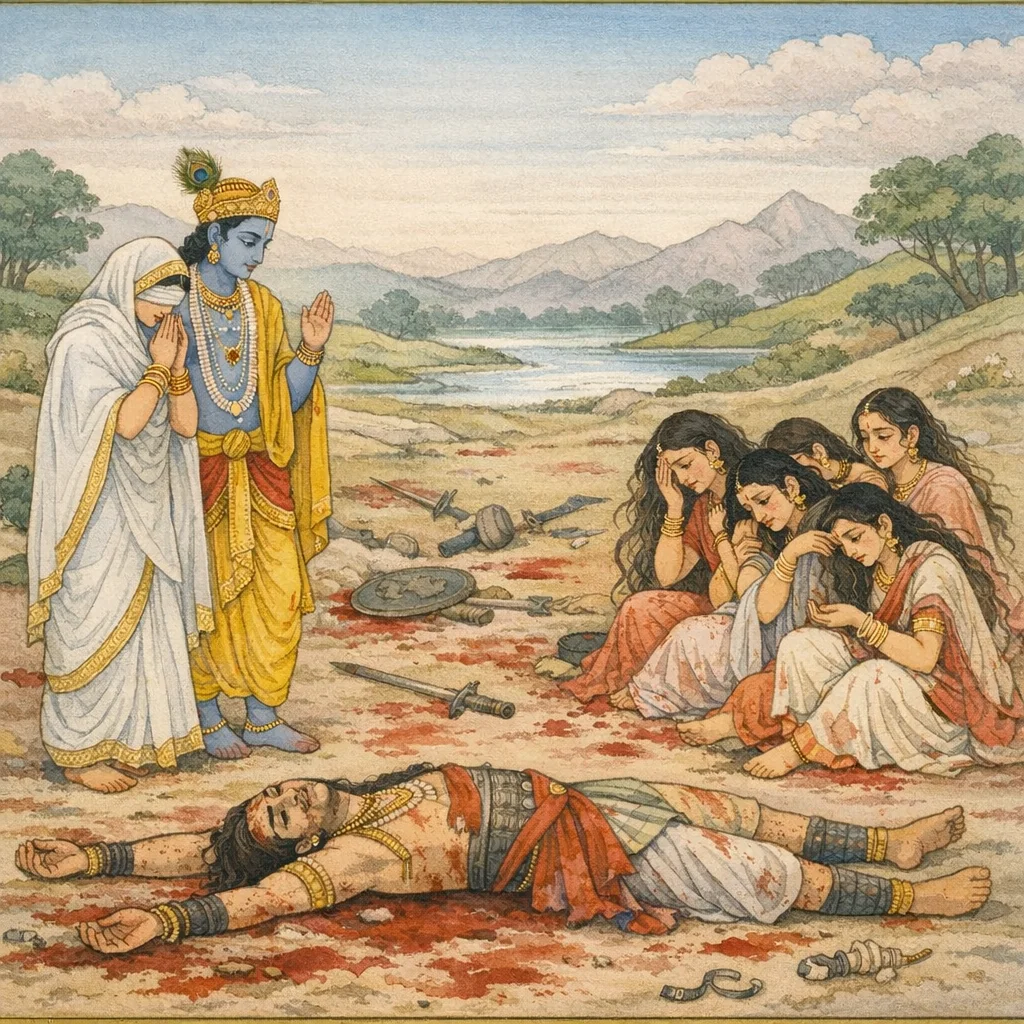
This adhyāya is a directed witnessing narrative in which Gāndhārī, speaking to Kṛṣṇa, points out the slain sons and the broader devastation. She describes her hundred sons as largely killed by Bhīmasena’s mace, then turns to the widowed daughters-in-law who run with loosened hair, stepping with ornamented feet upon blood-wet earth—an image of social and ritual dislocation. The scene includes sensory markers of the battlefield: scavenging birds and animals, cries of women and elders, and exhausted survivors leaning against chariots and the bodies of elephants and horses. Gāndhārī highlights individual instances of shock, including a woman holding a relative’s severed head, and interprets the catastrophe through karmic causality, stating that the fruits of auspicious and inauspicious actions do not perish. She recalls the dyūta-sabhā context: Duḥśāsana’s coercive speech toward Draupadī and the remembered grievance that motivates Bhīma’s extreme retaliation. The chapter culminates in identifying Duḥśāsana’s corpse and noting the ferocity of Bhīma’s act—drinking blood in anger—framed as a consequential endpoint of prior wrongdoing and accumulated hostility.
Chapter Arc: कुरुक्षेत्र के रक्त-रंजित मैदान में गान्धारी श्रीकृष्ण (माधव/जनार्दन) के सम्मुख अपने शत-संख्यक पुत्रों को मृत देखकर विलाप आरम्भ करती है—मातृत्व का शोक राजधर्म के गर्व को चीर देता है। → गान्धारी का दुःख और तीखा होता जाता है जब वह अपनी स्नुषाओं (बाल-वधुओं) को देखती है—जो कभी प्रासाद-तलों पर आभूषणों सहित चलती थीं, आज रक्त-भीगी वसुन्धरा को स्पर्श करती हुई भटक रही हैं; वह इसे पूर्वजन्म के पाप और अपनी ‘मन्द बुद्धि’ के दुष्फल के रूप में भी देखती है। → वह एक-एक कर अपने पुत्रों के अपराध और उनके परिणाम को श्रीकृष्ण के सामने उघाड़ती है—ईर्ष्या, मद, वासुदेव-विरोध; और विशेषतः दुःशासन का दृश्य: भीमसेन द्वारा गदा से वध, तथा क्रोध में उसका रक्तपान—यह दृश्य गान्धारी के शोक को रौद्र-भयावह चरम पर पहुँचा देता है। → गान्धारी अपने ही वचनों/डाँट (वाग्बाण) को स्मरण करती है—जैसे सर्प अपने विष को छोड़ दे—और स्वीकार करती है कि जिनको उसने कभी रोका-टोका, वे उसी दर्प और अधर्म के पथ पर चले; अब परिणाम सामने है: पुत्र, कुल, और स्त्रियों का सर्वनाश। → शोक से भरी गान्धारी का यह आत्मस्वीकार और कृष्ण के प्रति आरोप-प्रत्यारोप की छाया आगे के प्रसंगों में उसके कठोर वचन/शाप की भूमिका बनती है।
Shlokas
Verse 1
अपर बक। है >> >> अष्टादशो< ध्याय: अपने अन्य हे कक तथा दुःशासनको देखकर गान्धारीका सम्मुख विलाप गान्धायुवाच पश्य माधव पुत्रान्मे शतसंख्याजञ्जितक्लमान् । गदया भीमसेनेन भूयिष्ठं निहतान् रणे,गान्धारी बोलीं--माधव! जो परिश्रमको जीत चुके थे, उन मेरे सौ पुत्रोंको देखो, जिन्हें रणभूमिमें प्रायः भीमसेनने अपनी गदासे मार डाला है
Gāndhārī said: “Look, O Mādhava, upon my sons—numbering a hundred—who had endured and overcome exhaustion. See how, on the battlefield, most of them have been slain by Bhīmasena with his mace.”
Verse 2
इदं दुःखतरं मेडद्य यदिमा मुक्तमूर्थजा: । हतपुत्रा रणे बाला: परिधावन्ति मे स्नुषा:,सबसे अधिक दुःख मुझे आज यह देखकर हो रहा है कि ये मेरी बालवधुएँ, जिनके पुत्र भी मारे जा चुके हैं, रणभूमिमें केश खोले चारों ओर अपने स्वजनोंकी खोजमें दौड़ रही हैं
Vaiśampāyana said: “What grieves me most today is this sight: these young daughters-in-law of mine, their sons slain, with their hair loosened in mourning, are running about the battlefield searching for their own kin. The scene lays bare the cruel aftermath of war—where victory yields only bereavement and the collapse of familial order.”
Verse 3
प्रासादतलचारिण्यश्वरणैर्भूषणान्वितै: । आपन्ना यत् स्पृशन्तीमां रुधिराद्रां वसुन्धराम्,ये महलकी अट्टालिकाओंमें आभूषणभूषित चरणोंद्वारा विचरण करनेवाली थीं; परंतु आज विपत्तिकी मारी हुई ये इस खूनसे भीगी हुई वसुधाका स्पर्श कर रही हैं
Vaiśampāyana said: “Those women who once moved about on palace terraces with feet adorned by ornaments are now, struck by calamity, touching this earth soaked with blood.”
Verse 4
कृच्छादुत्सारयन्ति सम गृध्रगोमायुवायसान् । दुःखेनार्ता विघूर्णन्त्यो मत्ता इव चरन्त्युत,ये दुःखसे आतुर हो पगली स्त्रियोंके समान झूमती हुई सब ओर विचरती हैं तथा बड़ी कठिनाईसे गीधों, गीदड़ों और कौओंको लाशोंके पाससे दूर हटा रही हैं
Vaiśaṃpāyana said: Stricken by grief, they wandered about like women driven mad with sorrow, and with great difficulty kept driving away the vultures, jackals, and crows from the corpses—an image of the battlefield’s aftermath where human dignity and last rites are threatened by scavengers and despair.
Verse 5
एषान्या त्वनवद्याज़ी करसम्मितमध्यमा । घोरमायोधन दृष्टवा निपतत्यतिदु:खिता,यह पतली कमरवाली सर्वागसुन्दरी दूसरी वधू युद्धस्थलका भयानक दृश्य देखकर अत्यन्त दुःखी हो पृथ्वीपर गिर पड़ती है
Vaiśampāyana said: Another bride—faultless in conduct, with a waist as slender as a hand’s span—on seeing the dreadful scene of battle, collapses to the ground, overwhelmed by unbearable grief. The verse underscores how the spectacle of war shatters even the innocent and blameless, turning beauty and auspiciousness into sudden mourning.
Verse 6
दृष्टवा मे पार्थिवसुतामेतां लक्ष्मणमातरम् | राजपुत्रीं महाबाहो मनो न ह्युपशाम्यति,महाबाहो! यह लक्ष्मणकी माता एक भूमिपालकी बेटी है, इस राजकुमारीकी दशा देखकर मेरा मन किसी तरह शान्त नहीं होता है
Vaiśampāyana said: “O mighty-armed one, when I behold this princess—daughter of a king, the mother of Lakṣmaṇa—my mind does not find peace at all. Her condition is such that it will not let my heart grow calm.”
Verse 7
क्रातृश्चान्या: पितृश्चान्या: पुत्रांक्ष निहतान् भुवि । दृष्टवा परिपतन्त्येता: प्रगृह्दा सुमहाभुजान्,कुछ स्त्रियाँ रणभूमिमें मारे गये अपने भाइयोंको, कुछ पिताओंको और कुछ पुत्रोंको देखकर उन महाबाहु वीरोंको पकड़ लेती और वहीं गिर पड़ती हैं
Vaiśampāyana said: Some women, seeing their brothers slain upon the earth, others their fathers, and others their sons, seize those mighty-armed heroes and collapse there, overcome by grief. The verse underscores the human cost of war: beyond victory and duty, the battlefield becomes a place where familial bonds and compassion confront the devastation wrought by violence.
Verse 8
मध्यमानां तु नारीणां वृद्धानां चापराजित । आक्रन्दं हतबन्धूनां दारुणे वैशसे शृणु,अपराजित वीर! इस दारुण संग्राममें जिनके बन्धु-बान्धव मारे गये हैं, उन अधेड़ और बूढ़ी स्त्रियोंका यह करुणाजनक क्रन्दन सुनो
Vaiśampāyana said: “O Aparājita, listen to the heartrending wail of those women—middle‑aged and elderly—whose kinsmen have been slain, amid this dreadful carnage.”
Verse 9
रथनीडानि देहांश्व॒ हतानां गजवाजिनाम् । आश्रित्य श्रममोहार्ता: स्थिता: पश्य महाभुज,महाबाहो! देखो, ये स्त्रियाँ परिश्रम और मोहसे पीड़ित हो टूटे हुए रथोंकी बैठकों तथा मारे गये हाथी-घोड़ोंकी लाशोंका सहारा लेकर खड़ी हैं
Vaiśampāyana said: “O mighty-armed, O strong-armed one—look: these women, overcome by exhaustion and bewilderment, stand leaning for support on the shattered seats of chariots and on the bodies of slain elephants and horses.”
Verse 10
अन्यां चापह्तं कायाच्चारुकुण्डलमुन्नसम् | स्वस्थ बन्धो: शिर: कृष्ण गृहीत्वा पश्य तिष्ठतीम्,श्रीकृष्ण! देखो, वह दूसरी स्त्री किसी आत्मीय जनके मनोहर कुण्डलोंसे सुशोभित और ऊँची नासिकावाले कटे हुए मस्तकको लेकर खड़ी है
Vaiśampāyana said: “And see another woman standing there, O Kṛṣṇa, holding a severed head taken from its body—adorned with lovely earrings and marked by a high, well-shaped nose—belonging to one of her own close kin. The scene lays bare the moral wreckage of war: even the bonds of family are reduced to tokens of grief, and the battlefield’s violence follows the living into their mourning.”
Verse 11
अनघ! मैं समझती हूँ कि इन अनिन्द्य सुन्दरी अबलाओंने तथा मन्द बुद्धिवाली मैंने भी पूर्वजन्मोंमें कोई बड़ा भारी पाप किया है, जिसके फलस्वरूप धर्मराजने हमलोगोंको बड़ी भारी विपत्तिमें डाल दिया है। जनार्दन! वृष्णिनन्दन! जान पड़ता है कि किये हुए पुण्य और पापकर्मोंका उनके फलका उपभोग किये बिना नाश नहीं होता है
“O blameless one! I believe that these faultless, beautiful, helpless women—and I too, of dull understanding—must have committed some very grave sin in former births. As its consequence, King Dharma has cast us into a great calamity. O Janārdana, delight of the Vṛṣṇis! It seems that deeds of merit and sin do not perish until their fruits have been experienced.”
Verse 12
यदिदं धर्मराजेन पातितं नो जनार्दन | न हि नाशो३स्ति वार्ष्णेय कर्मणो: शुभपापयो:,अनघ! मैं समझती हूँ कि इन अनिन्द्य सुन्दरी अबलाओंने तथा मन्द बुद्धिवाली मैंने भी पूर्वजन्मोंमें कोई बड़ा भारी पाप किया है, जिसके फलस्वरूप धर्मराजने हमलोगोंको बड़ी भारी विपत्तिमें डाल दिया है। जनार्दन! वृष्णिनन्दन! जान पड़ता है कि किये हुए पुण्य और पापकर्मोंका उनके फलका उपभोग किये बिना नाश नहीं होता है
Vaiśampāyana said: “O Janārdana, this calamity into which we have been cast by Dharmarāja—O Vārṣṇeya, O sinless one—does not simply vanish. For deeds, whether meritorious or sinful, are not destroyed without their fruits being experienced.”
Verse 13
पूर्वजातिकृतं पापं मन्ये नाल््पमिवानघ । एताभिरननिरिवद्याभिमया चैवाल्पमेधया,प्रत्यग्रवयस: पश्य दर्शनीयकुचानना: । कुलेषु जाता ह्वीमत्य: कृष्णपक्ष्माक्षिमूर्धजा: माधव! देखो, इन महिलाओंकी नयी अवस्था है। इनके वक्ष:स्थल और मुख दर्शनीय हैं। इनकी आँखोंकी बरौनियाँ और सिरके केश काले हैं। ये सब-की-सब कुलीन और सलज्ज हैं। ये हंसके समान गद्गद स्वरमें बोलती हैं; परंतु आज दुःख और शोकसे मोहित हो चहचहाती सारसियोंके समान रोती-बिलखती हुई पृथ्वीपर गिर पड़ी हैं
Vaiśampāyana said: “O blameless one, I think the sin wrought in a former birth is not small. Look at these young women—faultless—while I too, of little understanding, can only behold them: their breasts and faces are lovely to see. Born in noble families, modest by nature, with black eyelashes, dark eyes, and dark hair—yet now, overwhelmed by grief and sorrow, they have fallen to the earth, their sweet voices turned from gentle speech into lamentation.”
Verse 14
हंसगद्गदभाषिण्यो दुःखशोकप्रमोहिता: । सारस्य इव वाशन्त्य: पतिता: पश्य माधव,माधव! देखो, इन महिलाओंकी नयी अवस्था है। इनके वक्ष:स्थल और मुख दर्शनीय हैं। इनकी आँखोंकी बरौनियाँ और सिरके केश काले हैं। ये सब-की-सब कुलीन और सलज्ज हैं। ये हंसके समान गद्गद स्वरमें बोलती हैं; परंतु आज दुःख और शोकसे मोहित हो चहचहाती सारसियोंके समान रोती-बिलखती हुई पृथ्वीपर गिर पड़ी हैं
Vaiśampāyana said: “O Mādhava, behold: these noble, modest women—whose voices once trembled sweetly like swans—are now bewildered by grief and sorrow. Crying out like calling cranes, they have fallen to the earth.”
Verse 15
फुल्लपद्मप्रकाशानि पुण्डरीकाक्ष योषिताम् | अनवद्यानि वक्त्राणि तापयत्येष रश्मिवान्,कमलनयन! खिले हुए कमलके समान प्रकाशित होनेवाले युवतियोंके इन सुन्दर मुखोंको ये सूर्यदेव संतप्त कर रहे हैं
Vaiśampāyana said: “O lotus-eyed one, the radiant sun, with his burning rays, is scorching these faultless faces of the women—faces that shine like fully blossomed lotuses.” The line underscores the cruelty of the moment: even nature’s impartial heat falls upon the innocent, intensifying the pathos of the post-war scene.
Verse 16
ईर्षूणां मम पुत्राणां वासुदेवावरोधनम् । मत्तमातड्डदर्पाणां पश्यन्त्यद्य पृथग्जना:,वासुदेव! मतवाले हाथीके समान घमंडमें चूर रहनेवाले मेरे ईर्ष्यालु पुत्रोंकी इन रानियोंको आज साधारण लोग देख रहे हैं
Vaiśampāyana said: “Today the common people behold these women—once kept in confinement by my sons out of jealousy toward Vāsudeva—those sons who, swollen with the pride of intoxicated elephants, have now been brought low.”
Verse 17
शतचन्द्राणि चर्माणि ध्वजांश्चादित्यवर्चस: । रौक्माणि चैव वर्माणि निष्कानपि च काउ्चनान्,गोविन्द! देखो, मेरे पुत्रोंकी ये सौ चन्द्राकार चिह्लोंसे सुशोभित ढालें, सूर्यके समान तेजस्विनी ध्वजाएँ, सुवर्णमय कवच, सोनेके निष्क तथा शिरस्त्राण घीकी उत्तम आहुति पाकर प्रज्वलित हुई अग्नियोंके समान पृथ्वीपर देदीप्यमान हो रहे हैं
Vaiśampāyana said: “There lie, shining upon the earth, a hundred shields marked with moon-like emblems; banners radiant as the sun; golden coats of mail; and golden neck-ornaments as well. These splendid instruments of war and honor—once borne with pride—now blaze in the mind’s eye like sacrificial fires fed with rich oblations, underscoring the terrible cost of violence and the fragility of worldly glory.”
Verse 18
शीर्षत्राणानि चैतानि पुत्राणां मे महीतले । पश्य दीप्तानि गोविन्द पावकान् सुहुतानिव,गोविन्द! देखो, मेरे पुत्रोंकी ये सौ चन्द्राकार चिह्लोंसे सुशोभित ढालें, सूर्यके समान तेजस्विनी ध्वजाएँ, सुवर्णमय कवच, सोनेके निष्क तथा शिरस्त्राण घीकी उत्तम आहुति पाकर प्रज्वलित हुई अग्नियोंके समान पृथ्वीपर देदीप्यमान हो रहे हैं इति श्रीमहाभारते स्त्रीपर्वणि स्त्रीविलापपर्वणि गान्धारीवाक्येडष्टादशो 5 ध्याय: ।। १८ || इस प्रकार श्रीमह्याभारत स्त्रीपर्वके अन्तर्गत स्त्रीविलापपर्वमें गान्धारीवाक्यविषयक अठारहवाँ अध्याय पूरा हुआ
Vaiśampāyana said: “O Govinda, look—here on the earth are these helmets of my sons, shining brilliantly, like fires that blaze after receiving well-offered oblations. In this field of ruin, the very emblems of protection now stand as witnesses to the cost of war, turning a mother’s grief into a moral indictment of violence and its aftermath.”
Verse 19
एष दुःशासन: शेते शूरेणामित्रघातिना । पीतशोणितसर्वाड्रो युधि भीमेन पातित:,शत्रुधाती शूरवीर भीमसेनने युद्धमें जिसे मार गिराया तथा जिसके सारे अंगोंका रक्त पी लिया, वही यह दुःशासन यहाँ सो रहा है
Vaiśampāyana said: “Here lies Duḥśāsana—felled in battle by the heroic Bhīma, a slayer of foes. His whole body is drenched with blood, for Bhīma struck him down in the fight.” The verse underscores the grim moral aftermath of war: vengeance fulfilled, yet the battlefield remains a place of horror rather than triumph.
Verse 20
गदया भीमसेनेन पश्य माधव मे सुतम् । द्यूतक््लेशाननुस्मृत्य द्रौपदीनोदितेन च,माधव! देखो, द्यूतक्रीडाके समय पाये हुए क्लेशोंको स्मरण करके द्रौपदीसे प्रेरित हुए भीमसेनने मेरे इस पुत्रको गदासे मार डाला है
Vaiśampāyana said: “Behold, O Mādhava, my son—Bhīmasena has struck him down with a mace, stirred on by Draupadī and by the remembered humiliations and sufferings of the dice-game. The killing is presented not merely as battlefield violence, but as the moral aftershock of adharma: an act driven by recalled injustice and a vow of retribution.”
Verse 21
उक्ता हानेन पाज्चाली सभायां द्यूतनिर्जिता । प्रियं चिकीर्षता भ्रातु: कर्णस्य च जनार्दन,जनार्दन! इसने अपने भाई और कर्णका प्रिय करनेकी इच्छासे सभामें जूएसे जीती गयी द्रौपदीके प्रति कहा था कि 'पांचालि! तू नकुल-सहदेव तथा अर्जुनके साथ ही हमारी दासी हो गयी; अतः शीघ्र ही हमारे घरोंमें प्रवेश कर”
Vaiśampāyana said: Draupadī of Pāñcāla, having been won in the dice-game in the royal assembly, was addressed in this manner by Hāna—seeking to do what was pleasing to his brother and also to Karṇa, O Janārdana. (The context is the humiliation of Draupadī after the gambling loss, where harsh words are spoken to gratify partisan allies, intensifying the adharma of the scene.)
Verse 22
सहैव सहदेवेन नकुलेनार्जुनेन च । दासीभूतासि पाज्चालि क्षिप्रं प्रविश नो गृहान्,जनार्दन! इसने अपने भाई और कर्णका प्रिय करनेकी इच्छासे सभामें जूएसे जीती गयी द्रौपदीके प्रति कहा था कि 'पांचालि! तू नकुल-सहदेव तथा अर्जुनके साथ ही हमारी दासी हो गयी; अतः शीघ्र ही हमारे घरोंमें प्रवेश कर”
Verse 23
ततो5हमत्रवं कृष्ण तदा दुर्योधन नृपम् | मृत्युपाशपरिक्षिप्तं शकुनिं पुत्र वर्जय,श्रीकृष्ण! उस समय मैं राजा दुर्योधनसे बोली--“बेटा! शकुनि मौतके फंदेमें फँसा हुआ है। तुम इसका साथ छोड़ दो। पुत्र! तुम अपने इस खोटी बुद्धिवाले मामाको कलहप्रिय समझो और शीघ्र ही इसका परित्याग करके पाण्डवोंके साथ संधि कर लो। दुर्बुद्धे! तुम नहीं जानते भीमसेन कितने अमर्षशील हैं। तभी जलती लकड़ीसे हाथीको मारनेके समान तुम अपने तीखे वाग्बाणोंसे उन्हें पीड़ा दे रहे हो”
Then I said to King Duryodhana at that time: “O Kṛṣṇa (Duryodhana), abandon Śakuni, my son. He is already ensnared in the noose of death. Recognize this ill-minded maternal uncle of yours as one who delights in strife; quickly forsake him and make peace with the Pāṇḍavas. You do not understand how fiercely resentful Bhīmasena is—yet you keep tormenting them with your sharp arrows of speech, as though trying to kill an elephant with a burning brand.”
Verse 24
निबोधैन सुददुर्वुद्धि मातुलं कलहप्रियम् । क्षिप्रमेनं परित्यज्य पुत्र शाम्यस्व पाण्डवै:,श्रीकृष्ण! उस समय मैं राजा दुर्योधनसे बोली--“बेटा! शकुनि मौतके फंदेमें फँसा हुआ है। तुम इसका साथ छोड़ दो। पुत्र! तुम अपने इस खोटी बुद्धिवाले मामाको कलहप्रिय समझो और शीघ्र ही इसका परित्याग करके पाण्डवोंके साथ संधि कर लो। दुर्बुद्धे! तुम नहीं जानते भीमसेन कितने अमर्षशील हैं। तभी जलती लकड़ीसे हाथीको मारनेके समान तुम अपने तीखे वाग्बाणोंसे उन्हें पीड़ा दे रहे हो”
Vaiśaṃpāyana said: “Understand this, O very foolish one: your maternal uncle is quarrelsome by nature. Quickly abandon him, my son, and make peace with the Pāṇḍavas.”
Verse 25
न बुद्धयसे त्व॑ं दुर्बुद्धे भीमसेनममर्षणम् । वाड्नाराचैस्तुदंस्ती क्ष्णफल्काभिरिव कुड्जरम्,श्रीकृष्ण! उस समय मैं राजा दुर्योधनसे बोली--“बेटा! शकुनि मौतके फंदेमें फँसा हुआ है। तुम इसका साथ छोड़ दो। पुत्र! तुम अपने इस खोटी बुद्धिवाले मामाको कलहप्रिय समझो और शीघ्र ही इसका परित्याग करके पाण्डवोंके साथ संधि कर लो। दुर्बुद्धे! तुम नहीं जानते भीमसेन कितने अमर्षशील हैं। तभी जलती लकड़ीसे हाथीको मारनेके समान तुम अपने तीखे वाग्बाणोंसे उन्हें पीड़ा दे रहे हो”
Vaiśampāyana said: “O foolish one, you do not understand Bhīmasena—how intolerant of insult he is. Yet you keep tormenting him with your sharp, arrow-like words, as though striking an elephant with burning, keen-tipped missiles. Such speech, driven by spite and quarrelsomeness, only hastens ruin and closes the door to reconciliation.”
Verse 26
तानेवं रहसि क्रुद्धो वाक्शल्यानवधारयन् । उत्ससर्ज विषं तेषु सर्पो गोवृषभेष्विव,इस प्रकार एकान्तमें मैंने उन सबको डाँटा था। श्रीकृष्ण! उन्हीं वाग्बाणोंको याद करके क्रोधी भीमसेनने मेरे पुत्रोंपर उसी प्रकार क्रोधरूपी विष छोड़ा है, जैसे सर्प गाय-बैलोंको डँसकर उनमें अपने विषका संचार कर देता है
Vaiśampāyana said: “Thus, in private, he—angered and brooding over those barbed, wounding words—poured out poison upon them, like a serpent injecting its venom into cows and bulls. The verse frames rage as a moral toxin: remembered insults become the fuel by which violence is justified and intensified.”
Verse 27
एष दुःशासन: शेते विक्षिप्य विपुलौ भुजौ । निहतो भीमसेनेन सिंहेनेव महागज:,सिंहके मारे हुए विशाल हाथीके समान भीमसेनका मारा हुआ यह दु:शासन दोनों विशाल हाथ फैलाये रणभूमिमें पड़ा हुआ है
Vaiśampāyana said: “Here lies Duḥśāsana, his two mighty arms flung wide, slain by Bhīmasena—like a great elephant brought down by a lion.” The verse underscores the moral weight of retribution in war: the violent aggressor meets a fitting end, and the battlefield becomes the visible consequence of adharma.
Verse 28
अत्यर्थमकरोद् रौद्रं भीमसेनो<त्यमर्षण: । दुःशासनस्य यत् क्रुद्धो3पिबच्छोणितमाहवे,अत्यन्त अमर्षमें भरे हुए भीमसेनने युद्धस्थलमें क्रुद्ध होकर जो दुःशासनका रक्त पी लिया, यह बड़ा भयानक कर्म किया है
Vaiśampāyana said: Overcome by extreme, unforgiving wrath, Bhīmasena committed a fiercely cruel deed—when enraged in the midst of battle, he drank Duḥśāsana’s blood. The narration marks it as a dreadful act, highlighting how war can drive even a vowed act of vengeance into ethically terrifying excess.
Frequently Asked Questions
The dilemma is how to interpret and respond to irreversible harm: whether the war’s outcomes are viewed as mere fate, as karmic fruition, or as human failure of counsel and restraint requiring ethical accounting.
The chapter stresses karmic continuity—actions bear results over time—and uses grief as evidence that public wrongs and private decisions converge into collective consequences.
No formal phalaśruti is stated; the closest meta-level claim is the doctrinal assertion that the results of good and bad actions do not vanish, positioning the episode as an interpretive lens for the epic’s ethical causality.