Adhyaya 53
Plakṣaprasravaṇa–Kārapacana tīrtha-varṇana and Nārada’s war briefing (Śalya-parva, Adhyāya 53)
Upa-parva: Tīrtha–Āśrama–Nārada-saṃvāda (Balarāma’s pilgrimage interlude)
Vaiśaṃpāyana describes Baladeva arriving at Kurukṣetra, giving gifts, and reaching a large, auspicious āśrama characterized by sacred trees and a sanctified environment. Baladeva questions the resident sages about the āśrama’s prior occupant; they narrate that Viṣṇu performed supreme tapas there, that ancient rites were conducted, and that a perfected brāhmaṇī—identified as the virtuous daughter of Śāṇḍilya—attained heaven through yogic accomplishment, with a noted aśvamedha-related merit associated with the hermitage. Baladeva then proceeds near the Himavat region, visits Sarasvatī’s source at Plakṣaprasravaṇa, reaches the eminent tīrtha Kārapacana, performs dāna and cold-water bathing, and goes to the āśrama of Mitra and Varuṇa, then onward to the Yamunā region where deities previously found delight. Seated with ṛṣis and siddhas, he receives Devarṣi Nārada, who is described with ascetic insignia and musical skill. When asked about the Kuru situation, Nārada recounts principal deaths (Bhīṣma, Droṇa, Karṇa, and others), names remaining Kaurava-aligned survivors (notably Kṛpa, Bhoja, and Aśvatthāman), and reports Duryodhana’s concealment in the Dvaipāyana lake and his being pressured by speech from the Pāṇḍavas with Kṛṣṇa. Nārada indicates the imminent gadā duel between Bhīma and Duryodhana and advises Baladeva to go witness it. Baladeva dismisses attendants toward Dvārakā, praises Sarasvatī in two verses emphasizing her sanctity and salvific association, mounts his chariot, and hastens to observe the disciple-duel.
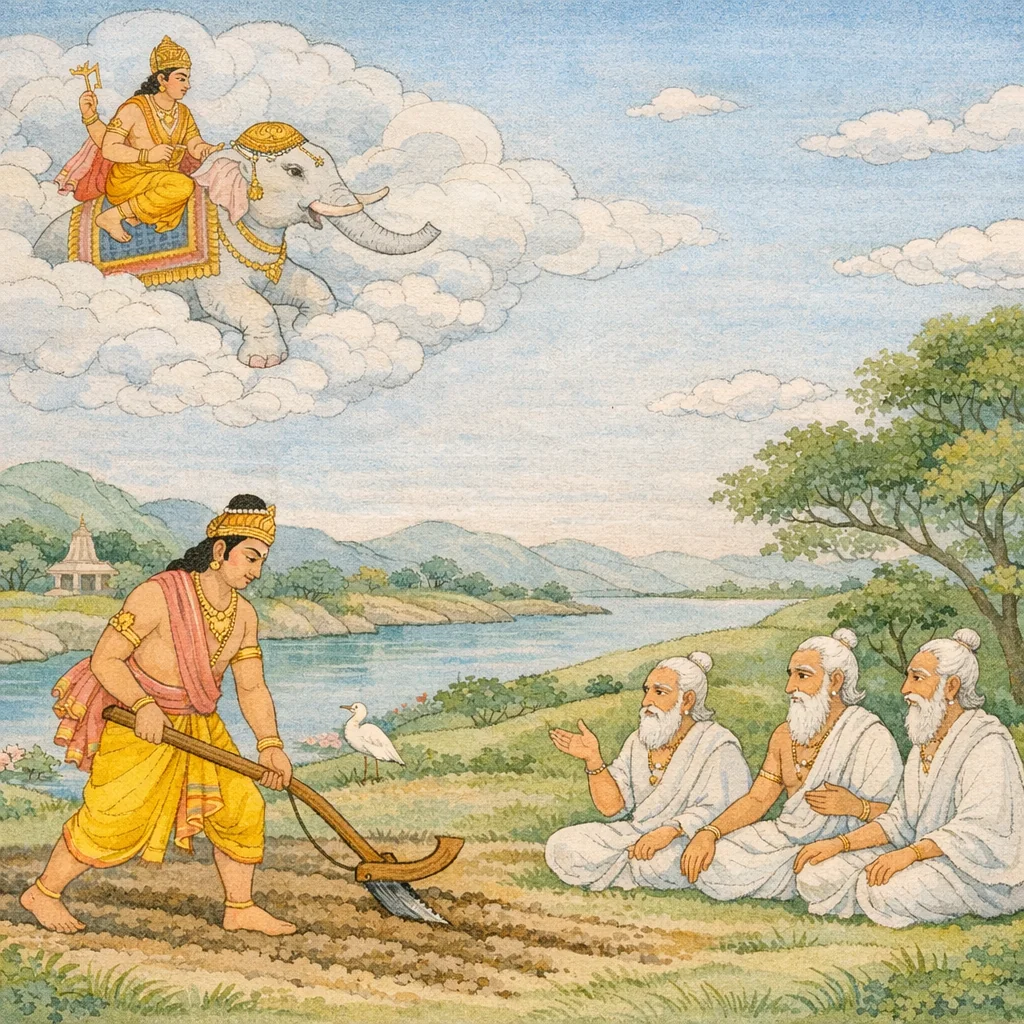
Chapter Arc: बलराम (हलायुध) तीर्थयात्रा के क्रम में तपोधनों से पूछते हैं—महात्मा कुरु ने इस भूमि को क्यों जोता कि यह ‘कुरुक्षेत्र’ कहलायी? → ऋषि कुरु के अदम्य संकल्प का वृत्तांत सुनाते हैं: दीर्घकाल तक वे तपोबल से भूमि को कर्षित करते रहे; इन्द्र उनके उद्योग पर उपहास कर त्रिदिव लौट जाते हैं, पर कुरु विरत नहीं होते। → कुरु के तप और कर्षण से यह भूमि परम-पुण्य-स्थान घोषित होती है—यहाँ तप, यज्ञ, दान और रण में वीरगति पाने वालों को अक्षय शुभगति; यहाँ शुभ-इच्छा से निवास करने वालों को यम-लोक का दर्शन नहीं। → ऋषि कुरुक्षेत्र की महिमा का विधान करते हैं: यहाँ ब्राह्मण-शिरोमणि और नरेश यज्ञ कर उत्तम गति पाते हैं; इस क्षेत्र की पुण्य-प्रभावना पृथ्वी के रहने तक त्रिविष्टप-वास का कारण बनती है। → हलायुध से कहा जाता है—अब इन्द्र द्वारा कुरुक्षेत्र-विषयक गायी गयी गाथा सुनो; आगे उसी दिव्य गाथा/विस्तार का संकेत।
Shlokas
Verse 1
इस प्रकार श्रीमह्याभारत शल्यपर्वके अन्तर्गत यदापर्वर्में बलदेवजीकी तीर्थयात्राके प्रसंगमें सारस्वतोपाख्यानविषयक बावनवाँ अध्याय पूरा हुआ ॥/ ५२ ॥। ऑपनआक्राा छा अं क्ााज त्रिपठ्चाशत्तमोड्ध्याय: ऋषियोंद्वारा कुरुक्षेत्रकी सीमा और महिमाका वर्णन ऋषय ऊचु: प्रजापतेरुत्तरवेदिरुच्यते सनातनं राम समन्तपञठ्चकम् । समीजिरे यत्र पुरा दिवौकसो वरेण सत्रेण महावरप्रदा:,ऋषियोंने कहा--बलरामजी! समनन््तपंचक क्षेत्र सनातन तीर्थ है। इसे प्रजापतिकी उत्तरवेदी कहते हैं। वहाँ प्राचीनकालमें महान् वरदायक देवताओंने बहुत बड़े यज्ञका अनुष्ठान किया था
The sages said: “O Rāma (Balarāma), Samantapañcaka is an ancient and everlasting sacred region. It is called Prajāpati’s northern altar. In former times, the gods assembled there and performed a great sacrificial session, through which they became bestowers of mighty boons.”
Verse 2
पुरा च राजर्षिवरेण धीमता बहूनि वर्षाण्यमितेन तेजसा । प्रकृष्टमेतत् कुरुणा महात्मना ततः कुरुक्षेत्रमितीह पप्रथे,पहले अमित तेजस्वी बुद्धिमान् राजर्षिप्रवर महात्मा कुरुने इस क्षेत्रको बहुत वर्षोतक जोता था, इसलिये इस जगतमें इसका नाम कुरक्षेत्र प्रसिद्ध हो गया
Vaiśampāyana said: Long ago, this land was excellently cultivated for many years by the great-souled Kuru—foremost among royal seers, wise, and possessed of immeasurable splendor. Therefore, in this world it became renowned by the name “Kurukṣetra.”
Verse 3
राम उवाच किमर्थ कुरुणा कृष्ट क्षेत्रमेतन््महात्मना । एतदिच्छाम्यहं श्रोतुं कथ्यमानं तपोधना:,बलरामजीने पूछा--तपोधनो! महात्मा कुरुने इस क्षेत्रकों किसलिये जोता था? मैं आपलोगोंके मुखसे यह कथा सुनना चाहता हूँ
Rāma said: “For what purpose did the great-souled Kuru plough this field? I wish to hear this account as it is told, O you rich in austerity.”
Verse 4
ऋषय ऊचु: पुरा किल कुरुं राम कर्षन्तं सततोत्थितम् | अभ्येत्य शक्रस्त्रिदिवात् पर्यपूच्छत कारणम्,ऋषि बोले--राम! सुना जाता है कि पूर्वकालमें सदा प्रत्येक शुभ कार्यके लिये उद्यत रहनेवाले कुरु जब इस क्षेत्रको जोत रहे थे, उस समय इन्द्रने स्वर्गसे आकर इसका कारण पूछा
Verse 5
इन्द्र वाच किमिदं वर्तते राजन् प्रयत्नेन परेण च । राजर्षे किमभिप्रेतं येनेयं कृष्यते क्षिति:,इन्द्रने प्रश्न किया--राजन्! यह महान् प्रयत्नके साथ क्या हो रहा है? राजर्ष! आप क्या चाहते हैं, जिसके कारण यह भूमि जोत रहे हैं?
Indra said: “O King, what is taking place here with such extraordinary effort? O royal sage, what is it that you intend—because of which this earth is being ploughed?”
Verse 6
कुरुरुवाच इह ये पुरुषा: क्षेत्रे मरिष्यन्ति शतक्रतो । ते गमिष्यन्ति सुकृतालल्लोकान् पापविवर्जितान्,कुरुने कहा--शतक्रतो! जो मनुष्य इस क्षेत्रमें मरेंगे, वे पुण्यात्माओंके पापरहित लोकोंमें जायँगे
Kuru said: “O Śatakratu (Indra), those men who die here on this sacred field will depart to the worlds attained by the meritorious—realms free from sin.”
Verse 7
अवहस्य तत: शक्रो जगाम त्रिदिवं पुनः । राजर्षिरिप्यनिर्विण्ण: कर्षत्येव वसुंधराम्,तब इन्द्र उनका उपहास करके स्वर्गलोकमें चले गये। राजर्षि कुरु उस कार्यसे उदासीन न होकर वहाँकी भूमि जोतते ही रहे
After mocking him, Śakra (Indra) returned again to the heavenly world. Yet the royal sage, not disheartened by that act, continued to plough the earth there—steadfast in his resolve and unshaken by ridicule, embodying perseverance in righteous effort.
Verse 8
आगम्यागम्य चैवैनं भूयो भूयो5वहस्य च । शतक्रतुरनिर्विण्णं पृष्टवा पृष्टवा जगाम ह
Coming to him again and again, and repeatedly mocking him, Rama—after questioning the unwearied Śatakratu time and again—departed. The verse underscores a moral tension: persistent inquiry can be legitimate, but when mixed with ridicule it becomes ethically compromised, revealing pride and a lack of restraint in speech.
Verse 9
शतक्रतु इन्द्र अपने कार्यसे विरत न होनेवाले कुरुक पास बारंबार आते और उनसे पूछ-पूछकर प्रत्येक बार उनकी हँसी उड़ाकर स्वर्गलोकमें चले जाते थे ।। यदा तु तपसोग्रेण चकर्ष वसुधां नृपः । ततः शक्रो<ब्रवीद् देवान् राजर्षेर्यच्चिकीर्षितम्,जब राजा कुरु कठोर तपस्यापूर्वक पृथ्वीको जोतते ही रह गये, तब इन्द्रने देवताओंसे राजर्षि कुरुकी वह चेष्टा बतायी
Indra, the hundred-sacrificed lord, repeatedly came to King Kuru—who would not desist from his chosen undertaking—questioned him again and again, and each time departed to heaven after making light of him. But when the king, by the sharp force of austere penance, continued to plough and draw the earth without pause, Indra then informed the gods of what the royal sage Kuru was intent on accomplishing. The passage highlights the ethical tension between steadfastness in dharma-driven effort and the discouragement or ridicule that may come even from powerful beings; true resolve is tested by persistence under mockery.
Verse 10
एतच्छुत्वाब्रुवन् देवा: सहस्राक्षमिदं वच: । वरेण च्छन्द्यतां शक्र राजर्षियदि शक्यते,यह सुनकर देवताओंने सहसनेत्रधारी इन्द्रसे कहा--'शक्र! यदि सम्भव हो तो राजर्षि कुरुको वर देकर अपने अनुकूल किया जाय
Hearing this, the gods addressed Sahasrākṣa (Indra) with these words: “O Śakra, if it is possible, let this royal sage be won over—made favorable—by granting him a boon.”
Verse 11
यदि हांत्र प्रमीता वै स्वर्ग गच्छन्ति मानवा: । अस्माननिष्ट्वा क्रतुभिर्भागो नो न भविष्यति,“यदि यहाँ मरे हुए मानव यज्ञोंद्वारा हमारा पूजन किये बिना ही स्वर्गलोकमें चले जायँगे, तब तो हमलोगोंका भाग सर्वथा नष्ट हो जायगा”
Rāma said: “If, in this very world, men who have died go to heaven without first honoring us through sacrificial rites, then our rightful share in the offerings will cease altogether.”
Verse 12
आगम्य च तत: शक्रस्तदा राजर्षिमब्रवीत् । अलं खेदेन भवत: क्रियतां वचनं मम
Then Śakra (Indra) arrived and addressed the royal sage: “Enough of your sorrow. Do as I ask.” The verse frames a moral pivot: grief is acknowledged but not allowed to paralyze right action, especially when a higher duty or a divinely guided course is being urged.
Verse 13
मानवा ये निराहारा देहं त्यक्ष्यन्त्यतन्द्रिता: । युधि वा निहता: सम्यगपि तिर्यग्गता नूप
O king, those men who, remaining vigilant, abandon the body while fasting, or who are properly slain in battle—even if they should be reborn among the lower species—(their course is not to be despised). The verse underscores that disciplined self-restraint and a righteous death in combat carry moral weight, shaping one’s destiny beyond the immediate form of rebirth.
Verse 14
ते स्वर्गभाजो राजेन्द्र भविष्यन्ति महामते । तब इन्द्रने वहाँसे आकर राजर्षि कुरुसे कहा--“नरेश्वर! आप व्यर्थ कष्ट क्यों उठाते हैं? मेरी बात मान लीजिये। महामते! राजेन्द्र! जो मनुष्य और पशु-पक्षी यहाँ निराहार रहकर देह त्याग करेंगे अथवा युद्धमें मारे जायँगे, वे स्वर्गलोकके भागी होंगे” || १२-१३ ह ।। तथास्त्विति ततो राजा कुरु: शक्रमुवाच ह,तब राजा कुरने इन्द्रसे कहा--'देवराज! ऐसा ही हो” तदनन्तर कुरुसे विदा ले बलसूदन इन्द्र फिर शीघ्र ही प्रसन्नचित्तसे स्वर्गलोकमें चले गये
Indra said, “O best of kings, O wise one: they will become sharers in heaven.” Then King Kuru replied to Śakra (Indra), “So be it.” Having thus granted his assent, Kuru took leave; and Indra, the slayer of Bala, departed swiftly, his mind satisfied, to the heavenly world. The passage frames a moral assurance: voluntary austerity and death in righteous battle are presented as paths to heavenly reward, and the king’s acceptance signals consent to that ethical order.
Verse 15
ततस्तम भ्यनुज्ञाप्य प्रह्ृष्टेनान्तरात्मना । जगाम त्रिदिवं भूय: क्षिप्रं बलनिषूदन:,तब राजा कुरने इन्द्रसे कहा--'देवराज! ऐसा ही हो” तदनन्तर कुरुसे विदा ले बलसूदन इन्द्र फिर शीघ्र ही प्रसन्नचित्तसे स्वर्गलोकमें चले गये
Having thus taken leave of him, with an inwardly delighted heart, the slayer of Bala (Indra) swiftly departed once more for the heavenly world. The passage conveys the ethic of proper closure in counsel and command: after assent is granted, one should part with clarity, goodwill, and composure, without lingering attachment or agitation.
Verse 16
एवमेतद् यदुश्रेष्ठ कृष्टं राजर्षिणा पुरा । शक्रेण चाभ्यनुज्ञातं ब्रह्माद्यैश्व सुरैस्तथा,यदुश्रेष्ठ! इस प्रकार प्राचीनकालमें राजर्षि कुरुने इस क्षेत्रको जोता और इन्द्र तथा ब्रह्मा आदि देवताओंने इसे वर देकर अनुगृहीत किया
“So it is, O best of the Yadus. In ancient times this land was ploughed and brought under cultivation by the royal sage Kuru; and it was sanctioned and blessed by Śakra (Indra), and likewise by Brahmā and the other gods. Thus its sanctity rests on righteous human effort confirmed by divine approval.”
Verse 17
नातः परतरं पुण्यं भूमे: स्थानं भविष्यति । इह तप्स्यन्ति ये केचित्तप: परमकं नरा:
Rāma said: “There will be no holier place on earth than this. Here, whatever men undertake austerities will practice the highest form of tapas.”
Verse 18
देहत्यागेन ते सर्वे यास्यन्ति ब्रह्मण: क्षयम् भूतलका कोई भी स्थान इससे बढ़कर पुण्यदायक नहीं होगा। जो मनुष्य यहाँ रहकर बड़ी भारी तपस्या करेंगे, वे सब लोग देहत्यागके पश्चात् ब्रह्मलोकमें जायँगे ।। ये पुन: पुण्यभाजो वै दानं दास्यन्ति मानवा:
Rāma said: “By giving up their bodies, all of them will attain the imperishable abode of Brahman. On this earth there will be no place more sanctifying than this. Those who remain here and undertake great austerities will, after death, go to the world of Brahmā. And again, those people who are worthy of merit will indeed give gifts (in charity).”
Verse 19
ये चेह नित्यं मनुजा निवत्स्यन्ति शुभैषिण:
“And those people who will dwell here continually, seeking what is auspicious (for themselves and others) …”
Verse 20
यक्ष्यन्ति ये च क्रतुभिर्महद्/िर्मनुजेश्वरा:
Rāma said: “Those rulers of men who will perform great sacrificial rites (kratus) will offer worship on a grand scale.”
Verse 21
अपि चात्र स्वयं शक्रो जगौ गाथां सुराधिप:
Moreover, in this very context, Śakra himself—the lord of the gods—sang a gāthā (a traditional verse), invoking a remembered divine utterance to frame the ensuing counsel with authoritative, ethical weight.
Verse 22
पांसवो5पि कुरुक्षेत्राद् वायुना समुदीरिता: । अपि दुष्कृतकर्माणं नयन्ति परमां गतिम्,“कुरक्षेत्रसे वायुद्वारा उड़ायी हुई धूलियाँ भी यदि ऊपर पड़ जाय॑ँ तो वे पापी मनुष्यको भी परमपदकी प्राप्ति कराती हैं
Rāma said: “Even the dust-particles from Kurukṣetra, when lifted and carried by the wind, can lead even a person of sinful deeds to the highest state. Such is the sanctifying power attributed to this field of dharma.”
Verse 23
सुरर्षभा ब्राह्मणसत्तमाश्न तथा नृगाद्या नरदेवमुख्या: । इष्ट्वा महा: क्रतुभिर्नसिंहा: संत्यज्य देहान् सुगतिं प्रपन्ना:
The foremost among the gods and the best of Brahmins, and likewise eminent royal leaders such as King Nṛga—having performed great sacrificial rites—cast off their bodies and attained the blessed course. The verse underscores a moral vision in which disciplined ritual action, carried out in accordance with dharma, is presented as a means to an auspicious posthumous destiny.
Verse 24
'श्रेष्ठ देवताओ! यहाँ ब्राह्मणशिरोमणि तथा नृप आदि मुख्य-मुख्य पुरुषसिंह नरेश महान् यज्ञोंका अनुष्ठान करके देहत्यागके पश्चात् उत्तम गतिको प्राप्त हुए हैं ।। तरन्तुकारन्तुकयोर्यदन्तरं रामह्दानां च मचक्रुकस्य च । एतत् कुरुक्षेत्रसमन्तपजञ्चकं प्रजापतेरुत्तरवेदिरुच्यते,“तरन्तुक, अरन्तुक, रामहद (परशुराम कुण्ड) तथा मचक्क़ुक--इनके बीचका जो भूभाग है, यही समन्तपंचक एवं कुरुक्षेत्र है। इसे प्रजापतिकी उत्तरवेदी कहते हैं
Rama said: “O most excellent deities! In this very region, eminent Brahmins and foremost kings—lion-like among men—have performed great sacrifices and, after laying down their bodies, attained the highest state. The tract of land lying between Tarantuka and Arantuka, and between the lakes of Rāma and Macakruka—this is the Samantapañcaka of Kurukṣetra. It is called Prajāpati’s Northern Altar.”
Verse 25
शिवं महापुण्यमिदं दिवौकसां सुसम्मतं सर्वगुणै: समन्वितम् | अतश्न सर्वे निहता नूपा रणे यास्यन्ति पुण्यां गतिमक्षयां सदा
Rāma said: “This is auspicious and supremely meritorious, approved by the gods and endowed with every excellence. Therefore, all these kings who have been slain in battle will attain a holy, imperishable state—forever.”
Verse 26
“यह महान् पुण्यप्रद, कल्याणकारी, देवताओंका प्रिय एवं सर्वगुणसम्पन्न तीर्थ है। अतः यहाँ रणभूमिमें मारे गये सम्पूर्ण नरेश सदा पुण्यमयी अक्षय गति प्राप्त करेंगे' ।। इत्युवाच स्वयं शक्र: सह ब्रह्मादिभिस्तदा । तच्चानुमोदितं सर्व ब्रह्मविष्णुमहेश्वरै:,ब्रह्मा आदि देवताओंसहित साक्षात् इन्द्रने ऐसी बातें कही थीं तथा ब्रह्मा, विष्णु और महादेवजीने इन सारी बातोंका अनुमोदन किया था
“This is a great sacred ford that bestows merit, brings welfare, is dear to the gods, and is endowed with every excellence. Therefore, all the kings who have been slain here on the battlefield will surely attain an imperishable, merit-filled destiny.” Thus spoke Śakra (Indra) himself at that time, together with Brahmā and the other gods; and all these words were approved by Brahmā, Viṣṇu, and Maheśvara. The passage frames the battlefield-tīrtha as a moral and ritual assurance: even amid the devastation of war, a sanctified locus and divine testimony are invoked to affirm an enduring spiritual outcome for the fallen.
Verse 53
इति श्रीमहाभारते शल्यपर्वणि गदापर्वणि बलदेवतीर्थयात्रायां सारस्वतोपाख्याने कुरुक्षेत्र कथ ने त्रिपडचाशत्तमो<5ध्याय:
Thus, in the Śrī Mahābhārata, within the Śalya Parvan—specifically the Gadā Parvan—during Baladeva’s pilgrimage to sacred fords, in the episode concerning Sārasvata, in the narration connected with Kurukṣetra, ends the fifty-third chapter. This is a colophon marking the close of a section, situating the reader within the larger ethical and ritual frame of the narrative: pilgrimage, sacred geography, and remembered instruction amid the aftermath of war.
Verse 186
तेषां सहस्रगुणितं भविष्यत्यचिरेण वै | जो पुण्यात्मा मानव वहाँ दान देंगे, उनका वह दान शीघ्र ही सहसख्रगुना हो जायगा
Rāma said: “For those people, whatever gift is given with a pure and righteous heart will, in no long time, return multiplied a thousandfold.” The verse underscores the ethical principle that charity offered with sincerity and merit yields swift and greatly increased spiritual fruit.
Verse 193
यमस्य विषयं ते तु न द्रक्ष्यन्ति कदाचन । जो मानव शुभकी इच्छा रखकर यहाँ नित्य निवास करेंगे, उन्हें कभी यमका राज्य नहीं देखना पड़ेगा
Rāma said: “Those people will never behold the realm of Yama. Whoever lives here continually with an auspicious intention and a wish for the good will not have to face Yama’s dominion.” The verse underscores an ethical promise: steadfast residence or conduct grounded in wholesome intent is portrayed as a safeguard from the fearful consequences associated with death and judgment.
Verse 206
तेषां त्रिविष्टपे वासो यावदभूमिर्धरिष्यति । जो नरेश्वर यहाँ बड़े-बड़े यज्ञोंका अनुष्ठान करेंगे, वे जबतक यह पृथ्वी रहेगी, तबतक स्वर्गलोकमें निवास करेंगे
Rāma said: “For them, there will be residence in the heaven of the Thirty-three gods for as long as the earth endures. Those kings and men who perform great sacrifices here attain heaven and remain there so long as this world continues.”
Verse 213
कुरुक्षेत्रनिबद्धां वै तां शृणुष्व हलायुध । हलायुध! स्वयं देवराज इन्द्रने कुरुक्षेत्रके सम्बन्धमें यहाँ जो गाथा गायी है, उसे आप सुनिये
Rāma said: “O Halāyudha, listen to that ancient verse connected with Kurukṣetra. O bearer of the plough-weapon, hear the gāthā that Indra himself, king of the gods, has sung here concerning Kurukṣetra.”
Frequently Asked Questions
The chapter stages a tension between withdrawal into sacred space and engagement with impending conflict: Baladeva’s pilgrimage practices and devarṣi intelligence together raise the question of how a kṣatriya-aligned figure should relate to violence—through direct participation, disciplined witnessing, or dharmic contextualization.
Meaning-making in crisis is mediated by authoritative narration and sacred topography: tīrtha visitation, dāna, and listening to sages function as structured methods for aligning action and understanding with dharma when outcomes are dominated by accumulated karma.
A localized phala motif appears through the Sarasvatī praise and the tīrtha framing: association with Sarasvatī is described as producing enduring remembrance and relief from sorrow, implying that comprehension of events is complemented by ritual-geographic memory rather than only by tactical history.