Adhyaya 134
कर्ण-पाण्डव-संमर्दः — Karṇa and Arjuna’s Intensified Engagement
Upa-parva: Karna–Arjuna Strategic Engagement (Droṇa-parva battlefield episode, Adhyāya 134)
Saṃjaya reports that Aśvatthāman, seeing Karṇa’s harsh words toward his maternal uncle (Kṛpa), rushes forward with sword raised; Duryodhana and Kṛpa restrain him, preventing internal fracture. Karṇa, taking a defiant posture, stands surrounded by Kaurava elites as the Pāṇḍavas and allied kings converge, openly calling for his defeat as a strategic necessity. A massed exchange of arrows follows: Karṇa counters an encircling assault with rapid volleys and marked arrows, dispersing enemy formations and creating visible disarray. Observing Karṇa’s performance, Duryodhana notes that Arjuna (Phalguna) is advancing with intent to eliminate Karṇa; allied warriors (Drauṇi, Kṛpa, Śalya, and Hārdikya) move to intercept Arjuna to protect Karṇa. The narrative then tightens into a direct Karṇa–Arjuna duel: Karṇa and Arjuna trade dense arrow-showers; Arjuna cuts Karṇa’s bow at the grip, kills his four horses, and removes the charioteer, leaving Karṇa temporarily disabled. Karṇa leaps from the compromised chariot and mounts Kṛpa’s chariot under pressure. Seeing Karṇa checked, Kaurava troops scatter; Duryodhana attempts to rally them and declares he will personally confront Arjuna. Kṛpa warns Aśvatthāman that exposing the king to Arjuna’s range is strategically unsound; Aśvatthāman asserts he will hold Arjuna back and urges Duryodhana to stand down. Duryodhana’s speech reveals resentment toward perceived underperformance and implores Aśvatthāman to neutralize the Pāñcālas and Somakas, asserting the overwhelming reach of Aśvatthāman’s astras.
Chapter Arc: धृतराष्ट्र, कर्ण की परशुराम-शिष्यता और उसकी ‘अपराजेय’ ख्याति का स्मरण कर, संजय से पूछते हैं—जिस पर विजय की सबसे बड़ी आशा थी, वह भीम से सहज ही कैसे पराजित हुआ? → संजय युद्धभूमि का दृश्य खींचते हैं: कर्ण और वृकोदर क्रोध से ताम्र-नेत्र होकर आमने-सामने आते हैं; उनके उग्र वेग को देखकर कौरव-पक्ष के महारथी तक संत्रस्त हो उठते हैं। साथ ही, द्रौपदी-अपमान, वनवास, विराट-काल के क्लेश—ये सब स्मृतियाँ भीम के रोष को और धार देती हैं। → भीम-कर्ण का भीषण संग्राम चरम पर पहुँचता है; अस्त्र-शस्त्रों की वर्षा और प्रतिघात के बीच क्षण भर में मनुष्य, अश्व और गजों के निर्जीव शरीरों से भूमि ढँक जाती है—मानो रुद्र के क्रोध में दक्षयज्ञ-विध्वंस का दृश्य पुनः घट रहा हो। → युद्ध का परिणाम कौरव-सेना के लिए जनक्षय बनकर प्रकट होता है; रणभूमि शवों से पट जाती है और कर्ण की प्रतिष्ठा पर भीम का प्रहार धृतराष्ट्र के मन में भय और शोक को स्थिर कर देता है। → धृतराष्ट्र की आशा-आधारित रणनीति डगमगाती है—अब दुर्योधन क्या कहेगा और कर्ण-भीम की इस टक्कर के बाद अगला प्रहार किस पर पड़ेगा?
Shlokas
Verse 1
धृतराष्ट्रने कहा--संजय! भृगुवंशशिरोमणि धनुर्धर परशुरामजी साक्षात् भगवान् शंकरके शिष्य हैं तथा कर्ण उन्हींका शिष्यत्व ग्रहण करके अस्त्रविद्यामें उनके समान ही सुयोग्य हो गया था
Dhṛtarāṣṭra said: “Sañjaya, Paraśurāma—the foremost jewel of the Bhṛgu lineage and a master archer—was himself a disciple of Lord Śaṅkara. Karṇa, having accepted discipleship under that very Paraśurāma, became in the science of weapons fully qualified, comparable to his teacher.”
Verse 2
तद्विशिष्टोडपि वा कर्ण: शिष्य: शिष्यगुणैर्युत: । कुन्तीपुत्रेण भीमेन निर्जित: स तु लीलया,अथवा शिष्योचित सदगुणोंसे सम्पन्न परशुरामका वह शिष्य उनसे भी बढ़-चढ़कर है, तो भी उसे कुन्तीकुमार भीमसेनने खेल-खेलमें ही पराजित कर दिया
Karna said: Even if that disciple—Karna—was exceptional, endowed with all the virtues proper to a student, still he was defeated by Bhima, the son of Kunti, and that too as if in mere sport. The remark underscores how sheer strength and circumstance in war can humble even the well-trained, and it hints at the ethical tension between pride in learning and the reality of prowess on the battlefield.
Verse 3
यस्मिन् जयाशा महती पुत्राणां मम संजय । तं॑ भीमाद् विमुखं दृष्टवा कि नु दुर्योधनो<5ब्रवीत्,संजय! जिसपर मेरे पुत्रोंकी विजयकी बड़ी भारी आशा लगी हुई है, उसे भीमसेनसे पराजित होकर युद्धसे विमुख हुआ देख दुर्योधनने क्या कहा?
Karna said: “Sanjaya, the man in whom my sons had placed great hope of victory—seeing him turned away from the battle after being routed by Bhima, what indeed did Duryodhana say?”
Verse 4
कथं च युयुधे भीमो वीर्यश्लाघी महाबल: । कर्णो वा समरे तात किमकार्षीत् ततः परम् | भीमसेनं रणे दृष्टवा ज्वलन्तमिव पावकम्,तात! अपने पराक्रमसे सुशोभित होनेवाले महाबली भीमसेनने किस प्रकार युद्ध किया? अथवा कर्णने रणक्षेत्रमें भीमसेनको अग्निके समान तेजसे प्रज्वलित होते देख उसके बाद क्या किया?
Karna said: “How did Bhima—mighty and proud of his valor—fight? Or, dear one, when Karna saw Bhimasena on the battlefield blazing like fire, what did he do thereafter?”
Verse 5
संजय उवाच रथमन्यं समास्थाय विधिवत् कल्पितं पुन: । अभ्ययात् पाण्डवं कर्णो गज त इवार्णव:,संजय कहते हैं--राजन्! बोध वेगसे ऊपर उठते हुए समुद्रके समान कर्णने विधिपूर्वक सजाये हुए दूसरे रथपर आरूढ़ होकर पुनः पाण्डुनन्दन भीमपर आक्रमण किया
Sañjaya said: “O King, Karṇa, mounting another chariot that had been duly prepared according to rule, once again charged at the Pāṇḍava—like the ocean swelling with a roaring surge.” The verse underscores the relentless momentum of battle: even after setbacks, a warrior re-equips and returns to the fray, intensifying the moral pressure of war where resolve and aggression contend with righteousness and restraint.
Verse 6
क्रुद्धमाधिरथिं दृष्टवा पुत्रास्तव विशाम्पते । भीमसेनममन्यन्त वैश्वानरमुखे हुतम्,प्रजानाथ! उस समय अधिरथपुत्र कर्णको क्रोधमें भरा हुआ देखकर आपके पुत्रोंने यही मान लिया कि भीमसेन अब अग्निके मुखमें दी हुई आहुतिके समान नष्ट हो जायँगे
Sanjaya said: Seeing Karna, the son of Adhiratha, inflamed with anger, your sons, O lord of the people, concluded that Bhimasena would now be destroyed—like an oblation cast into the mouth of the fire. The verse highlights the Kauravas’ confidence in Karna’s wrathful prowess and their expectation of Bhima’s imminent downfall amid the brutal logic of war.
Verse 7
चापशब्दं ततः कृत्वा तलशब्दं च भैरवम् । अभ्यद्रवत राधेयो भीमसेनरथं प्रति,तदनन्तर धनुषकी टंकार और हथेलीका भयानक शब्द करते हुए राधानन्दन कर्णने भीमसेनके रथपर धावा बोल दिया
Sanjaya said: Then, making the sharp twang of his bow and the dreadful clap-like sound, Radheya (Karna) charged straight toward Bhimasena’s chariot. The scene underscores the war’s escalating ferocity, where prowess and resolve surge forward even as the moral weight of fratricidal conflict deepens.
Verse 8
पुनरेव तयो राजन् घोर आसीत् समागम: । वैकर्तनस्य शूरस्य भीमस्य च महात्मन:,राजन! शूरवीर कर्ण और महामनस्वी भीमसेन--इन दोनों वीरोंमें पुनः घोर संग्राम छिड़ गया
Sañjaya said: O King, once again a dreadful clash arose between those two—Karna, the heroic son of the charioteer (Vaikartana), and Bhīmasena, the great-souled warrior. Their renewed encounter signals how, in the press of war, personal rivalries and vows repeatedly reignite, drawing even the mightiest into relentless, fate-driven combat.
Verse 9
संरब्धौ हि महाबाहू परस्परवधैषिणौ | अन्योन्यमीक्षांचक्राते दहन्ताविव लोचनै:,एक-दूसरेके वधकी इच्छावाले वे दोनों महाबाहु योद्धा अत्यन्त कुपित हो एक-दूसरेको नेत्रोंद्वारा दग्ध-से करते हुए परस्पर दृष्टिपात करने लगे
Sañjaya said: The two mighty-armed warriors, inflamed with rage and intent on each other’s death, fixed their gaze upon one another—seeming to scorch each other with their eyes. The scene underscores how wrath and the thirst to kill can eclipse restraint and dharma even among the great, turning perception itself into a weapon.
Verse 10
क्रोधरक्तेक्षणौ तीव्रौ नि:श्वसन्ताविवोरगौ । शूरावन्योन्यमासाद्य ततक्षतुररिंदमौ,उन दोनोंकी आँखें लाल हो गयी थीं। दोनों ही फुफकारते हुए सर्पोके समान लंबी साँस खींच रहे थे। दोनों ही शत्रुदमन वीर उग्र हो परस्पर भिड़कर एक-दूसरेको बाणोंद्वारा क्षत- विक्षत करने लगे
Verse 11
भीमसेनके द्वारा कर्णकी पराजय व्याप्राविव सुसंरब्धौ श्येनाविव च शीघ्रगौ । शरभाविव संक्रुद्धौ युयुधाते परस्परम्,वे दो व्याप्रोंके समान रोषावेशमें भरकर दो बाजोंके समान परस्पर शीजघ्रतापूर्वक झपटते थे तथा अत्यन्त क्रोधमें भरे हुए दो शरभोंके समान परस्पर युद्ध करते थे
Sañjaya said: As Bhīmasena pressed Karṇa toward defeat, the two warriors, inflamed with fierce wrath, closed upon each other—like enraged tigers, like swift hawks striking in flight, and like maddened śarabhas locked in combat. Their encounter shows how, in the heat of war, anger and rivalry can drive even great heroes into a relentless, almost bestial contest, where prowess eclipses restraint.
Verse 12
ततो भीम: स्मरन् क्लेशानक्षदूते वनेडपि च । विराटनगरे चैव दु:खं प्राप्तमरिंदम:,जूआके समय, वनवासकालमें तथा विराटनगरमें जो दुःख प्राप्त हुआ था, उसका स्मरण करके, आपके पुत्रोंने जो पाण्डवोंके राज्यों तथा समुज्ज्वल रत्नोंका अपहरण किया था, उसे याद करके, पुत्रोंसहित आपने पाण्डवोंको जो निरन्तर क्लेश प्रदान किये हैं, उन्हें ध्यानमें लाकर निरपराध कुन्तीदेवी तथा उनके पुत्रोंकोी जो आपने जला डालनेकी इच्छा की थी, सभाके भीतर आपके दुरात्मा पुत्रोंने जो द्रौपदीको महान् कष्ट पहुँचाया था, दुःशासनने जो उसके केश पकड़े थे, भारत! कर्णने जो उसके प्रति कठोर वचन सुनाये थे तथा कुरुनन्दन! आपकी आँखोंके सामने ही कौरवोंने जो द्रौपदीसे यह कहा था कि “कृष्णे! तू दूसरा पति कर ले, तेरे ये पति अब नहीं रहे, कुन्तीके सभी पुत्र थोथे तिलोंके समान निर्वीर्य होकर नरक (दुःख)-में पड़ गये हैं।! महाराज! आपके पुत्र जो द्रौपदीको दासी बनाकर उसका उपभोग करना चाहते थे तथा काले मृगचर्म धारण करके वनकी ओर प्रस्थान करते समय पाण्डवोंके प्रति सभामें आपके समीप ही कर्णने जो कटुवचन सुनाये थे और पाण्डवोंको तिनकोंके समान समझकर जो आपका पुत्र दुर्योधन उछलता-कूदता था, स्वयं सुखमयी परिस्थितिमें रहते हुए भी जो उस अचेत मूर्खने संकटमें पड़े हुए पाण्डवोंके प्रति क्रोधका भाव दिखाया था, इन सब बातोंको तथा बचपनसे लेकर अबतक आपकी ओरसे प्राप्त हुए अपने दुःखोंको याद करके शत्रुओंका दमन करनेवाले शत्रुनाशक धर्मात्मा भीमसेन अपने जीवनसे विरक्त हो उठे थे
Sañjaya said: Then Bhīma, the subduer of foes, recalling the afflictions that had befallen them in the dice-hall, in the forest-exile, and again in the city of Virāṭa, became inwardly consumed by the memory of those wrongs. The recollection of repeated, undeserved suffering—inflicted through deceit, humiliation, and relentless hostility—hardened his resolve and intensified the moral urgency of retribution in the war.
Verse 13
राष्ट्राणां स्फीतरत्नानां हरणं च तवात्मजै: । सततं च परिक््लेशान् सपुत्रेण त्वया कृतान्,जूआके समय, वनवासकालमें तथा विराटनगरमें जो दुःख प्राप्त हुआ था, उसका स्मरण करके, आपके पुत्रोंने जो पाण्डवोंके राज्यों तथा समुज्ज्वल रत्नोंका अपहरण किया था, उसे याद करके, पुत्रोंसहित आपने पाण्डवोंको जो निरन्तर क्लेश प्रदान किये हैं, उन्हें ध्यानमें लाकर निरपराध कुन्तीदेवी तथा उनके पुत्रोंकोी जो आपने जला डालनेकी इच्छा की थी, सभाके भीतर आपके दुरात्मा पुत्रोंने जो द्रौपदीको महान् कष्ट पहुँचाया था, दुःशासनने जो उसके केश पकड़े थे, भारत! कर्णने जो उसके प्रति कठोर वचन सुनाये थे तथा कुरुनन्दन! आपकी आँखोंके सामने ही कौरवोंने जो द्रौपदीसे यह कहा था कि “कृष्णे! तू दूसरा पति कर ले, तेरे ये पति अब नहीं रहे, कुन्तीके सभी पुत्र थोथे तिलोंके समान निर्वीर्य होकर नरक (दुःख)-में पड़ गये हैं।! महाराज! आपके पुत्र जो द्रौपदीको दासी बनाकर उसका उपभोग करना चाहते थे तथा काले मृगचर्म धारण करके वनकी ओर प्रस्थान करते समय पाण्डवोंके प्रति सभामें आपके समीप ही कर्णने जो कटुवचन सुनाये थे और पाण्डवोंको तिनकोंके समान समझकर जो आपका पुत्र दुर्योधन उछलता-कूदता था, स्वयं सुखमयी परिस्थितिमें रहते हुए भी जो उस अचेत मूर्खने संकटमें पड़े हुए पाण्डवोंके प्रति क्रोधका भाव दिखाया था, इन सब बातोंको तथा बचपनसे लेकर अबतक आपकी ओरसे प्राप्त हुए अपने दुःखोंको याद करके शत्रुओंका दमन करनेवाले शत्रुनाशक धर्मात्मा भीमसेन अपने जीवनसे विरक्त हो उठे थे
Sañjaya said: “Calling to mind how your sons seized the prosperous kingdoms rich in treasures, and how you yourself—together with your son—have continually inflicted hardships, the Pandavas’ long-accumulated suffering rises again before them. Remembering these wrongs and humiliations, even the righteous Bhīma, famed for crushing enemies, becomes inwardly detached from life—his resolve hardened by the ethical weight of repeated injustice.”
Verse 14
दग्धुमैच्छच्च यः कुन्तीं सपुत्रां त्वमनागसम् | कृष्णायाश्व परिक्लेशं सभामध्ये दुरात्मभि:,जूआके समय, वनवासकालमें तथा विराटनगरमें जो दुःख प्राप्त हुआ था, उसका स्मरण करके, आपके पुत्रोंने जो पाण्डवोंके राज्यों तथा समुज्ज्वल रत्नोंका अपहरण किया था, उसे याद करके, पुत्रोंसहित आपने पाण्डवोंको जो निरन्तर क्लेश प्रदान किये हैं, उन्हें ध्यानमें लाकर निरपराध कुन्तीदेवी तथा उनके पुत्रोंकोी जो आपने जला डालनेकी इच्छा की थी, सभाके भीतर आपके दुरात्मा पुत्रोंने जो द्रौपदीको महान् कष्ट पहुँचाया था, दुःशासनने जो उसके केश पकड़े थे, भारत! कर्णने जो उसके प्रति कठोर वचन सुनाये थे तथा कुरुनन्दन! आपकी आँखोंके सामने ही कौरवोंने जो द्रौपदीसे यह कहा था कि “कृष्णे! तू दूसरा पति कर ले, तेरे ये पति अब नहीं रहे, कुन्तीके सभी पुत्र थोथे तिलोंके समान निर्वीर्य होकर नरक (दुःख)-में पड़ गये हैं।! महाराज! आपके पुत्र जो द्रौपदीको दासी बनाकर उसका उपभोग करना चाहते थे तथा काले मृगचर्म धारण करके वनकी ओर प्रस्थान करते समय पाण्डवोंके प्रति सभामें आपके समीप ही कर्णने जो कटुवचन सुनाये थे और पाण्डवोंको तिनकोंके समान समझकर जो आपका पुत्र दुर्योधन उछलता-कूदता था, स्वयं सुखमयी परिस्थितिमें रहते हुए भी जो उस अचेत मूर्खने संकटमें पड़े हुए पाण्डवोंके प्रति क्रोधका भाव दिखाया था, इन सब बातोंको तथा बचपनसे लेकर अबतक आपकी ओरसे प्राप्त हुए अपने दुःखोंको याद करके शत्रुओंका दमन करनेवाले शत्रुनाशक धर्मात्मा भीमसेन अपने जीवनसे विरक्त हो उठे थे
Sanjaya said: Remembering also how you once wished to burn the blameless Kunti together with her sons, and recalling the grievous torment inflicted upon Draupadi in the very midst of the royal assembly by the wicked—Bhima, though righteous and famed as a destroyer of foes, became disgusted with life. The verse evokes the moral weight of past crimes: attempted murder of innocents and public humiliation of a virtuous woman, which now return as fuel for wrath and the demand for justice in war.
Verse 15
केशपक्षग्रहं चैव दःशासनकृतं तथा । परुषाणि च वाक्यानि कर्णेनोक्तानि भारत,जूआके समय, वनवासकालमें तथा विराटनगरमें जो दुःख प्राप्त हुआ था, उसका स्मरण करके, आपके पुत्रोंने जो पाण्डवोंके राज्यों तथा समुज्ज्वल रत्नोंका अपहरण किया था, उसे याद करके, पुत्रोंसहित आपने पाण्डवोंको जो निरन्तर क्लेश प्रदान किये हैं, उन्हें ध्यानमें लाकर निरपराध कुन्तीदेवी तथा उनके पुत्रोंकोी जो आपने जला डालनेकी इच्छा की थी, सभाके भीतर आपके दुरात्मा पुत्रोंने जो द्रौपदीको महान् कष्ट पहुँचाया था, दुःशासनने जो उसके केश पकड़े थे, भारत! कर्णने जो उसके प्रति कठोर वचन सुनाये थे तथा कुरुनन्दन! आपकी आँखोंके सामने ही कौरवोंने जो द्रौपदीसे यह कहा था कि “कृष्णे! तू दूसरा पति कर ले, तेरे ये पति अब नहीं रहे, कुन्तीके सभी पुत्र थोथे तिलोंके समान निर्वीर्य होकर नरक (दुःख)-में पड़ गये हैं।! महाराज! आपके पुत्र जो द्रौपदीको दासी बनाकर उसका उपभोग करना चाहते थे तथा काले मृगचर्म धारण करके वनकी ओर प्रस्थान करते समय पाण्डवोंके प्रति सभामें आपके समीप ही कर्णने जो कटुवचन सुनाये थे और पाण्डवोंको तिनकोंके समान समझकर जो आपका पुत्र दुर्योधन उछलता-कूदता था, स्वयं सुखमयी परिस्थितिमें रहते हुए भी जो उस अचेत मूर्खने संकटमें पड़े हुए पाण्डवोंके प्रति क्रोधका भाव दिखाया था, इन सब बातोंको तथा बचपनसे लेकर अबतक आपकी ओरसे प्राप्त हुए अपने दुःखोंको याद करके शत्रुओंका दमन करनेवाले शत्रुनाशक धर्मात्मा भीमसेन अपने जीवनसे विरक्त हो उठे थे
Sañjaya said: “O Bhārata, I recall also how Duḥśāsana seized Draupadī by her hair, and likewise the harsh, cruel words that Karṇa spoke.”
Verse 16
पतिमन्यं परीप्सस्व न सन्ति पतयस्तव । पतिता नरके पार्था: सर्वे षण्ढतिलोपमा:,जूआके समय, वनवासकालमें तथा विराटनगरमें जो दुःख प्राप्त हुआ था, उसका स्मरण करके, आपके पुत्रोंने जो पाण्डवोंके राज्यों तथा समुज्ज्वल रत्नोंका अपहरण किया था, उसे याद करके, पुत्रोंसहित आपने पाण्डवोंको जो निरन्तर क्लेश प्रदान किये हैं, उन्हें ध्यानमें लाकर निरपराध कुन्तीदेवी तथा उनके पुत्रोंकोी जो आपने जला डालनेकी इच्छा की थी, सभाके भीतर आपके दुरात्मा पुत्रोंने जो द्रौपदीको महान् कष्ट पहुँचाया था, दुःशासनने जो उसके केश पकड़े थे, भारत! कर्णने जो उसके प्रति कठोर वचन सुनाये थे तथा कुरुनन्दन! आपकी आँखोंके सामने ही कौरवोंने जो द्रौपदीसे यह कहा था कि “कृष्णे! तू दूसरा पति कर ले, तेरे ये पति अब नहीं रहे, कुन्तीके सभी पुत्र थोथे तिलोंके समान निर्वीर्य होकर नरक (दुःख)-में पड़ गये हैं।! महाराज! आपके पुत्र जो द्रौपदीको दासी बनाकर उसका उपभोग करना चाहते थे तथा काले मृगचर्म धारण करके वनकी ओर प्रस्थान करते समय पाण्डवोंके प्रति सभामें आपके समीप ही कर्णने जो कटुवचन सुनाये थे और पाण्डवोंको तिनकोंके समान समझकर जो आपका पुत्र दुर्योधन उछलता-कूदता था, स्वयं सुखमयी परिस्थितिमें रहते हुए भी जो उस अचेत मूर्खने संकटमें पड़े हुए पाण्डवोंके प्रति क्रोधका भाव दिखाया था, इन सब बातोंको तथा बचपनसे लेकर अबतक आपकी ओरसे प्राप्त हुए अपने दुःखोंको याद करके शत्रुओंका दमन करनेवाले शत्रुनाशक धर्मात्मा भीमसेन अपने जीवनसे विरक्त हो उठे थे
Sañjaya said: “Seek another husband; your husbands are no more. The sons of Pṛthā (the Pāṇḍavas) have fallen into hell—impotent, like barren sesame seeds.” This is reported as a cruel taunt hurled at Draupadī in the assembly, meant to shame her and to deny the Pāṇḍavas’ dignity and moral standing. In the ethical frame of the epic, such speech exemplifies adharma: humiliation of the vulnerable, contempt for rightful spouses, and the weaponization of public insult—acts that accumulate as causes for later retribution and the hardening of vows in the war.
Verse 17
समक्ष तव कौरव्य यदूचु: कौरवास्तदा । दासीभावेन कृष्णां च भोक्तुकामा: सुतास्तव,जूआके समय, वनवासकालमें तथा विराटनगरमें जो दुःख प्राप्त हुआ था, उसका स्मरण करके, आपके पुत्रोंने जो पाण्डवोंके राज्यों तथा समुज्ज्वल रत्नोंका अपहरण किया था, उसे याद करके, पुत्रोंसहित आपने पाण्डवोंको जो निरन्तर क्लेश प्रदान किये हैं, उन्हें ध्यानमें लाकर निरपराध कुन्तीदेवी तथा उनके पुत्रोंकोी जो आपने जला डालनेकी इच्छा की थी, सभाके भीतर आपके दुरात्मा पुत्रोंने जो द्रौपदीको महान् कष्ट पहुँचाया था, दुःशासनने जो उसके केश पकड़े थे, भारत! कर्णने जो उसके प्रति कठोर वचन सुनाये थे तथा कुरुनन्दन! आपकी आँखोंके सामने ही कौरवोंने जो द्रौपदीसे यह कहा था कि “कृष्णे! तू दूसरा पति कर ले, तेरे ये पति अब नहीं रहे, कुन्तीके सभी पुत्र थोथे तिलोंके समान निर्वीर्य होकर नरक (दुःख)-में पड़ गये हैं।! महाराज! आपके पुत्र जो द्रौपदीको दासी बनाकर उसका उपभोग करना चाहते थे तथा काले मृगचर्म धारण करके वनकी ओर प्रस्थान करते समय पाण्डवोंके प्रति सभामें आपके समीप ही कर्णने जो कटुवचन सुनाये थे और पाण्डवोंको तिनकोंके समान समझकर जो आपका पुत्र दुर्योधन उछलता-कूदता था, स्वयं सुखमयी परिस्थितिमें रहते हुए भी जो उस अचेत मूर्खने संकटमें पड़े हुए पाण्डवोंके प्रति क्रोधका भाव दिखाया था, इन सब बातोंको तथा बचपनसे लेकर अबतक आपकी ओरसे प्राप्त हुए अपने दुःखोंको याद करके शत्रुओंका दमन करनेवाले शत्रुनाशक धर्मात्मा भीमसेन अपने जीवनसे विरक्त हो उठे थे
Sañjaya said: “O Kauravya (Dhṛtarāṣṭra), in your very presence the Kauravas spoke those words then—your sons, inflamed with the intent to reduce Kṛṣṇā (Draupadī) to the status of a slave-woman and to violate her.”
Verse 18
यच्चापि तान् प्रव्रजतः कृष्णाजिननिवासिन: । परुषाण्युक्तवान् कर्ण: सभायां संनिधौ तव,जूआके समय, वनवासकालमें तथा विराटनगरमें जो दुःख प्राप्त हुआ था, उसका स्मरण करके, आपके पुत्रोंने जो पाण्डवोंके राज्यों तथा समुज्ज्वल रत्नोंका अपहरण किया था, उसे याद करके, पुत्रोंसहित आपने पाण्डवोंको जो निरन्तर क्लेश प्रदान किये हैं, उन्हें ध्यानमें लाकर निरपराध कुन्तीदेवी तथा उनके पुत्रोंकोी जो आपने जला डालनेकी इच्छा की थी, सभाके भीतर आपके दुरात्मा पुत्रोंने जो द्रौपदीको महान् कष्ट पहुँचाया था, दुःशासनने जो उसके केश पकड़े थे, भारत! कर्णने जो उसके प्रति कठोर वचन सुनाये थे तथा कुरुनन्दन! आपकी आँखोंके सामने ही कौरवोंने जो द्रौपदीसे यह कहा था कि “कृष्णे! तू दूसरा पति कर ले, तेरे ये पति अब नहीं रहे, कुन्तीके सभी पुत्र थोथे तिलोंके समान निर्वीर्य होकर नरक (दुःख)-में पड़ गये हैं।! महाराज! आपके पुत्र जो द्रौपदीको दासी बनाकर उसका उपभोग करना चाहते थे तथा काले मृगचर्म धारण करके वनकी ओर प्रस्थान करते समय पाण्डवोंके प्रति सभामें आपके समीप ही कर्णने जो कटुवचन सुनाये थे और पाण्डवोंको तिनकोंके समान समझकर जो आपका पुत्र दुर्योधन उछलता-कूदता था, स्वयं सुखमयी परिस्थितिमें रहते हुए भी जो उस अचेत मूर्खने संकटमें पड़े हुए पाण्डवोंके प्रति क्रोधका भाव दिखाया था, इन सब बातोंको तथा बचपनसे लेकर अबतक आपकी ओरसे प्राप्त हुए अपने दुःखोंको याद करके शत्रुओंका दमन करनेवाले शत्रुनाशक धर्मात्मा भीमसेन अपने जीवनसे विरक्त हो उठे थे
Sanjaya said: And also, when the Pāṇḍavas were setting out for exile, clad in black antelope-skins, Karṇa spoke harsh and cutting words to them in the assembly, right in your presence. Recalling these humiliations and the long chain of wrongs inflicted upon them, even the righteous Bhīmasena—destroyer of foes—became sick at heart with life itself, his resolve hardened by the memory of injustice.
Verse 19
तृणीकृत्य यथा पार्थास्तव पुत्रो ववल्ग ह । विषमस्थान् समस्थो हि संरब्धो गतचेतन:,जूआके समय, वनवासकालमें तथा विराटनगरमें जो दुःख प्राप्त हुआ था, उसका स्मरण करके, आपके पुत्रोंने जो पाण्डवोंके राज्यों तथा समुज्ज्वल रत्नोंका अपहरण किया था, उसे याद करके, पुत्रोंसहित आपने पाण्डवोंको जो निरन्तर क्लेश प्रदान किये हैं, उन्हें ध्यानमें लाकर निरपराध कुन्तीदेवी तथा उनके पुत्रोंकोी जो आपने जला डालनेकी इच्छा की थी, सभाके भीतर आपके दुरात्मा पुत्रोंने जो द्रौपदीको महान् कष्ट पहुँचाया था, दुःशासनने जो उसके केश पकड़े थे, भारत! कर्णने जो उसके प्रति कठोर वचन सुनाये थे तथा कुरुनन्दन! आपकी आँखोंके सामने ही कौरवोंने जो द्रौपदीसे यह कहा था कि “कृष्णे! तू दूसरा पति कर ले, तेरे ये पति अब नहीं रहे, कुन्तीके सभी पुत्र थोथे तिलोंके समान निर्वीर्य होकर नरक (दुःख)-में पड़ गये हैं।! महाराज! आपके पुत्र जो द्रौपदीको दासी बनाकर उसका उपभोग करना चाहते थे तथा काले मृगचर्म धारण करके वनकी ओर प्रस्थान करते समय पाण्डवोंके प्रति सभामें आपके समीप ही कर्णने जो कटुवचन सुनाये थे और पाण्डवोंको तिनकोंके समान समझकर जो आपका पुत्र दुर्योधन उछलता-कूदता था, स्वयं सुखमयी परिस्थितिमें रहते हुए भी जो उस अचेत मूर्खने संकटमें पड़े हुए पाण्डवोंके प्रति क्रोधका भाव दिखाया था, इन सब बातोंको तथा बचपनसे लेकर अबतक आपकी ओरसे प्राप्त हुए अपने दुःखोंको याद करके शत्रुओंका दमन करनेवाले शत्रुनाशक धर्मात्मा भीमसेन अपने जीवनसे विरक्त हो उठे थे
Sañjaya said: “How your son, treating the Pāṇḍavas as mere straw, leapt about in arrogance! Though himself standing on level ground, he raged at those placed in an uneven, disadvantaged position, his mind carried away by fury.”
Verse 20
बाल्यात् प्रभृति चारिघ्न: स्वानि दुःखानि चिन्तयन् | निरविद्यत धर्मात्मा जीवितेन वृकोदर:,जूआके समय, वनवासकालमें तथा विराटनगरमें जो दुःख प्राप्त हुआ था, उसका स्मरण करके, आपके पुत्रोंने जो पाण्डवोंके राज्यों तथा समुज्ज्वल रत्नोंका अपहरण किया था, उसे याद करके, पुत्रोंसहित आपने पाण्डवोंको जो निरन्तर क्लेश प्रदान किये हैं, उन्हें ध्यानमें लाकर निरपराध कुन्तीदेवी तथा उनके पुत्रोंकोी जो आपने जला डालनेकी इच्छा की थी, सभाके भीतर आपके दुरात्मा पुत्रोंने जो द्रौपदीको महान् कष्ट पहुँचाया था, दुःशासनने जो उसके केश पकड़े थे, भारत! कर्णने जो उसके प्रति कठोर वचन सुनाये थे तथा कुरुनन्दन! आपकी आँखोंके सामने ही कौरवोंने जो द्रौपदीसे यह कहा था कि “कृष्णे! तू दूसरा पति कर ले, तेरे ये पति अब नहीं रहे, कुन्तीके सभी पुत्र थोथे तिलोंके समान निर्वीर्य होकर नरक (दुःख)-में पड़ गये हैं।! महाराज! आपके पुत्र जो द्रौपदीको दासी बनाकर उसका उपभोग करना चाहते थे तथा काले मृगचर्म धारण करके वनकी ओर प्रस्थान करते समय पाण्डवोंके प्रति सभामें आपके समीप ही कर्णने जो कटुवचन सुनाये थे और पाण्डवोंको तिनकोंके समान समझकर जो आपका पुत्र दुर्योधन उछलता-कूदता था, स्वयं सुखमयी परिस्थितिमें रहते हुए भी जो उस अचेत मूर्खने संकटमें पड़े हुए पाण्डवोंके प्रति क्रोधका भाव दिखाया था, इन सब बातोंको तथा बचपनसे लेकर अबतक आपकी ओरसे प्राप्त हुए अपने दुःखोंको याद करके शत्रुओंका दमन करनेवाले शत्रुनाशक धर्मात्मा भीमसेन अपने जीवनसे विरक्त हो उठे थे
Sañjaya said: From his very childhood, the foe-slaying Vṛkodara (Bhīma), reflecting on the many sufferings that had befallen him, became disenchanted with life—even though he was a righteous man. The verse frames Bhīma’s inner turning-point: accumulated injustices and humiliations, long endured, now press upon his mind and make him feel a grim weariness toward mere living.
Verse 21
ततो विस्फार्य सुमहद्धेमपृष्ठं दुरासदम् । चापं भरतशार्टूलस्त्यक्तात्मा कर्णमभ्ययात्,उस समय भरतवंशके उस सिंहने अपने जीवनका मोह छोड़कर सुवर्णमय पृष्ठभागसे सुशोभित दुर्धर्ष एवं विशाल धनुषकी टंकार करते हुए वहाँ कर्णपर धावा किया
Then the tiger among the Bharatas, having cast off all concern for his own life, twanged his vast, hard-to-resist bow with its golden-backed sheen and charged straight at Karṇa. The moment frames a warrior’s grim resolve: personal survival is set aside in pursuit of the chosen duty of battle, even when the opponent is formidable.
Verse 22
स सायकमयैजललिैर्भीम: कर्णरथं प्रति । भानुमद्धिः शिलाधौतैर्भानो: प्राच्छादयत् प्रभाम्,कर्णके रथपर भीमसेनने सानपर चढ़ाकर स्वच्छ किये हुए तेजस्वी बाणोंका जाल-सा बिछाकर सूर्यकी प्रभाको आच्छादित कर दिया
Sañjaya said: Bhīma, hurling a dense shower of arrows toward Karṇa’s chariot—arrows bright and keen as if polished on stone—so covered the sun’s radiance that the sky seemed veiled. The scene underscores the war’s relentless intensity: prowess is displayed not for sport but as a grave instrument within a dharmic struggle, where courage and restraint are continually tested amid destructive necessity.
Verse 23
ततः प्रहस्याधिरथिस्तूर्णमस्य शिलाशितै: । व्यधमद् भीमसेनस्य शरजालानि पत्रिभि:,तब अधिरथपुत्र कर्णने हँसकर शिलापर तेज किये हुए पंखयुक्त बाणोंद्वारा भीमसेनके उन बाण-समूहोंको तुरंत ही छिन्न-भिन्न कर दिया
Sañjaya said: Then Adhirathi’s son (Karna), laughing, swiftly shattered Bhīmasena’s dense volleys of arrows with his own sharp, stone-whetted, feathered shafts. The scene underscores the ruthless precision of battlefield skill, where courage and force are continually tested against superior technique and composure.
Verse 24
महारथो महाबाहुर्महाबाणैर्महाबल: । विव्याधाधिरथिभ्भीमं नवभिर्निशितैस्तदा,महारथी महाबाहु महाबली अधिरथपुत्र कर्णने उस समय नौ तीखे महाबाणोंसे भीमसेनको घायल कर दिया
Sañjaya said: Then the mighty and long-armed great chariot-warrior—Adhirathi (Karna), of immense strength—pierced Bhīma with nine razor-sharp, powerful arrows. The scene underscores the relentless escalation of skill and force in battle, where prowess is displayed through measured, targeted strikes rather than indiscriminate violence.
Verse 25
स तोत्रैरिव मातड़ो वार्यमाण: पतत्रिभि: | अभ्यधावदसम्भ्रान्त: सूतपुत्रं वकोदर:,जैसे मतवाला हाथी अंकुशसे रोका जाय, उसी प्रकार पंखयुक्त बाणोंद्वारा रोके जाते हुए भीमसेन तनिक भी घबराहटमें न पड़कर सूतपुत्र कर्णपर चढ़ आये
Sañjaya said: Like a rutting elephant checked by goads, Bhīma—Vakodara—though being held back by winged arrows, did not lose his composure. Unshaken, he rushed straight at Karṇa, the charioteer’s son, embodying fierce resolve amid the moral strain of fratricidal war.
Verse 26
तमापततन्तं वेगेन रभसं पाण्डवर्षभम् | कर्ण: प्रत्युद्ययौ युद्धे मत्तो मत्तमिव द्विपम्,जैसे मतवाला हाथी दूसरे मतवाले हाथीपर धावा करता है, उसी प्रकार पाण्डवशिरोमणि वेगशाली भीमको वेगपूर्वक आक्रमण करते देख कर्ण भी युद्धस्थलमें उनका सामना करनेके लिये आगे बढ़ा
Verse 27
ततः प्रध्माप्प जलजं भेरीशतसमस्वनम् । अक्षुभ्यत बल हर्षादुद्धृत इव सागर:,तदनन्तर कर्णने हर्षपूर्वक सैकड़ों भेरियोंके समान गम्भीर ध्वनि करनेवाले शंखको बजाकर सब ओर गुँजा दिया। इससे पाण्डवोंकी सेनामें विक्षुब्ध समुद्रके समान हलचल पैदा हो गयी
Sañjaya said: Then he blew the conch born of the waters, whose deep sound was like that of a hundred war-drums. At that, the Pāṇḍava host, stirred by excitement, became tumultuous—like the ocean when it is churned up.
Verse 28
तदुद्धूतं बल॑ दृष्टवा नागाश्वरथपत्तिमत् । भीम: कर्ण समासाद्य च्छादयामास सायकै:,हाथी, घोड़े, रथ और पैदलोंसे युक्त उस सेनाको विकद्षुब्ध हुई देख भीमसेनने कर्णके पास जाकर उसे बाणोंद्वारा आच्छादित कर दिया
Sañjaya said: Seeing that army thrown into turmoil—abounding in elephants, horses, chariots, and foot-soldiers—Bhīmasena closed in upon Karṇa and covered him with a dense shower of arrows. The scene underscores the relentless momentum of battle, where personal valor and tactical pressure drive warriors to confront their foremost rivals directly.
Verse 29
अश्वानृक्षसवर्णाश्व हंसवर्णर्हयोत्तमै: | व्यामिश्रयद् रणे कर्ण: पाण्डवं छादयन् शरै:,उस रणक्षेत्रमें पाण्डुनन्दन भीमको अपने बाणोंसे आच्छादित करते हुए कर्णने रीछके समान रंगवाले अपने काले घोड़ोंको भीमसेनके हंस-सदृश श्वेतवर्णवाले उत्तम घोड़ोंके साथ मिला दिया
Sañjaya said: In the thick of battle, Karṇa, showering the Pāṇḍava (Bhīma) with arrows, drove his bear-hued dark horses into close mêlée with Bhīmasena’s finest horses, white as swans—an image of the war’s relentless press where prowess seeks to overwhelm and entangle the opponent’s strength.
Verse 30
ऋक्षवर्णान् हयान् कर्कर्मिश्रान् मारुतरंहस: । निरीक्ष्य तव पुत्राणां हाहाकृतमभूद् बलम्,रीछके समान रंगवाले और वायुके समान वेगशाली घोड़ोंको श्वेत अश्वोंके साथ मिला हुआ देख आपके पुत्रोंकी सेनामें हाहाकार मच गया
Sañjaya said: Seeing those wind-swift horses—bear-coloured and dappled—mingled among the white steeds, the army of your sons was thrown into a cry of alarm. The sight signals a sudden shift in the battle’s balance, where speed, appearance, and formation become instruments of fear and moral pressure amid the chaos of war.
Verse 31
ते हया बह्नशोभन्त मिश्रिता वातरंहस: । सितासिता महाराज यथा व्योम्नि बलाहका:,महाराज! वायुके समान वेगवाले वे सफेद और काले घोड़े परस्पर मिलकर आकाशगमें उठे हुए सफेद और काले बादलोंके समान अधिक शोभा पा रहे थे
Sañjaya said: “O King, those horses—swift as the wind—mingled together in great splendor. White and black, they looked like white and dark clouds rising and drifting across the sky.”
Verse 32
संरब्धौ क्रोधताम्राक्षौ प्रेक्ष्य कर्णवृकोदरौ । संत्रसस््ता: समकम्पन्त त्वदीयानां महारथा:,रोषावेशमें भरकर क्रोधसे लाल आँखें किये कर्ण और भीमसेनको देखकर आपके महारथी भयभीत हो काँपने लगे
Sañjaya said: Seeing Karṇa and Vṛkodara (Bhīma) inflamed with fury, their eyes reddened by wrath, your great chariot-warriors were seized with fear and began to tremble. The verse underscores how unrestrained anger, when embodied by formidable fighters, becomes a moral and psychological force on the battlefield—shaking even seasoned warriors and foreshadowing the destructive momentum of war.
Verse 33
यमराष्ट्रोपमं घोरमासीदायोधनं तयो: । दुर्दर्श भरतश्रेष्ठ प्रेतराजपुरं यथा,भरतश्रेष्ठ! उन दोनोंका संग्राम यमराजके राज्यके समान अत्यन्त भयंकर था। प्रेतराजकी पुरीके समान उसकी ओर देखना अत्यन्त कठिन हो रहा था
Sañjaya said: O best of the Bharatas, the battle between those two became terrifying—like the very realm of Yama. It was as hard to look upon as the city of the Lord of the departed, for it seemed to embody death’s dominion and the moral dread that follows when warriors are driven beyond restraint.
Verse 34
समाजमिव तच्चित्र॑ प्रेक्षमाणा महारथा: । नालक्षयन् जयं व्यक्तमेकस्यैव महारणे,उस विचित्र-से समाजको देखते हुए महारथियोंने उस महासमरमें निश्चय ही उन दोनोंमेंसे किसी एक ही व्यक्तिकी विजय होती नहीं देखी
Sañjaya said: Watching that astonishing scene, like a wondrous assembly, the great chariot-warriors could not clearly discern a definite victory for either one alone in that vast battle. The moment underscores how, amid the moral and physical chaos of war, even seasoned heroes can lose certainty about outcomes and justice, seeing only the terrible balance of force and fate.
Verse 35
तयो: प्रैक्षन्त सम्मर्द संनिकृष्टं महास्त्रयो: । तव दुर्मन्त्रिते राजन् सपुत्रस्य विशाम्पते,राजन! प्रजानाथ! पुत्रोंसहित आपकी कुमन्त्रणाके फलस्वरूप महान् अस्त्रधारी भीमसेन और कर्णका अत्यन्त निकटसे होनेवाला संघर्ष सब लोग देख रहे थे
Sañjaya said: All were watching the fierce clash that had drawn very near between the two great wielders of mighty weapons. O king, lord of the people, this impending combat—born of your ill counsel—was to be the bitter consequence that would fall upon you and your sons.
Verse 36
छादयन्तौ हि शत्रुघ्नावन्योन्यं सायकै: शितै: । शरजालावृत॑ व्योम चक्राते5द्धुतविक्रमौ,उन दोनों त पराक्रमी शत्रुहन्ता वीरोंने एक-दूसरेको तीखे बाणोंसे आच्छादित करते हुए आकाशको बाण-समूहोंसे व्याप्त कर दिया
Sañjaya said: The two astonishingly valiant warriors—slayers of foes—showered one another with keen arrows, so that the sky itself was made overcast with a net of shafts. In this grim exchange of arms, their prowess is displayed as disciplined martial resolve, even as the scene underscores the ethical tragedy of war where heroism and destruction advance together.
Verse 37
तावन्योन्यं जिघांसन्तौ शरैस्तीक्ष्णैर्महारथौ । प्रेक्षणीयतरावास्तां वृष्टिमन्ताविवाम्बुदौ,पैने बाणोंद्वारा एक-दूसरेको मार डालनेकी इच्छावाले वे दोनों महारथी वीर वर्षा करनेवाले बादलोंके समान अत्यन्त दर्शनीय हो रहे थे
Sañjaya said: Those two great chariot-warriors, each intent on slaying the other, struck with sharp arrows. They stood there as a most wondrous sight—like rain-laden clouds pouring down—embodying the terrible splendor of battle where prowess and resolve surge, even as the aim is mutual destruction.
Verse 38
सुवर्णविकृतान् बाणान् विमुञ्चन्तावरिंदमौ । भास्वरं व्योम चक्राते महोल्काभिरिव प्रभो,प्रभो! उन दोनों शत्रुहन्ता वीरोंने सुवर्णनिर्मित बाणोंकी वर्षा करके आकाशको उसी प्रकार प्रकाशमान कर दिया, जैसे बड़ी-बड़ी उल्काओंके गिरनेसे वह प्रकाशित होने लगता है
Sañjaya said: O lord, those two heroic foesmiters, releasing showers of gold-adorned arrows, made the sky blaze with radiance—like the heavens lit up by the fall of great meteors. The verse underscores how martial prowess can dazzle the senses, even as it intensifies the destructive momentum of war.
Verse 39
ताभ्यां मुक्ता: शरा राजन गार्ध्रपत्राश्चकाशिरे । श्रेण्य: शरदि मत्तानां सारसानामिवाम्बरे,राजन! उन दोनोंके छोड़े हुए गीधकी पाँखवाले बाण शरद्-ऋतुके आकाशमें मतवाले सारसोंकी श्रेणियोंके समान सुशोभित होते थे
Sañjaya said: O King, the arrows released by those two—fletched with vulture-feathers—shone brilliantly, appearing in the autumn sky like orderly flights of intoxicated cranes. The simile heightens the scene’s beauty even amid violence, showing how martial skill can make the battlefield resemble a natural spectacle while still serving the grim purpose of war.
Verse 40
संसक्तं सूतपुत्रेण दृष्टया भीममरिंदमम् | अतिभारममन्येतां भीमे कृष्णधनंजयौ,शत्रुदमन भीमसेनको सूतपुत्रके साथ उलझा हुआ देख श्रीकृष्ण और अर्जुनने भीमपर यह बहुत बड़ा भार समझा
Sañjaya said: Seeing Bhīma—the crusher of foes—locked in close combat with the charioteer’s son (Karna), Kṛṣṇa and Dhanañjaya (Arjuna) judged that Bhīma had taken upon himself an excessive burden. In the moral atmosphere of the war, the verse highlights the leaders’ responsibility to assess when valor becomes overstrain and when support is owed to a comrade facing a formidable adversary.
Verse 41
तत्राधिरथिभीमाभ्यां शरैर्मुक्तिर्दृढ हता: । इषुपातमतिक्रम्य पेतुरश्वनरद्धिपा:,उस युद्धस्थलमें कर्ण और भीमसेनके छोड़े हुए बाणोंसे अत्यन्त घायल हुए घोड़े, मनुष्य और हाथी बाणोंके गिरनेके स्थानको लाँधकर उससे दूर जा गिरते थे
Sañjaya said: There, struck down with relentless severity by the arrows released by Adhirathi (Karna) and Bhīmasena, horses, men, and elephants—pierced and overwhelmed—would leap past the very zone where the shafts were falling and then collapse at a distance. The verse underscores the brutal momentum of battle: even the mighty, driven by fear and force, are hurled beyond their limits before life gives way.
Verse 42
पतद्धि: पतितैश्वान्यैर्गतासुभिरनेकश: । कृतो राजन् महाराज पुत्राणां ते जनक्षय:,राजन्! महाराज! कुछ सैनिक गिर रहे थे, कुछ गिर चुके थे और दूसरे बहुत-से योद्धा प्राणशून्य हो गये थे; उन सबके कारण आपके पुत्रोंकी सेनामें बड़ा भारी नरसंहार हुआ
Sanjaya said: O King, O great monarch—amid warriors who were falling, those already fallen, and many others lying lifeless in great numbers, a vast slaughter of men was wrought within the army of your sons. The scene reveals the grim moral weight of war: victory and loss are measured not only in strategy, but in the irreversible cost of human lives.
Verse 43
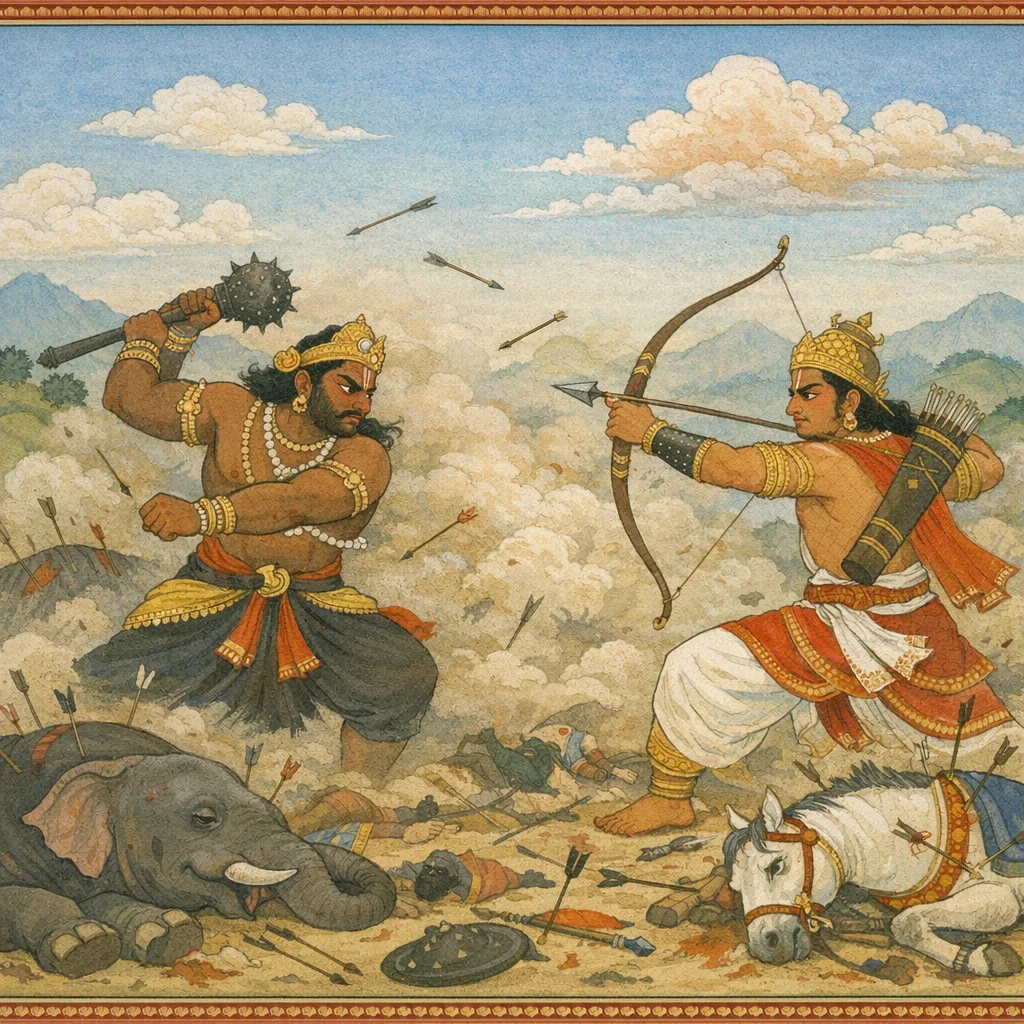
मनुष्याश्वगजानां च शरीरैर्गतजीवितै: । क्षणेन भूमि: संजज्ञे संवृता भरतर्षभ
Sañjaya said: In a single moment, O bull among the Bharatas, the earth appeared completely covered with the lifeless bodies of men, horses, and elephants. The verse underscores the swift, indiscriminate devastation of war, where living beings—regardless of rank or species—are reduced to mere bodies, inviting reflection on the moral cost of violence and the fragility of life.
Verse 132
(आक्रीडमिव रुद्रस्य दक्षयज्ञनिबर्हणे ।) भरतश्रेष्ठ! मनुष्य, घोड़े और हाथियोंके निष्प्राण शरीरोंसे वहाँकी भूमि क्षणभरमें ढक गयी और दक्षयज्ञके संहारकालमें रुद्रकी क्रीड़ाभूमिके समान प्रतीत होने लगी ।। इति श्रीमहाभारते द्रोणपर्वणि जयद्रथवधपर्वणि भीमकर्णयुद्धे द्वात्रिशदिधिकशततमो<्ध्याय:
Sanjaya said: “O best of the Bharatas, in a mere moment the ground there was covered over with lifeless bodies of men, horses, and elephants; it looked like Rudra’s very playground at the time he destroyed Daksha’s sacrifice.”
Frequently Asked Questions
The dilemma is coalition ethics versus personal rage: Aśvatthāman’s impulse to punish Karṇa’s insulting conduct is checked by the need to preserve unity and prioritize the external threat, illustrating restraint as a form of dharma in crisis.
The episode models disciplined leadership: valor without discernment can endanger the collective, while timely counsel and self-restraint protect strategic objectives and prevent avoidable loss of command authority.
No explicit phalaśruti appears here; the chapter’s significance is functional and ethical—demonstrating how narrative reportage (Saṃjaya to Dhṛtarāṣṭra) preserves decision-making under pressure as a didactic record within the epic.