Adhyaya 91
Bhagadattā’s Deployment Against Ghaṭotkaca; Elephant-Corps Escalation
Upa-parva: Bhagadatta–Ghaṭotkaca–Bhīmasena Saṅgrāma (Strategic Engagement Episode)
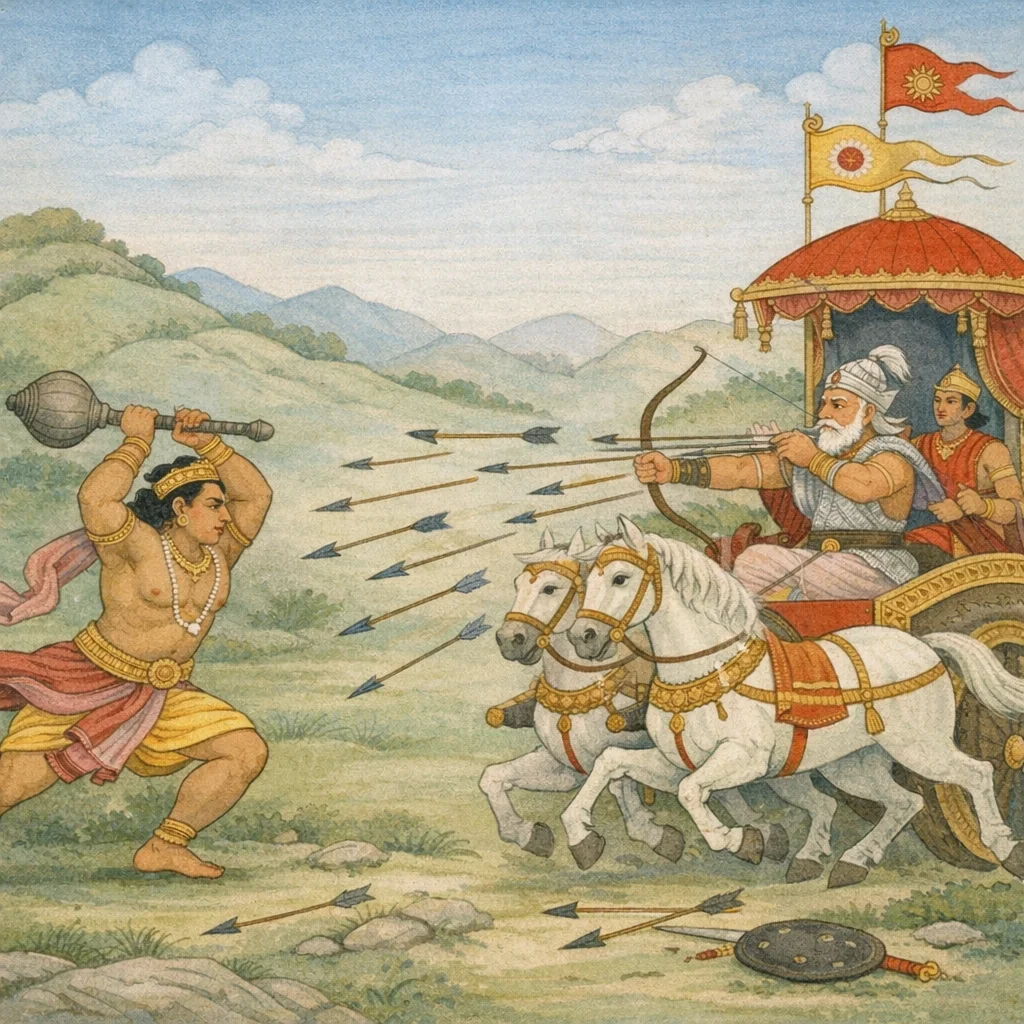
Saṃjaya reports that, amid a severe engagement, Duryodhana approaches Bhīṣma with deference and recounts Ghaṭotkaca’s success and his own reverse, requesting a decisive remedy. Bhīṣma counsels the king to prioritize self-preservation in battle and to prosecute the war in alignment with rāja-dharma, noting the availability of senior Kaurava champions and allies. He then directs Bhagādattā of Prāgjyotiṣa—renowned for divine weapons and experience against formidable opponents—to move swiftly and check the Haiḍimba (Ghaṭotkaca) as Indra once checked Tāraka. Bhagādattā advances with a martial cry; Pāṇḍava leaders converge, and a large-scale clash follows with intense missile exchanges and elephant-on-elephant engagements. Bhagādattā’s elephant Supratīka drives into formations, compressing Pāṇḍava forces; Ghaṭotkaca counters with terrifying displays and heavy weapons, which Bhagādattā neutralizes with precise archery. Bhagādattā’s subsequent volleys unhorse and wound key fighters, forcing Bhīma to fight on foot with a mace, heightening Kaurava anxiety. Arjuna, with Kṛṣṇa as charioteer, arrives and charges into the approaching Kaurava host; Bhagādattā continues pressing through the melee, extending the engagement toward Yudhiṣṭhira as the battlefield front broadens.
Chapter Arc: आठवें दिन के रण में धर्मपुत्र युधिष्ठिर की आज्ञा से समस्त पाण्डव-सेना गंगानन्दन भीष्म पर टूट पड़ती है—मानो एक ही लक्ष्य पर समूचा युद्ध सिमट आया हो। → रणश्लाघी भीष्म अपने तीक्ष्ण बाणों से सोमक, सृंजय और महेष्वास पाञ्चालों को गिराते जाते हैं; पाण्डव-पक्ष में भय और क्रोध साथ-साथ उठते हैं, और भीमसेन के सिवा कोई उनके सामने टिकता नहीं दिखता। → भीमसेन भीष्म के रथ पर झपटता है, उनके सारथि को मार गिराता है और रथ को अस्त-व्यस्त कर देता है; उसी उथल-पुथल में कौरव-वीरों से भीम का घोर संघर्ष होता है, जहाँ वह धृतराष्ट्र-पुत्रों का संहार करने की प्रतिज्ञा-सी निभाता दिखाई देता है। → कौरव-पक्ष में भीम के प्रचण्ड पराक्रम को देखकर चेतावनी और उपदेश का स्वर उठता है—राजा से कहा जाता है कि स्थिर होकर दृढ़ निश्चय करे, स्वर्ग को अंतिम आश्रय मानकर युद्ध में डटा रहे; पर रण का परिणाम तत्काल निर्णीत नहीं होता। → भीम के हाथों धृतराष्ट्र-पुत्रों के वध का क्रम आगे भी बढ़ने वाला है—अगले प्रहार में कौन-सा ‘अपराजित’ भी पराजित होगा, यह भय कौरव-शिविर पर छाया रहता है।
Shlokas
Verse 1
इस प्रकार श्रीमह्ाभारत भीष्मपर्वके अन्तर्गत भीष्मवधपर्वमें आठवें दिनके युद्धसे सम्बन्ध रखनेवाला सतासीवाँ अध्याय पूरा हुआ ॥/ ८७ ॥ अपन हू< बक। है २ >> अष्टाशीतितमो<् ध्याय: भीष्मका पराक्रम, भीमसेनके द्वारा धृतराष्ट्रके आठ पुत्रोंका वध तथा दुर्योधन और भीष्मकी युद्धविषयक बातचीत संजय उवाच भीष्म तु समरे क्रुद्धं प्रतपन््तं समन््ततः । न शेकुः पाण्डवा द्रष्ट॑ं तपनन्तमिव भास्करम्,संजय कहते हैं--राजन्! जैसे तपते हुए सूर्यकी ओर देखना कठिन होता है, उसी प्रकार जब भीष्म उस समरमें कुपित हो सब ओर अपना प्रताप प्रकट करने लगे, उस समय पाण्डवसैनिक उनकी ओर देख न सके
Sañjaya said: O King, when Bhīṣma, enraged in the battle, began to blaze with might on every side, the Pāṇḍavas could not bear to look upon him—just as one cannot gaze at the sun when it burns at its fiercest. The verse frames Bhīṣma’s martial presence as overwhelming, underscoring how war magnifies both prowess and peril, and how even the righteous side can be shaken by the sheer force of a formidable elder bound to his chosen duty.
Verse 2
ततः सर्वाणि सैन्यानि धर्मपुत्रस्य शासनात् | अभ्यद्रवन्त गाड़ेयं मर्दयन्तं शितै: शरै:,तदनन्तर धर्मपुत्र युधिष्ठिरकी आज्ञासे समस्त सेनाएँ गंगानन्दन भीष्मपर टूट पड़ीं, जो अपने तीखे बाणोंसे पाण्डव-सेनाका मर्दन कर रहे थे
Then, at the command of Dharmaputra Yudhiṣṭhira, all the armies surged forward against Bhīṣma, the son of the Gaṅgā. Even as he was cutting down the Pāṇḍava host with sharp arrows, they rushed to confront him—an image of duty-bound warriors acting under rightful leadership amid the harsh demands of war.
Verse 3
स तु भीष्मो रणश्लाघी सोमकान् सहसृञज्जयान् | पज्चालांश्व महेष्वासान् पातयामास सायकै:,युद्धकी स्पृहा रखनेवाले भीष्म अपने बाणोंके द्वारा सोमक, सृंजय और पांचाल महाधनुर्धरोंको रणभूमिमें गिराने लगे
Sañjaya said: Bhīṣma, exulting in battle, began to strike down with his arrows the Somakas, the Sahasṛñjayas, and the great bowmen of the Pāñcālas—casting them to the ground on the field. The verse underscores the grim momentum of war: prowess and martial pride translate into real human collapse, reminding the listener that heroism in battle is inseparable from the ethical weight of violence and its consequences.
Verse 4
ते वध्यमाना भीष्मेण पठ्चाला: सोमकै: सह । भीष्ममेवाभ्ययुस्तूर्ण त्यक्त्वा मृत्युकृतं भयम्,भीष्मके द्वारा घायल किये जाते हुए वे सोमक (सूृंजय) और पांचाल भी मृत्युका भय छोड़कर तुरंत भीष्मपर ही टूट पड़े
Sañjaya said: Though being struck down by Bhīṣma, the Pāñcālas—together with the Somakas—cast aside the fear born of death and, with swift resolve, rushed straight at Bhīṣma himself. The verse highlights a battlefield ethic of steadfastness: when a leader becomes the decisive force, warriors may choose to confront him directly, accepting mortal risk for the sake of their cause and comrades.
Verse 5
स तेषां रथिनां वीरो भीष्म: शान्तनवो युधि । चिच्छेद सहसा राजन् बाहूनथ शिरांसि च,राजन! वीर शान्तनुनन्दन भीष्म उस युद्धके मैदानमें सहसा उन रथियोंकी भुजाओं और मस्तकोंको काट-काटकर गिराने लगे
Sañjaya said: In that battle, the valiant Bhīṣma, son of Śāntanu, suddenly began to hew down the arms and even the heads of those chariot-warriors, O King—an image of the war’s ruthless momentum, where prowess and duty on the field eclipse personal ties and compassion.
Verse 6
विरथान् रथिनश्षक्रे पिता देवव्रतस्तव । पतितान्युत्तमाज़ानि हयेभ्यो हयसादिनाम्,आपके ताऊ देवव्रतने बहुत-से रथियोंको रथहीन कर दिया। घोड़ोंसे घुड़सवारोंके मस्तक कट-कटकर गिरने लगे
Sañjaya said: Your father Devavrata (Bhīṣma) made many chariot-warriors bereft of their chariots; and from their horses the heads of the mounted fighters fell, severed again and again. The scene underscores Bhīṣma’s overwhelming martial prowess and the grim, impersonal momentum of battle, where skill and duty on the field result in swift, irreversible loss of life.
Verse 7
निर्मनुष्यांश्न मातज्रान् शयानान् पर्वतोपमान् | अपश्याम महाराज भीष्मास्त्रेण प्रमोहितान्,महाराज! हमने देखा, भीष्मके अस्त्रसे मूर्च्छित हो बहुत-से पर्वताकार गजराज रणभूमिमें पड़े हैं और उनके पास कोई मनुष्य नहीं है
Sañjaya said: “O King, we saw the great elephants—mountain-like in size—lying on the battlefield, their riders gone, rendered senseless by Bhīṣma’s weapon.”
Verse 8
न तत्रासीत् पुमान् कश्नित् पाण्डवानां विशाम्पते । अन्यत्र रथिनां श्रेष्ठाद् भीमसेनान्महाबलात्,प्रजानाथ! उस समय वहाँ रथियोंमें श्रेष्ठ महाबली भीमसेनके सिवा पाण्डवपक्षका कोई भी वीर भीष्मके सामने नहीं ठहर सका
Sanjaya said: O lord of the people, O ruler of men, there was no warrior of the Pāṇḍavas who could stand firm before Bhīṣma at that time—except the mighty Bhīmasena, foremost among chariot-fighters. The scene underscores how, amid the moral strain of war, individual valor and steadfastness become the last refuge when an army’s resolve collapses before an elder’s overwhelming prowess.
Verse 9
स हि भीष्म समासाद्य ताडयामास संयुगे | ततो निष्ठानको घोरो भीष्मभीमसमागमे,वे ही युद्धमें भीष्मका सामना करते हुए उनपर अपने बाणोंका प्रहार कर रहे थे। भीष्म और भीमसेनमें युद्ध होते समय सम्पूर्ण सेनाओंमें भयंकर कोलाहल मच गया और पाण्डव हर्षमें भरकर जोर-जोरसे सिंहनाद करने लगे
Sañjaya said: Closing in upon Bhīṣma on the battlefield, he struck him again and again with his arrows. Then, as Bhīṣma and Bhīmasena met in fierce combat, a dreadful tumult arose throughout the armies; and the Pāṇḍavas, filled with exhilaration, roared aloud like lions—an outward sign of morale and resolve amid the harsh demands of war.
Verse 10
बभूव सर्वसैन्यानां घोररूपो भयानक: । तथैव पाण्डवा हृष्टा: सिंहनादमथानदन्,वे ही युद्धमें भीष्मका सामना करते हुए उनपर अपने बाणोंका प्रहार कर रहे थे। भीष्म और भीमसेनमें युद्ध होते समय सम्पूर्ण सेनाओंमें भयंकर कोलाहल मच गया और पाण्डव हर्षमें भरकर जोर-जोरसे सिंहनाद करने लगे
Sañjaya said: A dreadful, fearsome tumult arose among all the armies. At the same time, the Pāṇḍavas, filled with exhilaration, roared aloud like lions—signaling resolve and morale amid the terrifying press of battle.
Verse 11
ततो दुर्योधनो राजा सोदर्य: परिवारित: । भीष्म॑ जुगोप समरे वर्तमाने जनक्षये,जिस समय युद्धमें वह जनसंहार हो रहा था, उसी समय राजा दुर्योधन अपने भाइयोंसे घिरा हुआ वहाँ आ पहुँचा और भीष्मकी रक्षा करने लगा
Sañjaya said: Then King Duryodhana, surrounded by his own brothers, arrived there; and as the battle raged on with great slaughter of men, he set himself to protect Bhīṣma. In the midst of mass killing, the king’s loyalty to his commander and elder becomes visible—an act of duty and attachment intertwined within the moral chaos of war.
Verse 12
भीमस्तु सारथिं हत्वा भीष्मस्य रथिनां वर: । प्रद्रुताश्वे रथे तस्मिन् द्रवमाणे समनन््तत:ः,इसी समय रथियोंमें श्रेष्ठ भीमसेनने भीष्मके सारथिको मार डाला। फिर तो उनके घोड़े उस रथको लेकर रणभूमिमें चारों ओर दौड़ लगाने लगे
Sanjaya said: Bhima, foremost among chariot-warriors, slew Bhishma’s charioteer. With the driver fallen, the horses—now running wild—dragged that chariot as it sped about the battlefield in every direction. The episode underscores how, in war, striking a key support (the charioteer) can unmake even a great warrior’s control, raising hard questions about necessity, propriety, and the ethics of disabling an opponent’s means rather than meeting him directly.
Verse 13
(चचार युधि राजेन्द्र भीमो भीमपराक्रम: । सुनाभस्तव पुत्रो वै भीमसेनमुपाद्रवत् ।। जघान निशितैर्बाणैर्भीमं विव्याध सप्तभि: । भीमसेन: सुसंक्रुद्ध: शरेण नतपर्वणा ।।) सुनाभस्य शरेणाशु शिरकश्षिच्छेद भारत । क्षुरप्रेण सुतीक्ष्णेन स हतो न्यपतद् भुवि,राजेन्द्र! भयंकर पराक्रमी भीमसेन युद्धमें सब ओर विचरने लगे। उस समय आपके पुत्र सुनाभने भीमसेनपर धावा किया और उन्हें सात तीखे बाणोंसे बींध डाला। भारत! तब भीमसेनने भी अत्यन्त कुपित होकर झुकी हुई गाँठवाले क्षुरप्र नामक बाणसे शीघ्र ही सुनाभका सिर काट दिया। उस तीखे क्षुरप्रसे मारा जाकर वह पृथ्वीपर गिर पड़ा
Sañjaya said: O king, Bhīma of dreadful prowess ranged about the battlefield. Then your son Sunābha rushed at Bhīmasena and pierced him with seven sharp arrows. Enraged, Bhīmasena swiftly severed Sunābha’s head with a razor-edged, keenly whetted arrow with a bent joint. Struck down by that terrible shaft, Sunābha fell upon the earth. The passage underscores the grim reciprocity of war: aggression is met with immediate, proportionate—and often escalated—violence, revealing how wrath and martial duty can eclipse compassion on the field of dharma-yuddha.
Verse 14
हते तस्मिन् महाराज तव पुत्रे महारथे । नामृष्यन्त रणे शूरा: सोदरा: सप्त संयुगे,महाराज! आपके उस महारथी पुत्रके मारे जानेपर उसके सात रणवीर भाई, जो वहीं मौजूद थे, भीमसेनका यह अपराध सहन न कर सके
Sañjaya said: “O King, when that great chariot-warrior—your son—was slain, his seven full brothers, valiant heroes present on the battlefield, could not endure it. They could not tolerate Bhīmasena’s deed and burned with the urge to retaliate.”
Verse 15
आदित्यकेतुर्बह्नाशी कुण्डधारो महोदर: । अपराजित: पण्डितको विशालाक्ष: सुदुर्जय:,आदित्यकेतु, बह्नाशी, कुण्डधार, महोदर, अपराजित, पण्डितक और अत्यन्त दुर्जय वीर विशालाक्ष--ये सातों शत्रुमर्दन भाई विचित्र वेशभूषासे सुसज्जित हो विचित्र कवच और ध्वज धारण किये संग्राम-भूमिमें युद्धकी इच्छासे पाण्डुपुत्र भीमसेनपर टूट पड़े
Sanjaya said: Adityaketu, Bahnāśī, Kuṇḍadhāra, Mahodara, Aparājita, Paṇḍitaka, and the exceedingly hard-to-conquer hero Viśālākṣa—these seven enemy-crushing brothers, adorned in strange and striking attire, bearing unusual armor and banners, surged onto the battlefield with the desire to fight, rushing to fall upon Bhīmasena, the son of Pāṇḍu. The scene underscores the relentless momentum of war: valor and aggression are displayed as martial virtues, yet they also reveal how conflict draws many into peril through pride, loyalty, and the thirst for victory.
Verse 16
पाण्डवं चित्रसंनाहा विचित्रकवचधध्वजा: । अभ्यद्रवन्त संग्रामे योद्धुकामारिमर्दना:,आदित्यकेतु, बह्नाशी, कुण्डधार, महोदर, अपराजित, पण्डितक और अत्यन्त दुर्जय वीर विशालाक्ष--ये सातों शत्रुमर्दन भाई विचित्र वेशभूषासे सुसज्जित हो विचित्र कवच और ध्वज धारण किये संग्राम-भूमिमें युद्धकी इच्छासे पाण्डुपुत्र भीमसेनपर टूट पड़े
Sañjaya said: Adorned in striking battle-gear, bearing varied armor and banners, seven brothers—famed as enemy-crushers—rushed into the fight, eager for combat. Ādityaketu, Bahnāśī, Kuṇḍadhāra, Mahodara, Aparājita, Paṇḍitaka, and the exceedingly hard-to-defeat, mighty Viśālākṣa, splendidly dressed and equipped with distinctive mail and standards, surged across the battlefield with the intent to wage war against Bhīmasena, the son of Pāṇḍu. Ethically, the verse underscores the war’s relentless momentum: personal valor and martial display drive men forward, even as the larger dharmic stakes of the Kurukṣetra conflict loom over every charge.
Verse 17
महोदरस्तु समरे भीम॑ विव्याध पत्रिभि: | नवभिर्वज्ञसंकाशैर्नमुचिं वृत्रहा यथा,जैसे वृत्रविनाशक इन्द्रने नमुचि नामक दैत्यपर प्रहार किया था, उसी प्रकार महोदरने समरभूमिमें अपने वज़सरीखे नौ बाणोंसे भीमसेनको घायल कर दिया
Sañjaya said: In the thick of battle, Mahodara pierced Bhīma with nine arrows, gleaming like Indra’s thunderbolt—just as the slayer of Vṛtra once struck the demon Namuci. The simile heightens the ferocity of the encounter, portraying the battlefield as a testing ground of martial duty where prowess and endurance are relentlessly measured.
Verse 18
आदित्यकेतु: सप्तत्या बह्ॉलाशी चापि पञ्चभि: | नवत्या कुण्डधारश्न विशालाक्षश्न पञ्चभि:,महाराज! आदित्यकेतुने सत्तर, बह्नाशीने पाँच, कुण्डधारने नब्बे, विशालाक्षने पाँच और अपराजितने महारथी महाबली भीमसेनको पराजित करनेके लिये उन्हें बहुत-से बाणोंद्वारा पीड़ित किया
Verse 19
अपराजितो महाराज पराजिएष्णुर्महारथम् | शरैर्बहुभिरानर्च्छद् भीमसेन॑ महाबलम्,महाराज! आदित्यकेतुने सत्तर, बह्नाशीने पाँच, कुण्डधारने नब्बे, विशालाक्षने पाँच और अपराजितने महारथी महाबली भीमसेनको पराजित करनेके लिये उन्हें बहुत-से बाणोंद्वारा पीड़ित किया
Verse 20
रणे पण्डितकश्नैनं त्रिभिर्बाणै: समार्पयत् । स तन्न ममृषे भीम: शत्रुभिर्वधमाहवे,पण्डितकने उस युद्धमें तीन बाणोंसे भीमसेनको घायल कर दिया। तब भीम उस रणक्षेत्रमें शत्रुओंद्वारा किये हुए प्रहारको सहन न कर सके
Sañjaya said: In the thick of battle, Paṇḍitaka struck Bhīmasena with three arrows. Bhīma could not endure that assault dealt by his enemies on the battlefield, and his wrath rose in response to the injury and challenge.
Verse 21
धनु: प्रपीड्य वामेन करेणामित्रकर्शन: । शिरक्षिच्छेद समरे शरेणानतपर्वणा
Sañjaya said: Pressing the bow firmly with his left hand, the foe-subduer, in the thick of battle, severed his opponent’s head with an arrow whose joints were unbent—an act that displays the ruthless precision and irreversible consequences of war when martial duty is pursued without hesitation.
Verse 22
पराजितस्य भीमेन निपपात शिरो महीम्,भीमसेनसे पराजित हुए अपराजितका मस्तक धरतीपर जा गिरा। तत्पश्चात् भीमसेनने एक-दूसरे भल्ल्लके द्वारा सब लोगोंके देखते-देखते महारथी कुण्डधारको यमराजके लोकमें भेज दिया
Sañjaya said: When he was overcome by Bhīma, the vanquished warrior’s head fell upon the earth. Thereafter, before the eyes of all, Bhīmasena with another sharp arrow dispatched the great chariot-fighter Kuṇḍadhāraka to Yama’s realm. The verse underscores the stark finality of battlefield karma: prowess and resolve decide life and death in war, and public witnessing makes victory and downfall equally undeniable.
Verse 23
अथापरेण भल््लेन कुण्डधारं महारथम् | प्राहिणोन्मृत्युलोकाय सर्वलोकस्य पश्यत:,भीमसेनसे पराजित हुए अपराजितका मस्तक धरतीपर जा गिरा। तत्पश्चात् भीमसेनने एक-दूसरे भल्ल्लके द्वारा सब लोगोंके देखते-देखते महारथी कुण्डधारको यमराजके लोकमें भेज दिया
Sañjaya said: Then, with another sharp arrow, Bhīmasena struck down Kuṇḍadhāra, the great chariot-warrior, sending him to the realm of Death before the eyes of all. The scene underscores the Mahābhārata’s stark war-ethic: prowess and resolve decide life and death in battle, while public witnessing magnifies both glory and the tragic cost of violence.
Verse 24
ततः पुनरमेयात्मा प्रसंधाय शिलीमुखम् | प्रेषयामास समरे पण्डितं प्रति भारत,भरतनन्दन! तब अमेय आत्मबलसे सम्पन्न भीमने समरमें पुन: एक बाणका संधान करके उसे पण्डितककी ओर चलाया
Sañjaya said: Then again, that warrior of immeasurable spirit, having carefully set a sharp arrow, sent it forth in the midst of battle toward Paṇḍita, O Bhārata. The verse underscores the deliberate, trained use of force in war—action taken with composure and precision rather than impulsive rage.
Verse 25
स शर: पण्डितं हत्वा विवेश धरणीतलम् | यथा नरं निहत्याशु भुजग: कालचोदित:,जैसे कालप्रेरित सर्प किसी मनुष्यको शीघ्र ही डँँसकर लापता हो जाता है, उसी प्रकार वह बाण पण्डितककी हत्या करके धरतीमें समा गया
Sañjaya said: Having slain Paṇḍita, that arrow sank into the surface of the earth. Just as a serpent, driven by Time (fate), swiftly strikes a man and then disappears, so too the arrow, after killing Paṇḍita, vanished into the ground—evoking the grim inevitability that governs deaths in war.
Verse 26
विशालाक्षशिरश्छित्त्वा पातयामास भूतले । त्रिभि: शरैरदीनात्मा स्मरन् क्लेशं पुरातनम्,उसके बाद उदार हृदयवाले भीमने अपने पूर्व-क्लेशोंका स्मरण करके तीन बाणोंद्वारा विशालाक्षके मस्तकको काटकर धरतीपर गिरा दिया
Sañjaya said: Recalling the hardships of old, the undaunted warrior struck down Viśālākṣa—severing his head with three arrows—and cast it upon the earth. The act is framed as a grim consequence of past suffering, where memory of injury fuels relentless resolve amid the duties and cruelties of war.
Verse 27
महोदरं महेष्वासं नाराचेन स्तनान्तरे । विव्याध समरे राजन् स हतो न््यपतद् भुवि,राजन! तत्पश्चात् उन्होंने महाधनुर्धर महोदरकी छातीमें एक नाराचसे प्रहार किया। उससे मारा जाकर वह युद्धमें धरतीपर गिर पड़ा
Sañjaya said: O King, in the thick of battle he pierced the great archer Mahodara in the chest with a nārāca arrow. Struck down, Mahodara fell to the earth—an episode that underscores the grim, duty-bound finality of warfare where prowess and life can end in an instant.
Verse 28
आदित्यकेतो: केतुं च छित्त्वा बाणेन संयुगे । भल्लेन भृशतीक्ष्णेन शिरश्रिच्छेद भारत,भारत! तदनन्तर भीमने रणक्षेत्रमें एक बाणसे आदित्यकेतुकी ध्वजा काटकर अत्यन्त तीखे भल्लके द्वारा उसका मस्तक भी काट दिया
Sañjaya said: In the thick of battle, Bhīma first severed Ādityaketu’s banner with a single arrow; then, with a razor-sharp bhalla, he cut off his head, O Bhārata. The verse underscores the grim decisiveness of kṣatriya warfare, where prowess and resolve are displayed through swift, lethal acts amid the larger demands of duty on the battlefield.
Verse 29
बह्बाशिनं ततो भीम: शरेणानतपर्वणा । प्रेषयामास संक़रुद्धो यमस्य सदन प्रति,इसके बाद क्रोधमें भरे हुए भीमसेनने झुकी हुई गाँठवाले बाणसे मारकर बह्लाशीको यमलोक भेज दिया
Sañjaya said: Then Bhīma, inflamed with wrath, struck Bahvāśin with an arrow whose joints were bent, and dispatched him toward the abode of Yama. In the brutal ethic of battlefield duty, the act is presented not as personal cruelty but as the swift execution of a warrior’s role amid the inexorable law of death that governs war.
Verse 30
प्रदुद्रुवुस्ततस्ते<न्ये पुत्रास्तव विशाम्पते । मन्यमाना हि तत् सत्यं सभायां तस्य भाषितम्,प्रजानाथ! तब आपके दूसरे पुत्र भीमसेनके द्वारा सभामें की हुई उस प्रतिज्ञाको सत्य मानकर वहाँसे भाग खड़े हुए
Sañjaya said: Then your other sons, O lord of the people, fled from there—taking as true the declaration that had been spoken in the assembly. The verse underscores how a public vow or threat, once uttered before witnesses, acquires moral and psychological force, compelling even the powerful to act out of fear and consequence.
Verse 31
ततो दुर्योधनो राजा भ्रातृव्यसनकर्शित: । अबवीत् तावकान् योधान् भीमो<यं युधि वध्यताम्,भाइयोंके मरनेसे राजा दुर्योधनको बड़ा कष्ट हुआ। अतः उसने आपके समस्त सैनिकोंको आज्ञा दी कि इस भीमसेनको युद्धमें मार डालो
Then King Duryodhana, tormented by the calamity that had befallen his brothers, addressed your warriors: “This Bhīma—let him be slain in battle.” The verse highlights how grief and attachment can harden into vengeful resolve, turning personal loss into a command for intensified violence on the battlefield.
Verse 32
एवमेते महेष्वासा: पुत्रास्तव विशाम्पते । भ्रातृन् संदृश्य निहतानू प्रास्मरंस्ते हि तद् वच:,प्रजानाथ! इस प्रकार ये आपके महाथनुर्धर पुत्र अपने भाइयोंको मारा गया देख उन बातोंकी याद करने लगे, जिन्हें महाज्ञानी विदुरने कहा था। वे सोचने लगे--दिव्यदर्शी विदुरने हमारे कुशल एवं हितके लिये जो बात कही थी, वह आज सिरपर आ गयी
Sañjaya said: “Thus, O lord of the people, your sons—mighty archers—on seeing their brothers slain, began to recall those very words. For the counsel spoken by the wise Vidura for their welfare and true good now seemed to have come upon them as an unavoidable consequence.”
Verse 33
यदुक्तवान् महाप्राज्ञ: क्षत्ता हितमनामयम् | तदिदं समनुप्राप्तं वचन दिव्यदर्शिन:,प्रजानाथ! इस प्रकार ये आपके महाथनुर्धर पुत्र अपने भाइयोंको मारा गया देख उन बातोंकी याद करने लगे, जिन्हें महाज्ञानी विदुरने कहा था। वे सोचने लगे--दिव्यदर्शी विदुरने हमारे कुशल एवं हितके लिये जो बात कही थी, वह आज सिरपर आ गयी
Sanjaya said: “The wise chamberlain Vidura once spoke words meant for our welfare and free from harm. Now, O lord of the people, that very utterance of the seer has come to pass.” Seeing their brothers slain, the mighty bowmen recall Vidura’s counsel and recognize that neglected good advice has ripened into unavoidable consequence.
Verse 34
लोभमोहसमादविष्ट: पुत्रप्रीत्या जनाधिप । न बुध्यसे पुरा यत् तत् तथ्यमुक्तं वचो महत्,जनेश्वर! आपने अपने पुत्रोंके प्रति प्रेमके कारण लोभ और मोहके वशीभूत हो, विदुरने पहले जो सत्य एवं हितकी महत्त्वपूर्ण बात बतायी थी, उसपर ध्यान नहीं दिया
Sanjaya said: O ruler of men, overcome by greed and delusion through your affection for your sons, you did not heed earlier that great and truthful counsel which was spoken for your welfare. Thus blinded by attachment, you failed to recognize what was right before the calamity unfolded.
Verse 35
तथैव च वधार्थाय पुत्राणां पाण्डवो बली । नूनं जातो महाबाहुर्यथा हन्ति सम कौरवान्,उनके कथनानुसार ही बलवान पाण्डुपुत्र महाबाहु भीम आपके पुत्रोंके वधका कारण बनते जा रहे हैं और उसी प्रकार वे कौरवोंका सर्वनाश कर रहे हैं
Sañjaya said: “So too, for the very purpose of slaying your sons, the mighty Pāṇḍava has arisen. Indeed, that great-armed hero has been born such that he strikes down the Kauravas alike—bringing them toward complete ruin.”
Verse 36
ततो दुर्योधनो राजा भीष्ममासाद्य संयुगे । दुःखेन महता5<विष्टो विललाप सुदु:ःखित:,उस समय राजा दुर्योधन युद्धभूमिमें भीष्मके पास जाकर महान् दुःखसे व्याप्त एवं अत्यन्त शोकमग्न होकर विलाप करने लगा--
Then King Duryodhana, approaching Bhīṣma on the battlefield, overwhelmed by intense grief and deeply distressed, began to lament. The scene frames a ruler’s anguish amid war—where pride and policy collide with the moral weight of loss and responsibility.
Verse 37
निहता भ्रातर: शूरा भीमसेनेन मे युधि | यतमानास्तथान्ये5पि हन्यन्ते सर्वसैनिका:,“पितामह! भीमसेनने युद्धमें मेरे शूरवीर बन्धुओंको मार डाला और दूसरे भी समस्त सैनिक विजयके लिये पूर्ण प्रयत्न करते हुए भी असफल हो उनके हाथसे मारे जा रहे हैं
Sañjaya said: “O Grandfather, my heroic brothers have been slain in battle by Bhīmasena. And the rest of the army too—though striving with all their might for victory—are being cut down by him.” The report underscores the moral weight of war: valor and effort do not guarantee success when adharma-driven ambition meets a force perceived as righteous and resolute.
Verse 38
भवांश्व॒ मध्यस्थतया नित्यमस्मानुपेक्षते । सो<हं कुपथमारूढ: पश्य दैवमिदं मम,“आप मध्यस्थ बने रहनेके कारण सदा हम-लोगोंकी उपेक्षा करते हैं। मैं बड़े बुरे मार्गपर चढ़ आया। मेरे इस दुर्भाग्यको देखिये"
Sañjaya said: “You, remaining ever in a stance of neutrality, continually disregard us. And so I have mounted a wicked path—behold this fate of mine.”
Verse 39
एतच्छुत्वा वचः क्रूरं पिता देवव्रतस्तव । दुर्योधनमिदं वाक्यमब्रवीत् साश्रुलोचन:,यह क्रूरतापूर्ण वचन सुनकर आपके ताऊ भीष्म अपने नेत्रोंसे आँसू बहाते हुए वहाँ दुर्योधनसे इस प्रकार बोले--
Sañjaya said: Hearing those harsh and cruel words, your grandsire Devavrata (Bhīṣma), his eyes filled with tears, addressed Duryodhana with these words. The scene underscores the moral weight of speech in a time of war: even the foremost elder, bound by duty, is inwardly pained by the hardening of hearts that drives kin toward ruin.
Verse 40
उक्तमेतन्मया पूर्व द्रोणेन विदुरेण च । गान्धार्या च यशस्विन्या तत् त्वं तात न बुद्धवान्,“तात! मैंने, द्रोणाचार्यने, विदुरने तथा यशस्विनी गान्धारी देवीने भी पहले ही यह सब बात कह दी थी, परंतु तुमने इसपर ध्यान नहीं दिया
Sanjaya said: “All this was told earlier—by me, by Drona, by Vidura, and by the illustrious Gandhari as well. Yet you, dear son, did not take it to heart or act with understanding.”
Verse 41
समयश्न मया पूर्व कृतो वै शत्रुकर्शन । नाहं युधि नियोक्तव्यो नाप्याचार्य: कथंचन,'शत्रुसूदन! मैंने पहले ही यह निश्चय प्रकट कर दिया था कि तुम्हें मुझे या द्रोणाचार्यको युद्धमें किसी प्रकार भी नहीं लगाना चाहिये (क्योंकि हमलोगोंका कौरवों तथा पाण्डवोंके प्रति समान स्नेह है)
Sañjaya said: “O subduer of foes, I had already made this resolve earlier: I should not be appointed to fight in this war, nor should the Teacher (Droṇa) be employed in any way. The ethical ground is clear—those who bear equal affection toward both sides ought not be compelled into partisan violence.”
Verse 42
य॑ य॑ हि धार्तराष्ट्राणां भीमो द्रक्ष्यति संयुगे । हनिष्यति रणे नित्यं सत्यमेतद् ब्रवीमि ते,“मैं तुमसे यह सत्य कहता हूँ कि भीमसेन धृतराष्ट्रके पुत्रोमेंसे जिस-जिसको युद्धमें (अपने सामने आया हुआ) देख लेंगे, उसे प्रतिदिनके संग्राममें अवश्य मार डालेंगे
Verse 43
स त्वं राजन् स्थिरो भूत्वा रणे कृत्वा दृढां मतिम् । योधयस्व रणे पार्थान् स्वर्ग कृत्वा परायणम्
Sanjaya said: “Therefore, O King, stand firm. In this battle, make your resolve unshakable and fight the sons of Pṛthā. Let heaven be your chosen goal and final refuge—act with steady purpose, without wavering.”
Verse 44
“अतः राजन! तुम स्थिर होकर युद्धके विषयमें अपना दृढ़ निश्चय बना लो और स्वर्गको ही अन्तिम आश्रय मानकर रणभूमिमें पाण्डवोंके साथ युद्ध करो ।। न शक्या: पाण्डवा जेतु सेन्द्रैरपि सुरासुरै: । तस्माद् युद्धे स्थिरां कृत्वा मतिं युद्धयस्व भारत,'भारत! इन्द्रसहित सम्पूर्ण देवता और असुर मिलकर भी पाण्डवोंको जीत नहीं सकते। अतः युद्धके लिये पहले अपनी बुद्धिको स्थिर कर लो। उसके बाद युद्ध करो”
Sanjaya says: “Therefore, O King, steady yourself and form an unshakable resolve regarding the war. Taking heaven as your final refuge, fight the Pāṇḍavas on the battlefield. The Pāṇḍavas cannot be conquered—even if the gods and asuras together, with Indra at their head, were to oppose them. Hence, first make your mind firm for battle, and then engage in war, O descendant of Bharata.”
Verse 88
इति श्रीमहा भारते भीष्मपर्वणि भीष्मवधपर्वणि सुनाभादिधृतराष्ट्रपुत्रवधे अष्टाशीतितमो<ध्याय:
Thus, in the revered Mahābhārata, within the Bhīṣma Parva—specifically in the section concerning the slaying of Bhīṣma—ends the eighty-eighth chapter, describing the killing of Sunābha and other sons of Dhṛtarāṣṭra. This colophon marks the close of a narrative unit in which the war’s moral gravity is underscored through the fall of royal heirs and the inexorable movement of fate on the battlefield.
Verse 213
अपराजितस्य सुनसं तव पुत्रस्य संयुगे । उन शत्रुसूदन वीरने बायें हाथसे धनुषको अच्छी तरह दबाकर झुकी हुई गाँठवाले बाणसे समरभूमिमें आपके पुत्र अपराजितका सुन्दर नासिकासे युक्त मस्तक काट डाला
Sanjaya said: In the thick of battle, the heroic slayer of foes pressed his bow firmly with his left hand and, with a barbed arrow, severed the handsome, well-nosed head of your son Aparājita on the field of war. The scene underscores the ruthless finality of kṣatriya combat, where valor and skill are displayed even as life is cut down in an instant.
Frequently Asked Questions
The tension lies between a ruler’s impulse for immediate retaliation and the disciplined requirement of rāja-dharma: Bhīṣma frames the king’s body and continuity of rule as strategic goods, urging action governed by legitimacy and prudence rather than by wounded honor alone.
Leadership should convert battlefield emotion into policy: preserve command continuity, rely on coordinated senior capability, and pursue objectives through role-appropriate conduct—so that tactical choices remain accountable to governance ethics.
No explicit phalaśruti is presented in the supplied passage; the chapter functions primarily as operational narration and ethical counsel embedded in dialogue, contributing interpretive guidance through Bhīṣma’s advisory statements rather than through a formal benedictory colophon.