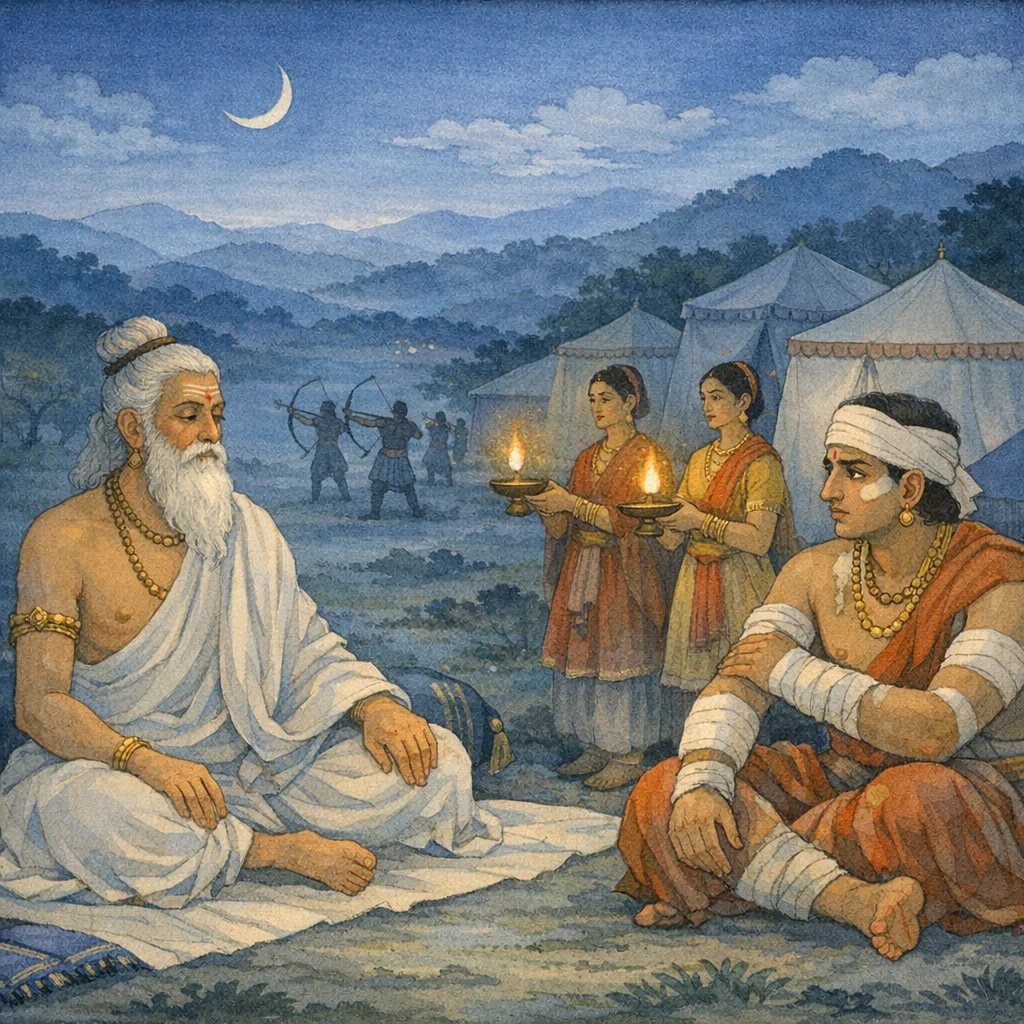
Adhyaya 83
महाव्यूहप्रवर्तनम् / Deployment of the Great Battle Arrays
Upa-parva: Bhīṣmābhiṣeka–Sainyaniryāṇa (War-Resumption and Vyūha Deployment Unit)
Saṃjaya reports that after the night passes and the kings rest, both Kauravas and Pāṇḍavas march again for renewed engagement. A vast, sea-like roar arises as the armies move out. Key Kaurava leaders are presented in sequence—Duryodhana, Bhīṣma, Droṇa (Bhāradvāja), Bhagadatta, Bṛhadbala, the Trigarta leader with Kāmbojas and Yavanas, Aśvatthāman, and Kṛpa—conveying a structured command procession. Bhīṣma forms a formidable ‘ocean’ array, visually reinforced by banners, white umbrellas, and costly weapons. Observing this, Yudhiṣṭhira instructs Dhṛṣṭadyumna (Pārṣata), as army-commander, to create a prompt counter-array; Dhṛṣṭadyumna constructs the Śṛṅgāṭaka formation designed to break opposing arrays. Assignments within the Pāṇḍava formation are specified: Bhīma and Sātyaki on the ‘horns,’ Arjuna (white horses, monkey-banner) at the ‘navel,’ with Yudhiṣṭhira and the Mādrī sons central, followed by Abhimanyu, Virāṭa, the Draupadeyas, and Ghaṭotkaca. The chapter then transitions into direct confrontation: martial instruments resound, fighters appraise one another, and the combat begins with dense missile exchanges and descriptions of weapons, chariots, elephants, and infantry clashing, culminating in Bhīṣma’s aggressive advance and the full intermingling of forces.
Chapter Arc: छठे दिन के युद्ध के बाद दोनों सेनाएँ यथायोग्य विश्राम कर शिविरों की ओर लौटती हैं—पर विश्राम के भीतर भी अगले प्रहार की तैयारी की टंकार छिपी है। → दुर्योधन रक्त से लथपथ और चिंता से घिरा पितामह भीष्म के पास जाकर युद्ध की दशा पूछता/कहता है; भीष्म भीमसेन की उग्रता और पाण्डव-बल की तीव्रता का संकेत देते हुए, विजय-प्राप्ति हेतु अपनी प्रतिज्ञा और प्रयत्न का आश्वासन देते हैं। → भीष्म का दुर्योधन से तीखा, यथार्थवादी संवाद—भीम के ‘मृत्युदण्ड-प्रकाश’ बाणों और उसकी सेना-भेदन क्षमता का वर्णन करते हुए भीष्म का यह कहना कि वे समस्त शक्ति से व्यूह में प्रवेश कर दुर्योधन के लिए विजय-सुख लाने का प्रयास करेंगे। → रात्रि-विश्राम के बाद दोनों पक्ष पुनः युद्धचिकीर्षा से संनद्ध दिखते हैं; सेनाएँ विविध शस्त्रों, गजराजों और धनुष-टंकार के समुद्र-मंथन-सदृश घोर नाद के साथ अगले दिन के लिए सज जाती हैं। → अगले दिन भीष्म किस प्रकार का व्यूह रचकर भीम-पाण्डवों को रोकेंगे—और दुर्योधन की आशंकाएँ क्या सत्य होंगी?
Shlokas
Verse 1
इस प्रकार श्रीमह्याभारत भीष्मपर्वके अन्तर्गत भीष्मवधपर्वमें छठे दिनके युद्धर्में सेनाके शिविरके लिये लौटनेसे सम्बन्ध रखनेवाला उन्यासीवाँ अध्याय पूरा हुआ ॥/ ७९ ॥। [दाक्षिणात्य अधिक पाठके २ श्लोक मिलाकर कुल ६६ “लोक हैं।] ऑपन-माज छा अऑफि-आकऋाल-ण अशीतितमोब<्ध्याय: भीषद्धारा दुर्योधनको आश्वासन तथा सातवें दिनके युद्धके लिये कौरव-सेनाका प्रस्थान संजय उवाच अथ शूरा महाराज परस्परकृतागस: । जग्मु: स्वशिबिराण्येव रुधिरेण समुक्षिता:,संजय कहते हैं--महाराज! आपसमें एक-दूसरेको चोट पहुँचानेवाले वे सभी शूरवीर खूनसे लथपथ हो अपने शिविरोंको ही चले गये
Sañjaya said: Then, O King, those warriors—who had inflicted wounds upon one another—went back to their own camps, their bodies drenched in blood. The day’s fighting closes not with triumph but with the sobering return to shelter, bearing the visible cost of mutual harm.
Verse 2
विश्रम्य च यथान्यायं पूजयित्वा परस्परम् | संनद्धा: समदृश्यन्त भूयो युद्धचिकीर्षया,यथायोग्य विश्राम करके एक-दूसरेकी प्रशंसा करते हुए वे लोग पुनः युद्ध करनेकी इच्छासे तैयार दिखायी देने लगे
Sañjaya said: Having rested as was proper and having honored one another in due form, they appeared once again fully armed—ready, with renewed resolve, to engage in battle. The verse underscores the warrior code: even amid hostility, decorum, mutual respect, and orderly conduct are observed before returning to violence sanctioned by the rules of war.
Verse 3
ततस्तव सुतो राजंश्चिन्तयाभिपरिप्लुत: । विस््रवच्छोणिताक्ताडु: पप्रच्छेदे पितामहम्,राजन! तदनन्तर आपके पुत्र दुर्योधनने, जिसका शरीर बहते हुए रक्तसे भीगा हुआ था, चिन्तामग्न होकर पितामह भीष्मके पास जाकर इस प्रकार पूछा--
Then, O King, your son—overwhelmed by anxious thought, his body smeared with blood that was still flowing—approached the grandsire Bhīṣma and questioned him. The scene underscores the moral pressure of war: even the proud are driven to seek counsel when the consequences of adharma and battlefield reality close in.
Verse 4
सैन्यानि रौद्राणि भयानकानि व्यूढानि सम्यग् बहुलध्वजानि । विदार्य हत्वा च निपीड्य शूरा- स््ते पाण्डवानां त्वरिता महारथा:,“दादाजी! हमारी सेनाएँ अत्यन्त भयंकर तथा रौद्ररूप धारण करनेवाली हैं। उनकी व्यूह-रचना भी अच्छे ढंगसे की जाती है। इन सेनाओंमें ध्वजोंकी संख्या बहुत अधिक है, तथापि शूरवीर पाण्डव महारथी उनमें प्रवेश करके तुरंत हमारे सैनिकोंको विदीर्ण करते, मारते और पीड़ा देकर चले जाते हैं
Sañjaya said: “Our armies are fierce and terrifying, drawn up in proper battle-formations and thick with countless banners. Yet the heroic Pāṇḍava great chariot-warriors swiftly break into them, tear through our ranks, slay, and crush the troops—then move on at once.”
Verse 5
सम्मोहा सर्वान् युधि कीर्तिमन्तो व्यूहं चत॑ मकरं वज़कल्पम् | प्रविश्य भीमेन रणे हतो5स्मि घोरै: शरैर्मुत्युदण्डप्रकाशै:,वे युद्धमें सबको मोहित करके अपनी कीर्तिका विस्तार करते हैं। देखिये न, भीमसेनने वज्रके समान दुर्भेद्य मकर-व्यूहमें प्रवेश करके मृत्युदण्डके समान भयंकर बाणोंद्वारा मुझे युद्धस्थलमें क्षत-विक्षत कर दिया है
Sañjaya said: “After bewildering everyone on the battlefield, those famed warriors spread their renown. Look—Bhīma has forced his way into that makara-shaped battle-formation, hard to break like a thunderbolt, and there in the fight I have been struck down, torn by dreadful arrows that gleam like the rod of Death. The scene shows how, amid the moral chaos of war, fame and tactical brilliance can coexist with terrifying destruction.”
Verse 6
क्रुद्धं तमुद्वीक्ष्य भयेन राजन् सम्मूर्च्छितो न लभे शान्तिमद्य । इच्छे प्रसादात् तव सत्यसंध प्राप्तुं जयं पाण्डवेयांश्व हन्तुम्,“राजन! भीमसेनको कुपित देखकर मैं भयसे व्याकुल हो उठता हूँ। आज मुझे शान्ति नहीं मिल रही है। सत्यप्रतिज्ञ पितामह! मैं आपकी कृपासे पाण्डवोंको मारना और उनपर विजय पाना चाहता हूँ
Sanjaya said: “O King, seeing him enraged, I am overwhelmed by fear and fall into a faint; today I find no peace. O grandsire of unfailing vow, by your favor I long to win victory and to slay the sons of Pāṇḍu.”
Verse 7
तेनैवमुक्त: प्रहसन् महात्मा दुर्योधनं मन्युगतं विदित्वा । त॑ं प्रत्युवाचाविमना मनस्वी गड्डासुतः शस्त्रभूृतां वरिष्ठ:,दुर्योधनके ऐसा कहनेपर और उसे क्रोधमें भरा हुआ जानकर शश्त्रधारियोंमें श्रेष्ठ मनस्वी महात्मा गंगानन्दन भीष्मने जोर-जोरसे हँसते हुए प्रसन्न मनसे उसे इस प्रकार उत्तर दिया--
Thus addressed, the great-souled Bhīṣma—perceiving Duryodhana to be seized by anger—laughed aloud and, with an untroubled and resolute mind, replied to him. The son of the Gaṅgā, foremost among weapon-bearers, answered in a spirit of calm mastery, implicitly contrasting disciplined judgment with impulsive wrath on the eve of war.
Verse 8
परेण यत्नेन विगाहा सेनां सर्वात्मनाहं तव राजपुत्र । इच्छामि दातुं विजयं सुखं च न चात्मानं छादये<हं त्वदर्थे,“राजकुमार! मैं अपनी पूरी शक्ति लगाकर महान प्रयत्नके साथ पाण्डवोंकी सेनामें प्रवेश करके तुम्हें विजय और सुख देना चाहता हूँ। तुम्हारे लिये अपने-आपको छिपाकर नहीं रखता हूँ
Sañjaya said: “O prince, with utmost effort I will plunge into the army with my whole being. I desire to secure for you both victory and well-being; for your sake I do not hold myself back or conceal my own person.”
Verse 9
एते तु रौद्रा बहवो महारथा यशस्विन: शूरतमा:ः कृतास्त्रा: । ये पाण्डवानां समरे सहाया जितक्लमा रोषविषं वमन्ति,“जो समरभूमिमें पाण्डवोंके सहायक हुए हैं, उनमें बहुत-से ये महारथी वीर अत्यन्त भयंकर, परम शौर्यसम्पन्न, शस्त्रविद्याके विद्वान तथा यशस्वी हैं। इन्होंने थकावटको जीत लिया है और ये हमलोगोंपर रोषरूपी विष उगल रहे हैं
Sañjaya said: “These, indeed, are many fierce great chariot-warriors—renowned, supremely valorous, and fully trained in the use of weapons. Standing as allies of the Pāṇḍavas in battle, they have conquered fatigue and now spew forth, as it were, the poison of their wrath against us.”
Verse 10
ते नैव शक््या: सहसा विजेतुं वीर्योद्धता: कृतवैरास्त्वया च । अहं सेनां प्रतियोत्स्यामि राजन् सर्वात्मना जीवितं त्यज्य वीर,“ये बल-पराक्रममें प्रचण्ड और तुम्हारे साथ वैर बाँधे हुए हैं। इन्हें सहसा पराजित नहीं किया जा सकता है। राजन! वीरवर! मैं सम्पूर्ण शरीरसे अपने प्राणोंकी परवा छोड़कर पाण्डवोंकी सेनाके साथ युद्ध करूँगा
Sañjaya said: “Those warriors, swollen with valor and bound to enmity with you, cannot be conquered all at once. O King, O hero—casting aside all concern for my own life, I will oppose the army in battle with my whole being.”
Verse 11
रणे तवार्थाय महानुभाव न जीवितं रक्ष्यतमं ममाद्य | सर्वास्तवार्थाय सदेवदैत्यान् घोरान् दहेयं किमु शत्रुसेनाम्
Sañjaya said: “O great-souled one, for your sake in this battle, my life is not something I would now seek to preserve. For your sake I would burn up even the dreadful hosts of Daityas together with the gods—how much more, then, this army of enemies.”
Verse 12
“महानुभाव! तुम्हारे कार्यकी सिद्धिके लिये अब युद्धमें मुझे अपने जीवनकी रक्षा भी अत्यन्त आवश्यक नहीं जान पड़ती है। मैं तुम्हारे मनोरथकी सिद्धिके लिये देवताओंसहित समस्त भयंकर दैत्योंको भी दग्ध कर सकता हूँ; फिर शत्रुओंकी सेनाकी तो बात ही क्या है? ।। तान् पाण्डवान् योधयिष्यामि राजन् प्रियं च ते सर्वमहं करिष्ये । श्रुत्वैव चैतद् वचनं तदानीं दुर्योधन: प्रीतमना बभूव,“राजन! मैं उन पाण्डवोंसे भी युद्ध करूँगा और तुम्हारा सम्पूर्ण प्रिय कार्य सिद्ध करूँगा।' उस समय भीष्मजीकी यह बात सुनते ही दुर्योधनका मन प्रसन्न हो गया
Sanjaya said: “O noble one! For the accomplishment of your purpose in this war, I no longer regard even the protection of my own life as of great importance. For the fulfillment of your desire, I could burn up even the terrifying Daityas together with the gods—what then to speak of the enemy’s army? O King, I shall fight those Pandavas, and I will do everything that is dear to you.” Hearing these words at that moment, Duryodhana’s heart became pleased.
Verse 13
सर्वाणि सैन्यानि ततः प्रह्ृष्टो निर्गच्छतेत्याह नृपांश्व सर्वान् तदाज्ञया तानि विनिर्ययुर्द्रतं गजाश्व॒पादातरथायुतानि,तदनन्तर दुर्योधनने हर्षमें भरकर सम्पूर्ण राजाओं तथा सारी सेनाओंसे कहा--'युद्धके लिये निकलो।' राजा दुर्योधनकी आज्ञा पाकर सहस्रों हाथी, घोड़े, पैदल तथा रथोंसे भरी हुई वे सारी सेनाएँ तुरंत रणके लिये प्रस्थित हुईं
Sañjaya said: Then, exultant, he addressed all the kings, saying, “Let all the armies march out.” At Duryodhana’s command, those forces—massed with elephants, horses, infantry, and chariots—swiftly set forth for battle. The verse underscores how a ruler’s order can mobilize vast power at once, heightening the moral weight of leadership when war is chosen.
Verse 14
प्रहर्षयुक्तानि तु तानि राजन् महान्ति नानाविधशस्त्रवन्ति । स्थितानि नागाश्चूपदातिमन्ति विरेजुराजी तव राजन् बलानि,महाराज! आपकी वे विशाल सेनाएँ नाना प्रकारके अस्त्र-शस्त्रोंसे सम्पन्न हो अत्यन्त हर्ष एवं उत्साहमें भरी हुई थीं। राजन! घोड़े, हाथी और पैदलोंसे युक्त हो रणभूमिमें खड़ी हुई उन सेनाओंकी बड़ी शोभा होती थी
Sañjaya said: O King, those vast divisions of your army—equipped with weapons of many kinds—stood filled with exhilaration and martial ardor. With elephants and supporting troops drawn up in formation, your forces shone splendidly on the battlefield, their ordered readiness reflecting the intoxicating confidence that precedes great violence.
Verse 15
शस्त्रास्त्रविद्धिर्नरवीरयो थै- रथिछिता: सैन्यगणास्त्वदीया: । रथौघपादातगजाश्चसंघै: प्रयाद्धिराजी विधिवत् प्रणुन्ने:
Sañjaya said: Your troops—heroes struck and pierced by weapons and missiles, and many charioteers cut down—were driven back in proper battle order. In dense groups of chariots, infantry, and elephants, they withdrew from the field, compelled by the force of the assault.
Verse 16
समुद्धतं वै तरुणार्कवर्ण रजो बभौच्छादयन् सूर्यरश्मीन् । रेजु: पताका रथदन्तिसंस्था वातेरिता भ्राम्यमाणा: समन्तात्
Sañjaya said: “Dust, churned up and glowing like the hue of the young sun, rose high and spread so as to veil the sun’s rays. All around, banners fixed upon chariots and elephants shone and whirled about, driven by the wind.”
Verse 17
आपकी सेनाओंके सेनापति अस्त्र-शस्त्रोंके ज्ञाता एवं नरवीर योद्धा थे। उनसे विधिपूर्वक अनुशासित हो रथसमूह, पैदल, हाथी और घोड़ोंके समुदाय जब युद्ध-भूमिमें जाने लगे, तब उनके पैरोंसे उठी हुई धूल सूर्यकी किरणोंको आच्छादित करके प्रात:कालिक सूर्यकी प्रभाके समान कान्तिमती प्रतीत होने लगी। रथों और हाथियोंपर खड़ी की हुई पताकाएँ चारों ओर वायुकी प्रेरणासे फहराती हुई बड़ी शोभा पा रही थीं ।। नानारड्डा: समरे तत्र राजन् मेघैर्युता विद्युत: खे यथैव । वन्दैः स्थिताश्चापि सुसम्प्रयुक्ता- श्षकाशिरे दन्तिगणा: समन्तात्,राजन! जैसे आकाशगमें बादलोंके साथ बिजलियाँ चमक रही हों, उसी प्रकार उस समरांगणमें चारों ओर अनेक रंगोंके दन्तार हाथी झुंड-के-झुंड खड़े हुए शोभा पा रहे थे। उनका संचालन सुन्दर ढंगसे हो रहा था
Sañjaya said: “O King, just as lightning flashes in the sky amid banks of clouds, so in that battlefield herds of elephants—adorned in many colors—stood resplendent on every side. Properly arrayed and well-directed, they lent a formidable beauty to the war-ground, where disciplined order and martial display masked the impending violence.”
Verse 18
धनूंषि विस्फारयतां नृपाणां बभूव शब्दस्तुमुलोडतिघोर: । विमथ्यतो देवमहासुरौधै- ्यथार्णवस्यादियुगे तदानीम्
Sañjaya said: As the kings drew and twanged their bows, a tumultuous and exceedingly dreadful roar arose—like the churning of the primeval ocean in the beginning age, when it was stirred by vast hosts of gods and great asuras. The verse heightens the moral gravity of the battle: the sound is not mere noise, but an omen-like echo of cosmic upheaval, suggesting that the clash of rulers, driven by duty and ambition, can shake the world-order itself.
Verse 19
जैसे आदियुगमें देवताओं और दैत्योंके समूहद्वारा समुद्रके मथे जाते समय अत्यन्त घोर शब्द होता था, उसी प्रकार उस समय युद्धस्थलमें अपने धनुषोंकी टंकार करनेवाले राजाओंका अत्यन्त भयानक तुमुल शब्द प्रकट हो रहा था ।। तठुग्रनागं बहुरूपवर्ण तवात्मजानां समुदीर्णमेवम् बभूव सैन्यं रिपुसैन्यहन्तृ युगान्तमेघौघनिभं तदानीम्,महाराज! आपके पुत्रोंकी वह सेना भयंकर गजराजोंसे भरी थी। वह अनेक रूप- रंगोंकी दिखायी देती थी। उसका वेग बढ़ता ही जा रहा था। वह उस समय प्रलयकालके मेघसमुदायकी भाँति शत्रु-सेनाका संहार करनेमें समर्थ प्रतीत होती थी
Sanjaya said: Just as in the primeval age, when the hosts of gods and demons churned the ocean, a most dreadful roar arose, so too at that time on the battlefield there burst forth a terrifying, tumultuous sound from the kings as they twanged their bows. And, O great king, your sons’ army—crowded with fierce lordly elephants, displaying many forms and colors, and surging forward—appeared then like a mass of end-of-age storm-clouds, capable of destroying the enemy host.
Verse 80
इति श्रीमहाभारते भीष्मपर्वणि भीष्मवधपर्वणि भीष्मदुर्योधनसंवादे अशीतितमो<ध्याय:
Thus, in the Śrī Mahābhārata, within the Bhīṣma Parva, in the section concerning Bhīṣma’s fall, in the dialogue between Bhīṣma and Duryodhana, ends the eightieth chapter. This closing colophon frames the episode as a morally charged exchange set amid the catastrophe of war, where loyalty, duty, and the consequences of obstinacy converge around Bhīṣma’s impending downfall.
Frequently Asked Questions
The implicit tension is between necessary force and regulated conduct: large-scale violence is presented as requiring formal structure, command accountability, and restraint through rules of engagement, suggesting that duty is exercised through order rather than impulse.
The instructional takeaway is rapid, competent delegation: recognizing an adversary’s strategic configuration and authorizing an expert to implement an appropriate counter-measure without delay, thereby aligning ethical leadership with operational effectiveness.
No explicit phalaśruti appears in this chapter’s verses. Its meta-function is archival and strategic: it documents how disciplined formations, leadership signals, and initial contact shape the war’s unfolding within the epic’s broader moral narrative.