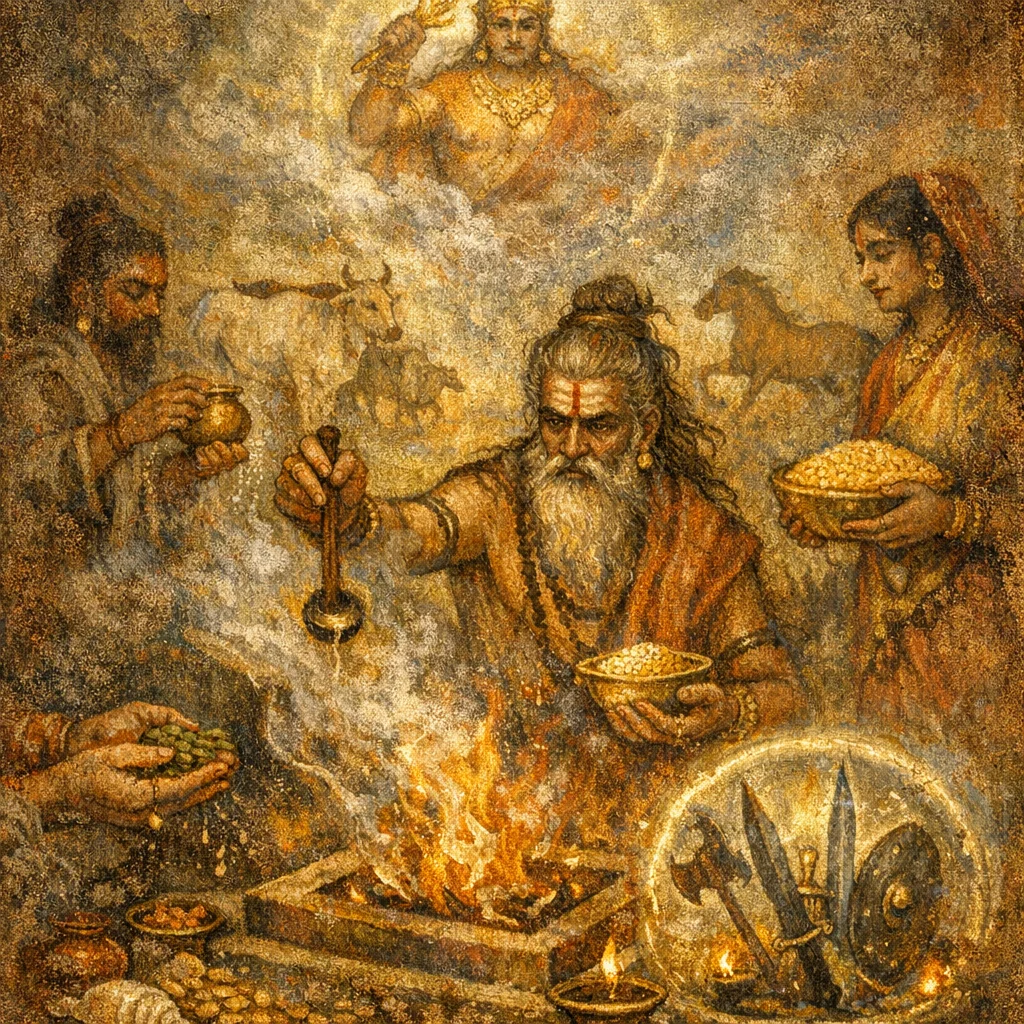
Sukta 71
Rishi: Traditionally Ṛgvedic; in AV 20 the seer-attribution follows the borrowed RV hymn tradition (Indra-stuti).
Devata: Indra
Chandas: Triṣṭubh/Jagatī-type cadence as in RV-style praise (exact metrical parsing depends on pada recension).
Mantras
Mantra 1
महां इन्द्रः परश्च नु महित्वमस्तु वज्रिणे । द्यौर्न प्रथिना शवः
Mighty is Indra, yea, farther still; now let majesty be for the Thunderer—his force, like heaven, broad in its expanse.
Mantra 2
समोहे वा य आशत नरस्तोकस्य सनितौ । विप्रासो वा धियायवः
Whether in the shock of onset those men attained it, in the winning of offspring; or whether the inspired priests, the seekers with their thought—
Mantra 3
यः कुक्षिः सोमपातमः समुद्र इव पिन्वते । उर्वीरापो न काकुदः
He whose belly, the most Soma-drinking, swelleth like the ocean—broad waters, as it were, a rising crest—
Mantra 4
एवा ह्यस्य सूनृता विरप्शी गोमती मही। पक्वा शाखा न दाशुषे
Even so, for his gracious truth is far-spreading, rich in kine, abundant—like a ripened branch unto the liberal worshipper.
Mantra 5
एवा हि ते विभूतय ऊतय इन्द्र मावते । सद्यश्चित् सन्ति दाशुषे
Even so, for thy manifest powers and succors, O Indra the bounteous, are—yea, straightway—present for the liberal worshipper.
Mantra 6
एवा ह्यस्य काम्या स्तोम उक्थं च शंस्या । इन्द्राय सोमपीतये
For thus, in very truth, for him the wish-availing praise, and the solemn hymn, are meet to be proclaimed—unto Indra, for Soma-drinking.
Mantra 7
इन्द्रेहि मत्स्यन्धसो विश्वेभिः सोमपर्वभिः । महां अभिष्टिरोजसा
O Indra, come; rejoice in the Soma-juice with all the Soma-pressings: great is thy succour, by thy might.
Mantra 8
एमेनं सृजता सुते मन्दिमिन्द्राय मन्दिने । चक्रिं विश्वानि चक्रये
Pour forth this, when pressed, the gladdening draught for Indra the gladdened—him the doer, to do all deeds.
Mantra 9
मत्स्वा सुशिप्र मन्दिभि स्तोमेभिर्विश्वचर्षणे । सचैषु सवनेष्वा
Rejoice, O fair-lipped one, with gladdening draughts, with praises, O thou of all mankind; join thyself unto these pressings, hither.
Mantra 10
असृग्रमिन्द्र ते गिरः प्रतित्वामुदहासत । अजोषा वृषभं पतिम्
Forth have they been sent, O Indra—thy songs—toward thee they have cried aloud: thou hast accepted the Bull, the Lord.
Mantra 11
सं चोदय चित्रमर्वाग् राध इन्द्र वरेण्यम्। असदित् ते विभु प्रभु
Urge hither, O Indra, thy splendid bounty, choice and to be chosen; yea, let it verily come to pass—thou, the all-ruling, the effectual lord.
Mantra 12
अस्मान्त्सु तत्र चोदयेन्द्र राये रभस्वतः । तुविद्युम्न यशस्वतः
Drive us, O Indra, well onward therein—unto wealth—thou vigorous one, of abundant glory, of high renown.
Mantra 13
सं गोमदिन्द्र वाजवदस्मे पृथु श्रवो बृहत्। विश्वायुर्धेह्यक्षितम्
Bestow on us, O Indra, wealth with cattle, wealth with winning strength—broad fame, great; and set in us life in every wise, imperishable.
Mantra 14
अस्मे धेहि श्रवो बृहद् द्युम्नं सहस्रसातमम्। इन्द्र ता रथिनीरिषः
In us establish great fame, and splendour most winning of thousands; O Indra, those chariot-bearing impulses of plenty.
Mantra 15
वसोरिन्द्रं वसुपतिं गीर्भिर्गृणन्त ऋग्मियम्। होम गन्तारमूतये
With hymns praise Indra, lord of wealth, the hymn-worthy; O invoker, (praise) him who cometh for aid.
Mantra 16
सुतेसुते न्योऽकसे बृहद् बृहत एदरिः । इन्द्राय शूषमर्चति
At every Soma-pressing he settles him in his proper seat—the Great, the Great One’s impeller; for Indra he chants the vehement might.
Frequently Asked Questions
It is primarily a Paustika (prosperity) hymn: it summons Indra’s splendid bounty, asks for immediate help, and stabilizes protection and success for the patron.
Savana language ‘stations’ Indra in repeated ritual moments, so his presence is not brief but continuous—supporting ongoing protection and steady gain.
No. The sukta’s stated mechanism is stoma (praise) and invitation; later practice may add simple offerings, but the text itself does not require substances.