Sukta 24
Sukta 4.24
Indra
Triṣṭubh (probable; verse-level verification needed)
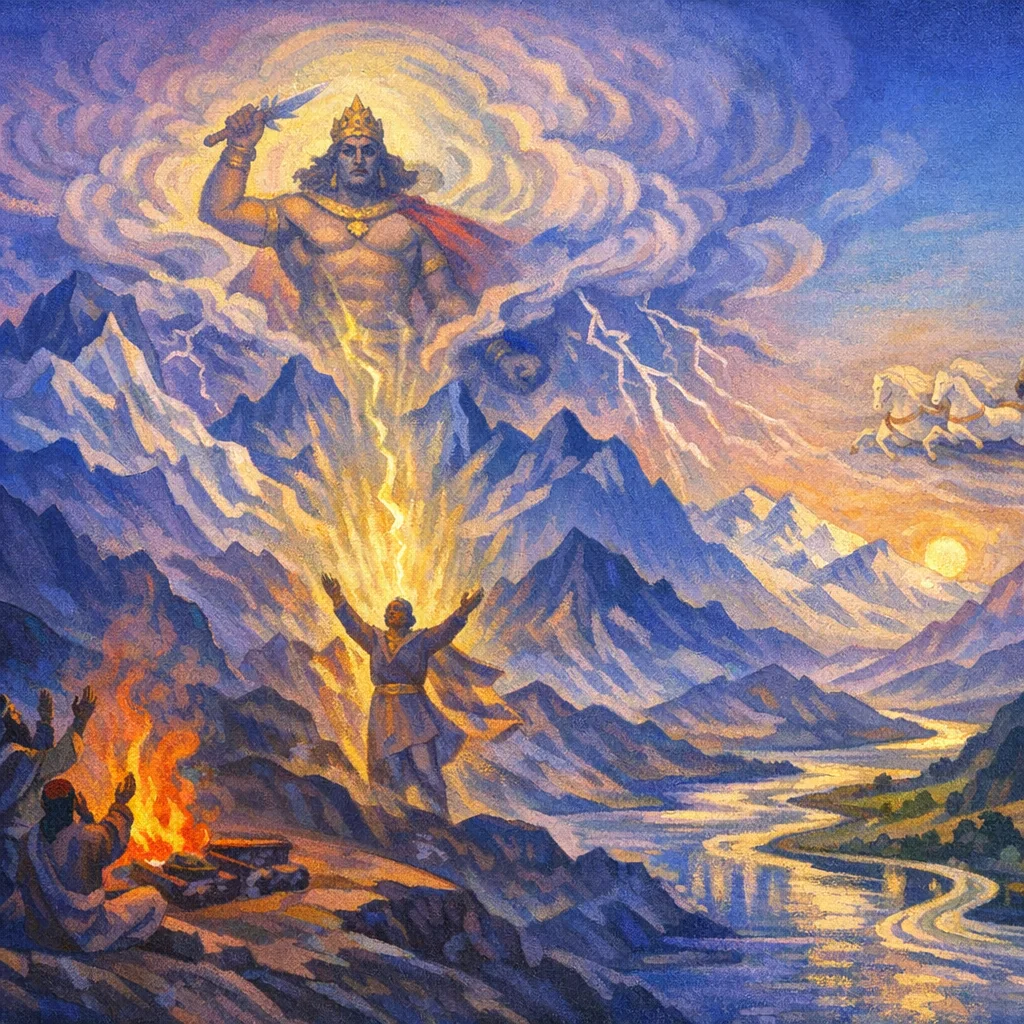
This hymn calls Indra—“son of Strength”—to turn toward the worshippers through flawless praise, and to reward the singer with wealth, cattle, and the removal of oppressive restraints. It links Indra’s gifts to correct sacrificial action (pressing Soma, preparing foods) and to inspired speech, culminating in a “new brahman” (fresh sacred utterance) that seeks abundance to swell like rivers and steady companionship with Indra’s chariot-force.
Mantras
Mantra 1
का सुष्टुतिः शवसः सूनुमिन्द्रमर्वाचीनं राधस आ ववर्तत् । ददिर्हि वीरो गृणते वसूनि स गोपतिर्निष्षिधां नो जनासः ॥
What perfect praise will turn Indra, the son of Strength, toward us for his giving? For the hero indeed gives treasures to the singer; he, the Lord of the luminous herds, drives away our down-pressing constraints, O peoples.
Mantra 2
स वृत्रहत्ये हव्यः स ईड्यः स सुष्टुत इन्द्रः सत्यराधाः । स यामन्ना मघवा मर्त्याय ब्रह्मण्यते सुष्वये वरिवो धात् ॥
He is the offering in the slaying of Vṛtra; he is to be invoked, he is to be adored—Indra well praised, whose bounty is true. In the journey he, the bounteous one, comes to the mortal who seeks the word of power and presses Soma; he establishes for him a wide room (a free space) to move.
Mantra 3
तमिन्नरो वि ह्वयन्ते समीके रिरिक्वांसस्तन्वः कृण्वत त्राम् । मिथो यत्त्यागमुभयासो अग्मन्नरस्तोकस्य तनयस्य सातौ ॥
Him indeed men call in the encounter; the strong strivers make their bodies a protection. When, facing one another, both sides have come to the casting-away (the crisis of surrender and risk), the men (invoke him) for the winning of the child and the offspring—of continuity in the soul’s line.
Mantra 4
क्रतूयन्ति क्षितयो योग उग्राशुषाणासो मिथो अर्णसातौ । सं यद्विशोऽववृत्रन्त युध्मा आदिन्नेम इन्द्रयन्ते अभीके ॥
The peoples set their will into action in the joining, O Mighty One, eager in mutual striving for the winning of the flood (of plenitude). When the clans close together in the battle, then indeed, in the very nearness, they call and press towards Indra (the illumined Force).
Mantra 5
आदिद्ध नेम इन्द्रियं यजन्त आदित्पक्तिः पुरोळाशं रिरिच्यात् । आदित्सोमो वि पपृच्यादसुष्वीनादिज्जुजोष वृषभं यजध्यै ॥
Then indeed, at close quarters, they sacrifice to the Indrian power; then Pakti makes ready the offering-cake. Then Soma spreads itself out for those who have not pressed (enough); then he has sought to win the Bull (Indra) for the act of sacrifice.
Mantra 7
य इन्द्राय सुनवत्सोममद्य पचात्पक्तीरुत भृज्जाति धानाः । प्रति मनायोरुचथानि हर्यन्तस्मिन्दधद्वृषणं शुष्ममिन्द्रः ॥
Whoever today presses Soma for Indra, and cooks the ripenings and roasts the grains—towards his two ardors of mind Indra hastens in response to the chants, placing in him the bull-like force, the victorious might.
Mantra 8
यदा समर्यं व्यचेदृघावा दीर्घं यदाजिमभ्यख्यदर्यः । अचिक्रदद्वृषणं पत्न्यच्छा दुरोण आ निशितं सोमसुद्भिः ॥
When the swift one discerned the comrade in the long course, when the noble one sighted the contest straight before him, he cried out to the Bull towards the Spouse: ‘Come to the house, sharpened (made keen) by the Soma-pressers.’
Mantra 9
भूयसा वस्नमचरत्कनीयोऽविक्रीतो अकानिषं पुनर्यन् । स भूयसा कनीयो नारिरेचीद्दीना दक्षा वि दुहन्ति प्र वाणम् ॥
For a greater price the younger moved about; unsold, he returned again with nothing. The younger, even for more, did not become rich; the diminished capacities milk out only a thin measure of speech-force.
Mantra 10
क इमं दशभिर्ममेन्द्रं क्रीणाति धेनुभिः । यदा वृत्राणि जङ्घनदथैनं मे पुनर्ददत् ॥
Who will buy for me this Indra with ten milch-cows? When he has smitten the obstructions, then let him give him back to me again.
Mantra 11
नू ष्टुत इन्द्र नू गृणान इषं जरित्रे नद्यो न पीपेः । अकारि ते हरिवो ब्रह्म नव्यं धिया स्याम रथ्यः सदासाः ॥
Now praised, O Indra, now sung, may you swell the inspirer’s abundance like rivers. For you, O lord of the tawny steeds, a new word of power has been made; by the awakened thought may we become fit for the chariot—ever-companions (of your movement).
Frequently Asked Questions
It teaches that sincere, well-shaped praise joined with correct offering—especially Soma—draws Indra near, and Indra then grants wealth, protection, and empowering strength.
It highlights complete ritual hospitality: along with Soma pressing, prepared foods and grains symbolize proper sacrifice, which makes the worshipper fit to receive Indra’s force and gifts.
It is an image for overflowing increase—resources, inspiration, and life-energy expanding naturally and continuously, as rivers swell and fill their channels.