Sukta 7
Sukta 3.7
Viśvāmitra Gāthina (traditional for RV 3.7)
Agni (implicit), with cosmological dyads (two Mothers/two Fathers) and the seven voices
Triṣṭubh (probable; confirm in critical edition)
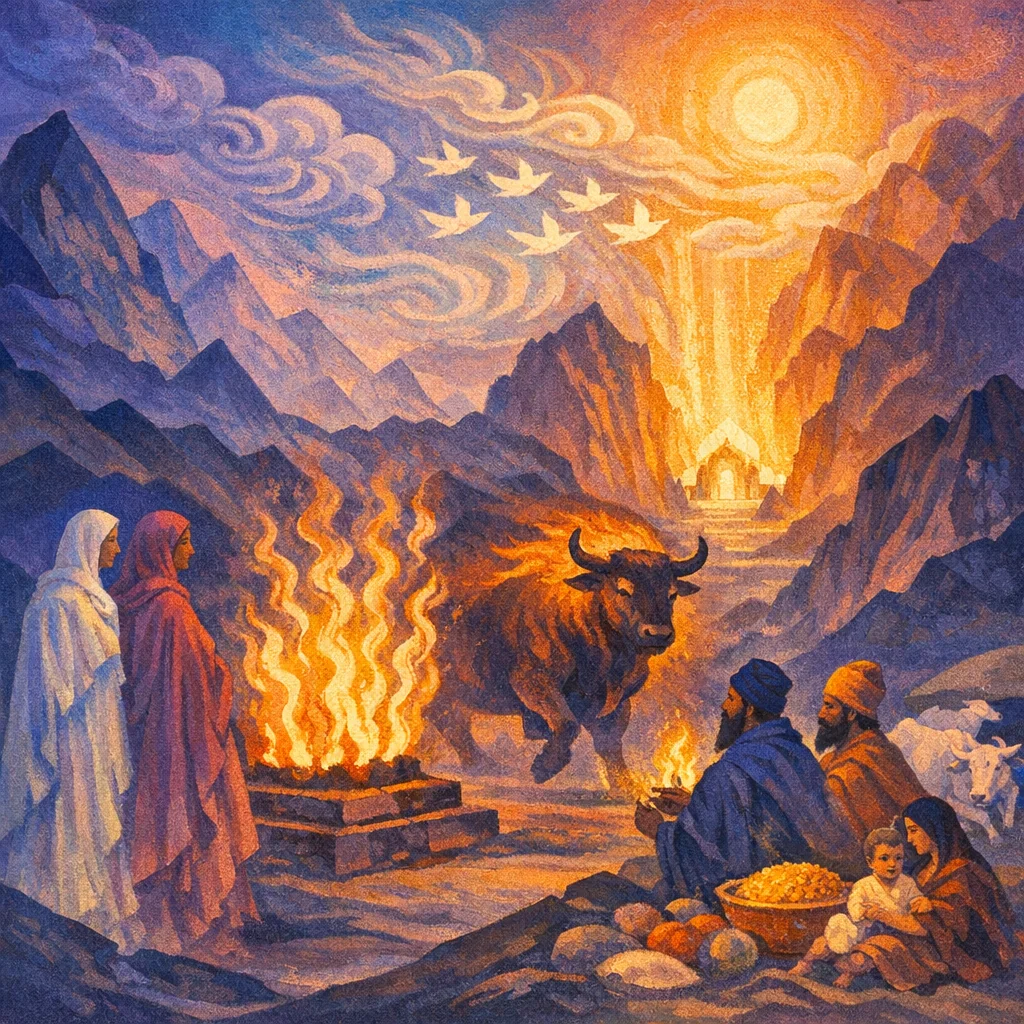
This hymn to Agni presents him as the luminous power who is born and established within the cosmic Parents—two Mothers and two Fathers—while the “seven voices” (sapta vāṇīḥ) rise and enter his bright foundation. Through dense cosmological imagery (Night’s garment, the Bull-force, and the spanning Parents), the poet asks Agni to extend life, lead the singer safely into his own dhāman (abode), and grant enduring prosperity, “rays/cattle” (go), and strong offspring.
Mantras
Mantra 1
प्र य आरुः शितिपृष्ठस्य धासेरा मातरा विविशुः सप्त वाणीः । परिक्षिता पितरा सं चरेते प्र सर्स्राते दीर्घमायुः प्रयक्षे ॥
Forward they rise—those seven powers of speech—entering into the two Mothers of the bright-backed one. The two Fathers, encompassing, move together; they extend the long life in the forward sacrifice of the soul.
Mantra 2
दिवक्षसो धेनवो वृष्णो अश्वा देवीरा तस्थौ मधुमद्वहन्तीः । ऋतस्य त्वा सदसि क्षेमयन्तं पर्येका चरति वर्तनिं गौः ॥
The divine milk-cows of heaven, the stallion’s horses, stand ready bearing sweetness. In the seat of Ṛta you are the maker of safety and peace; around you the one Cow moves along the track—circling as the ray of knowledge that follows the true course.
Mantra 3
आ सीमरोहत्सुयमा भवन्तीः पतिश्चिकित्वान्रयिविद्रयीणाम् । प्र नीलपृष्ठो अतसस्य धासेस्ता अवासयत्पुरुधप्रतीकः ॥
They have mounted—becoming well-guided—while the lord, the conscious knower, the finder of plenitudes, takes the lead. The dark-backed one of the woven substance sets them to their stations, he of many forms: he arranges the powers for the working of the inner rite.
Mantra 4
महि त्वाष्ट्रमूर्जयन्तीरजुर्यं स्तभूयमानं वहतो वहन्ति । व्यङ्गेभिर्दिद्युतानः सधस्थ एकामिव रोदसी आ विवेश ॥
Great are the formative powers that strengthen you, O Tvāṣṭra-born; they carry you, the unfailing one, firmly upheld, as bearers bear their load. Shining out through the limbs, you enter the seat, as though you made Heaven-and-Earth one in a single embrace of light.
Mantra 5
जानन्ति वृष्णो अरुषस्य शेवमुत ब्रध्नस्य शासने रणन्ति । दिवोरुचः सुरुचो रोचमाना इळा येषां गण्या माहिना गीः ॥
They know the blissful good of the mighty Ruddy One, and they resound in the governance of the Bright. The luminous powers of heaven, shining with a right radiance, increase their light—those in whom the Word (gīḥ) becomes worthy of invocation by greatness, and the inner offering (iḷā) is awakened.
Mantra 6
उतो पितृभ्यां प्रविदानु घोषं महो महद्भ्यामनयन्त शूषम् । उक्षा ह यत्र परि धानमक्तोरनु स्वं धाम जरितुर्ववक्ष ॥
And to the two Parents they have found out the cry and led the strength from the Great to the Great. The Bull indeed—where he encompasses the garment of the Night—has borne the singer along into his own home of being.
Mantra 7
अध्वर्युभिः पञ्चभिः सप्त विप्राः प्रियं रक्षन्ते निहितं पदं वेः । प्राञ्चो मदन्त्युक्षणो अजुर्या देवा देवानामनु हि व्रता गुः ॥
With five Adhvaryus the seven seers guard the dear hidden step of the Bird. Facing forward, the unaging Bulls exult—gods who move in accordance with the divine laws of the gods.
Mantra 8
दैव्या होतारा प्रथमा न्यृञ्जे सप्त पृक्षासः स्वधया मदन्ति । ऋतं शंसन्त ऋतमित्त आहुरनु व्रतं व्रतपा दीध्यानाः ॥
The divine two Hotars first take their seat; the seven fostering powers rejoice in their self-law. Proclaiming ṛta, they declare ṛta alone; guarding the law, they blaze in thought along the path of the vow.
Mantra 9
वृषायन्ते महे अत्याय पूर्वीर्वृष्णे चित्राय रश्मयः सुयामाः । देव होतर्मन्द्रतरश्चिकित्वान्महो देवान्रोदसी एह वक्षि ॥
The ancient rays surge mightily for the great beyond, for the Bull of many forms, moving in a right course. O divine Hotar, more gladdening and knowing, bring here the great gods—Heaven and Earth—into this working.
Mantra 10
पृक्षप्रयजो द्रविणः सुवाचः सुकेतव उषसो रेवदूषुः । उतो चिदग्ने महिना पृथिव्याः कृतं चिदेनः सं महे दशस्य ॥
Those who offer strengthening oblations, rich in substance and well-worded, the Dawn-powers of clear discernment have shone with abundance. And even what has been done as fault—O Agni—by the greatness of Earth, we would set it in harmony and make it a means of greater perfection.
Mantra 11
इळामग्ने पुरुदंसं सनिं गोः शश्वत्तमं हवमानाय साध । स्यान्नः सूनुस्तनयो विजावाग्ने सा ते सुमतिर्भूत्वस्मे ॥
O Agni, accomplish for the caller the Iḷā—rich in many works—an enduring winning of the Rays (go). May there be for us a son, a child with victorious energy; O Agni, let that be thy good-will toward us.
Frequently Asked Questions
Agni is the main deity. Even when the hymn speaks in cosmic images (Parents, Night, seven voices), it centers on Agni as the fire-power that makes the sacrifice work and brings blessings.
They refer to the many powers or forms of inspired speech that rise in the sacrifice. On an inner level, they can point to awakened faculties of expression and understanding gathered into a single luminous focus in Agni.
It uses traditional Vedic dyads to describe the cosmic framework in which Agni is established—often read as paired generative principles (like Heaven/Earth and complementary supports of order). The point is that Agni is born and active within the whole structure of the world and the rite.