Sarga 21
अयोध्याकाण्डे एकविंशः सर्गः — Lakṣmaṇa’s militant counsel and Rāma’s dharma-based persuasion of Kausalyā
अयोध्याकाण्ड
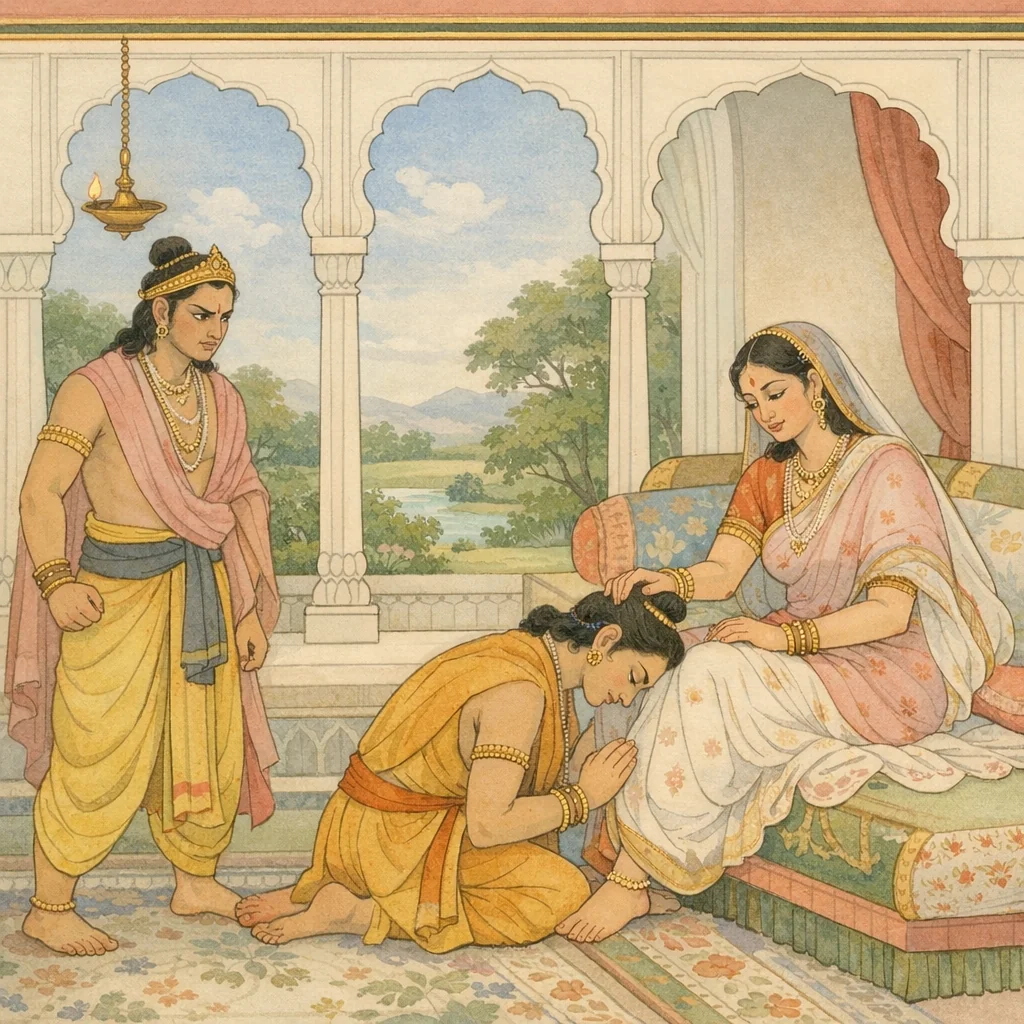
Sarga 21 presents a multi-voiced ethical debate in Ayodhyā over Rāma’s imminent forest exile. It begins with Lakṣmaṇa, anguished by Kausalyā’s lament, offering “occasion-appropriate” yet militant counsel: he urges an immediate seizure of authority, threatens to depopulate Ayodhyā if opposed, and even speaks of imprisoning or killing Daśaratha should the king, swayed by Kaikeyī, become an “enemy.” Kausalyā then addresses Rāma directly, rejecting Kaikeyī’s unrighteous demand and urging him to stay and serve his mother as dharma, warning of spiritual ruin if he departs. Rāma replies with disciplined vow-keeping: he cannot transgress his father’s command, and he supports this with exempla—Kandu, the sons of Sagara, Jāmadagnya Rāma and Reṇukā—showing the ancestral precedence of obedience. Rāma restrains Lakṣmaṇa’s violent kṣatriya impulses and seeks Kausalyā’s permission and blessings through svastyayana rites, promising to return after completing the exile-term, likening it to Yayāti’s regained heaven. The chapter crystallizes the hierarchy of duties: truth anchored in dharma stands above grief, anger, and political expediency.
Shlokas
Verse 1
तथा तु विलपन्तीं तां कौसल्यां राममातरम्।उवाच लक्ष्मणो दीनस्तत्कालसदृशं वचः।।2.21.1।।
As Kausalya, Rama’s mother, thus lamented, Lakshmana—miserable himself—spoke to her words suited to that moment.
Verse 2
न रोचते ममाप्येतदार्ये यद्राघवो वनम्।त्यक्त्वा राज्यश्रियं गच्छेत् स्त्रिया वाक्यवशं गतः।।2.21.2।।
O noble one, even to me this is not acceptable—that Rāghava should go to the forest, abandoning the prosperity of the kingdom, merely because he has yielded to a woman’s words.
Verse 3
विपरीतश्च वृद्धश्च विषयैश्च प्रधर्षितः।नृपः किमिव न ब्रूयाच्चोद्यमानस्समन्मथः।।2.21.3।।
With his judgment turned aside, aged, and assailed by sense-pleasures—ruled by desire and urged on—what might the king not say?
Verse 4
नास्यापराधं पश्यामि नापि दोषं तथाविधम्।येन निर्वास्यते राष्ट्राद्वनवासाय राघवः।।2.21.4।।
I see in Rāghava no offence at all, nor any fault of such a kind as could justify his banishment from the kingdom to dwell in the forest.
Verse 5
न तं पश्याम्यहं लोके परोक्षमपि यो नरः।स्वमित्रोऽपि निरस्तोऽपि योऽस्य दोषमुदाहरेत्।।2.21.5।।
I see no one in this world—neither an enemy nor even one who has been defeated—who would speak of any fault in him, even behind his back.
Verse 6
देवकल्पमृजुं दान्तं रिपूणामपि वत्सलम्।अवेक्षमाणः को धर्मं त्यजेत्पुत्रमकारणात्।।2.21.6।।
Who, disregarding dharma, would abandon without cause a son who is godlike, upright, self-controlled, and dear even to his enemies?
Verse 7
तदिदं वचनं राज्ञःपुनर्बाल्यमुपेयुषः।पुत्रः को हृदये कुर्याद्राजवृत्तमनुस्मरन्।।2.21.7।।
What son, mindful of the righteous conduct of kings, could take to heart these words of a king who seems to have returned to childishness?
Verse 8
यावदेव न जानाति कश्चिदर्थमिमं नरः।तावदेव मया सार्धमात्मस्थं कुरु शासनम्।।2.21.8।।
Before anyone comes to know of this matter, assume authority under your own control—with my support.
Verse 9
मया पार्श्वे सधनुषा तव गुप्तस्य राघव।क स्समर्थोऽधिकं कर्तुं कृतान्तस्येव तिष्ठतः।।2.21.9।।
O Rāghava, with me at your side, bow in hand, guarding you—who could dare commit any excess against you as you stand like Kṛtānta (Death) himself?
Verse 10
निर्मनुष्यामिमां कृत्स्नामयोध्यां मनुजर्षभ। करिष्यामि शरैस्तीक्ष्णैर्यदि स्थास्यति विप्रिये।।2.21.10।।
O best of men, if the whole of Ayodhya stands against you in hostility, I will make this entire city devoid of men with my sharp arrows.
Verse 11
भरतस्याथ पक्ष्यो वा यो वाऽस्य हितमिच्छति।सर्वानेतान्वधिष्यामि मृदुर्हि परिभूयते।।2.21.11।।
And whoever is on Bharata’s side—or whoever seeks his advantage—I will kill them all; for the gentle are indeed trampled upon with contempt.
Verse 12
प्रोत्साहितोऽयं कैकेय्या स दुष्टो यदि नः पिता।अमित्रभूतो निस्सङ्गं वध्यतां बध्यतामपि।।2.21.12।।
If our father—incited by Kaikeyī and turned wicked—has truly become our enemy, then, without regard for the bond of kinship, let him be restrained, bound and even imprisoned, or, if need be, slain.
Verse 13
गुरोरप्यवलिप्तस्य कार्याकार्यमजानतः।उत्पथं प्रतिपन्नस्य कार्यं भवति शासनम्।।2.21.13।।
Even a teacher—if swollen with pride, unable to discern what should and should not be done, and having taken to a wrongful path—must be corrected; in such a case, discipline becomes one’s duty.
Verse 14
बलमेष किमाश्रित्य हेतुं वापुरुषर्षभ।दातुमिच्छति कैकेय्यै राज्यं स्थितमिदं तव।।2.21.14।।
O best of men, relying on what power—or on what reason—does this king wish to give to Kaikeyī the kingdom that rightfully stands as yours?
Verse 15
त्वया चैव मया चैव कृत्वा वैरमनुत्तमम्।काऽस्य शक्तिश्श्रियं दातुं भरतायारिशासन।।2.21.15।।
O chastiser of foes, what power does he have to bestow royal fortune upon Bharata, after provoking the gravest hostility from you—and from me as well?
Verse 16
अनुरक्तोऽस्मि भावेन भ्रातरं देवि तत्त्वतः। सत्येन धनुषा चैव दत्तेनेष्टेन ते शपे।।2.21.16।।
O mother, in truth I am devoted to my brother with all my heart. I swear to you by my truth, by my bow, and by the merit of my gifts and sacrifices.
Verse 17
दीप्तमग्निमरण्यं वा यदि रामः प्रवेक्ष्यति।प्रविष्टं तत्र मां देवि त्वं पूर्वमवधारय।।2.21.17।।
O mother, be assured of this beforehand: if Rāma enters a blazing fire or the wilderness, I will have entered there first.
Verse 18
हरामि वीर्याद्दुःखं ते तम स्सूर्य इवोदितः।देवी पश्यतु मे वीर्यं राघवश्चैव पश्यतु।।2.21.18।।
With my valor I will remove your sorrow, like the risen sun dispels darkness. Let you, O mother, witness my strength—and let Rāghava witness it too.
Verse 19
एतत्तु वचनं श्रुत्वा लक्ष्मणस्य महात्मनः।उवाच रामं कौशल्या रुदन्ती शोकलालसा।।2.21.19।।
Hearing these words of the great-souled Lakṣmaṇa, Kauśalyā—weeping and overwhelmed by grief—spoke to Rāma.
Verse 20
भ्रातुस्ते वदतः पुत्र लक्ष्मणस्य श्रुतं त्वया।यदत्रानन्तरं कार्यं कुरुष्व यदि रोचते।।2.21.20।।
My son, you have heard what your brother Lakṣmaṇa has said. If it pleases you, then do next whatever you judge should be done in this matter.
Verse 21
न चाधर्म्यं वच श्रुत्वा सपत्न्या मम भाषितम्।विहाय शोकसन्तप्तां गन्तुमर्हसि मामितः।।2.21.21।।
Having listened to the unrighteous words spoken by my co-wife (Kaikeyī), it is not proper for you to leave me here, scorched by grief, and go away from this place.
Verse 22
धर्मज्ञ यदि धर्मिष्ठो धर्मं चरितुमिच्छसि।शुश्रूष मामिहस्थस्त्वं चर धर्ममनुत्तमम्।।2.21.22।।
O knower of dharma—if you truly wish to practice righteousness as the most righteous, then stay here and serve me; practice that unsurpassed dharma.
Verse 23
शुश्रूषुर्जननीं पुत्र स्वगृहे नियतो वसन्।परेण तपसा युक्तः काश्यपस्त्रिदिवं गतः।।2.21.23।।
O son, by living with discipline in his own home and serving his mother, Kāśyapa—endowed with supreme austerity—attained heaven.
Verse 24
यथैव राजा पूज्यस्ते गौरवेण तथाऽस्म्यहम्।त्वां नाहमनुजानामि न गन्तव्यमितो वनम्।।2.21.24।।
Just as the king is worthy of your reverent honor, so too am I. I do not grant you permission—you must not go from here to the forest.
Verse 25
त्वद्वियोगान्न मे कार्यं जीवितेन सुखेन वा।त्वया सह मम श्रेयस्तृणानामपि भक्षणम्।।2.21.25।।
Separated from you, life itself—or happiness—has no purpose for me. For me, it is better to be with you even if it means eating mere grass.
Verse 26
यदि त्वं यास्यसि वनं त्यक्त्वा मां शोकलालसाम्।अहं प्रायमिहासिष्ये न हि शक्ष्यामि जीवितुम्।।2.21.26।।
If you go to the forest, leaving me overwhelmed by sorrow, I will undertake fasting unto death here—for I truly will not be able to live.
Verse 27
ततस्त्वं प्राप्स्यसे पुत्र निरयं लोकविश्रुतम्।ब्रह्महत्यामिवाधर्मात्समुद्र स्सरितां पतिः।।2.21.27।।
Then, my son, you will reach a hell renowned in the world—just as the ocean, lord of rivers, through unrighteous conduct incurred a sin like brahmin-slaying (brahmahatyā).
Verse 28
विलपन्तीं तथा दीनां कौसल्यां जननीं ततः।उवाच रामो धर्मात्मा वचनं धर्मसंहितम्।।2.21.28।।
Then Rāma, steadfast in dharma, spoke words aligned with righteousness to his mother Kausalyā, who was wretched and lamenting.
Verse 29
नास्ति शक्तिः पितुर्वाक्यं समतिक्रमितुं मम।प्रसादये त्वां शिरसा गन्तुमिच्छाम्यहं वनम्।।2.21.29।।
I have no power to overstep my father’s command. Bowing my head, I entreat you; I wish to go to the forest.
Verse 30
ऋषिणा च पितुर्वाक्यं कुर्वता व्रतचारिणा।गौर्हता जानता धर्मं कण्डुनाऽपि विपश्चिता।।2.21.30।।
Even the learned sage Kandu—who knew dharma and lived by strict vows—killed a cow solely to carry out his father’s command.
Verse 31
अस्माकं च कुले पूर्वं सगरस्याज्ञया पितुः।खनद्भिस्सागरैर्भूमिमवाप्तस्सुमहान्वधः।।2.21.31।।
And earlier, in our very lineage, the sons of Sagara—digging into the earth under their father’s command—met with a dreadful death.
Verse 32
जामद्ग्न्येन रामेण रेणुका जननी स्वयम्।कृत्ता परशुनाऽरण्ये पितुर्वचनकारिणा।।2.21.32।।
Rāma Jāmadagnya (Paraśurāma) himself, obeying his father’s word, cut down his own mother Reṇukā in the forest with an axe.
Verse 33
एतैरन्यैश्च बहुभिर्देवि देवसमैः कृतम्।पितुर्वचनमक्लीबं करिष्यामि पितुर्हितम्।।2.21.33।।
O Devi, these—and many other godlike men besides—have fulfilled their father’s word; so I too shall make my father’s intent succeed.
Verse 34
न खल्वेतन्मयैकेन क्रियते पितृशासनम्।एतैरपि कृतं देवि ये मया तव कीर्तिताः।।2.21.34।।
Indeed, O Devi, it is not I alone who carry out a father’s command; those whom I have mentioned to you have done so as well.
Verse 35
नाहं धर्ममपूर्वं ते प्रतिकूलं प्रवर्तये।पूर्वैरयमभिप्रेतो गतो मार्गोऽनुगम्यते।।2.21.35।।
I am not proposing to you some new ‘dharma’ that goes against established practice; I am following the very path approved and walked by our forebears.
Verse 36
तदेतत्तु मया कार्यं क्रियते भुवि नान्यथा।पितुर्हि वचनं कुर्वन्न कश्चिन्नाम हीयते।।2.21.36।।
Therefore this is my duty, and in this world I shall do it—by no other way; for no one, truly, falls from dharma by fulfilling a father’s word.
Verse 37
तामेवमुक्त्वा जननीं लक्ष्मणं पुनरब्रवीत्।वाक्यं वाक्यविदां श्रेष्ठश्श्रेष्ठस्सर्वधनुष्मताम्।।2.21.37।।
Having spoken thus to his mother, Rāma—foremost among masters of speech and the best of all archers—again addressed Lakṣmaṇa.
Verse 38
तव लक्ष्मण जानामि मयि स्नेहमनुत्तमम्।विक्रमं चैव सत्त्वं च तेजश्च सुदुरासदम्।।2.21.38।।
O Lakṣmaṇa, I know your unsurpassed affection for me; I also know your valor, your steadfast character, and your unassailable energy.
Verse 39
मम मातुर्महद्दुःखमतुलं शुभलक्षण।अभिप्रायमविज्ञाय सत्यस्य च शमस्य च।।2.21.39।।
O auspicious Lakṣmaṇa, my mother’s grief is vast and incomparable, for she has not understood the true intent of truthfulness and self-restraint.
Verse 40
धर्मो हि परमो लोके धर्मे सत्यं प्रतिष्ठितम्।धर्मसंश्रितमेतच्च पितुर्वचनमुत्तमम्।।2.21.40।।
For dharma is supreme in this world, and truth stands firmly grounded in dharma. And this excellent command of my father rests upon dharma.
Verse 41
संश्रुत्य च पितुर्वाक्यं मातुर्वा ब्राह्मणस्य वा।न कर्तव्यं वृथा वीर धर्ममाश्रित्य तिष्ठता।।2.21.41।।
And having once pledged one’s word—to a father, a mother, or a brāhmaṇa—one who stands taking refuge in dharma, O hero, must not let that promise become vain.
Verse 42
सोऽहं न शक्ष्यामि पितुर्नियोगमतिवर्तितुम्।पितुर्हिवचनाद्वीर कैकेय्याऽहं प्रचोदितः।।2.21.42।।
So I cannot transgress my father’s command. For it is only on account of my father’s word, O hero, that I have been urged on by Kaikeyī (toward exile).
Verse 43
तदेतां विसृजानार्यां क्षत्रधर्माश्रितां मतिम्।धर्ममाश्रय मा तैक्ष्ण्यं मद्बुद्धिरनुगम्यताम्।।2.21.43।।
Therefore abandon this ignoble impulse—though it presents itself as kṣatriya-duty. Take refuge in dharma; do not turn to harsh violence. Let my judgment be followed.
Verse 44
तमेवमुत्त्वा सौहार्दाद्भ्रातरं लक्ष्मणाग्रजः।उवाच भूयः कौसल्यां प्राञ्जलिश्शिरसानतः।।2.21.44।।
Having thus spoken to his brother out of affection, Rāma—the elder brother of Lakṣmaṇa—once again addressed Kausalyā, with folded hands and his head bowed.
Verse 45
अनुमन्यस्व मां देवि गमिष्यन्तमितो वनम्।शापिताऽसि मम प्राणैः कुरु स्वस्त्ययनानि मे।।2.21.45।।
Grant me leave, O Goddess, O Mother, as I depart from here to the forest. By my very life I bind and beseech you—perform for me the rites and blessings that secure well-being.
Verse 46
तीर्णप्रतिज्ञश्च वनात्पुनरेष्याम्यहं पुरीम्।ययातिरिव राजर्षिःपुरा हित्वा पुनर्दिवम्।।2.21.46।।
When I have fulfilled my vow, I shall return again from the forest to the city—like the royal sage Yayāti of old, who, having fallen from heaven, regained it once more.
Verse 47
शोकस्सन्धार्यतां मात र्हृदये साधु मा शुचः।वनवासादिहैष्यामि पुनः कृत्वा पितुर्वचः।।2.21.47।।
Hold your sorrow wisely within your heart, Mother; do not grieve. After fulfilling my father’s word and completing my forest-dwelling, I shall return here again.
Verse 48
त्वया मया च वैदेह्या लक्ष्मणेन सुमित्रया।पितुर्नियोगे स्थातव्यमेष धर्मस्सनातनः।।2.21.48।।
By you, by me, by Vaidehī, by Lakṣmaṇa, and by Sumitrā—we must stand by my father’s command. This is the eternal dharma.
Verse 49
अम्ब संहृत्य सम्भारान् दुःखं हृदि निगृह्य च।वनवासकृता बुद्धिर्मम धर्म्याऽनु वर्त्यताम्।।2.21.49।।
Mother, withdraw the preparations and restrain the sorrow within your heart; let my resolve—rightly set on dwelling in the forest—be accepted and followed as the path of dharma.
Verse 50
एतद्वचस्तस्य निशम्य मातासुधर्म्यमव्यग्रमविक्लबं च।मृतेव संज्ञां प्रतिलभ्य देवी समीक्ष्य रामं पुनरित्युवाच।।2.21.50।।
Hearing his words—so firmly grounded in dharma, unshaken and undismayed—the queen-mother, as if returning to consciousness from death, looked steadily at Rama and spoke again.
Verse 51
यथैव ते पुत्र पिता तथाऽहं गुरु स्स्वधर्मेण सुहृत्तया च।न त्वाऽनुजानामि न मां विहायसुदुःखितामर्हसि गन्तुमेवम्।।2.21.51।।
As your father is to you, my son, so am I—your guide by my duty in dharma and by my love. I do not permit you; you ought not to go thus, leaving me in extreme sorrow.
Verse 52
किं जीवितेनेह विना त्वया मेलोकेन वा किं स्वधयाऽमृतेन।श्रेयो मुहूर्तं तव सन्निधानं ममेह कृत्स्नादपि जीवलोकात्।।2.21.52।।
What use is life here to me without you? What use are heaven, the offerings to the ancestors, or even nectar? For me, even one moment of your presence is better than this entire world of living beings without you.
Verse 53
नरैरिवोल्काभिरपोह्यमानोमहागजोऽध्वानमनुप्रविष्टः।भूयः प्रजज्वाल विलापमेवं निशम्य रामः करुणं जनन्याः।।2.21.53।।
Hearing his mother’s pitiful lament in this manner, Rama burned inwardly all the more—like a great elephant forced back from the road by men brandishing blazing torches.
Verse 54
स मातरं चैव विसंज्ञकल्पा मार्तं च सौमित्रिमभिप्रतप्तम्।धर्मे स्थितो धर्म्यमुवाच वाक्यं यथा स एवार्हति तत्र वक्तुम्।।2.21.54।।
Abiding in dharma, he spoke words befitting righteousness to his mother—nearly senseless with grief—and to Saumitri, tormented with anguish; in that moment, he alone could speak as was fitting.
Verse 55
अहं हि ते लक्ष्मण नित्यमेव जानामि भक्तिं च पराक्रमं च।मम त्वभिप्रायमसन्निरीक्ष्य मात्रा सहाभ्यर्दसि मां सुदुःखम्।।2.21.55।।
Lakshmana, I have always known your devotion and your valor; yet, without truly examining my intent, you—together with my mother—are causing me intense pain.
Verse 56
धर्मार्थकामाः खलु तात लोके समीक्षिता धर्मफलोदयेषु।ते तत्र सर्वे स्युरसंशयं मे भार्येव वश्याऽभिमता सुपुत्रा।।2.21.56।।
Dear brother, in this world dharma, artha, and kāma are assessed by the fruits that arise from dharma. In my chosen course, all three are present without doubt—like a wife’s faithful compliance and the cherished affection found in a mother blessed with good sons.
Verse 57
यस्मिंस्तु सर्वे स्युरसन्निविष्टा धर्मो यत स्स्यात्तदुपक्रमेत।द्वेष्यो भवत्यर्थपरो हि लोके कामात्मता खल्वपि न प्रशस्ता।।2.21.57।।
But when all three aims cannot be jointly established, one should undertake that course by which dharma is secured. For in this world, the wealth-obsessed become despised, and a life driven by desire is not praised by the wise.
Verse 58
गुरुश्च राजा च पिता च वृद्धःक्रोधात्प्रहर्षाद्यदि वाऽपि कामात्।यद्व्यादिशेत्कार्यमवेक्ष्य धर्मंकस्तन्न कुर्यादनृशंसवृत्तिः।2.21.58।।
Whatever act a teacher, a king, a father, or an elder may command—whether from anger, delight, or even desire—one should carry it out, regarding it in light of dharma. Who would not do so, unless he were cruel-hearted?
Verse 59
स वै न शक्नोमि पितुः प्रतिज्ञामिमामकर्तुं सकलां यथावत्।स ह्यावयोस्तात गुरुर्नियोगेदेव्याश्च भर्ता स गति स्सधर्मः।।2.21.59।।
Truly, dear one, I cannot fail to carry out this promise of my father in full, exactly as it was pledged. For in giving commands he is our teacher; and for the queen (my mother) he is her husband—her refuge and her dharma.
Verse 60
तस्मिन्पुनर्जीवति धर्मराजे विशेषतस्स्वे पथि वर्तमाने।देवी मया सार्धमितोऽपगच्छेत्कथं स्विदन्या विधवेव नारी।।2.21.60।।
While that king of righteousness yet lives—especially while he abides upon his own path of dharma—how could the Queen depart from here with me, like some other woman, as though a widow?
Verse 61
सा माऽनुमन्यस्व वनं व्रजन्तंकुरुष्व न स्स्वस्त्ययनानि देवि।यथा समाप्ते पुनराव्रजेयं यथा हि सत्येन पुनर्ययातिः।।2.21.61।।
Therefore, O Mother, grant me leave as I depart for the forest; perform for me the rites of blessing and well-being, so that when the term is fulfilled I may return again—just as Yayāti returned again through the power of truth.
Verse 62
यशो ह्यहं केवलराज्यकारणान्न पृष्ठतः कर्तुमलं महोदयम्।अदीर्घकाले न तु देवि जीवितेवृणेऽवरामद्य महीमधर्मतः।।2.21.62।।
I will not cast behind me this great glory merely for the sake of a kingdom. In this life, which is but short, O Mother, I do not choose to gain this petty earth today through adharma.
Verse 63
प्रसादयन्नरवृषभ स्समातरं पराक्रमाज्जिगमिषुरेव दण्डकान्।अथानुजं भृशमनुशास्य दर्शनंचकार तां हृदि जननीं प्रदक्षिणम्।।2.21.63।।
Having pacified his mother, that best of men—resolved by steadfast valor to go to Daṇḍaka—then firmly instructed his younger brother with clear intent, and with heartfelt devotion he circumambulated his mother in pradakṣiṇā.
Frequently Asked Questions
The dharma-sankat is whether Rāma should resist an unjust political outcome (instigated by Kaikeyī) to protect his rightful kingship, or obey Daśaratha’s command and uphold truth and vow-keeping. Lakṣmaṇa advocates coercive action and punitive violence; Rāma rejects that route and prioritizes filial obedience as a dharmic imperative.
The chapter teaches that dharma is stabilized by satya (truth) and by keeping pledged words—especially promises involving father, mother, and spiritual authorities. Rāma frames obedience not as weakness but as ethical sovereignty, restraining anger and political calculation to preserve moral order (maryādā) even when outcomes are personally painful.
Ayodhyā is the contested civic space threatened by internal discord, while the Daṇḍaka forest represents the disciplined arena of exile and ethical testing. Culturally, the text foregrounds svastyayana rites (prosperity/blessing ceremonies) and the use of exempla from ancestral lore (Yayāti, Kandu, Sagara’s sons, Paraśurāma–Reṇukā) as authoritative moral precedent.