Sarga 107
पितृवाक्यपालनम्, गयाश्रुति-उपदेशः, भरतस्य राज्यग्रहण-निर्देशः (Rama’s Counsel on Vows, the Gaya Śruti, and Bharata’s Return to Rule)
अयोध्याकाण्ड
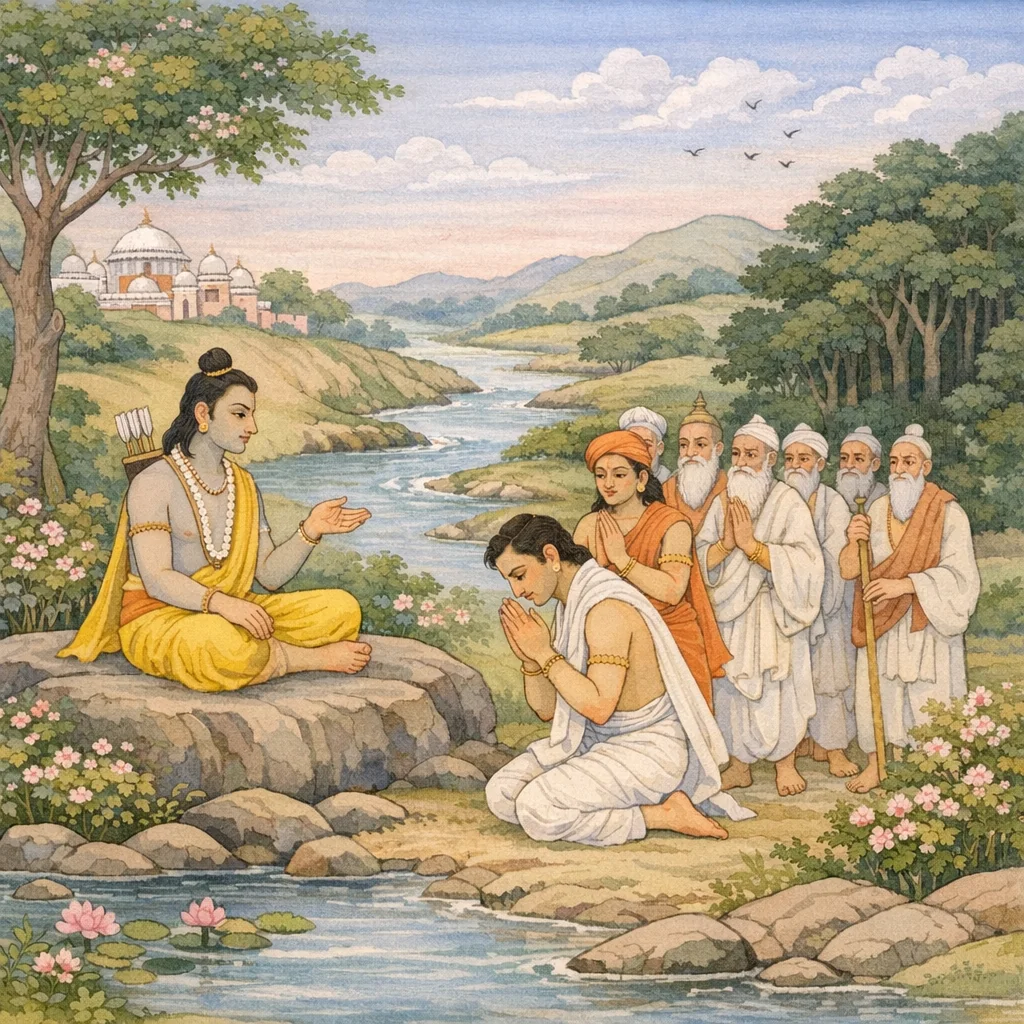
In Sarga 107 of the Ayodhyā Kāṇḍa, Rāma—honoured among his kin—answers Bharata’s renewed appeal and affirms that Bharata’s stance is proper for Daśaratha’s son through Kaikeyī. Rāma then sets forth the chain of dharmic obligation: Daśaratha’s earlier promise at Kaikeyī’s marriage, the later boon granted after her service in the deva–asura conflict, and Kaikeyī’s demand that Bharata receive the kingdom while Rāma goes to forest exile. Rāma presents his own forest life as faithful observance of a vow and urges Bharata to complete the same moral course by accepting coronation without delay, thus preserving Daśaratha’s truthfulness. He instructs Bharata to “release the king from his debt”—the burden of an unfulfilled vow—and to honour father and mother. To strengthen the filial imperative, Rāma cites a Gaya-related śruti: a “putra” is one who saves his father from the hell called Put and protects the ancestors; therefore many sons are desired so that at least one performs the rites at Gayā. Concluding with guidance for rule and reassurance, Rāma directs Bharata to return to Ayodhyā with Śatrughna and the twice-born, keep the subjects content, while Rāma enters Daṇḍaka with Sītā and Lakṣmaṇa—complementary sovereignties: Bharata over men, Rāma over the forest, each under fitting “shade” (umbrella and trees), bound together by truth.
Shlokas
Verse 1
पुनरेवं ब्रुवाणं तं भरतं लक्ष्मणाग्रजः।प्रत्युवाच तत श्श्रीमान् ज्ञातिमध्येऽभिसत्कृतः।।2.107.1।।
Then, as Bharata spoke again in that manner, the illustrious Rāma—elder brother of Lakṣmaṇa, honoured among his kinsmen—replied to him.
Verse 2
उपपन्नमिदं वाक्यं यत्त्वमेवमभाषथाः।जातः पुत्रो दशरथात्कैकेय्यां राजसत्तमात्।।2.107.2।।
Your words are fitting, for you were born as the son of Daśaratha, the most excellent of kings, through Kaikeyī.
Verse 3
पुरा भ्रातः पिता न स्स मातरं ते समुद्वहन्।मातामहे समाश्रौषीद्राज्यशुल्कमनुत्तमम्।।2.107.3।।
Formerly, dear brother, when our father married your mother, he gave your maternal grandfather his assurance of an unsurpassed ‘bride-price’: a kingdom rich in revenues.
Verse 4
दैवासुरे च सङ्ग्रामे जनन्यै तव पार्थिवः।सम्प्रहृष्टो ददौ राजा वरमाराधितः प्रभुः।।2.107.4।।
And in the war between gods and demons, the lordly king—gratified by your mother—gladly granted her a boon.
Verse 5
ततस्सा सम्प्रतिश्राव्य तव माता यशस्विनी।अयाचत नरश्रेष्ठं द्वौ वरौ वरवर्णिनी।।2.107.5।।तव राज्यं नरव्याघ्र मम प्रव्राजनं तथा।तौ च राजा तदा तस्यै नियुक्तः प्रददौ वरौ।।2.107.6।।
Then your illustrious mother, fair in complexion, having first bound that best of men by a renewed promise, asked for two boons.
Verse 6
ततः सा सम्प्रतिश्राव्य तव माता यशस्विनी।अयाचत नरश्रेष्ठं द्वौ वरौ वरवर्णिनी।।2.107.5।।तव राज्यं नरव्याघ्र मम प्रव्राजनं तथा।तच्च राजा तदा तस्यै नियुक्तः प्रददौ वरौ।।2.107.6।।
“The kingdom for you, O tiger among men, and my banishment as well.” Thus bound by his pledged word, the king then granted her those two boons.
Verse 7
तेन पित्राऽहमप्यत्र नियुक्तः पुरुषर्षभ।चतुर्दश वने वासं वर्षाणि वरदानिकम्।।2.107.7।।
Therefore, O best of men, I too have been enjoined by my father—according to the boon’s stipulation—to dwell in the forest here for fourteen years.
Verse 8
सोऽहं वनमिदं प्राप्तो निर्जनं लक्ष्मणान्वितः।सीतया चाप्रतिद्वन्द्व स्सत्यवादे स्थितः पितुः।।2.107.8।।
Thus I have reached this lonely forest, accompanied by Lakṣmaṇa and Sītā, resolved to uphold the truthfulness of my father—unrivalled in his fidelity to his word.
Verse 9
भवानपि तथेत्येव पितरं सत्यवादिनम्।कर्तुमर्हति राजेन्द्र क्षिप्रमेवाभिषेचनात्।।2.107.9।।
O Indra among kings, you too should ensure—by proceeding swiftly with the coronation—that our father, true to his word, is vindicated as one who kept his promise.
Verse 10
ऋणान्मोचय राजानं मत्कृते भरत प्रभुम्।पितरं चापि धर्मज्ञं मातरं चाभिनन्दय।।2.107.10।।
O Bharata, for my sake release the capable king from his debt of obligation; and honour as well the dharma-knowing father and the mother.
Verse 11
श्रूयते धीमता तात श्रुतिर्गीता यशस्विना।गयेन यजमानेन गयेष्वेव पितॄन् प्रति।।2.107.11।।
Dear brother, it is heard in tradition that a Vedic utterance was once chanted by the illustrious and wise sacrificer Gaya, while performing rites for the ancestors at Gaya.
Verse 12
पुन्नाम्नो नरकाद् यस्मात् पितरं त्रायते सुतः।तस्मात् पुत्र इति प्रोक्तः पितॄन् यः पाति सर्वतः।।2.107.12।।
Since a son delivers his father from a hell called ‘Put’, therefore he is called putra—one who protects the ancestors in every way.
Verse 13
एष्टव्या बहवः पुत्रा गुणवन्तो बहुश्रुताः।तेषां वै समवेतानामपि कश्चिद्गयां व्रजेत्।।2.107.13।।
Many sons—virtuous and well-learned—are to be desired, so that even if all are gathered together, at least one may go to Gayā to perform the rites for the ancestors.
Verse 14
एवं राजर्षय स्सर्वे प्रतीता राजनन्दन।तस्मात्राहि नरश्रेष्ठ पितरं नरकात्प्रभो।।2.107.14।।
Thus all the royal seers are agreed, O delight of the king’s line; therefore, O best of men, O lord—save your father from hell.
Verse 15
अयोध्यां गच्छ भरत प्रकृतीरनुरञ्जय।शत्रुघ्नसहितो वीर सह सर्वैर्द्विजातिभिः।।2.107.15।।
Go to Ayodhyā, Bharata, and keep the people content; go, O valiant one, together with Śatrughna and all the twice-born.
Verse 16
प्रवेक्ष्ये दण्डकारण्यमहमप्यविलम्बयन्।आभ्यान्तु सहितो राजन् वैदेह्या लक्ष्मणेन च।।2.107.16।।
And I, without delay, shall enter the Daṇḍaka forest—accompanied only by those two: Vaidehī and Lakṣmaṇa, O king.
Verse 17
त्वं राजा भरत भव स्वयं नराणां वन्यानामहमपि राजराण्मृगाणाम्।गच्छ त्वं पुरवरमद्य सम्प्रहृष्टस्संहृष्टस्त्वहमपि दण्डकान्प्रवेक्ष्ये।।2.107.17।।
Be king yourself, Bharata, over men; and I shall be sovereign over the forest’s wild beasts. Go today—glad at heart—to the best of cities; and I too, rejoicing, shall enter the Daṇḍaka wilds.
Verse 18
छायां ते दिनकरभाः प्रबाधमानां वर्षत्रं भरत करोतु मूर्ध्नि शीताम्।एतेषामहमपि काननद्रुमाणां छायां तामतिशयिनीं सुखी श्रयिष्ये।।2.107.18।।
Bharata, let an umbrella, warding off the sun’s fierce heat, cast cool shade upon your head. As for me, content, I shall take refuge in the deeper shade of these forest trees.
Verse 19
शत्रुघ्नः कुशलमतिस्तु ते सहायस्सौमित्रिर्मम विदितः प्रधानमित्रम्।चत्वारस्तनयवरा वयं नरेन्द्रं सत्यस्थं भरत चराम मा विषीद।।2.107.19।।
Thus all the royal seers are agreed, O delight of the king’s line; therefore, O best of men, O lord—save your father from hell.
Frequently Asked Questions
The dilemma is how to preserve Daśaratha’s truthfulness after his death: Rāma insists Bharata must accept coronation so the pledged boons are honored, while Rāma himself completes exile as vow-obedience.
Dharma is upheld through continuity of promises across generations: a son’s duty includes sustaining the moral credit of the father’s word, integrating personal sacrifice with public order.
Gayā is highlighted as a sacred locus for ancestral rites, invoked through a śruti explaining ‘putra’ as one who saves the father from Put-naraka; Ayodhyā and Daṇḍakāraṇya mark the paired domains of civic rule and ascetic forest life.