Sarga 30
खरवधः — The Slaying of Khara (Janasthana Battle Climax)
अरण्यकाण्ड
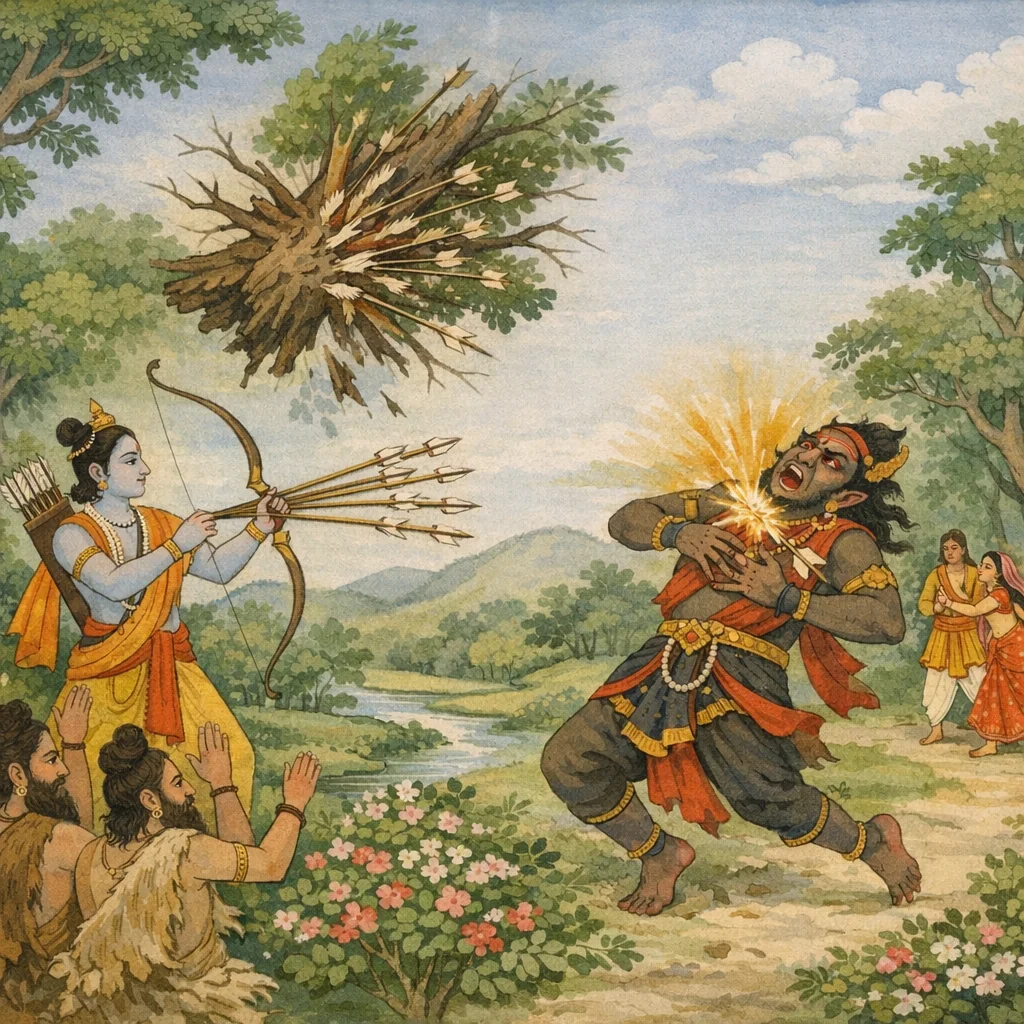
This sarga brings the Janasthāna battle to its climax through taut dialogue and decisive weapon-play. Rāma first shatters Khara’s mace with arrows and, smiling, rebukes him: Khara’s boastful confidence is exposed, his promises to hearten the rākṣasas are declared false, and the moral charge is sharpened—Khara is shown as a continual menace to brāhmaṇa-led sacrificial life, forcing seers to offer oblations in fear. Khara answers with abuse, mistaking bravado for fearlessness and claiming Rāma speaks under the “noose of death” that steals discernment. Snatching an improvised weapon, Khara uproots a great śāla tree and hurls it; Rāma splinters it with a torrent of arrows. Then Rāma looses a fire-like dart/arrow, likened to a brahmadaṇḍa and said to be Indra-given, and strikes Khara in the chest. Khara falls amid layered similes (Vṛtra, Bala, Namuci). Rājarṣis and deities praise Rāma’s swift efficacy and the restoration of safe dharma-practice in Daṇḍaka. The chapter ends with Lakṣmaṇa returning with Sītā, and Sītā embracing the unhurt Rāma, joining martial victory to the welfare of home and ascetic life.
Shlokas
Verse 1
भित्त्वा तु तां गदां बाणै राघवो धर्मवत्सलः।स्मयमानः खरं वाक्यं संरब्धमिदमब्रवीत्।।।।
But Rāghava, devoted to dharma, shattered that mace with his arrows; and smiling at Khara, he spoke these charged words.
Verse 2
एतत्ते बलसर्वस्वं दर्शितं राक्षसाधम।शक्तिहीनतरो मत्तो वृथा त्वमवगर्जसि।।।।
This is all the strength you have to show, vile rākṣasa. Weaker than I, you roar in vain.
Verse 3
एषा बाणविनिर्भिन्ना गदा भूमितलं गता।अभिधानप्रगल्भस्य तव प्रत्ययघातिनी।।।।
Behold this mace—pierced and shattered by arrows—now lying upon the earth, shattering the pride and false confidence born of your boastful words.
Verse 4
यत्त्वयोक्तं विनष्टानामहमश्रुप्रमार्जनम्।राक्षसानां करोमीति मिथ्या तदपि ते वचः।।।।
As for what you declared—“I will wipe away the tears of the fallen rākṣasas”—even those words of yours have proved false.
Verse 5
नीचस्य क्षुद्रशीलस्य मिथ्यावृत्तस्य रक्षसः।प्राणानहं हरिष्यामि गरुत्मानमृतं यथा।।।।
I will take the life of this rākṣasa—base, petty-natured, and given to false ways—just as Garuḍa once carried off the nectar.
Verse 6
अद्य ते छिन्नकण्ठस्य फेनबुद्बुदभूषितम्।विदारितस्य मद्बाणैर्मही पास्यति शोणितम्।।।।
Today, when your throat is cut and your body torn open by my arrows, the earth will drink your blood—frothy and bubbled.
Verse 7
पांसुरूषितसर्वाङ्गस्स्रस्तन्यस्त भुजद्वयः।स्वप्स्यसे गां समालिङ्ग्य दुर्लभां प्रमदामिव।।।।
Your whole body will be smeared with dust; your two arms will fall slack and lie outstretched on the ground. Embracing the earth, you will sleep—like one clasping a rare woman.
Verse 8
प्रबद्धनिद्रे शयिते त्वयि राक्षसपांसने।भविष्यन्तिशरण्यानां शरण्या दण्डका इमे।।।।
When you, vile rakshasa, lie in boundless sleep, these Dandaka forests will become a refuge for those who deserve refuge.
Verse 9
जनस्थाने हतस्थाने तव राक्षस मच्छरैः।निर्भया विचरिष्यन्ति सर्वतो मुनयो वने।।।।
O rakshasa, when your stronghold at Janasthana is destroyed by my arrows, the sages will roam everywhere in the forest, free from fear.
Verse 10
अद्य विप्रसरिष्यन्ति राक्षस्यो हतबान्धवाः।बाष्पार्द्रवदना दीना भयादन्यभयावहाः।।।।
Today the rākṣasī women—bereft of their kinsmen—will scatter in panic, their faces wet with tears; they who once spread terror to others will now be driven by fear.
Verse 11
अद्य शोकरसज्ञास्ता भविष्यन्ति निरर्थकाः।अनुरूपकुलाः पत्न्यो यासां त्वं पतिरीदृशः।।।।
Today those wives of yours—women of fitting lineage—will taste only the flavor of grief, made widowed in vain, since their husband is one such as you.
Verse 12
नृशंस नीच क्षुद्रात्मन्नित्यं ब्राह्मणकण्टक।यत्कृते शङ्कितैरग्नौ मुनिभिः पात्यते हविः।।।।
O cruel, base, petty-souled thorn to the brāhmaṇas—because of you, the sages, anxious and wary, cast their oblations into the fire as though under threat.
Verse 13
तमेवमभिसंरब्धं ब्रुवाणं राघवं रणे।खरो निर्भर्त्सयामास रोषात्खरतरस्वरः।।।।
As Rāghava spoke thus, fiercely aroused in the battle, Khara—his anger sharpening his voice—began to revile him.
Verse 14
दृढं खल्ववलिप्तोऽसि भयेष्वपि च निर्भयः।वाच्यावाच्यं ततो हि त्वं मृत्युवश्यो न बुध्यसे।।।।
Surely you are obstinate in your arrogance—fearless even where fear is warranted; and therefore, already under Death’s dominion, you do not discern what should be spoken and what should be left unsaid.
Verse 15
कालपाशपरिक्षिप्ता भवन्ति पुरुषा हि ये।कार्याकार्यं न जानन्ति ते निरस्तषडिन्द्रियाः।।।।
Those men whom the noose of Time has already bound lose their senses; they no longer discern what ought to be done and what ought not to be done, their six faculties cast away.
Verse 16
एवमुक्त्वा ततो रामं संरुध्य भ्रुकुटीं ततः।स ददर्श महासालमविदूरे निशाचरः।।।।रणे प्रहरणस्यार्थे सर्वतो ह्यवलोकयन्।
Having spoken thus to Rāma, the night-roamer knit his brows into a frown; then, scanning all around the battlefield for a weapon with which to strike, he saw a great śāla tree nearby.
Verse 17
स तमुत्पाटयामास संदश्य दशनच्छदम्।।।।तं समुत्क्षिप्य बाहुभ्यां विनद्य च महाबलः।राममुद्दिश्य चिक्षेप हतस्त्वमिति चाब्रवीत्।।।।
Khara, biting his lower lip in rage, uprooted that tree; hoisting it with his powerful arms and roaring, he hurled it at Rāma, crying, “You are slain!”
Verse 18
स तमुत्पाटयामास संदश्य दशनच्छदम्।।3.30.17।।तं समुत्क्षिप्य बाहुभ्यां विनद्य च महाबलः।राममुद्दिश्य चिक्षेप हतस्त्वमिति चाब्रवीत्।।3.30.18।।
Khara, biting his lower lip, uprooted that tree; lifting it with his strong arms and roaring, he hurled it at Rāma, saying, “You are dead.”
Verse 19
तमापतन्तं बाणौघैच्छित्वा रामः प्रतापवान्।रोषमाहारयत्तीव्रं निहन्तुं समरे खरम्।।।।
As the tree came crashing toward him, mighty Rāma shattered it with a torrent of arrows, and then gathered a fierce resolve to end Khara in battle.
Verse 20
जातस्वेदस्ततो रामो रोषाद्रक्तान्तलोचनः।निर्भिभेद सहस्रेण बाणानां समरे खरम्।।।।
Then Rama, sweating and with eyes reddened at the corners from anger, struck Khara in battle with a thousand arrows.
Verse 21
तस्य बाणान्तराद्रक्तं बहु सुस्राव फेनिलम्।गिरेः प्रस्रवणस्येव तोयधारापरिस्रवः।।।।
From the gaps made by the arrows, much foaming blood poured from him, like streams of water cascading down Mount Prasravana.
Verse 22
विह्वलस्सकृतो बाणैः खरो रामेण संयुगे।मत्तो रुधिरगन्धेन तमेवाभ्यद्रवद्द्रुतम्।।।।
Though staggered by Rama’s arrows in the fight, Khara—intoxicated by the smell of blood—rushed swiftly at him again.
Verse 23
तमापतन्तं संरब्धं कृतास्त्रो रुधिराप्लुतम्।अपासर्पत्प्रतिपदं किञ्चित्वरितविक्रमः।।।।
Seeing him charge in fury, drenched in blood, Rama—trained in the use of weapons—shifted back a step, swiftly adjusting his stance.
Verse 24
ततः पावकसङ्काशं वधाय समरे शरम्।खरस्य रामो जग्राह ब्रह्मदण्डमिवापरम्।।।।
Then, to slay Khara in the battle, Rama took up an arrow radiant like fire, as though it were a second rod of Brahmā’s chastisement.
Verse 25
स तं दत्तं मघवता सुरराजेन धीमता।संदधे चापि धर्मात्मा मुमोच च खरं प्रति।।।।
That weapon, bestowed by the wise Maghavat (Indra), king of the gods, righteous Rama set upon his bow and released toward Khara.
Verse 26
स विमुक्तो महाबाणो निर्घातसमनिस्वनः।रामेण धनुरायम्य खरस्योरसिचापतत्।।।।
Drawing the bow to its full stretch, Rama released a mighty arrow, roaring like a thunderclap; it struck and fell upon Khara’s chest.
Verse 27
स पपात खरो भूमौ दह्यमानश्शरानग्निना।रुद्रेणेव विनिर्दग्धश्वेतारण्ये यथान्तकः।।।।
Khara collapsed to the ground, burning in the fire of the arrow—like Antaka (Yama), scorched by Rudra in Śvetāraṇya.
Verse 28
स वृत्र इव वज्रेण फेनेन नमुचिर्यथा।बलो वेन्द्राशनिहतो निपपात हतः खरः।।।।
Slain, Khara fell—like Vṛtra struck down by the vajra, like Namuci destroyed by foam, or like Bala felled by Indra’s weapon.
Verse 29
ततो राजर्षयस्सर्वे सङ्गताः परमर्षयः।सभाज्य मुदिता राममिदं वचनमब्रुवन्।।।।
Then all the royal sages—the great seers assembled together—honored Rāma with reverence and, rejoicing, spoke these words.
Verse 30
एतदर्थं महातेजा महेन्द्रः पाकशासनः।शरभङ्गाश्रमं पुण्यमाजगाम पुरन्दरः।।।।
For this very purpose, the glorious Mahendra—Indra, slayer of Pāka, the fortress-breaker—came to the holy hermitage of Śarabhaṅga.
Verse 31
आनीतस्त्वमिमं देशमुपायेन महर्षिभिः।एषां वधार्थं क्रूराणां रक्षसां पापकर्मणाम्।।।।
By a deliberate plan, the great sages brought you to this region—so that these cruel rākṣasas of sinful deeds might be slain.
Verse 32
तदिदं नः कृतं कार्यं त्वया दशरथात्मज।सुखं धर्मं चरिष्यन्ति दण्डकेषु महर्षयः।।।।
O son of Daśaratha, by you our task has been accomplished; now the great sages in Daṇḍaka will practice dharma in peace and happiness.
Verse 33
एतस्मिन्तरे देवाश्चारणैस्सह सङ्गताः।दुन्दुभींश्चाभिनिघ्नन्तः पुष्पवर्षं समन्ततः।।।।रामस्योपरि संह्रुष्टा ववृषुर्विस्मितास्तदा।
Meanwhile, the gods assembled with the Cāraṇas; beating their dundubhi drums, they joyfully rained a shower of flowers from every side upon Rāma, astonished at his feat.
Verse 34
अर्धाधिकमुहूर्तेन रामेण निशितैश्शरैः।।।।चतुर्दशसहस्राणि रक्षसां भीमकर्मणाम्।खरदूषणमुख्यानां निहतानि महाहवे।।।।
In a little more than half a muhūrta, Rāma, with sharp arrows, slew fourteen thousand rākṣasas of terrible deeds, led by Khara and Dūṣaṇa, in that great battle.
Verse 35
अर्धाधिकमुहूर्तेन रामेण निशितैश्शरैः।।3.30.34।।चतुर्दशसहस्राणि रक्षसां भीमकर्मणाम्।खरदूषणमुख्यानां निहतानि महाहवे।।3.30.35।।
In that great battle, fourteen thousand rākṣasas—men of dreadful deeds, led by Khara and Dūṣaṇa—were slain.
Verse 36
अहो बत महत्कर्म रामस्य विदितात्मनः।अहो वीर्यमहो दाक्ष्यं विष्णोरिव हि दृश्यते।।।।इत्येवमुक्त्वा ते सर्वे ययुर्देवा यथागतम्।
“How great is the deed of self-knowing Rāma! How splendid his prowess—how perfect his skill; it appears like that of Viṣṇu himself.” Saying so, all the gods departed, returning as they had come.
Verse 37
तस्मिन्नन्तरे वीरो लक्ष्मणस्सह सीतया।गिरिदुर्गाद्विनिष्क्रम्य संविवेशाश्रमं सुखी।।।।
Meanwhile, the heroic Lakṣmaṇa, together with Sītā, came out from the mountain stronghold and happily entered the hermitage.
Verse 38
ततो रामस्तु विजयी पूज्यमानो महर्षिभिः।प्रविवेशाश्रमं वीरो लक्ष्मणेनाभिपूजितः।।।।
Then the victorious hero Rāma—honored by the great ṛṣis and reverently received by Lakṣmaṇa—entered the hermitage.
Verse 39
तं दृष्ट्वा शत्रुहन्तारं महर्षीणां सुखावहम्।बभूव हृष्टा वैदेही भर्तारं परिषस्वजे।।।।
Seeing him—the slayer of foes and the bringer of safety and joy to the great ṛṣis—Vaidehī rejoiced and embraced her husband.
Verse 40
मुदा परमया युक्ता दृष्ट्वा रक्षोगणान्हतान्।रामं चैवाव्यथं दृष्ट्वा तुतोष जनकात्मजा।।।।
Filled with the greatest joy, Janaka’s daughter was satisfied on seeing the bands of rākṣasas slain—and seeing Rāma himself unharmed.
Verse 41
ततस्तु तं राक्षससङ्घमर्दनं सभाज्यमानं मुदितैर्महर्षिभिः।पुनः परिष्वज्य शशिप्रभानना बभूव हृष्टा जनकात्मजा तदा।।।।
Then Janaka’s daughter, her face radiant like the moon, embraced him again—him who had crushed the host of rākṣasas, while the joyful great ṛṣis honored him—and she was filled with delight.
Frequently Asked Questions
The sarga frames a dharmic use of force: Rāma’s violence is justified as protection of ascetics and sacrificial practice against a persistent aggressor, while warning that arrogance and intimidation of brāhmaṇas destabilize social-ritual order.
Speech and perception degrade under the ‘kālapāśa’ motif: those nearing ruin lose discrimination (kārya/akārya). The text contrasts Rāma’s disciplined, purpose-bound action with Khara’s reactive rage and abusive rhetoric.
Daṇḍaka and Janasthāna are treated as contested sacred space for muni-life; Śarabhaṅgāśrama is referenced in relation to Indra’s purpose, while Prasravaṇa and Śvetāraṇya appear through similes that anchor the battle in a wider mythic geography.