Adhyaya 70
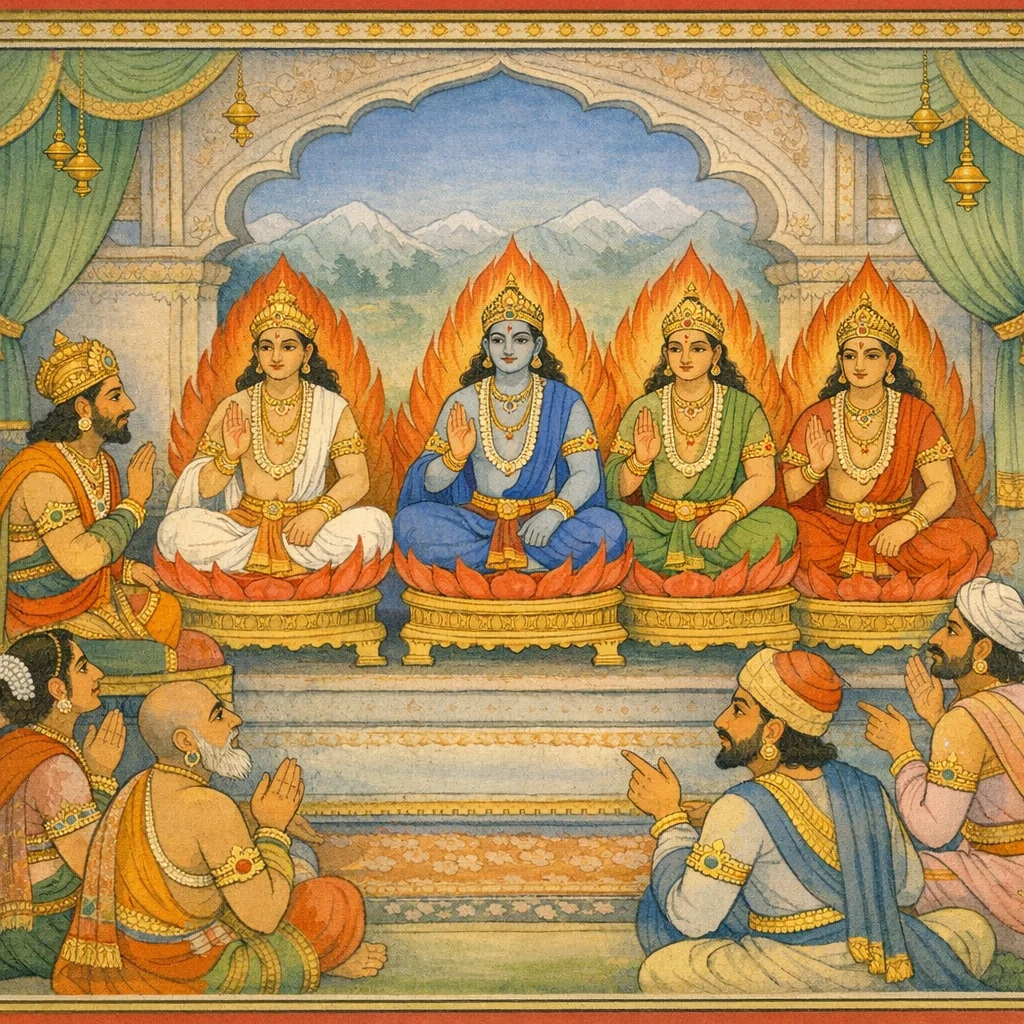
Chapter Arc: अज्ञातवास की प्रतिज्ञा पूर्ण होते ही विराट-सभा के द्वार पर एक अद्भुत दृश्य—युधिष्ठिर को अग्रणी बनाकर, समस्त आभूषणों से विभूषित, तेजस्वी महारथी पाण्डव ऐसे चमकते हैं जैसे द्वार पर मदमत्त गजराज। → सभा में प्रवेश कर वे राजासन-सम आसनों पर अग्नि-सदृश दीप्त होकर बैठते हैं; पहचान का क्षण निकट है—विराट, सभासद, और नगर-जन सबके मन में विस्मय और आशंका साथ-साथ उठती है कि ये कौन दिव्य पुरुष हैं। → सभा में युधिष्ठिर के गुणों का महिमामंडन—दीर्घदर्शी, सत्यवादी, जितेन्द्रिय, यज्ञ-धर्मपरायण, मनु के समान प्रजापालक—ऐसी स्तुति के साथ उनका राजोचित अधिकार प्रकट होता है; ‘ऐसे धर्मात्मा को आसन न देना कैसे संभव?’—यही पहचान-प्रकाश का शिखर बनता है। → पाण्डवों का ‘प्राकट्य’ (प्रकाश) स्थापित होता है—वे अब छिपे सेवक नहीं, धर्म-तेज से युक्त क्षत्रिय-श्रेष्ठ हैं; विराट-सभा में उनका सम्मान और स्थान सुनिश्चित होता है। → अब जब पहचान खुल गई, तो कौरवों तक यह समाचार पहुँचेगा—और द्रौपदी-विवाह/उत्तर-परिणय के सूत्रों के साथ युद्ध की आहट निकट आती है।
Shlokas
Verse 1
इस प्रकार श्रीमह्या भारत विराटपवके अन्तर्गत वैवाहिकपरववमें पाण्डवप्राकट्यविषयक सत्तरवाँ अध्याय पूरा हुआ ॥/ ७० ॥। बपाडानडज () | अऑपटआ छणडट एकसप्ततितमो<्ध्याय: विराटको अन्य पाण्डवोंका भी परिचय प्राप्त होना तथा विराटके द्वारा युधिष्ठिरको राज्य समर्पण करके अर्जुनके साथ उत्तराके विवाहका प्रस्ताव करना विराट उवाच यद्येष राजा कौरव्य: कुन्तीपुत्रो युधिष्ठिर: । कतमोडस्यार्जुनो भ्राता भीमश्न॒ कतमो बली,वैशम्पायनजी कहते हैं-जनमेजय! तदनन्तर नियत समयतक अपनी प्रतिज्ञाका पालन करके अग्निके समान तेजस्वी पाँचों भाई महारथी पाण्डव तीसरे दिन स्नान करके श्वेत वस्त्र धारणकर समस्त राजोचित आभूषणोंसे विभूषित हो राजसभामें द्वारपर स्थित मदोन्मत्त गजराजोंकी भाँति सुशोभित होने लगे। वे राजा युधिष्ठिरको आगे करके विराटकी सभामें गये और राजाओंके लिये रखे हुए सिंहासनोंपर बैठे। उस समय वे भिन्न-भिन्न यज्ञवेदियोंपर प्रज्वलित अग्नियोंके समान प्रकाशित हो रहे थे
Vaiśaṃpāyana said: O Janamejaya, thereafter—having kept their vow for the appointed time—the five Pāṇḍava brothers, mighty chariot-warriors blazing like fire, on the third day bathed, put on white garments, and adorned themselves with every royal ornament. Standing at the entrance of the royal hall, they shone like intoxicated lordly elephants posted at a palace gate. Then, placing King Yudhiṣṭhira in front, they entered Virāṭa’s assembly and sat upon the thrones reserved for kings. At that moment they appeared radiant, like sacred fires kindled on different sacrificial altars.
Verse 2
युधिष्ठिरं पुरस्कृत्य सर्वाभरणभूषिता: । द्वारि मत्ता यथा नागा भ्राजमाना महारथा:,वैशम्पायनजी कहते हैं-जनमेजय! तदनन्तर नियत समयतक अपनी प्रतिज्ञाका पालन करके अग्निके समान तेजस्वी पाँचों भाई महारथी पाण्डव तीसरे दिन स्नान करके श्वेत वस्त्र धारणकर समस्त राजोचित आभूषणोंसे विभूषित हो राजसभामें द्वारपर स्थित मदोन्मत्त गजराजोंकी भाँति सुशोभित होने लगे। वे राजा युधिष्ठिरको आगे करके विराटकी सभामें गये और राजाओंके लिये रखे हुए सिंहासनोंपर बैठे। उस समय वे भिन्न-भिन्न यज्ञवेदियोंपर प्रज्वलित अग्नियोंके समान प्रकाशित हो रहे थे
Vaiśampāyana said: With Yudhiṣṭhira placed in the forefront, the great chariot-warriors—adorned with every kind of royal ornament—stood shining at the doorway, like intoxicated lordly elephants at a gate. The scene underscored their disciplined return to rightful dignity and bearing after fulfilling their vow.
Verse 3
विराटस्य सभां गत्वा भूमिपालासनेष्वथ । निषेदु: पावकप्रख्या: सर्वे धिष्ण्येष्विवाग्नय:,वैशम्पायनजी कहते हैं-जनमेजय! तदनन्तर नियत समयतक अपनी प्रतिज्ञाका पालन करके अग्निके समान तेजस्वी पाँचों भाई महारथी पाण्डव तीसरे दिन स्नान करके श्वेत वस्त्र धारणकर समस्त राजोचित आभूषणोंसे विभूषित हो राजसभामें द्वारपर स्थित मदोन्मत्त गजराजोंकी भाँति सुशोभित होने लगे। वे राजा युधिष्ठिरको आगे करके विराटकी सभामें गये और राजाओंके लिये रखे हुए सिंहासनोंपर बैठे। उस समय वे भिन्न-भिन्न यज्ञवेदियोंपर प्रज्वलित अग्नियोंके समान प्रकाशित हो रहे थे
Vaiśampāyana said: Having gone to King Virāṭa’s royal assembly, they then took their seats upon the thrones set apart for kings. All of them—radiant like fire—sat shining like sacred flames kindled upon their respective altars.
Verse 4
तेषु तत्रोपविष्टेषु विराट: पृथिवीपति: । आजगाम सभां कर्तु राजकार्याणि सर्वश:,पाण्डवोंके वहाँ बैठ जानेपर राजा विराट अपने समस्त राजकाज करनेके लिये सभामें आये
When they had taken their seats there, King Virāṭa, lord of the land, came into the assembly hall to attend to all the affairs of state.
Verse 5
श्रीमतः पाण्डवान् दृष्टवा ज्वलत: पावकानिव । मुहूर्तमिव च ध्यात्वा सरोष: पृथिवीपति:,वहाँ प्रज॒जलित अग्नियोंके समान तेजस्वी श्रीसम्पन्न पाण्डवोंको देखकर पृथ्वीपति विराटने दो घड़ीतक मन-ही-मन कुछ विचार किया। फिर वे कुपित होकर देवताके समान स्थित मरुदगणोंसे घिरे हुए देवराज इन्द्रके तुल्य सुशोभित कंकसे बोले--
Seeing the illustrious Pāṇḍavas blazing like fires, King Virāṭa, lord of the earth, paused for a moment in inward reflection. Then, anger rising, he spoke to Kaṅka, who stood resplendent like Indra amid attendants like the Maruts.
Verse 6
अथ मत्स्यो5ब्रवीत् कड्कं॑ देवरूपमिव स्थितम् । मरुद्गणैरुपासीन त्रिदशानामिवेश्वरम्,वहाँ प्रज॒जलित अग्नियोंके समान तेजस्वी श्रीसम्पन्न पाण्डवोंको देखकर पृथ्वीपति विराटने दो घड़ीतक मन-ही-मन कुछ विचार किया। फिर वे कुपित होकर देवताके समान स्थित मरुदगणोंसे घिरे हुए देवराज इन्द्रके तुल्य सुशोभित कंकसे बोले--
Vaiśampāyana said: Then King Matsya (Virāṭa) addressed Kaṅka, who stood with a godlike bearing—attended by bands of Maruts, like the lord of the Thirty-Three Gods. Seeing the Pāṇḍavas radiant like blazing fires, Virāṭa reflected briefly within; then, anger rising, he spoke to Kaṅka, who shone like Indra amid the Maruts.
Verse 7
स किलाक्षातिवापस्त्वं सभास्तारो मया वृतः । अथ राजासने कस्मादुपविष्टस्त्वलंकृत: ७ ।। “कंक! तुम्हें तो मैंने पासा फेंकनेवाला सभासद् बनाया था। आज बन-ठनकर राजसिंहासनपर कैसे बैठ गये?”
He said: “Kanka! I chose you as a member of the royal assembly to cast the dice. Why, then, are you now seated—adorned and dressed up—upon the king’s throne?”
Verse 8
वैशम्पायन उवाच परिहासेप्सया वाकक््यं विराटस्य निशम्य तत् | स्मयमानोडर्जुनो राजन्निदं वचनमत्रवीत्,वैशम्पायनजी कहते हैं--जनमेजय! मानो परिहास करनेके लिये कहा गया हो, ऐसा विराटका वह वचन सुनकर अर्जुन मुसकराते हुए इस प्रकार बोले
Vaiśampāyana said: O King (Janamejaya), hearing that statement of Virāṭa—spoken as though in jest—Arjuna, smiling, replied with these words.
Verse 9
अर्जुन उवाच इन्द्रस्यार्धासनं राजन्नयमारोदुमर्हति । ब्रह्माण्य: श्रुतवांस्त्यागी यज्ञशीलो दृढव्रत:,अर्जुनने कहा--राजन्! आपके राजासनकी तो बात ही क्या है, ये तो इन्द्रके भी आधे सिंहासनपर बैठनेके अधिकारी हैं। ये ब्राह्मणभक्त, शास्त्रोंके विद्वान, त्यागी, यज्ञशील तथा दृढ़ताके साथ अपने व्रतका पालन करनेवाले हैं
Arjuna said: “O King, leaving aside your royal throne—this man is worthy even to ascend half the seat of Indra. He is devoted to the Brāhmaṇas, learned in sacred lore, self-denying, devoted to sacrificial duty, and steadfast in the observance of his vows.”
Verse 10
एष विग्रहवान् धर्म एष वीर्यवर्तां वर: । एष बुद्धपबाधिको लोके तपसां च परायणम्,ये मूर्तिमान धर्म हैं तथा पराक्रमी पुरुषोंमें श्रेष्ठ हैं। इस जगत्में ये सबसे बढ़कर बुद्धिमान् और तपस्याके परम आश्रय हैं। ये नाना प्रकारके ऐसे अस्त्रोंको जानते हैं, जिन्हें इस चराचर त्रिलोकीमें दूसरा मनुष्य न तो जानता है और न कभी जान सकेगा
Arjuna said: “Here stands Dharma embodied; here is the foremost among the valiant. In this world he is the highest in discernment and the supreme refuge of ascetics and austerity.”
Verse 11
एषो<स्त्र॑ विविध॑ वेत्ति त्रैलोक्ये सचराचरे | न चैवान्य: पुमान् वेत्ति न वेत्स्यति कदाचन,ये मूर्तिमान धर्म हैं तथा पराक्रमी पुरुषोंमें श्रेष्ठ हैं। इस जगत्में ये सबसे बढ़कर बुद्धिमान् और तपस्याके परम आश्रय हैं। ये नाना प्रकारके ऐसे अस्त्रोंको जानते हैं, जिन्हें इस चराचर त्रिलोकीमें दूसरा मनुष्य न तो जानता है और न कभी जान सकेगा
Arjuna said: “He knows the manifold kinds of weapons throughout the three worlds with all that moves and does not move. No other man knows them, nor will anyone ever come to know them.”
Verse 12
न देवा नासुरा: केचिन्न मनुष्या न राक्षसा: । गन्धर्वयक्षप्रवरा: सकिन्नरमहोरगा:,जिन अस्त्रोंको देवता, असुर, मनुष्य, राक्षस, गन्धर्व, यक्ष, किन्नर और बड़े-बड़े नाग भी नहीं जानते, उन सबका इन्हें ज्ञान है
Arjuna said: “Neither the gods nor the demons—nor any among humans or the rākṣasas—nor even the foremost Gandharvas and Yakṣas, nor the Kinnaras, nor the mighty serpents, know (certain) weapons. Yet he has knowledge of them all.”
Verse 13
दीर्घदर्शी महातेजा: पौरजानपदप्रिय: । पाण्डवानामतिरथो यज्ञधर्मपरो वशी,ये दीर्घदर्शी, महातेजस्वी तथा नगर और देशके लोगोंको अत्यन्त प्रिय हैं। ये पाण्डवोंमें अतिरथी वीर हैं एवं सदा यज्ञ और धर्मके अनुष्ठानमें संलग्न तथा मन और इन्द्रियोंको वशमें रखनेवाले हैं
Arjuna said: “He is far-sighted and of great splendor, beloved by townsfolk and country people alike. Among the Pāṇḍavas he is an atiratha, ever devoted to sacrifice and Dharma, and master of his mind and senses.”
Verse 14
महर्षिकल्पो राजर्षि: सर्वलोकेषु विश्रुत: । बलवान धृतिमान् दक्ष: सत्यवादी जितेन्द्रिय: । धनैश्न सज्चयैश्नैव शक्रवैश्रवणोपम:,ये महर्षियोंके समान हैं, राजर्षि हैं और समस्त लोकोंमें विख्यात हैं। बलवान, धैर्यवान्, चतुर, सत्यवादी और जितेन्द्रिय हैं। धन और संग्रहकी दृष्टिसे ये इन्द्र और कुबेरके समान हैं
Arjuna said: “He is like a great seer, a royal sage renowned throughout all the worlds—strong, steadfast, capable, truthful, and master of his senses. In wealth and accumulated resources he is comparable to Śakra (Indra) and Vaiśravaṇa (Kubera).”
Verse 15
यथा मनुर्महातेजा लोकानां परिरक्षिता । एवमेष महातेजा: प्रजानुग्रहकारक:,जैसे महातेजस्वी मनु समस्त लोकोंके रक्षक हैं उसी प्रकार ये महातेजस्वी नरेश भी प्रजाजनोंपर अनुग्रह करनेवाले हैं
Arjuna said: “Just as Manu, the mighty and radiant lawgiver, is the protector of all peoples, so too is this mighty king one who shows benevolence and active favor toward his subjects.”
Verse 16
अयं कुरूणामृषभो धर्मराजो युधिष्ठिर: । अस्य कीर्ति: स्थिता लोके सूर्यस्येवोद्यत: प्रभा,ये ही कुरुवंशमें सर्वश्रेष्ठ धर्मराज युधिष्ठिर हैं। उदयकालके सूर्यकी शान्त प्रभाके समान इनकी सुख-दायिनी कीर्ति समस्त संसारमें फैली हुई है
Arjuna said: “This is Yudhiṣṭhira, the righteous king—foremost among the Kurus. His good fame stands established in the world, gentle and beneficent like the calm radiance of the rising sun.”
Verse 17
संसरन्ति दिश: सर्वा यशसो<स्य इवांशव: । उदितस्थेव सूर्यस्य तेजसो5नु गभस्तय:,जैसे सूर्योदय होनेपर सूर्यके तेजके पश्चात् उनकी किरणें समस्त दिशाओंमें फैल जाती हैं, उसी प्रकार इनके सुयशके साथ-साथ उसकी सुधाधवल किरणें समस्त दिशाओंमें छा रही हैं
Arjuna said: “As, at sunrise, the rays that follow the sun’s brilliance spread out into every direction, so too the radiance of this man’s fame is spreading everywhere—his spotless, nectar-white glory accompanying his renown.”
Verse 18
एनं दशसहस्राणि कुण्जराणां तरस्विनाम् | अन्वयु: पृष्ठतो राजन् यावदध्यावसत् कुरून्,राजन! ये महाराज जब कुरुदेशमें रहते थे, उस समय इनके पीछे दस हजार वेगवान् हाथी चला करते थे
Arjuna said: “O King, as long as he dwelt among the Kurus, ten thousand powerful, swift elephants used to follow behind him.”
Verse 19
त्रिंशदेनं सहस्राणि रथा: काउ्चनमालिन: । सदश्वैरुपसम्पन्ना: पृष्ठतो5नुययुस्तदा
Arjuna said: “Then thirty thousand chariots, adorned with golden garlands and fully equipped with excellent horses, followed behind him at that time.”
Verse 20
इस प्रकार अच्छे घोड़ोंसे जुते हुए सुवर्णमालामण्डित तीस हजार रथ भी उस समय इनका अनुसरण करते थे ।। एनमष्टशता: सूता: सुमृष्टमणिकुण्डला: । अब्र॒ुवन् मागधीै: सार्ध पुरा शक्रमिवर्षय:,जैसे महर्षिगण इन्द्रकी स्तुति करते हैं, उसी प्रकार पहले विशुद्ध मणिमय कुण्डल धारण किये आठ सौ सूत और मागध इनके गुण गाते थे
Arjuna said: “Just as the ancient seers once praised Indra, so too did eight hundred bards—Sūtas together with Māgadhas—adorned with finely polished, jewel-like earrings, sing aloud the virtues of this hero as he advanced, surrounded by the splendor and retinue of royal power.”
Verse 21
एन॑ नित्यमुपासन्त कुरव: किंकरा यथा । सर्वे च राजन् राजानो धनेश्वरमिवामरा:,राजन! जैसे देवगण धनाध्यक्ष कुबेरका दरबार किया करते हैं, वैसे ही सब राजा और कौरव किंकरोंकी भाँति इनकी नित्य उपासना करते थे
Arjuna said: “O King, the Kauravas used to attend upon him constantly, like servants. Indeed, all the kings would pay him homage—just as the gods attend upon the Lord of Wealth (Kubera).”
Verse 22
एष सर्वान् महीपालान् करदान् समकारयत् | वैश्यानिव महाभागो विवशान् स्ववशानपि,इन महाभाग नरेशने इस देशके सब राजाओंको वैश्योंकी भाँति स्ववश (अपने अधीन) और विवश करके कर देनेवाला बना दिया था। (अर्थात् सब राजा इन्हें कर दिया करते थे।) अत्यन्त उत्तम व्रतका पालन करनेवाले इन महाराजके यहाँ प्रतिदिन अट्टासी हजार महाबुद्धिमान् स्नातकोंकी जीविका चलती थी
Arjuna said: “This illustrious king compelled all the rulers of the earth to become tributaries. Like vaiśyas, whether they were willing or unwilling, he brought them under his control and made them pay tribute.”
Verse 23
अष्टाशीतिसहस््राणि स्नातकानां महात्मनाम् । उपजीवन्ति राजानमेनं सुचरितव्रतम्,इन महाभाग नरेशने इस देशके सब राजाओंको वैश्योंकी भाँति स्ववश (अपने अधीन) और विवश करके कर देनेवाला बना दिया था। (अर्थात् सब राजा इन्हें कर दिया करते थे।) अत्यन्त उत्तम व्रतका पालन करनेवाले इन महाराजके यहाँ प्रतिदिन अट्टासी हजार महाबुद्धिमान् स्नातकोंकी जीविका चलती थी
Arjuna said: “Eighty-eight thousand high-souled snātakas (learned householders who have completed their Vedic studies) earn their livelihood by the support of this king, a man steadfast in well-conducted vows.”
Verse 24
एष वृद्धाननाथांश्व पड्गूनन्धांश्व मानवान् । पुत्रवत् पालयामास प्रजा धर्मेण वै विभु:,ये बूढ़े, अनाथ, पंगू और अंधे मनुष्योंका भी स्नेहपूर्वक पालन करते थे। ये नरेश अपनी प्रजाकी धर्मपूर्वक पुत्रकी भाँति रक्षा करते थे
He, the mighty ruler, protected even the aged, the helpless, the lame, and the blind among his people. Upholding dharma, he cared for his subjects with the same solicitude with which one guards and nurtures one’s own children—an ideal of kingship grounded in compassion and righteous duty.
Verse 25
एष धर्म दमे चैव क्रोधे चापि जितव्रतः । महाप्रसादो ब्रह्माण्य: सत्यवादी च पार्थिव:,ये भूपाल धर्म और इन्द्रियसंयममें तत्पर तथा क्रोधको काबूमें रखनेके लिये दृढ़प्रतिज्ञ हैं। ये बड़े कृपालु, ब्राह्मणभक्त और सत्यवक्ता हैं
Arjuna said: “This king is steadfast in dharma and in self-restraint, and he has also taken a firm vow to conquer anger. He is greatly gracious, devoted to Brahmins, and a speaker of truth.”
Verse 26
शीघ्र तापेन चैतस्य तप्यते स सुयोधन: । सगण: सह कर्णेन सौबलेनापि वा विभु:,इनके प्रतापसे दुर्योधन शक्तिशाली होकर भी कर्ण, शकुनि तथा अपने गणोंके साथ शीघ्र ही संतप्त होनेवाला है
Arjuna said: “Suyodhana (Duryodhana), though powerful, will soon be scorched by the heat of this (deed/encounter). Along with his followers—together with Karṇa and even Śakuni, the son of Subala—he will quickly come to grief.”
Verse 27
न शक््यन्ते हास्य गुणा: प्रसंख्यातुं नरेश्वर । एष धर्मपरो नित्यमानृशंसश्न पाण्डव:,नरेश्वर! इनके सदगुणोंकी गणना नहीं की जा सकती। ये पाण्डुनन्दन नित्य धर्मपरायण तथा दयालु स्वभावके हैं। राजन! समस्त राजाओंके शिरोमणि पाण्डुनन्दन महाराज युधिष्ठिर इस प्रकार सर्वोत्तम गुणोंसे युक्त होकर भी राजोचित आसनके अधिकारी क्यों नहीं हैं?
Arjuna said: “O king, his virtues cannot be fully counted. This son of Pāṇḍu is ever devoted to dharma and is compassionate by nature. O ruler of men, though Yudhiṣṭhira—the crest-jewel among kings—possesses such supreme qualities, why should he not be worthy of a royal seat?”
Verse 28
एवं युक्तो महाराज: पाण्डव: पार्थिवर्षभ: । कथं नाहति राजाहमासनं पृथिवीपते,नरेश्वर! इनके सदगुणोंकी गणना नहीं की जा सकती। ये पाण्डुनन्दन नित्य धर्मपरायण तथा दयालु स्वभावके हैं। राजन! समस्त राजाओंके शिरोमणि पाण्डुनन्दन महाराज युधिष्ठिर इस प्रकार सर्वोत्तम गुणोंसे युक्त होकर भी राजोचित आसनके अधिकारी क्यों नहीं हैं?
Arjuna said: “O great king, bull among rulers—this Pandava, endowed with such virtues—how could he not deserve the royal seat? O lord of the earth, O sovereign of men! His noble qualities cannot be fully counted. The son of Pandu is ever devoted to dharma and compassionate by nature. O king, Yudhiṣṭhira, the crown-jewel among all kings, though possessed of the highest excellences, why should he not be entitled to a kingly throne?”
Verse 70
इति श्रीमहाभारते विराटपर्वणि वैवाहिकपर्वणि पाण्डवप्रकाशे सप्ततितमो< ध्याय:
Thus ends the seventieth chapter in the Virāṭa Parva of the Śrī Mahābhārata, within the section concerning the marriage (Vaivāhika-parvan), in the episode known as the “Revelation of the Pāṇḍavas”. This is a colophon marking the close of the chapter rather than a spoken verse, situating the narrative at the point where the Pāṇḍavas’ concealed identities are brought to light and the path is cleared for rightful alliance and the restoration of dharma through legitimate social bonds.