Adhyaya 50
अध्याय ५०: उत्तरेण सह अर्जुनस्य रथप्रयाणे ध्वजचिह्नैः कौरवसेनानिर्देशः (Arjuna directs Uttara by identifying Kaurava commanders through banners)
Upa-parva: Gograhaṇa (Cattle-Raid) Episode within Virāṭa-parva
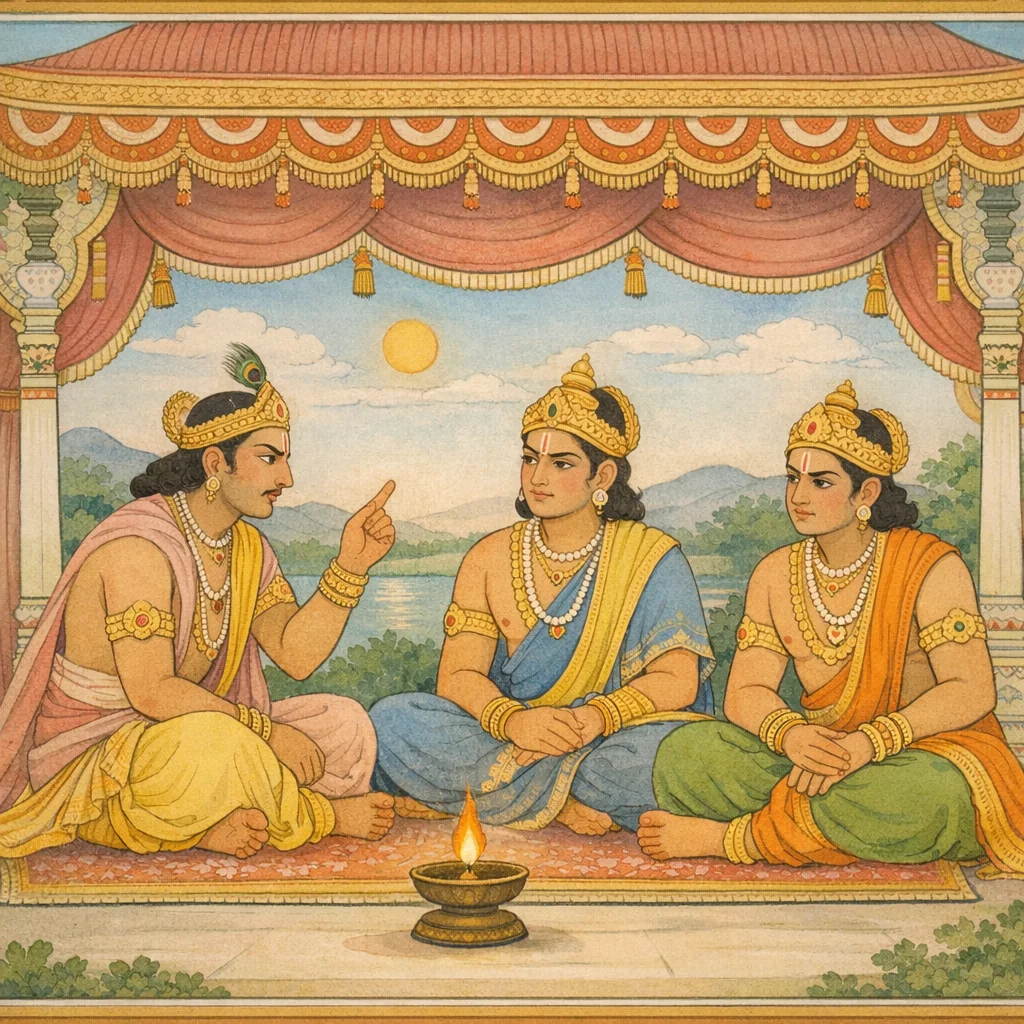
Vaiśaṃpāyana describes the immediate aftermath of Karṇa’s withdrawal as Duryodhana and allied divisions continue a coordinated arrow-assault on the Pandava (Arjuna, still concealed). In response to the approaching formations, Prince Uttara—serving as charioteer—asks Arjuna which enemy division to enter. Arjuna then provides a structured tactical identification of key commanders by their visual insignia: he first points to Kṛpa’s position, then identifies Droṇa by the kamaṇḍalu emblem and prescribes a respectful, non-provocative maneuver (pradakṣiṇā) consistent with guru-ethics. He outlines a conditional engagement protocol—allowing Droṇa to strike first to avoid inciting personal anger—then notes Aśvatthāmā’s proximity. Arjuna proceeds to indicate Duryodhana by the elephant emblem, Karṇa by distinctive standards, and Bhīṣma by radiant armor and senior status, advising sequencing (to avoid obstruction) while maintaining chariot control. The chapter closes with Uttara swiftly driving Arjuna toward Kṛpa’s station, initiating the next phase of the engagement.
Chapter Arc: कौरव-सेना के बीच द्रोणपुत्र अश्वत्थामा का वचन उठता है—वीरता का असली माप शोर नहीं, सामर्थ्य है; जैसे रथकार अपने रथ की दृढ़ता का दावा करता है, वैसे ही युद्ध में पुरुषार्थ का दावा कर्म से सिद्ध होता है। → अश्वत्थामा कर्ण के आत्म-प्रशंसक दर्प को काटता है: बहुत-सी लड़ाइयाँ जीतना, धन पाना, शत्रु-सेना रौंदना—इनसे विद्वान पुरुष अपनी बड़ाई नहीं गाते; अग्नि बिना वाणी के जलती है, सूर्य मौन होकर चमकता है, पृथ्वी चुपचाप जगत धारण करती है। फिर वह कर्ण को चुनौती देता है—किस संग्राम में तुमने युधिष्ठिर को जीता? किसमें भीम को? किसमें इन्द्रप्रस्थ को? यह प्रश्न कर्ण की प्रतिष्ठा पर सीधा प्रहार बनकर सभा को गरमा देता है। → अश्वत्थामा निर्णायक घोषणा करता है कि कुन्तीपुत्र अर्जुन भय से कभी नहीं डिगेगा—न देवों से, न गन्धर्वों से, न असुरों-राक्षसों से। वह कर्ण को स्पष्ट कहता है कि अर्जुन पराक्रम और धनुर्विद्या में उससे विशिष्ट है, और युद्ध में वासुदेव-समान सहायक के साथ उसे कौन न पूजे। फिर दुर्योधन को भी कटाक्ष करता है: जैसे तुमने जुए में छल किया, इन्द्रप्रस्थ छीना, द्रौपदी को सभा में घसीटा—वैसे ही अब युद्ध में भी सौबल (शकुनि) की ‘सुरक्षा’ में लड़ो; यह व्यंग्य कौरव-नीति की नैतिक दरार को उजागर कर देता है। → अश्वत्थामा अंततः अपनी सीमा रेखा खींचता है—‘योधा चाहें तो लड़ें, पर मैं अर्जुन से नहीं लड़ूँगा’; और वह मत्स्य-राज्य के विरुद्ध इस गोहरण-यात्रा को भी तुच्छ ठहराता है, मानो कह रहा हो कि असली संकट मत्स्य नहीं, अर्जुन है। → कौरव-पक्ष के भीतर ही अर्जुन के भय/सम्मान का द्वंद्व तीव्र हो उठता है—अब प्रश्न यह रह जाता है कि अर्जुन के सामने कौन टिकेगा, और कर्ण-द्रोणपुत्र के इस वैचारिक टकराव का प्रभाव रणभूमि पर कैसे फूटेगा।
Shlokas
Verse 1
अऑडज आर (_) ऑपआ अपाय - जैसे कोई रथ बनानेवाला कारीगर रथ लाकर यह कहे कि मैंने इस दिव्य रथका निर्माण किया है। इसका प्रत्येक अंग सुदृढ़ है। इसपर बैठकर युद्ध करनेसे तुम देवताओंपर भी सर्वथा विजय पा सकोगे
Ashvatthama said: “Karna, we have not yet won the cattle, nor have we even crossed beyond the border of Matsya, and we have not reached Hastinapura. Why, then, are you boasting so pointlessly?”
Verse 2
संग्रामांश्च बहून् जित्वा लब्धवा च विपुलं धनम् | विजित्य च परां सेनां नाहु: किंचन पौरुषम्
Kṛpa said: “Even after winning many battles, gaining abundant wealth, and defeating an enemy host, the wise do not indulge in empty self-praise. Fire burns all things to ashes without announcing itself; the sun shines while remaining silent; the earth, without speaking, bears all moving and unmoving beings. In the same way, true valor is shown by deeds, not by boastful speech.”
Verse 3
दहत्यग्निरवाक्यस्तु तूष्णी भाति दिवाकर: । तूष्णीं धारयते लोकान् वसुधा सचराचरान्
Kṛpa said: “Fire burns without speaking; the Sun shines in silence; and the Earth, wordless, bears all worlds with their moving and unmoving beings. In the same way, a truly wise man—even after winning many battles, gaining immense wealth, and crushing an enemy host—does not indulge in vain self-praise. Power proves itself through action, not through boastful speech.”
Verse 4
चातुर्वर्ण्यस्य कर्माणि विहितानि स्वयम्भुवा । धनं यैरधिगन्तव्यं यच्च कुर्वन् न दुष्पति
Kṛpa said: The duties of the four social orders have been ordained by the Self-born Creator. By performing those prescribed works one may also obtain wealth, and, while acting in that way, the doer does not incur moral fault.
Verse 5
अधीत्य ब्राह्मणो वेदान् याजयेत यजेत वा | क्षत्रियो धनुराश्रित्य यजेच्चैव न याजयेत्
Kṛpa said: “Having studied the Vedas, a brāhmaṇa should either perform sacrifices himself or officiate and conduct sacrifices for others. A kṣatriya, relying on the bow—i.e., on martial duty and the means of protection—should perform sacrifices for himself, but he should not act as a priest conducting sacrifices for others, for that office belongs to brāhmaṇas.”
Verse 6
वैश्यो5धिगम्य वित्तानि ब्रह्मुकर्माणि कारयेत् । शूद्र: शुश्रूषणं कुर्यात् त्रिषु वर्णेषु नित्यश: । वन्दनायोगविधिभिर्वैतसीं वृत्तिमास्थित:
Kṛpa said: “Let the Vaiśya, having acquired wealth, arrange for the Veda-enjoined rites to be performed through Brahmins. Let the Śūdra practice constant service toward the three higher social orders. Adopting the ‘vaitasī’ mode of conduct—pliant and humble like a cane—he should, by acts such as respectful salutation and disciplined obedience, remain near them and serve them continually.”
Verse 7
वर्तमाना यथाशास्त्र प्राप्प चापि महीमिमाम् । सत्कुर्वन्ति महाभागा गुरून् सुविगुणानपि
Kṛpa said: “Noble and fortunate men, acting by the injunctions of the śāstras, even after gaining sovereignty over this earth by rightful means, still honor their teachers—though those teachers be without merit. But here, a kingdom won by injustice has brought contempt even upon worthy elders.”
Verse 8
प्राप्य द्यूतिन को राज्यं क्षत्रियस्तोष्टमर्हति । तथा नृशंसरूपो<यं धार्त॑राष्ट्रश्न निर्धण:
Kṛpa said: “Having won a kingdom through gambling, what kṣatriya could ever be satisfied? Yet this son of Dhṛtarāṣṭra is content with just that—for his nature is cruel, pitiless, and base.”
Verse 9
तथाधिगगम्य वित्तानि को विकत्थेद् विचक्षण: । निकृत्या वज्चनायोगैश्वरन् वैतंसिको यथा
Having obtained wealth in such a manner, what discerning man would boast? Just as a fowler lives by deceit and contrived tricks of cheating, so too—if one gains riches through a fraudulent way of life—who among the wise would praise himself with his own mouth?
Verse 10
कतमद् द्वैरथं युद्ध यत्राजैषीर्धनंजयम् । नकुलं सहदेवं वा धन येषां त्वया हृतम्
Kripa said: “Which duel in battle was it in which you defeated Dhanañjaya? Or Nakula, or Sahadeva? You seized the wealth of those Pāṇḍavas through deceitful gambling; tell me, O King Duryodhana—when did you ever conquer any of them in fair combat?”
Verse 11
युधिष्ठिरो जित: कस्मिन् भीमश्च बलिनां वर: । इन्द्रप्रस्थं त्वया कस्मिन् संग्रामे निर्जितं पुरा
Kṛpa said: “In what battle did you defeat Yudhiṣṭhira, the King of Dharma? Or Bhīma, foremost among the mighty? And Indraprastha, which you now hold—by what war did you ever win it in days past?”
Verse 12
तथैव कतमद् युद्ध यस्मिन् कृष्णा जिता त्वया । एकवस्त्रा सभां नीता दुष्टकर्मन् रजस्वला
Kṛpa said: “Tell me then—what battle was it in which you claim to have ‘won’ Kṛṣṇā (Draupadī)? You wicked-doer! Instead, you dragged into the royal assembly a helpless woman wearing only a single garment, and that too while she was in her menstrual period.”
Verse 13
मूलमेषां महत् कृत्तं सारार्थी चन्दनं यथा । कर्म कारयिथा: सूत तत्र कि विदुरो5ब्रवीत्
Kṛpa said: “You have cut down the very root of these men, just as one who seeks the heartwood cuts sandalwood. O Sūta, when you made the Pāṇḍavas into forced laborers through that deceitful dice-game and the humiliation of Draupadī, what did the noble Vidura say there? Do you remember—how he warned that the gambling would become the cause of the Kuru clan’s destruction?”
Verse 14
यथाशक्ति मनुष्याणां शममालक्षयामहे । अन्येषामपि सत्त्वानामपि कीटपिपीलिकै: । द्रौपद्या: सम्परिकलेशं न क्षन्तुं पाण्डवो5हति
Kṛpa said: “We observe that, in accordance with their capacity, human beings have a limit to how much they can endure; and so too do other living creatures—even tiny insects and ants. The grievous affliction inflicted upon Draupadī is not something the Pāṇḍava (Arjuna) can forgive.”
Verse 15
क्षयाय धार्रराष्ट्राणां प्रादुर्भूतोी धनंजय: । त्वं पुन: पण्डितो भूत्वा वाचं वक्तुमिहेच्छसि
Kṛpa said: “For the destruction of the Dhṛtarāṣṭras, Dhanaṃjaya (Arjuna) has manifested here. And yet you, pretending to be wise, still wish to speak words in this assembly.”
Verse 16
धृतराष्ट्रके पुत्रोंका संहार करनेके लिये ही धनंजय प्रकट हुए हैं और एक तुम हो
Kripa said: “Dhanañjaya has revealed himself only to bring about the destruction of Dhṛtarāṣṭra’s sons. And you—here you sit, posturing as a sage and spinning lofty words. Will not Jiṣṇu, the avenger who ends enmity, leave none of us remaining? Will Arjuna, intent on repaying hostility, not wipe us out?”
Verse 17
नैष देवान् न गन्धर्वान् नासुरान् न च राक्षसान् | भयादिह न मुध्येत कुन्तीपुत्रो धनंजय:,यह कभी सम्भव नहीं है कि कुन्तीनन्दन अर्जुन भयके कारण देवता, गन्धर्व, असुर तथा राक्षसोंसे भी युद्ध न करें
Kripa said: “It is not possible that Dhanañjaya, the son of Kuntī, would lose his composure here out of fear and refuse to fight—even against gods, Gandharvas, Asuras, or Rākṣasas.” In context, the statement affirms Arjuna’s steadfast courage and warrior-dharma: fear does not govern his conduct, and his resolve remains firm even before superhuman opponents.
Verse 18
यं यमेषो5तिसंक्रुद्धः संग्रामे निपतिष्यति । वृक्ष गरुत्मान् वेगेन विनिहत्य तमेष्यति
Kripa said: “Whomever that Yameṣa—Arjuna—furiously charges upon in battle, he will strike down with sheer speed and move on. Just as Garuḍa, alighting on a tree, breaks it by his momentum and then flies onward, so will Arjuna, inflamed with wrath, destroy each great chariot-warrior he assails and advance without pause.”
Verse 19
त्वत्तो विशिष्ट वीयेंण धनुष्यमरराट्समम् | वासुदेवसमं युद्धे तं॑ पार्थ को न पूजयेत्
Kṛpa said: “O Karṇa, Arjuna surpasses you in prowess. In the use of the bow he is comparable to the king of the gods, Indra; and in the art of warfare he is like Vāsudeva (Kṛṣṇa) himself. Who, then, would not honor and praise that son of Pṛthā?”
Verse 20
देवं दैवेन युध्येत मानुषेण च मानुषम् । अस्त्रं हास्त्रेण यो हन्यात् कोर््डर्जुनेन सम: पुमान्
Kripa said: “Let a god be fought with by divine means, and a man by human means. Who is the man equal to Arjuna—he who can counter and destroy each weapon with its opposing weapon?”
Verse 21
पुत्रादनन्तरं शिष्य इति धर्मविदो विदु: । एतेनापि निमित्तेन प्रियो द्रोणस्य पाण्डव:
Kṛpa said: “Those who know dharma hold that, after one’s own son, a disciple is dearest. For this reason as well, the Pāṇḍava (Arjuna) is dear to Droṇa—hence it is only fitting that Droṇa should praise him.”
Verse 22
यथा त्वमकरोर््यूतमिन्द्रप्रस्थं यथा55हर: । यथा<5<नैषी: सभां कृष्णां तथा युध्यस्व पाण्डवम्
Kṛpa said: “Just as you arranged the dice-game, just as you seized Indraprastha, and just as you dragged Kṛṣṇā (Draupadī) into the assembly hall—so too, Duryodhana, fight the son of Pāṇḍu (Arjuna) in that same spirit. When you did those unrighteous deeds you did not feel any need for our support; therefore, do not now look to us for help in this battle.”
Verse 23
अयं ते मातुल: प्राज्ञ: क्षत्रधर्मस्य कोविद: | दुर्यूतदेवी गान्धार: शकुनिर्युध्यतामिह
Kṛpa said: “Here is your maternal uncle Śakuni—wise and well-versed in the duties of the kṣatriya. Let this king of Gandhāra, famed for deceitful skill at dice, be the one to fight here.”
Verse 24
नाक्षान् क्षिपति गाण्डीवं न कृतं द्वापरं न च । ज्वलतो निशितान् बाणांस्तांस्तान् क्षिपति गाण्डिवम्
Kṛpa said: “That Gāṇḍīva does not cast dice—neither the Kṛta nor the Dvāpara. Instead, it keeps sending forth, again and again, showers of sharp, blazing arrows.”
Verse 25
न हि गाण्डीवनिर्मुक्ता गार्ध्रपक्षा: सुतेजना: । नान्तरेष्ववतिष्ठन्ते गिरीणामपि दारणा:
Kṛpa said: “For the razor-bright arrows released from the Gāṇḍīva—feathered with vulture-wings—do not halt midway. They lodge only after piercing the enemy’s body; indeed, they are capable of rending even mountains.”
Verse 26
अन्तकः पवनो मृत्युस्तथाग्निर्वडवामुख: । कुर्युरेते क्वचिच्छेषं न तु क्रुद्धो धनंजय:
Kṛpa said: “Antaka (Yama), the wind, Death, and even fire with the mare’s-mouth blaze may sometimes leave something remaining; but Dhanañjaya (Arjuna), when angered, leaves nothing at all.”
Verse 27
यथा सभायां दूत॑ त्वं मातुलेन सहाकरो: । तथा युध्यस्व संग्रामे सौबलेन सुरक्षित:
Kṛpa said: “Just as, in the royal assembly, you played the dice with your maternal uncle, so too fight now on the battlefield—protected by that Saubala (Śakuni). Do not look to anyone else for support.”
Verse 28
युध्यन्तां कामतो योधा नाहं योत्स्ये धनंजयम् । मत्स्यो हास्माभिरायो ध्यो यद्यागच्छेद् गवां पदम्
Kripa said: “Let the warriors fight if they wish; I will not engage Dhanañjaya (Arjuna) in battle. Our quarrel is with the king of Matsya. If he comes to the cattle-station (the cow-pen/encampment), then I can fight him—or anyone else.”
Verse 50
इति श्रीमहाभारते विराटपर्वणि गोहरणपर्वणि उत्तरगाग्रहे द्रौणिवाक्यं नाम पज्चाशत्तमोडथ्याय:
Thus ends the fiftieth chapter of the Virāṭa Parva of the Śrī Mahābhārata, within the section on the cattle-raid, at the time of Uttara’s taking the lead—entitled “The Speech of Drauṇi (Aśvatthāmā).”
Frequently Asked Questions
The dilemma concerns how to engage militarily against revered elders and teachers—especially Droṇa—while preserving recognized norms of respect, avoiding needless provocation, and still fulfilling protective duty in an active threat environment.
Competence in action is inseparable from ethical constraint: discernment (who is who, what they signify) and restraint (how to approach a guru/elder) together constitute a disciplined form of dharma-guided strategy.
No explicit phalaśruti appears here; the chapter functions as operational narration, embedding implicit instruction on duty and etiquette through Arjuna’s directives rather than through a formal concluding eulogy.
Read Mahabharata in the Vedapath app
Scan the QR code to open this directly in the app, with audio, word-by-word meanings, and more.