Adhyaya 91
Brahmaṇānāṃ Yācanā—Tīrtha-yātrā-prastāvaḥ (The Brahmanas’ Petition and the Proposal of Pilgrimage)
Upa-parva: Tīrtha-yātrā Upa-Parva (Pilgrimage Cycle with Lomaśa)
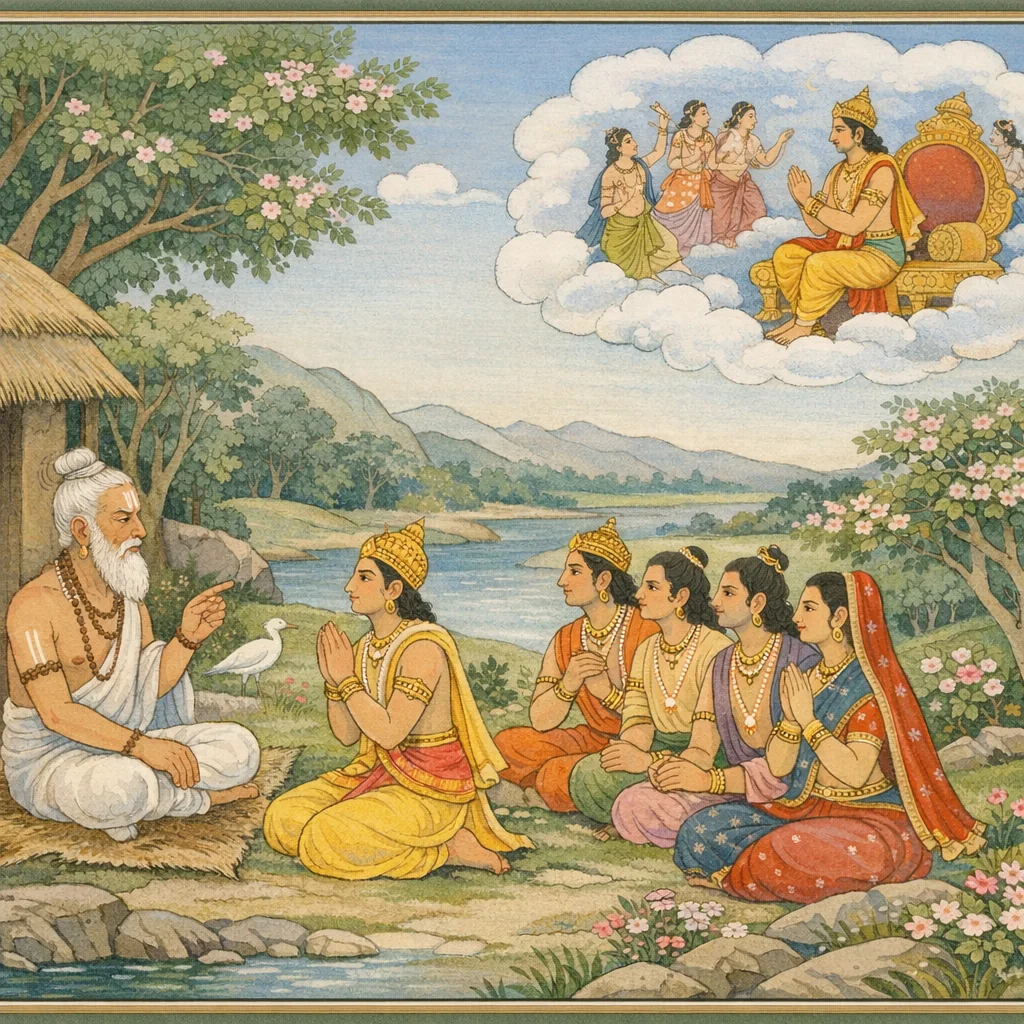
Vaiśaṃpāyana reports that forest-dwelling Brahmanas approach Yudhiṣṭhira as he is preparing to move and request that he take them along on a pilgrimage to celebrated tīrthas and landmarks (e.g., Prabhāsa, major rivers, mountains, and sacred trees). They argue that the routes are difficult and threatened by hostile beings that disrupt ascetic practice, and that without the Pandavas’ martial protection the journey is impracticable. The Brahmanas frame the expedition as mutually beneficial: protected pilgrimage yields purification (dhūtapāpmatā) and auspicious results for both pilgrims and the king. Yudhiṣṭhira, moved by their reverence, agrees. Subsequently, Vyāsa, Nārada, and Parvata arrive and instruct the brothers on the hierarchy of vows: bodily restraint is termed “human” discipline, while purity of mind and intellect is described as the “divine” vow. After affirming these instructions, the Pandavas receive blessings, pay respects to the sages, and depart in the Puṣya season with Dhaumya, Lomaśa, attendants, weapons, and travel equipment—formalizing the transition into the tīrtha-yātrā sequence.
Chapter Arc: वनवास के तीर्थयात्रा-पथ पर पाण्डवों के शिविर में महर्षि लोमश का आगमन होता है—मानो देवलोक की कोई खबर पृथ्वी पर उतर आई हो। → युधिष्ठिर ब्राह्मणों सहित महर्षि का सत्कार करते हैं। लोमश इन्द्रलोक का वृत्तान्त सुनाते हुए बताते हैं कि उन्होंने अर्जुन को स्वयं इन्द्र के अर्धासन पर विराजमान देखा—यह समाचार पाण्डवों के लिए आश्वासन भी है और प्रतीक्षा की पीड़ा भी। → लोमश का निर्णायक उद्घोष: अर्जुन ने यम, कुबेर, वरुण और इन्द्र से दिव्यास्त्रों का अध्ययन किया है; इन्द्र के आदेश और अर्जुन की इच्छा से ही वे शीघ्र पाण्डवों से मिलने आए हैं—अर्थात् अर्जुन का प्रयोजन सिद्ध हो रहा है और पाण्डवों की आशा को देवलोक का प्रमाण मिल जाता है। → युधिष्ठिर का विस्मय-आनन्द स्थिर होता है; अर्जुन की उपलब्धि को धर्म-यात्रा के धैर्य का फल मानकर वे आगे की तीर्थयात्रा/कथाश्रवण के लिए मन तैयार करते हैं। → लोमश संकेत देते हैं कि अर्जुन के आगमन पर वे युधिष्ठिर के मन में उठे तीर्थयात्रा-सम्बन्धी संकल्प/प्रश्नों का निश्चय ही विस्तार से वर्णन करेंगे—आगे की कथा का द्वार खुला रह जाता है।
Shlokas
Verse 1
अऑडज आर | आओ अप - ये सहदेव सुप्रसिद्ध राजा सूंजयके पुत्र थे--'सहदेव: सूंजयपुत्र:" इति नीलकण्ठी। एकनवतितमो< ध्याय: महर्षि लोमशका आगमन और युधिष्ठिरसे अर्जुनके पाशुपत आदि दिव्यास्त्रोंकी प्राप्तिका वर्णन तथा इन्द्रका संदेश सुनाना वैशम्पायन उवाच एवं सम्भाषमाणे तु धौम्ये कौरवनन्दन । लोमश: स महातेजा ऋषिस्तत्राजगाम ह,वैशम्पायनजी कहते हैं--कौरवनन्दन! जब धौम्य ऋषि इस प्रकार कह रहे थे, उसी समय महातेजस्वी महर्षि लोमश वहाँ आये। जैसे स्वर्गमें इन्द्रके आनेपर समस्त देवता उठकर खड़े हो जाते हैं, उसी प्रकार ज्येष्ठ पाण्डव राजा युधिष्ठिर, उनके समुदायके अन्य लोग तथा वे ब्राह्मण भी उन महाभाग लोमशको आया देख उनके स्वागतके लिये उठकर खड़े हो गये
Vaiśampāyana said: O delight of the Kurus, while the sage Dhaumya was speaking thus, the great and radiant Ṛṣi Lomaśa arrived there. As the gods rise when Indra enters heaven, so Yudhiṣṭhira—the eldest of the Pāṇḍavas—together with his companions and the assembled brāhmaṇas, rose to honor the illustrious Lomaśa.
Verse 2
तं॑ पाण्डवाग्रजो राजा सगणो ब्राह्मणाश्न ते । उपातिष्ठन्महा भागं दिवि शक्रमिवामरा:,वैशम्पायनजी कहते हैं--कौरवनन्दन! जब धौम्य ऋषि इस प्रकार कह रहे थे, उसी समय महातेजस्वी महर्षि लोमश वहाँ आये। जैसे स्वर्गमें इन्द्रके आनेपर समस्त देवता उठकर खड़े हो जाते हैं, उसी प्रकार ज्येष्ठ पाण्डव राजा युधिष्ठिर, उनके समुदायके अन्य लोग तथा वे ब्राह्मण भी उन महाभाग लोमशको आया देख उनके स्वागतके लिये उठकर खड़े हो गये
Vaiśampāyana said: Then the eldest of the Pāṇḍavas, the king, together with his companions and those brāhmaṇas, rose to receive that greatly fortunate one—just as, in heaven, the immortals rise in attendance when Indra appears.
Verse 3
“ थ 222 (८ है, ० क्र ते 222: श &# 2 प्र ५ ८ ् (/2/6% 7, हे | न ्ट 727 ५४:&6- “3 ; १ है “था ९१४५ थ। ) 65: / ्अ 23 760: “ /.<<“ है हा है” 7 ४ 57% ५५४: हज 2 78] ५ | रा ४ (04 १] ै। !' / (/ डे है (- र ५ ! %200%« 27% ७४५, - श्र ॥| ५: जज १ 5 हद -स्थ ॥ ५, < < पूछ अ (5 “अक। समभ्यर्च्य यथान्यायं धर्मपुत्रो युधिष्ठिर: । पप्रच्छागमने हेतुमटने च प्रयोजनम्,धर्मनन्दन युधिष्ठिरने यथायोग्य उनका पूजन करके उन्हें आसनपर बिठाया और वहाँ आने तथा वनमें घूमनेका प्रयोजन पूछा
After honoring them in the proper manner, Dharma’s son Yudhiṣṭhira asked the reason for their coming and the purpose of their wandering in the forest.
Verse 4
स पृष्ट: पाण्डुपुत्रेण प्रीयमाणो महामना: । उवाच श्लक्ष्णया वाचा हर्षयन्निव पाण्डवान्,पाणए्डुपुत्र युधिष्ठिरके इस प्रकार पूछनेपर महामना महर्षि लोमश बड़े प्रसन्न हुए और अपनी मधुर वाणीद्वारा पाण्डवोंका हर्ष बढ़ाते हुए-से बोले--
Questioned by the son of Pāṇḍu, the great-souled sage—well pleased—spoke in gentle, polished words, as though increasing the joy and confidence of the Pāṇḍavas.
Verse 5
संचरजन्नस्मि कौन्तेय सर्वाल्लॉकान् यदृच्छया । गत: शक्रस्य भवन तत्रापश्य॑ सुरेश्वरम्,“कुन्तीनन्दन! मैं यों ही इच्छानुसार सम्पूर्ण लोकोंमें विचरण करता हूँ। एक दिन मैं इन्द्रके भवनमें गया और वहाँ देवराज इन्द्रसे मिला
Vaiśampāyana said: “O son of Kuntī, I have been wandering freely through all the worlds as chance allowed. On one occasion I went to Śakra’s abode, and there I beheld the lord of the gods, Indra.”
Verse 6
तव च भ्रातरं वीरमपश्यं सव्यसाचिनम् | शक्रस्यार्धासनगतं तत्र मे विस्स्मयो महान्,“वहाँ मैंने तुम्हारे वीर भ्राता सव्यसाची अर्जुनको भी देखा, जो इन्द्रके आधे सिंहासनपर बैठे हुए थे। वहाँ उन्हें इस दशामें देखकर मुझे बड़ा आश्चर्य हुआ
Vaiśaṃpāyana said: “There I also saw your heroic brother Arjuna, famed as Savyasācin, seated upon half of Indra’s throne. Seeing him in such a station, I was struck with great wonder.”
Verse 7
आसीत् पुरुषशार्दूल दृष्टवा पार्थ तथागतम् | आह मां तत्र देवेशो गच्छ पाण्डुसुतान् प्रति,'पुरुषसिंह युधिष्ठिर! तुम्हारे भाई अर्जुनको इन्द्रके सिंहासनपर बैठा देख जब मैं आश्चर्यचकित हो रहा था, उसी समय देवराज इन्द्रने मुझसे कहा--“मुने! तुम पाण्डवोंके पास जाओ'
Seeing Pārtha (Arjuna) arrived there, O tiger among men, I stood astonished. At that moment the Lord of the gods, Indra, spoke to me: “Sage, go to the sons of Pāṇḍu.”
Verse 8
सो5हमभ्यागतः क्षिप्रं दिदृक्षुस्त्वां सहानुजम् । वचनात् पुरुहृतस्य पार्थस्य च महात्मन:,“उन इन्द्रके आदेशसे मैं भाइयोंसहित तुम्हें देखनेके लिये शीघ्रतापूर्वक यहाँ आया हूँ। इसके लिये इन्द्रने तो मुझसे कहा ही था, महात्मा अर्जुनने भी अनुरोध किया था
So I have come here swiftly, eager to see you together with your younger brothers—having been sent by the command of Puruhūta (Indra), and also at the request of the great-souled Pārtha (Arjuna).
Verse 9
आख््यास्ये ते प्रियं तात महत् पाण्डवनन्दन । ऋषिभि: सहितो राजन् कृष्णया चैव तच्छूणु,“तात! पाण्डवोंको आनन्दित करनेवाले युधिष्छिर! मैं तुम्हें बड़ा प्रिय समाचार सुनाऊँगा। राजन! तुम इन महर्षियों और द्रौपदीके साथ मेरी बात सुनो। भरतकुलभूषण विभो! तुमने महाबाहु अर्जुनको दिव्यास्त्रोंकी प्राप्तिके लिये जो आदेश दिया था, उसके विषयमें यह निवेदन करना है कि अर्जुनने भगवान् शंकरसे उनका अनुपम अस्त्र (पाशुपत) प्राप्त कर लिया है
Vaiśampāyana said: “Dear child, O joy of the Pāṇḍavas, I shall tell you great and welcome news. O King, listen to it together with these sages and with Kṛṣṇā (Draupadī).” (He then indicates that the report concerns Arjuna’s mission for divine weapons—undertaken at Yudhiṣṭhira’s command—and that Arjuna has obtained from Lord Śaṅkara the incomparable weapon, the Pāśupata.)
Verse 10
यत् त्वयोक्तो महाबाहुरस्त्रार्थ भरतर्षभ । तदस्त्रमाप्तं पार्थेन रुद्रादप्रतिमं विभो,“तात! पाण्डवोंको आनन्दित करनेवाले युधिष्छिर! मैं तुम्हें बड़ा प्रिय समाचार सुनाऊँगा। राजन! तुम इन महर्षियों और द्रौपदीके साथ मेरी बात सुनो। भरतकुलभूषण विभो! तुमने महाबाहु अर्जुनको दिव्यास्त्रोंकी प्राप्तिके लिये जो आदेश दिया था, उसके विषयमें यह निवेदन करना है कि अर्जुनने भगवान् शंकरसे उनका अनुपम अस्त्र (पाशुपत) प्राप्त कर लिया है
Vaiśampāyana said: “O bull among the Bharatas, when you directed the mighty-armed Arjuna to seek the divine weapons, that very incomparable weapon has now been obtained by Pārtha from Rudra (Śiva), O lord.”
Verse 11
यत् तद् ब्रह्मशिरों नाम तपसा रुद्रमागमत् । अमृतादुत्थितं रौद्रं तल्लब्धं सव्यसाचिना,'जो ब्रह्मशिर नामक अस्त्र अमृतसे प्रकट होकर तपस्याके प्रभावसे भगवान् शंकरको मिला था, वही पाशुपतास्त्र सव्यसाची अर्जुनने प्राप्त कर लिया है
Vaiśampāyana said: “That dread weapon called Brahmaśiras—born from the nectar of immortality and obtained from Rudra through the power of austerities—has now been acquired by Arjuna, the ambidextrous archer.”
Verse 12
तत् समन्त्रं ससंहारं सप्रायश्रित्तमड्रलम् । वज्मस्त्राणि चान्यानि दण्डादीनि युधिष्ठिर,'युधिष्ठिर! रुद्र देवताका वह वज्रके समान दुर्भद्य अस्त्र मन्त्र, उपसंहार, प्रायश्चित्त और मंगलसहित अर्जुनने पा लिया है। साथ ही, दण्ड आदि अन्य अस्त्र भी उन्होंने हस्तगत कर लिये हैं
Vaiśampāyana said: “O Yudhiṣṭhira, Arjuna obtained those formidable, thunderbolt-like weapons of Rudra—complete with their mantras, the proper method of withdrawal, and the rites of expiation and auspicious preliminaries. He also gained other weapons as well, such as those beginning with the staff (daṇḍa).”
Verse 13
यमात् कुबेराद् वरुणादिन्द्राच्च कुरुनन्दन । अस्त्राण्यधीतवान् पार्थो दिव्यान्यमितविक्रम:,“कुरुनन्दन! अमित पराक्रमी अर्जुनने यम, कुबेर, वरुण और इन्द्रसे दिव्यास्त्रोंका अध्ययन किया है
Vaiśampāyana said: “O delight of the Kurus, the mighty Arjuna (son of Pṛthā), of immeasurable prowess, has mastered the divine weapons—learning them from Yama, Kubera, Varuṇa, and Indra.”
Verse 14
विश्वावसोस्तु तनयाद् गीत॑ नृत्यं च साम च । वादित्रं च यथान्यायं प्रत्यविन्दद् यथाविधि,“इतना ही नहीं, उन्होंने विश्वावसुके पुत्रसे नृत्य, गीत, सामगान और वाद्यकलाकी भी विधिपूर्वक यथोचित शिक्षा प्राप्त कर ली है
Vaiśampāyana said: “From the son of Viśvāvasu he duly acquired, in the proper manner, instruction in singing, dancing, Sāman-chanting, and instrumental music—learning each art according to established rule and fitting practice.”
Verse 15
एवं कृतास्त्र: कौन्तेयो गान्धर्व वेदमाप्तवान् । सुखं वसति बीभत्सुरनुजस्यानुजस्तव,“इस प्रकार अस्त्रविद्यामें निपुणता प्राप्त करके कुन्तीकुमारने गान्धर्ववेद (संगीतविद्या) को भी प्राप्त कर लिया है। अब तुम्हारे छोटे भाई भीमसेनके छोटे भाई अर्जुन वहाँ बड़े सुखसे रह रहे हैं
Vaiśampāyana said: “Thus, having become fully accomplished in the science of weapons, the son of Kuntī also attained the Gāndharva-veda, the lore of music and performance. Now Bībhatsu (Arjuna)—the younger brother of your younger brother (Bhīma)—is living there in great comfort.”
Verse 16
यदर्थ मां सुरश्रेष्ठ इंदे वचनमत्रवीत् । तच्च ते कथयिष्यामि युधिछ्विर निबोध मे,'युधिष्ठिर! देवश्रेष्ठ इन्द्रने मुझसे तुम्हारे लिये जो संदेश कहा था, उसे अब तुम्हें बता रहा हूँ, सुनो
Vaiśampāyana said: “O Yudhiṣṭhira, I shall now tell you the very message for your sake that Indra, the foremost among the gods, spoke to me. Listen attentively to my words.”
Verse 17
भवान् मनुष्यलोकेडपि गमिष्यति न संशय: । ब्रूयाद् युधिष्ठिरं तत्र वचनान्मे द्विजोत्तम,“उन्होंने मुझसे कहा--द्विजोत्तम! इसमें संदेह नहीं कि आप घूमते-घामते मनुष्यलोकमें भी जायूँगे; अतः मेरे अनुरोधसे आप राजा युधिष्ठिरके पास जाकर यह बात कह दीजियेगा --'राजन! तुम्हारे भाई अर्जुन अस्त्र-विद्यामें निपुण हो चुके हैं। अब वे देवताओंका एक बहुत बड़ा कार्य, जिसे देवता स्वयं नहीं कर सकते, सिद्ध करके शीघ्र तुम्हारे पास आ जायँगे; तबतक तुम भी अपने भाइयोंके साथ स्वयंको तपस्यामें लगाओ; क्योंकि तपस्यासे बढ़कर दूसरा कोई साधन नहीं है। तपस्यासे महान् फलकी प्राप्ति होती है
Vaiśampāyana said: “O best of Brahmins, there is no doubt that you too will, in the course of your wanderings, reach the world of men. When you do, convey my words to Yudhiṣṭhira there.”
Verse 18
आगमिष्यति ते भ्राता कृतास्त्र: क्षिप्रमर्जुन: । सुरकार्य महत् कृत्वा यदशकक््यं दिवौकसाम्,“उन्होंने मुझसे कहा--द्विजोत्तम! इसमें संदेह नहीं कि आप घूमते-घामते मनुष्यलोकमें भी जायूँगे; अतः मेरे अनुरोधसे आप राजा युधिष्ठिरके पास जाकर यह बात कह दीजियेगा --'राजन! तुम्हारे भाई अर्जुन अस्त्र-विद्यामें निपुण हो चुके हैं। अब वे देवताओंका एक बहुत बड़ा कार्य, जिसे देवता स्वयं नहीं कर सकते, सिद्ध करके शीघ्र तुम्हारे पास आ जायँगे; तबतक तुम भी अपने भाइयोंके साथ स्वयंको तपस्यामें लगाओ; क्योंकि तपस्यासे बढ़कर दूसरा कोई साधन नहीं है। तपस्यासे महान् फलकी प्राप्ति होती है
Vaiśampāyana said: “Your brother Arjuna will return to you soon, having mastered the celestial weapons. After accomplishing a great task for the gods—one that even the dwellers of heaven cannot themselves achieve—he will quickly come back.”
Verse 19
तपसापि त्वमात्मानं योजय भ्रातृभिः सह | तपसो हि परं नास्ति तपसा विन्दते महत्,“उन्होंने मुझसे कहा--द्विजोत्तम! इसमें संदेह नहीं कि आप घूमते-घामते मनुष्यलोकमें भी जायूँगे; अतः मेरे अनुरोधसे आप राजा युधिष्ठिरके पास जाकर यह बात कह दीजियेगा --'राजन! तुम्हारे भाई अर्जुन अस्त्र-विद्यामें निपुण हो चुके हैं। अब वे देवताओंका एक बहुत बड़ा कार्य, जिसे देवता स्वयं नहीं कर सकते, सिद्ध करके शीघ्र तुम्हारे पास आ जायँगे; तबतक तुम भी अपने भाइयोंके साथ स्वयंको तपस्यामें लगाओ; क्योंकि तपस्यासे बढ़कर दूसरा कोई साधन नहीं है। तपस्यासे महान् फलकी प्राप्ति होती है
Vaiśaṃpāyana said: “You too, together with your brothers, should yoke yourself to austerity. For there is nothing higher than tapas; through tapas one attains great results.”
Verse 20
अहं च कर्ण जानामि यथावद् भरतर्षभ | सत्यसंधं महोत्साहं महावीर्य महाबलम्,“भरतश्रेष्ठ! मैं कर्णको अच्छी तरह जानता हूँ। वह सत्यप्रतिज्ञ, अत्यन्त उत्साही, महापराक्रमी और महाबली है
Vaiśaṃpāyana said: “O bull among the Bharatas, I too know Karṇa as he truly is—steadfast in truth, of towering resolve, possessed of great valor and great strength.”
Verse 21
महाहवेष्वप्रतिमं महायुद्धविशारदम् । महाथनुर्धरं वीरं महास्त्रं वरवर्णिनम्
Vaiśaṃpāyana said: He was unmatched in great battles, thoroughly skilled in the arts of mighty warfare—a heroic master of the great bow, possessed of formidable weapons, and of excellent appearance.
Verse 22
महेश्वरसुतप्रख्यमादित्यतनयं प्रभुम् । तथार्जुनमतिस्कन्दं सहजोल्बणपौरुषम्
Vaiśampāyana said: He was like the son of Maheśvara, a mighty lord, and like the son of Āditya; and so too was Arjuna—surpassing even Skanda in prowess, endowed from birth with overwhelming manly valor.
Verse 23
न स पार्थस्य संग्रामे कलामहति षोडशीम् | यच्चापि ते भयं कर्णान्मनसिस्थमरिंदम
Vaiśampāyana said: “In battle he is not even a sixteenth part of Pārtha in greatness. And as for the fear of Karṇa that still lingers in your mind, O subduer of foes—set it aside.”
Verse 24
तच्चाप्यपहरिष्यामि सव्यसाचिन्युपागते । यच्च ते मानसं वीर तीर्थयात्रामिमां प्रति । स महर्षिलोमशस्ते कथयिष्यत्यसंशयम्
Vaiśaṃpāyana said: “And I shall also remove that when the ambidextrous archer arrives. And whatever intention, O hero, is in your mind regarding this pilgrimage to sacred fords—sage Lomaśa will explain it to you without any doubt.”
Verse 25
“बड़े-बड़े संग्रामोंमें उसकी समानता करनेवाला कोई नहीं है। वह महान् युद्धविशारद, महाधनुर्धर, अस्त्र-शस्त्रोंका महान ज्ञाता, श्रेष्ठ, सुन्दर महेश्वरपुत्र कार्तिकेयके समान पराक्रमी, सूर्यदेवताका पुत्र और शक्तिशाली वीर है। इसी प्रकार मैं अर्जुनको भी जानता हूँ। वह कार्तिकेयसे भी बढ़कर है, उसमें स्वभावसे ही दुःसह पुरुषार्थ भरा हुआ है। युद्धमें कर्ण अर्जुनकी सोलहवीं कलाके बराबर भी नहीं है। शत्रुदमन! तुम्हारे मनमें जिस बातको लेकर कर्णसे भय बना रहता है, मैं अर्जुनके लौटनेपर तुम्हारे उस भयको भी दूर कर दूँगा। वीरवर! तीर्थयात्राके विषयमें जो तुम्हारा मानसिक संकल्प है, उसके विषयमें महर्षि लोमश निश्चय ही तुमसे सब कुछ बतावेंगे ।। यच्च किंचित् तपोयुक्त फल॑ तीर्थेषु भारत । ब्रद्मर्षिरिष ब्रूयात् ते तच्छुद्धेयं न चान्यथा,“भरतनन्दन! तीर्थोंमें जो कुछ तपस्यायुक्त फल प्राप्त होता है, वह सब ये ब्रह्मर्षि लोमश तुम्हें बतायेंगे, तुम्हें उसपर विश्वास करना चाहिये। उसमें अन्यथाबुद्धि नहीं करनी चाहिये”
O Bhārata, whatever merit is gained at the sacred fords through austerity—this Brahmarṣi, Lomāśa, will explain it all to you. You should place trust in his account and not entertain any contrary doubt about it.
Verse 91
इति श्रीमहाभारते वनपर्वणि तीर्थयात्रापर्वणि लोमशसंवादे एकनवतितमो<ध्याय: ।। ९१ || इस प्रकार श्रीमह्याभारत वनपववके अन्तर्गत तीर्थयात्रापर्वमें युधिष्ठटिरलोमश-संवादविषयक इक्यानबेवाँ अध्याय पूरा हुआ
Thus, in the Śrī Mahābhārata, within the Vana Parva, in the section on the pilgrimage to sacred fords (Tīrtha-yātrā Parva), in the dialogue involving Lomaśa, the ninety-first chapter comes to an end.
Frequently Asked Questions
The episode balances ascetic aims with pragmatic security: pilgrimage and tapas require vulnerability, yet the text frames protective force as a dharmic support for spiritual practice rather than a contradiction of it.
The sages elevate inner discipline: bodily regulation is a preliminary vow, while purity of mind and intellect—supported by friendliness and non-malicious intent—is presented as the “divine” vrata enabling true benefit from tīrthas.
Yes in functional form: the Brahmanas assert that protected tīrtha-darśana and proper vrata lead to purification (removal of sin/impurity) and access to difficult-to-attain auspicious results, framing merit as the expected consequence of disciplined travel.