Adhyaya 88
Udīcī-diśi Tīrtha-kīrtana (Northern Sacred Places Enumeration)
Upa-parva: Tīrtha-yātrā Upaparvan (Northern Sacred Sites Discourse)
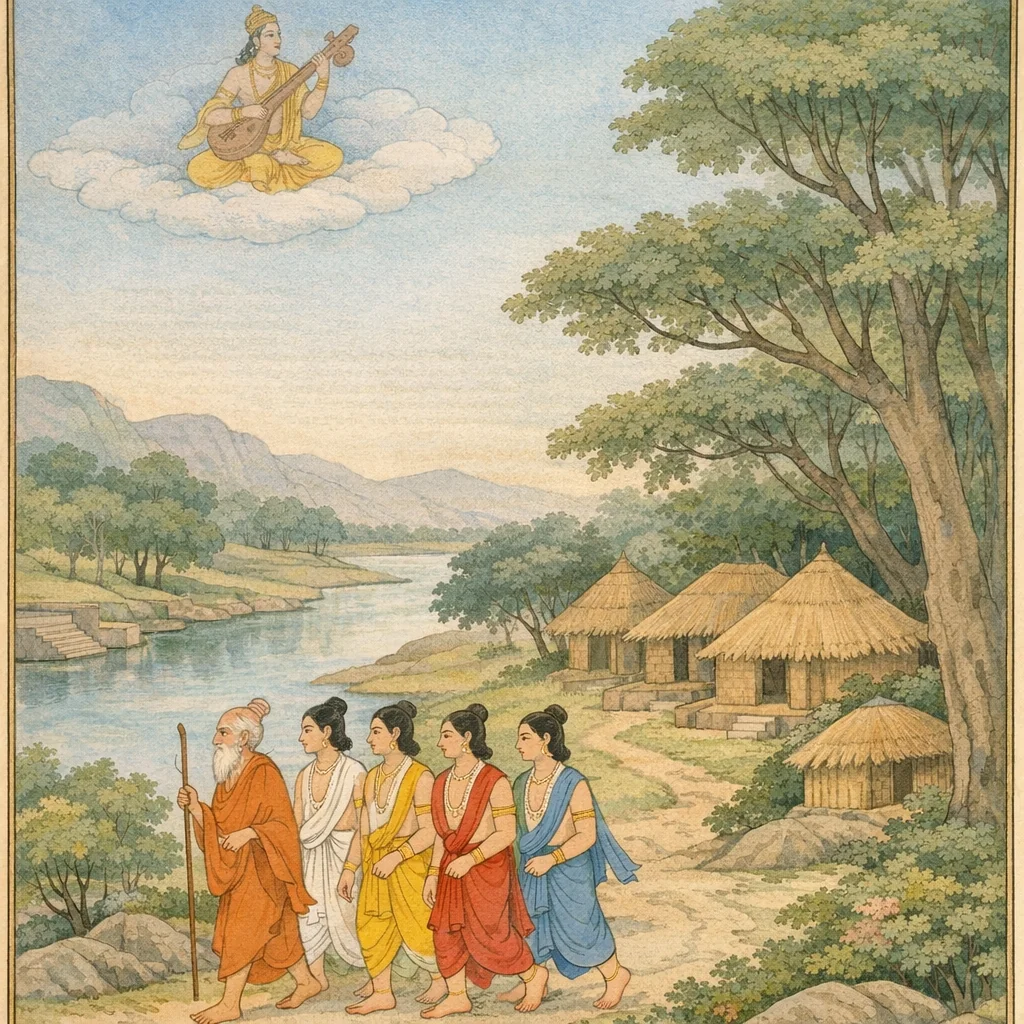
Dhaumya begins a northward (udīcī) catalogue of puṇya-tīrthas and āyatanas for Yudhiṣṭhira. He highlights Sarasvatī and Yamunā and identifies Plakṣāvataraṇa as a particularly auspicious crossing where dvijas complete avabhṛtha after Sārasvata rites. The chapter associates sites with exemplary sacrifices: Sahadeva’s yajña by symbolic śamyā-throw, extensive fire-rituals along the Yamunā, and Bharata’s multiple aśvamedhas. It then names revered ascetic and divine locales: worship by Vālakhilya ṛṣis, the sanctity of Dṛṣadvatī, the Viśākhayūpa where gods once assembled, Jamadagni’s sacrificial ground at Palāśaka, and Gaṅgādvāra as a river-breach revered by brahmarṣis. The sequence continues through Kanakhala, Bhṛgutuṅga, and culminates in Badarī-Viśālā, where Nārāyaṇa is described as the abiding cosmic principle, making that region a concentrated locus of tīrtha, tapas, and devarṣi presence. The chapter closes by asserting that visiting these places with learned brāhmaṇas and one’s brothers alleviates sorrow, framing pilgrimage as an applied remedy for exile-affliction.
Chapter Arc: वनवास की धूल में थके पाण्डवों के सामने धौम्य दक्षिणापथ के तीर्थों का मानचित्र खोलते हैं—गोदावरी, वेणा, भीमरथी जैसे नाम स्वयं में ही पाप-भय-नाश का आश्वासन बनकर उठते हैं। → तीर्थों का वर्णन केवल भूगोल नहीं रहता: प्रत्येक नदी-तट, आश्रम और वेदी के साथ पुण्य, तप, और शुद्धि की शर्तें जुड़ती जाती हैं। युधिष्ठिर के मन में प्रश्न तीखा होता है—क्या केवल यात्रा और स्नान से धर्म स्थिर होता है, या किसी एक परम तत्त्व का आश्रय आवश्यक है? → नारद के ‘पुराण श्लोक’ के माध्यम से निर्णायक उद्घोष आता है: वेदवेत्ता और अध्यात्मविद् ब्राह्मण महात्मा कृष्ण को ही ‘सनातन धर्म’ के रूप में जानते हैं—तीर्थों की बहुलता के बीच एक ही परम आधार का संकेत। → धौम्य की तीर्थ-सूची अब एक सूत्र में बँध जाती है: बाह्य तीर्थ-यात्रा अंततः अंतःकरण-यात्रा है, और उसका ध्रुव-तारा कृष्ण-तत्त्व है। युधिष्ठिर को दिशा मिलती है कि पुण्य-प्राप्ति का अंतिम आश्रय किसमें है। → दक्षिण के इन पवित्र स्थलों की यात्रा आगे किन-किन ऋषि-आश्रमों और उपाख्यानों के द्वार खोलेगी—यह जिज्ञासा बनी रहती है।
Shlokas
Verse 1
&:...6 ८5. (9) ४८६३ ००६० > लोहितो यस्तु वर्णेन पुच्छाग्रेण तु पाण्डुरः । श्वेतः खुरविषाणाभ्यां स नीलो वृष उच्यते ।। जिसका रंग तो लाल हो पर पूँछका अग्रभाग सफेद हो एवं खुर और सींग भी सफेद हों, वह नील वृष कहा जाता है। अष्टाशीतितमो< ध्याय: धौम्यमुनिके द्वारा दक्षिण दिशावर्ती तीर्थोंका वर्णन धौम्य उवाच दक्षिणस्यां तु पुण्यानि शृणु तीर्थानि भारत । विस्तरेण यथाबुद्धि कीर्त्यमानानि तानि वै,धौम्यजी कहते हैं--भरतवंशी युधिष्ठिर! अब मैं अपनी बुद्धिके अनुसार दक्षिणदिशावर्ती पुण्यतीर्थोंका विस्तारपूर्वक वर्णन करता हूँ, सुनो--
Dhaumya said: “O Bhārata, listen now to the sacred pilgrimage-fords of the southern quarter. As far as my understanding allows, I shall recount them to you in detail.”
Verse 2
यस्यामाख्यायते पुण्या दिशि गोदावरी नदी । बह्वदारामा बहुजला तापसाचरिता शिवा,दक्षिणमें पुण्यमयी गोदावरी नदी बहुत प्रसिद्ध है, जिसके तटपर अनेक बगीचे सुशोभित हैं। उसके भीतर अगाध जल भरा हुआ है। बहुत-से तपस्वी उसका सेवन करते हैं तथा वह सबके लिये कल्याण-स्वरूपा है
In the south is the holy river Godāvarī, renowned far and wide. Many gardens grace her banks; her waters are deep and plentiful. Numerous ascetics resort to her, and she is a source of welfare for all.
Verse 3
वेणा भीमरथी चैव नद्यौ पापभयापहे । मृगद्धिजसमाकीर्णे तापसालयभूषिते,वेणा और भीमरथी--ये दो नदियाँ भी दक्षिणमें ही हैं जो समस्त पापभयका नाश करनेवाली हैं। उसके दोनों तट अनेक प्रकारके पशु-पक्षियोंसे व्याप्त और तपस्वीजनोंके आश्रमोंसे विभूषित हैं
Dhaumya said: “The rivers Veṇā and Bhīmarathī are there in the southern region; they dispel the fear born of sin. Their banks are thronged with beasts and birds of many kinds, and are adorned with the hermitages of ascetics—places that foster purity, restraint, and spiritual calm.”
Verse 4
राजर्षेस्तस्य च सरिन्नृगस्य भरतर्षभ । रम्यतीर्था बहुजला पयोष्णी द्विजसेविता,भरतकुलभूषण! राजा नृगकी नदी पयोष्णी भी उधर ही है जो रमणीय तीर्थों और अगाध जलसे सुशोभित है। द्विज उसका सेवन करते हैं
Dhaumya said: “O bull among the Bharatas, there is also the river Payoṣṇī belonging to that royal sage Nṛga. Rich in lovely fords and abounding in waters, it is frequented and resorted to by the twice-born.”
Verse 5
अपि चात्र महायोगी मार्कण्डेयो महायशा: । अनुवंश्यां जगौ गाथां नृगस्य धरणीपते:,इस विषयमें हमारे सुननेमें आया है कि महायोगी एवं महायशस्वी मार्कण्डेयने यजमान राजा नृगके सामने उनके वंशके योग्य यशोगाथाका वर्णन इस प्रकार किया था --'पयोष्णीके तटपर उत्तम वाराहतीर्थमें यज्ञ करनेवाले राजा नृगके यज्ञमें इन्द्र सोमपान करके मस्त हो गये थे और प्रचुर दक्षिणा पाकर ब्राह्मणलोग भी हर्षोल्लाससे पूर्ण हो गये थे।” पयोष्णीका जल हाथसे उठाया गया हो या धरतीपर पड़ा हो अथवा वायुके वेगसे उछलकर अपने ऊपर पड़ गया हो तो वह जन्मसे लेकर मृत्युपर्यन्त किये हुए समस्त पापोंको हर लेता है
Dhaumya said: “In this connection, the great yogin, the illustrious Markandeya, once recited a lineage-worthy praise-song concerning King Nṛga, lord of the earth. It is remembered that at Nṛga’s sacrifice at the excellent Varāha-tīrtha on the bank of the Payoṣṇī, Indra became exhilarated after drinking Soma, and the Brahmins too were filled with joy, having received abundant gifts. Such is the sanctifying power of that place and its waters: even a mere touch—whether the water is lifted in the hand, fallen upon the ground, or splashed by the wind—washes away the sins accumulated from birth until death.”
Verse 6
नृगस्य यजमानस्थ प्रत्यक्षमिति नः श्रुतम् । अमाद्यदिन्द्र: सोमेन दक्षिणाभिद्धिजातय:,इस विषयमें हमारे सुननेमें आया है कि महायोगी एवं महायशस्वी मार्कण्डेयने यजमान राजा नृगके सामने उनके वंशके योग्य यशोगाथाका वर्णन इस प्रकार किया था --'पयोष्णीके तटपर उत्तम वाराहतीर्थमें यज्ञ करनेवाले राजा नृगके यज्ञमें इन्द्र सोमपान करके मस्त हो गये थे और प्रचुर दक्षिणा पाकर ब्राह्मणलोग भी हर्षोल्लाससे पूर्ण हो गये थे।” पयोष्णीका जल हाथसे उठाया गया हो या धरतीपर पड़ा हो अथवा वायुके वेगसे उछलकर अपने ऊपर पड़ गया हो तो वह जन्मसे लेकर मृत्युपर्यन्त किये हुए समस्त पापोंको हर लेता है
Dhaumya said: “We have heard this as something witnessed directly at King Nṛga’s sacrifice: Indra became exhilarated by drinking Soma, and the twice-born (brāhmaṇas) were delighted and uplifted by the abundant sacrificial gifts (dakṣiṇās).”
Verse 7
पयोष्ण्यां यजमानस्य वाराहे तीर्थ उत्तमे | उद्धुतं भूतलस्थं वा वायुना समुदीरितम् पयोष्ण्या हरते तोयं पापमामरणान्तिकम्,इस विषयमें हमारे सुननेमें आया है कि महायोगी एवं महायशस्वी मार्कण्डेयने यजमान राजा नृगके सामने उनके वंशके योग्य यशोगाथाका वर्णन इस प्रकार किया था --'पयोष्णीके तटपर उत्तम वाराहतीर्थमें यज्ञ करनेवाले राजा नृगके यज्ञमें इन्द्र सोमपान करके मस्त हो गये थे और प्रचुर दक्षिणा पाकर ब्राह्मणलोग भी हर्षोल्लाससे पूर्ण हो गये थे।” पयोष्णीका जल हाथसे उठाया गया हो या धरतीपर पड़ा हो अथवा वायुके वेगसे उछलकर अपने ऊपर पड़ गया हो तो वह जन्मसे लेकर मृत्युपर्यन्त किये हुए समस्त पापोंको हर लेता है
Dhaumya said: “At the supremely sacred Boar (Varāha) ford on the river Payoṣṇī, for one who is performing sacrifice, the water of the Payoṣṇī removes sin up to the very end of life—whether that water has been lifted in the hand, lies upon the ground, or has been splashed up and driven onto one by the force of the wind.”
Verse 8
स्वर्गादुत्तुज़ममलं विषाणं यत्र शूलिन: । स्वमात्मविदितं दृष्टवा मर्त्य: शिवपुरं व्रजेत्,जहाँ भगवान् शंकरका स्वयं ही अपने लिये बनाया हुआ शुंग नामक वाद्यविशेष स्वर्गसे भी ऊँचा और निर्मल है, उसका दर्शन करके मरणधर्मा मानव शिवधाममें चला जाता है
Dhaumya said: “There is, higher even than heaven and utterly pure, the horn (a special wind-instrument) belonging to the Trident-bearing Lord (Śiva). A mortal who beholds that sacred object—known by the Lord as His own—attains Śiva’s city.”
Verse 9
एकत:ः सरित: सर्वा गड़ाद्या: सलिलोच्चया: । पयोष्णी चैकत: पुण्या तीर्थेभ्यो हि मता मम,एक ओर अगाध जलराशिसे भरी हुई गंगा आदि सम्पूर्ण नदियाँ हों और दूसरी ओर केवल पुण्यसलिला पयोष्णी नदी हो तो वही अन्य सब नदियोंकी अपेक्षा श्रेष्ठ है; ऐसा मेरा विचार है
Dhaumya said: “Even if, on one side, there were all rivers—such as the Gaṅgā—swollen with deep and abundant waters, and on the other side there were only the sacred Payoṣṇī, then in my judgment Payoṣṇī alone surpasses all the rest as a tīrtha, a place of holy merit. Not number nor outward grandeur decides spiritual excellence, but sanctity and the power of the tīrtha.”
Verse 10
माठरस्य वन॑ पुण्यं बहुमूलफलं शिवम् । यूपश्च भरतश्रेष्ठ वरुणस्रोतसे गिरौ,भरतश्रेष्ठ! दक्षिणमें पवित्र माठरवन है, जो प्रचुर फलमूलसे सम्पन्न और कल्याणस्वरूप है। वहाँ वरुण-स्रोतस नामक पर्वतपर माठर (सूर्यके पार्श्ववर्ती देवता) का विजय-स्तम्भ सुशोभित होता है
Dhaumya said: “O best of the Bharatas, there is a sacred forest belonging to Māṭhara—auspicious and rich in roots and fruits. And on the mountain called Varuṇa-srotas there stands a yūpa, a victory or sacrificial pillar, associated with Māṭhara.”
Verse 11
प्रवेण्युत्तरमार्गे तु पुण्ये कण्वाश्रमे तथा । तापसानामरण्यानि कीर्तितानि यथाश्रुति,यह स्तम्भ प्रवेणी नदीके उत्तरवर्ती मार्गमें कण्वके पुण्यमय आश्रममें है। इस प्रकार जैसा कि मैंने सुन रखा था, तपस्वी महात्माओंके निवासयोग्य वनोंका वर्णन किया है
Dhaumya said: “On the northern route of the Praveṇī, and at the holy hermitage of Kaṇva as well, I have described—just as I have heard in tradition—the forest retreats fit for ascetics.”
Verse 12
वेदी शूपरिके तात जमदग्नेर्महात्मन: । रम्या पाषाणतीर्था च पुनश्नन्द्रा च भारत,तात! शूर्परिवक्षेत्रमें महात्मा जमदग्निकी वेदी है। भारत! वहीं रमणीय पाषाणतीर्था और पुनश्नन्द्रा नामक तीर्थ-विशेष हैं
Dhaumya said: “Dear child, in Śūparika lies the sacred altar (vedī) of the great-souled sage Jamadagni. O Bhārata, there too are the delightful holy ford called Pāṣāṇa-tīrtha and another sacred spot known as Punaśnandrā.”
Verse 13
अशोकतीर्थ तत्रैव कौन्तेय बहुलाअ्मम् । अगस्त्यतीर्थ पाण्ड्येषु वारुणं च युधिछ्िर,कुन्तीनन्दन! उसी क्षेत्रमें अशोकतीर्थ है, जहाँ महर्षियोंके बहुत-से आश्रम हैं। युधिष्ठिर! पाण्ड्यदेशमें अगस्त्यतीर्थ और वारुणतीर्थ है। नरश्रेष्ठ। पाण्ड्यदेशके भीतर पवित्र कुमारी कन्याएँ (कन्याकुमारी तीर्थ) कही गयी हैं। कुन्तीकुमार! अब मैं तुमसे ताम्रपर्णी नदीकी महिमाका वर्णन करूँगा, सुनो
Dhaumya said: “O son of Kuntī, in that very region lies Aśoka-tīrtha, a sacred ford renowned for its many hermitages of seers. And, O Yudhiṣṭhira, in the Pāṇḍya country there are also Agastya-tīrtha and Vāruṇa-tīrtha.”
Verse 14
कुमार्य: कथिता: पुण्या: पाण्ड्येष्वेव नरर्षभ । ताम्रपर्णी तु कौन्तेय कीर्तयिष्यामि तां शुणु,कुन्तीनन्दन! उसी क्षेत्रमें अशोकतीर्थ है, जहाँ महर्षियोंके बहुत-से आश्रम हैं। युधिष्ठिर! पाण्ड्यदेशमें अगस्त्यतीर्थ और वारुणतीर्थ है। नरश्रेष्ठ। पाण्ड्यदेशके भीतर पवित्र कुमारी कन्याएँ (कन्याकुमारी तीर्थ) कही गयी हैं। कुन्तीकुमार! अब मैं तुमसे ताम्रपर्णी नदीकी महिमाका वर्णन करूँगा, सुनो
Dhaumya said: “O bull among men, within the Pāṇḍya land they speak of the holy ‘Kumārīs’—the sacred region of the Maiden. And now, O son of Kuntī, I shall proclaim to you the greatness of the Tāmraparṇī; listen.”
Verse 15
यत्र देवैस्तपस्तप्तं॑ महदिच्छद्धिराश्रमे । गोकर्ण इति विख्यातस्त्रिषु लोकेषु भारत,भरतनन्दन! वहाँ मोक्ष पानेकी इच्छासे देवताओंने आश्रममें रहकर बड़ी भारी तपस्या की थी। वहाँका गोकर्णतीर्थ तीनों लोकोंमें विख्यात है
Dhaumya said: “O Bhārata, in that hermitage—where the gods, desiring liberation, performed great austerities—there is the sacred place renowned as Gokarṇa. It is celebrated throughout the three worlds.”
Verse 16
शीततोयो बहुजल: पुण्यस्तात शिव: शुभ: | हृद: परमदुष्प्रापो मानुषैरकृतात्मभि:,तात! गोकर्णतीर्थमें शीतल जल भरा रहता है। उसकी जलराशि अनन्त है। वह पवित्र, कल्याणमय और शुभ है। जिनका अन्त:करण शुद्ध नहीं है, ऐसे मनुष्योंके लिये गोकर्णतीर्थ अत्यन्त दुर्लभ है
Dhaumya said: “Dear child, this sacred lake has cool water and abundant stores of it. It is holy, auspicious, and beneficent. Yet for people whose inner self is undisciplined and impure, this Gokarṇa-tīrtha is exceedingly hard to attain.”
Verse 17
तत्र वृक्षतृणद्यैश्व सम्पन्न: फलमूलवान् | आश्रमो5गस्त्यशिष्यस्य पुण्यो देवसमो गिरि:,वहाँ अगस्त्यके शिष्यका पुण्यमय आश्रम है, जो वृक्षों और तृण आदिसे सम्पन्न एवं फल-मूलोंसे परिपूर्ण है। देवसम नामक पर्वत ही वह आश्रम है
Dhaumya said: “There, on the mountain called Devasama, lies the holy hermitage of Agastya’s disciple. It is richly furnished with trees, grasses, and the like, and it abounds in fruits and roots.”
Verse 18
वैदूर्यपर्वतस्तत्र श्रीमान् मणिमय: शिव: । अगस्त्यस्याश्रमश्वैव बहुमूलफलोदक:,वहाँ परम सुन्दर मणिमय वैदूर्यपर्वत है जो शिवस्वरूप है। उसीपर महर्षि अगस्त्यका आश्रम है जो प्रचुर फल-मूल और जलसे सम्पन्न है
Dhaumya said: “There, on the Vaidūrya mountain, stands a splendid, jewel-like presence—auspicious as Śiva himself. And there too is the hermitage of the sage Agastya, richly provided with abundant roots, fruits, and water.”
Verse 19
सुराष्ट्रेष्वपि वक्ष्यामि पुण्यान्यायतनानि च । आश्रमान् सरितश्वैव सरांसि च नराधिप,नरेश्वर! अब मैं सुराष्ट्र (सौराष्ट्र)-देशीय पुण्य-स्थानों, मन्दिरों, आश्रमों, सरिताओं और सरोवरोंका वर्णन करता हूँ
Dhaumya said: “O king, I shall now describe, even in the land of Surāṣṭra, the sacred abodes—holy shrines and sanctuaries—together with the hermitages, the rivers, and the lakes.”
Verse 20
चमसोद्ठेदनं विप्रास्तत्रापि कथयन्त्युत । प्रभासं चोदधौ तीर्थ त्रिदशानां युधिछ्िर,विप्रगण! वहीं चमसोद्धेदतीर्थकी चर्चा की जाती है। युधिष्ठिर! सुराष्ट्रमें ही समुद्रके तटपर प्रभासक्षेत्र है जो देवताओंका तीर्थ कहा गया है
Dhaumya said: “O brahmins, they also speak there of the sacred ford called Camasoddhedana. And, O Yudhiṣṭhira, on the seashore lies Prabhāsa—renowned as a holy place of the gods.”
Verse 21
तत्र पिण्डारकं॑ नाम तापसाचरितं शिवम् | उज्जयन्तश्न शिखरी क्षिप्रं सिद्धिकरो महान्,वहीं पिण्डारक नामक तीर्थ है जो तपस्वी जनोंद्वारा सेवित और कल्याणस्वरूप है। उधर ही उज्जयन्त नामक महानू् पर्वत है जो शीघ्र सिद्धि प्रदान करनेवाला है
There lies the sacred ford called Piṇḍāraka, auspicious and hallowed by the practice of ascetics. Nearby is the great mountain-peak named Ujjayanta, renowned for granting spiritual accomplishment swiftly.
Verse 22
तत्र देवर्षिवर्येण नारदेनानुकीर्तित: । पुराण: श्रूयते श्लोकस्तं निबोध युधिछिर,युधिष्ठिर! उसके विषयमें देवर्षिप्रवर श्रीनारदजीके द्वारा कहा हुआ एक प्राचीन श्लोक सुना जाता है, उसको मुझसे सुनो
“In this matter, O Yudhiṣṭhira, an ancient verse is heard—one that was recited by the foremost divine seer Nārada. Listen to it from me with attention.”
Verse 23
पुण्ये गिरौ सुराष्ट्रेषु मृगपक्षिनिषेविते । उज्जयन्ते सम तप्ताड़ो नाकपृष्ठे महीयते,सुराष्ट्र देशमें मृगों और पक्षियोंसे सेवित उज्जयन्त नामक पुण्यपर्वतपर तपस्या करनेवाला पुरुष स्वर्गलोकमें पूजित होता है
Dhaumya said: “In the land of Surāṣṭra there is a sacred mountain, frequented by deer and birds. One who performs austerities there—at Ujjayanta, endowed with steadfast, well-sustained tapas—is honored in the heavenly world.”
Verse 24
पुण्या द्वारवती तत्र यत्रासौ मधुसूदन: । साक्षाद देव: पुराणोडसौ स हि धर्म: सनातन:,उज्जयन्तके ही आस-पास पुण्यमयी द्वारकापुरी है जहाँ साक्षात् पुराणपुरुष भगवान् मधुसूदन निवास करते हैं। वे ही सनातन धर्मस्वरूप हैं
Dhaumya said: “Blessed is the city of Dvāravatī, for there dwells Madhusūdana. He is the ancient Lord Himself, manifest before one’s eyes; indeed, He is the very embodiment of eternal Dharma.”
Verse 25
ये च वेदविदो विप्रा ये चाध्यात्मविदो जना: । ते वदन्ति महात्मानं कृष्णं धर्म सनातनम्
Dhaumya said: “Both the Brahmins who are learned in the Vedas and those people who are knowers of the Self declare Krishna to be a great-souled one—indeed, the very embodiment of the eternal Dharma.”
Verse 26
पवित्राणां हि गोविन्द: पवित्र परमुच्यते | पुण्यानामपि पुण्योडसौ मड़लानां च मड़लम् | त्रैलोक्ये पुण्डरीकाक्षो देवदेवः सनातन:,भगवान् गोविन्द पवित्रोंको भी पावन करनेवाले परम पवित्र कहे जाते हैं। वे पुण्योंके भी पुण्य और मंगलोंके भी मंगल हैं। कमलनयन देवाधिदेव सनातन श्रीहरि अविनाशी परमात्मा, व्ययात्मा (क्षरपुरुष), क्षेत्रज्ष और परमेश्वर हैं। वे अचिन्त्यस्वरूप भगवान् मधुसूदन वहीं द्वारकापुरीमें विराजमान हैं
Dhaumya declares that Govinda is called the supreme purifier—one who sanctifies even what is already pure. He is the very essence of merit among meritorious acts and the highest auspiciousness among all auspicious things. In the three worlds he is the lotus-eyed, eternal God of gods.
Verse 27
अव्ययात्मा व्ययात्मा च क्षेत्रज्ञ: परमेश्वर: । आस्ते हरिरचिन्त्यात्मा तत्रैव मधुसूदन:,भगवान् गोविन्द पवित्रोंको भी पावन करनेवाले परम पवित्र कहे जाते हैं। वे पुण्योंके भी पुण्य और मंगलोंके भी मंगल हैं। कमलनयन देवाधिदेव सनातन श्रीहरि अविनाशी परमात्मा, व्ययात्मा (क्षरपुरुष), क्षेत्रज्ष और परमेश्वर हैं। वे अचिन्त्यस्वरूप भगवान् मधुसूदन वहीं द्वारकापुरीमें विराजमान हैं
Dhaumya said: “He is the imperishable Self, and also the perishable embodied principle; He is the Knower of the Field and the Supreme Lord. That Hari—of inconceivable nature—Madhusūdana, abides there indeed (in Dvārakā).”
Verse 54
जो वेदवेत्ता और अध्यात्मशास्त्रके विद्वान् ब्राह्मण हैं, वे परमात्मा श्रीकृष्णको ही सनातन धर्मरूप बताते हैं
Dhaumya said: “Those Brahmins who truly know the Vedas and are learned in the science of the Self declare that the Supreme Self—Śrī Kṛṣṇa alone—is the very embodiment of the eternal Dharma.”
Verse 87
इस प्रकार श्रीमहाभारत वनपववके अन्तर्गत तीर्थयात्रापर्वमें धौम्यतीर्थयात्राविषयक सत्तासीवाँ अध्याय पूरा हुआ
Thus, in the revered Śrī Mahābhārata, within the Vana Parva, the eighty-seventh chapter of the Tīrtha-yātrā Parva—concerning Dhaumya’s pilgrimage to the sacred fords—comes to an end. This closing formula reaffirms the epic’s ethical frame: pilgrimage and remembrance of holy places are disciplines that purify conduct and strengthen dharma amid the hardships of exile.
Verse 88
इति श्रीमहा भारते वनपर्वणि तीर्थयात्रापर्वणि धौम्यतीर्थयात्रायामष्टाशीतितमो5 ध्याय:,इस प्रकार श्रीमहाभारत वनपर्वके अन्तर्गत तीर्थयात्रापर्वमें धौम्यतीर्थयात्राविषयक अठासीवाँ अध्याय पूरा हुआ
Thus, in the revered Mahābhārata, within the Vana Parva—specifically in the Tīrtha-yātrā Parva—the eighty-eighth chapter, concerning Dhaumya’s pilgrimage narrative, comes to its close. This colophon marks the completion of the chapter without adding new instruction, formally situating the discourse within the broader ethical frame of pilgrimage, purification, and dharma in exile.
Frequently Asked Questions
It instructs Yudhiṣṭhira that sacred places function as repositories of exemplary rites and conduct, enabling the exiled to sustain dharma through disciplined remembrance, worship, and regulated travel.
The text presents Nārāyaṇa/Vişṇu as the enduring principle behind past, present, and future, implying that proximity to such a locus is framed as proximity to the highest ethical and contemplative orientation.
Yes in functional form: the closing statement asserts that traversing these tīrthas with learned brāhmaṇas and one’s brothers reduces distress, treating pilgrimage as a pragmatic outcome-bearing practice within the exile narrative.