Adhyaya 62
दमयन्त्या वणिजां सार्थगमनम्, हस्तियूथविप्लवः, चेदिराजपुरप्रवेशश्च (Damayantī joins a caravan; elephant-herd catastrophe; entry into Cedi)
Upa-parva: Nalopākhyāna (Nala–Damayantī Upākhyāna)
Bṛhadaśva narrates Damayantī’s movement from solitary searching to a temporary collective refuge as she accompanies a caravan, motivated by the hope of reuniting with Nala. The group reaches a forest pond rich with lotus fragrance and resources, and camps while exhausted. At midnight, an elephant herd arrives for water, blocks the route, and crushes sleepers; panic causes secondary harm as people and animals stampede, producing widespread casualties. At dawn, survivors emerge grieving for kin and companions. Damayantī laments, attributing the disaster to her misfortune and reflecting on daiva, karma, and the maxim that death does not occur before one’s destined time. She recalls rejecting the lokapālas at her svayaṃvara in favor of Nala, interpreting her separation as a consequence of that act. Continuing with brāhmaṇas who survived, she eventually reaches the city of the Cedi king Subāhu. Noted by townspeople for her distress, she is brought to the queen mother, who recognizes her extraordinary presence. Damayantī identifies herself as human and faithful to her husband, recounts Nala’s ruin through gambling, his abandonment, and her ongoing search. The queen mother offers asylum and assistance in locating Nala; Damayantī agrees on conditions: she will not accept leftovers, will not perform menial foot-washing, will not converse privately with other men, and seeks access to brāhmaṇas for the purpose of her husband’s search. The queen mother accepts these terms and entrusts Damayantī (as a sairandhrī) to her daughter Sunandā for protected companionship.
Chapter Arc: वन की निस्तब्ध रात में नल का अंतःकरण फटता है—वह स्मरण करता है कि कभी समृद्ध राजा था, और अब उसी के कारण दमयन्ती का हर्ष शोक में बदल रहा है। → नल बार-बार दमयन्ती को सान्त्वना देता है, पर भीतर-ही-भीतर कलि की दुष्ट प्रेरणा उसे एक ही निष्कर्ष की ओर धकेलती है: ‘मेरे साथ रहकर यह निश्चय ही दुःख पाएगी; मुझे छोड़ दे तो शायद किसी दिन अपने स्वजनों तक पहुँचकर सुख पा ले।’ यह ‘कल्याण’ का तर्क बनकर ‘परित्याग’ का औचित्य रचता है। → कलि के वशीभूत नल दमयन्ती के वस्त्र का आधा भाग काटकर स्वयं पहन लेता है और सोती हुई वैदर्भी को वन में अकेला छोड़कर भाग निकलता है—प्रेम, संरक्षण और पति-धर्म का सबसे क्रूर विच्छेद। → नल, कलि-स्पृष्ट और नष्ट-चित्त, शून्य वन में अकेला चला जाता है; पीछे दमयन्ती करुण विलाप के लिए छोड़ दी जाती है—अध्याय का अंत नल के पलायन और दमयन्ती के परित्याग की स्थायी छाप पर टिकता है। → दमयन्ती के जागने पर उसका क्या होगा—वन में अकेली, आधे वस्त्र में, पति-वियोग से व्याकुल—यह प्रश्न अगले अध्याय के लिए काँपता हुआ रह जाता है।
Shlokas
Verse 1
#::73:.8 #::3-...7 (0) हि २ 7 द्विषष्टितमो<5 ध्याय: राजा नलकी चिन्ता और दमयन्तीको अकेली सोती छोड़कर उनका अन्यत्र प्रस्थान नल उवाच यथा राज्यं तव पितुस्तथा मम न संशय: । न तु तत्र गमिष्यामि विषमस्थ: कथंचन,नलने कहा--प्रिये! इसमें संदेह नहीं कि विदर्भराज्य जैसे तुम्हारे पिताका है, वैसे मेरा भी है, तथापि आपकत्तिमें पड़ा हुआ मैं किसी तरह वहाँ नहीं जाऊँगा
Nala said: “Beloved, there is no doubt that the kingdom is as much mine as it is your father’s. Yet, fallen into this dire predicament, I will not go there—by no means.”
Verse 2
कथं समृद्धो गत्वाहं तव हर्षविवर्धन: । परिच्युतो गमिष्यामि तव शोकविवर्धन:,एक दिन मैं भी समृद्धिशाली राजा था। उस अवस्थामें वहाँ जाकर मैंने तुम्हारे हर्षको बढ़ाया था और आज उस राज्यसे वंचित होकर केवल तुम्हारे शोककी वृद्धि कर रहा हूँ, ऐसी दशामें वहाँ कैसे जाऊँगा?
Nala said: “How can I go there now? Once, when I was prosperous, I went and increased your joy; but today, fallen from my kingdom, I would go only to increase your sorrow. In such a condition, how could I present myself there?”
Verse 3
बृहदश्च उवाच इति ब्रुवन् नलो राजा दमयन्तीं पुन: पुन: । सान्त्वयामास कल्याणीं वाससोअर्धेन संवृताम्,बृहदश्च मुनि कहते हैं--राजन्! आधे वस्त्रसे ढकी हुई कल्याणमयी दमयन्तीसे बार- बार ऐसा कहकर राजा नलने उसे सान्त्वना दी; क्योंकि वे दोनों एक ही वस्त्रसे अपने अंगोंको ढककर इधर-उधर घूम रहे थे। भूख और प्याससे थके-माँदे वे दोनों दम्पति किसी सभाभवन (धर्मशाला)-में जा पहुँचे
Bṛhadaśva said: Speaking thus again and again, King Nala repeatedly consoled Damayantī, the auspicious lady, who was covered with only half a garment. For the two of them, sharing a single cloth to cover their bodies, were wandering here and there; worn out by hunger and thirst, the couple at last reached a hall of assembly—a shelter for travelers—seeking relief and safety amid their hardship.
Verse 4
तावेकवस्त्रसंवीतावटमानावितस्तत: । क्षुत्पिपासापरिश्रान्ती सभां कांचिदुपेयतु:,बृहदश्च मुनि कहते हैं--राजन्! आधे वस्त्रसे ढकी हुई कल्याणमयी दमयन्तीसे बार- बार ऐसा कहकर राजा नलने उसे सान्त्वना दी; क्योंकि वे दोनों एक ही वस्त्रसे अपने अंगोंको ढककर इधर-उधर घूम रहे थे। भूख और प्याससे थके-माँदे वे दोनों दम्पति किसी सभाभवन (धर्मशाला)-में जा पहुँचे
Bṛhadaśva said: “O King, the two of them, covered by a single garment, wandered here and there. Worn out by hunger and thirst, the couple came upon a certain sabhā-hall (a public shelter/assembly-house).”
Verse 5
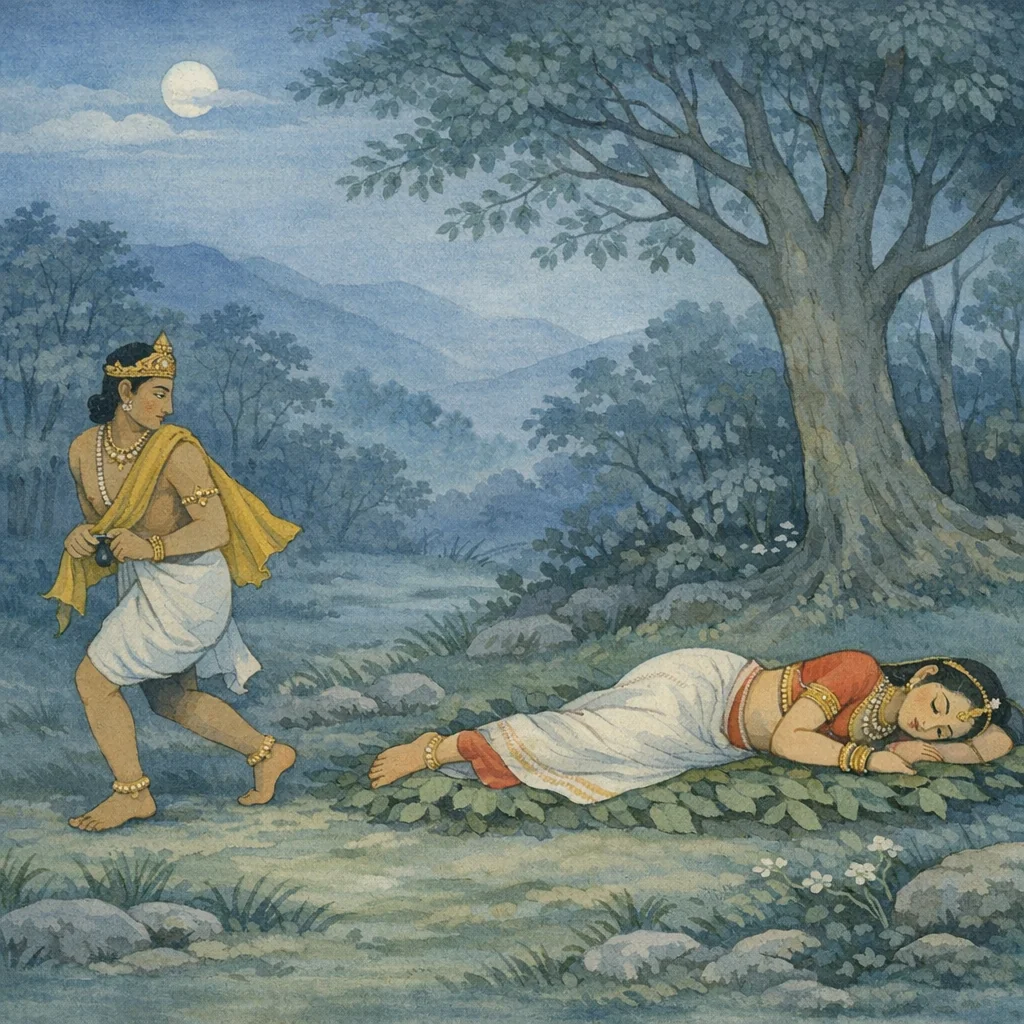
तां सभामुपसम्प्राप्प तदा स निषधाधिप: । वैदर्भ्या सहितो राजा निषसाद महीतले,तब उस धर्मशालामें पहुँचकर निषधनरेश राजा नल वैदर्भके साथ भूतलपर बैठे
Having then reached that hall, King Nala, lord of Niṣadha, accompanied by the princess of Vidarbha (Damayantī), sat down upon the ground.
Verse 6
स वै विवस्त्रो विकटो मलिन: पांसुगुण्ठित: । दमयन्त्या सह श्रान्तः सुष्वाप धरणीतले,वे वस्त्रहीन, चटाई आदिसे रहित, मलिन एवं धूलि-धूसरित हो रहे थे। दमयन्तीके साथ थककर भूमिपर ही सो गये
Bṛhadaśva said: He, indeed, was without clothing—disfigured, unclean, and covered with dust. Exhausted together with Damayantī, he lay down and slept upon the bare ground.
Verse 7
दमयन्त्यपि कल्याणी निद्रयापहता तत: । सहसा दुःखमासाद्य सुकुमारी तपस्विनी,सुकुमारी तपस्विनी कल्याणमयी दमयन्ती भी सहसा दुःखमें पड़ गयी थी। वहाँ आनेपर उसे भी निद्राने घेर लिया
Bṛhadaśva said: Even Damayantī—noble and auspicious—was then overcome by sleep. Having suddenly fallen into distress, that delicate, ascetic woman succumbed to slumber there as well.
Verse 8
सुप्तायां दमयन्त्यां तु नलो राजा विशाम्पते । शोकोन्मथितचित्तात्मा न सम शेते तथा पुरा,राजन्! राजा नलका चित्त शोकसे मथा जा रहा था। वे दमयन्तीके सो जानेपर भी स्वयं पहलेकी भाँति सो न सके
Bṛhadaśva said: When Damayantī had fallen asleep, King Nala—O lord of the people—his mind and inner self churned by grief, could not lie down and sleep in calm as he had done before.
Verse 9
स तद् राज्यापहरणं सुद्वत्त्यागं च सर्वश: । वने च त॑ परिध्वंसं प्रेक्ष्य चिन्तामुपेयिवान्,राज्यका अपहरण, सुहृदोंका त्याग और वनमें प्राप्त होनेवाले नाना प्रकारके क्लेशपर विचार करते हुए वे चिन्ताको प्राप्त हो गये
Seeing in full the loss of his kingdom, the abandonment by his friends, and the many hardships that befell him in the forest, he was overcome by anxious thought.
Verse 10
किं नु मे स्यादिदं कृत्वा कि नु मे स्यादकुर्वत: । कि नु मे मरणं श्रेय: परित्यागो जनस्य वा,वे सोचने लगे "ऐसा करनेसे मेरा क्या होगा और यह कार्य न करनेसे भी क्या होगा। मेरा मर जाना अच्छा है कि अपनी आत्मीया दमयन्तीको त्याग देना
Bṛhadaśva said: “What will become of me if I do this? And what will become of me if I do not do it? Is death better for me, or is it better to abandon my own people?” Thus he fell into anxious deliberation.
Verse 11
मामियं हानुरक्तैवं दुःखमाप्रोति मत्कृते । मद्विहीना त्वियं गच्छेत् कदाचित् स्वजनं प्रति,“यह मुझसे इस प्रकार अनुरक्त होकर मेरे ही लिये दुःख उठा रही है। यदि मुझसे अलग हो जाय तो यह कदाचित् अपने स्वजनोंके पास जा सकती है
Bṛhadaśva said: “She, so deeply attached to me, is enduring sorrow solely on my account. If she were separated from me, she might perhaps be able to go back to her own people.”
Verse 12
मयि नि:संशयं दुःखमियं प्राप्स्यत्यनुव्रता । उत्सगें संशय: स्यात् तु विन्देतापि सुखं क्वचित्,“मेरे पास रहकर तो यह पतित्रता नारी निश्चय ही केवल दुःख भोगेगी। यद्यपि इसे त्याग देनेपर एक संशय बना रहेगा तो भी यह सम्भव है कि इसे कभी सुख मिल जाय'
Bṛhadaśva said: “If she remains with me, this devoted, faithful wife will, without doubt, obtain only suffering. If I abandon her, there will indeed remain an uncertainty; yet it is possible that, somewhere and at some time, she may find happiness.”
Verse 13
स विनिश्चित्य बहुधा विचार्य च पुनः पुन: । उत्सर्ग मन्यते श्रेयो दमयन्त्या नराधिप,राजन! नल अनेक प्रकारसे बार-बार विचार करके एक निश्चयपर पहुँच गये और दमयन्तीका परित्याग कर देनेमें ही उसकी भलाई मानने लगे
Bṛhadaśva said: Having reached a firm resolve and turning it over in his mind again and again in many ways, King Nala came to believe, O lord of men, O king, that it would be better for Damayantī if he were to abandon her. In his troubled judgment he treats separation as an act meant for her welfare, laying bare the ethical strain between intention and the harm wrought by one’s chosen means.
Verse 14
न चैषा तेजसा शक्या कैश्िद् धर्षयितुं पथि । यशस्विनी महाभागा मद्धक्तेयं पतिव्रता,“यह महाभागा यशस्विनी दमयन्ती मेरी भक्त और पतित्रता है। पातिव्रत-तेजके कारण मार्गमें कोई इसका सतीत्व नष्ट नहीं कर सकता”
And on the road no one can violate her, for her spiritual radiance makes her unassailable. This illustrious, greatly fortunate Damayantī is devoted to me and steadfast in wifely fidelity; by the power born of her chastity, her integrity cannot be harmed in the course of her journey.
Verse 15
एवं तस्य तदा बुद्धिर्दमयन्त्यां न्यवर्तत । कलिना दुष्टभावेन दमयन्त्या विसर्जने,ऐसा सोचकर उनकी बुद्धि दमयन्तीको अपने साथ रखनेके विचारसे निवृत्त हो गयी। बल्कि दुष्ट स्वभाववाले कलियुगसे प्रभावित होनेके कारण दमयन्तीको त्याग देनेमें ही उनकी बुद्धि प्रवृत्त हुई
Thinking thus, his mind at that time turned away from the resolve to keep Damayantī with him. Instead, under the baleful influence of Kali and his wicked intent, his judgment was driven toward abandoning Damayantī.
Verse 16
सो<वस्त्रतामात्मनश्व तस्याश्वाप्येकवस्त्रताम् । चिन्तयित्वाध्यगाद् राजा वस्त्रार्धस्यावकर्तनम्,तदनन्तर राजाने अपनी वस्त्रहीनता और दमयन्तीकी एकवस्त्रताका विचार करके उसके आधे वस्त्रको फाड़ लेना ही उचित समझा
Then the king, reflecting on his own nakedness and on Damayantī having only a single garment, concluded that the proper course was to tear away half of her cloth.
Verse 17
कथं वासो विकर्तेयं न च बुध्येत मे प्रिया । विचिन्त्यैवं नलो राजा सभां पर्यचरत्तदा,फिर यह सोचकर कि “मैं कैसे वस्त्रको काटूँ, जिससे मेरी प्रियाकी नींद न टूटे।” राजा नल धर्मशालामें (नंगे ही) इधर-उधर घूमने लगे
Then King Nala thought: “How can I cut the garment so that my beloved does not awaken?” Thinking thus, he wandered to and fro in the hall of the rest-house, still intent on acting without disturbing her.
Verse 18
परिधावन्नथ नल इतश्रैतश्ष भारत । आससाद सभोद्देशे विकोशं खड्गमुत्तमम्,भारत! इधर-उधर दौड़-धूप करनेपर राजा नलको उस सभाभवनमें एक अच्छी-सी नंगी तलवार मिल गयी
Bṛhadaśva said: As King Nala ran about here and there, O Bhārata, he came upon an excellent sword, already drawn from its scabbard, lying in a part of the assembly-hall. In the midst of distress and disorientation, this chance finding offered a sudden means of protection and resolve, hinting that even in adversity one may encounter the instruments needed to act with courage and regain steadiness.
Verse 19
तेनार्थ वाससश्कछित्त्वा निवस्य च परंतप: । सुप्तामुत्सृज्य वैदर्भी प्राद्रवद् गतचेतनाम्,उसीसे दमयन्तीका आधा वस्त्र काटकर परंतप नलने उसके द्वारा अपना शरीर ढँक लिया और अचेत सोती हुई विदर्भराजकुमारी दमयन्तीको वहीं छोड़कर वे शीघ्रतासे चले गये
For the sake of clothing, the scorcher of foes (Nala) cut the garment in two and wrapped himself in it. Then, abandoning the Vidarbha princess Damayantī as she lay asleep and senseless, he hurried away—an act born of delusion and desperation, carrying grave ethical weight as a breach of marital protection (rakṣaṇa) even amid calamity.
Verse 20
ततो निवृत्तहदय: पुनरागम्य तां सभाम् | दमयन्तीं तदा दृष्टवा रुरोद निषधाधिप:,कुछ दूर जानेपर उनके हृदयका विचार पलट गया और वे पुनः उसी सभाभवनमें लौट आये। वहाँ उस समय दमयन्तीको देखकर निषधनरेश नल फूट-फूटकर रोने लगे
Then, his resolve turning back, he returned again to that assembly hall. There, on seeing Damayantī, the lord of Niṣadha (King Nala) broke down and wept—his grief and remorse overcoming him in the very place where duty and restraint were expected.
Verse 21
यां न वायुर्न चादित्य: पुरा पश्यति मे प्रियाम् । सेयमद्य सभामध्ये शेते भूमावनाथवत्,(वे विलाप करते हुए कहने लगे--) “पहले जिस मेरी प्रियतमा दमयन्तीको वायु तथा सूर्य देवता भी नहीं देख पाते थे, वही आज इस धर्मशालामें भूमिपर अनाथकी भाँति सो रही है
Bṛhadaśva said: “She whom, in former days, not even the Wind nor the Sun could behold—my beloved—she is now lying on the ground in the midst of this hall, like one without protection.”
Verse 22
इयं वस्त्रावकर्तेन संवीता चारुहासिनी । उन्मत्तेव वरारोहा कथं बुद्ध्वा भविष्यति,“यह मनोहर हास्यवाली सुन्दरी वस्त्रके आधे टुकड़ेसे लिपटी हुई सो रही है। जब इसकी नींद खुलेगी, तब पगली-सी होकर न जाने यह कैसी दशाको पहुँच जायगी
Bṛhadaśva said: “This lovely, sweet-smiling maiden lies wrapped only in a torn half-piece of cloth. When she awakens and comes to her senses, how will she fare—like one distraught and bewildered?”
Verse 23
कथमेका सती भैमी मया विरहिता शुभा । चरिष्यति वने घोरे मृगव्यालनिषेविते,“यह भयंकर वन हिंसक पशुओं और सर्पोंसे भरा है। मुझसे बिछुड़कर शुभलक्षणा सती दमयन्ती अकेली इस वनमें कैसे विचरण करेगी?
Bṛhadaśva said: “How will the virtuous Bhīmī—auspicious and faithful—bereft of me, wander alone in this dreadful forest, a haunt of wild beasts and predators?”
Verse 24
आदित्या वसवो रुद्रा अश्विनौ समरुद्गणौ । रक्षन्तु त्वां महाभागे धर्मेणासि समावृता,“महाभागे! तुम धर्मसे आवृत हो, आदित्य, वसु, रुद्र, अश्विनीकुमार और मरुठ्वण--ये सब देवता तुम्हारी रक्षा करें!
Bṛhadaśva said: “O noble lady, may the Ādityas, the Vasus, the Rudras, the two Aśvins, together with the hosts of Maruts, protect you. You are encompassed by dharma—guarded by righteousness itself.”
Verse 25
एवमुकक्त्वा प्रियां भार्या रूपेणाप्रतिमां भुवि | कलिनापद्वतज्ञानो नल: प्रातिष्ठदुद्यत:,इस भूतलपर रूप-सौन्दर्यमें जिसकी समानता करनेवाली दूसरी कोई स्त्री नहीं थी, उसी अपनी प्यारी पत्नी दमयन्तीके प्रति इस प्रकार कहकर राजा नल वहाँसे उठे और चल दिये। उस समय कलिने इनकी विवेकशक्ति हर ली थी
Having spoken thus to his beloved wife—Damayantī, whose beauty on earth was without equal—King Nala rose up and set out. At that moment, his discernment had been stolen by Kali, and under that delusion he departed.
Verse 26
गत्वा गत्वा नलो राजा पुनरेति सभा मुहुः । आकृष्यमाण: कलिना सौहृदेनावकृष्यते,राजा नलको एक ओर कलियुग खींच रहा था और दूसरी ओर दमयन्तीका सौहार्द। अतः: वे बार-बार जाकर फिर उस धर्मशालामें ही लौट आते थे
King Nala goes out again and again, yet repeatedly returns to the hall. Pulled one way by Kali’s malign influence and drawn back the other way by the bond of affection, he is tugged between ruinous temptation and loyal attachment.
Verse 27
द्विधेव हृदयं तस्य दुःखितस्याभवत् तदा | दोलेव मुहुरायाति याति चैव सभां प्रति,उस समय दु:ःखी राजा नलका हृदय मानो दुविधामें पड़ गया था। जैसे झूला बार-बार नीचे-ऊपर आता-जाता रहता है, उसी प्रकार उनका हृदय कभी बाहर जाता, कभी सभाभवनमें लौट आता था
Then, as he sat in sorrow, his heart became as though split in two. Like a swing that repeatedly rises and falls, his mind kept wavering—now moving outward, now turning back again toward the assembly hall—torn between opposing impulses and unable to settle on a single course.
Verse 28
अवकृष्टस्तु कलिना मोहित: प्राद्रवन्नल: । सुप्तामुत्सृज्य तां भार्या विलप्य करुणं बहु,अन्तमें कलियुगने प्रबल आकर्षण किया, जिससे मोहित होकर राजा नल बहुत देरतक करुण विलाप करके अपनी सोती हुई पत्नीको छोड़कर शीघ्रतासे चले गये
Dragged down by Kali’s influence and bewildered in mind, King Nala fled away. After lamenting long and piteously, he abandoned his wife as she lay asleep and departed in haste—an ethically tragic moment showing how delusion can overpower judgment and rupture marital duty.
Verse 29
नष्टात्मा कलिना स्पृष्टस्तत् तद् विगणयन् नृपः । जगामैकां वने शून्ये भार्यामुत्सृज्य दु:खित:,कलियुगके स्पर्शसे उनकी बुद्धि भ्रष्ट हो गयी थी; अतः वे अत्यन्त दुःखी हो विभिन्न बातोंका विचार करते हुए उस सूने वनमें अपनी पत्नीको अकेली छोड़कर चल दिये
Bṛhadaśva said: Struck by Kali, the king’s judgment and self-mastery were ruined. Tormented with grief and turning various thoughts over in his mind, he went off alone into the desolate forest, abandoning his wife behind.
Verse 62
इति श्रीमहाभारते वनपर्वणि नलोपाख्यानपर्वणि दमयन्तीपरित्यागे द्विषष्टितमो5 ध्याय:,इस प्रकार श्रीमहाभारत वनपर्वके अन्तर्गत नलोपाख्यानपर्वमें दमयन्तीपरित्यागविषयक बासठवाँ अध्याय पूरा हुआ
Thus ends the sixty-second chapter of the Nala episode within the Vana Parva of the Śrī Mahābhārata, dealing with Nala’s abandonment of Damayantī. The colophon marks the close of a morally charged turning point: a virtuous woman is left vulnerable, and the narrative frames the ensuing suffering as a test of character, endurance, and the workings of fate and ethical responsibility.
Frequently Asked Questions
Damayantī must balance survival and social safety with fidelity and personal boundaries—accepting shelter and assistance while regulating conduct (food, service, and speech) to preserve dignity and the integrity of her search for Nala.
The chapter juxtaposes human agency with daiva: catastrophe can occur without clear personal fault, yet ethical discipline persists through grief; one continues purposeful action (seeking, negotiating protection) while acknowledging uncertainty in outcomes.
No explicit phalaśruti is stated in this chapter; its meta-function is narrative-ethical, positioning Damayantī’s vows and the queen mother’s protective role as instructive models within the broader Nalopākhyāna.