Adhyaya 40
Chapter 40: Śiva in Kirāta Disguise Tests Arjuna (Mūka-vadha and the Contest)
Upa-parva: Kirātārjunīya Episode (Śiva as Kirāta; Arjuna’s trial for divine weapons)
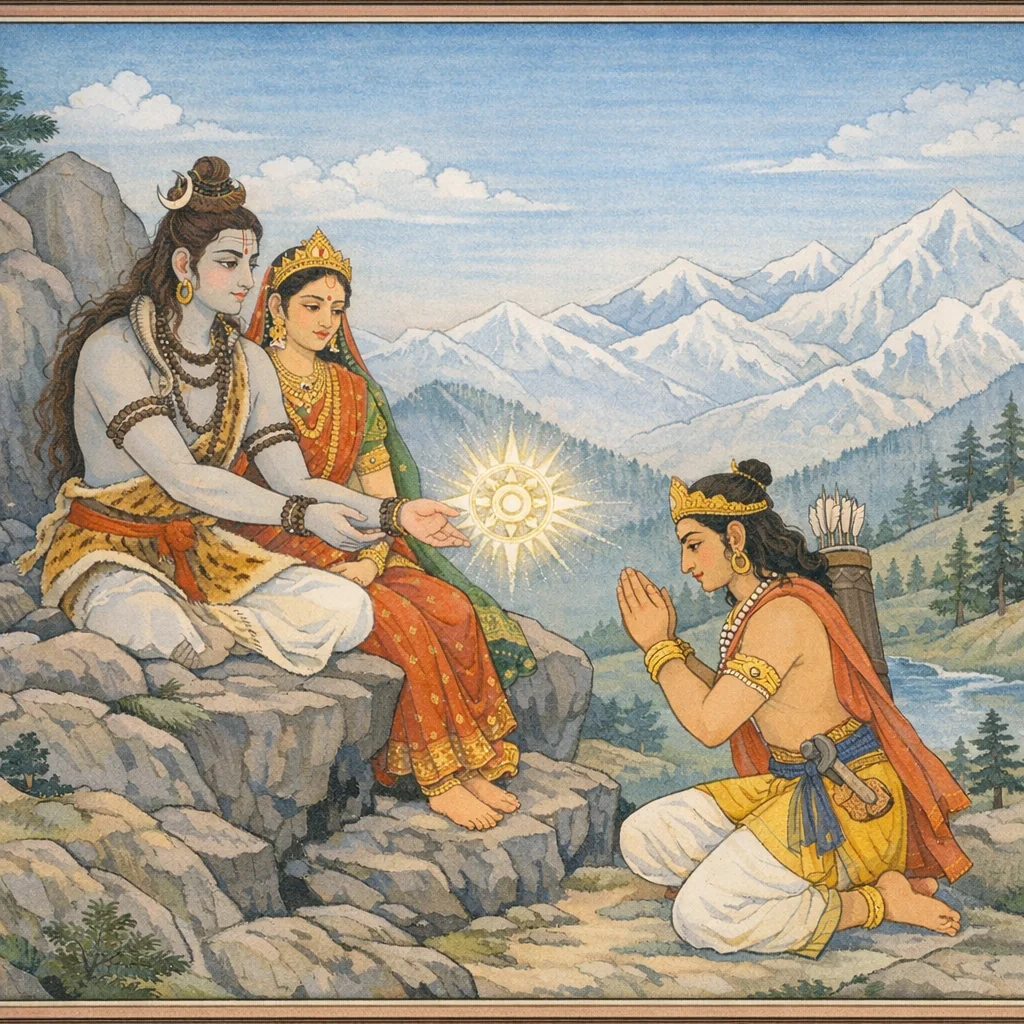
Vaiśaṃpāyana describes Śiva (Pinākapāṇi, Hara) arriving in a kirāta disguise, accompanied by Umā and a retinue of diverse beings. The forest becomes abruptly silent, signaling a divine proximity. Arjuna encounters Mūka, a rākṣasa assuming a boar form, and prepares to strike; simultaneously, the disguised kirāta claims the target. Both release arrows that land together, killing Mūka, and a dispute arises over rightful claim and hunting propriety. The kirāta challenges Arjuna to demonstrate full strength; a prolonged engagement follows—archery volleys that Śiva receives unharmed, followed by close combat using bow, sword, trees, stones, and finally fists. Śiva overpowers Arjuna, compressing his body and breath until Arjuna collapses. Pleased, Śiva reveals himself, praises Arjuna’s unmatched kṣatriya valor and endurance, grants him a special divine sight/recognition, and accepts Arjuna’s subsequent apology and submission once the deity’s true identity is disclosed.
Chapter Arc: किरात-वेषधारी महादेव अब अपना रहस्य-स्वरूप प्रकट कर अर्जुन के तप की परीक्षा का फल सुनाते हैं—और देवदेव स्वयं वर देने को उद्यत होते हैं। → शिव अर्जुन की पूर्वजन्म-स्मृति और उसके नारायण-सहचर होने का संकेत देकर उसके तेज का महत्त्व बताते हैं—यह तेज साधारण नहीं, जगत्-धारण करने वाले पुरुषश्रेष्ठों का अंश है। फिर भी, ऐसा वर यदि मिला तो उसका भार और मर्यादा भी उतनी ही कठोर होगी। → अर्जुन विनयपूर्वक ‘घोर’ दिव्यास्त्र—पाशुपत—की याचना करता है, जिससे दानव, राक्षस, भूत-पिशाच, गन्धर्व, नाग आदि का दमन हो सके। शिव प्रसन्न होकर पाशुपतास्त्र प्रदान करते हैं, पर साथ ही उसका भयावह निषेध भी देते हैं—अल्पतेज या अनुचित लक्ष्य पर प्रयोग हुआ तो वह जगत्-विनाशक बन सकता है। → महादेव अर्जुन को महान धनुष (गाण्डीव का उल्लेख/प्रशंसा-प्रसंग) और दिव्य सामर्थ्य का आश्वासन देकर वरदान-सम्पन्न करते हैं। अर्जुन के देखते-देखते शिव उमा सहित हिम-शिखरों, श्वेत तटों और कन्दराओं वाले शुभ पर्वत-प्रदेश को त्यागकर अपने धाम की ओर प्रस्थान करते हैं। → अर्जुन के हाथ में अब ऐसा अस्त्र है जो युद्ध का भाग्य बदल सकता है—पर प्रश्न यह है कि वह इसे कब, किस पर, और किस धर्म-सीमा में प्रयोग करेगा।
Shlokas
Verse 1
हि >> न (0) है चत्वारिशो< ध्याय: भगवान् शंकरका अर्जुनको वरदान देकर अपने धामको प्रस्थान देवदेव उवाच नरस्त्वं पूर्वदेहे वै नारायणसहायवान् । बदर्या तप्तवानुग्र॑ं तपो वर्षायुतान् बहूनू,देवदेव महादेवजी बोले--अर्जुन! तुम पूर्व-शरीरमें “नर' नामक सुप्रसिद्ध ऋषि थे। नारायण तुम्हारे सखा हैं। तुमने बदरिकाश्रममें अनेक सहस्र वर्षोतक उग्र तपस्या की है
Devadeva (Mahādeva) said: “Arjuna, in a former embodiment you were the renowned sage Nara, and Nārāyaṇa was your companion and support. In Badarī you performed fierce austerities for many tens of thousands of years.”
Verse 2
त्वयि वा परमं तेजो विष्णौ वा पुरुषोत्तमे । युवाभ्यां पुरुषाग्रयाभ्यां तेजसा धार्यते जगत्,तुममें अथवा पुरुषोत्तम भगवान् विष्णुमें उत्कृष्ट तेज है। तुम दोनों पुरुषरत्नोंने अपने तेजसे इस सम्पूर्ण जगत्को धारण कर रखा है
The god of gods said: “Whether the supreme radiance abides in you, or in Viṣṇu, the highest Person—by the splendor of you two, the foremost among men, this entire world is upheld.”
Verse 3
शक्राभिषेके सुमहद्धनुर्जलदनि:स्वनम् । प्रगृह् दानवा: शस्तास्त्वया कृष्णेन च प्रभो,प्रभो! तुमने और श्रीकृष्णने इन्द्रके अभिषेकके समय मेघके समान गम्भीर घोष करनेवाले महान् धनुषको हाथमें लेकर बहुत-से दानवोंका वध किया था
At the consecration of Śakra (Indra), you—together with Kṛṣṇa—took up a mighty bow whose roar was like thunderclouds, and you struck down many Dānavas.
Verse 4
तदेतदेव गाण्डीवं तव पार्थ करोचितम् । मायामास्थाय यद् ग्रस्तं मया पुरुषसत्तम,पुरुषप्रवर पार्थ! तुम्हारे हाथमें रहनेयोग्य यही वह गाण्डीव धनुष है, जिसे मैंने मायाका आश्रय लेकर अपनेमें विलीन कर लिया था
The Lord said: “O Pārtha, this very Gāṇḍīva is indeed the bow fit to remain in your hands. It was I—taking refuge in divine māyā—who had drawn it into Myself and kept it withdrawn. Now it is returned to you, O best among men.”
Verse 5
तूणौ चाप्यक्षयौ भूयस्तव पार्थ यथोचितौ । भविष्यति शरीरं च नीरुजं कुरुनन्दन,कुरुनन्दन! और ये रहे तुम्हारे दोनों अक्षय तूणीर, जो सर्वथा तुम्हारे ही योग्य हैं। कुन्तीकुमार! तुम्हारे शरीरमें जो चोट पहुँची है, वह सब दूर होकर तुम नीरोग हो जाओगे
The Lord of gods said: “And here again are your two inexhaustible quivers, O Pārtha, perfectly suited to you. And your body too, O delight of the Kurus, shall become free from pain and injury.”
Verse 6
प्रीतिमानस्मि ते पार्थ भवान् सत्यपराक्रम: । गृहाण वरमस्मत्त: काड्क्षितं पुरुषोत्तम,पार्थ! तुम्हारा पराक्रम यथार्थ है, इसलिये मैं तुमपर बहुत प्रसन्न हूँ। पुरुषोत्तम! तुम मुझसे मनोवांछित वर ग्रहण करो
The Lord of gods said: “O Pārtha, I am pleased with you, for your valor is true and proven. Therefore, accept from me the boon you desire, O Puruṣottama, O Pārtha.”
Verse 7
न त्वया पुरुष: कश्रित् पुमान् मर्त्येषु मानद । दिवि वा वर्तते क्षत्रं त्वत्प्रधानमरिंदम,मानद! मर्त्यलोक अथवा स्वर्गलोकमें भी कोई पुरुष तुम्हारे समान नहीं है। शत्रुदमन! क्षत्रिय-जातिमें तुम्हीं सबसे श्रेष्ठ हो
The Lord of gods said: “O giver of honor, among mortals there is no man equal to you; nor is there, even in heaven, any warrior power that surpasses your preeminence. O subduer of foes, within the Kṣatriya order you stand foremost.”
Verse 8
अजुन उवाच भगवन् ददासि चेन्महां काम प्रीत्या वृषध्वज । कामये दिव्यमस्त्रं तद् घोरं पाशुपतं प्रभो,अर्जुन बोले--भगवन्! वृषध्वज! यदि आप प्रसन्नतापूर्वक मुझे इच्छानुसार वर देते हैं तो प्रभो! मैं उस भयंकर दिव्यास्त्र पाशुपतको प्राप्त करना चाहता हूँ
Arjuna said: “O Blessed Lord, O Bull-bannered One (Śiva)! If, out of gracious favor, you would grant me a boon according to my desire, then, O Master, I seek to obtain that formidable divine weapon—the Pāśupata.”
Verse 9
यत् तद् ब्रह्मशिरो नाम रौद्रे भीमपराक्रमम् | चुगान्ते दारुणे प्राप्ते कृत्स्नं संहरते जगत्,जिसका नाम ब्रह्मशिर है, आप भगवान् रुद्र ही जिसके देवता हैं, जो भयानक पराक्रम प्रकट करनेवाला तथा दारुण प्रलयकालमें सम्पूर्ण जगत्का संहारक है
Arjuna said: “That weapon called Brahmaśiras—presided over by the fierce Rudra, terrible in its might—when the dreadful end of an age arrives, is capable of annihilating the entire world.”
Verse 10
कर्णभीष्मकृपद्रोणैर्भविता तु महाहव: । त्वत्प्रसादान्न्महादेव जयेयं तान् यथा युधि,महादेव! कर्ण, भीष्म, कृप, द्रोणाचार्य आदिके साथ मेरा महान् युद्ध होनेवाला है, उस युद्धमें मैं आपकी कृपासे उन सबपर विजय पा सकूँ, इसीके लिये दिव्यास्त्र चाहता हूँ
Arjuna said: “A great battle will indeed come to pass with Karṇa, Bhīṣma, Kṛpa, and Droṇa. O Mahādeva, by your grace may I defeat them in the proper manner of war. For that purpose I seek divine weapons.”
Verse 11
दहेयं येन संग्रामे दानवान् राक्षसांस्तथा । भूतानि च पिशाचांश्व गन्धर्वानथ पन्नगान्,मुझे वह अस्त्र प्रदान कीजिये, जिससे संग्राममें दानवों, राक्षसों, भूतों, पिशाचों, गन्धवों तथा नागोंको भस्म कर सकूँ। जिस अस्त्रके अभिमन्त्रित करते ही सहस्रों शूल, देखनेमें भयंकर गदाएँ और विषैले सर्पोके समान बाण प्रकट हों
Arjuna said: “Grant me that weapon by which, in battle, I may burn to ashes the Dānavas and the Rākṣasas, as well as the Bhūtas and Piśācas, the Gandharvas, and the serpentine Nāgas. I seek an astric power that, once empowered by mantra, manifests dreadful volleys—thousands of tridents, terrifying maces, and arrows like venomous serpents—so that hostile forces that threaten righteous order may be decisively checked.”
Verse 12
यस्मिज्छुलसहस््राणि गदाश्षोग्रप्रदर्शना: । शराश्षाशीविषाकारा: सम्भवन्त्यनुमन्त्रिते,मुझे वह अस्त्र प्रदान कीजिये, जिससे संग्राममें दानवों, राक्षसों, भूतों, पिशाचों, गन्धवों तथा नागोंको भस्म कर सकूँ। जिस अस्त्रके अभिमन्त्रित करते ही सहस्रों शूल, देखनेमें भयंकर गदाएँ और विषैले सर्पोके समान बाण प्रकट हों
Arjuna said: “Grant me that weapon by which, in battle, I may reduce to ashes the Dānavas, Rākṣasas, Bhūtas, Piśācas, Gandharvas, and Nāgas—an enchanted weapon such that, the moment it is empowered by mantra, thousands of spears arise, along with terrifying maces, and arrows shaped like venomous serpents.”
Verse 13
युध्येयं येन भीष्मेण द्रोणेन च कृपेण च । सूतपुत्रेण च रणे नित्यं कटुकभाषिणा,उस अस्त्रको पाकर मैं भीष्म, द्रोण, कृपाचार्य तथा सदा कटु भाषण करनेवाले सूतपुत्र कर्णके साथ भी युद्धमें लड़ सकूँ
Arjuna said: “Grant me that power by which, even on the battlefield, I may fight against Bhīṣma, Droṇa, and Kṛpa—and also against Karṇa, the charioteer’s son, who is ever harsh of speech.”
Verse 14
एष मे प्रथम: कामो भगवन् भगनेत्रहन् । त्वत्प्रसादाद् विनिर्वृत्त: समर्थ: स्थामहं यथा,भगदेवताकी आँखें नष्ट करनेवाले भगवन्! आपके समक्ष यह मेरा सबसे पहला मनोरथ है, जो आपहीके कृपाप्रसादसे पूर्ण हो सकता है। आप ऐसा करें, जिससे मैं सर्वथा शत्रुओंको परास्त करनेमें समर्थ हो सकूँ
Arjuna said: “O Blessed Lord, slayer of Bhaga’s eyes! This is my first and foremost desire before you: that by your gracious favor it may be fulfilled—grant that I may stand firm and become fully capable of overcoming my enemies.”
Verse 15
भव उवाच ददामि ते<स्त्रं दयितमहं पाशुपतं विभो । समर्थो धारणे मोक्षे संहारे चासि पाण्डव,महादेवजीने कहा--पराक्रमशाली पाण्डुकुमार! मैं अपना परम प्रिय पाशुपतास्त्र तुम्हें प्रदान करता हूँ। तुम इसके धारण, प्रयोग और उपसंहारमें समर्थ हो
Bhava said: “O mighty one, I grant you my most cherished weapon—the Pāśupata. O Pāṇḍava, you are capable of bearing it, releasing it in use, and withdrawing it again.”
Verse 16
नैतद् वेद महेन्द्रोडपि न यमो न च यक्षराट् वरुणो5प्यथवा वायु: कुतो वेत्स्यन्ति मानवा:,इसे देवराज इन्द्र, यम, यक्षराज कुबेर, वरुण अथवा वायुदेवता भी नहीं जानते। फिर साधारण मानव तो जान ही कैसे सकेंगे?
Bhava said: “Not even Mahendra (Indra) knows this—nor Yama, nor the lord of the Yakṣas (Kubera), nor Varuṇa, nor even Vāyu. How, then, could ordinary human beings possibly know it?”
Verse 17
न त्वेतत् सहसा पार्थ मोक्तव्यं पुरुषे क्वचित् । जगद् विनाशयेत् सर्वमल्पतेजसि पातितम्,परंतु कुन्तीकुमार! तुम सहसा किसी पुरुषपर इसका प्रयोग न करना। यदि किसी अल्पशक्ति योद्धापर इसका प्रयोग किया गया तो यह सम्पूर्ण जगत्का नाश कर डालेगा
But, O Pārtha, you must never discharge this rashly against any man. If it is unleashed upon one of little spiritual or martial power, it would destroy the entire world.
Verse 18
अवशध्यो नाम नास्त्यत्र त्रैलोक्ये सचराचरे । मनसा चक्षुषा वाचा धनुषा च निपातयेत्,चराचर प्राणियोंसहित समस्त त्रिलोकीमें कोई ऐसा पुरुष नहीं है जो इस अस्त्रद्वारा मारा न जा सके। इसका प्रयोग करनेवाला पुरुष अपने मानसिक संकल्पसे, दृष्टिसे, वाणीसे तथा धनुष-बाणद्वारा भी शत्रुओंको नष्ट कर सकता है
Bhava said: “In this entire threefold world, with all that moves and all that is unmoving, there exists no being who cannot be slain by this weapon. The one who employs it can bring down enemies by mere mental resolve, by a glance, by a spoken utterance, and also by bow and arrow.”
Verse 19
वैशम्पायन उवाच तच्छुत्वा त्वरित: पार्थ: शुचिर्भूत्वा समाहित: । उपसंगम्य विश्वेशमधीष्वेत्यथ सो<ब्रवीत्,वैशम्पायनजी कहते हैं--जनमेजय! यह सुनकर कुन्तीपुत्र अर्जुन तुरंत ही पवित्र एवं एकाग्रचित्त हो शिष्यभावसे भगवान् विश्वेश्वरकी शरण गये और बोले--“भगवन्! मुझे इस पाशुपतास्त्रका उपदेश कीजिये'
Vaiśampāyana said: Hearing that, Pārtha (Arjuna) hastened at once. Having purified himself and steadied his mind, he approached Viśveśa (Śiva) in a disciple’s spirit and said, “O Lord, please instruct me in the Pāśupata weapon.”
Verse 20
ततस्त्वध्यापयामास सरहस्यनिवर्तनम् | तदस्त्रं पाण्डवश्रेष्ठ मूर्तिमन्तमिवान्तकम्,तब भगवान् शिवने रहस्य और उपसंहारसहित पाशुपतास्त्रका उन्हें उपदेश दिया। उस समय वह अस्त्र जैसे पहले त्रिनेत्रधारी उमापति शिवकी सेवामें उपस्थित हुआ था, उसी प्रकार मूर्तिमान् यमराजतुल्य पाण्डवश्रेष्ठ अर्जुनके पास आ गया। तब अर्जुनने बहुत प्रसन्न होकर उसे ग्रहण किया
Then he instructed him in that weapon together with its secret lore and the method of withdrawal. O best of the Pāṇḍavas, that missile—like Death himself embodied—came to Arjuna as if taking visible form, just as it had formerly stood in attendance upon the three-eyed Lord Śiva. Arjuna, filled with joy, accepted it with reverence.
Verse 21
उपतस्थे च तत् पार्थ यथा तरयक्षमुमापतिम् । प्रतिजग्राह तच्चापि प्रीतिमानर्जुनस्तदा,तब भगवान् शिवने रहस्य और उपसंहारसहित पाशुपतास्त्रका उन्हें उपदेश दिया। उस समय वह अस्त्र जैसे पहले त्रिनेत्रधारी उमापति शिवकी सेवामें उपस्थित हुआ था, उसी प्रकार मूर्तिमान् यमराजतुल्य पाण्डवश्रेष्ठ अर्जुनके पास आ गया। तब अर्जुनने बहुत प्रसन्न होकर उसे ग्रहण किया
Vaiśampāyana said: That Pāśupata weapon came to Arjuna, O Pārtha, in the same manner as it had once stood in attendance upon the three-eyed Lord, Umāpati (Śiva). Having received from Śiva the secret instruction and the concluding rite that completes the transmission of the Pāśupata, Arjuna accepted it then, filled with joy and reverence.
Verse 22
ततश्नचाल पृथिवी सपर्वतवनद्रुमा | ससागरवनोद्देशा सग्रामनगराकरा,अर्जुनके पाशुपतास्त्र ग्रहण करते ही पर्वत, वन, वृक्ष, समुद्र, वनस्थली, ग्राम, नगर तथा आबकरों (खानों) सहित सारी पृथ्वी काँप उठी
Vaiśampāyana said: Then the earth trembled—together with its mountains, forests, and trees; with its seas and woodland tracts; with its villages, cities, and mines. This cosmic shaking marked the extraordinary, divinely sanctioned moment when Arjuna received the Pāśupata weapon.
Verse 23
शड्खदुन्दुभिघोषाश्व भेरीणां च सहस्रश: । तस्मिन् मुहूर्ते सम्प्राप्ते निर्धातश्न महानभूत्,उस शुभ मुहूर्त्तक आते ही शंख और दुन्दुभियोंके शब्द होने लगे। सहस्रों भेरियाँ बज उठीं। आकाशमें वायुके टकरानेका महान् शब्द होने लगा
Vaiśampāyana said: When that auspicious moment arrived, the blare of conches and kettledrums arose; thousands of war-drums resounded, and a great roaring clangor—like the striking of the sky by the wind—filled the heavens, marking the solemn commencement of the event.
Verse 24
अथानस्त्रं जाज्वलद् घोरं पाण्डवस्यामितौजस: । मूर्तिमद् वै स्थितं पाश्वे ददृशुर्देवदानवा:,तदनन्तर वह भयंकर अस्त्र मूर्तिमान्ू हो अग्निके समान प्रज्वलित तेजस्वीरूपसे अमित पराक्रमी पाण्डुनन्दन अर्जुनके पार्श्रभागमें खड़ा हो गया। यह बात देवताओं और दानवोंने प्रत्यक्ष देखी
Vaiśampāyana said: Then a dreadful weapon, blazing fiercely, appeared in embodied form and stood at the side of the mighty Pāṇḍava (Arjuna). Gods and Dānavas alike beheld it directly.
Verse 25
स्पृष्टस्य >यम्बकेणाथ फाल्गुनस्यामितौजस: । यत् किंचिदशुभं देहे तत् सर्व नाशमीयिवत्,भगवान् शंकरके स्पर्श करनेसे अमित तेजस्वी अर्जुनके शरीरमें जो कुछ भी अशुभ था, वह नष्ट हो गया
Vaiśampāyana said: When the mighty Phālguna (Arjuna) was touched by Tryambaka (Śiva), whatever impurity or inauspiciousness remained in his body was completely destroyed.
Verse 26
स्वर्ग गच्छेत्यनुज्ञातस्त्रयम्बकेण तदार्जुन: । प्रणम्य शिरसा राजनू् प्राञ्जलिदेंवमैक्षत,उस समय भगवान् त्रिलोचनने अर्जुनको यह आज्ञा दी कि “तुम स्वर्गलेकको जाओ।' राजन! तब अर्जुनने भगवानके चरणोंमें मस्तक रखकर प्रणाम किया और हाथ जोड़कर उनकी ओर देखने लगे
Then Tryambaka, the Three-eyed Lord, granted Arjuna leave, saying, “Go to Svarga.” O King, Arjuna bowed his head at the Lord’s feet in homage, and with hands joined, gazed upon Him.
Verse 27
ततः प्रभुस्त्रेदिवनिवासिनां वशी महामतिर्गिरिश उमापति: शिव: । धनुर्महद् देतिजपिशाचसूदनं ददौ भव: पुरुषवराय गाण्डिवम्,तत्पश्चात् देवताओंके स्वामी, जितेन्द्रिय एवं परम बुद्धिमान् कैलासवासी उमावल्लभ भगवान् शिवने पुरुषप्रवर अर्जुनको वह महान् गाण्डीवधनुष दे दिया, जो दैत्यों और पिशाचोंका संहार करनेवाला था
Then the mighty Lord—ruler of the dwellers of the three worlds, great-souled Girisha, Śiva, the consort of Umā—bestowed upon Arjuna, foremost among men, the great bow Gāṇḍīva, famed for destroying daityas and piśācas.
Verse 28
ततः शुभं गिरिवरमी श्वरस्तदा सहोमया सिततटसानुकन्दरम् | विहाय त॑ पतगमहर्षिसेवितं जगाम खं पुरुषवरस्य पश्यत:,जिसके तट, शिखर और कन्दराएँ हिमाच्छादित होनेके कारण श्वेत दिखायी देती हैं, पक्षी और महर्षिगण सदा जिसका सेवन करते हैं, उस मंगलमय गिरिश्रेष्ठ इन्द्रकीलको छोड़कर भगवान् शंकर भगवती उमादेवीके साथ अर्जुनके देखते-देखते आकाशमार्गसे चले गये
Then the Lord, accompanied by Umā, left that auspicious best of mountains, Indrakīla—its slopes, ridges, and caves gleaming white with snow, ever frequented by birds and great seers. As Arjuna watched, Śaṅkara departed along the path of the sky.
Verse 40
इति श्रीमहाभारते वनपर्वणि कैरातपर्वणि शिवप्रस्थाने चत्वारिंशो5ध्याय:
Thus ends the fortieth chapter of the Vana Parva of the Śrī Mahābhārata, in the section known as the Kairāta episode, concerning Śiva’s departure.
Frequently Asked Questions
The dilemma concerns rightful claim and conduct in a contested hunt: Arjuna believes the target is his legitimate engagement, while the kirāta asserts prior claim. The episode probes when honor-assertion becomes pride, and how disputes should be resolved under dharmic restraint.
Extraordinary power is ethically conditioned: capability must be proven through endurance and self-control, and finalized through humility—recognizing a higher order beyond personal prowess before receiving divine support.
While not framed as a formal phalaśruti, the narrative implies that correct understanding—submission after ignorance, and recognition of divine authority—functions as the qualifying seal for later attainments (e.g., access to divyastras) within the epic’s mokṣa-and-dharma horizon.