Adhyaya 24
वनप्रस्थानम् (Departure for the Forest) — Āraṇyaka-parva, Adhyāya 24
Upa-parva: Pāṇḍava-Vanapravēśa (Departure and Entry into Exile) — contextual unit for Book 3, Chapter 24
Vaiśaṃpāyana reports that, after the Daśārhādhipati (Kṛṣṇa) has departed, Yudhiṣṭhira sets out for the forest with Bhīma, Arjuna, the twins (Nakula and Sahadeva), Draupadī, and the household priest, mounting valuable chariots yoked with excellent horses (1). The party proceeds with a dignified, martial readiness; gifts—gold ornaments, garments, and cattle—are distributed to specialists in phonetics, letters, and mantra-knowledge, marking a formal ritualized transition (2). Attendants go ahead bearing weapons, bows, armor, arrows, bowstrings, devices, and missiles, while Indrasena follows with Draupadī’s apparel and ornaments (3–4). Citizens and leading Brahmins of Kuru-jāṅgala approach, circumambulate, and offer greetings; the scene records collective grief and a paternal bond between Yudhiṣṭhira and the populace, who lament his departure and condemn the agents of injustice (5–12). Arjuna addresses the assembled dvija-leaders, advising engagement with ascetics and dharma-competent counselors so that the exile yields successful ends and the king’s aims are fulfilled; the Brahmins respond with approval and pradakṣiṇā (13–15). Having taken leave, the groups return to their respective homes, joy diminished, with Yudhiṣṭhira’s consent, while the Pandavas continue their forest-bound course (16).
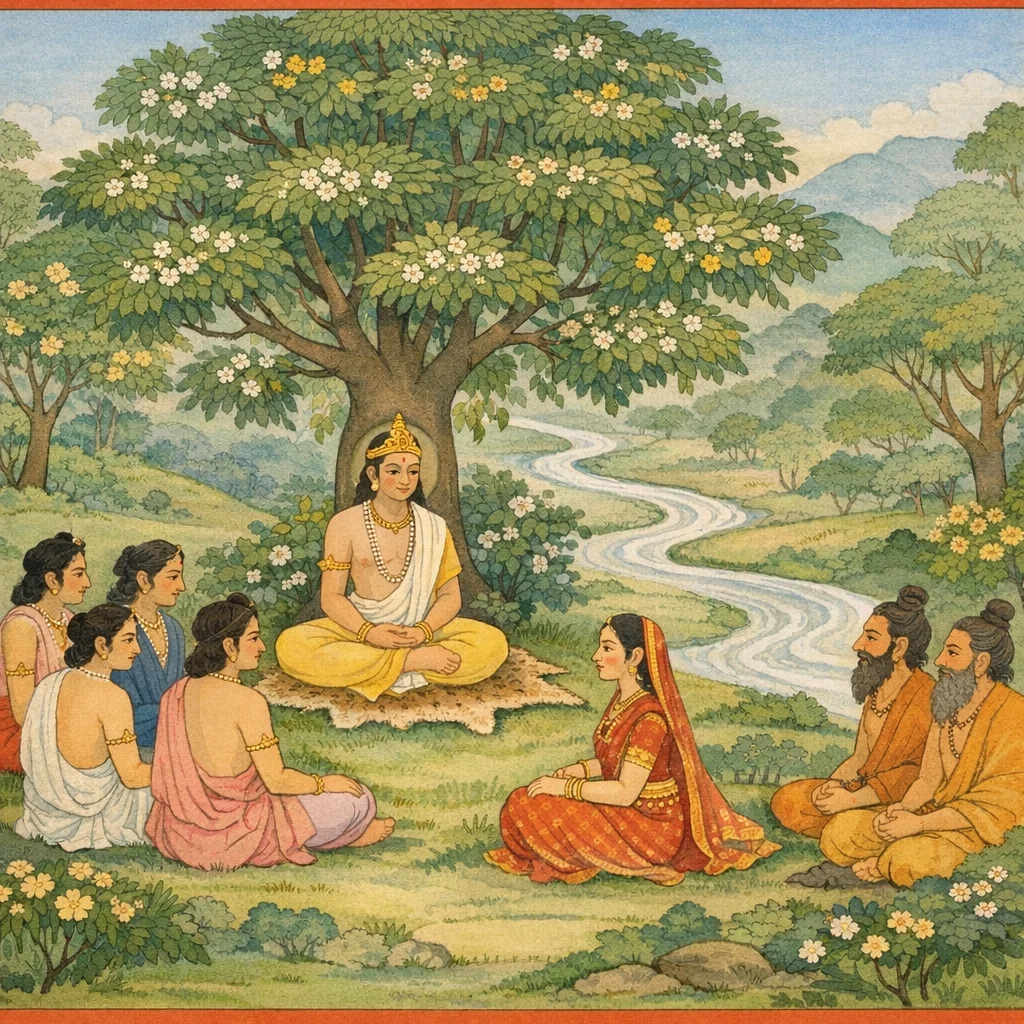
Chapter Arc: वैशम्पायन कहते हैं—जब पाण्डव वन-मार्ग पर चल पड़े, तब सत्यसंकल्प धर्मराज युधिष्ठिर ने भाइयों से कहा: अब बारह वर्ष निर्जन वन में रहना है, इसलिए ऐसा देश चुनो जो सुरक्षित, रमणीय और जीवन-निर्वाह से भरपूर हो। → वनवास की दीर्घ प्रतिज्ञा सामने है—भूख, असुरक्षा, अनजान भूभाग और साथ चल रहे ब्राह्मणों की जिम्मेदारी। युधिष्ठिर ‘बहुमृग-द्विज’ और ‘बहुपुष्प-फल’ वाले स्थान की खोज का आग्रह करते हैं, ताकि तप और जीवन दोनों निभ सकें। → पाण्डव अनेक ब्राह्मणों सहित पुण्य ‘द्वैतवन’ में प्रवेश करते हैं। युधिष्ठिर तमाल-ताल-आम्र-मधूक-नीप-कदम्ब आदि पुष्पित वृक्षों से भरे उस महावन को देखते हैं; भोगवती (सरस्वती) में स्नान कर चीर-जटा-धारी सिद्धर्षियों के दर्शन होते हैं—मानो वन स्वयं धर्म का आश्रय बन गया हो। → राजा युधिष्ठिर रथ से उतरकर भाइयों और जनों सहित वन में प्रविष्ट होते हैं; तपस्वी धर्मपरायण मुनि उनका सत्कार करते हैं। पुष्प-भार से झुके महावृक्ष के मूल में युधिष्ठिर बैठते हैं; भीम, द्रौपदी, अर्जुन, नकुल-सहदेव और अनुचर वाहन खोलकर वहीं उपस्थित रहते हैं—निवास का प्रथम ठहराव स्थापित होता है। → द्वैतवन में आश्रय तो मिल गया, पर बारह वर्षों की परीक्षा अभी आरम्भ है—यह पुण्य वन आगे किन संकटों और धर्म-संकटों का द्वार बनेगा?
Shlokas
Verse 1
#2:8 #:23:.:7 (0) हि २ 7 चतुर्विशो$ध्याय: पाण्डवोंका द्वैतवनमें जाना वैशम्पायन उवाच ततस्तेषु प्रयातेषु कौन्तेय: सत्यसंगर: । अभ्यभाषत धर्मात्मा भ्रातृन् सर्वान् युधिष्ठिर:,वैशम्पायनजी कहते हैं--जनमेजय! तदनन्तर प्रजाजनोंके चले जानेपर सत्यप्रतिज्ञ एवं धर्मात्मा कुन्तीनन्दन युधिष्ठिरने अपने सब भाइयोंसे कहा--
Vaiśampāyana said: When those people had departed, Kuntī’s son Yudhiṣṭhira—steadfast in his vow and devoted to dharma—addressed all his brothers.
Verse 2
द्वादशेमानि वर्षाणि वस्तव्यं निर्जने वने । समीक्षध्वं महारण्ये देशं बहुमृगद्धिजम्,“हमलोगोंको इन आगामी बारह वर्षोतक निर्जन वनमें निवास करना है, अतः इस महान् वनमें कोई ऐसा स्थान ढूँढ़ो, जहाँ बहुत-से पशु-पक्षी निवास करते हों
“For the next twelve years we must dwell in a lonely, uninhabited forest. Therefore, in this vast wilderness, look about and find a suitable place—one rich in game and birds.”
Verse 3
बहुपुष्पफलं रम्यं शिवं पुण्यजनावृतम् । यत्रेमा: शरद: सर्वा: सुखं प्रतिवसेमहि,“जहाँ फल-फूलोंकी अधिकता हो, जो देखनेमें रमणीय एवं कल्याणकारी हो तथा जहाँ बहुत-से पुण्यात्मा पुरुष रहते हों। वह स्थान इस योग्य होना चाहिये, जहाँ हम सब लोग इन बारह वर्षोतक सुखपूर्वक रह सकें”
“(Let us seek) a place rich in flowers and fruits, delightful to behold, auspicious and welfare-giving, and frequented by virtuous people—such a spot where we may dwell in comfort through all these seasons during our time away.”
Verse 4
एवमुक्ते प्रत्युवाच धर्मराजं धनंजय: । गुरुवन्मानवगुरुं मानयित्वा मनस्विनम्,धर्मराजके ऐसा कहनेपर अर्जुनने उन मनस्वी मानवगुरु युधिष्ठिरका गुरुतुल्य सम्मान करके उनसे इस प्रकार कहा
Vaiśaṃpāyana said: When the Dharma-king (Yudhiṣṭhira) had spoken thus, Dhanaṃjaya (Arjuna) replied. First honoring that high-minded guide of men with the reverence due to a teacher, he then addressed the Dharma-king in return.
Verse 5
अजुन उवाच भवानेव महर्षीणां वृद्धानां पर्युपासिता । अज्ञातं मानुषे लोके भवतो नास्ति किंचन,अर्जुन बोले--आर्य! आप स्वयं ही बड़े-बड़े ऋषियों तथा वृद्ध पुरुषोंका संग करनेवाले हैं। इस मनुष्यलोकमें कोई ऐसी वस्तु नहीं है, जो आपको ज्ञात न हो
Arjuna said: “Sir, you yourself have long attended upon great seers and venerable elders. In this human world there is nothing at all that remains unknown to you.”
Verse 6
त्वया हुपासिता नित्यं ब्राह्मणा भरतर्षभ । द्वैपायनप्रभूतयो नारदश्च॒ महातपा:,भरतश्रेष्ठी आपने सदा द्वैपायन आदि बहुत-से ब्राह्मणों तथा महातपस्वी नारदजीकी उपासना की है
O bull among the Bharatas, you have always shown devoted reverence and service to Brahmin sages—foremost among them Vyāsa (Dvaipāyana)—and also to the great ascetic Nārada. By honoring such seers, you uphold the ethical order that rests on humility, learning, and respect for spiritual authority.
Verse 7
य: सर्वलोकद्वाराणि नित्यं संचरते वशी । देवलोकाद् ब्रह्मलोक॑ गन्धर्वाप्सरसामपि,जो मन और इन्द्रियोंको वशमें रखकर सदा सम्पूर्ण लोकोंमें विचरते रहते हैं। देवलोकसे लेकर ब्रह्मलोक तथा गन्धर्वों और अप्सराओंके लोकोंमें भी उनकी पहुँच है
Arjuna said: “He who, having mastered his mind and senses, moves constantly and freely through the gateways of all worlds—reaching even the realms of the gods up to Brahmā’s world, and the worlds of the Gandharvas and Apsarases as well.”
Verse 8
अनुभावांश्व॒ जानासि ब्राह्मणानां न संशय: । प्रभावांश्वैव वेत्थ त्वं सर्वेषामेव पार्थिव,राजन! आप सभी ब्राह्मणोंके अनुभाव और प्रभावको जानते हैं, इसमें संशय नहीं है
Arjuna said: “You surely know the true stature and tested worth of the Brahmanas—there is no doubt of it. Indeed, O king, you also understand the full extent of their power and influence over all. Therefore, act with due reverence and restraint toward them, for honoring the learned and self-controlled upholds righteous order.”
Verse 9
त्वमेव राजन् जानासि श्रेय:कारणमेव च । यत्रेच्छसि महाराज निवासं तत्र कुर्महे,राजन! आप ही श्रेय (मोक्ष)-के कारणका ज्ञान रखते हैं। महाराज! आपकी जहाँ इच्छा हो वहीं हमलोग निवास करेंगे
Arjuna said: “O King, you alone know what truly leads to the highest good—indeed, the very cause of liberation. Wherever you wish, O great king, there we shall make our dwelling.”
Verse 10
इदं द्वैतवनं नाम सर: पुण्यजलोचितम् | बहुपुष्पफलं रम्यं नानाद्विजनिषेवितम्,यह जो पवित्र जलसे भरा हुआ सरोवर है, इसका नाम द्वैतवन है। यहाँ फल और फूलोंकी बहुलता है। देखनेमें यह स्थान रमणीय तथा अनेक ब्राह्मणोंसे सेवित है
Arjuna said: “This is the forest called Dvaitavana, with a lake filled with sacred, purifying waters. It is delightful to behold, rich in many flowers and fruits, and frequented by numerous dvijas—learned Brahmins—who dwell here for study, worship, and disciplined living.”
Verse 11
अत्रेमा द्वादश समा विहरेमेति रोचये । यदि तेडनुमतं राजन् किमन्यन्मन्यते भवान्,मेरी इच्छा है कि यहीं हमलोग इन बारह वर्षोतक निवास करें। राजन! यदि आपकी अनुमति हो तो द्वैतववनके समीप रहा जाय। अथवा आप दूसरे किस स्थानको उत्तम मानते हैं
Arjuna said: “My preference is that we should spend these twelve years of exile right here. O King, if this meets with your approval, let us stay near the Dvaitavana. Or if you judge some other place to be better, what do you think?”
Verse 12
युधिछिर उवाच ममाप्येतन्मतं पार्थ त्वया यत् समुदाह्मतम् । गच्छाम: पुण्यविख्यातं महद् द्वैतवनं सर:,युधिष्ठिरने कहा--पार्थ! तुमने जैसा बताया है, वही मेरा भी मत है। हमलोग पवित्र जलके कारण प्रसिद्ध द्वैतववन नामक विशाल सरोवरके समीप चलें
Yudhiṣṭhira said: “O Pārtha, the view you have expressed is also my own. Let us go to that great lake in the Dvaitavana, renowned for its sanctity.”
Verse 13
वैशम्पायन उवाच ततस्ते प्रययु: सर्वे पाण्डवा धर्मचारिण: । ब्राह्मणैर्बहुभि: सार्ध पुण्यं द्वैतवनं सर:,वैशम्पायनजी कहते हैं--जनमेजय! तदनन्तर वे सभी धर्मात्मा पाण्डव बहुत-से ब्राह्मणोंके साथ पवित्र द्वैववन नामक सरोवरको चले गये
Vaiśampāyana said: Then all the Pāṇḍavas, steadfast in the practice of dharma, set out together. Accompanied by many brāhmaṇas, they went to the sacred lake in the Dvaitavana forest—moving forward in a way that underscores righteous conduct, reverence for holy places, and respect for spiritual counsel in exile.
Verse 14
ब्राह्मणा: साम्निहोत्राश्न तथैव च निरग्नय: । स्वाध्यायिनो भिक्षवश्ष॒ तथैव वनवासिन:,वहाँ बहुत-से अन्निहोत्री ब्राह्मणों, निरग्निकों, स्वाध्यायपरायण ब्रह्मचारियों, वानप्रस्थियों, संन्यासियों, सैकड़ों कठोर व्रतका पालन करनेवाले तपःसिद्ध महात्माओं तथा अन्य अनेक ब्राह्मणोंने महाराज युधिष्ठिरको घेर लिया
Vaiśaṃpāyana said: Many Brahmins—some maintaining the sacred household fires, others living without fires—along with Veda-students devoted to recitation, mendicants, and forest-dwellers, gathered around King Yudhiṣṭhira. Their presence evokes the moral weight of dharma: the king is encircled not by arms but by ascetic discipline, learning, and the authority of spiritual practice.
Verse 15
बहवो ब्राद्मणास्तत्र परिवद्रुर्युधिष्ठिरम् । तपःसिद्धा महात्मान: शतश: संशितव्रता:,वहाँ बहुत-से अन्निहोत्री ब्राह्मणों, निरग्निकों, स्वाध्यायपरायण ब्रह्मचारियों, वानप्रस्थियों, संन्यासियों, सैकड़ों कठोर व्रतका पालन करनेवाले तपःसिद्ध महात्माओं तथा अन्य अनेक ब्राह्मणोंने महाराज युधिष्ठिरको घेर लिया
Vaiśampāyana said: There, many brāhmaṇas surrounded Yudhiṣṭhira—great-souled ascetics who had attained success through austerity, hundreds of them, steadfast in well-disciplined vows.
Verse 16
ते यात्वा पाण्डवास्तत्र ब्राह्मणैर्बहुभि: सह । पुण्यं द्वेतवनं रम्यं विविशुर्भरतर्षभा:,वहाँ पहुँचकर भरतश्रेष्ठ पाण्डवोंने बहुत-से ब्राह्मणोंके साथ पवित्र एवं रमणीय द्वैतवनमें प्रवेश किया
Having reached that place, the Pāṇḍavas—foremost among the Bharatas—entered the sacred and delightful Dvaitavana together with many brāhmaṇas.
Verse 17
तमालतालाम्रमधूकनीप- कदम्बसर्जार्जुनकर्णिकारै: । तपात्यये पुष्पधथरैरुपेतं महावनं राष्ट्रपतिर्ददर्श,राष्ट्रपति युधिष्ठिरने देखा, वह महान् वन तमाल, ताल, आम, महुआ, नीप, कदम्ब, साल, अर्जुन और कनेर आदि वृक्षोंसे, जो ग्रीष्म-ऋतु बीतनेपर फ़ूल धारण करते हैं, सम्पन्न है
King Yudhiṣṭhira beheld a vast forest, rich with tamāla, tāla, mango, madhūka, nīpa, kadamba, sāla, arjuna, karṇikāra and other trees, which, when the heat of summer had passed, bore blossoms.
Verse 18
महाद्रुमाणां शिखरेषु तस्थु- मनोरमां वाचमुदीरयन्त: । मयूरदात्यूहचकोरसड्घा- स्तस्मिन् वने बर्हिणकोकिलाश्न,उस वनमें बड़े-बड़े वृक्षोंकी ऊँची शाखाओं-पर मयूर, चातक, चकोर, बर्हिण तथा कोकिल आदि पक्षी मनको भानेवाली मीठी बोली बोलते हुए बैठे थे
Vaiśampāyana said: In that forest, flocks of birds—peacocks, dātyūhas, cakoras, barhiṇas, and cuckoos—sat upon the lofty tops of great trees, filling the woodland with sweet, pleasing calls.
Verse 19
करेणुयूथै: सह यूथपानां मदोत्कटानामचलप्रभाणाम् | महान्ति यूथानि महाद्विपानां तस्मिन् वने राष्ट्रपतिर्ददर्श,राष्ट्रपति युधिष्ठिरको उस वनमें पर्वतोंके समान प्रतीत होनेवाले मदोन्मत्त गजराजोंके, जो एक-एक यूथके अधिपति थे, हथिनियोंके साथ विचरनेवाले कितने ही भारी-भारी झुंड दिखायी दिये
Vaiśampāyana said: In that forest the king (Yudhiṣṭhira) beheld many great herds of mighty elephants—rut-maddened leaders of their troops—moving about with bands of cow-elephants, appearing as massive and immovable as mountains.
Verse 20
मनोरमां भोगवतीमुपेत्य पूतात्मनां चीरजटाधराणाम् | तस्मिन् वने धर्मभूतां निवासे ददर्श सिद्धर्षिगणाननेकान्,मनोरम भोगवती (सरस्वती) नदीमें स्नान करके जिनके अन्त:करण पवित्र हो गये हैं, जो वल््कल और जटा धारण करते हैं, ऐसे धर्मात्माओंके निवासभूत उस वनमें राजाने सिद्धमहर्षियोंके अनेक समुदाय देखे
Vaiśampāyana said: Having reached the lovely, pleasure-giving river Sarasvatī and bathed there, the king beheld, in that forest—an abode made sacred by dharma—many assemblies of perfected seers. Those ascetics, their inner selves purified, wore bark garments and matted locks, embodying a life of restraint and righteousness.
Verse 21
ततः स यानादवरुह्यु राजा सभ्रातृक: सजन: काननं तत् । विवेश धर्मात्मवतां वरिष्ठ- स्त्रिविष्टपं शक्र इवामितौजा:,तदनन्तर धर्मात्माओंमें श्रेष्ठ एवं अमित तेजस्वी राजा युधिष्ठिरने अपने सेवकों और भाइयोंसहित रथसे उतरकर स्वर्ममें इन्द्रके समान उस वनमें प्रवेश किया
Then the king alighted from his chariot with his brothers and attendants and entered that forest. Yudhiṣṭhira—foremost among the righteous and of immeasurable splendor—went in like Śakra (Indra) entering heaven.
Verse 22
त॑ सत्यसंधं सहसाभिपेतु- दिंदृक्षवश्चारणसिद्धसड्घा: । वनौकससश्षापि नरेन्द्रसिंहं मनस्थविनं तं परिवार्य तस्थु:,उस समय उन सत्यप्रतिज्ञ मनस्वी राजसिंह युधिष्ठिरको देखनेकी इच्छासे सहसा बहुत- से चारण, सिद्ध एवं वनवासी महर्षि आये और उन्हें घेरकर खड़े हो गये
At that time, eager to behold Yudhiṣṭhira—the lion among kings, steadfast in his vow of truth—many Cāraṇas, Siddhas, and forest-dwelling great seers came at once and stood around him, encircling him.
Verse 23
स तत्र सिद्धानभिवाद्य सर्वान् प्रत्यर्चितो राजवद् देववच्च । विवेश सर्व: सहितो द्विजाग्रयै: कृताञ्जलि।धर्धर्म भृतां वरिष्ठ:,वहाँ आये हुए समस्त सिद्धोंको प्रणाम करके धर्मात्माओंमें श्रेष्ठ युधिष्ठिर उनके द्वारा भी राजा तथा देवताके समान पूजित हुए एवं दोनों हाथ जोड़कर उन्होंने उन समस्त श्रेष्ठ ब्राह्मणोंके साथ वनके भीतर पदार्पण किया
Vaiśaṃpāyana said: There, having bowed to all the Siddhas who had arrived, Yudhiṣṭhira—foremost among the upholders of dharma—was in turn honored by them as one would honor a king, even as a god. With palms joined in reverence, he entered the forest together with those eminent Brahmins, embodying humility and righteous conduct amid sacred company.
Verse 24
स पुण्यशील: पितृवन्महात्मा तपस्विभिर्धर्मपरैरुपेत्य । प्रत्यर्चित: पुष्पधरस्य मूले महाद्रुमस्पोपविवेश राजा,उस वनमें रहनेवाले धर्मपरायण तपस्वियोंने उन पुण्यशील महात्मा राजाके पास जाकर उनका पिताकी भाँति सम्मान किया। तत्पश्चात् राजा युधिष्ठिर फूलोंसे लदे हुए एक महान् वृक्षके नीचे उसकी जड़के समीप बैठे इति श्रीमहाभारते वनपर्वणि अर्जुनाभिगमनपर्वणि द्वैतवनप्रवेशे चतुर्विशो 5ध्याय: ।। २४ ।। इस प्रकार श्रीमह्याभारत वनपर्वके अन्तर्गत अजुनाभिगमनपर्वमें द्वैतवनप्रवेशविषयक चौबीसवाँ अध्याय पूरा हुआ
That great-souled king, steadfast in merit and virtue, was approached by ascetics devoted to dharma, who honored him as one would honor a father. After being duly received and revered, the king sat down at the root of a great tree laden with blossoms—thus entering a moment of calm, reverent repose amid the forest’s dharmic company.
Verse 25
भीमश्न कृष्णा च धनंजयश्न यमौ च ते चानुचरा नरेन्द्रम् । विमुच्य वाहानवशाश्न सर्वे तत्रोपतस्थुर्भरतप्रबर्हा:,तदनन्तर पराधीन-दशामें पड़े हुए भीम, द्रौपदी, अर्जुन, नकुल, सहदेव तथा सेवकगण सवारी छोड़कर उतर गये। वे सभी भरतश्रेष्ठ वीर महाराज युधिष्ठिरके समीप जा बैठे
Bhīma, Kṛṣṇā (Draupadī), and Dhanañjaya (Arjuna), together with the twin sons of Yama (Nakula and Sahadeva) and their attendants, released their mounts; all dismounted and stood there in attendance upon the king. Then Bhīma, Draupadī, Arjuna, Nakula, Sahadeva, and the servants—fallen into a state of dependence—alighted from their conveyances and went to sit near King Yudhiṣṭhira, the foremost hero of the Bhāratas.
Verse 26
लतावतानावनतः: स पाण्डवै- महाद्रुम: पठचभिरेव धन्विभि: । बभौ निवासोपगतैर्महात्मभि- महागिरिवारिणयूथपैरिव,जैसे महान् पर्वत यूथपति गजराजोंसे सुशोभित होता है, उसी प्रकार, लतासमूहसे झुका हुआ वह महान् वृक्ष वहाँ निवासके लिये आये हुए पाँच धनुर्धर महात्मा पाण्डवोंद्वारा शोभा पाने लगा
Vaiśampāyana said: That great tree, bent low by masses of creepers, became splendid when the Pāṇḍavas—five great-souled archers who had come there to make their dwelling—took shelter beneath it, just as a mighty mountain shines when graced by herds of lordly elephants.
Frequently Asked Questions
The dilemma is how a rightful ruler responds to dispossession: whether to prioritize immediate retaliation or to uphold disciplined exile as a dharmically structured interval, maintaining public legitimacy and ethical conduct despite communal grief and provocation.
Dharma is sustained through institutions and relationships: orderly preparation, dāna to knowledge-bearers, respectful public rites, and reliance on dharma-competent counsel (tapasvins) together form a practical ethics for navigating political injustice.
No explicit phalaśruti is stated in these verses; the meta-function is archival—recording the social validation of Yudhiṣṭhira’s character and framing exile as a legitimate, community-witnessed dharmic course within the larger epic trajectory.