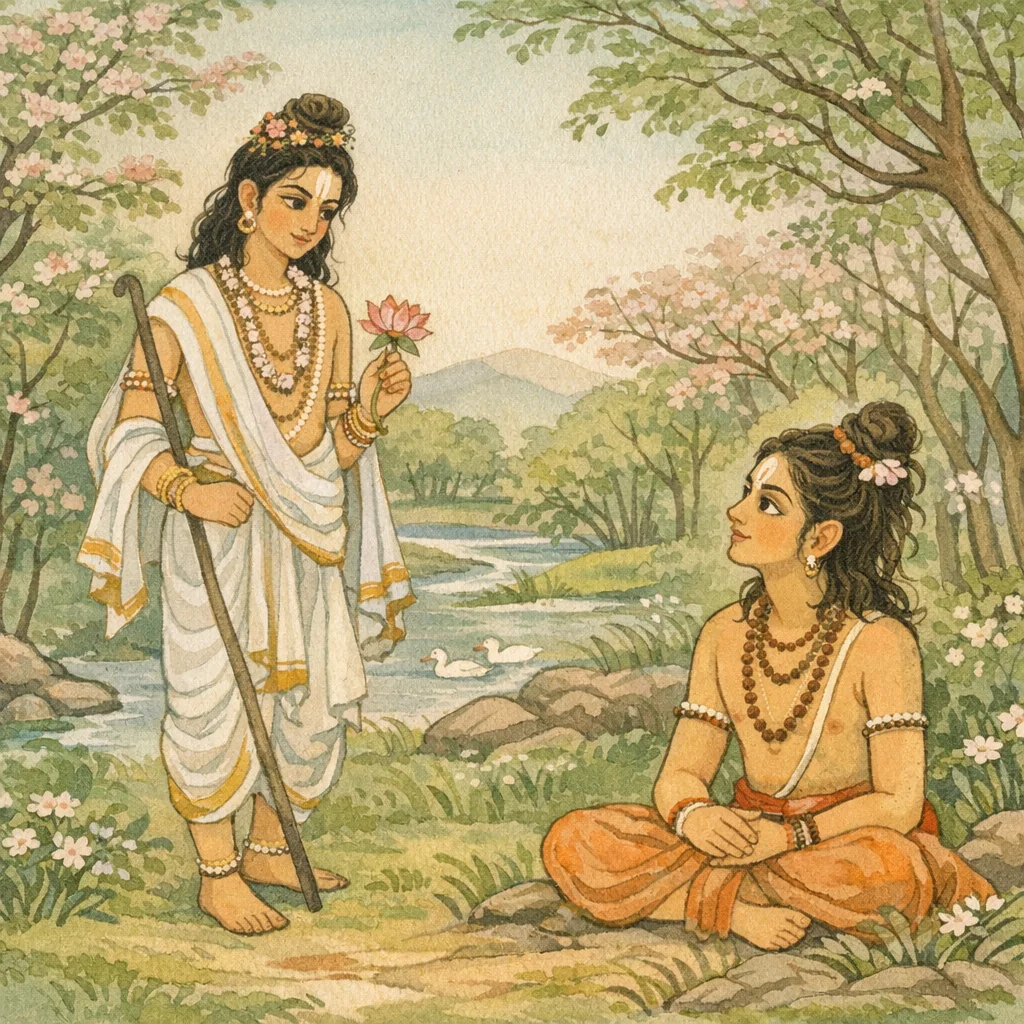
Adhyaya 112
Adhyāya 112: Ṛṣyaśṛṅga’s Description of an Exemplary Brahmacārī (Ascetic Presence and Vow-Practice)
Upa-parva: Āraṇya-saṃvāda / Ṛṣyaśṛṅga-kathā (Episode of the Brahmacārī’s Description)
Ṛṣyaśṛṅga speaks in a descriptive register, presenting a brahmacārī who arrives with the markers of disciplined ascetic life: jaṭā hair arranged with care, a radiant and composed bearing, and an appearance likened to luminous natural and celestial imagery. The account itemizes bodily and material details—garments, belt, garlands, fragrance, and the auditory imagery of movement—using them as semiotic indicators of tapas rather than ornament for its own sake. The speaker reports an intense affective response: delight, admiration, and a bodily agitation that signals the persuasive force of perceived virtue. Acts of interaction follow: embrace, exchange of speech, and the giving of fruits and exceptionally pleasing water. A comparative evaluation is offered—common fruits are said to be inferior in taste and substance to those provided by the ascetic—highlighting the theme that disciplined life yields refined outcomes. The chapter closes with the speaker’s resolve to go near the ascetic, inquire into his vow-practice (vratacaryā), and emulate the rigorous tapas (ugrakarma) he performs, framing the episode as an initiation into ethical apprenticeship within the forest milieu.
Chapter Arc: ऋष्यशृङ्ग अपने पिता को अपनी भीतर उठती चिन्ता का कारण बताते हैं—वन में आए एक जटिल ब्रह्मचारी का अद्भुत रूप-वैभव और आचरण उनके मन को बाँध रहा है। → वह ब्रह्मचारी सूर्य-सा दीप्त, सुगन्धित जटाओं वाला, स्वर्ण-रज्जुओं से गुँथा, कण्ठाभूषणों से चमकता, मधुर वाणी वाला प्रतीत होता है; उसकी प्रत्येक भंगिमा और अलंकार ऋष्यशृङ्ग के चित्त को विचलित कर देते हैं। → ऋष्यशृङ्ग का मन निर्णायक रूप से खिंच जाता है—वे कहते हैं कि उस आर्यधर्म-पालक तपस्वी के पास जाकर उसका नाम, उसकी ब्रह्मचर्या और उसका तप जानेंगे, और उसी के साथ वैसा ही तप करना चाहते हैं। → वे पिता से स्पष्ट स्वीकार करते हैं कि उस व्यक्ति को देखे बिना चित्त संतप्त रहता है; इस प्रकार भीतर की आकांक्षा को वाणी देकर वे अपने अगले कदम की दिशा तय कर लेते हैं। → ऋष्यशृङ्ग उस ‘ब्रह्मचारी’ के निकट जाने को उद्यत हैं—पर वह वास्तव में कौन है, और यह आकर्षण उन्हें किस जाल में ले जाएगा?
Shlokas
Verse 1
हि मय ० (0) है 7 दादशाधिकशततमो< ध्याय: 5 6 पिताको अपनी चिन्ताका कारण बताते हुए धारी वेश्याके स्वरूप और आचरणका वर्णन ऋष्यशुड्र उवाच इहागतो जटिलो ब्रह्मचारी न वै हस्वो नातिदीर्घो मनस्वी । सुवर्णवर्ण: कमलायताक्ष: स्वत: सुराणामिव शोभमान:,ऋष्यशूृंगने कहा--पिताजी! यहाँ एक जटाधारी ब्रह्मचारी आया था। वह न तो छोटा था और न बहुत बड़ा ही। उसका हृदय बहुत उदार था। उसके शरीरकी कान्ति सुवर्णके समान थी और बड़ी-बड़ी आँखें कमलोंके सदृश जान पड़ती थीं। वह स्वयं देवताओंके समान सुशोभित हो रहा था
R̥ṣyaśṛṅga said: “Father, a matted-haired brahmacārin has come here. He is neither short nor excessively tall, and he is noble-minded. His complexion shines like gold, his large eyes resemble lotus petals, and he appears radiant—almost like the gods themselves.”
Verse 2
समृद्धरूप: सवितेव दीप्त: सुश्लक्षणकृष्णाक्षिरतीव गौर: । नील: प्रसन्नाश्न॒ जटा: सुगन्धा हिरण्यरज्जुग्रथिता: सुदीर्घा:,उसका रूप बड़ा सुन्दर था। वह सूर्यदेवकी भाँति उद्धासित हो रहा था। उसके नेत्र स्वच्छ, चिकने एवं कजरारे थे। वह बड़ा गोरा दिखाई देता था। उसकी जटाएँ बहुत लम्बी, साफ-सुथरी और नीले रंगकी थीं। उनसे बड़ी मधुर गन्ध फैल रही थी। वे सारी जटाएँ एक सुनहरी रस्सीसे गुँथी हुई थीं
Ṛṣyaśṛṅga said: “He was of splendid form, radiant like the sun. His eyes were clear, smooth, and dark-lashed; he appeared exceedingly fair. His matted locks were very long, neat, and bluish, spreading a sweet fragrance, and all those locks were braided together with a golden cord.”
Verse 3
आश्चर्यरूपा पुनरस्यथ कण्ठे विभ्राजते विद्युदिवान्तरिक्षे | दौ चास्य पिण्डावधरेण कण्ठा- दजातरोमौ सुमनोहरौ च,उसके गलेमें एक ऐसा आश्चर्यजनक आभूषण (कण्ठा) था, जो आकाशमें बिजलीकी भाँति चमक रहा था। उसके गलेसे नीचे (वक्ष:स्थलपर) दो मांसपिण्ड थे, जिनपर रोएँ नहीं उगे थे। वे अत्यन्त मनोहर जान पड़ते थे
R̥ṣyaśṛṅga continued: “Around his neck there shone a wondrous necklace, flashing like lightning in the sky. And below his throat were two fleshy protuberances, smooth and without hair, appearing exceedingly beautiful.”
Verse 4
विलग्नमध्यक्ष स नाभिदेशे कटिश्व तस्यातिकृतप्रमाणा । तथास्य चीरान्तरत: प्रभाति हिरण्मयी मेखला मे यथेयम्,उस ब्रह्मचारीके नाभिदेशके समीप जो शरीरका मध्य भाग था, वह बहुत पतला था और उसका नितम्बभाग अत्यन्त स्थूल था। जैसे मेरे कौपीनके नीचे यह मूँजकी मेखला बँधी है, इसी प्रकार उसके कटि-प्रदेशमें भी एक सोनेकी मेखला (करधनी) थी, जो उसके चीरके भीतरसे चमकती रहती थी
R̥ṣyaśṛṅga said: “O revered one, his midsection near the navel was tightly drawn and slender, while his hips were disproportionately broad. And from within his garment there shone a golden girdle at his waist—just as this munja-grass belt is bound beneath my loincloth as a brahmacārin.”
Verse 5
अन्यच्च तस्याद्धुतदर्शनीयं विकूजितं पादयो: सम्प्रभाति । पाण्योश्व तद्धत् स्वनवन्निबद्धौ कलापकावक्षमाला यथेयम्,उसकी अन्य सब बातें भी अद्भुत एवं दर्शनीय थीं। पैरोंमें (पायलकी) छम-छम ध्वनि बड़ी मधुर प्रतीत होती थी। इसी प्रकार हाथोंकी कलाइयोंमें मेरी इस रुद्राक्षकी मालाकी भाँति उसने दो कलापक (कंगन) बाँध रखे थे, उनसे भी बड़ी मधुर ध्वनि होती रहती थी
Moreover, everything about her was wondrous and worthy of being seen. The tinkling at her feet rang out sweetly, as if announcing her presence at every step. Likewise, on her wrists she had fastened two bracelets that chimed with a gentle sound—much like this rosary of rudrākṣa beads on my own arm. The description underscores how outward beauty and ornamentation can captivate the mind, hinting at the ethical need for restraint and discernment amid sensory allure.
Verse 6
विचेष्टमानस्य च तस्य तानि कूजन्ति हंसा: सरसीव मत्ता: । चीराणि तस्याद्भधुतदर्शनानि नेमानि तद्धन्मम रूपवन्ति,वह ब्रह्मचारी जब तनिक भी चलता-फिरता या हिलता-डुलता था, उस समय उसके आभूषण बड़ी मनोहर झनकार उत्पन्न करते थे, मानो सरोवरमें मतवाले हंस कलरव कर रहे हों। उसके चीर भी अद्भुत दिखायी देते थे। मेरी कौपीनके ये वल्कलवस्त्र वैसे सुन्दर नहीं हैं
Ṛśyaśṛṅga said: “Whenever he so much as moved, those ornaments of his would chime sweetly—like intoxicated swans calling out upon a lake. Even his garments appeared wondrous to behold. But these bark-cloth rags of mine are not so fair in form.”
Verse 7
वक्त्र॑ च तस्याद्भुतदर्शनीयं प्रव्याह्ृतं ह्वादयतीव चेत: । पुंस्कोकिलस्थेव च तस्य वाणी तां शृण्वतो मे व्यथितो<न्तरात्मा,उसका मुख भी देखने ही योग्य था। उसकी अद्भुत शोभा थी। ब्रह्मचारीकी एक-एक बात मनको आनन्द-सिन्धुमें निमग्न-सा कर देती थी। उसकी वाणी कोकिलके समान थी, जिसे एक बार सुन लेनेपर अब पुनः सुननेके लिये मेरी अन्तरात्मा व्यथित हो उठी है
His face too was a marvel, truly worthy of beholding, and his every utterance seemed to gladden the heart. His voice was like that of a male cuckoo; and as I listened to it, my inmost self grew restless with longing to hear it again.
Verse 8
यथा वन॑ माधवमासि मध्ये समीरितं श्वसनेनेव भाति । तथा स भात्युत्तमपुण्यगन्धी निषेव्यमाण: पवनेन तात,तात! जैसे माधवमास (वैशाख या वसंत ऋतु) में (सौरभयुक्त मलय-) समीरसे सेवित वन-उपवनकी शोभा होती है, उसी प्रकार पवनदेवसे सेवित वह ब्रह्मचारी उत्तम एवं पवित्र गन्धसे सुवासित और सुशोभित हो रहा था
Ṛśyaśṛṅga said: “Just as a forest-grove, in the heart of the Mādhava month, shines when stirred by the life-breath-like breeze, so too that brahmacārin shone—fragrant with the finest, sanctifying scent—being attended and fanned by the Wind-god, dear child.”
Verse 9
सुसंयताश्चापि जटा विषक्ता दैधीकृता नातिसमा ललाटे । कर्णो च चित्रैरिव चक्रवाकै: समावृतौ तस्य सुरूपवद्धि:,उसकी जटा सटी हुई और अच्छी प्रकार बँधी हुई थी, जो ललाटप्रदेशमें दो भागोंमें विभक्त थी; किंतु बराबर नहीं थी। उसके कुण्डलमण्डित कान सुन्दर एवं विचित्र चक्रवाकोंसे घिरे हुए-से जान पड़ते थे
Ṛśyaśṛṅga describes the ascetic’s appearance: his matted locks were neatly restrained and firmly bound, parted upon the forehead yet not evenly. His ears, adorned with earrings, seemed as though encircled by wondrous cakravāka birds—so striking was his handsome form. The passage underscores the Mahābhārata’s recurring ethical motif that inner discipline (saṁyama) is reflected in outward composure and restraint.
Verse 10
तथा फल वृत्तमथो विचित्र समाहरत् पाणिना दक्षिणेन । तद् भूमिमासाद्य पुनः पुनश्न ३-2 438 - 07ख पद च्चै:,उसके पास एक गोलाकार फल (गेंद) था, जिसपर वह अपने दाहिने हाथसे आघात करता था। वह फल (गेंद) पृथ्वीपर जाकर बार-बार ऊँचेकी ओर उछलता था; उस समय उसका रूप अद्भुत दिखायी देता था
Then he took in his right hand a strange, round fruit and struck it with that same right hand. The fruit, touching the earth, sprang up again and again to a great height; at that moment its appearance seemed wondrous indeed.
Verse 11
तच्चाभिह्वत्य परिवर्ततेडसौ वातेरितो वृक्ष इवावघूर्णन् | त॑ प्रेक्षत: पुत्रमिवामराणां प्रीति: परा तात रतिश्षु जाता,उस फल (गेंद) को मारकर वह चारों ओर घूमने लगता था, मानो वृक्ष हवाका झोंका खाकर झूम रहा हो। तात! देवपुत्रके समान उस ब्रह्मचारीको देखते समय मेरे हृदयमें बड़ा प्रेम और आनन्द उमड़ रहा था और मेरी उसके प्रति आसक्ति हो गयी है
When he struck that fruit-ball, it would whirl in every direction, like a tree twisting and swaying beneath a gust of wind. Dear child, as I watched that brahmacārin—like a son of the gods—an intense affection surged within me; delight arose, and my heart became attached to him.
Verse 12
स मे समाश्शलिष्य पुन: शरीरं जटासु गृह्माभ्यवनाम्य वक्त्रम् । वक्त्रेण वक्त्र प्रणिधाय शब्दं चकार तन्मे5जनयत् प्रहर्षम्,वह बार-बार मेरे शरीरका आलिंगन करके मेरी जटा पकड़ लेता और मेरे मुखको झुकाकर उसपर अपना मुख रख देता था, इस प्रकार मुख-से-मुख मिलाकर उससे एक ऐसा शब्द किया, जिसने मेरे हृदयमें अत्यन्त आनन्द उत्पन्न कर दिया
Again and again he embraced my body; seizing my matted locks, he bent my face down and placed his own face upon it. Pressing mouth to mouth, he uttered a sound—one that filled my heart with intense exhilaration.
Verse 13
न चापि पाद्यं बहु मन्यते5सौ फलानि चेमानि मया55हृतानि । एवंव्रतो5स्मीति च मामवोचत् फलानि चान्यानि समाददन्मे,मैंने जो पाद्य अर्पण किया, उसको उसने बहुत महत्त्व नहीं दिया। मेरे दिये हुए ये फल भी उसने स्वीकार नहीं किये और मुझसे कहा--“मेरा ऐसा ही नियम है।” साथ ही उसने मेरे लिये दूसरे-दूसरे फल दिये
He did not attach much importance even to the water for washing the feet (pādya). Nor did he accept the fruits I had brought. He told me, “Such is my vow (vrata),” and at the same time he gave me other fruits in exchange.
Verse 14
मयोपयुक्तानि फलानि यानि नेमानि तुल्यानि रसेन तेषाम् । न चापि तेषां त्वगियं यथैषां साराणि नैषामिव सन्ति तेषाम्,मैंने उसके दिये हुए जिन फलोंका उपयोग किया है, उनके समान रस हमारे इन फलोंमें नहीं है। उन फलोंके छिलके भी ऐसे नहीं थे, जैसे इन जंगली फलोंके हैं। इन फलोंके गूदे जैसे हैं, वैसे उसके दिये हुए फलोंके नहीं थे (वे सर्वथा विलक्षण थे)
Ṛṣyaśṛṅga said: “The fruits I once partook of—those given by him—are not matched by these in taste. Nor was their peel like this rough skin of wild forest fruits. And their inner pulp was unlike these; those fruits were altogether extraordinary.”
Verse 15
तोयानि चैवातिरसानि महां प्रादात् स वै पातुमुदाररूप: । पीत्वैव यान्यभ्यधिकः: प्रहर्षो ममाभवद् भूश्वलितेव चासीत्,उदारताके मूर्तिमान् स्वरूप उस ब्रह्मचारीने मुझे पीनेके लिये अत्यन्त स्वादिष्ट जल भी दिया था। उस जलको पीते ही मेरे हर्षकी सीमा न रही। मुझे यह धरती डोलती-सी जान पड़ने लगी
That noble-looking brahmacārin gave me, to drink, waters of exceedingly delightful taste in great abundance. The moment I drank them, an extraordinary joy arose in me beyond measure, and the earth itself seemed to sway beneath me—as though my delight had taken bodily form.
Verse 16
इमानि चित्राणि च गन्धवन्ति माल्यानि तस्योदग्रथितानि पट्टेः । यानि प्रकीर्येह गत: स्वमेव स आश्रमं तपसा द्योतमान:,ये विचित्र सुगन्धित मालाएँ उसीने रेशमी डोरोंसे गूँथकर बनायी थीं, जिन्हें यहाँ बिखेरकर तपस्यासे प्रकाशित होनेवाला वह ब्रह्मचारी अपने आश्रमको चला गया था
These are the variegated, fragrant garlands that he himself had carefully strung with silken cords. After scattering them here, that radiant ascetic—shining with the power of his austerities—departed to his own hermitage.
Verse 17
गतेन तेनास्मि कृतो विचेता गात्रं च मे सम्परिदह्मतीव । इच्छामि तस्यान्तिकमाशोु गन्तुं त॑ चेह नित्यं परिवर्तमानम्,उसके चले जानेसे मैं अचेत हो गया हूँ। मेरा शरीर जलता-सा जान पड़ता है। मैं चाहता हूँ, शीघ्र उसके पास ही चला जाऊँ अथवा वही यहाँ नित्य मेरे पास रहे
When he departed, I was left senseless, and my body felt as though it were burning. I long to go swiftly to his side—or else for him to remain here always, ever moving about near me.
Verse 18
गच्छामि तस्यान्तिकमेव तात का नाम सा ब्रह्म॒चर्या च तस्य । इच्छाम्यहं चरितुं तेन सार्ध यथा तप: स चरत्यार्यधर्मा,पिताजी! मैं उसीके पास जाता हूँ, देखूँ, उसकी ब्रह्मचर्यकी साधना कैसी है? वह आर्यधर्मका पालन करनेवाला ब्रह्मचारी जिस प्रकार तप करता है, उसके साथ रहकर मैं भी वैसी ही तपस्या करना चाहता हूँ
“Father, I will go at once to his very presence and see what sort of brahmacarya-discipline he practices. I wish to live and practice with him, so that I too may undertake austerities in the very manner that this brahmacārin—one who upholds noble dharma—performs his tapas.”
Verse 19
चर्तु तथेच्छा हृदये ममास्ति दुनोति चित्त यदि त॑ न पश्ये,वैसा ही तप करनेकी इच्छा मेरे हृदयमें भी है। यदि उसे नहीं देखूँगा तो मेरा यह चित्त संतप्त होता रहेगा
Ṛṣyaśṛṅga said: “That very longing is present in my heart as well. If I do not behold him, my mind is pained and continues to burn with distress.”
Verse 112
इति श्रीमहा भारते वनपर्वणि तीर्थयात्रापर्वणि लोमशतीर्थयात्रायामृष्यशुज्रोपाख्याने द्वादशशाधिकशततमो<ध्याय:
Thus ends the one-hundred-and-twelfth chapter (112) of the Vana Parva of the Śrī Mahābhārata, within the section on pilgrimage (Tīrtha-yātrā), in the account of Lomāśa’s pilgrimage, in the episode concerning Ṛṣyaśujra. This is the colophon marking the close of the chapter and situating it within the larger frame of sacred travel and instruction.
Frequently Asked Questions
The chapter frames a practical ethical tension: whether admiration of ascetic excellence remains aesthetic and passive, or becomes disciplined commitment—prompting the speaker to choose active learning and emulation of vratacaryā.
Moral authority is portrayed as embodied and reproducible: tapas and restraint generate clarity, refinement, and trust, and the appropriate response is inquiry, proximity to exemplars, and deliberate practice.
No explicit phalaśruti is stated in these verses; the implied meta-point is pedagogical—understanding the signs and effects of disciplined conduct guides one toward apprenticeship and sustained ethical formation.