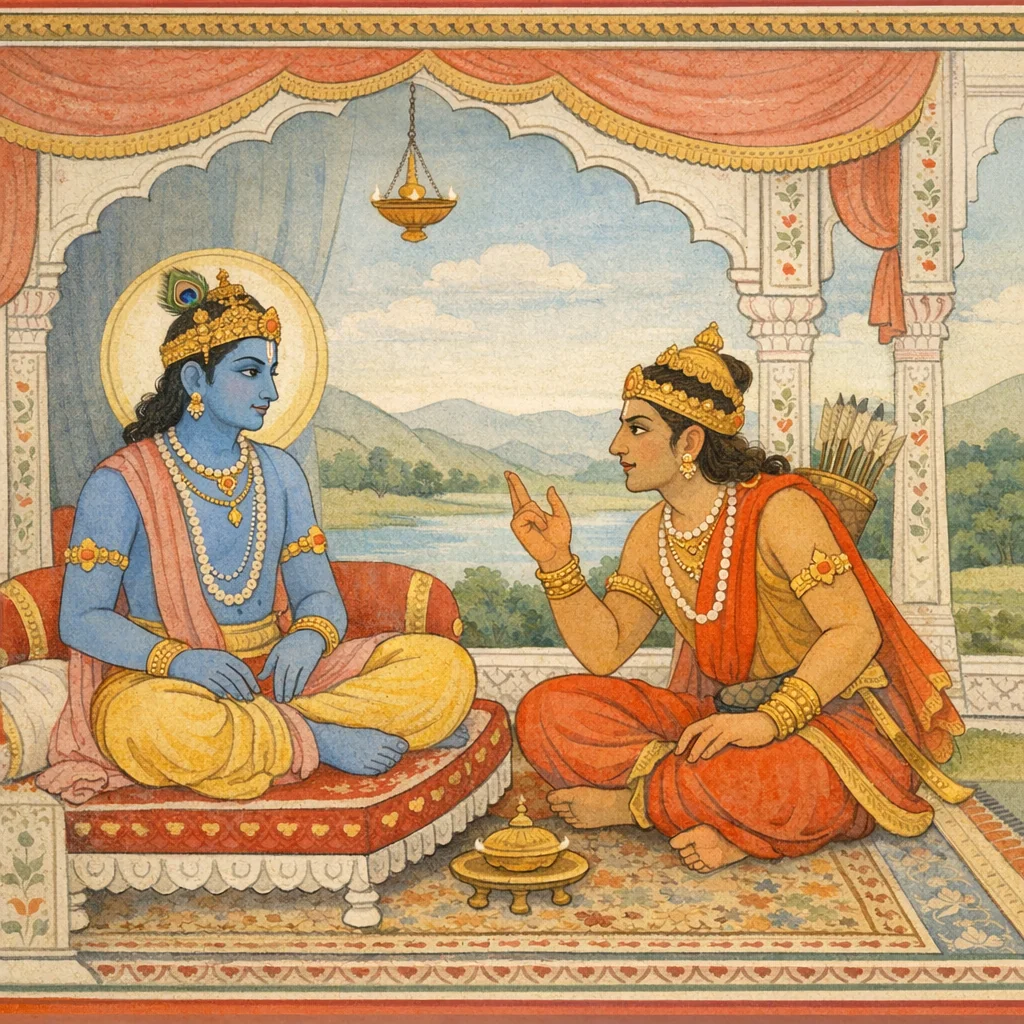
Adhyaya 77
उद्योगपर्व — अध्याय ७७: पुरुषकार–दैवसंयोगः तथा दुष्टमन्त्रपरामर्शस्य राजनैतिक-परिणामः (Human Effort, Contingency, and the Political Effects of Corrupt Counsel)
Upa-parva: Udyoga Parva — Counsel on Puruṣakāra (Human Effort) and Daiva (Contingency) [Adhyāya 77 Context Unit]
Bhagavān addresses a Pāṇḍava and affirms that events depend upon two operative domains: human action and uncontrollable contingency. An agrarian model is offered: a well-prepared field and the farmer’s labor are necessary, yet without rain the crop does not mature; likewise, irrigation and effort are human, while drying and other reversals are attributed to daiva. From this, a general thesis is stated—worldly outcomes arise from the conjunction of daiva and mānuṣa (human). The speaker then limits personal commitment to what can be done through puruṣakāra while denying control over daiva. The discourse shifts to ethical-political evaluation of an opposing ruler described as abandoning dharma and satya, remaining untroubled by wrongful acts, and being strengthened in harmful intent by counselors named Śakuni, the sūtaputra (Karna), and Duḥśāsana. The speaker argues that such a figure will not reach peace by relinquishing power, nor yield even when petitioned; therefore, if corrective action is not taken, he becomes liable to public condemnation and coercive restraint. The chapter closes by reiterating adherence to the dharmic command of Dharmarāja (Yudhiṣṭhira) while urging renewed appraisal of the adversary’s repeated misconduct.
Chapter Arc: Arjuna turns to Janardana (Krishna) after Yudhishthira has spoken, declaring that he too has heard Krishna’s counsel and now must speak what burns within him. → He questions whether peace is truly attainable—whether Dhritarashtra’s greed, weakness, and helpless attachment have made reconciliation impossible. Arjuna presses the deeper doubt: is human effort (paurusha) futile before past karma, or do actions still bear fruit through present striving? → Arjuna urges Krishna that mere going as envoy is itself a necessary act of dharma and strategy—yet if Duryodhana remains the ‘durात्मा’, then Krishna must do whatever he intends, even if it leads beyond soft conciliation. Arjuna’s voice hardens into a moral verdict: the wicked one does not deserve to live with sons and kin if he persists in cruel deceit. → He yields the final decision to Krishna’s discernment—whether peace with the Kauravas occurs or not, Krishna’s considered intention becomes the Pandavas’ guiding authority; the mission must proceed, and the outcome will follow Krishna’s will and method. → Krishna’s impending departure to the Kaurava court hangs over the chapter: will diplomacy restrain Duryodhana, or will the envoy’s visit become the last step before inevitable war?
Shlokas
Verse 1
ऑपन--माज छा जज अष्टसप्ततितमोब< ध्याय: अर्जुनका कथन अर्जुन उवाच उक्त युधिष्ठिरेणैव यावद् वाच्यं जनार्दन । तव वाक्यं तु मे श्रुत्वा प्रतिभाति परंतप,तदनन्तर अर्जुनने कहा--जनार्दन! मुझे जो कुछ कहना था, वह सब तो महाराज युधिष्ठिरने ही कह दिया। शत्रुओंको संतप्त करनेवाले प्रभो! आपकी बात सुनकर मुझे ऐसा जान पड़ता है कि आप धृतराष्ट्रके लोभ तथा हमारी प्रस्तुत दीनताके कारण संधि करानेका कार्य सरल नहीं समझ रहे हैं
Arjuna said: “Janārdana, whatever needed to be said has already been spoken by King Yudhiṣṭhira. But after hearing your words, O scorcher of foes, it seems to me that you do not regard the task of bringing about a settlement as easy—because of Dhṛtarāṣṭra’s greed and because of our present humbled condition.”
Verse 2
नैव प्रशममत्र त्वं मन्यसे सुकरं प्रभो । लोभाद् वा धृतराष्ट्रस्य दैन्याद् वा समुपस्थितात्,तदनन्तर अर्जुनने कहा--जनार्दन! मुझे जो कुछ कहना था, वह सब तो महाराज युधिष्ठिरने ही कह दिया। शत्रुओंको संतप्त करनेवाले प्रभो! आपकी बात सुनकर मुझे ऐसा जान पड़ता है कि आप धृतराष्ट्रके लोभ तथा हमारी प्रस्तुत दीनताके कारण संधि करानेका कार्य सरल नहीं समझ रहे हैं
Arjuna said: “O Lord, it seems you do not consider reconciliation here to be easy—either because of Dhṛtarāṣṭra’s greed, or because of the pitiable helplessness in which we now stand.”
Verse 3
अफल मन्यसे वापि पुरुषस्य पराक्रमम् | न चान्तरेण कर्माणि पौरुषेण फलोदय:,अथवा आप मनुष्यके पराक्रमको निष्फल मानते हैं; क्योंकि पूर्वजन्मके कर्म (प्रारब्ध)- के बिना केवल पुरुषार्थसे किसी फलकी प्राप्ति नहीं होती
Arjuna said: “Do you consider a man’s valor to be fruitless? For without the workings of past deeds (karma), no result arises merely from personal effort.”
Verse 4
तदिदं भाषितं वाक््यं तथा च न तथैव तत् । न चैतदेवं द्रष्टव्यमसाध्यमपि किंचन,आपने जो बात कही है, वह ठीक है; परंतु सदा वैसा ही हो, यह नहीं कहा जा सकता। किसी भी कार्यको असाध्य नहीं समझना चाहिये
Arjuna said: “What you have spoken is reasonable; yet it cannot be asserted that matters will always turn out exactly so. One should not look upon any undertaking as impossible—nothing should be deemed beyond attainment.”
Verse 5
कि चैतन्मन्यसे कृच्छूमस्माकमवसादकम् । कुर्वन्ति तेषां कर्माणि येषां नास्ति फलोदय:,आप ऐसा मानते हैं कि हमारा यह वर्तमान कष्ट ही हमें पीड़ित करनेवाला है; परंतु वास्तवमें हमारे शत्रुओंके किये हुए वे कार्य ही हमें कष्ट दे रहे हैं, जिनका उनके लिये भी कोई विशेष फल नहीं है
Arjuna said: “O Keshava, do you think it is merely our present hardship that afflicts us? In truth, it is the deeds done by our enemies—deeds that yield no worthy fruit even for them—that are causing us this suffering.”
Verse 6
सम्पाद्यमानं सम्यक् च स्यात् कर्म सफल प्रभो । स तथा कृष्ण वर्तस्व यथा शर्म भवेत् परैः:,प्रभो! जिस कार्यको अच्छी तरह किया जाय, वह सफल हो सकता है। श्रीकृष्ण! आप ऐसा ही प्रयत्न करें, जिससे शत्रुओंके साथ हमारी संधि हो जाय
Arjuna said: “O Lord, a task, when carried through properly and with due care, can indeed bear fruit. Therefore, O Kṛṣṇa, act in such a way that peace and security may arise between us and the others (our opponents)—so that a settlement with the enemy becomes possible.”
Verse 7
पाण्डवानां कुरूणां च भवान् न: प्रथम: सुह्ृत् सुराणामसुराणां च यथा वीर प्रजापति:,वीरवर! जैसे प्रजापति ब्रह्माजी देवताओं तथा असुरोंके भी प्रधान हितैषी हैं, उसी प्रकार आप हम पाण्डवों तथा कौरवोंके भी प्रधान सुहृद् हैं
Arjuna said: “For both the Pāṇḍavas and the Kurus, you are our foremost well-wisher—just as the heroic Prajāpati (Brahmā) is the chief benefactor of both the gods and the asuras. In the same way, you stand as the principal friend of us Pāṇḍavas and of the Kauravas alike.”
Verse 8
कुरूणां पाण्डवानां च प्रतिपत्स्व निरामयम् | अस्मद्धितमनुष्ठानं मन््ये तव न दुष्करम्,इसलिये आप ऐसा प्रयत्न कीजिये, जिससे कौरवों तथा पाण्डवोंके भी दुःखका निवारण हो जाय। मेरा विश्वास है कि हमारे लिये हितकर कार्य करना आपके लिये दुष्कर नहीं है
In the crisis that has befallen both the Kurus and the Pāṇḍavas, bring about a state free from affliction. I believe that to undertake what is beneficial for us is not difficult for you.
Verse 9
एवं च कार्यतामेति कार्य तव जनार्दन | गमनादेवमेव त्वं करिष्यसि जनार्दन,जनार्दन! ऐसा करना आपके लिये अत्यन्त आवश्यक कर्तव्य है। प्रभो! आप वहाँ जानेमात्रसे यह कार्य सफलतापूर्वक सम्पन्न कर लेंगे
Arjuna said: “Thus, O Janārdana, this becomes a duty that must be carried out by you. By your very going there, O Janārdana, you will accomplish it just so.”
Verse 10
चिकीर्षितमथान्यत् ते तस्मिन् वीर दुरात्मनि । भविष्यति च तत् सर्व यथा तव चिकीर्षितम्,वीर! उस दुरात्मा दुर्योधनके प्रति आपको कुछ और करना अभीष्ट हो, तो जैसी आपकी इच्छा होगी, वह सब कार्य उसी रूपमें सम्पन्न होगा
“O hero, if you still intend to do something further regarding that wicked man, then all of it will come to pass exactly as you wish.”
Verse 11
शर्म तैः सह वा नो<सस््तु तव वा यच्चिकीर्षितम् | विचार्यमाणो यः: कामस्तव कृष्ण स नो गुरु: । न स नार्हति दुष्टात्मा वध॑ ससुतबान्धव:,उपायेन नृशंसेन हता दुर्द्यूतदेविना । श्रीकृष्ण! कौरवोंके साथ हमारी संधि हो अथवा आप जो कुछ करना चाहते हों, वही हो। विचार करनेपर हम इसी निष्कर्षपर पहुँचते हैं कि आपकी जो इच्छा हो, वही हमारे लिये गौरव तथा समादरकी वस्तु है। वह दुष्टात्मा दुर्योधन अपने पुत्रों और बन्धु- बान्धवोंसहित वधके ही योग्य है, जो धर्मपुत्र युधिष्ठिके पास आयी हुई सम्पत्ति देखकर उसे सहन न कर सका। इतना ही नहीं, जब कपटटद्यूतका आश्रय लेनेवाले उस क्र्रात्माने किसी धर्मसम्मत उपाय युद्ध आदिको अपने लिये सफलता देनेवाला नहीं देखा, तब कपटपूर्ण उपायसे उस सम्पत्तिका अपहरण कर लिया
Arjuna said: “Whether there be peace for us with them, or whatever you wish to do—let that be done. Upon reflection we reach this conclusion: O Kṛṣṇa, whatever desire you form is for us a guiding authority, worthy of honor and acceptance. That wicked-souled Duryodhana, together with his sons and kinsmen, deserves only death—he who could not endure the sight of the rightful wealth that had come to Dharmaputra Yudhiṣṭhira. And when that cruel man, relying on deceitful gambling, saw that no righteous means—such as open contest or war—would bring him success, he seized that wealth through a treacherous stratagem.”
Verse 12
येन धर्मसुते दृष्टा न सा श्रीरुपमर्षिता । यच्चाप्यपश्यतोपायं धर्मिष्ठ मधुसूदन
Arjuna said: “When that prosperity and royal fortune was seen in Dharmasuta (Yudhiṣṭhira), it was not endured (by the envious). And even when he did not perceive any remedy, O most righteous one, O Madhusūdana—”
Verse 13
कथं हि पुरुषो जात: क्षत्रियेषु धनुर्धर:
Arjuna said: “How indeed is a man born among the Kṣatriyas as a bearer of the bow?”
Verse 14
समाहूतो निवर्तेत प्राणत्यागे5प्युपस्थिते । क्षत्रियकुलमें उत्पन्न हुआ कोई भी धनुर्धर पुरुष किसीके द्वारा युद्धके लिये आमन्त्रित होनेपर कैसे पीछे हट सकता है? भले ही वैसा करनेपर उसके लिये प्राण-त्यागका संकट भी उपस्थित हो जाय ॥। १३ है ।। अधर्मेण जितान् दृष्ट्वा वने प्रव्रजितांस्तथा
Arjuna said: “When a warrior has been formally summoned, how could he turn back—even if the peril of losing his life stands right before him? A bow-bearing man born in a kṣatriya lineage cannot rightly retreat when others call him to battle.”
Verse 15
वध्यतां मम वार्ष्णेय निर्गतो$सौ सुयोधन: । वृष्णिकुलनन्दन! हमलोग अधर्मपूर्वक जूएमें पराजित किये गये और वनमें भेज दिये गये। यह सब देखकर मैंने मन-ही-मन पूर्णरूपसे निश्चय कर लिया था कि दुर्योधन मेरे द्वारा वधके योग्य है ।। १४ इ ।। न चैतदद्धुतं कृष्ण मित्रार्थ यच्चिकीर्षसि । क्रिया कथ॑ं च मुख्या स्यान्मृदुना चेतरेण वा,श्रीकृष्ण! आप मित्रोंके हितके लिये जो कुछ करना चाहते हैं, वह आपके लिये अद्भुत नहीं है। मृदु अथवा कठोर, जिस उपायसे भी सम्भव हो किसी तरह अपना मुख्य कार्य सफल होना चाहिये
Arjuna said: “O Vārṣṇeya, let Suyodhana be slain by my hand—he has now come forth. And, O Kṛṣṇa, it is no wonder that you seek to act for the welfare of your friends. Whether by gentle means or by harsher measures, the foremost task must somehow be brought to success.”
Verse 16
अथवा मन्यसे ज्यायान् वधस्तेषामनन्तरम् | तदेव क्रियतामाशु न विचार्यमतस्त्वया
“Or if you judge that the better course is the immediate slaying of those men, then let that alone be done at once; on this point you need not deliberate further.”
Verse 17
अथवा यदि आप अब कौशरवोंका वध ही श्रेष्ठ मानते हों तो वही शीघ्र-से-शीघ्र किया जाय। फिर इसके सिवा और किसी बातपर आपको विचार नहीं करना चाहिये ।। जानासि हि यथैतेन द्रौपदी पापबुद्धिना । परिक्लिष्टा सभामध्ये तच्च तस्योपमर्षितम्,आप जानते हैं, इस पापात्मा दुर्योधनने भरी सभामें ट्रपदकुमारी कृष्णाको कितना कष्ट पहुँचाया था, परंतु हमने उसके इस महान् अपराधको भी चुपचाप सह लिया था
“Or if you now hold that slaying the Kauravas is best, then let it be done as swiftly as possible; beyond this you should not deliberate on anything else. You know how, in the midst of the royal assembly, that Duryodhana of sinful intent grievously tormented Draupadī, Drupada’s daughter—and you know that we endured even that great outrage in silence.”
Verse 18
स नाम सम्यग वर्तेत पाण्डवेष्विति माधव । न मे संजायते बुद्धिर्बीजमुप्तमिवोषरे,माधव! वही दुर्योधन अब पाण्डवोंके साथ अच्छा बर्ताव करेगा, ऐसी बात मेरी बुद्धिमें जँच नहीं रही है। उसके साथ संधिका सारा प्रयत्न ऊसरमें बोये हुए बीजकी भाँति व्यर्थ ही है
Arjuna said: “O Mādhava, the thought that Duryodhana would truly conduct himself rightly toward the Pāṇḍavas does not arise in my mind. Any attempt at making peace with him is futile—like seed sown in barren soil.”
Verse 19
तस्माद् यन्मन्यसे युक्त पाण्डवानां हितं च यत् । तथा<<शु कुरु वार्ष्णेय यज्ञ: कार्यमनन्तरम्,अतः वृष्णिकुलभूषण श्रीकृष्ण! आप पाण्डवोंके लिये अबसे करनेयोग्य जो उचित एवं हितकर कार्य मानते हों, वही यथासम्भव शीघ्र आरम्भ कीजिये
Therefore, O wise one, whatever you judge to be proper and beneficial for the Pāṇḍavas—do it at once, O Vārṣṇeya. Let the necessary undertaking be carried out without delay.
Verse 77
इस प्रकार श्रीमह्याभारत उद्योगपर्वके अन्तर्गत भगवद्यानपर्वनें श्रीकृष्णवाक्यविषयक सतहत्तरवाँ अध्याय पूरा हुआ
Thus ends the seventy-seventh chapter of the Bhagavad-yāna section within the Udyoga Parva of the Śrī Mahābhārata, a chapter centered on the words of Śrī Kṛṣṇa.
Verse 78
इति श्रीमहाभारते उद्योगपर्वणि भगवद्यानपर्वणि अर्जुनवाक्ये5ष्टसप्ततितमो 5ध्याय:
Thus, in the Śrī Mahābhārata, within the Udyoga Parva, in the section concerning the Lord’s mission (Bhagavad-yāna), ends the seventy-eighth chapter, in the portion recording Arjuna’s words.
Verse 126
उपायेन नृशंसेन हता दुर्द्यूतदेविना । श्रीकृष्ण! कौरवोंके साथ हमारी संधि हो अथवा आप जो कुछ करना चाहते हों, वही हो। विचार करनेपर हम इसी निष्कर्षपर पहुँचते हैं कि आपकी जो इच्छा हो, वही हमारे लिये गौरव तथा समादरकी वस्तु है। वह दुष्टात्मा दुर्योधन अपने पुत्रों और बन्धु- बान्धवोंसहित वधके ही योग्य है, जो धर्मपुत्र युधिष्ठिके पास आयी हुई सम्पत्ति देखकर उसे सहन न कर सका। इतना ही नहीं, जब कपटटद्यूतका आश्रय लेनेवाले उस क्र्रात्माने किसी धर्मसम्मत उपाय युद्ध आदिको अपने लिये सफलता देनेवाला नहीं देखा, तब कपटपूर्ण उपायसे उस सम्पत्तिका अपहरण कर लिया
Arjuna said: “By a cruel stratagem we were struck down by that gambler Duryodhana. O Śrī Kṛṣṇa, let there be peace with the Kauravas—or else, whatever you wish to do, let that be done. On reflection we arrive at this conclusion: whatever is your will is, for us, the very object of honor and rightful regard. That wicked-souled Duryodhana, together with his sons and kinsmen, deserves only death—he who could not endure the sight of the wealth that had come to Dharmaputra Yudhiṣṭhira. And further: when that cruel man, having taken refuge in deceitful dice, saw that no righteous means—war and the like—would bring him success, he seized that wealth by fraud.”
Frequently Asked Questions
The dilemma is how to act ethically when peace is desired but the opposing authority is assessed as persistently rejecting dharma and truthful settlement—whether continued petitioning suffices or whether enforcement becomes the remaining responsible option.
Outcomes should be understood as a conjunction of disciplined human effort and uncontrollable factors; therefore one must commit fully to rightful action within one’s control, avoid fatalism, and evaluate political decisions by their adherence to dharma and satya.
No explicit phalaśruti is stated in this passage; its meta-function is practical-ethical instruction—clarifying causality (agency plus contingency) and guiding governance decisions under negotiation failure.