Adhyaya 156
कुरुक्षेत्रे सेनानिवेशवृत्तान्तः — Dhṛtarāṣṭra Questions Saṃjaya on the Deployed Armies
Upa-parva: Sanjaya–Dhritarashtra Dialogue on Army Deployment and Moral Responsibility (Udyoga Parva context)
This chapter opens with Janamejaya’s inquiry about the Kurus’ actions once the armies are arrayed at Kurukṣetra. Vaiśaṃpāyana narrates Dhṛtarāṣṭra calling Saṃjaya and requesting an exhaustive account of events surrounding the military encampment and deployment of Kuru and Pāṇḍava forces. Dhṛtarāṣṭra articulates a reflective stance that elevates destiny (diṣṭa) while deeming human effort ineffectual, even as he confesses awareness of war’s harms and the cycles of loss and gain. He admits personal inability to correct or restrain his son—described as inclined to stratagem and gambling—despite periodic clarity about faults. He then resigns to what will occur and invokes kṣatriya-dharma, where bodily renunciation in battle is socially honored. Saṃjaya answers by validating the king’s inquiry but cautions against shifting culpability onto Duryodhana as a mere externalized cause; instead, he argues that misfortune resulting from one’s own misconduct should not be attributed to daiva or kāla. He extends the ethical claim that socially censured conduct invites universal condemnation. The chapter closes with a compact philosophical schema of causation: some events are said to be divinely ordained, some accidental, and others driven by prior karma, framing the forthcoming report within debates about agency and responsibility.
Chapter Arc: जनमेजय, भीष्म के गुणों को बृहस्पति-सम बुद्धि, पृथ्वी-सम क्षमा, समुद्र-सम गाम्भीर्य और हिमालय-सम स्थैर्य कहकर, पूछते हैं कि ऐसे पितामह के सेनापतित्व का निर्णय कैसे हुआ। → कौरव-पक्ष की सैन्य-व्यवस्था और नेतृत्व-निर्धारण की गूंज उठती है—भीष्म का वचन कि ‘युद्ध पितामह के नेतृत्व में ही होगा’ और सात सेनाओं के निरीक्षण/सज्जा का आदेश वातावरण को युद्ध-निकट बना देता है। → बलराम (हलायुध) पाण्डव-शिविर में प्रवेश करते हैं; वहीं गदा-युद्ध के दो शिष्यों—भीम और दुर्योधन—के प्रति उनकी ‘तुल्यस्नेह’ घोषणा (उभौ शिष्यौ… तुल्यस्नेहोऽस्मि) एक तीखा नैतिक-संकट रचती है: गुरु किस ओर खड़ा हो? → पाण्डव-सभा में सम्मान-प्रणाम, युधिष्ठिर का आसन ग्रहण, और वरिष्ठ राजाओं (विराट, द्रुपद) की उपस्थिति के साथ संवाद का मंच बनता है; कृष्ण-अर्जुन की धुरी भी उभरती है—कृष्ण अर्जुन के नेता/सारथी-भाव की ओर संकेत मिलता है। → बलराम की तटस्थता और दोनों शिष्यों के बीच आने वाले निर्णायक गदा-संघर्ष की छाया पाण्डव-शिविर पर पड़ती है—आगे यह स्पष्ट होना शेष है कि वे किस नीति से इस द्वंद्व को साधेंगे।
Shlokas
Verse 1
इस प्रकार श्रीमहाभारत उद्योगपर्वके अन्तर्गत यैन्यनिर्याणपर्वमें भीष्पका सेनापतित्वविषयक एक सौ छप्पनवाँ अध्याय पूरा हुआ ॥/ १५६ ॥/ ऑपन--माज छा जि सप्तपञ्चाशर्दाधिकशततमोब् ध्याय: युधिष्ठटिरके द्वारा अपने सेनापतियोंका अभिषेक, यदुवंशियोंसहित बलरामजीका आगमन तथा पाण्डवोंसे विदा लेकर उनका तीर्थयात्राके लिये प्रस्थान जनमेजय उवाच आपगेयं महात्मानं भीष्म शस्त्रभृतां वरम् । पितामहं भारतानां ध्वजं सर्वमहीक्षिताम्,जनमेजयने पूछा--भगवन्! भरतवंशियोंके पितामह गंगानन्दन महात्मा भीष्म सम्पूर्ण शस्त्रधारियोंमें श्रेष्ठ थे। समस्त राजाओंमें ध्वजके समान उनका बहुत ऊँचा स्थान था। वे बुद्धिमें बृहस्पति, क्षमामें पृथ्वी, गम्भीरतामें समुद्र, स्थिरतामें हिमवान्, उदारतामें प्रजापति और तेजमें भगवान् सूर्यके समान थे। वे अपने बाणोंकी वर्षद्वारा देवराज इन्द्रके समान शत्रुओंका विध्वंस करनेवाले थे। उस समय जो अत्यन्त भयंकर तथा रोमांचकारी रणयज्ञ आरम्भ हुआ था, उसमें उन्होंने जब दीर्घकालके लिये दीक्षा ले ली, तब इस समाचारको सुननेके पश्चात् सम्पूर्ण शस्त्रधारियोंमें श्रेष्ठ महाबाहु युधिष्ठिरने क्या कहा? भीमसेन तथा अर्जुनने भी उसके बारेमें क्या कहा? अथवा भगवान् श्रीकृष्णने अपना मत किस प्रकार व्यक्त किया?
Janamejaya said: “I ask about the great-souled Bhīṣma, the foremost among all wielders of weapons—the grandsire of the Bharatas and a banner-like exemplar among all kings. When that awe-inspiring, hair-raising ‘sacrifice of battle’ began, and he had taken up its long consecration (that is, committed himself to sustained command and combat), what did Yudhiṣṭhira—the mighty-armed, foremost among warriors—say upon hearing this? What did Bhīmasena and Arjuna say about it? And how did Bhagavān Śrī Kṛṣṇa express his judgment?”
Verse 2
बृहस्पतिसमं बुद्धया क्षमया पृथिवीसमम् | समुद्रमिव गाम्भीर्य हिमवन्तमिव स्थिरम्,जनमेजयने पूछा--भगवन्! भरतवंशियोंके पितामह गंगानन्दन महात्मा भीष्म सम्पूर्ण शस्त्रधारियोंमें श्रेष्ठ थे। समस्त राजाओंमें ध्वजके समान उनका बहुत ऊँचा स्थान था। वे बुद्धिमें बृहस्पति, क्षमामें पृथ्वी, गम्भीरतामें समुद्र, स्थिरतामें हिमवान्, उदारतामें प्रजापति और तेजमें भगवान् सूर्यके समान थे। वे अपने बाणोंकी वर्षद्वारा देवराज इन्द्रके समान शत्रुओंका विध्वंस करनेवाले थे। उस समय जो अत्यन्त भयंकर तथा रोमांचकारी रणयज्ञ आरम्भ हुआ था, उसमें उन्होंने जब दीर्घकालके लिये दीक्षा ले ली, तब इस समाचारको सुननेके पश्चात् सम्पूर्ण शस्त्रधारियोंमें श्रेष्ठ महाबाहु युधिष्ठिरने क्या कहा? भीमसेन तथा अर्जुनने भी उसके बारेमें क्या कहा? अथवा भगवान् श्रीकृष्णने अपना मत किस प्रकार व्यक्त किया?
Janamejaya said: “O venerable one, Bhīṣma—the great-souled son of Gaṅgā, grandsire of the Bharata line—was foremost among all who bore weapons, standing aloft among kings like a banner. In intellect he was like Bṛhaspati; in forbearance, like the earth; in depth, like the ocean; and in steadfastness, like Himālaya. When that dread and hair-raising ‘sacrifice of battle’ began, and he had taken up its long consecration (a sustained vow to fight), what did the mighty-armed Yudhiṣṭhira say on hearing this? What did Bhīmasena and Arjuna say about it? And how did Bhagavān Śrī Kṛṣṇa express his judgment?”
Verse 3
प्रजापतिमिवौदार्ये तेजसा भास्करोपमम् | महेन्द्रमिव शत्रूणां ध्वंसनं शरवृष्टिभि:,जनमेजयने पूछा--भगवन्! भरतवंशियोंके पितामह गंगानन्दन महात्मा भीष्म सम्पूर्ण शस्त्रधारियोंमें श्रेष्ठ थे। समस्त राजाओंमें ध्वजके समान उनका बहुत ऊँचा स्थान था। वे बुद्धिमें बृहस्पति, क्षमामें पृथ्वी, गम्भीरतामें समुद्र, स्थिरतामें हिमवान्, उदारतामें प्रजापति और तेजमें भगवान् सूर्यके समान थे। वे अपने बाणोंकी वर्षद्वारा देवराज इन्द्रके समान शत्रुओंका विध्वंस करनेवाले थे। उस समय जो अत्यन्त भयंकर तथा रोमांचकारी रणयज्ञ आरम्भ हुआ था, उसमें उन्होंने जब दीर्घकालके लिये दीक्षा ले ली, तब इस समाचारको सुननेके पश्चात् सम्पूर्ण शस्त्रधारियोंमें श्रेष्ठ महाबाहु युधिष्ठिरने क्या कहा? भीमसेन तथा अर्जुनने भी उसके बारेमें क्या कहा? अथवा भगवान् श्रीकृष्णने अपना मत किस प्रकार व्यक्त किया?
Janamejaya said: “In generosity he was like Prajāpati; in splendor he resembled the Sun. By showers of arrows he was a destroyer of enemies like great Indra. After hearing that Gaṅgā’s son, the magnanimous Bhīṣma—foremost among all bearers of weapons and exalted among kings like a banner—had undertaken a long consecration for that dread, hair-raising ‘sacrifice of battle’ that had begun, what did the mighty-armed Yudhiṣṭhira, best of warriors, say? What did Bhīmasena and Arjuna say about it? And how did Bhagavān Śrī Kṛṣṇa express his view?”
Verse 4
रणयज्ञे प्रवितते सुभीमे लोमहर्षणे | दीक्षितं चिररात्राय श्रुत्वा तत्र युधिष्ठिर:,जनमेजयने पूछा--भगवन्! भरतवंशियोंके पितामह गंगानन्दन महात्मा भीष्म सम्पूर्ण शस्त्रधारियोंमें श्रेष्ठ थे। समस्त राजाओंमें ध्वजके समान उनका बहुत ऊँचा स्थान था। वे बुद्धिमें बृहस्पति, क्षमामें पृथ्वी, गम्भीरतामें समुद्र, स्थिरतामें हिमवान्, उदारतामें प्रजापति और तेजमें भगवान् सूर्यके समान थे। वे अपने बाणोंकी वर्षद्वारा देवराज इन्द्रके समान शत्रुओंका विध्वंस करनेवाले थे। उस समय जो अत्यन्त भयंकर तथा रोमांचकारी रणयज्ञ आरम्भ हुआ था, उसमें उन्होंने जब दीर्घकालके लिये दीक्षा ले ली, तब इस समाचारको सुननेके पश्चात् सम्पूर्ण शस्त्रधारियोंमें श्रेष्ठ महाबाहु युधिष्ठिरने क्या कहा? भीमसेन तथा अर्जुनने भी उसके बारेमें क्या कहा? अथवा भगवान् श्रीकृष्णने अपना मत किस प्रकार व्यक्त किया?
Janamejaya said: When that dread and hair-raising ‘sacrifice of battle’ had begun, and Bhīṣma had taken a long-term vow of consecration for it, Yudhiṣṭhira—on hearing this—what did he say? What did Bhīma and Arjuna say about it? And how did Bhagavān Śrī Kṛṣṇa express his judgment?
Verse 5
किमब्रवीन्महाबाहु: सर्वशस्त्रभूतां वर: । भीमसेनार्जुनौ वापि कृष्णो वा प्रत्यभाषत,जनमेजयने पूछा--भगवन्! भरतवंशियोंके पितामह गंगानन्दन महात्मा भीष्म सम्पूर्ण शस्त्रधारियोंमें श्रेष्ठ थे। समस्त राजाओंमें ध्वजके समान उनका बहुत ऊँचा स्थान था। वे बुद्धिमें बृहस्पति, क्षमामें पृथ्वी, गम्भीरतामें समुद्र, स्थिरतामें हिमवान्, उदारतामें प्रजापति और तेजमें भगवान् सूर्यके समान थे। वे अपने बाणोंकी वर्षद्वारा देवराज इन्द्रके समान शत्रुओंका विध्वंस करनेवाले थे। उस समय जो अत्यन्त भयंकर तथा रोमांचकारी रणयज्ञ आरम्भ हुआ था, उसमें उन्होंने जब दीर्घकालके लिये दीक्षा ले ली, तब इस समाचारको सुननेके पश्चात् सम्पूर्ण शस्त्रधारियोंमें श्रेष्ठ महाबाहु युधिष्ठिरने क्या कहा? भीमसेन तथा अर्जुनने भी उसके बारेमें क्या कहा? अथवा भगवान् श्रीकृष्णने अपना मत किस प्रकार व्यक्त किया?
Janamejaya asked: “After hearing that Bhīṣma—the mighty-armed son of Gaṅgā, foremost among all wielders of weapons—had taken up his long vow in that dread and thrilling ‘sacrifice of battle,’ what did the great-armed Yudhiṣṭhira say? What did Bhīmasena and Arjuna say about it? And how did Lord Kṛṣṇa express his judgment?”
Verse 6
वैशम्पायन उवाच आपद्धर्मार्थकुशलो महाबुद्धिर्युधिष्ठिर: । सर्वान् भ्रातृन् समानीय वासुदेव॑ च शाश्वतम्
Vaiśampāyana said: Yudhiṣṭhira—skilled in discerning the demands of dharma in times of crisis and endowed with great intelligence—gathered all his brothers together, and also summoned Vāsudeva, the eternal one.
Verse 7
पर्याक्रामत सैन्यानि यत्तास्तिष्ठत दंशिता:,“तुम सब लोग सब ओर घूम-फिरकर अपनी सेनाओंका निरीक्षण करो और कवच आदिसे सुसज्जित होकर खड़े हो जाओ। सबसे पहले पितामह भीष्मसे तुम्हारा युद्ध होगा। इसलिये अपनी सात अक्षौहिणी सेनाओंके सेनापतियोंकी देखभाल कर लो”
Vaiśampāyana said: “Move about on all sides and inspect the troops; then, fully armed and armored, stand ready. Your first engagement will be against Grandfather Bhīṣma; therefore, ensure the proper oversight and readiness of the commanders of your seven akṣauhiṇīs.”
Verse 8
पितामहेन वो युद्ध पूर्वमेव भविष्यति । तस्मात् सप्तसु सेनासु प्रणेतृन् मम पश्यत,“तुम सब लोग सब ओर घूम-फिरकर अपनी सेनाओंका निरीक्षण करो और कवच आदिसे सुसज्जित होकर खड़े हो जाओ। सबसे पहले पितामह भीष्मसे तुम्हारा युद्ध होगा। इसलिये अपनी सात अक्षौहिणी सेनाओंके सेनापतियोंकी देखभाल कर लो”
Vaiśampāyana said: “Your battle will first take place with the grandsire (Bhīṣma). Therefore, look to the commanders of your seven armies—inspect your forces on every side, and stand ready, fully equipped with armor and the like.”
Verse 9
कृष्ण उवाच यथाहति भवान् वक्तुमस्मिन् काले हुपस्थिते । तथेदमर्थवद् वाक्यमुक्त ते भरतर्षभ,भगवान् श्रीकृष्ण बोले--भरतकुलभूषण! ऐसा अवसर उपस्थित होनेपर आपको जैसी बात कहनी चाहिये, वैसी ही यह अर्थयुक्त बात आपने कही है
Krishna said: “O bull among the Bharatas, since this is the very moment when one must speak as the situation demands, you have indeed spoken words that are timely and full of meaning.”
Verse 10
रोचते मे महाबाहो क्रियतां यदनन्तरम् | नायकास्तव सेनायां क्रियन्तामिह सप्त वै,महाबाहो! मुझे आपकी बात ठीक लगती है; अतः इस समय जो आवश्यक कर्तव्य है, उसका पालन कीजिये। अपनी सेनाके सात सेनापतियोंको यहाँ निश्चित कर लीजिये
Kṛṣṇa said: “O mighty-armed one, your proposal pleases me. Therefore, do at once what must be done next. Here and now, appoint—indeed, decisively—seven commanders for your army.”
Verse 11
वैशम्पायन उवाच ततो द्रुपदमानाय्य विराटं शिनिपुज्भवम् | धृष्टद्युम्नं च पाज्चाल्यं धृष्टकेतुं च पार्थिव,द्रोणान्तहेतोरुत्पन्नो य इद्धाज्जातवेदस: । वैशम्पायनजी कहते हैं-जनमेजय! तदनन्तर राजा द्रुपद, विराट, सात्यकि, पांचालराजकुमार धृष्टद्युम्न, धृष्टकेतु, पांचालवीर शिखण्डी और मगधराज सहदेव--इन सात युद्धाभिलाषी महाभाग वीरोंको युधिष्छिरने विधिपूर्वक सेनापतिके पदपर अभिषिक्त कर दिया और धृष्टद्युम्नको सम्पूर्ण सेनाओंका प्रधान सेनापति बना दिया, जो द्रोणाचार्यका अन्त करनेके लिये प्रज्वलित अग्निसे उत्पन्न हुए थे
Vaiśampāyana said: Then they brought forward King Drupada and King Virāṭa—the foremost among the Śinis—together with Dhṛṣṭadyumna of the Pāñcālas and King Dhṛṣṭaketu. Yudhiṣṭhira, in due form and by the prescribed rites, consecrated the commanders; and there he made Dhṛṣṭadyumna commander-in-chief of the entire host. He was born from the blazing sacrificial fire, destined to be the cause of Droṇa’s end—an appointment sanctified by ritual and fate, yet shadowed by the grave moral weight of setting a man’s very origin upon the slaying of a revered teacher.
Verse 12
शिखण्डिनं च पाज्चाल्यं सहदेवं च मागधम् । एतान् सप्त महाभागान् वीरान् युद्धाभिकाड्क्षिण:
Vaiśampāyana said: “Śikhaṇḍin, the Pāñcāla warrior, and Sahadeva of Magadha—these seven illustrious heroes, eager for battle, were thus named.”
Verse 13
सेनाप्रणेतृन् विधिवदभ्यषिज्चद् युधिष्ठिर: । सर्वसेनापतिं चात्र धृष्टद्युम्नं चकार ह
Vaiśampāyana said: Yudhiṣṭhira, following the prescribed rites, duly consecrated the commanders of the army; and thereupon he appointed Dhṛṣṭadyumna as the commander-in-chief of the entire host. The act underscores the Pāṇḍavas’ insistence on lawful procedure and accountable leadership even as war became inevitable.
Verse 14
सर्वेषामेव तेषां तु समस्तानां महात्मनाम्
And indeed, of all those great-souled men—of them all together as a single body—the narrative proceeds.
Verse 15
अर्जुनस्यापि नेता च संयन्ता चैव वाजिनाम्
Vaiśampāyana said: “He is also Arjuna’s guide, and indeed the charioteer who restrains and directs the horses.” The line underscores that Arjuna’s prowess in war is inseparable from disciplined guidance and skilled control—strength made ethical through right leadership and mastery over powerful forces.
Verse 16
तद् दृष्टवोपस्थितं युद्ध समासन्न॑ं महात्ययम्
Seeing that the war had already presented itself—imminent and fraught with vast calamity—Vaiśaṃpāyana frames the moment as one where conflict is no longer abstract, but a near, unavoidable crisis carrying grave moral and human consequences.
Verse 17
प्राविशद् भवनं राजन् पाण्डवानां हलायुध: । सहाक्र्रप्रभृतिभिर्गदसाम्बोद्धवादिभि:
Vaiśaṃpāyana said: O King, Halāyudha (Balarāma) entered the residence of the Pāṇḍavas, accompanied by Akrūra and others—Gada, Sāmba, Uddhava, and the rest. The scene underscores the gravity of the moment: revered elders and leading Yādavas come in person, signaling that counsel, restraint, and rightful conduct must be sought before conflict hardens into irreversible war.
Verse 18
रौक्मिणेयाहुकसुतैश्चवारुदेष्णपुरोगमै: । वृष्णिमुख्यैरधिगतैर्व्याप्रैरिव बलोत्कटै:
Vaiśampāyana said: He was accompanied by Raukmiṇeya and the sons of Ahuka, with Vāru and Deṣṇa at their head—by the foremost of the Vṛṣṇis, who had gathered around him, vigorous and formidable in strength, like powerful warriors already set in motion for action.
Verse 19
अभिगुप्तो महाबाहुर्मरुद्धिरिव वासव: । नीलकौशेयवसन: कैलासशिखरोपम:
Vaiśampāyana said: The mighty-armed hero, well-guarded and attended—like Vāsava (Indra) surrounded by the Maruts—was clad in dark-blue silk, and in his splendor resembled a peak of Mount Kailāsa. The verse heightens the ethical-narrative mood by portraying righteous power as disciplined, protected, and radiant rather than reckless.
Verse 20
सिंहखेलगति: श्रीमान् मदरक्तान्तलोचन: । राजन्! तदनन्तर उस महान् संहारकारी युद्धको अत्यन्त संनिकट और प्राय: उपस्थित हुआ देख नीले रंगका रेशमी वस्त्र पहने कैलासशिखरके समान गौर-वर्णवाले हलधारी महाबाहु श्रीमान् बलरामजीने पाण्डवोंके शिविरमें सिंहके समान लीलापूर्वक गतिसे प्रवेश किया। उनके नेत्रोंक कोने मदसे अरुण हो रहे थे। उनके साथ अक्रूर आदि यदुवंशी तथा गद, साम्ब, उद्धव, प्रद्युम्न, चारुदेष्ण तथा आहुकपुत्र आदि प्रमुख वृष्णिवंशी भी जो सिंह और व्याप्रोंक समान अत्यन्त उत्कट बल-शाली थे, उन सबसे सुरक्षित बलरामजी वैसे ही सुशोभित हुए, मानो मरुद्गणोंके साथ महेन्द्र शोभा पा रहे हों ।। त॑ दृष्टवा धर्मराजश्न केशवश्व महाद्युति:,उन्हें देखते ही धर्मराज युधिष्ठिर, महातेजस्वी श्रीकृष्ण, भयंकर कर्म करनेवाले कुन्तीपुत्र भीमसेन तथा अन्य जो कोई भी राजा वहाँ विद्यमान थे, वे सब-के-सब उठकर खड़े हो गये
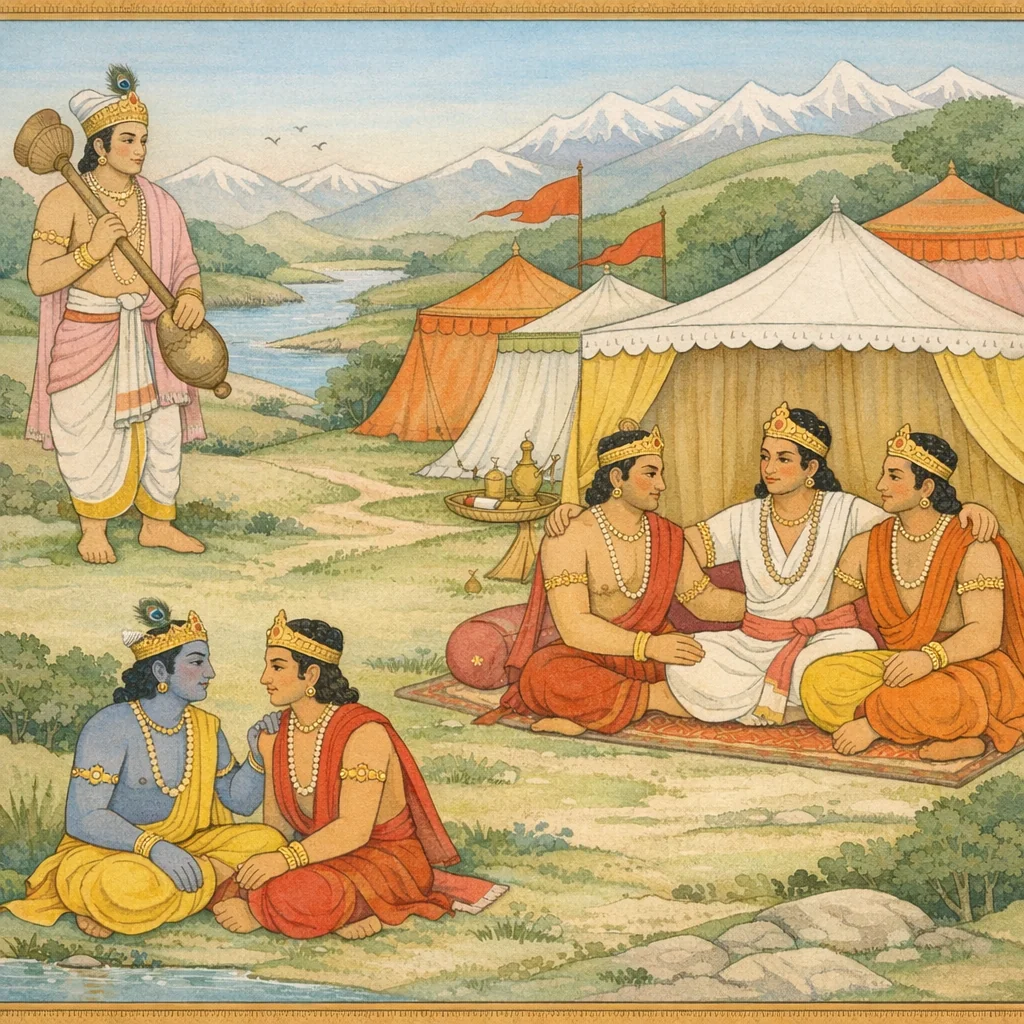
Vaiśampāyana said: O King, when that great, world-destroying war was seen to be extremely near—almost already upon them—Balarāma, the illustrious wielder of the plough, fair as the peak of Kailāsa and clad in blue silk, entered the Pāṇḍavas’ camp with the playful, leonine stride of a lion. The corners of his eyes were reddened with intoxication. With him came Akrūra and other Yādavas, and the foremost Vṛṣṇis—Gada, Sāmba, Uddhava, Pradyumna, Cārudeṣṇa, the sons of Āhuka, and others—fierce in strength like lions and tigers. Guarded and surrounded by them, Balarāma shone like Indra adorned by the Maruts. Seeing him, Dharmarāja Yudhiṣṭhira, the radiant Keśava (Kṛṣṇa), Bhīmasena of dreadful deeds, and all the kings present there rose to their feet.
Verse 21
उदतिष्ठत् ततः पार्थों भीमकर्मा वृकोदर: । गाण्डीवधन्वा ये चान्ये राजानस्तत्र केचन,उन्हें देखते ही धर्मराज युधिष्ठिर, महातेजस्वी श्रीकृष्ण, भयंकर कर्म करनेवाले कुन्तीपुत्र भीमसेन तथा अन्य जो कोई भी राजा वहाँ विद्यमान थे, वे सब-के-सब उठकर खड़े हो गये
Then Pārtha—Bhīma of dreadful deeds, the wolf-bellied hero—rose to his feet; and the other kings who were present there as well, including the wielder of the Gāṇḍīva, also stood up. The scene conveys a formal, dharma-governed gesture of respect and readiness, as the assembly responds in disciplined unison to what has just appeared or been announced.
Verse 22
पूजयांचक्रिरे ते वै समायान्तं हलायुधम् । ततस्तं पाण्डवो राजा करे पस्पर्श पाणिना,हलायुध बलरामजीको आया देख सबने उनका समादर किया। तदनन्तर पाण्डुनन्दन राजा युधिष्ठिरने अपने हाथसे उनके हाथका स्पर्श किया
When Halāyudha (Balarāma) arrived, they all duly honored him. Then the Pāṇḍava king (Yudhiṣṭhira), in a gesture of reverent welcome and proper conduct, touched his hand with his own—signifying respectful reception of an elder and a revered kinsman amid the tense prelude to war.
Verse 23
वासुदेवपुरोगास्तं सर्व एवाभ्यवादयन् | विराटद्रुपदौ वृद्धावभिवाद्य हलायुध:
Vaiśampāyana said: With Vāsudeva at their head, all of them offered respectful salutations to him. Then Halāyudha (Balarāma), having paid homage to the aged kings Virāṭa and Drupada, proceeded in due decorum. The scene underscores the ethic of honoring elders and allies even amid the mounting pressures of impending conflict.
Verse 24
ततस्तेषूपविष्टेषु पार्थिवेषु समन्तत: । वासुदेवमभिप्रेक्ष्य राहिणेयो5भ्य भाषत,फिर उन सब राजाओंके चारों ओर बैठ जानेपर रोहिणीनन्दन बलरामने भगवान् श्रीकृष्णकी ओर देखते हुए कहा--
Then, when the kings had taken their seats all around, Rohiṇī’s son Balarāma, looking toward Vāsudeva (Kṛṣṇa), addressed him—setting the stage for counsel amid an assembly where royal power, duty, and the looming conflict demanded clear speech and responsible guidance.
Verse 25
भवितायं महारौद्रो दारुण: पुरुषक्षय: । दिष्टमेतद् ध्रुवं मन्ये न शक््यमतिवर्तितुम्,“जान पड़ता है यह महाभयंकर और दारुण नरसंहार होगा ही। प्रारब्धके इस विधानको मैं अटल मानता हूँ। अब इसे हटाया नहीं जा सकता
Vaiśampāyana said: “It seems certain that a most dreadful and ruthless slaughter of men will indeed come to pass. I regard this as a fixed decree of destiny; it cannot now be averted.”
Verse 26
का दर ++प्रध्य्क >मकाब न कमा थ। तस्माद् युद्धात् समुत्तीर्णानपि व: ससुहृज्जनान् । अरोगानक्षवैर्देहै्द्रष्टासम्मीति मतिर्मम,“इस युद्धसे पार हुए आप सब सुहृदोंको मैं अक्षत शरीरसे युक्त और नीरोग देखूँगा। ऐसा मेरा विश्वास है
Therefore, even after you have come through this war, I am resolved to see you all—together with your dear friends and well-wishers—healthy and with bodies uninjured. Such is my firm conviction.
Verse 27
समेतं पार्थिवं क्षत्रं कालपक्वमसंशयम् | विमर्दश्वन महान् भावी मांसशोणितकर्दम:,“इसमें संदेह नहीं कि यहाँ जो-जो क्षत्रिय नरेश एकत्र हुए हैं, उन सबको कालने अपना ग्रास बनानेके लिये पका दिया है। महान् जनसंहार होनेवाला है। इसमें रक्त और मांसकी कीच जम जायगी
There is no doubt that the assembled Kṣatriya kings here have been ripened by Time to become its prey. A great slaughter is to come; this place will turn into mire of flesh and blood.
Verse 28
उक्तो मया वासुदेव: पुनः पुनरुपह्नरे । सम्बन्धिषु समां वृत्तिं वर्तस्व मधुसूदन,“मैंने एकान्तमें श्रीकृष्णसे बार-बार कहा था कि मधुसूदन! अपने सभी सम्बन्धियोंके प्रति एक-सा बर्ताव करो; क्योंकि हमारे लिये जैसे पाण्डव हैं, वैसा ही राजा दुर्योधन है। उसकी भी सहायता करो। वह बार-बार अपने यहाँ चक्कर लगाता है
Vaiśampāyana said: “I repeatedly told Vāsudeva in private: ‘O Madhusūdana, conduct yourself with equal regard toward all our kinsmen. For to us the Pāṇḍavas are as dear as King Duryodhana; therefore support him as well. He keeps coming here again and again.’”
Verse 29
पाण्डवा हि यथास्माकं तथा दुर्योधनो नृप: । तस्यापि क्रियतां साहां स पर्येति पुन: पुन:,“मैंने एकान्तमें श्रीकृष्णसे बार-बार कहा था कि मधुसूदन! अपने सभी सम्बन्धियोंके प्रति एक-सा बर्ताव करो; क्योंकि हमारे लिये जैसे पाण्डव हैं, वैसा ही राजा दुर्योधन है। उसकी भी सहायता करो। वह बार-बार अपने यहाँ चक्कर लगाता है
Vaiśampāyana said: “For us, the Pāṇḍavas are dear in the same way as King Duryodhana is. Therefore, let assistance be rendered to him as well. He keeps coming again and again (seeking support).”
Verse 30
तच्च मे नाकरोद् वाक्यं त्वदर्थे मधुसूदन: । निर्विष्ट: सर्वभावेन धनंजयमवेक्ष्य ह,'परंतु युधिष्ठिर! तुम्हारे लिये ही मधुसूदन श्रीकृष्णने मेरी उस बातको नहीं माना है। ये अर्जुनको देखकर सब प्रकारसे उसीपर निछावर हो रहे हैं
Vaiśampāyana said: “Yet, O Yudhiṣṭhira, Madhusūdana (Kṛṣṇa) did not accept my counsel—even though it was offered for your sake. For, having looked upon Dhanañjaya (Arjuna), he was wholly absorbed in him, devoted with his entire being.”
Verse 31
ध्रुवी जय: पाण्डवानामिति मे निश्चिता मति: । तथा हाभिनिवेशो<यं वासुदेवस्य भारत,'मेरा निश्चित विश्वास है कि इस युद्धमें पाण्डवोंकी अवश्य विजय होगी। भारत! श्रीकृष्णका भी ऐसा दृढ़ संकल्प है
Vaiśampāyana said: “My conviction is settled: victory for the Pāṇḍavas is certain. O Bhārata, Vāsudeva (Kṛṣṇa) too holds this same firm resolve.”
Verse 32
न चाहमुत्सहे कृष्णमृते लोकमुदीक्षितुम् | ततो5हमनुवर्तामि केशवस्य चिकीर्षितम्,“मैं तो श्रीकृष्णके बिना इस सम्पूर्ण जगत्की ओर आँख उठाकर देख भी नहीं सकता; अतः ये केशव जो कुछ करना चाहते हैं, मैं उसीका अनुसरण करता हूँ
Vaiśampāyana said: “Without Kṛṣṇa, I do not have the heart even to lift my eyes and look upon this whole world. Therefore I follow whatever Keśava intends to do.”
Verse 33
उभौ शिष्यौ हि मे वीरौ गदायुद्धविशारदौ । तुल्यस्नेहो 5स्म्यतो भीमे तथा दुर्योधने नूपे,'भीमसेन और दुर्योधन ये दोनों ही वीर मेरे शिष्य एवं गदायुद्धमें कुशल हैं; अतः मैं इन दोनोंपर एक-सा स्नेह रखता हूँ
Vaiśaṃpāyana said: “O king, both of these heroes are my disciples, highly skilled in fighting with the mace. Therefore I bear equal affection toward Bhīma and toward Duryodhana.”
Verse 34
तस्माद् यास्यामि तीर्थानि सरस्वत्या निषेवितुम् । न हि शक्ष्यामि कौरव्यान् नश्यमानानुपेक्षितुम्,“इसलिये मैं सरस्वती नदीके तटवर्ती तीर्थोका सेवन करनेके लिये जाऊँगा; क्योंकि मैं नष्ट होते हुए कुरुवंशियोंको उस अवस्थामें देखकर उनकी उपेक्षा नहीं कर सकूँगा?”
“Therefore I shall depart to visit the sacred fords along the Sarasvatī. For I cannot bear to stand by in indifference while the Kauravas—scions of the Kuru line—are heading toward ruin.”
Verse 35
एवमुक््त्वा महाबाहुरनुज्ञातश्व पाण्डवै: । तीर्थयात्रां ययौ रामो निर्वर्त्य मधुसूदनम्,ऐसा कहकर महाबाहु बलरामजी पाण्डवोंसे विदा ले मधुसूदन श्रीकृष्णको संतुष्ट करके तीर्थयात्राके लिये चले गये
Having spoken thus, the mighty-armed Rāma (Balarāma), having received leave from the Pāṇḍavas, set out on a pilgrimage to sacred fords. Before departing, he satisfied Madhusūdana (Śrī Kṛṣṇa), acting in a manner that preserved harmony and propriety amid the looming conflict.
Verse 63
उवाच वदतां श्रेष्ठ: सान्त्वपूर्वमिदं वच: । वैशम्पायनजीने कहा--राजन्! आपद्धर्मके विषयमें कुशल, वक्ताओंमें श्रेष्ठ, परम बुद्धिमान् युधिष्ठिने उस समय सम्पूर्ण भाइयों तथा सनातन भगवान् वासुदेवको बुलाकर सान्त्वनापूर्वक इस प्रकार कहा--
Vaiśampāyana said: Then the foremost of speakers addressed them with words meant to console and steady the mind. In that moment, Yudhiṣṭhira—skilled in discerning dharma in times of crisis—summoned all his brothers and the eternal Lord Vāsudeva, and spoke in a calming, conciliatory manner, preparing them for the difficult ethical decisions ahead.
Verse 136
द्रोणान्तहेतोरुत्पन्नो य इद्धाज्जातवेदस: । वैशम्पायनजी कहते हैं-जनमेजय! तदनन्तर राजा द्रुपद, विराट, सात्यकि, पांचालराजकुमार धृष्टद्युम्न, धृष्टकेतु, पांचालवीर शिखण्डी और मगधराज सहदेव--इन सात युद्धाभिलाषी महाभाग वीरोंको युधिष्छिरने विधिपूर्वक सेनापतिके पदपर अभिषिक्त कर दिया और धृष्टद्युम्नको सम्पूर्ण सेनाओंका प्रधान सेनापति बना दिया, जो द्रोणाचार्यका अन्त करनेके लिये प्रज्वलित अग्निसे उत्पन्न हुए थे
Vaiśampāyana said: “He who was born from the blazing sacrificial fire for the very purpose of bringing about Droṇa’s end—him, Dhṛṣṭadyumna, Yudhiṣṭhira duly installed as chief commander over the entire host, after appointing the leading war-eager heroes to command.”
Verse 146
सेनापतिपतिं चक्रे गुडाकेशं धनंजयम् । तदनन्तर उन्होंने निद्राविजयी वीर धनंजयको उन समस्त महामना वीर सेनापतियोंका भी अधिपति बना दिया
Vaiśampāyana said: Thereafter, they appointed Dhanañjaya—Arjuna, famed as Guḍākeśa (the conqueror of sleep)—as the supreme commander over the commanders of the army. The narrative underscores a dharmic principle of war-leadership: in a crisis, authority is consolidated under the most capable and self-controlled warrior, so that discipline, unity, and righteous strategy may prevail.
Verse 153
संकर्षणानुज: श्रीमान् महाबुद्धिर्जनार्दन: । अर्जुनके भी नेता और उनके घोड़ोंके भी नियन्ता हुए बलरामजीके छोटे भाई परम बुद्धिमान श्रीमान् भगवान् श्रीकृष्ण
Vaiśampāyana said: The illustrious Janārdana—of great intellect, the younger brother of Saṅkarṣaṇa (Balarāma)—became Arjuna’s guide and also the controller of his horses. Thus the blessed Śrī Kṛṣṇa, renowned for supreme wisdom, assumed the role of charioteer, placing his discernment and restraint at the service of righteous purpose.
Verse 157
इति श्रीमहाभारते उद्योगपर्वणि सैन्यनिर्याणपर्वणि बलरामती र्थयात्रागमने सप्तपञ्चाशदधिकशततमो< ध्याय:,इस प्रकार श्रीमह्ा भारत उद्योगपर्वके अन्तर्गत यैन्यनिर्याणपर्वमें बलरामजीके तीर्थयात्राके लिये जानेसे सम्बन्ध रखनेवाला एक सौ सत्तावनवाँ अध्याय पूरा हुआ
Vaiśampāyana concludes: Thus, in the Śrī Mahābhārata, within the Udyoga Parva and the section on the marching forth of armies, ends the one-hundred-and-fifty-seventh chapter, dealing with Balarāma’s departure on a tīrtha-yātrā, a pilgrimage to sacred fords. The closing colophon signals a deliberate ethical pause: as war preparations intensify, Balarāma chooses withdrawal into pilgrimage, embodying a dharmic response that seeks purification and restraint amid escalating conflict.
Verse 236
युधिष्ठटिरिण सहित उपाविशदरिंदम: । पाण्डवोंके डेरेमें बलरामजी श्रीकृष्ण आदि सब लोगोंने उन्हें प्रणाम किया। तत्पश्चात् बूढ़े राजा विराट और ट्रुपदको प्रणाम करके शत्रुदमन बलराम युधिष्ठटिरके साथ बैठे
Then Balarāma, the subduer of foes, sat down together with Yudhiṣṭhira. In the Pāṇḍavas’ camp, Balarāma, Śrī Kṛṣṇa, and all the others offered their salutations. Thereafter, having paid respects to the aged King Virāṭa and to Drupada, Balarāma—the tamer of enemies—took his seat beside Yudhiṣṭhira, affirming the dharma of honoring elders and allies even as war drew near.
Frequently Asked Questions
Dhṛtarāṣṭra’s dilemma is the conflict between acknowledged knowledge of war’s harms and his admitted inability to restrain his son’s harmful trajectory, raising the question of a ruler’s responsibility when personal attachment undermines governance.
Saṃjaya stresses ethical causality: when adverse outcomes arise from one’s own wrongful conduct, attributing them to time (kāla) or destiny (daiva) becomes an evasion of accountability; human action remains morally legible even amid uncertainty.
No explicit phalaśruti is stated; the meta-commentary functions instead as a causation framework (daiva, chance, prior karma) that guides how the listener should interpret subsequent reports without collapsing responsibility into fatalism.