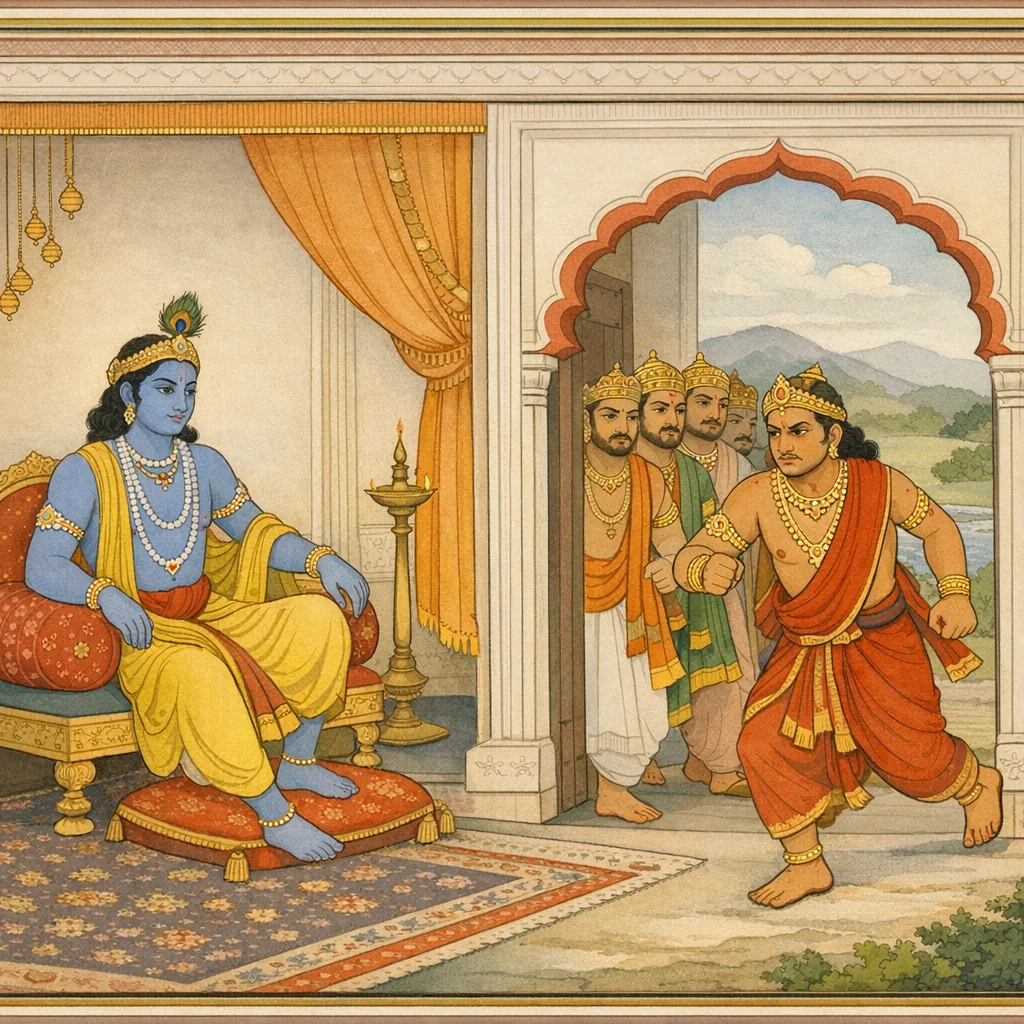
Adhyaya 149
सेनापति-निर्णयः तथा पाण्डवसेनायाः कुरुक्षेत्रगमनम् (Decision on Command and the Pandavas’ March to Kurukshetra)
Upa-parva: Senāpati-nirṇaya & Vāhinī-vyūha (Pandava command deliberation and mobilization)
Vaiśaṃpāyana narrates that, after hearing Kṛṣṇa’s counsel, Yudhiṣṭhira addresses his brothers in Kṛṣṇa’s presence, confirming that the assembly proceedings and Kṛṣṇa’s words are understood. He requests a formal division of the army: seven akṣauhiṇīs with seven renowned leaders (Drupada, Virāṭa, Dhṛṣṭadyumna, Śikhaṇḍin, Sātyaki, Cekitāna, Bhīmasena). Yudhiṣṭhira specifically asks Sahadeva for an assessment of who is fit to serve as senāpati capable of sustaining engagement against Bhīṣma. Sahadeva argues for Virāṭa’s strength and readiness; Nakula argues for Drupada, emphasizing lineage, discipline, and hostility toward Droṇa; Arjuna extols Dhṛṣṭadyumna as divinely purposed for Droṇa’s defeat and able to withstand Bhīṣma’s assault; Bhīma highlights Śikhaṇḍin’s unique strategic relevance against Bhīṣma. Yudhiṣṭhira resolves that the one recommended by Kṛṣṇa should be commander, treating that choice as decisive for success or reversal. Kṛṣṇa affirms the competence of all named leaders and notes the failure of conciliation due to Dhṛtarāṣṭra’s misjudgment of strength. The narrative then shifts to mobilization: the army’s loud movement, conch and drum signals, marching order, inclusion of support staff and supplies, and the establishment of a fortified camp at Kurukṣetra. The text details careful camp placement—avoiding cremation grounds and sacred sites—digging a protective trench, distributing provisions, arranging separate royal pavilions, and the arrival of allied kings in support of the Pandavas’ campaign.
Chapter Arc: संजय धृतराष्ट्र को कुरुसभा का वृत्तान्त सुनाते हैं—कृष्ण का दूत-धर्म निभाते हुए साम, दान और भेद की नीति से शान्ति-प्रयत्न, और उसके सामने दुर्योधन का कठोर, अविवेकी प्रतिरोध। → दुर्योधन क्रोध से लाल नेत्र किये सभा की अवहेलना कर उठ पड़ता है और साथ आये राजाओं को बार-बार आज्ञा देता है कि पुष्य-नक्षत्र के दिन कुरुक्षेत्र की ओर प्रस्थान करें; उधर कौरव-पक्ष की ग्यारह अक्षौहिणियाँ एकत्र होने लगती हैं और भीष्म ध्वज-केतु की भाँति अग्रणी दीखते हैं। → कृष्ण का निर्णायक वचन उभरता है—जब दुष्टात्मा दुर्योधन किसी भी प्रकार राज्य-भाग नहीं छोड़ता, तब नीति के तीन उपाय विफल होकर ‘दण्ड’ ही शेष रहता है; स्पष्ट घोषणा होती है कि कौरव बिना युद्ध के राज्य नहीं देंगे और विनाश-हेतु बनकर मृत्यु के सम्मुख खड़े हैं। → संजय यह सब धृतराष्ट्र के सामने रखकर संकेत करते हैं कि अब निर्णय का भार राजा पर है—जो उचित जानें, वही करें; शान्ति का द्वार संकुचित हो चुका है और युद्ध की तैयारी ठोस रूप ले चुकी है। → अमानुष, घोर और दारुण अपशकुनों/अद्भुत कर्मों का संकेत भविष्य की विभीषिका पर परदा उठाता है—मानो कुरुक्षेत्र स्वयं बुला रहा हो।
Shlokas
Verse 1
अपन हू< बक। है २ >> पजञज्चाशर्दाधिकशततमोब ध्याय: श्रीकृष्णका कौरवोंके प्रति साम, दान और भेदनीतिके प्रयोगकी असफलता बताकर दण्डके प्रयोगपर जोर देना वायुदेव उवाच एवमुक्ते तु भीष्मेण द्रोणेन विदुरेण च । गान्धार्या धृतराष्ट्रेण न वै मन्दो<न्वबुद्धयत,भगवान् श्रीकृष्ण कहते हैं--राजन्! भीष्म, द्रोण, विदुर, गान्धारी तथा धृतराष्ट्रके ऐसा कहनेपर भी मन्दबुद्धि दुर्योधनको तनिक भी चेत नहीं हुआ
Vāyudeva said: Even after Bhīṣma, Droṇa, Vidura, Gāndhārī, and Dhṛtarāṣṭra had spoken thus, the dull-witted Duryodhana did not come to understanding in the least.
Verse 2
अवधूयोत्थितो मन्द: क्रोधसंरक्तलोचन: । अन्वद्रवन्त त॑ पश्चाद् राजानस्त्यक्तजीविता:,वह मूर्ख क्रोधसे लाल आँखें किये उन सबकी अवहेलना करके सभासे उठकर चला गया। उसीके पीछे अन्य राजा भी अपने जीवनका मोह छोड़कर सभासे उठकर चल दिये
The dull-witted man rose in contempt, his eyes reddened with anger, and left the assembly. After him the kings too followed, as though they had cast aside all concern for their lives—driven by wrath and the momentum of conflict rather than by calm counsel.
Verse 3
आज्ञापयच्च राज्ञस्तान् पार्थिवान् नष्टचेतस: । प्रयाध्व॑ वै कुरुक्षेत्रं पुष्योडद्येति पुन: पुन:,ज्ञात हुआ है, दुर्योधनने उन विवेकशून्य राजाओं-को यह बार-बार आज्ञा दे दी कि तुम सब लोग कुरुक्षेत्रको चलो। आज पुष्य नक्षत्र है
Vāyu said: “And he repeatedly commanded those kings—earthly rulers whose judgment had been lost—‘Set out at once for Kurukṣetra; today is the rising of the Puṣya constellation.’”
Verse 4
ततस्ते पृथिवीपाला: प्रययु: सहसैनिका: । भीष्मं सेनापतिं कृत्वा संहृष्टाः कालचोदिता:,तदनन्तर वे सभी भूपाल कालसे प्रेरित हो भीष्मको सेनापति बनाकर बड़े हर्षके साथ सैनिकों-सहित वहाँसे चल दिये हैं
Then those kings, accompanied by their armies, set out. Urged on by the pressure of time and fate, and rejoicing in their resolve, they appointed Bhīṣma as commander-in-chief and departed from that place—an ominous movement where political choice and moral consequence begin to converge toward war.
Verse 5
अक्षौहिण्यो दशैका च कौरवाणां समागता: । तासां प्रमुखतो भीष्मस्तालकेतुर्व्यरोचत,कौरवोंकी ग्यारह अक्षौहिणी सेनाएँ आ गयी हैं। उन सबमें प्रधान हैं भीष्मजी, जो अपने तालध्वजके साथ सुशोभित हो रहे हैं
Vāyu said: “The Kauravas have assembled eleven akṣauhiṇīs of troops. At the head of them all stood Bhīṣma, resplendent with his palm-tree banner—an image of disciplined might marshalled for a war whose moral burden will fall heavily on its leaders.”
Verse 6
यदत्र युक्त प्राप्त च तद् विधत्स्व विशाम्पते । उक्त भीष्मेण यद् वाक््यं द्रोणेन विदुरेण च,प्रजानाथ! अब तुम्हें भी जो उचित जान पड़े, वह करो। भारत! कौरवसभामें भीष्म, द्रोण, विदुर, गान्धारी तथा धृतराष्ट्रने मेरे सामने जो बातें कही थीं, वे सब आपको सुना दीं। राजन! यही वहाँका वृत्तान्त है
Vāyu said: “O lord of the people, do now what is fitting and has become necessary in this situation. The words that were spoken—by Bhīṣma, by Droṇa, and by Vidura—(and likewise by Gāndhārī and Dhṛtarāṣṭra) in the Kaurava assembly in my presence, I have conveyed to you in full. O Bhārata, this is exactly what transpired there. Now, decide and act according to what you judge to be right.”
Verse 7
गान्धार्या धृतराष्ट्रेण समक्ष मम भारत । एतत् ते कथितं राजन् यद् वृत्तं कुरुसंसदि,प्रजानाथ! अब तुम्हें भी जो उचित जान पड़े, वह करो। भारत! कौरवसभामें भीष्म, द्रोण, विदुर, गान्धारी तथा धृतराष्ट्रने मेरे सामने जो बातें कही थीं, वे सब आपको सुना दीं। राजन! यही वहाँका वृत्तान्त है
Vāyu said: “O Bhārata, in the presence of Gāndhārī and Dhṛtarāṣṭra I have told you, O king, what transpired in the Kuru assembly. O lord of the people, now you too should do what you judge to be right. O Bhārata, I have recounted to you everything that Bhīṣma, Droṇa, Vidura, Gāndhārī, and Dhṛtarāṣṭra spoke before me in the Kaurava court. O king, this is the full account of what happened there.”
Verse 8
साम्यमादौ प्रयुक्त मे राजन् सौश्रात्रमिच्छता । अभेदायास्य वंशस्य प्रजानां च विवृद्धये,राजन! मैंने सब भाइयोंमें उत्तम बन्धुजनोचित प्रेम बने रहनेकी इच्छासे पहले सामनीतिका प्रयोग किया था, जिससे इस वंशमें फूट न हो और प्रजाजनोंकी निरन्तर उन्नति होती रहे
Vāyu said: “O king, seeking concord, I first employed the policy of sāma—conciliation through gentle words—so that this lineage might not be split and so that the people might continually prosper.”
Verse 9
पुनर्भेदश्न मे युक्तो यदा साम न गृहाते । कर्मानुकीर्तनं चैव देवमानुषसंहितम्,जब वे सामनीति न ग्रहण कर सके, तब मैंने भेदनीतिका प्रयोग किया (उनमें फूट डालनेकी चेष्टा की)। पाण्डवोंके देव-मनुष्योचित कर्मोंका बारंबार वर्णन किया
When my policy of conciliation was not accepted, I then resorted to the strategy of division. I repeatedly recounted the deeds of the Pāṇḍavas—actions befitting both gods and noble men—so that their excellence and rightful conduct would be clearly recognized.
Verse 10
यदा नाद्रियते वाक््यं सामपूर्व सुयोधन: । तदा मया समानीय भेदिता: सर्वपार्थिवा:,जब मैंने देखा दुर्योधन मेरे सान्त्वनापूर्ण वचनोंका पालन नहीं कर रहा है, तब मैंने सब राजाओंको बुलाकर उनमें फ़ूट डालनेका प्रयत्न किया
Vāyu said: “When I saw that Suyodhana (Duryodhana) did not heed my conciliatory counsel spoken in the spirit of sāman (gentle persuasion), then I gathered all the kings together and sought to split them—setting them at variance—so that his obstinacy would not carry everyone into a single, ruinous course.”
Verse 11
भारत! वहाँ मैंने बहुत-से अद्भुत, भयंकर, निछ्ठर एवं अमानुषिक कर्मोका प्रदर्शन किया
O Bhārata, there I displayed many deeds—wondrous yet terrifying—harsh and beyond ordinary human measure.
Verse 12
निर्भर्त्सयित्वा राज्ञस्तांस्तृणीकृत्य सुयोधनम् । राधेयं भीषयित्वा च सौबलं च पुन: पुनः:,समस्त राजाओंको डाँट बताकर दुर्योधनको तिनकेके समान समझकर तथा राधानन्दन कर्ण और सुबलपुत्र शकुनिको बार-बार डराकर जूएसे धृतराष्ट्रपुत्रोंकी निन्दा करके वाणी तथा गुप्त मन्त्रणाद्वारा सब राजाओंके मनमें अनेक बार भेद उत्पन्न करनेके पश्चात् फिर सामसहित दानकी बात उठायी, जिससे कुरुवंशकी एकता बनी रहे और अभीष्ट कार्यकी सिद्धि हो जाय
Vāyu said: “After rebuking those kings, treating Suyodhana as no more than a straw, and repeatedly intimidating Rādheya (Karna) and Saubala (Śakuni), he went on censuring the sons of Dhṛtarāṣṭra. By speech and by secret counsel he again and again sowed dissension in the minds of the assembled rulers; then he raised the proposal of conciliation together with gifts, so that the unity of the Kuru line might be preserved and the desired objective be accomplished.”
Verse 13
द्यूततो धार्तराष्ट्राणां निन््दां कृत्वा तथा पुनः । भेदयित्वा नृपान् सर्वान् वाम्भिर्मन्त्रेण चासकृत्,समस्त राजाओंको डाँट बताकर दुर्योधनको तिनकेके समान समझकर तथा राधानन्दन कर्ण और सुबलपुत्र शकुनिको बार-बार डराकर जूएसे धृतराष्ट्रपुत्रोंकी निन्दा करके वाणी तथा गुप्त मन्त्रणाद्वारा सब राजाओंके मनमें अनेक बार भेद उत्पन्न करनेके पश्चात् फिर सामसहित दानकी बात उठायी, जिससे कुरुवंशकी एकता बनी रहे और अभीष्ट कार्यकी सिद्धि हो जाय
Vāyu said: “Having censured the sons of Dhṛtarāṣṭra for their gambling, and then again—by words and by repeated secret counsel—having sown dissension among all the kings, he proceeded further.”
Verse 14
पुनः सामाभिसंयुक्तं सम्प्रदानमथाब्रुवम् । अभेदात् कुरुवंशस्य कार्ययोगात् तथैव च,समस्त राजाओंको डाँट बताकर दुर्योधनको तिनकेके समान समझकर तथा राधानन्दन कर्ण और सुबलपुत्र शकुनिको बार-बार डराकर जूएसे धृतराष्ट्रपुत्रोंकी निन्दा करके वाणी तथा गुप्त मन्त्रणाद्वारा सब राजाओंके मनमें अनेक बार भेद उत्पन्न करनेके पश्चात् फिर सामसहित दानकी बात उठायी, जिससे कुरुवंशकी एकता बनी रहे और अभीष्ट कार्यकी सिद्धि हो जाय
Vāyu said: “Then again I spoke of offering a conciliatory gift, joined with gentle persuasion—so that the Kuru lineage might not be split, and so that the intended objective might be accomplished.”
Verse 15
ते शूरा धृतराष्ट्रस्य भीष्मस्य विदुरस्य च । तिष्ठेयु: पाण्डवा: सर्वे हित्वा मानमधश्चरा:,मैंने कहा--नृपश्रेष्ठ! यद्यपि पाण्डव शौर्यसे सम्पन्न हैं, तथापि वे सब-के-सब अभिमान छोड़कर भीष्म, धृतराष्ट्र और विदुरके नीचे रह सकते हैं। वे अपना राज्य भी तुम्हींको दे दें और सदा तुम्हारे अधीन होकर रहें। राजा धृतराष्ट्र, भीष्म और विदुरजीने तुम्हारे हितके लिये जैसी बात कही है, वैसा ही करो। सारा राज्य तुम्हारे ही पास रहे। तुम पाण्डवोंको पाँच ही गाँव दे दो; क्योंकि तुम्हारे पिताके लिये पाण्डवोंका भरण-पोषण करना भी परम आवश्यक है
Vāyu said: “Those heroic Pāṇḍavas, casting aside pride and living in humility, could all remain under the authority of Dhṛtarāṣṭra, Bhīṣma, and Vidura. Even though they are mighty, they are capable of yielding and accepting subordination for the sake of concord. Therefore, act in the manner advised by Dhṛtarāṣṭra, Bhīṣma, and Vidura for your own welfare: let the kingdom remain with you, and grant the Pāṇḍavas only five villages—enough to sustain them—so that duty toward your father’s dependents is also fulfilled and peace is preserved.”
Verse 16
प्रयच्छन्तु च ते राज्यमनीशास्ते भवन्तु च | यथा<55ह राजा गाड़ेयो विदुरश्ष हितं तव,मैंने कहा--नृपश्रेष्ठ! यद्यपि पाण्डव शौर्यसे सम्पन्न हैं, तथापि वे सब-के-सब अभिमान छोड़कर भीष्म, धृतराष्ट्र और विदुरके नीचे रह सकते हैं। वे अपना राज्य भी तुम्हींको दे दें और सदा तुम्हारे अधीन होकर रहें। राजा धृतराष्ट्र, भीष्म और विदुरजीने तुम्हारे हितके लिये जैसी बात कही है, वैसा ही करो। सारा राज्य तुम्हारे ही पास रहे। तुम पाण्डवोंको पाँच ही गाँव दे दो; क्योंकि तुम्हारे पिताके लिये पाण्डवोंका भरण-पोषण करना भी परम आवश्यक है
Vāyu said: “Let them even hand over the kingdom to you, and let them live without sovereignty, remaining under your authority. Act in the very way that King Dhṛtarāṣṭra, Bhīṣma, and Vidura have advised for your welfare. Let the whole realm remain with you; grant the Pāṇḍavas only five villages—since it is also a sacred obligation to provide for the sons of your father.”
Verse 17
सर्व भवतु ते राज्यं पञ्च ग्रामान् विसर्जय । अवश्यं भरणीया हि पितुस्ते राजसत्तम,मैंने कहा--नृपश्रेष्ठ! यद्यपि पाण्डव शौर्यसे सम्पन्न हैं, तथापि वे सब-के-सब अभिमान छोड़कर भीष्म, धृतराष्ट्र और विदुरके नीचे रह सकते हैं। वे अपना राज्य भी तुम्हींको दे दें और सदा तुम्हारे अधीन होकर रहें। राजा धृतराष्ट्र, भीष्म और विदुरजीने तुम्हारे हितके लिये जैसी बात कही है, वैसा ही करो। सारा राज्य तुम्हारे ही पास रहे। तुम पाण्डवोंको पाँच ही गाँव दे दो; क्योंकि तुम्हारे पिताके लिये पाण्डवोंका भरण-पोषण करना भी परम आवश्यक है
Vāyu said: “Let the entire kingdom remain yours; only grant (to them) five villages. For, O best of kings, it is indeed obligatory that your father provide for them.”
Verse 18
एवमुक्तो5पि दुष्टात्मा नैव भागं व्यमुज्चत । दण्डं चतुर्थ पश्यामि तेषु पापेषु नान्यथा,मेरे इस प्रकार कहनेपर भी उस दुष्टात्माने राज्यका कोई भाग तुम्हारे लिये नहीं छोड़ा अर्थात् देना नहीं स्वीकार किया। अब तो मैं उन पापियोंपर चौथे उपाय दण्डके प्रयोगकी ही आवश्यकता देखता हूँ, अन्यथा उन्हें मार्गपर लाना असम्भव है
Even after I spoke thus, that wicked-souled man did not yield any share at all. Therefore, with regard to those sinful men, I see no alternative but the fourth course—punishment by force; otherwise it is impossible to bring them back to the right path.
Verse 19
निर्याताश्न विनाशाय कुरुक्षेत्र नराधिपा: । एतत् ते कथितं राजन् यद् वृत्तं कुरुसंसदि,सब राजा अपने विनाशके लिये कुरक्षेत्रको प्रस्थान कर चुके हैं। राजन्! कौरव-सभामें जो कुछ हुआ था, वह सारा वृत्तान्त मैंने तुमसे कह सुनाया
O king, the rulers have already set out for Kurukṣetra, moving toward their own destruction. And, O Rājan, I have now told you the entire account of what transpired in the Kuru assembly—how events unfolded there and led to this fateful march toward war.
Verse 20
नते राज्यं प्रयच्छन्ति विना युद्धेन पाण्डव । विनाशहेतव: सर्वे प्रत्युपस्थितमृत्यव:,पाण्डुनन्दन! वे कौरव बिना युद्ध किये तुम्हें राज्य नहीं देंगे। उन सबके विनाशका कारण जुट गया है और उनका मृत्युकाल भी आ पहुँचा है
O Pāṇḍava, they will not grant you the kingdom without war. All of them have become the very causes of their own destruction, and their time of death has drawn near, O son of Pāṇḍu. The counsel implies that when arrogance and injustice harden into refusal, conflict becomes unavoidable, and adharma ripens into its own ruin.
Verse 131
अद्भुतानि च घोराणि दारुणानि च भारत | अमानुषाणि कर्माणि दर्शितानि मया विभो
Vāyu said: “O Bhārata, I have shown you deeds and portents—marvelous yet terrifying, harsh and dreadful—acts beyond the human sphere, so that you may grasp the gravity of what is unfolding.”
Verse 150
इति श्रीमहा भारते उद्योगपर्वणि भगवद्यानपर्वणि श्रीकृष्णवाक्ये पजञ्चाशदधिकशततमो<ध्याय:
Thus, in the revered Mahābhārata, within the Udyoga Parva—specifically the section on the Lord’s embassy—this concludes the one-hundred-and-fiftieth chapter, centered on Śrī Kṛṣṇa’s discourse. The line functions as a formal colophon, marking the end of the chapter and situating the teaching within Kṛṣṇa’s diplomatic mission, where ethical counsel and the pursuit of peace are set against the looming inevitability of war.
Frequently Asked Questions
The dilemma is how to choose military leadership ethically when conflict appears unavoidable: whether selection should follow personal valor claims, lineage and seniority, strategic necessity (countering Bhīṣma/Droṇa), or the authoritative judgment of a trusted counselor (Kṛṣṇa) who is positioned as knowing the broader balance of outcomes.
Competence in action must be integrated with legitimacy and counsel: decisions with collective consequences are best stabilized through transparent deliberation, deference to qualified ethical strategy, and disciplined preparation that includes protection, provisioning, and respect for social-sacral boundaries.
No explicit phalaśruti appears here; the chapter’s meta-level emphasis is practical-ethical—how dharma is operationalized through command structure, morale signaling, and responsible encampment—framing preparedness itself as a form of duty.