Adhyaya 135
उद्योगपर्व — अध्याय १३५: कुन्त्याः कृष्णं प्रति संदेशः (Kuntī’s Message to Kṛṣṇa)
Upa-parva: Kuntī-vākya (Kuntī’s Counsel to Kṛṣṇa) — Udyoga Parva Context Unit
Kuntī addresses Kṛṣṇa, requesting that he convey her words to Arjuna and the Pāṇḍavas. She recalls a divine utterance heard at Arjuna’s birth predicting his Indra-like prowess, victory over assembled Kurus, and restoration of a lost ancestral share, aided by Vāsudeva. She affirms Arjuna’s steadfastness and asks that dharma be allowed to manifest as truth through Kṛṣṇa’s agency. She instructs Kṛṣṇa to remind Arjuna of Bhīma’s constant readiness and unappeased resolve until adversaries are brought to an end. Kuntī also asks Kṛṣṇa to speak to Draupadī—praised for conduct aligned with dharma—while emphasizing that her deepest grief is not exile or lost kingship but the harsh words Draupadī endured in the royal assembly. She requests that Arjuna be urged to stand in Draupadī’s stead and that the prior contempt and insults be recalled as moral evidence. The chapter closes with Vaiśaṃpāyana narrating Kṛṣṇa’s respectful departure, the Kurus’ astonished discussion, and Kṛṣṇa’s swift journey as he confers with Karṇa and proceeds onward.
Chapter Arc: राजनीति के अँधेरे मोड़ पर एक माँ का तेजस्वी हस्तक्षेप—विदुला अपने पुत्र संजय को कायरता और निराशा से उबारने के लिए वाणी को शस्त्र बनाती है: ‘राजा को कभी भयभीत नहीं होना चाहिए।’ → विदुला बताती है कि भयभीत राजा को देखकर राज्य-तंत्र टूटने लगता है—अमात्य अलग हो जाते हैं, बल बिखरता है, कुछ लोग शत्रु की शरण जाते हैं, कुछ साथ छोड़ देते हैं, और जो पहले अपमानित थे वे प्रतिशोध के लिए तत्पर हो उठते हैं। वह संजय को समझाती है कि उन्नति चाहने वाले पुरुष के लिए सही सचिव/सहायक और दृढ़ निश्चय ही रक्षा-कवच हैं। → माँ के ‘वाग्बाण’ संजय के भीतर जड़ता को भेद देते हैं—वह ‘सदश्व इव क्षिप्तः’ (उत्तेजित घोड़े की तरह) उठ खड़ा होता है और विदुला के अनुशासन के अनुसार युद्ध/उद्यम के लिए स्वयं को तैयार करता है। → विदुला संजय के भीतर क्षत्रिय-धर्म का आदर्श रूप जगाती है—तेज, बल, धृति, और ‘अपराजित जेतार’ बनने की आकांक्षा; वह उसे असाधुओं का नियन्ता और धर्मचारियों का गोप्ता बनने का लक्ष्य देती है। अध्याय विदुला-उपदेश की पूर्णता के साथ समाप्त होता है। → अगले प्रसंग की ओर संकेत—इस उपदेश को सुनकर क्षत्राणियों/स्त्रियों में भी वीर-गुणों की प्रशंसा और आदर्श-निर्माण का विस्तार होता है, मानो यह वाणी व्यापक क्षत्रिय-समाज को उद्यत करने वाली हो।
Shlokas
Verse 1
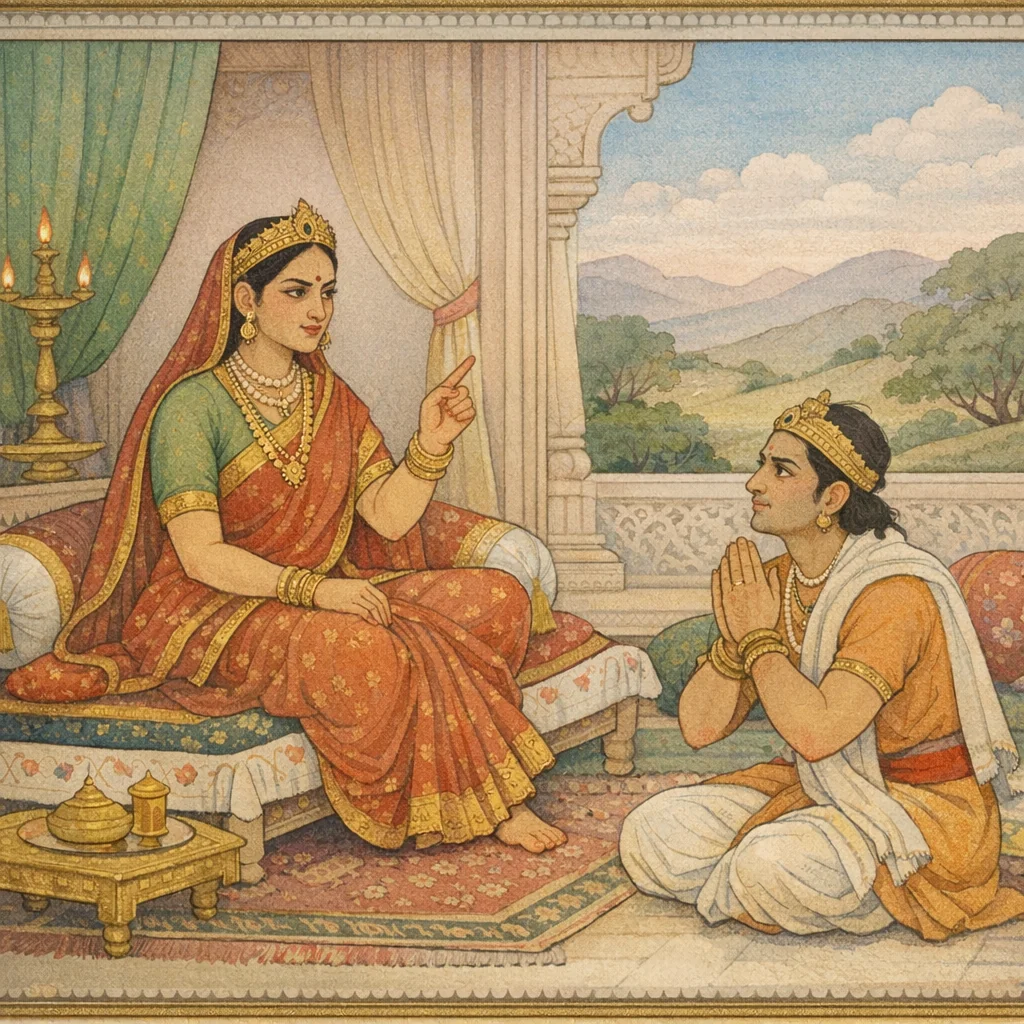
ऑपनआ कराता छा अकाल षट्त्रिशर्दाधिकशततमो< ध्याय: विदुलाके उपदेशसे उसके पुत्रका युद्धके लिये उद्यत होना मातोवाच नैव राज्ञा दर: कार्यो जातु कस्याज्चिदापदि । अथ चेदपि दीर्ण: स्यान्नैव वर्तेत दीर्णवत्,माता बोली--पुत्र! कैसी भी आपत्ति क्यों न आ जाय, राजाको कभी भयभीत होना या घबराना नहीं चाहिये। यदि वह डरा हुआ हो तो भी डरे हुएके समान कोई बर्ताव न करे
The mother said: “Son, whatever calamity may arise, a king must never give way to fear. Even if he is inwardly shaken, he should not behave like one who is shaken—he must maintain steadiness and royal resolve.”
Verse 2
दीर्ण हि दृष्टवा राजानं सर्वमेवानुदीर्यते । राष्ट्र बलममात्याश्न पृथक् कुर्वन्ति ते मती:,राजाको भयभीत देखकर उसके पक्षके सभी लोग भयभीत हो जाते हैं। राज्यकी प्रजा, सेना और मन्त्री भी उससे भिन्न विचार रखने लगते हैं
Seeing the king broken and shaken, the whole realm is thrown into alarm. The people of the kingdom, the army, and even the ministers begin to separate themselves in counsel, forming divergent opinions.
Verse 3
शत्रूनेके प्रपद्यन्ते प्रजहत्यपरे पुनः । अन््ये तु प्रजिहीर्षन्ति ये पुरस्ताद् विमानिता:,उनमेंसे कुछ लोग तो उस राजाके शत्रुओंकी शरणमें चले जाते हैं, दूसरे लोग उसका त्यागमात्र कर देते हैं और कुछ लोग जो पहले राजाद्वारा अपमानित हुए होते हैं, वे उस अवस्थामें उसके ऊपर प्रहार करनेकी भी इच्छा कर लेते हैं
Some, faced with a king’s decline, go over to his enemies for protection; others merely abandon him. Still others—those who had earlier been insulted and humiliated by him—now even long to strike at him.
Verse 4
य एवात्यन्तसुहृदस्त एन॑ पर्युपासते । अशक्तय: स्वस्तिकामा बद्धवत्सा इडा इव,जो लोग अत्यन्त सुहृद होते हैं, वे ही उस संकटके समय उस राजाके पास रह जाते हैं; परंतु वे भी असमर्थ होनेके कारण बाँधे हुए बछड़ेवाली गायोंकी भाँति कुछ कर नहीं पाते, केवल मन-ही-मन उसकी मंगलकामना करते रहते हैं
Only those who are truly intimate well-wishers remain close to the king in that time of crisis. Yet, being powerless, they can do nothing—like cows whose calves are tethered; they can only keep wishing for his welfare in their hearts.
Verse 5
शोचन्तमनुशोचन्ति पतितानिव बान्धवान् | अपि ते पूजिता: पूर्वमपि ते सुह्ददो मता:,जो विपत्तिकी अवस्थामें शोक करते हुए राजाके साथ-साथ स्वयं भी वैसे ही शोकमग्न हो जाते हैं, मानो उनके कोई सगे भाई-बन्धु विपन्न हो गये हों, क्या ऐसे ही लोगोंको तूने सुहृद् माना है? कया तूने भी पहले ऐसे सुहृदोंका सम्मान किया है?
“Those who, seeing a king in distress, grieve along with him—lamenting as though their own close kinsmen had fallen—did you regard such people as your true well-wishers? And did you formerly honor them as friends?”
Verse 6
ये राष्ट्रमभिमन्यन्ते राज्ञो व्यसनमीयुष: । मा दीदरस्त्वं सुहृदो मा त्वां दीर्ण प्रहासिषु:
“Those who set their hearts on the kingdom while the king has fallen into calamity—do not fear them. Do not let your well-wishers lose heart, and do not allow yourself, when broken by distress, to become an object of ridicule.”
Verse 7
जो संकटमें पड़े हुए राजाके राज्यको अपना ही मानकर उसकी तथा राजाकी रक्षाके लिये कृतसंकल्प होते हैं, ऐसे सुह्दोंको तू कभी अपनेसे विलग न कर और वे भी भयभीत अवस्थामें तेरा परित्याग न करें ।। प्रभावं पौरुषं बुद्धिं जिज्ञासन्त्या मया तव । विदधत्या समाश्वासमुक्त तेजोविवृद्धये
Seeking to understand your true influence, manly prowess, and judgment, I have spoken words of reassurance—so that your inner fire and confidence may grow. Therefore, never separate yourself from those loyal friends who, in a king’s time of distress, treat his kingdom as their own and resolve to protect both him and his realm; and let it never happen that they, when fear arises, abandon you.
Verse 8
मैं तेरे प्रभाव, पुरुषार्थ और बुद्धि-बलको जानना चाहती थी, अतः तुझे आश्वासन देते हुए तेरे तेज (उत्साह)-की वृद्धिके लिये मैंने उपर्युक्त बातें कही है ।। यदेतत् संविजानासि यदि सम्यग ब्रवीम्यहम् । कृत्वा सौम्यमिवात्मानं जयायोत्तिष्ठ संजय,संजय! यदि मैं यह सब ठीक कह रही हूँ और यदि तू भी मेरी इन बातोंको ठीक समझ रहा है तो अपने-आपको उमग्र-सा बनाकर विजयके लिये उठ खड़ा हो
If you truly grasp what I am conveying, and if my words are indeed correct, then compose yourself into calm steadiness and rise up, Sañjaya, for victory. I spoke as I did to reassure you and to kindle your ardor—so that your strength of purpose and clarity of mind might increase rather than falter.
Verse 9
अस्ति न: कोशनिचयो महान् हाविदितस्तव । तमहं वेद नान्यस्तमुपसम्पादयामि ते,अभी हमलोगोंके पास बड़ा भारी खजाना है जिसका तुझे पता नहीं है, उसे मैं ही जानती हूँ, दूसरा नहीं। वह खजाना मैं तुझे सौंपती हूँ
The child said: “We possess a vast store of treasure, unknown to you. I alone know of it—no one else. That treasure I now place into your hands.”
Verse 10
सन्ति नैकतमा भूय: सुहृदस्तव संजय । सुखदुःखसहा वीर संग्रामादनिवर्तिन:,वीर संजय! अभी तो तेरे सैकड़ों सुहृद् हैं। वे सभी सुख-दुःखको सहन करनेवाले तथा युद्धसे पीछे न हटनेवाले हैं
“O Sañjaya, you have not just a few but many friends indeed—countless in number. O hero, they are men who endure both pleasure and pain with steadiness, and who do not turn back from battle.”
Verse 11
तादृशा हि सहाया वै पुरुषस्य बुभूषत: । इष्टं जिहीर्षत: किंचित् सचिवा: शत्रुकर्शन,शत्रुसूदन! जो पुरुष अपनी उन्नति चाहता है और शत्रुके हाथसे अपनी अभीष्ट सम्पत्तिको हर लाना चाहता है, उसके सहायक और मन्त्री पूर्वोक्त गुणोंसे युक्त सुहृद हुआ करते हैं
For a man who seeks to rise and prosper, and who wishes to recover—even in some measure—what is dear to him when it has been seized by enemies, such helpers and ministers are indeed required: well-wishing friends endowed with the qualities described earlier, capable of weakening and overcoming foes.
Verse 12
यस्यास्त्वीदृशकं वाक्यं श्र॒ुत्वापि स्वल्पचेतस: । तमस्त्वपागमत् तस्य सुचित्रार्थपदाक्षरम्,(कुन्ती बोली--) श्रीकृष्ण! संजयका हृदय यद्यपि बहुत दुर्बल था तो भी विदुलाका वह विचित्र अर्थ, पद और अक्षरोंसे युक्त वचन सुनकर उसका तमोगुणजनित भय और विषाद भाग गया
Even though Sañjaya’s heart was faint and his understanding limited, on hearing Vidulā’s words—remarkable for their striking sense, well-chosen expressions, and carefully formed syllables—the darkness-born fear and despondency that had seized him fell away.
Verse 13
पुत्र बवाच उदके भूरियं धार्या मर्तव्यं प्रवणे मया । यस्य मे भवती नेत्री भविष्यद्धूतिदर्शिनी,पुत्र बोला--माँ! मेरा यह राज्य शत्रुरूपी जलमें डूब गया है, अब मुझे इसका उद्धार करना है, नहीं तो युद्धमें शत्रुओंका सामना करते हुए अपने प्राणोंका विसर्जन कर देना है; जब मुझे भावी वैभवका दर्शन करानेवाली तुझ-जैसी संचालिका प्राप्त है, तब मुझमें ऐसा साहस होना ही चाहिये
The son said: “Mother, my kingdom has sunk, as it were, into the waters of hostile forces. I must now rescue it; otherwise, facing the enemies in battle, I must lay down my life. Since I have a guide like you—one who leads me and shows me the promise of future prosperity—courage in me is only fitting.”
Verse 14
अहं हि वचन त्वत्त: शुश्रूषुरपरापरम् । किंचित् किंचित् प्रतिवर्दस्तूष्णीमासं मुहुर्मुहु:,मैं बराबर तेरी नयी-नयी बातें सुनना चाहता था। इसीलिये बारंबार बीच-बीचमें कुछ- कुछ बोलकर फिर मौन हो जाता था
The son said: “I was eager to hear ever more of your words, one after another. That is why, from time to time, I would interject a little and then repeatedly fall silent again—so that your fresh counsel might continue without interruption.”
Verse 15
अतृप्यन्नमृतस्येव कृच्छाल्लब्धस्य बान्धवात् | उद्यच्छाम्येष शत्रूणां नियमाय जयाय च,तेरे ये अमृतके समान वचन बड़ी कठिनाईसे सुननेको मिले थे। उन्हें सुनकर मैं तृप्त नहीं होता था। यह देखो, अब मैं शत्रुओंका दमन और विजयकी प्राप्ति करनेके लिये बन्धु- बान्धवोंके साथ उद्योग कर रहा हूँ
Like one who cannot be sated with nectar obtained only after great hardship from a kinsman, I too was not satisfied after hearing those nectar-like words so difficult to come by. Look—now I am rising to action, together with my relatives, to restrain and subdue the enemies and to win victory.
Verse 16
कुन्त्युवाच सदश्व इव स क्षिप्त: प्रणुन्नो वाक्यसायकै: । तच्चकार तथा सर्व यथावदनुशासनम्,कुन्ती कहती है--श्रीकृष्ण! माताके वाग्बाणोंसे बिधकर और तिरस्कृत होकर चाबुककी मार खाये हुए अच्छे घोड़ेके समान संजयने माताके उस समस्त उपदेशका यथावत््रूपसे पालन किया
Kuntī said: “Struck and driven on by my arrow-like words, he was spurred into action like a fine horse lashed by the whip. Accordingly, he carried out, in proper order and without deviation, the whole of the instruction I had given.”
Verse 17
इदमुद्धर्षणं भीम॑ तेजोवर्धनमुत्तमम् । राजानं श्रावयेन्मन्त्री सीदन्तं शत्रुपीडितम्,यह उत्तम उपाख्यान वीरोंके लिये अत्यन्त उत्साह-वर्धक और कायरोंके लिये भयंकर है। यदि कोई राजा शत्रुसे पीड़ित होकर दुःखी एवं हताश हो रहा हो तो मन्त्रीको चाहिये कि उसे यह प्रसंग सुनाये
“This is a mighty exhortation, O Bhīma—an excellent tale that increases valor. A minister should recite it to a king who is sinking into despair, oppressed by enemies.”
Verse 18
जयो नामेतिहासो<यं श्रोतव्यो विजिगीषुणा । महीं विजययते क्षिप्रं श्रुत्वा शत्रृंक्ष मर्दति,यह जय नामक इतिहास है। विजयकी इच्छा रखनेवाले पुरुषको इसका श्रवण करना चाहिये। इसे सुनकर युद्धमें जानेवाला राजा शीघ्र ही पृथ्वीपर विजय पाता और शत्रुओंको रौंद डालता है
This is the itihāsa called “Jaya.” One who seeks victory should listen to it. Having heard it, the king who goes forth to war swiftly conquers the earth and crushes his enemies.
Verse 19
इदं पुंसवनं चैव वीराजननमेव च । अभीद्षणं गर्भिणी श्रुत्वा ध्रुवं वीरं प्रजायते,यह आख््यान पुत्रकी प्राप्ति करानेवाला है तथा साधारण पुरुषमें वीरभाव उत्पन्न करनेवाला है। यदि गर्भवती स्त्री इसे बारंबार सुने तो वह निश्चय ही वीर पुत्रको जन्म देती है
This account serves as a puṃsavana rite that brings about the begetting of a son, and it also kindles heroic spirit in an ordinary man. If a pregnant woman listens to it again and again, she will surely give birth to a heroic son.
Verse 20
विद्याशूरं तप:शूरं दानशूरं तपस्विनम् । ब्राह्मयया श्रिया दीप्यमानं साधुवादे च सम्मतम्
The son said: “He is a hero in learning, a hero in austerity, and a hero in generosity—truly an ascetic. He shines with the noble, Brahmanical splendor of spiritual excellence, and he is widely approved and praised by the good.”
Verse 21
अर्चिष्मन्तं बलोपेतं महाभागं महारथम् | धृतिमन्तमनाधृष्यं जेतारमपराजितम्
The son said: “(He is) radiant, endowed with strength, greatly fortunate, a mighty chariot-warrior; steadfast in dhṛti, unassailable—ever a conqueror, never defeated.”
Verse 22
नियन्तारमसाधूनां गोप्तारं धर्मचारिणाम् | ईदृशं क्षत्रिया सूते वीर॑ सत्यपराक्रमम्
“O charioteer, the Kṣatriyas beget such a hero—one who restrains the wicked and protects those who walk in dharma, whose prowess is grounded in truth.”
Verse 135
इस प्रकार श्रीमह्ाभारत उद्योगपर्वके अन्तर्गत भगवद्यानपर्वमें विदुलाको पुत्रका उपदेशविषयक एक सौ पैतीसवाँ अध्याय पूरा हुआ
Thus ends the one hundred and thirty-fifth chapter of the Udyoga Parva of the Śrī Mahābhārata, within the Bhagavad-yāna section, dealing with the instruction given to Vidulā’s son.
Verse 136
इसे सुनकर प्रत्येक क्षत्राणी विद्याशूर, तप:शूर, दानशूर, तपस्वी, ब्राह्मी शोभासे सम्पन्न, साधुवादके योग्य, तेजस्वी, बलवान, परम सौभाग्यशाली, महारथी, धैर्यवान्, दुर्धर्ष विजयी, किसीसे भी पराजित न होनेवाले, दुष्टोंका दमन करनेवाले, धर्मात्माओंके रक्षक तथा सत्य- पराक्रमी वीर पुत्रको उत्पन्न करती है ।। इति श्रीमहा भारते उद्योगपर्वणि भगवद्यानपर्वणि विदुलापुत्रानुशासनसमाप्तौ षट्त्रिंयाधिकशततमो<्ध्याय:
Hearing this, every Kshatriya woman gives birth to a heroic son—one who is a champion of learning, austerity, and generosity; a disciplined ascetic; endowed with Brahmanical splendor; worthy of the praise of the virtuous; radiant and strong; supremely fortunate; a great chariot-warrior; steadfast; unconquerable and victorious; never defeated by anyone; a subduer of the wicked; a protector of the righteous; and a true, valorous hero. Thus ends Vidulā’s instruction to her son in the Udyoga Parva, in the section on the divine embassy.
Frequently Asked Questions
The chapter weighs endurance of loss (kingdom, exile) against the non-negotiable duty to address public degradation and violated protection norms, presenting redress as an ethical necessity rather than mere retaliation.
Dharma is portrayed as the sustaining principle of society; when dharma is upheld through truthful action and responsible agency, outcomes align with satya—yet this requires disciplined resolve and ethically framed strategy.
No explicit phalaśruti is stated; the meta-level closure is narrative (Vaiśaṃpāyana’s report of Kṛṣṇa’s departure and ensuing reactions), positioning Kuntī’s counsel as a hinge that legitimizes subsequent strategic movements.