Adhyaya 117
Gālava Completes the Horse-Gift: Garuḍa’s Counsel and Viśvāmitra’s Acceptance (गालव-विष्वामित्र-सम्बन्धः)
Upa-parva: Gālava–Mādhavī Episode (Embedded Exemplum within Udyoga-parva)
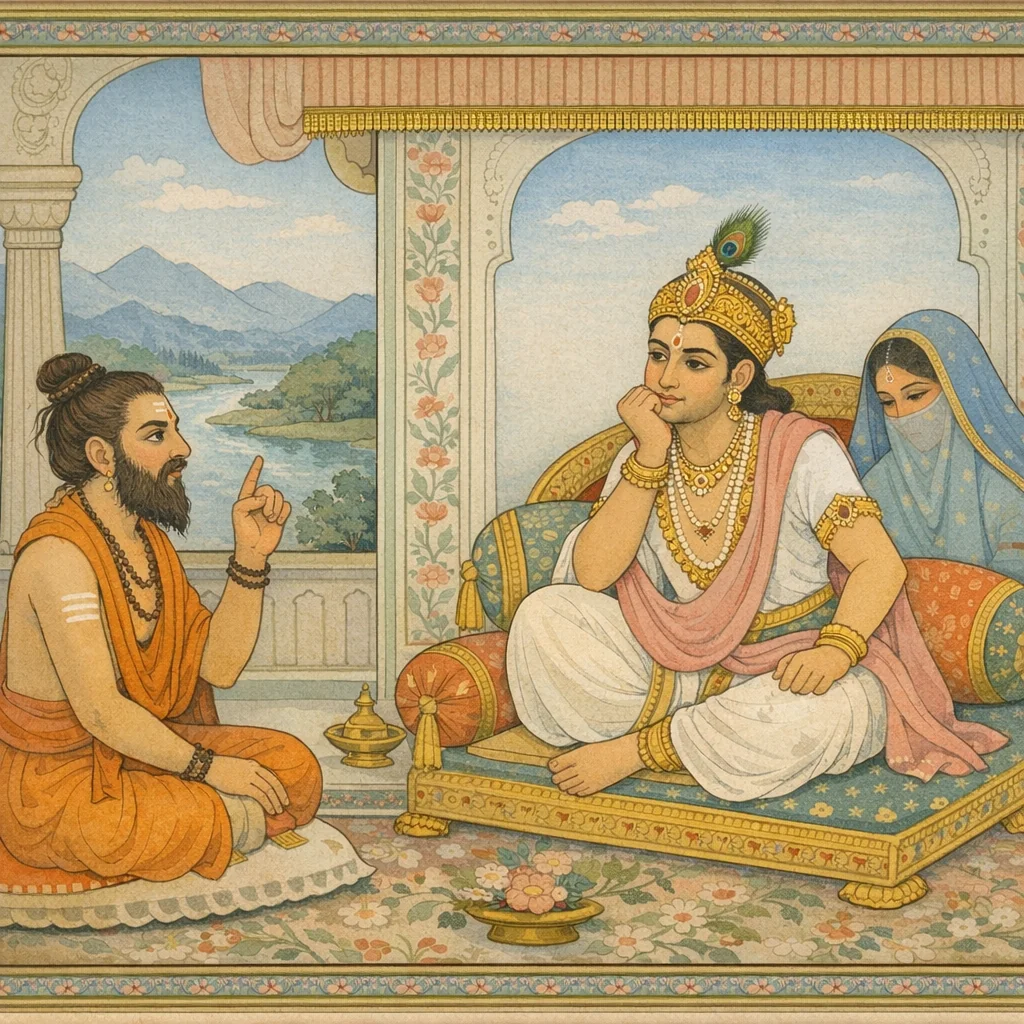
Nārada narrates Garuḍa (Vainateya/Suparṇa) addressing Gālava, acknowledging his near-completion of the demanded gift and disclosing that a quarter remains unresolved. Garuḍa cautions that further striving for the unattained ideal will not succeed, illustrating the point through an earlier precedent at Kānyakubja: Ṛcīka secures a requested set of distinctive horses via Varuṇa’s abode and Aśvatīrtha, yet even then additional horses are lost during transit—demonstrating practical limits in acquisition and custody. Garuḍa advises Gālava to present the remaining two hundred horses alongside the already obtained six hundred to Viśvāmitra, completing eight hundred in total. Gālava approaches Viśvāmitra with the horses and Mādhavī, requesting acceptance and proposing that Viśvāmitra also father a fourth son upon her (after three already born to royal sages). Viśvāmitra questions why she was not offered earlier, then accepts her for the single-son outcome; he fathers Aṣṭaka and integrates the settlement with dharmic and material arrangements, sending the child to a city described as Somapura. Viśvāmitra returns Mādhavī to Gālava; Gālava acknowledges the four sons produced through her, affirms that her father is ‘rescued’ by these lineal outcomes, and then releases Garuḍa and proceeds to the forest, marking closure of obligation and transition to ascetic pursuit.
Chapter Arc: गालव अपने अधूरे व्रत-कार्य की सिद्धि का भार मन में लिए, उपाय खोजते-खोजते भोजनगर में सत्यविक्रम राजा उशीनर के पास पहुँचते हैं—जहाँ एक कन्या का भविष्य और एक राजवंश का उत्तराधिकार एक साथ दाँव पर है। → गालव राजा से निवेदन करते हैं कि यह कन्या (माधवी) उनके लिए पुत्र उत्पन्न कर सकती है; पर राजा के सामने धर्म-संकट है—क्या वह एक ब्राह्मण के प्रयोजन हेतु कन्या को स्वीकार करे, और क्या पुत्र-प्राप्ति का लोभ उसे मर्यादा से विचलित करेगा? गालव पुत्र-धर्म, स्वर्ग-फल और वंश-रक्षा के तर्कों से राजा को समझाते हैं कि पुत्रहीनता पतन का कारण बनती है और पुत्र-फल का उपभोग करने वाला स्वर्ग से नहीं गिरता। → राजा उशीनर के दरबार में निर्णायक संवाद—गालव का धर्मयुक्त प्रतिपादन और राजा का अंतर्मंथन—यहीं चरम पर पहुँचता है, जब राजा कन्या-स्वीकार/पुत्र-प्राप्ति के प्रस्ताव को धर्मसम्मत मानकर स्वीकार करने की ओर झुकता है। → राजा उशीनर गालव की न्याययुक्त वाणी से संतुष्ट होते हैं; गालव उनका आदरपूर्वक पूजन करते हैं और कन्या को साथ लेकर आगे की यात्रा के लिए प्रस्थान करते हैं। मार्ग में वे पर्वत-कंदराओं, नदी-तटों, झरनों, उद्यानों, वनों, अट्टालिकाओं और प्रासाद-शिखरों जैसे विविध रमणीय स्थलों का वर्णन/अनुभव करते हुए आगे बढ़ते हैं। → गालव कन्या को लेकर अगले राजा/अगले चरण की ओर बढ़ते हैं—यह संकेत छोड़ते हुए कि यह यात्रा अभी समाप्त नहीं, और व्रत-पूर्ति के लिए आगे और भी निर्णायक सौदे शेष हैं।
Shlokas
Verse 1
इस प्रकार श्रीमहाभारत उद्योगपर्वके अन्तर्गत भगवद्यानपर्वमें गालवचरित्रविषयक एक सौ सत्रहवाँ अध्याय पूरा हुआ ॥/ ११७ ॥। अपन क्रात बछ। >> 2 अष्टादशाधिकशततमोब<् ध्याय: उशीनरका ययातिकन्या माधवीके गर्भसे शिबि नामक पुत्र उत्पन्न करना, गालवका उस कन्याको साथ लेकर जाना और मार्गमें गरुड़का दर्शन करना नारद उवाच तथैव तां श्रियं त्यक्त्वा कन्या भूत्वा यशस्विनी । माधवी गालवं विप्रमभ्ययात् सत्यसंगरा,नारदजी कहते हैं--तदनन्तर वह यशस्विनी राजकन्या माधवी सत्यके पालनमें तत्पर हो काशी-नरेशकी उस राजलक्ष्मीको त्यागकर विप्रवर गालवके साथ चली गयी
Nārada said: “In the same manner, the illustrious Mādhavī—having relinquished that royal fortune and becoming again a maiden—set out toward the Brahmin Gālava, steadfastly committed to the keeping of truth.”
Verse 2
गालवो विमृशन्नेव स्वकार्यगतमानस: । जगाम भोजनगरं द्रष्टमौशीनरं नृपम्,गालवका मन अपने कार्यकी सिद्धिके चिन्तनमें लगा था। उन्होंने मन-ही-मन कुछ सोचते हुए राजा उशीनरसे मिलनेके लिये भोजनगरकी यात्रा की
Nārada said: Galava, his mind absorbed in the accomplishment of his own task, reflected inwardly and then set out for Bhojanagara to meet King Auśīnara.
Verse 3
तमुवाचाथ गत्वा स नृपतिं सत्यविक्रमम् । इयं कन्या सुतौ द्वौ ते जनयिष्यति पार्थिवौ,उन सत्यपराक्रमी नरेशके पास जाकर गालवने उनसे कहा--'राजन्! यह कन्या आपके लिये पृथ्वीका शासन करनेमें समर्थ दो पुत्र उत्पन्न करेगी
Nārada said: “Then, going to the king of unfailing valor, he addressed him: ‘O king, this maiden will bear for you two sons, fit to rule the earth.’”
Verse 4
अस्यां भवानवाप्तार्थों भविता प्रेत्य चेह च । सोमार्कप्रतिसंकाशौ जनयित्वा सुतौ नूप,“नरेश्वर! इसके गर्भसे सूर्य और चन्द्रमाके समान दो तेजस्वी पुत्र पैदा करके आप लोक और परलोकमें भी पूर्णकाम होंगे
Nārada said: “By her you will attain your desired ends—both in this world and after death. O king, by begetting two sons radiant like the Moon and the Sun, you will become fulfilled here and in the hereafter.”
Verse 5
शुल्कं तु सर्वधर्मज्ञ हयानां चन्द्रवर्चसाम् । एकत: श्यामकर्णानां देयं महां चतुःशतम्,“समस्त धर्मोके ज्ञाता भूपाल! आप इस कन्याके शुल्कके रूपमें मुझे ऐसे चार सौ अश्व प्रदान करें, जो चन्द्रमाके समान उज्ज्वल कान्तिसे सुशोभित तथा एक ओरसे श्यामवर्णके कानोंवाले हों
“O king, knower of all dharma, as the bride-price for this maiden, grant me four hundred horses, bright as moonlight, with black ears on one side.”
Verse 6
गुर्वर्थोडयं समारम्भो न हयै: कृत्यमस्ति मे । यदि शक््यं महाराज क्रियतामविचारितम्,“मैंने गुरुदक्षिणा देनेके लिये यह उद्योग आरम्भ किया है अन्यथा मुझे इन घोड़ोंकी कोई आवश्यकता नहीं है। महाराज! यदि आपके लिये यह शुल्क देना सम्भव हो तो कोई अन्यथा विचार न करके यह कार्य सम्पन्न कीजिये
Nārada said: “This undertaking has been begun only to secure the means for my teacher’s fee; otherwise I have no need of these horses. O King, if it is within your power to pay this due, then have it done at once, without hesitation.”
Verse 7
अनपत्योऊसि राजर्षे पुत्रो जनय पार्थिव । पितृन् पुत्र॒प्लवेन त्वमात्मानं चैव तारय,'राजर्षे! पृथ्वीपते! आप संतानहीन हैं। अतः इससे दो पुत्र उत्पन्न कीजिये और पुत्ररूपी नौकाद्वारा पितरोंका तथा अपना भी उद्धार कीजिये
Nārada said: “O royal seer, O king, you are without offspring. Therefore beget a son; by the son—like a boat—deliver your forefathers, and also bring about your own deliverance.”
Verse 8
न पुत्रफलभोक्ता हि राजर्षे पात्यते दिव: । न याति नरकं घोर यथा गच्छन्त्यनात्मजा:,*राजर्षे! पुत्रजनित पुण्यफलका उपभोग करनेवाला मनुष्य कभी स्वर्गसे नीचे नहीं गिराया जाता और संतानहीन मनुष्य जिस प्रकार घोर नरकमें पड़ते हैं, उस प्रकार वह नहीं पड़ता”
Nārada said: “O royal sage, one who partakes of the merit that arises from having a son is never cast down from heaven. Nor does he fall into dreadful hell as those without offspring are said to do.”
Verse 9
एतच्चान्यच्च विविध श्रुत्वा गालवभाषितम् | उशीनर: प्रतिवचो ददौ तस्य नराधिप:,गालवकी कही हुई ये तथा और भी बहुत-सी बातें सुनकर राजा उशीनरने उन्हें इस प्रकार उत्तर दिया--
Having heard these and many other varied statements spoken by Gālava, King Uśīnara, the ruler of men, replied to him in return—thus continuing the dialogue in a measured and responsible manner.
Verse 10
श्रुतवानस्मि ते वाक्यं यथा वदसि गालव । विधिस्तु बलवान ब्रद्मन् प्रवणं हि मनो मम,“विप्रवर गालव! आप जैसा कहते हैं, वे सब बातें मैंने सुन लीं। परंतु विधाता प्रबल है। मेरा मन इससे संतान उत्पन्न करनेके लिये उत्सुक हो रहा है
Nārada said: “I have heard your words, Gālava, just as you have spoken them. Yet destiny is powerful, O brāhmaṇa; for my mind is indeed inclined—drawn toward the begetting of offspring.”
Verse 11
शते द्वे तु ममाश्वानामीदृशानां द्विजोत्तम | इतरेषां सहस्राणि सुबहूनि चरन्ति मे,द्विजश्रेष्ठ आपको जिनकी आवश्यकता है, ऐसे अश्व तो मेरे पास दो ही सौ हैं। दूसरी जातिके तो कई सहस्र घोड़े मेरे यहाँ विचरते हैं
Nārada said: “O best of Brahmins, I have only two hundred horses of the kind you ask for. As for other breeds, many thousands roam within my possession.”
Verse 12
अहमप्येकमेवास्यां जनयिष्यामि गालव । पुत्रं द्विज गतं मार्ग गमिष्यामि परैरहम्,“अतः ब्रह्मर्षि गालव! मैं भी इस कन्याके गर्भसे एक ही पुत्र उत्पन्न करूँगा। दूसरे लोग जिस मार्गपर चले हैं, उसीपर मैं भी चलूँगा
Nārada said: “O Gālava, I too shall beget from this maiden’s womb only a single son. And, O brāhmaṇa, I shall follow the very path that others have already taken.”
Verse 13
मूल्येनापि सम॑ कुर्या तवाहं द्विजसत्तम । पौरजानपदार्थ तु ममार्थो नात्मभोगत:,द्विजप्रवर! मैं घोड़ोंका मूल्य देकर आपका सारा शुल्क चुका दूँ, यह भी सम्भव नहीं है; क्योंकि मेरा धन पुरवासियों तथा जनपदनिवासियोंके लिये है, अपने उपभोगमें लानेके लिये नहीं
Nārada said: “O best of Brāhmaṇas, I cannot fully settle your due even by paying the horses’ price. For my wealth is meant for the needs of the townspeople and the inhabitants of the countryside, not for my own personal enjoyment.”
Verse 14
कामतो हि धनं राजा पारक््यं य: प्रयच्छति । न स धर्मेण धर्मात्मन् युज्यते यशसा न च,“धर्मात्मन! जो राजा पराये धनका अपनी इच्छाके अनुसार दान करता है, उसे धर्म और यशकी प्राप्ति नहीं होती है
Nārada said: “O righteous-minded one, a king who, merely at his own pleasure, gives away wealth that belongs to others does not become aligned with dharma; nor does he gain true renown. Such ‘generosity’ is not virtue, for it is founded on injustice.”
Verse 15
सोऊहं प्रतिग्रहीष्यामि ददात्वेतां भवान् मम | कुमारी देवगर्भाभामेकपुत्रभवाय मे,“अत: आप देवकन्याके समान सुन्दरी इस राजकुमारीको केवल एक पुत्र उत्पन्न करनेके लिये मुझे दें। मैं इसे ग्रहण करूँगा”
Nārada said: “I will accept her. Let Your Majesty give this maiden to me—she shines like a daughter of the gods—so that she may bear a single son for me.”
Verse 16
तथा तु बहुधा कन्यामुक्तवन्तं नराधिपम् । उशीनरं द्विजश्रेष्ठो गालव: प्रत्यपूजयत्,इस प्रकार भाँति-भाँतिकी न्याययुक्त बातें कहनेवाले राजा उशीनरकी विप्रवर गालवने भूरि-भूरि प्रशंसा की
After King Uśīnara had spoken in many ways with sound reasoning concerning the maiden, the foremost of Brahmins, Gālava, duly honored him and praised King Uśīnara greatly.
Verse 17
उशीनरं प्रतिग्राह्म गालव: प्रययौ वनम् । रेमे स तां समासाद्य कृतपुण्य इव श्रियम्,उशीनरको वह कन्या सौंपकर गालव मुनि वनको चले गये। जैसे पुण्यात्मा पुरुष राज्यलक्ष्मीको प्राप्त करे, उसी प्रकार उस राजकन्याको पाकर राजा उशीनर उसके साथ रमण करने लगे
Having handed over the maiden to King Uśīnara, the sage Gālava departed for the forest. And King Uśīnara, having obtained her, delighted in her—just as a man who has earned merit comes to possess royal prosperity.
Verse 18
कन्दरेषु च शैलानां नदीनां निर्डरिषु च । उद्यानेषु विचित्रेषु वनेषूपवनेषु च
“In the mountain caves, on the river-banks and in the ravines; in delightful, varied gardens—likewise in forests and groves.”
Verse 19
हम्येंषु रमणीयेषु प्रासादशिखरेषु च । वातायनविमानेषु तथा गर्भगृहेषु च
“In delightful mansions, upon the summits of palaces, in airy pavilions with windows, and likewise in the inner chambers (sanctum-like rooms)…”
Verse 20
उन्होंने पर्वतोंकी कन्दराओंमें, नदियोंके सुरम्य तटोंपर, झरनोंके आस-पास, विचित्र उद्यानोंमें, वनों और उपवनोंमें, रमणीय अट्टालिकाओंमें, प्रासादशिखरोंपर, वायु-के मार्गसे उड़नेवाले विमानोंपर तथा पृथ्वीके भीतर बने हुए गर्भगृहोंमें माधवीके साथ विहार किया ।। ततो<स्य समये जज्ञे पुत्रो बालरविप्रभ: । शिबिनाम्नाभिविख्यातो य: स पार्थिवसत्तम:,तदनन्तर यथासमय उसके गर्भसे राजाको एक पुत्र प्राप्त हुआ, जो बालसूर्यके समान तेजस्वी था। वही बड़ा होनेपर नृपश्रेष्ठ महाराज शिबिके नामसे विख्यात हुआ
Thus did King Uśīnara sport with Mādhavī—in mountain caves, on fair river-banks, near waterfalls, in varied gardens, in forests and groves; in delightful mansions, upon palace summits, in vimānas that moved along the paths of the wind, and in inner chambers built beneath the earth. Then, in due course, a son was born to him, radiant like the young sun; and that child later became renowned as Śibi, the foremost among kings.
Verse 21
उपस्थाय स तं विप्रो गालव: प्रतिगृह्म॒ च कनन््यां प्रयातस्तां राजन् दृष्टवान् विनतात्मजम्,राजन! तत्पश्चात् विप्रवर गालव राजाके दरबारमें उपस्थित हुए और उस कन्याको वापस लेकर वहाँसे चल दिये। मार्ममें उन्हें विनतानन्दन गरुड़ दिखायी दिये
Nārada said: Having presented himself before that king, the brahmin Gālava received the maiden back and set out from there. Then, O King, as he proceeded on his way, he beheld Vinatā’s son—Garuḍa.
Verse 118
इति श्रीमहाभारते उद्योगपर्वणि भगवद्यानपर्वणि गालवचरिते अष्टादशाधिकशततमो< ध्याय:,इस प्रकार श्रीमहाभारत उद्योगपर्वके अन्तर्गत भगवद्यानपर्वमें गालवचरित्रविषयक एक सौ अठारहवाँ अध्याय पूरा हुआ
Thus ends the one-hundred-and-eighteenth chapter of the Udyoga Parva of the Śrī Mahābhārata, within the section known as the Bhagavad-yāna Parva, specifically the episode concerning Gālava.
Frequently Asked Questions
Gālava faces a dharma-sankat between uncompromising pursuit of an idealized requirement (the remaining horses) and an ethically acceptable settlement that fulfills intent, closes the debt, and avoids endless escalation.
The chapter teaches dharmic pragmatism: when constraints make perfect fulfillment unattainable, one should complete obligations through transparent, proportionate means under legitimate authority, prioritizing closure, non-excess, and moral intelligibility.
No explicit phalaśruti is stated; the meta-commentary is implicit in the exemplum’s closure—debt resolution enables spiritual pursuit (tapas), presenting ethical completion as a prerequisite for disciplined life.