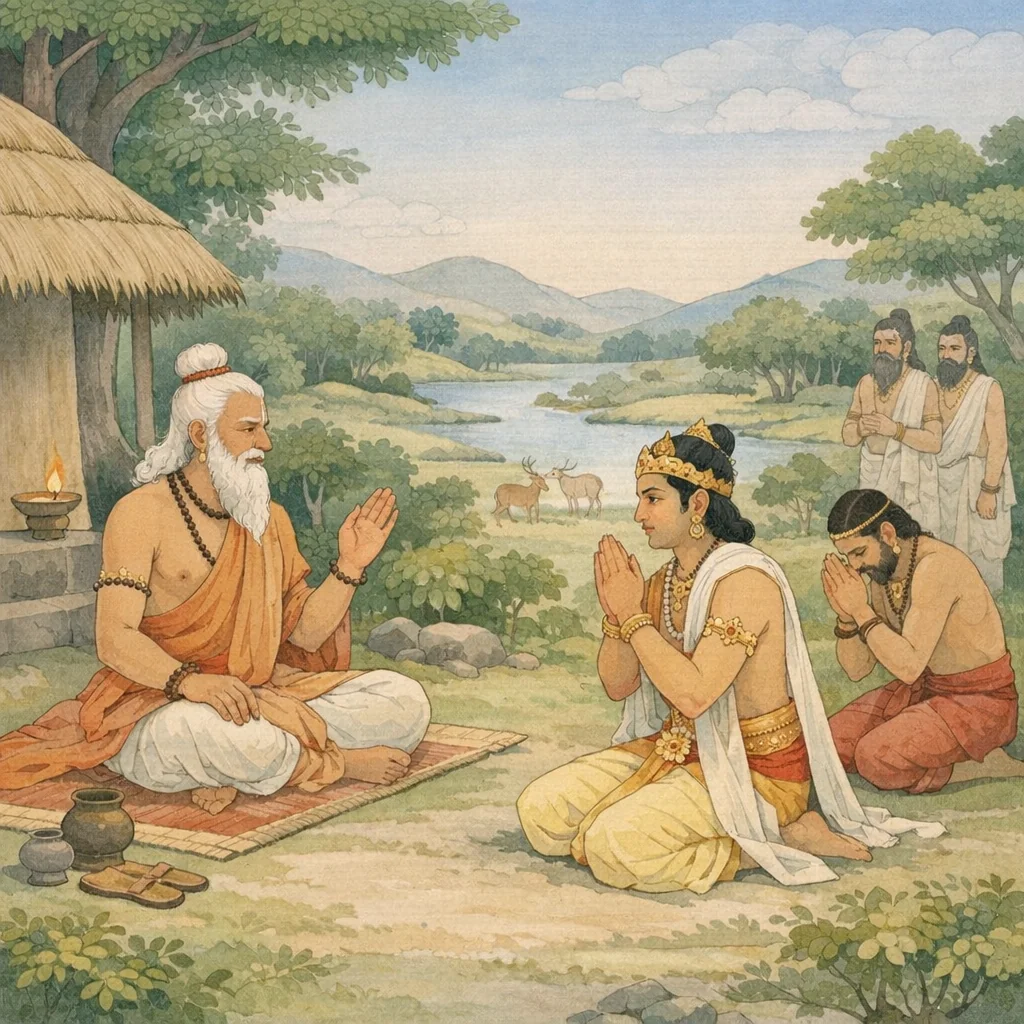
Adhyaya 97
Adharmic Victory as Unstable; Rules of Restraint, Mediation, and Conciliation (अधर्मविजय-अध्रुवत्व तथा क्षमा-नयः)
Upa-parva: Rājadharmānuśāsana Upa-parva (Instruction on Royal Duty)
Bhīṣma instructs that a ruler should not seek to conquer the earth through adharma, because such victory is unstable and spiritually unmeritorious, ultimately harming both king and realm. He outlines restraint norms: do not harm one who is disarmed, supplicatory, or openly seeks refuge; do not re-engage a foe overcome by superior force; and observe time-bound restrictions regarding forcibly taken persons and property. He states that a king should contend with a king (not irregular challengers), and that if a brahmin steps between armies seeking peace, combat should cease; violating this boundary damages enduring social limits and discredits the violator in assembly. The chapter further recommends rapid pacification through conciliation and granting of enjoyments/benefits, warning that harsh or misaligned governance drives distressed subjects toward enemy alignment. Finally, it advocates measured treatment of adversaries—do not annihilate them completely—since even minimal security can satisfy an offender, and stable rule rests on a prosperous territory, satisfied officials, and honored ritual authorities.
Chapter Arc: भीष्म युधिष्ठिर से कहते हैं कि जगतीपति को अधर्म के सहारे पृथ्वी जीतने की इच्छा नहीं करनी चाहिए—क्योंकि ऐसी विजय भीतर से ही राज्य और राजा दोनों को खोखला कर देती है। → वे अधर्म-विजय की प्रकृति बताते हैं: वह अस्थायी, अपवित्र और स्वर्ग से गिराने वाली है। फिर वे राजधर्म की सूक्ष्म मर्यादाएँ रखते हैं—पराजित, शस्त्र-त्यागी, कृताञ्जलि और ‘मैं आपका हूँ’ कहने वाले शत्रु पर हिंसा नहीं; कठोर, अन्यायपूर्ण शासन से प्रजा-हृदय में दाह और शत्रुओं को अवसर। → नीति का शिखर-उपदेश: जो धर्म का लोप और मर्यादा-भंग करके विजय पाता है, उसका अनुकरण विजिगीषु राजा को नहीं करना चाहिए; धर्म से प्राप्त विजय ही स्थायी, प्रतिष्ठादायक और राज्य-स्थापन करने वाली है—अधर्म-विजय राजा को और भूमि को नष्ट करती है। → भीष्म व्यवहार-नीति को ठोस उदाहरणों से बाँधते हैं—विजेता को संयम, संतोष, शुद्ध आजीविका, और पराजित के प्रति मर्यादा रखनी चाहिए; अन्यथा अमित्र ‘व्यसन-समूह’ की प्रतीक्षा में पास आ बैठते हैं और राज्य भीतर से टूटने लगता है। → युधिष्ठिर के लिए संकेत छोड़ा जाता है कि राजधर्म केवल रण-नीति नहीं, बल्कि ब्राह्मण-मान, मर्यादा और प्रजा-विश्वास की रक्षा है—अगले उपदेश में यही मर्यादा और अधिक कठोर कसौटी पर रखी जाएगी।
Shlokas
Verse 1
अपन बछ। है २ >> षण्णवतितमो< ध्याय: राजाके छलरहित धर्मयुक्त बर्तावकी प्रशंसा भीष्म उवाच नाधर्मेण महीं जेतुं लिप्सेत जगतीपति: । अधर्मविजयं लब्ध्वा को नु मन्येत भूमिप:,भीष्मजी कहते हैं--युधिष्ठि![ किसी भी भूपालको अधर्मके द्वारा पृथ्वीपर विजय प्राप्त करनेकी इच्छा कभी नहीं करनी चाहिये। अधर्मसे विजय पाकर कौन राजा सम्मानित हो सकता है?
Bhīṣma said: A ruler who bears responsibility for the world should never desire to conquer the earth by unrighteous means. For if one gains victory through adharma, what king could truly be regarded as honorable or worthy of esteem?
Verse 2
अधर्मयुक्तो विजयो हाप्रुवो5स्वर्ग्य एव च । सादयत्येष राजानं महीं च भरतर्षभ,अधर्मसे पायी हुई विजय स्वर्गसे गिरानेवाली और अस्थायी होती है। भरतश्रेष्ठ! ऐसी विजय राजा और राज्य दोनोंका पतन कर देती है
Bhishma said: “A victory joined with adharma is unstable and brings no true gain; it is also unheavenly, leading one away from higher worlds. O bull among the Bharatas, such a victory ruins the king and brings the realm itself to collapse.”
Verse 3
विशीर्णकवचं चैव तवास्मीति च वादिनम् | कृताञ्जलिं न्यस्तशस्त्रं गृहीत्वा न हि हिंसयेत्,जिसका कवच छिजत्न-भिन्न हो गया हो, जो “मैं आपका ही हूँ ऐसा कह रहा हो और हाथ जोड़े खड़ा हो अथवा जिसने हथियार रख दिये हों, ऐसे विपक्षी योद्धाको कैद करके मारे नहीं
Bhishma said: “One should not strike down an opposing warrior after taking him captive—if his armor has been shattered, if he is declaring ‘I am yours,’ if he stands with joined palms in surrender, or if he has laid down his weapons. Warfare must remain governed by dharma: once an enemy is disarmed or has sought protection, violence against him becomes unlawful.”
Verse 4
बलेन विजितो यश्व न त॑ युध्येत भूमिप: । संवत्सरं विप्रणयेत् तस्माज्जात: पुनर्भवेत्
Bhishma said: “O Yudhishthira, when a king has been overcome by superior force, he should not continue to fight that victor. Instead, he should live for a year in disciplined restraint and conciliation; from that self-control he is, as it were, born anew—restored in strength and fitness to act.”
Verse 5
जो बलके द्वारा पराजित कर दिया गया हो, उसके साथ राजा कदापि युद्ध न करे। उसे कैद करके एक सालतक अनुकूल रहनेकी शिक्षा दे; फिर उसका नया जन्म होता है। वह विजयी राजाके लिये पुत्रके समान हो जाता है (इसलिये एक साल बाद उसे छोड़ देना चाहिये) ।। नार्वाक्संवत्सरात् कन्या प्रष्टव्या विक्रमाहता । एवमेव धन सर्व यच्चान्यत्सहसा55हृतम्,यदि राजा किसी कनन््याको अपने पराक्रमसे हरकर ले आवे तो एक सालतक उससे कोई प्रश्न न करे (एक सालके बाद पूछनेपर यदि वह कन्या किसी दूसरेको वरण करना चाहे तो उसे लौटा देना चाहिये)। इसी प्रकार सहसा छलसे अपहरण करके लाये हुए सम्पूर्ण धनके विषयमें भी समझना चाहिये (उसे भी एक सालके बाद उसके स्वामीको लौटा देना चाहिये)
Bhishma said: “A king should never again wage war against one who has already been overcome by force. He should take him captive and, for a full year, train him to live in a loyal and agreeable manner; then it is as though the defeated man is born anew. He becomes like a son to the victorious king—therefore, after a year he should be released. Likewise, a maiden seized by prowess should not be questioned for a year; after that, if on being asked she wishes to choose another, she should be returned. The same principle applies to all wealth and other property taken suddenly or by deceit: after a year it should be restored to its rightful owner.”
Verse 6
नतु वध्यधन तिषछेत् पिबेयुर्राह्मिणा: पय: । युज्जीरन्नप्यनडुह: क्षन्तव्यं वा तदा भवेत्,चोर आदि अपराधियोंका धन लाया गया हो तो उसे अपने पास न रखे (सार्वजनिक कार्योमें लगा दे) और यदि गौ छीनकर लायी गयी हो तो उसका दूध स्वयं न पीकर ब्राह्मणोंको पिलावे। बैल हों तो उन्हें ब्राह्मगलोग ही गाड़ी आदिमें जोतें अथवा उन सब अपहृत वस्तुओं या धनका स्वामी आकर क्षमा-प्रार्थना करे तो उसे क्षमा करके उसका धन उसे लौटा देना चाहिये
Bhishma said: “One should not keep with oneself wealth that has been seized through punishable wrongdoing. If a cow has been taken by force, one should not drink its milk oneself; rather, let Brahmins drink it. If there are oxen, let them be yoked only for Brahmins’ use (in carts and the like). And if the rightful owner of those stolen goods or that wealth comes seeking forgiveness, then one should forgive him and return his property to him.”
Verse 7
राज्ञा राजैव योद्धव्यस्तथा धर्मो विधीयते । नान्यो राजानमभ्यस्थेदराजन्य: कथउ्चन,राजाको राजाके साथ ही युद्ध करना चाहिये। उसके लिये यही धर्म विहित है। जो राजा या राजकुमार नहीं है, उसे किसी प्रकार भी राजापर अस्त्र-शस्त्रोंका प्रहार नहीं करना चाहिये
Bhīṣma said: “A king should be fought only by a king; such is the rule of dharma that is laid down. No one who is not of the royal warrior order—no non-king and no non-prince—should, under any circumstance, assail a king with weapons.”
Verse 8
अनीकयो: संहतयोर्यदीयाद् ब्राह्मणो<न्तरा । शान्तिमिच्छन्नुभयतो न योद्धव्यं तदा भवेत्,दोनों ओरकी सेनाओंके भिड़ जानेपर यदि उनके बीचमें संधि करानेकी इच्छासे ब्राह्मण आ जाय तो दोनों पक्षवालोंको तत्काल युद्ध बंद कर देना चाहिये
Bhīṣma said: When two armies have closed in and clashed, if a brāhmaṇa steps in between them seeking to establish peace, then at that moment neither side should continue fighting; the battle ought to be stopped.
Verse 9
मर्यादां शाश्वतीं भिन्द्याद् ब्राह्णं योडभिलड्घयेत् । अथ चेल्लड्घयेदेव मर्यादां क्षत्रियत्रुव:
Bhīṣma said: “Whoever oversteps a Brāhmaṇa breaks the eternal boundary of right order. And if that boundary is indeed transgressed, then the Kṣatriya—steadfast in his duty—must act to restore and uphold that limit.”
Verse 10
यस्तु धर्मविलोपेन मर्यादाभेदनेन च
Bhīṣma said: “But the one who, by undermining dharma and by breaking established boundaries and norms…”
Verse 11
तां वृत्ति नानुवर्तेत विजिगीषुर्महीपति: । धर्मलब्धाद्धि विजयाल्लाभ: को<5भ्यधिको भवेत्
Bhīṣma said: A king who seeks conquest should not follow that course of conduct. For what gain could be greater than victory achieved through righteousness—victory obtained by means that are themselves lawful and just?
Verse 12
जो कोई धर्मका लोप और मर्यादाको भंग करके विजय पाता है, उसके इस बर्तावका विजयाभिलाषी नरेशको अनुसरण नहीं करना चाहिये। धर्मके द्वारा प्राप्त हुई विजयसे बढ़कर दूसरा कौन-सा लाभ हो सकता है? ।। सहसानार्यभूतानि क्षिप्रमेव प्रसादयेत् । सान्त्वेन भोगदानेन स राज्ञां परमो नयः,विजयी राजाको चाहिये कि वह मधुर वचन बोलकर और उपभोगकी वस्तुएँ देकर अनार्य (म्लेच्छ आदि) प्रजाको शीघ्रतापूर्वक प्रसन्न कर ले। यही राजाओंकी सर्वोत्तम नीति है
Bhishma said: A king who longs for victory should not imitate the conduct of one who wins by destroying dharma and breaking established bounds. What gain could be greater than a victory obtained through dharma itself? Therefore, a victorious ruler should quickly win over even uncivil or foreign elements among the people by gentle speech and by granting enjoyments and provisions; this, indeed, is the highest policy for kings.
Verse 13
भुज्यमाना हाायोगेन स्वराष्ट्रादभितापिता: । अमित्रास्तमुपासीरन् व्यसनौधप्रतीक्षिण:,यदि ऐसा न करके अनुचित कठोरताके द्वारा उनपर शासन किया जाता है तो वे दुखी होकर अपने देशसे चले जाते हैं और शत्रु बनकर विजयी राजाकी विपत्तिके समयकी बाट देखते हुए कहीं पड़े रहते हैं
If, instead of doing so, they are ruled with improper harshness, they will grow miserable, leave their own land, become enemies, and lie somewhere in wait—watching for the time when the victorious king falls into calamity.
Verse 14
अमित्रोपग्रहं चास्य ते कुर्यु: क्षिप्रमापदि । संतुष्टा: सर्वतो राजन् राजव्यसनकाड्क्षिण:,राजन्! जब विजयी राजापर कोई विपत्ति आ जाती है, तब वे राजापर संकट पड़नेकी इच्छा रखनेवाले लोग विपक्षियोंद्वारा सब प्रकारसे संतुष्ट हो राजाके शत्रुओंका पक्ष ग्रहण कर लेते हैं
O king! When calamity befalls the victorious ruler, those who long to see the king in distress—having been gratified in every way by the opposing side—quickly take up the cause of the king’s enemies.
Verse 15
नामित्रो विनिकर्तव्यो नातिच्छेद्य:ः कथठ्चन । जीवित हाृप्यतिच्छिन्न: संत्यजेच्च कदाचन,शत्रुके साथ छल नहीं करना चाहिये। उसे किसी प्रकार भी अत्यन्त उच्छिन्न करना उचित नहीं है। अत्यन्त क्षत-विक्षत कर देनेपर वह कभी अपने जीवनका त्याग भी कर सकता है
Bhishma said: “One should not deceive an enemy, nor should he be excessively cut down in any way. If a man is robbed of his very means of living and grievously wounded, he may, in despair, even abandon his life.”
Verse 16
अल्पेनापि च संयुक्तस्तुष्यत्येव नराधिप: । शुद्ध जीवितमेवापि तादृशो बहु मन्यते,राजा थोड़े-से लाभसे भी संयुक्त होनेपर संतुष्ट हो जाता है। वैसा नरेश निर्दोष जीवनको ही बहुत अधिक महत्त्व देता है
Bhishma said: Even when he attains only a little, a king remains content. Such a ruler regards a blameless, pure mode of living itself as a great gain—valuing integrity over accumulation.
Verse 17
यस्य स्फीतो जनपद: सम्पन्न: प्रियराजक: । संतुष्टभृत्यसचिवो दृढमूल: स पार्थिव:,जिस राजाका देश समृद्धिशाली, धन-धान्यसे सम्पन्न तथा राजभक्त होता है और जिसके सेवक एवं मन्त्री संतुष्ट रहते हैं, उसीकी जड़ मजबूत मानी जाती है
Bhishma said: That king is deemed firmly rooted whose realm is flourishing, rich in resources, devoted to its beloved ruler, and whose servants and ministers remain content. Such contented administration and prosperous subjects are the signs of a stable kingship grounded in dharma.
Verse 18
ऋत्विक्पुरोहिताचार्या ये चान्ये श्रुतसत्तमा: । पूजाह[: पूजिता यस्य स वै लोकविदुच्यते,जो राजा ऋत्विज, पुरोहित, आचार्य तथा अन्यान्य पूजाके पात्र शास्त्रज्ञोंका सत्कार करता है, वही लोक-गतिको जाननेवाला कहा जाता है
Bhishma said: That ruler is called a knower of the world’s true course who honours and duly reveres his officiating priests, his royal chaplain, his teachers, and other eminent masters of sacred learning. Such reverence sustains righteous governance by upholding those who preserve and transmit dharma.
Verse 19
एतेनैव च वृत्तेन महीं प्राप सुरोत्तम: । अनेन चेन्द्रविषयं विजिगीषन्ति पार्थिवा:,इसी बर्तावसे देवराज इन्द्रने राज्य पाया था और इसी बर्तावके द्वारा भूपालगण स्वर्गलोकपर विजय पाना चाहते हैं
Bhishma said: “By this very mode of conduct the best among the gods attained sovereignty over the earth. And by this same conduct, earthly kings seek to conquer Indra’s realm (heaven).”
Verse 20
भूमिवर्ज धनं राजा जित्वा राजन् महाहवे । अपि चान्नौषधी: शश्वदाजहार प्रतर्दन:,राजन! पूर्वकालमें राजा प्रतर्दन महासमरमें विजय प्राप्त करके पराजित राजाकी भूमिको छोड़कर शेष सारा धन, अन्न एवं औषध अपनी राजधानीमें ले आये
Bhishma said: “O king, having won a great battle, King Pratardana carried off the wealth—leaving aside the land itself. Indeed, he continually brought to his own capital the stores of grain and medicinal herbs as well.” The passage highlights a ruler’s restraint after victory: taking movable resources while sparing the conquered territory, suggesting a policy aimed at limiting harm and maintaining order rather than annihilating the defeated realm.
Verse 21
अन्निहोत्राग्निशेषं च हविभोजनमेव च । आजहार दिवोदासस्ततो विप्रकृतो&भवत्
Bhishma said: Divodāsa took for himself what remained from the Agnihotra fire and also the food that was meant as an oblation. Because of this act of appropriating what belonged to sacred rite and priestly due, he came to be regarded as having wronged the brāhmaṇas (and thus fell into blame).
Verse 22
राजा दिवोदास अन्निहोत्र, यज्ञका अंगभूत हविष्य तथा भोजन भी हर लाये थे। इसीसे वे तिरस्कृत हुए ।। सराजकानि राष्ट्राणि नाभागो दक्षिणां ददौ | अन््यत्र श्रोत्रियस्वाच्च तापसार्थाच्च भारत
Bhīṣma said: “O Bhārata, Nābhāga did not grant the sacrificial fee (dakṣiṇā) to kingdoms that were without a king. He made exception only in two cases—when the claim belonged to a learned Vedic householder (śrotriya) or when it was for the support of ascetics (tāpasa), O Bhārata.”
Verse 23
भरतनन्दन! राजा नाभागने श्रोत्रिय और तापसके धनको छोड़कर शेष सारा राष्ट्र दक्षिणारूपमें ब्राह्मणोंको दे दिया ।। उच्चावचानि वित्तानि धर्मज्ञानां युधिष्ठिर । आसन राज्ञां पुराणानां सर्व तनन््मम रोचते,युधिष्ठिर! प्राचीन धर्मज्ञ राजाओंके पास जो नाना प्रकारके धन थे, वे सब मुझे भी अच्छे लगते हैं
Bhīṣma said: “O scion of Bharata, King Nābhāga, setting aside the wealth belonging to learned Vedic householders (śrotriya) and to ascetics (tāpasa), gave all that remained of the realm to the Brahmins as dakṣiṇā. O Yudhiṣṭhira, the ancient kings who knew dharma possessed wealth of many kinds; all those varied resources and endowments appear commendable to me.”
Verse 24
सर्वविद्यातिरेकेण जयमिच्छेन्महीपति: । न मायया न दम्भेन य इच्छेद् भूतिमात्मन:,जिस राजाको अपना वैभव बढ़ानेकी इच्छा हो, वह सम्पूर्ण विद्याओंके उत्कर्षद्वारा विजय पानेकी इच्छा करे; दम्भ या पाखण्डद्वारा नहीं
Bhīṣma said: “A king who seeks to increase his own prosperity should desire victory through excellence in all branches of knowledge. He should not seek it through deception, nor through arrogant show and hypocrisy.”
Verse 93
असंख्येयस्तदूर्ध्व स्थादनादेयश्व संसदि । इन दोनोंमेंसे जो कोई भी पक्ष ब्राह्मणका तिरस्कार करता है, वह सनातनकालसे चली आयी हुई मर्यादाको तोड़ता है। यदि अपनेको क्षत्रिय कहनेवाला अधम योद्धा उस मर्यादाका उल्लंघन कर ही डाले तो उसके बादसे उसे क्षत्रियजातिके अंदर नहीं गिनना चाहिये और क्षत्रियोंकी सभामें उसे स्थान भी नहीं देना चाहिये
Bhīṣma said: “Such a person becomes beyond reckoning and, from that point onward, is not to be accepted in the assembly. Whoever among the two sides shows contempt for a Brahmin breaks the ancient, time-honored boundary of conduct. And if a base warrior who calls himself a Kshatriya violates that established norm, then thereafter he should not be counted within the Kshatriya community, nor should he be granted a seat in the Kshatriyas’ council.”
Verse 95
इस प्रकार श्रीमह्याभारत शान्तिपर्वके अन्तर्गत राजधमनुशासनपर्वमें विजयाभथिलाषी राजाका बर्तावविषयक पंचानबेवाँ अध्याय पूरा हुआ
Thus ends the ninety-fifth chapter in the Rājadharmānuśāsana section of the Śānti Parva of the Śrī Mahābhārata, dealing with the conduct a king should adopt when he seeks victory.
Verse 96
इति श्रीमहा भारते शान्तिपर्वणि राजधर्मानुशासनपर्वणि विजिगीषमाणपृत्ते षण्णवतितमो<ध्याय:
Thus, in the revered Mahābhārata, within the Śānti Parva—specifically in the Rājadharmānuśāsana Parva, the instruction on the duties of kings—ends the ninety-sixth chapter, spoken in reply to the questions of one who seeks victory. This closing formula marks the completion of a portion of Bhīṣma’s counsel on righteous kingship and statecraft.
Frequently Asked Questions
The dilemma is whether a ruler may pursue swift territorial gain through adharma; Bhīṣma argues that such gain is politically fragile and ethically defective, and that lawful restraint—even when costly in the short term—is the condition for durable sovereignty.
Power must be subordinated to dharma: victory acquired by boundary-breaking undermines legitimacy, while restraint toward the vulnerable, acceptance of peace mediation, and calibrated conciliation prevent cycles of retaliation and stabilize the polity.
No explicit phalaśruti is stated in these verses; the chapter’s meta-claim is pragmatic-normative: dharma-based victory yields superior, lasting benefit compared to adharmic success, which erodes both moral standing and political security.