Adhyaya 87
दुर्ग-निवेश-राजधर्मः | Fortified Capital and the King’s Residential Polity (Rājadharma)
Upa-parva: Rājadharmānuśāsana (Instruction on the Duties of Kings)
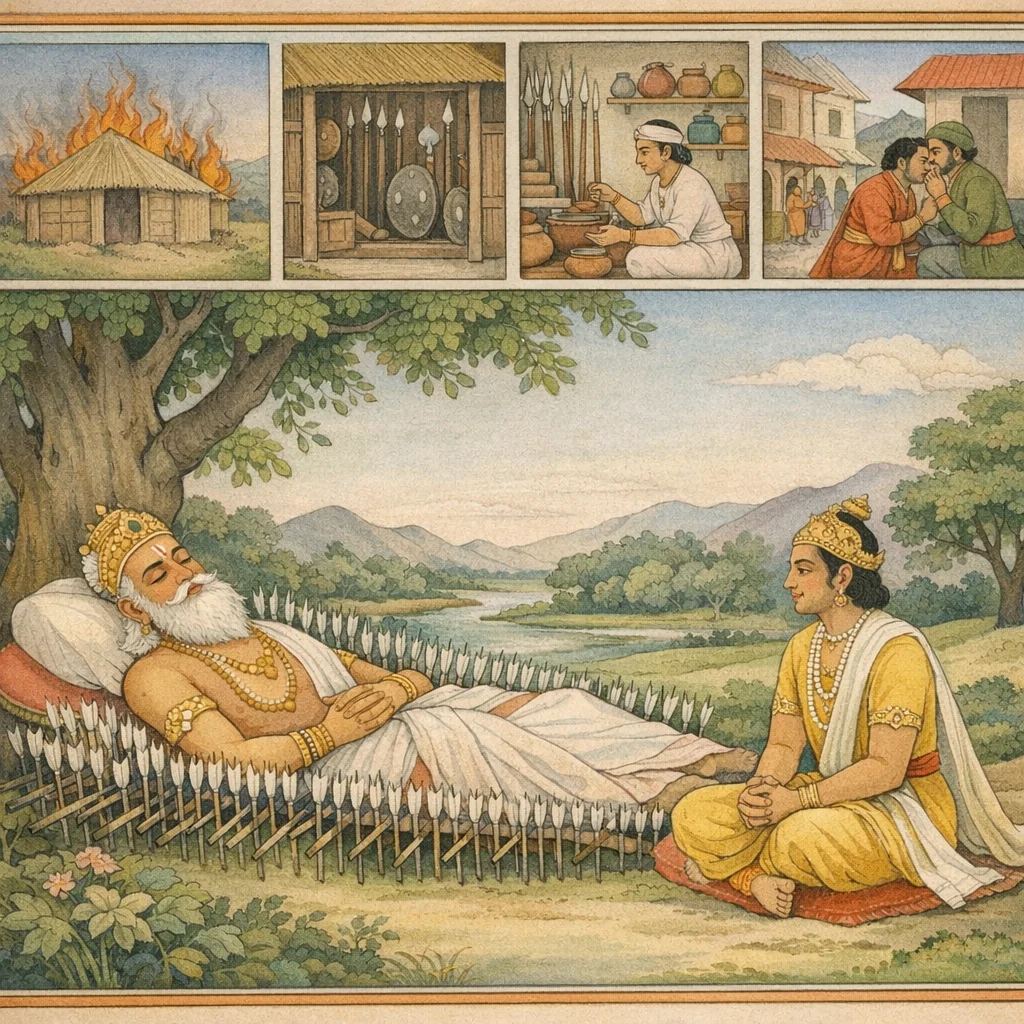
Yudhiṣṭhira asks Bhīṣma what kind of city a king should personally inhabit, whether built by himself or commissioned. Bhīṣma frames the inquiry as appropriate to a ruler residing with sons, brothers, and allies, then outlines “durga-karma” (the operational science of fortification and secure settlement). He lists six fort types—desert, earthen, mountain, human-garrisoned, water, and forest—and describes the ideal capital as well-stocked with grain and weapons, protected by strong ramparts and moats, and supported by elephants, horses, and chariots. The city should include learned persons and skilled artisans, accumulated stores, a disciplined and dharmic populace, orderly commerce, public squares and markets, and an atmosphere of calm security. The king is instructed to expand treasury, forces, alliances, and lawful transactions while removing faults in town and countryside. Detailed inventory guidance follows: armories and granaries; mechanical devices and medical supplies; materials such as wood, metal, charcoal, resins, fibers, leather, sinew, ropes, and specialized grasses; water reservoirs and wells; and preservation of productive trees. Bhīṣma emphasizes honoring priests and experts (ritualists, teachers, master archers, architects, physicians), appointing people to their proper duties, rewarding the righteous, restraining the unrighteous, and maintaining internal/external intelligence through spies. The chapter closes with welfare and legitimacy norms: regular sacrifices and non-coercive giving, protection of subjects, avoidance of blameworthy acts, and sustained support for the poor, orphaned, elderly, and widowed, as well as respectful engagement with ascetics—trusted in limited ways and managed with prudent balance.
Chapter Arc: युधिष्ठिर के प्रश्नों के उत्तर में भीष्म राजधर्म के व्यावहारिक पक्ष को छूते हैं—राजा कहाँ और कैसे सुरक्षित रहे, और राज्य-रक्षा के लिए दुर्ग-व्यवस्था कैसी हो। → भीष्म बताते हैं कि केवल शौर्य नहीं, सतत सेवा-तत्परता, कही बात को ध्यान से सुनकर ठीक-ठीक समझना, स्मरण रखना, और कार्य-परिणाम का तर्कपूर्वक विचार—ये सब राज्य-रक्षा की नींव हैं। फिर वे दुर्ग-निर्माण/दुर्ग-प्रबन्ध का ‘विशेष’ वर्णन आरम्भ करते हैं और युधिष्ठिर को वैसा ही करने का आग्रह करते हैं। → दुर्ग की आत्मा ‘संग्रह और तैयारी’ में है—अन्न-भाण्डागार, आयुधागार, यन्त्र-आयुधालय, तथा काष्ठ-लोहा-धानभूसी-कोयला-बाँस-सींग-हड्डी-मज्जा-तेल-घी-क्षौद्र-औषधि आदि सामग्री का प्रयत्नपूर्वक संचय/वृद्धि; साथ ही गुप्तचर-नेत्रों द्वारा उदासीन, शत्रु और मित्र—सबके अभिप्राय को नगर और जनपद में निरन्तर जानना। → भीष्म संक्षेप में उन लक्षणों का निर्देश देते हैं जिनसे राजा स्वयं जिस नगर/दुर्ग में निवास करे वह उपयुक्त और सुरक्षित हो—प्रश्नानुसार नीति का सार प्रस्तुत कर देते हैं। → अगले अध्याय में दुर्ग-परिक्षा/दुर्ग-नीति के शेष सूक्ष्म मानदण्डों और अनुप्रयोग की ओर संकेत बना रहता है।
Shlokas
Verse 1
अत-४-णर+ ३. सेवा करनेको सदा तैयार रहना, कही हुई बातको ध्यानसे सुनना, उसे ठीक-ठीक समझना, याद रखना, किस कार्यका कैसा परिणाम होगा-इसपर तर्क करना, यदि अमुक प्रकारसे कार्य सिद्ध न हुआ तो क्या करना चाहिये?--इस तरह वितर्क करना, शिल्प और व्यवहारकी जानकारी रखना और तत्त्वका बोध होना--ये आठ गुण पौराणिक सूतमें होने चाहिये। २, शिकार, जूआ, परस्त्रीप्रसंग और मदिरापान--ये चार कामजनित दोष और मारना, गाली बकना तथा दूसरेकी चीज खराब कर देना--ये तीन क्रोधजनित दोष मिलकर सात दुर्व्यसन माने गये हैं। षडशीतितमो< ध्याय: राजाके निवासयोग्य नगर एवं दुर्गका वर्णन, उसके लिये प्रजापालनसम्बन्धी व्यवहार तथा तपस्वीजनोंके समादरका निर्देश युधिष्ठिर उदाच कथंविध॑ पुरं राजा स्वयमावस्तुमर्हति । कृतं वा कारयित्वा वा तन्मे ब्रूहि पितामह,युधिष्ठिरने पूछा--पितामह! राजाको स्वयं कैसे नगरमें निवास करना चाहिये? वह पहलेसे बनी हुई राजधानीमें रहे या नये नगरका निर्माण कराकर उसमें निवास करे, यह मुझे बताइये?
Yudhiṣṭhira said: “Grandfather, what kind of city is a king fit to dwell in himself? Should he reside in an already-established capital, or should he have a new city built and then live there? Please tell me.”
Verse 2
भीष्म उवाच वस्तव्यं यत्र कौन्तेय सपुत्रज्ञातिबन्धुना । न्याय्यं तत्र परिप्रष्टं वृत्ति गुप्तिंच भारत,भीष्मजीने कहा--भारत! कुन्तीनन्दन! पुत्र, कुटुम्बीजन तथा बन्धुवर्गके साथ राजा जिस नगरमें निवास करे, उसमें जीवन-निर्वाह तथा रक्षाकी व्यवस्थाके सम्बन्धमें तुम्हारा प्रश्न करना न्यायसड्भत है
Bhishma said: “O son of Kunti, O Bharata—wherever a king resides together with his sons, kinsmen, and allies, it is proper and in accordance with justice to inquire there about the means of livelihood and the arrangements for protection.”
Verse 3
तस्मात् ते वर्तयिष्यामि दुर्गकर्म विशेषत: । श्रुत्वा तथा विधातव्यमनुष्ठेयं च यत्नत:
Therefore, I shall explain to you—especially in detail—the course of action to be followed in difficult undertakings. Having heard it, you should act accordingly and carry it out with careful effort.
Verse 4
इसलिये मैं तुम्हारे समक्ष दुर्गनिर्माणकी क्रियाका विशेषरूपसे वर्णन करूँगा। तुम इस विषयको सुनकर वैसा ही करना और प्रयत्नपूर्वक दुर्गका निर्माण कराना ।। षड्विध॑ दुर्गमास्थाय पुराण्यथ निवेशयेत् । सर्वसम्पत्प्रधानं यद् बाहुल्यं चापि सम्भवेत्
Therefore I shall describe to you in detail the procedure for constructing a fort. Having heard this, you should act accordingly and, with diligent effort, have the fort built. Establishing one of the six kinds of forts, one should then settle the towns within it—choosing that arrangement in which resources and provisions are foremost and abundance can also be secured.
Verse 5
जहाँ सब प्रकारकी सम्पत्ति प्रचुरमात्रामें भरी हुई हो तथा जो स्थान बहुत विस्तृत हो, वहाँ छ: प्रकारके दुर्गोंका आश्रय लेकर राजाको नये नगर बसाने चाहिये ।। धन्वदुर्ग महीदुर्ग गिरिदुर्ग तथैव च । मनुष्यदुर्ग अब्दुर्ग वनदुर्ग च तानि घट,उन छहों दुर्गोके नाम इस प्रकार हैं--धन्वदुर्ग5, महीदुर्ग5, गिरिदुर्ग5, मनुष्यतुर्गरें, जलदुर्ग5, तथा वनदुर्ग+
Bhishma said: Where resources of every kind are abundant and the site is very extensive, a king should found a new city there, taking shelter in six kinds of forts. These six are: the desert-fort, the earth (plain/earthen)-fort, the mountain-fort, the fort of men (a fort secured by manpower), the water-fort, and the forest-fort.
Verse 6
यत्पुरं दुर्गसम्पन्नं धान्न्यायुधसमन्वितम् । दृढप्राकारपरिखं हस्त्यश्वरथसंकुलम्
Bhishma said: That city which is well provided with fortifications, furnished with stores of grain and weapons, protected by strong ramparts and moats, and crowded with elephants, horses, and chariots—such a fortified capital is being described as the basis of secure rule and responsible kingship, where preparedness safeguards the people and supports the king’s duty to protect.
Verse 7
विद्वांस: शिल्पिनो यत्र निचयाश्न सुसंचिता: । धार्मिकश्न जनो यत्र दाक्ष्यमुत्तममास्थित:
Bhīṣma said: “In that realm, learned men and skilled artisans are found, and stores of wealth and provisions are well amassed. There too the people are righteous, and excellence in practical competence is firmly established.”
Verse 8
ऊर्जस्विनरनागाश्वृं चत्वरापणशोभितम् | प्रसिद्धव्यवहारं च प्रशान््तमकुतोभयम्
Bhishma said: “(That city/realm) is filled with vigorous men, elephants, and horses; it is beautified by crossroads and marketplaces. Its public dealings are well-known and orderly, and it stands calm—free from fear on any side.”
Verse 9
सुप्रभं सानुनादं च सुप्रशस्तनिवेशनम् । शुराब्यजनसम्पन्नं ब्रह्मघोषानुनादितम्
Bhishma said: “It was radiant and resonant, and its layout and dwellings were excellently planned and praised. It was filled with valiant and noble people, and it echoed with the solemn recitation of sacred Brahmanic chants.”
Verse 10
समाजोत्सवसम्पन्नं सदा पूजितदैवतम् । वश्यामात्यबलो राजा तत्पुरं स््वयमाविशेत्
Bhishma said: “A king whose ministers and military are loyal and under control should himself enter and take charge of that city—one that thrives with public gatherings and festivals, and where the deities are continually honored.”
Verse 11
जिस नगरमें इनमेंसे कोई-न-कोई दुर्ग हो, जहाँ अन्न और अस्त्र-शस्त्रोंकी अधिकता हो, जिसके चारों ओर मजबूत चहारदीवारी और गहरी एवं चौड़ी खाई बनी हो, जहाँ हाथी, घोड़े और रथोंकी बहुतायत हो, जहाँ विद्वान् और कारीगर बसे हों, जिस नगरमें आवश्यक वस्तुओंके संग्रहसे भरे हुए कई भंडार हों, जहाँ धार्मिक तथा कार्यकुशल मनुष्योंका निवास हो, जो बलवान मनुष्य, हाथी और घोड़ोंसे सम्पन्न हो, चौराहे तथा बाजार जिसकी शोभा बढ़ा रहे हों, जहाँका न््याय-विचार एवं न्यायालय सुप्रसिद्ध हो, जो सब प्रकारसे शान्तिपूर्ण हो, जहाँ कहींसे कोई भय या उपद्रव न हो, जिसमें रोशनीका अच्छा प्रबन्ध हो, संगीत और वाद्योंकी ध्वनि होती रहती हो, जहाँका प्रत्येक घर सुन्दर और सुप्रशस्त हो, जिसमें बड़े-बड़े शूरवीर और धनाढ्य लोग निवास करते हों, वेदमन्त्रोंकी ध्वनि गूँजती रहती हो तथा जहाँ सदा ही सामाजिक उत्सव और देवपूजनका क्रम चलता रहता हो, ऐसे नगरके भीतर अपने वशमें रहनेवाले मन्त्रियों तथा सेनाके साथ राजाको स्वयं निवास करना चाहिये || ६-- १० || तत्र कोशं बल मित्र व्यवहारं च वर्धयेत् । पुरे जनपदे चैव सर्वदोषान् निवर्तयेत्,राजाको चाहिये कि वह उस नगरमें कोष, सेना, मित्रोंकी संख्या तथा व्यवहारको बढ़ावे। नगर तथा बाहरके ग्रामोंमें सभी प्रकारके दोषोंको दूर करे
Bhishma said: “The king should himself reside—together with ministers under his control and with his army—within a city that is fortified in one way or another; rich in grain and weapons; encircled by strong ramparts and a deep, wide moat; abundant in elephants, horses, and chariots; inhabited by learned men and skilled artisans; furnished with many storehouses filled with necessary supplies; home to righteous and capable people; strong in men, elephants, and horses; adorned with crossroads and markets; renowned for its judicial deliberation and courts; peaceful in every respect; free from fear and disturbance from any quarter; well provided with lighting; resonant with music and instruments; possessing houses that are beautiful and well laid out; inhabited by great heroes and wealthy citizens; echoing with Vedic recitation; and where social festivals and worship of the gods proceed continually. There, he should increase the treasury, the military strength, the circle of allies, and orderly civic dealings; and in the city and throughout the countryside he should remove every kind of fault and disorder.”
Verse 12
भाण्डागारायुधागारं प्रयत्नेनाभिवर्धयेत् । निचयान् वर्धयेत् सर्वास्तथा यन्त्रायुधालयान्,अन्नभण्डार तथा अस्त्र-शस्त्रोंके संग्रहालयको प्रयत्नपूर्वक बढ़ावे, सब प्रकारकी वस्तुओंके संग्रहालयोंकी भी वृद्धि करे, यन्त्रों तथा अस्त्र-शस्त्रोंके कारखानोंकी उन्नति करे
Bhishma said: “With diligent effort, a king should expand his storehouses and armouries. He should increase every kind of reserve and likewise develop the workshops and depots for machines and weapons.”
Verse 13
काष्ठलोहतुषाड्रारदारुशृड्रास्थिवैणवान् । मज्जा स्नेहवसा क्षौद्रमौषधग्राममेव च,काठ, लोहा, धानकी भूसी, कोयला, बाँस, लकड़ी, सींग, हड्डी, मज्जा, तेल, घी, चरबी, शहद, औषधसमूह, सन, राल, धान्य, अस्त्र-शस्त्र, बाण, चमड़ा, ताँत, बेंत तथा मूँज और बल्वजकी रस्सी आदि सामग्रियोंका संग्रह रखे
Bhishma said: “One should keep a well-stocked reserve of practical materials—wood and iron, husk and charcoal, timber, horn, bone, and bamboo; also marrow, oils and fats, honey, and a full assortment of medicinal herbs.”
Verse 14
शणं सर्जरसं धान्यमायुधानि शरांस्तथा । चर्म स्नायुं तथा वेत्रं मुजजबल्वजबन्धनान्,काठ, लोहा, धानकी भूसी, कोयला, बाँस, लकड़ी, सींग, हड्डी, मज्जा, तेल, घी, चरबी, शहद, औषधसमूह, सन, राल, धान्य, अस्त्र-शस्त्र, बाण, चमड़ा, ताँत, बेंत तथा मूँज और बल्वजकी रस्सी आदि सामग्रियोंका संग्रह रखे
Bhishma said: “Let him keep a well-stocked reserve of essential materials—flax and resin, grain and provisions; weapons and arrows; leather, sinew, and cane; and cords made of muñja and balvaja grass. Such preparedness sustains order and protection, enabling one to meet duties without panic or injustice when danger or need arises.”
Verse 15
आशयाश्रोदपानाश्च प्रभूतसलिलाकरा: | निरोद्धव्या: सदा राज्ञा क्षीरिणशक्षु महीरुहा:,जलाशय (तालाब, पोखरे आदि), उदपान (कुँए, बावड़ी आदि), प्रचुर जलराशिसे भरे हुए बड़े-बड़े तालाब तथा दूधवाले वृक्ष--इन सबकी राजाको सदा रक्षा करनी चाहिये
Bhīṣma said: “A king must always safeguard reservoirs and water-sources—ponds and tanks, wells and stepwells, and large lakes rich in abundant water—as well as milky, sap-bearing trees. Protecting these supports the people’s welfare and upholds righteous kingship.”
Verse 16
सत्कृताश्च प्रयत्नेन आचार्यर्त्विकुपुरोहिता: । महेष्वासा: स्थपतय: सांवत्सरचिकित्सका:,आचार्य, ऋत्विजू, पुरोहित और महान् धनुर्धरोंका तथा घर बनानेवालोंका, वर्षफल बतानेवाले ज्यौतिषियोंका और वैद्योंका यत्नपूर्वक सत्कार करे
Bhīṣma said: With deliberate effort, one should honor and properly receive teachers, officiating priests, and household chaplains; likewise great archers, master builders, astrologers who reckon the year and its results, and physicians. The ethical point is that a well-ordered life and kingdom rests on respecting those whose knowledge, ritual duty, protection, craftsmanship, time-reckoning, and healing sustain society.
Verse 17
प्राज्ञा मेधाविनो दान्ता दक्षा: शूरा बहुश्रुता: । कुलीना: सत्त्वसम्पन्ना युक्ता: सर्वेषु कर्मसु,विद्वान, बुद्धिमान, जितेन्द्रिय, कार्यकुशल, शूर, बहुज्ञ, कुलीन तथा साहस और धैर्यसे सम्पन्न पुरुषोंको यथायोग्य समस्त कर्मोमें लगावे
Bhīṣma said: “Employ, in a fitting manner, in every duty and undertaking, men who are wise and discerning, self-controlled, capable and efficient, courageous, well-versed in learning, of good lineage, and endowed with steadfastness of character.”
Verse 18
पूजयेद् धार्मिकान् राजा निगृह्लीयादधार्मिकान् । नियुज्ज्याच्च प्रयत्नेन सर्ववर्णान् स्वकर्मसु,राजाको चाहिये कि धार्मिक पुरुषोंका सत्कार करे और पापियोंको दण्ड दे। वह सभी वर्णोको प्रयत्नपूर्वक अपने-अपने कर्मोमें लगावे
Bhīṣma said: A king should honor and support those who uphold dharma, and restrain and punish those who act against it. With diligent effort, he should also engage all the social orders in their respective duties, so that the realm remains orderly, just, and aligned with righteous conduct.
Verse 19
बाह्ुमा भ्यन्तरं चैव पौरजानपदं तथा । चारै: सुविदितं कृत्वा ततः कर्म प्रयोजयेत्,गुप्तचरोंद्वारा नगर तथा छोटे ग्रामोंक बाहटी और भीतरी समाचारोंको अच्छी तरह जानकर फिर उसके अनुसार कार्य करे
Bhishma said: “Having thoroughly ascertained—through spies—both the external and internal conditions, and likewise the situation among the townspeople and the rural populace, a king should then set his policies and actions in motion accordingly.”
Verse 20
चरान्मन्त्रं च कोशं च दण्डं चैव विशेषत: । अनुतिषछेत् स्वयं राजा सर्व ह्वात्र प्रतेष्ठितम्,गुप्तचरोंसे मिलने, गुप्त सलाह करने, खजानेकी जाँच-पड़ताल करने तथा विशेषत: अपराधियोंको दण्ड देनेका कार्य राजा स्वयं करे; क्योंकि इन्हींपर सारा राज्य प्रतिष्ठित है
Bhishma said: “A king should personally oversee his dealings with spies, hold confidential counsel, examine the treasury, and—most especially—administer punishment to offenders; for upon these matters the whole kingdom is established.”
Verse 21
उदासीनारिमित्राणां सर्वमेव चिकीर्षितम् । पुरे जनपदे चैव ज्ञातव्यं चारचक्षुषधा,राजाको गुप्तचररूपी नेत्रोंके द्वारा देखकर सदा इस बातकी जानकारी रखनी चाहिये कि मेरे शत्रु, मित्र तथा तटस्थ व्यक्ति नगर और छोटे ग्रामोंमें कब क्या करना चाहते हैं?
Bhishma said: “A king should, through the eyes of secret agents, continually ascertain the intentions and planned actions of neutrals, enemies, and friends alike—what they mean to do, and when—both in the city and throughout the countryside.”
Verse 22
ततस्तेषां विधातव्यं सर्वमेवाप्रमादत: । भक्तान् पूजयता नित्यं द्विषतश्न निगृह्लता,उनकी चेष्टाएँ जान लेनेके पश्चात् उनके प्रतीकारके लिये सारा कार्य बड़ी सावधानीके साथ करना चाहिये। राजाको उचित है कि वह अपने भक्तोंका सदा आदर करे और द्वेष रखनेवालोंको कैद कर ले
Bhishma said: “Having learned their movements, he should carry out every countermeasure with great care and without negligence. It is fitting for a king to honor the devoted always, and to restrain—by confinement—those who bear malice.”
Verse 23
यष्टव्यं क्रतुभिर्नित्यं दातव्यं चाप्पपीडया । प्रजानां रक्षणं कार्य न कार्य धर्मबाधकम्,उसे प्रतिदिन नाना प्रकारके यज्ञ करना तथा दूसरोंको कष्ट न पहुँचाते हुए दान देना चाहिये। वह प्रजाजनोंकी रक्षा करे और कोई भी कार्य ऐसा न करे जिससे धर्ममें बाधा आती हो
Bhishma said: “One should regularly perform sacrifices and offer gifts, but without causing distress to others. One must protect the people, and one must not undertake any act that obstructs or undermines dharma.”
Verse 24
कृपणानाथवृद्धानां विधवानां च योषिताम् | योगक्षेमं च वृत्ति च नित्यमेव प्रकल्पयेत्,दीन, अनाथ, वृद्ध तथा विधवा स्त्रियोंके योगक्षेम एवं जीविकाका सदा ही प्रबन्ध करे
Bhishma said: One should always make provision for yogakshema—welfare and security—and for the means of livelihood of the destitute, the unprotected, the aged, and widowed women, ensuring their sustenance and safety as a continuing duty.
Verse 25
आश्रमेषु यथाकालं चैलभाजनभोजनम् । सदैवोपहरेद् राजा सत्कृत्याभ्यर्च्य मान्य च
Bhīṣma said: At the proper times, in the hermitages, the king should always provide offerings—clothing, vessels, and food—doing so with due honor, respectful worship, and reverence. Thus he upholds dharma by sustaining those devoted to austerity and learning.
Verse 26
राजा आश्रमोंमें यथासमय वस्त्र, बर्तन और भोजन आदि सामग्री सदा ही भेजा करे, तथा सबको सत्कार, पूजन एवं सम्मानपूर्वक वे वस्तुएँ अर्पित करे ।। आत्मानं सर्वकार्याणि तापसे राष्ट्रमेव च । निवेदयेत् प्रयत्नेन तिछेत् प्रह्दश्न सर्वदा,अपने राज्यमें जो तपस्वी हों, उन्हें अपने शरीर-सम्बन्धी, सम्पूर्ण कार्यसम्बन्धी तथा राष्ट्रसम्बन्धी समाचार प्रयत्नपूर्वक बताया करे और उनके सामने सदा विनीतभावसे रहे
Bhishma said: A king should, at the proper times, continually send to the hermitages supplies such as clothing, vessels, and food, presenting these gifts with hospitality, worshipful regard, and honor. Moreover, he should diligently report to the ascetics of his realm matters concerning his own person, all affairs of governance, and the condition of the kingdom, and he should always stand before them with humility and deference.
Verse 27
सर्वार्थत्यागिनं राजा कुले जात॑ बहुश्रुतम् । पूजयेत् तादृशं दृष्टया शयनासनभोजनै:
Bhīṣma said: When a king encounters a man born in a good family, learned in sacred knowledge, and one who has renounced all worldly aims, he should honor such a person—recognizing his worth—by providing him with a bed, a seat, and food.
Verse 28
जिसने सम्पूर्ण स्वार्थोका परित्याग कर दिया है, ऐसे कुलीन एवं बहुश्रुत विद्वान् तपस्वीको देखकर राजा शय्या, आसन और भोजन देकर उसका सम्मान करे ।। तस्मिन् कुर्वीत विश्वासं राजा कस्याज्चिदापदि । तापसेषु हि विश्वासमपि कुर्वन्ति दस्यव:
Bhishma said: When a king encounters an austere sage—noble by conduct, widely learned, and one who has renounced all self-interest—he should honor him by offering a bed, a seat, and food. In some time of distress, the king should place trust in such a person; for even robbers are moved to place trust in ascetics.
Verse 29
कैसी भी आपत्तिका समय क्यों न हो? राजाको तो तपस्वीपर विश्वास करना ही चाहिये; क्योंकि चोर और डाकू भी तपस्वी महात्माओंपर विश्वास करते हैं ।। तस्मिन् निधीनादधीत प्रज्ञां पर्याददीत च | न चाप्यभीक्ष्णं सेवेत भृशं वा प्रतिपूजयेत्,राजा उस तपस्वीके निकट अपने धनकी निधियोंको रखे और उससे सलाह भी लिया करे; परंतु बार-बार उसके पास जाना-आना और उसका सड़ न करे, तथा उसका अधिक सम्मान भी न करे (अर्थात् गुप्तरूपसे ही उसकी सेवा और सम्मान करे। लोगोंपर इस बातको प्रकट न होने दे)
Bhishma said: “Therefore, the king should entrust his hidden treasures to that ascetic and also seek counsel from him. Yet he should not visit him too frequently, nor should he honor him excessively; rather, he should render service and respect discreetly, without making it publicly conspicuous.”
Verse 30
अन्य: कार्य: स्वराष्ट्रेषु परराष्ट्रेषु चापर: । अटवीषु पर: कार्य: सामन्तनगरेष्वपि,राजा अपने राज्यमें, दूसरोंके राज्योंमें, जंगलोंमें तथा अपने अधीन राजाओंके नगरोंमें भी एक-एक भित्न-भन्न तपस्वीको अपना सुहृद् बनाये रखे
Bhishma said: “In one’s own kingdom one kind of agent is to be employed; in another’s kingdom, a different one. Yet another should be appointed for the forests, and likewise for the towns of subordinate rulers. A king should keep, in each of these spheres, a distinct ascetic as a trusted friend—so that counsel, intelligence, and moral influence are available everywhere without arousing suspicion.”
Verse 31
तेषु सत्कारमानाभ्यां संविभागांश्व कारयेत् । परराष्ट्राटवीस्थेषु यथा स्वविषये तथा,उन सबको सत्कार और सम्मानके साथ आवश्यक वस्तुएँ प्रदान करे। जैसे अपने राज्यके तपस्वीका आदर करे, वैसे ही दूसरे राज्यों तथा जंगलोंमें रहनेवाले तापसोंका भी सम्मान करना चाहिये
Bhishma said: “They should be received with due honor and respect, and supplied with what is necessary. As one reveres the ascetics within one’s own realm, so too should one revere those dwelling in other kingdoms and in the forests.”
Verse 32
ते कस्याज्चिदवस्थायां शरणं शरणार्थिने । राज्ञे दद्युर्यथाकामं तापसा: संशितव्रता:,वे उत्तम व्रतका पालन करनेवाले तपस्वी शरणार्थी राजाको किसी भी अवस्थामें इच्छानुसार शरण दे सकते हैं
Bhishma said: “In whatever circumstance it may be, ascetics of firm and well-disciplined vows may, according to their own judgment, grant refuge to a king who seeks protection.”
Verse 33
एष ते लक्षणोद्देश: संक्षेपेण प्रकीर्तित: । यादृशे नगरे राजा स्वयमावस्तुमरहति,युधिष्ठिर! तुम्हारे प्रश्नके अनुसार राजाको स्वयं जैसे नगरमें निवास करना चाहिये, उसका लक्षण मैंने यहाँ संक्षेपसे बताया है
Bhishma said: “This concise outline of the defining features has been stated for you. O Yudhishthira, I have briefly described what kind of city a king ought to reside in personally, as your question required.”
Verse 85
इस प्रकार श्रीमह्याभारत शान्तिपर्वके अन्तर्गत राजधमानुशासनपर्वमें मन््त्रीविभागविषयक पचासीवाँ अध्याय पूरा हुआ
Thus ends the eighty-fifth chapter on the division and functions of ministers, within the Rājadharmānuśāsana section of the Śānti Parva of the revered Śrī Mahābhārata. This closing colophon marks the completion of a didactic unit on statecraft and righteous governance, set forth as Bhīṣma’s instruction on the kingly duty.
Verse 86
इति श्रीमहा भारते शान्तिपर्वणि राजधर्मानुशासनपर्वणि दुर्गपरी क्षायां षडशीतितमो<ध्याय:
Thus, in the revered Mahābhārata, within the Śānti Parva—specifically in the Rājadharmānuśāsana section on instruction concerning the king’s duties—ends the eighty-sixth chapter, dealing with the examination of forts. This closing colophon signals the completion of a unit of teaching on prudent governance and statecraft.
Frequently Asked Questions
The dilemma is how a king can pursue security and administrative strength without violating dharma—balancing fortification, surveillance, and coercive capacity with justice, restraint, and public welfare.
Political stability is treated as an ethical practice: preparedness, skilled institutions, and intelligence must be subordinated to prajā-rakṣaṇa (protection of subjects), support of the vulnerable, and removal of civic faults.
No explicit phalaśruti is stated; the chapter ends with a summarizing meta-note that these are the defining characteristics, in brief, of the kind of city a king is fit to inhabit—positioning the teaching as a normative checklist within rājadharma.