Adhyaya 363
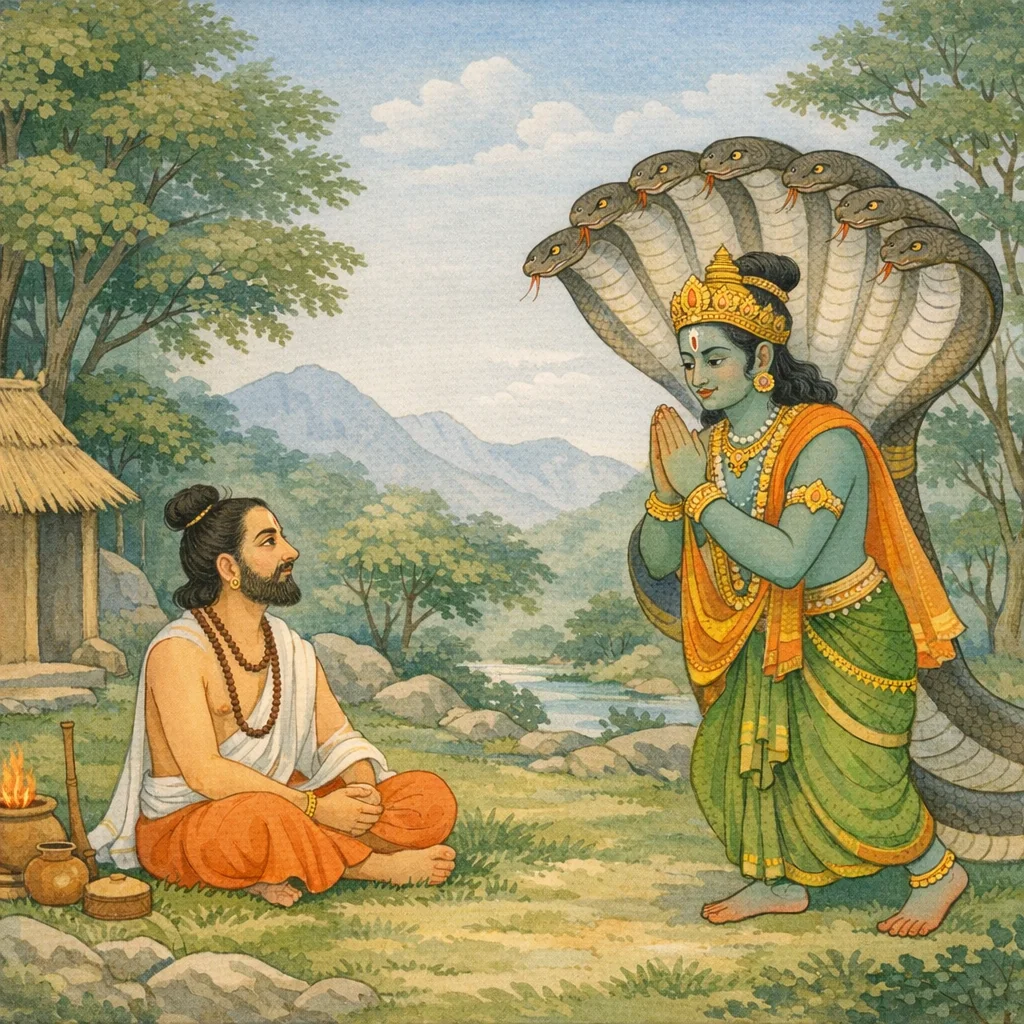
Chapter Arc: भीष्म युधिष्ठिर को ‘उच्छवृत्ति-उपाख्यान’ में एक अद्भुत संगम सुनाते हैं—धर्मारण्य में एक ब्राह्मण किसी ‘पद्मनाभ’ नाग की खोज में आता है, और उसी क्षण नागराज स्वयं उसकी ओर बढ़ता है। → नागेन्द्र ब्राह्मण के निकट जाकर मधुर वाणी में क्षमा-याचना और विनय के साथ पूछता है कि ब्राह्मण किस प्रयोजन से यहाँ आया है। ब्राह्मण बताता है कि वह विशेष कार्य से ‘पद्मनाभ’ को देखने आया है, पर सुनता है कि वह दूर गया है—इससे प्रतीक्षा और अनिश्चितता बढ़ती है। → नागराज स्वयं को प्रकट करता है—‘मैं ही वह नाग हूँ जिसे आप ढूँढ़ रहे हैं’—और ब्राह्मण से आदेश माँगता है कि वह क्या प्रिय कार्य करे। ब्राह्मण नाग के स्वगुणों/यश के प्रकाश की प्रशंसा करता है और कहता है कि उसके मन में एक प्रश्न उठा है—पहले उसका समाधान हो, फिर वह अपना कार्य बताएगा। → दोनों के बीच संवाद का मंच स्थिर होता है: नाग सेवा-भाव में प्रस्तुत है, ब्राह्मण प्रश्न-प्रधान मार्ग से आगे बढ़ना चाहता है। अध्याय का अंत ‘प्रश्न’ के उद्घाटन पर टिकता है—उत्तर अभी शेष है। → ब्राह्मण का ‘नया प्रश्न’ क्या है, और उसके बाद वह जो ‘कार्य’ बताएगा वह किस प्रकार का है—यही अगले अध्याय के लिए उत्कंठा छोड़ता है।
Shlokas
Verse 1
भीकम (2 अमान एकषपष्ट्यवथिकत्रिशततमो< ध्याय: नागराज और ब्राह्मणका परस्पर मिलन तथा बातचीत भीष्म उवाच स पन्नगपतिस्तत्र प्रययौ ब्राह्मणं प्रति । तमेव मनसा ध्यायन् कार्यवत्तां विचारयन्,भीष्मजी कहते हैं--युधिष्ठि!र[ यह कहकर नागराज मन-ही-मन उस ब्राह्मणके कार्यका विचार करते हुए उसके पास गये
Bhishma said: Thereupon the lord of serpents went to the Brahmin. Keeping his mind fixed on him, he reflected on the Brahmin’s purpose and the urgency of his undertaking, and approached him accordingly.
Verse 2
तमतिक्रम्य नागेन्द्रो मतिमान् स नरेश्वर । प्रोवाच मधुरं वाक्यं प्रकृत्या धर्मवत्सल:
Bhīṣma said: Having passed beyond him, the wise lord of serpents addressed the king with gentle words—one who, by his very nature, was devoted to dharma.
Verse 3
/! [॥/7८॥ ' ५ व ! १८ श्र 2 22, भो भो: क्षाम्याभिभाषे त्वां न रोषं कर्तुमरहसि । इह त्वमभिसम्प्राप्त: कस्यार्थे कि प्रयोजनम्,हे ब्राह्मणदेव! आप मेरे अपराधोंको क्षमा करें। मुझपर रोष न करें। मैं आपसे पूछता हूँ कि आप यहाँ किसके लिये आये हैं? आपका क्या प्रयोजन है?
Bhishma said: “O revered one, forgive my manner of speaking. You ought not to be angry. Since you have come here, for whose sake have you arrived, and what is your purpose, O divine Brahmin?”
Verse 4
आभिमुख्यादभिक्रम्य स्नेहात् पृच्छामि ते द्विज । विविक्ते गोमतीतीरे क॑ वा त्वं पर्युपाससे,“ब्रह्मन! मैं आपके सामने आकर प्रेमपूर्वक पूछता हूँ कि गोमतीके इस एकान्त तटपर आप किसकी उपासना करते हैं?”
Bhīṣma said: “Approaching you face to face, and out of affection, I ask you, O twice-born: on this secluded bank of the river Gomatī, whom indeed do you worship with devoted attendance?”
Verse 5
ब्राह्मण उवाच धर्मारण्यं हि मां विद्धि नागं द्रष्टमिहागतम् । पद्मनाभं द्विजश्रेष्ठ तत्र मे कार्यमाहितम्,ब्राह्मणने कहा--द्विजश्रेष्ठ! आपको विदित हो कि मेरा नाम धर्मरिण्य है। मैं नागराज पद्मनाभका दर्शन करनेके लिये यहाँ आया हूँ। उन्हींसे मुझे कुछ काम है
The brāhmaṇa said: “O best of the twice-born, know me as Dharmāraṇya. I have come here to behold the Nāga-king Padmanābha; with him I have a matter to be done.”
Verse 6
तस्य चाहमसांनिध्ये श्रुतवानस्मि तं गतम् | स्वजनात् त॑ प्रतीक्षामि पर्जन्यमिव कर्षक:,उनके स्वजनोंसे मैंने सुना है कि वे यहाँसे दूर गये हुए हैं, अतः जैसे किसान वर्षाकी राह देखता है, उसी तरह मैं भी उनकी बाट जोहता हूँ
“In his absence, I have heard from his own people that he has gone far away from here. Therefore I wait for his return, just as a farmer waits for the life-giving rain.”
Verse 7
तस्य चाक्लेशकरणं स्वस्तिकारसमाहितम् | आवर्तयामि तद् ब्रह्म योगयुक्तो निरामय:,उन्हें कोई क्लेश न हो। वे सकुशल घर लौटकर आ जाया, इसके लिये नीरोग एवं योगयुक्त होकर मैं वेदोंका पारायण कर रहा हूँ
“So that he may be free from suffering and return home in safety, I—healthy and disciplined in yoga—recite and repeat that sacred Brahman (the Vedic recitation), with my mind intent on auspicious rites.”
Verse 8
नाग उवाच अहो कल्याणवृत्तस्त्वं साधु: सज्जनवत्सल: । अवाच्यस्त्व॑ महाभाग परं स्नेहेन पश्यसि,नागने कहा--महाभाग! आपका आचरण बड़ा ही कल्याणमय है। आप बड़े ही साधु हैं और सज्जनोंपर स्नेह रखते हैं। किसी भी दृष्टिसे आप निन्दनीय नहीं हैं; क्योंकि दूसरोंको स्नेहदृष्टिसे देखते हैं
The Nāga said: “Ah, fortunate one! Your conduct is truly auspicious. You are a sādhū, affectionate toward the virtuous. In no way are you blameworthy, for you look upon others with eyes of love.”
Verse 9
अहं स नागो विप्रर्षे यथा मां विन्दते भवान् | आज्ञापय यथा स्वैरं कि करोमि प्रियं तव,ब्रह्मर्षे! मैं ही वह नाग हूँ, जिससे आप मिलना चाहते हैं। आप मुझे जैसा जानते हैं, मैं वैसा ही हूँ। इच्छानुसार आज्ञा दीजिये, मैं आपका कौन-सा प्रिय कार्य करूँ?
The Nāga said: “I am that very serpent, O sage among brāhmaṇas, whom you sought to find. As you have recognized me, so I stand before you. Command me freely as you wish—what service dear to you shall I perform, O brahmarṣi?”
Verse 10
भवन्तं स्वजनादस्मि सम्प्राप्तं श्रुववानहम् । अतत्त्वां स्वयमेवाहं द्रष्टम भ्यागतो द्विज,ब्रह्मन! अपने स्वजन (पत्नी) से मैंने आपके आगमनका समाचार सुना है; इसलिये स्वयं ही आपका दर्शन करनेके लिये चला आया हूँ
The Nāga said: “I heard from my own kinswoman (my wife) that you have arrived here. Therefore I myself have come to see you, O twice-born one—O Brahmin.”
Verse 11
सम्प्राप्तश्न भवानद्य कृतार्थ: प्रतियास्यति । विस्रब्धो मां द्विजश्रेष्ठ विषये योक्तुमहसि,द्विजश्रेष्ठ जब आप यहाँतक आ गये हैं, तब अब कृतार्थ होकर ही यहाँसे लौटेंगे; अतः बेखटके मुझे अपने अभीष्ट कार्यके साधनमें लगाइये
“Now that you have reached this place today, you will return only after your purpose is fulfilled. Therefore, O best of twice-born, act without hesitation and employ me in the means to accomplish the task you desire.”
Verse 12
वयं हि भवता सर्वे गुणक्रीता विशेषत: । यस्त्वमात्महितं त्यक्त्वा मामेवेहानुरुध्यसे,आपने हम सब लोगोंको विशेषरूपसे अपने गुणोंसे खरीद लिया है; क्योंकि आप अपने हितकी बातको अलग रखकर मेरे ही कल्याणका चिन्तन कर रहे हैं
The Nāga said: “Truly, all of us have been won over by you—especially through your virtues. For you set aside even your own self-interest and, here, concern yourself only with my welfare.”
Verse 13
ब्राह्मण उवाच आगतोऊहं महाभाग तव दर्शनलालस: । कंचिदर्थमनर्थज्ञ: प्र््धकामो भुजड्रम,ब्राह्मणने कहा--महाभाग नागराज! मैं आपहीके दर्शनकी लालसासे यहाँ आया हूँ। आपसे एक बात पूछना चाहता हूँ, जिसे मैं स्वयं नहीं जानता हूँ
The Brahmin said: “O noble one, I have come here longing to behold you. I wish to ask you about a certain matter—one whose true import I do not yet understand—O serpent-lord.”
Verse 14
अहमात्मानमात्मस्थो मार्गमाणो55त्मनो गतिम् । वासार्थिन महाप्रज्ञं चलच्चित्तमुपास्मि ह,मैं विषयोंसे निवृत्त हो अपने-आपमें ही स्थित रहकर जीवात्माओंकी परमगतिस्वरूप परब्रह्म परमात्माकी खोज कर रहा हूँ, तो भी महान बुद्धियुक्त गृहमें आसक्त हुए इस चंचल चित्तकी उपासना करता हूँ (अतः मैं न तो आसक्त हूँ और न विरक्त ही हूँ)
The Brahmin said: “Having withdrawn from sense-objects, abiding within my own Self, I search for the supreme course of the individual self—Brahman, the highest Self. Yet I still ‘serve’ this restless mind, though it is greatly clever and keeps seeking a dwelling in the household-life. Therefore I am neither bound by attachment nor defined by aversion; I strive for inner freedom while acknowledging the mind’s habitual movement.”
Verse 15
प्रकाशितस्त्वं स्वगुणैर्यशोगर्भगभस्तिभि: । शशाड्ककरसंस्पर्शै्द्यैरात्मप्रकाशितै:,आप चन्द्रमाकी किरणोंकी भाँति सुखद स्पर्शवाले और स्वतः प्रकाशित होनेवाले सुयशरूपी किरणोंसे युक्त अपने मनोरम गुणोंसे ही प्रकाशमान हैं
The Brāhmaṇa said: “You shine by your own virtues—rays of good fame that are self-luminous and soothing to the touch like the moon’s beams. Your excellence itself makes you radiant, bringing calm and uplift to those who come near you.”
Verse 16
तस्य मे प्रश्नमुत्पन्नं छिन्धि त्वमनिलाशन । पश्चात् कार्य वदिष्यामि श्रोतुमहति तद् भवान्,पवनाशन! इस समय मेरे मनमें एक नया प्रश्न उठा है। पहले इसका समाधान कीजिये। उसके बाद मैं आपसे अपना कार्य निवेदन करूँगा और आप उसे ध्यानसे सुनियेगा
The Brahmin said: “A question has arisen in my mind. Resolve it for me, O restrainer of the wind. After that, I shall state my purpose; you, who are worthy to hear it, please listen attentively, O subduer of the wind.”
Verse 44
नरेश्वर! उसके निकट पहुँचकर बुद्धिमान् नागेन्द्र, जो स्वभावसे ही धर्मानुरागी थे, मधुर वाणीमें बोले-- ।। ॥/ 0
Bhīṣma said: “O king, having approached him, the wise lord of serpents—by nature devoted to dharma—spoke in a gentle and sweet voice.”
Verse 361
इति श्रीमहाभारते शान्तिपर्वणि मोक्षधर्मपर्वणि उज्छवृत्त्युपाख्याने एकषष्ट्यधिकत्रिशततमो<5ध्याय:
Thus, in the Śrī Mahābhārata, within the Śānti Parva—specifically the Mokṣa-dharma section—ends the narrative episode known as the “Ujjha-vṛtti Upākhyāna.” This marks the conclusion of the 361st chapter.