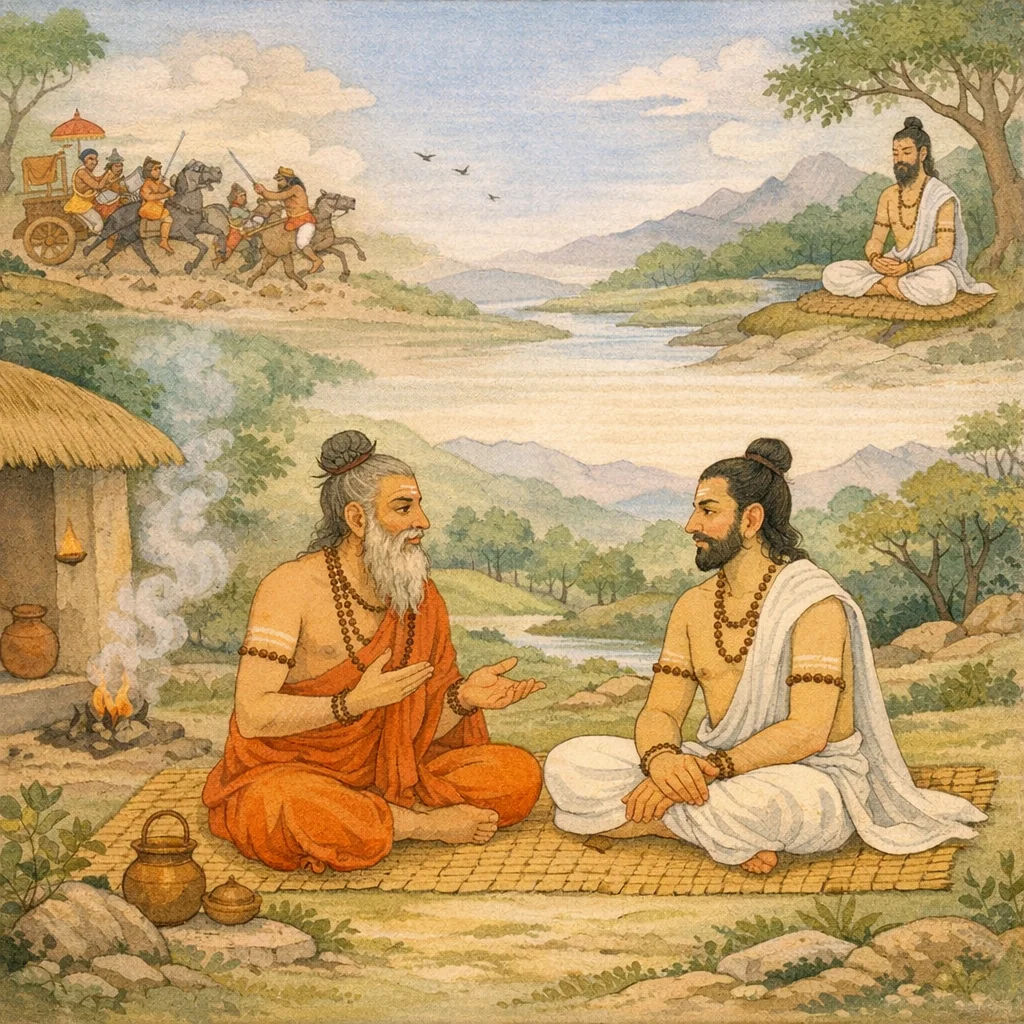
Adhyaya 356
Chapter Arc: एक ब्राह्मण अपने ही नाम-रूप और वाणी-माधुर्य से परिचित कराता है, पर भीतर से संसार-सागर के पार जाने की तीव्र आकांक्षा लिए पूछता है—धर्मरूपी ‘प्लव’ कहाँ है, किस मार्ग से पार उतरा जाए? → वह गृहस्थ-धर्म को पुत्रों के अधीन कर, भोग-काल में भी मन के न रजने की बात कहता है; यतियों की परलोक-प्रार्थना सुनकर उसका वैराग्य और तीखा होता है—पर मार्ग अनेक हैं, निर्णय कठिन। → अतिथि स्वयं स्वीकार करता है कि वह भी उसी दुविधा में है—त्रिविष्टप के ‘बहुद्वार’ हैं: कोई युद्ध में अभिमुख होकर मरकर स्वर्ग जाता है, कोई उग्र व्रत-साधना से; इतने खुले धर्म-द्वारों के बीच बुद्धि ‘वायु से हिली मेघ-रेखा’ की तरह चंचल हो उठती है। → संवाद का निष्कर्ष यह बनता है कि स्वर्ग/उन्नति के मार्ग एक नहीं—धर्म के अनेक द्वार हैं; इसलिए साधक को अपने स्वभाव, सामर्थ्य और निष्ठा के अनुसार धर्म-मार्ग चुनना होगा, केवल एक ही ‘एकमात्र’ उपाय का आग्रह भ्रम बढ़ाता है। → धर्म के बहुद्वार स्वीकार हो गए, पर ‘निश्चय’ अभी भी शेष है—अगले प्रसंग में यह प्रश्न उभरता है कि अनेक मार्गों में से साधक किस कसौटी से अपना मार्ग निश्चित करे।
Shlokas
Verse 1
अफ-४#-रा- चतुःपज्चाशर्दाधिकत्रिशततमो< ध्याय: अतिथिद्दारा स्वर्गके विभिन्न मार्गोका कथन ब्राह्मण उवाच समुत्पन्नाभिधानो5स्मि वाड्माधुर्येण तेडनघ । मित्रत्वमभिपन्नस्त्वं किंचिद् वक्ष्यामि तच्छुणु,ब्राह्मण बोला--निष्पाप! आपकी मीठी बातें सुनकर ही मैं आपके प्रति स्नेह धनसे बँध गया हूँ। आपके ऊपर मेरा मित्रभाव हो गया है; अतः आपसे कुछ कह रहा हूँ मेरी बात सुनिये
The Brāhmaṇa said: “O blameless one, your sweet and gracious speech has won my heart, and I have come to regard you as a friend. Therefore I will tell you something—listen to what I say.”
Verse 2
गृहस्थधर्म विप्रेन्द्र कृत्वा पुत्रगतं त्वहम् । धर्म परमकं कुर्या को हि मार्गो भवेद् द्विज,विप्रवर! मैं गृहस्थ-धर्मको अपने पुत्रोंके अधीन करके सर्वश्रेष्ठ धर्मका पालन करना चाहता हूँ। ब्रह्मन! बताइये, मेरे लिये कौन-सा मार्ग श्रेयस्कर होगा?
The brāhmaṇa said: “O best of brāhmaṇas, having entrusted the duties of the householder’s dharma to my sons, I now wish to practice the highest dharma. O twice-born one, what path would truly be the most beneficial for me?”
Verse 3
अहमात्मानमास्थाय एक एवात्मनि स्थितिम् । कर्तु काड्क्षामि नेच्छामि बद्ध: साधारणैर्गुणै:,कभी मेरी इच्छा होती है कि अकेला ही रहूँ और आत्माका आश्रय लेकर उसीमें स्थित हो जाऊँ? परंतु इन तुच्छ विषयोंसे बँधा होनेके कारण वह इच्छा नष्ट हो जाती है
“Sometimes I long to withdraw into solitude—taking refuge in the Self and abiding firmly in that inner reality. Yet I find myself bound by the common, ordinary qualities of nature, and because of that bondage my resolve for such inward steadiness falters.”
Verse 4
यावदेतदतीतं मे वय: पुत्रफलाश्रितम् | तावदिच्छामि पाथेयमादातुं पारलौकिकम्,अबतककी सारी आयु पुत्रसे फल पानेकी कामनामें ही बीत गयी। अब ऐसे धर्ममय धनका संग्रह करना चाहता हूँ, जो परलोकके मार्गमें पाथेय (राहखर्च) का काम दे सके
“So long has my life passed, resting on the hope of gaining the ‘fruit’ of sons. Now I wish to acquire provisions for the other world—righteous wealth that will serve as travel-supplies on the path beyond.”
Verse 5
अस्मिन् हि लोकसम्भारे परं पारमभीप्सत: । उत्पन्ना मे मतिरियं कुतो धर्ममय: प्लव:,मुझे इस संसारसागरसे पार जानेकी इच्छा हुई है, अतः मेरे मनमें यह जिज्ञासा हो रही है कि मुझे धर्ममयी नौका कहाँसे प्राप्त होगी?
The brāhmaṇa said: “In this turbulent traffic of worldly existence, I long to reach the far shore. Therefore this question has arisen in my mind: from where may I obtain a boat made of dharma—one that can carry me across?”
Verse 6
संयुज्यमानानि निशम्य लोके निर्यात्यमानानि च सात्विकानि । दृष्टवा तु धर्मध्वजकेतुमालां प्रकीर्यमाणामुपरि प्रजानाम्,जब मैं सुनता हूँ कि संसारमें विषयोंके सम्पर्कमें आये हुए साक्चिक पुरुष भी तरह तरहकी यातनाएँ भोगते हैं तथा जब देखता हूँ कि समस्त प्रजाके ऊपर यमराजकी ध्वजाएँ फहरा रही हैं, तब भोगकालमें भोगोंके प्राप्त होनेपर भी उन्हें भोगनेकी रुचि मेरे मनमें नहीं होती है। जब संन्यासियोंको भी दूसरोंके दरवाजोंपर अन्न-वस्त्रकी भीख माँगते देखता हूँ, तब उस संन्यास-धर्ममें भी मेरा मन नहीं लगता है; अतः अतिथिदेव! आप अपनी ही बुद्धिके बलसे अब मुझे धर्मद्वारा धर्ममें लगाइये
The brāhmaṇa says: “When I hear in this world that even sāttvika people—though engaged in the ordinary contacts of life—are driven onward and made to undergo many afflictions, and when I see above all beings the banners and standards of Dharma (the signs of Yama’s rule) being cast and spread over the multitude, then even when enjoyments come at the time of enjoyment, my mind finds no taste for them. And when I see renunciants too standing at others’ doors begging for food and clothing, my mind does not settle even in that path of renunciation. Therefore, O revered guest, by the strength of your own understanding, establish me in Dharma through Dharma.”
Verse 7
न मे मनो रज्यति भोगकाले दृष्टवा यतीन् प्रार्थयतः परत्र । तेनातिथे बुद्धिबलाश्रयेण धर्मेण धर्मे विनियुद्धक्ष्व मां त्वम्,जब मैं सुनता हूँ कि संसारमें विषयोंके सम्पर्कमें आये हुए साक्चिक पुरुष भी तरह तरहकी यातनाएँ भोगते हैं तथा जब देखता हूँ कि समस्त प्रजाके ऊपर यमराजकी ध्वजाएँ फहरा रही हैं, तब भोगकालमें भोगोंके प्राप्त होनेपर भी उन्हें भोगनेकी रुचि मेरे मनमें नहीं होती है। जब संन्यासियोंको भी दूसरोंके दरवाजोंपर अन्न-वस्त्रकी भीख माँगते देखता हूँ, तब उस संन्यास-धर्ममें भी मेरा मन नहीं लगता है; अतः अतिथिदेव! आप अपनी ही बुद्धिके बलसे अब मुझे धर्मद्वारा धर्ममें लगाइये
The Brahmin said: “My mind does not take delight in enjoyment, even when the time for pleasures has come, for I see ascetics who, seeking the ‘beyond’ (the next world), still must beg. Therefore, O guest, relying on the strength of your understanding, discipline me by dharma and set me firmly in dharma.”
Verse 8
सो<$तिथिरवी॑चनं तस्य श्र॒ुत्वा धर्माभिभाषिण: । प्रोवाच वचन “लक्षण प्राज्ञो मधुरया गिरा,धर्मयुक्त वचन बोलनेवाले उस ब्राह्मणकी बात सुनकर उस विद्वान् अतिथिने मधुर वाणीमें यह उत्तम वचन कहा
Hearing the words of that Brahmin, who was speaking in accordance with dharma, the wise guest—discerning the true marks of right conduct—replied in a gentle voice, offering an excellent counsel.
Verse 9
अतिथिरुवाच अहमप्यत्र मुह्यामि ममाप्येष मनोरथ: । न च संनिश्चयं यामि बहुद्वारे त्रिविष्टपे,अतिथिने कहा--विप्रवर! मेरा भी ऐसा ही मनोरथ है। मैं भी आपकी ही भाँति श्रेष्ठ धर्मका आश्रय लेना चाहता हूँ, परंतु मुझे भी इस विषयमें मोह ही बना हुआ है। स्वर्गके अनेक द्वार (साधन) हैं, अतः किसका आश्रय लिया जाय? इसका निश्चय मैं भी नहीं कर पाता हूँ
The guest said: “I too am bewildered in this matter; I also cherish this very aspiration. Like you, I wish to take refuge in the highest dharma, yet confusion still grips me. Heaven has many gates—many means of attainment—so I cannot determine with certainty which path should be chosen.”
Verse 10
केचिन्मोक्ष॑ प्रशंसन्ति केचिद् यज्ञफलं द्विजा: । वानप्रस्थाश्रया: केचिद् गार्हस्थ्यं केचिदास्थिता:,कोई द्विज मोक्षकी प्रशंसा करते हैं तो कोई यज्ञफलकी। कोई वानप्रस्थ-धर्मका आश्रय लेते हैं तो कोई गार्हस्थ्य-धर्मका
The brāhmaṇa said: “Some extol liberation, while others, O twice-born ones, praise the fruits of sacrifice. Some take refuge in the discipline of the forest-dweller, and some remain established in the householder’s way of life.”
Verse 11
राजधर्माश्रयं केचित् केचिदात्मफलाश्रयम् | गुरुधर्माश्रयं केचित्केचिद् वाक्संयमाश्रयम्,कोई राजधर्म, कोई आत्मज्ञान, कोई गुरुशुश्रुषा और कोई मौनव्रतका ही आश्रय लिये बैठे हैं
The brāhmaṇa said: “Some take refuge in the duties of kingship; some in the fruit that comes from self-knowledge and inner realization. Some rely on the discipline of serving the teacher and honoring the guru’s law; others rest their practice on restraint of speech. Thus, different seekers adopt different supports for living rightly.”
Verse 12
मातरं पितरं केचिच्छुश्रूषन्तो दिवं गता: । अहिंसया परे स्वर्ग सत्येन च तथा परे,कुछ लोग माता-पिताकी सेवा करके ही स्वर्गमें चले गये। कोई अहिंसासे और कोई सत्यसे ही स्वर्गलोकके भागी हुए हैं
The Brahmin said: “Some, by devotedly serving their mother and father, have attained heaven. Others have won heaven through non-violence, and likewise others through truthfulness.”
Verse 13
आहवे5भिमुखा: केचिन्निहतास्त्रिदिवं गता: | केचिदुउ्छव्रतै: सिद्धा: स्वर्गमार्ग समाश्रिता:,कुछ वीर पुरुष युद्धमें शत्रुओंका सामना करते हुए मारे जाकर स्वर्गलोकमें जा पहुँचे हैं। कितने ही मनुष्य उज्छवृत्तिके द्वारा सिद्धि प्राप्त करके स्वर्गगामी हुए हैं
The Brahmin said: “Some, facing the foe in battle, were slain and went to Tridiva, the heavenly world. Others, perfected through lofty vows, took refuge in the path that leads to heaven.”
Verse 14
केचिदध्ययने युक्ता वेदब्रतपरा: शुभा: । बुद्धिमन्तो गता: स्वर्ग तुष्टात्मानो जितेन्द्रिया:,कुछ बुद्धिमान् पुरुष संतुष्टचित्त और जितेन्द्रिय हो वेदोक्त व्रतका पालन तथा स्वाध्याय करते हुए शुभसम्पन्न हो स्वर्गलोकमें स्थान प्राप्त कर चुके हैं
The Brahmin said: “Some, devoted to sacred study and steadfast in the auspicious vows enjoined by the Veda, wise in understanding, self-satisfied in mind, and masters of their senses, have attained a place in heaven.”
Verse 15
आर्जवेनापरे युक्ता निहतानार्जवैर्जने: । ऋणजतवो नाकपूृष्े वै शुद्धात्मान: प्रतिष्ठिता:,कितने ही सरल और शुद्धात्मा पुरुष सरलतासे ही संयुक्त हो कुटिल मनुष्योंद्वारा मारे गये और स्वर्ग-लोकमें प्रतिष्ठित हुए हैं
“Others, endowed with straightforwardness and pure in soul, were slain by men devoid of integrity; yet those pure ones became established on the heights of heaven.”
Verse 16
एवं बहुविधैलोंकैर्धर्मद्वारैरनावृतै: । ममापि मतिराविग्ना मेघलेखेव वायुना,इस प्रकार लोकमें धर्मके विविध एवं बहुत-से दरवाजे खुले हुए हैं, उनसे मेरी बुद्धि भी उसी प्रकार उद्विग्न एवं चंचल हो उठी है, जैसे वायुसे मेघोंकी घटा
“Thus, with the many and varied ‘doors’ of dharma standing open in the world, my own mind too has become unsettled and wavering—like a streak of cloud driven about by the wind.”
Verse 353
इस प्रकार श्रीमहाभारत शान्तिपर्वके अन्तर्गत गोक्षधर्मपर्वमें उज्छवृत्तिका उपाख्यानविषयक तीन सौ तिरपनवाँ अध्याय पूरा हुआ
Thus ends the three hundred and fifty-third chapter of the Śānti Parva of the Śrī Mahābhārata, within the Gokṣa-dharma section, dealing with the episode concerning the ascetic practice called Ucchavṛttikā. This closing colophon marks the completion of that chapter’s teaching on dharma as illustrated through the narrative example.
Verse 354
इति श्रीमहाभारते शान्तिपर्वणि मोक्षधर्मपर्वणि उज्छवृत्त्युपाख्याने चतुःपञ्चाशदधिकत्रिशततमो<ध्याय:
Thus, in the Śrī Mahābhārata, within the Śānti Parvan—specifically the Mokṣa-dharma section—this concludes the narrative episode known as the Upākhyāna of Ucchavṛtti; here ends the three-hundred-and-fifty-sixth chapter (the 356th adhyāya).