Adhyaya 346
नागैः सह ब्राह्मणस्य अतिथिधर्म-व्रतसंवादः | The Brahmin’s Vow and the Nāgas’ Hospitality Appeal
Upa-parva: Mokṣa-dharma (Didactic Cycle within Śānti Parva)
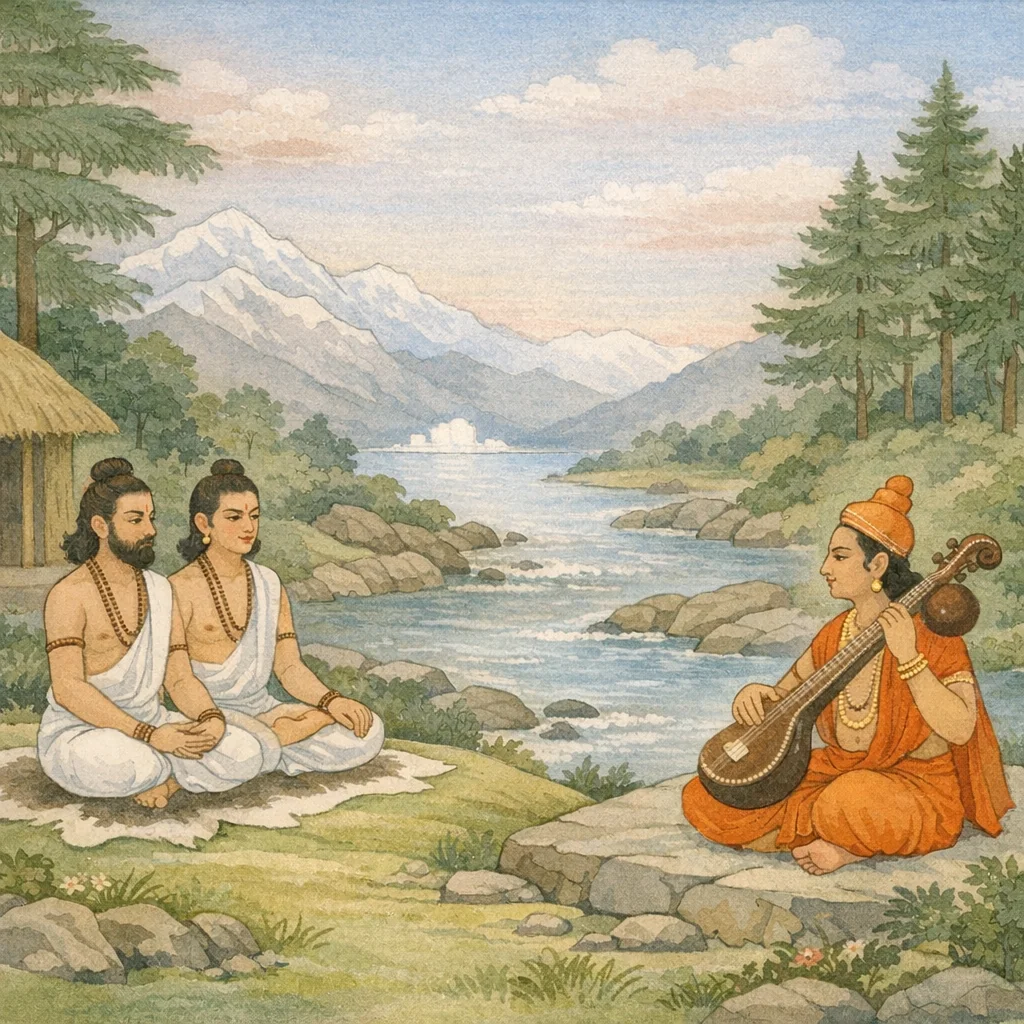
Bhīṣma narrates that a group of nāgas becomes distressed because a tapasvin brāhmaṇa resides in the forest without food. The nāga’s relatives—brothers, sons, and wife—approach the brāhmaṇa on a secluded riverbank where he sits in disciplined observance, devoted to japa and fasting. After repeatedly honoring him, they state that it is the sixth day of his arrival and request that he accept some form of sustenance (roots, fruits, leaves, milk, or cooked food), arguing that his continued abstention creates a communal dharma-crisis affecting young and old. They further assert their lineage is not characterized by grave moral transgressions, implying an obligation to fulfill proper hospitality. The brāhmaṇa replies that his abstention was adopted on their instruction/indication and is specifically oriented to the expected arrival of the nāga within a defined time window; if the nāga does not arrive after eight nights, he will eat. He asks them to depart without distress and not to break his vow. Bhīṣma concludes that the nāgas, permitted to leave, return home unsuccessful in altering the observance.
Chapter Arc: नर-नारायण नारद से कहते हैं कि श्वेतद्वीप में साक्षात् पुरुषोत्तम का दर्शन होना दुर्लभतम अनुग्रह है—और उसी दर्शन की महिमा से यह अध्याय आरम्भ होकर श्रोता को परम-रहस्य की ओर खींच लेता है। → वाणी क्रमशः ‘दर्शन’ से ‘तत्त्व’ की ओर बढ़ती है: भगवान् अव्यक्त-योनि, दुर्दर्श, पुरुषोत्तम—भक्त के प्रति उनकी अद्वितीय प्रीति; फिर सृष्टि-तत्त्वों की उत्पत्ति (स्पर्श से वायु आदि) और बदरिकाश्रम में धर्मगृह में अवतीर्ण नर-नारायण की उग्र तपस्या का उद्देश्य—त्रिलोकी में होने वाले देवप्रिय अवतारों का मंगल। → नर-नारायण ‘देवदेव’ द्वारा प्रदत्त सर्वज्ञता का उद्घोष करते हैं—त्रैलोक्य के शुभाशुभ, भूत-भविष्य-वर्तमान का ज्ञान—और फिर जीव-तत्त्व/व्यूह-तत्त्व की सूक्ष्म गति का निरूपण: साधक-समूह मनोमय होकर प्रद्युम्न में प्रवेश करता, सांख्य-भागवतों सहित संकर्षण-स्वरूप में लय/प्रवेश का क्रम बताता है। → अध्याय का निष्कर्ष यह स्थापित करता है कि परमात्मा भक्तवत्सल, अव्यक्त के मूल कारण, और जगत्-तत्त्वों के उद्गम हैं; तथा मोक्षमार्ग में ज्ञान (सांख्य) और भक्ति (भागवत) का संगम ‘व्यूह-तत्त्व’ की समझ के साथ साधक को परम-लय की ओर ले जाता है।
Shlokas
Verse 1
नर-नारायणने कहा--नारद! तुमने श्वेतद्वीपमें जाकर जो साक्षात् भगवान्का दर्शन कर लिया, इससे तुम धन्य हो गये। वास्तवमें भगवानने तुमपर बड़ा भारी अनुग्रह किया। तुम्हारे सिवा और किसीने, साक्षात् कमलयोनि ब्रह्माजीने भी भगवान्का इस प्रकार दर्शन नहीं किया
Nara-Nārāyaṇa said: “Nārada, you are truly blessed, for you went to Śvetadvīpa and beheld the Lord directly. In truth, the Lord has shown you an immense favor. No one else—not even Brahmā himself, the lotus-born—has obtained such a direct vision of the Lord in this manner.”
Verse 2
अव्यक्तयोनिर्भगवान् दुर्दर्श: पुरुषोत्तम: । नारदैतद्धि नौ सत्यं वचनं समुदाह्मतम्,नारद! वे भगवान् पुरुषोत्तम अव्यक्त प्रकृतिके मूल कारण हैं। उनका दर्शन मिलना अत्यन्त कठिन है। द्विजश्रेष्ठ! हम दोनों तुमसे सच कहते हैं कि भगवान्को इस जगतमें भक्तसे बढ़कर दूसरा कोई प्रिय नहीं है। इसलिये उन्होंने स्वयं ही तुम्हें अपने स्वरूपका दर्शन कराया है
“The Blessed Lord, the Supreme Person, has His origin in the Unmanifest and is exceedingly difficult to behold. O Nārada, this is the truthful statement we declare: in this world none is dearer to the Lord than His devotee. Therefore He Himself has granted you a vision of His own form.”
Verse 3
नास्य भक्तात् प्रियतरो लोके कश्नन विद्यते । ततः स्वयं दर्शितवान् स्वमात्मानं द्विजोत्तम,नारद! वे भगवान् पुरुषोत्तम अव्यक्त प्रकृतिके मूल कारण हैं। उनका दर्शन मिलना अत्यन्त कठिन है। द्विजश्रेष्ठ! हम दोनों तुमसे सच कहते हैं कि भगवान्को इस जगतमें भक्तसे बढ़कर दूसरा कोई प्रिय नहीं है। इसलिये उन्होंने स्वयं ही तुम्हें अपने स्वरूपका दर्शन कराया है
“In this world, no one is dearer to Him than His devotee. Therefore, O best of twice-born, He Himself has revealed His own Self to you, Nārada.”
Verse 4
तपो हि तप्यतस्तस्य यत् स्थानं परमात्मन: । न तत् सम्प्राप्तुते कश्चिदृते हयावां द्विजोत्तम,द्विजोत्तम! तपस्यामें लगे हुए उन परमात्माका जो स्थान है, वहाँ हम दोनोंके सिवा दूसरा कोई नहीं पहुँच सकता
“For the one engaged in austerity, there is a supreme abode of the Paramātman. No one can reach that state—except us two, O best of the twice-born.”
Verse 5
या हि सूर्यसहस्रस्य समस्तस्य भवेद् झद्युतिः । स्थानस्य सा भवेत् तस्य स्वयं तेन विराजता,एक हजार सूर्योंके एकत्र होनेपर जितनी कान्ति हो सकती है, उतनी ही उस स्थानकी भी कान्ति है, जहाँ भगवान् विराज रहे हैं
Nārada said: “The radiance that would arise if a thousand suns were gathered together—such is the splendor of that very place, for it is illumined by the Lord Himself seated there.”
Verse 6
तस्मादुत्तिष्ठते विप्र देवाद् विश्वभुवः पते: । क्षमा क्षमावतां श्रेष्ठ यया भूमिस्तु युज्यते,विप्रवर! क्षमाशीलोंमें श्रेष्ठ नारद! विश्वविधाता ब्रह्माजीके भी पति उन परमेश्वरसे ही क्षमाकी उत्पत्ति हुई है, जिससे पृथ्वीका संयोग होता है
Nārada said: “Therefore, O brahmin, rise up. Forgiveness arises from that Divine Lord who is the master of the Creator of the universe. O best among the forgiving, it is through forgiveness that the earth is held together and harmony among beings becomes possible.”
Verse 7
तस्माच्चोत्तिष्ठते देवात् सर्वभूतहितादू रस: । आपो हि तेन युज्यन्ते द्रवरत्वं प्राप्तुवन्ति च,सम्पूर्ण प्राणियोंका हित चाहनेवाले उन नारायण-देवसे ही रस प्रकट हुआ है, जिसका जलके साथ संयोग है और जिसके कारण जल द्रवीभूत होता है
Therefore, from that divine Nārāyaṇa—who is devoted to the welfare of all beings—arises ‘rasa’, the vital essence. Waters unite with that essence, and through it they attain liquidity.
Verse 8
तस्मादेव समुद्धूतं तेजो रूपगुणात्मकम् | येन संयुज्यते सूर्यस्ततो लोके विराजते,उन्हींसे रूप-गुणविशिष्ट तेजका प्रादुर्भाव हुआ है, जिससे सूर्यदेव संयुक्त हुए हैं। इसीलिये वे लोकमें प्रकाशित हो रहे हैं
Nārada said: “From that very source there arose a radiance endowed with form and qualities. United with that radiance, the Sun shines forth; therefore he appears resplendent in the world.”
Verse 9
तस्माद् देवात् समुद्धूतः स्पर्शस्तु पुरुषोत्तमात् । येन सम युज्यते वायुस्ततो लोकान् विवात्यसौ,उन्हीं भगवान् पुरुषोत्तमसे स्पर्शकी उत्पत्ति हुई है, जिससे वायुदेव संयुक्त होते हैं और उससे संयुक्त होनेके कारण ही वे सम्पूर्ण लोकोंमें प्रवाहित होते हैं
From that God—Purushottama, the Supreme Person—arose ‘sparśa’, the principle of touch. United with it, the Wind blows; and by that union he moves through all the worlds.
Verse 10
तस्माच्चोत्तिष्ठते शब्द: सर्वलोकेश्वरात् प्रभो: | आकाशं युज्यते येन ततस्तिष्ठत्यसंवृतम्,उन्हीं सर्वलोकेश्वर प्रभुसे शब्दका प्रादुर्भाव होता है, जिससे आकाशका नित्य संयोग है और जिसके ही कारण वह निरावृत रहता है
Therefore, O lord, sound arises from the Sovereign of all worlds. By that very principle with which it is ever conjoined, space (ākāśa) is sustained; and because of it, space remains unobstructed and uncovered.
Verse 11
तस्माच्चोत्तिष्ठते देवात् सर्वभूतगतं मन: । चन्द्रमा येन संयुक्त: प्रकाशगुणधारण:,उन्हीं नारायणदेवसे सम्पूर्ण प्राणियोंके भीतर रहनेवाले मनकी भी उत्पत्ति हुई है। उस मनसे संयुक्त होकर ही चन्द्रमा प्रकाश-गुणको धारण करता है
From that very Deity arises the mind that abides within all beings. United with that mind, the Moon upholds the quality of illumination.
Verse 12
सद्भूतोत्पादकं नाम तत् स्थान वेदसंज्ञितम् । विद्यासहायो यत्रास्ते भगवान् हव्यकव्यभुक्,जहाँ भगवान् श्रीहरि हव्य और कव्यका भोग ग्रहण करते हुए विद्याशक्तिके साथ विराजमान हैं, वह वेदसंज्ञक स्थान सद्भूतोत्पादक कहलाता है
Narada said: “That place, known by the name ‘Veda’, is called ‘Sadbhūtotpādaka’—the generator of true and auspicious being—for there the Blessed Lord abides together with the power of knowledge, receiving the sacred offerings made to gods (havis) and to ancestors (kavya).”
Verse 13
ये हि निष्कलुषा लोके पुण्यपापविवर्जिता: । तेषां वै क्षेममध्वानं गच्छतां द्विजसत्तम
Nārada said: “For those in this world who are truly stainless—free from both merit and sin—their journey is indeed along the secure and auspicious path, O best of the twice-born, as they proceed onward.”
Verse 14
सर्वलोकतमोहन्ता आदित्यो द्वारमुच्यते । द्विजश्रेष्ठ! संसारमें जो लोग पुण्य और पापसे रहित एवं निर्मल हैं, वे कल्याणमय मार्गसे भगवद्धामको प्राप्त होते हैं, उस समय सम्पूर्ण लोकोंके अन्धकारका नाश करनेवाले भगवान् सूर्य ही उनके उस मोक्षधामका द्वार बताये जाते हैं ।। १३ ई ।। आदित्यदग्धसर्वाड्रा अदृश्या: केनचित् क्वचित्
Nārada said: “The Sun, the Āditya, is spoken of as the ‘gate’—for he dispels the darkness of all worlds. O best of twice-born ones, those in this world who are stainless—free from both merit and sin—reach the Lord’s abode by the auspicious path; and at that time the blessed Sun, destroyer of universal darkness, is described as the doorway to that realm of liberation.”
Verse 15
तस्मादपि च निर्मुक्ता अनिरुद्धतनौ स्थिता:
Nārada said: “Therefore, being released even from that (bondage), they abide in the body-form of Aniruddha—steadfastly established in Him.”
Verse 16
प्रद्युम्नाच्चापि निर्मुक्ता जीव॑ संकर्षणं तत:
Nārada said: “From Pradyumna as well, the life-principle was released; thereafter it entered Saṅkarṣaṇa. The passage points to the orderly withdrawal and transfer of vital power, suggesting a disciplined, dharmic sequence in dissolution rather than chaos.”
Verse 17
ततस्त्रैगुण्यहीनास्ते परमात्मानमञज्जसा,तदनन्तर तीनों गुणोंसे मुक्त हो वे श्रेष्ठ द्विज अनायास ही निर्गुणस्वरूप क्षेत्रज्ञ परमात्मामें प्रवेश कर जाते हैं। तुम सबके निवासस्थान भगवान् वासुदेवको ही क्षेत्रज्ञ समझो
Nārada said: “Then, freed from the three qualities of nature, those excellent twice-born ones effortlessly enter the Supreme Self—the inner Knower of the field—whose nature is beyond qualities. Therefore, understand Vāsudeva, the Blessed Lord who is the dwelling-place of all beings, to be that very Kṣetrajña (the indwelling Consciousness).”
Verse 18
प्रविशन्ति द्विजश्रेष्ठा: क्षेत्रज्ञ निर्गुणात्मकम् । सर्वावासं वासुदेवं क्षेत्रज्ञं विद्धि तत््वतः,तदनन्तर तीनों गुणोंसे मुक्त हो वे श्रेष्ठ द्विज अनायास ही निर्गुणस्वरूप क्षेत्रज्ञ परमात्मामें प्रवेश कर जाते हैं। तुम सबके निवासस्थान भगवान् वासुदेवको ही क्षेत्रज्ञ समझो
Nārada said: “O best of the twice-born, those who become freed from the three guṇas enter, without strain, the attributeless Supreme Self—the Knower of the Field. Know in truth that Vāsudeva, the universal abode and dwelling-place of all beings, is that very Kṣetrajña.”
Verse 19
समाहितमनस्काश्ष नियता: संयतेन्द्रिया: । एकान्तभावोपगता वासुदेव॑ विशन्ति ते,जिन्होंने अपने मनको एकाग्र कर लिया है, जो शौच संतोष आदि नियमोंसे सम्पन्न और जितेन्द्रिय हैं, वे अनन्य भावसे भगवान्की शरणमें गये हुए भक्त साक्षात् वासुदेवमें प्रवेश करते हैं
Nārada said: “Those whose minds are steadily collected, who are disciplined by observances and have mastered their senses—having taken refuge with single-minded devotion—enter into Vāsudeva Himself. The teaching emphasizes inner restraint and purity of conduct as the ethical foundation of devotion, culminating not merely in reward but in complete union with the Divine.”
Verse 20
आवामपि च धर्मस्य गृहे जातौ द्विजोत्तम । रम्यां विशालामाश्रित्य तप उग्र॑ समास्थितौ,द्विजश्रेष्ठ) हम दोनों भी धर्मके घरमें अवतीर्ण हो इस रमणीय बदरिकाश्रमतीर्थका आश्रय ले कठोर तपस्यामें संलग्न हैं
Nārada said: “O best of twice-born ones, we too were born in the house of Dharma. Taking refuge in this delightful and spacious hermitage, we have undertaken severe austerities.”
Verse 21
ब्रह्मन! उन्हीं भगवान् परमदेव परमात्माके तीनों लोकोंमें जो देवप्रिय अवतार होनेवाले हैं, उनका सदा ही परम मंगल हो--यही हमारी इस तपस्याका उद्देश्य है
Narada said: “O Brahmin, our austerities have this single aim: may there ever be supreme auspiciousness for those beloved divine descents of the Blessed Lord—the Supreme God, the Supreme Self—who are to appear in the three worlds.”
Verse 22
विधिना स्वेन युक्ताभ्यां यथापूर्वे द्विजोत्तम । आस्थिताभ्यां सर्वकृच्छूं व्रतं सम्यगनुत्तमम्,द्विजोत्तम! हम दोनोंने पूर्ववत् अपने कर्ममें संलग्न हो सर्वोत्तम एवं सम्पूर्ण कठिनाइयोंसे युक्त उत्तम व्रतमें तत्पर रहते हुए ही श्वेतद्वीपमें उपस्थित होकर वहाँ तुम्हें देखा था। तपोधन! तुम वहाँ भगवान्से मिले और उनके साथ वार्तालाप किया। ये सारी बातें हम दोनोंको अच्छी तरह विदित हैं। महामुने! चराचर प्राणियोंसहित तीनों लोकोंमें जो शुभ या अशुभ बात हो चुकी है, हो रही है, अथवा होनेवाली है, वह सब उस समय देवदेव भगवान् श्रीहरिने तुमसे कही थी
Nārada said: “O best of twice-born ones, as before, we two—duly engaged in our own prescribed disciplines—remained steadfast in that unsurpassed vow, complete and demanding in every hardship. In that very state we came to Śvetadvīpa and saw you there. O ascetic rich in austerity, you met the Lord and conversed with Him; all this is well known to us. Great sage, whatever auspicious or inauspicious event has occurred, is occurring, or will occur in the three worlds together with all moving and unmoving beings—at that time the God of gods, Śrī Hari, declared it all to you.”
Verse 23
ये तु तस्यैव देवस्य प्रादुर्भावा: सुरप्रिया: । भविष्यन्ति त्रिलोकस्थास्तेषां स्वतीत्यथो द्विज,आवाशभ्यामपि दृष्टस्त्वं श्वेतद्वीपे तपोधन । समागतो भगवता संजल्पं कृतवांस्तथा द्विजोत्तम! हम दोनोंने पूर्ववत् अपने कर्ममें संलग्न हो सर्वोत्तम एवं सम्पूर्ण कठिनाइयोंसे युक्त उत्तम व्रतमें तत्पर रहते हुए ही श्वेतद्वीपमें उपस्थित होकर वहाँ तुम्हें देखा था। तपोधन! तुम वहाँ भगवान्से मिले और उनके साथ वार्तालाप किया। ये सारी बातें हम दोनोंको अच्छी तरह विदित हैं। महामुने! चराचर प्राणियोंसहित तीनों लोकोंमें जो शुभ या अशुभ बात हो चुकी है, हो रही है, अथवा होनेवाली है, वह सब उस समय देवदेव भगवान् श्रीहरिने तुमसे कही थी
Narada said: “O brahmin, those manifestations of that very God—dear to the gods—who will appear and move within the three worlds: you were seen by us (even by both of us) in Śvetadvīpa, O treasury of austerity. You met the Blessed Lord there and conversed with Him, O best of brahmins. All this is well known to us. Great sage, whatever auspicious or inauspicious event has occurred, is occurring, or will occur in the three worlds along with all moving and unmoving beings—at that time the God of gods, Lord Śrī Hari, told you all of it.”
Verse 24
सर्व हि नौ संविदितं त्रैलोक्ये सचराचरे । यद् भविष्यति वृत्तं वा वर्तते वा शुभाशुभम् । सर्व स ते कथितवान् देवदेवो महामुने,द्विजोत्तम! हम दोनोंने पूर्ववत् अपने कर्ममें संलग्न हो सर्वोत्तम एवं सम्पूर्ण कठिनाइयोंसे युक्त उत्तम व्रतमें तत्पर रहते हुए ही श्वेतद्वीपमें उपस्थित होकर वहाँ तुम्हें देखा था। तपोधन! तुम वहाँ भगवान्से मिले और उनके साथ वार्तालाप किया। ये सारी बातें हम दोनोंको अच्छी तरह विदित हैं। महामुने! चराचर प्राणियोंसहित तीनों लोकोंमें जो शुभ या अशुभ बात हो चुकी है, हो रही है, अथवा होनेवाली है, वह सब उस समय देवदेव भगवान् श्रीहरिने तुमसे कही थी
Nārada said: “Indeed, everything is known to us throughout the three worlds with all that moves and does not move—whatever auspicious or inauspicious event has happened, is happening, or will happen. All of that the God of gods disclosed to you, O great sage.”
Verse 25
वैशम्पायन उवाच एतच्छुत्वा तयोर्वाक््यं तपस्युग्रे च वर्ततो: । नारद: प्राउ्जलिर्भूत्वा नारायणपरायण:,वैशम्पायनजी कहते हैं--जनमेजय! कठोर तपस्यामें लगे हुए भगवान् नर और नारायणकी यह बात सुनकर नारदजीने उन्हें हाथ जोड़कर प्रणाम किया और नारायणकी शरण लेकर उन्हींकी आराधनामें लग गये
Vaiśampāyana said: O Janamejaya, hearing these words of the two—Nara and Nārāyaṇa—who were engaged in severe austerity, Nārada joined his hands in reverence and bowed to them; and taking refuge in Nārāyaṇa alone, he devoted himself to His worship.
Verse 26
जजाप विधिवन्न्मन्त्रान् नारायणगतान् बहून् । दिव्यं वर्षसमहसत्रं हि नरनारायणाश्रमे,उन्होंने नारायणसम्बन्धी बहुत-से मन्त्रोंका विधिपूर्वक जप किया और एक सहस्र दिव्य वर्षोतक वे नर-नारायणके आश्रममें टिके रहे
Vaiśampāyana said: He duly recited many mantras devoted to Nārāyaṇa, and indeed remained in the hermitage of Nara and Nārāyaṇa for a thousand divine years.
Verse 27
अवसत् स महातेजा नारदो भगवानृषि: । तमेवाभ्यर्चयन् देव॑ं नरनारायणो च तौ,महातेजस्वी भगवान् नारद मुनि प्रतिदिन उन्हीं भगवान् वासुदेवकी तथा उन दोनों नर और नारायणकी भी आराधना करते हुए वहाँ रहने लगे
Vaiśampāyana said: The illustrious sage Nārada, radiant with spiritual power, dwelt there. And Nara and Nārāyaṇa too remained in that place, continually worshipping that very divine Lord.
Verse 146
परमाणुभूता भूत्वा तु त॑ देवं प्रविशन्त्युत । सूर्यदेव उनके सम्पूर्ण अंगोंको जलाकर भस्म कर देते हैं। फिर कहीं कोई उन्हें देख नहीं पाता। वे परमाणुस्वरूप होकर उन्हीं सूर्यदेवमें प्रवेश कर जाते हैं
Nārada explains: The Sun’s radiance burns their bodies entirely to ash; then no one can see them. Becoming subtle like an atom, they enter into that very deity—the Sun.
Verse 153
मनोभूतास्ततो भूत्वा प्रद्युम्न॑ प्रविशन्त्युत । फिर उनसे भी मुक्त होकर वे अनिरुद्धविग्रहमें स्थित होते हैं। फिर मनोमय होकर प्रद्युम्नमें प्रवेश करते हैं
Nārada said: Then, having become mind-born—subtle, mental forms—they indeed enter Pradyumna.
Verse 166
विशन्ति विप्रप्रवरा: सांख्या भागवतैः सह । प्रद्यम्नसे भी युक्त होकर वे सांख्यज्ञानसम्पन्न श्रेष्ठ ब्राह्मण भगवद्भक्तोंके साथ जीवस्वरूप संकर्षणमें प्रविष्ट होते हैं
Narada said: The foremost among the Brahmins—endowed with Sāṅkhya insight and accompanied by devotees of the Lord—enter into Saṅkarṣaṇa, the principle identified with the individual self. Thus, being united with Pradyumna, they attain absorption into the inner reality that underlies embodied life.
Verse 344
इति श्रीमहाभारते शान्तिपर्वणि मोक्षधर्मपर्वणि नारायणीये चतुश्नत्वारिंशदधिकत्रिशततमो 5 ध्याय:,इस प्रकार श्रीमहाभारत शान्तिपर्वके अन्तर्गत गोक्षधर्मपर्वमें नाययणकी महिमाविषयक तीन सौ चौवालीसवाँ अध्याय पूरा हुआ
Vaiśampāyana said: “Thus ends, in the Śrī Mahābhārata, within the Śānti Parva—specifically the Mokṣa-dharma section—the Nārāyaṇīya portion: the three-hundred-and-forty-fourth chapter, treating the glory of Nārāyaṇa.” This is a formal colophon marking the completion of the chapter and situating it within the ethical and liberative teachings of the Śānti Parva.
Frequently Asked Questions
A duty-conflict arises: the nāgas seek to fulfill atithi-dharma by feeding a guest, while the brāhmaṇa prioritizes vrata-dharma by maintaining a time-bound fast linked to an anticipated event (the nāga’s arrival).
Competing dharmas are negotiated through articulated intention and proportionality: hospitality is honored through respectful approach and offer, while ascetic discipline is preserved when a vow is explicit, limited in scope, and requests non-interference.
The closing emphasizes procedural dharma rather than explicit phalaśruti: the nāgas’ respectful withdrawal and the brāhmaṇa’s steadfastness imply that ethical outcomes depend on preserving vows without coercion, even when communal expectations are strong.