Adhyaya 3
Śānti-parva Adhyāya 3: Karṇa’s training under Rāma Jāmadagnya and the Bhārgava restriction on the Brahmāstra
Upa-parva: Karṇa–Paraśurāma Upākhyāna (Episode on Karṇa’s training and the Bhārgava curse)
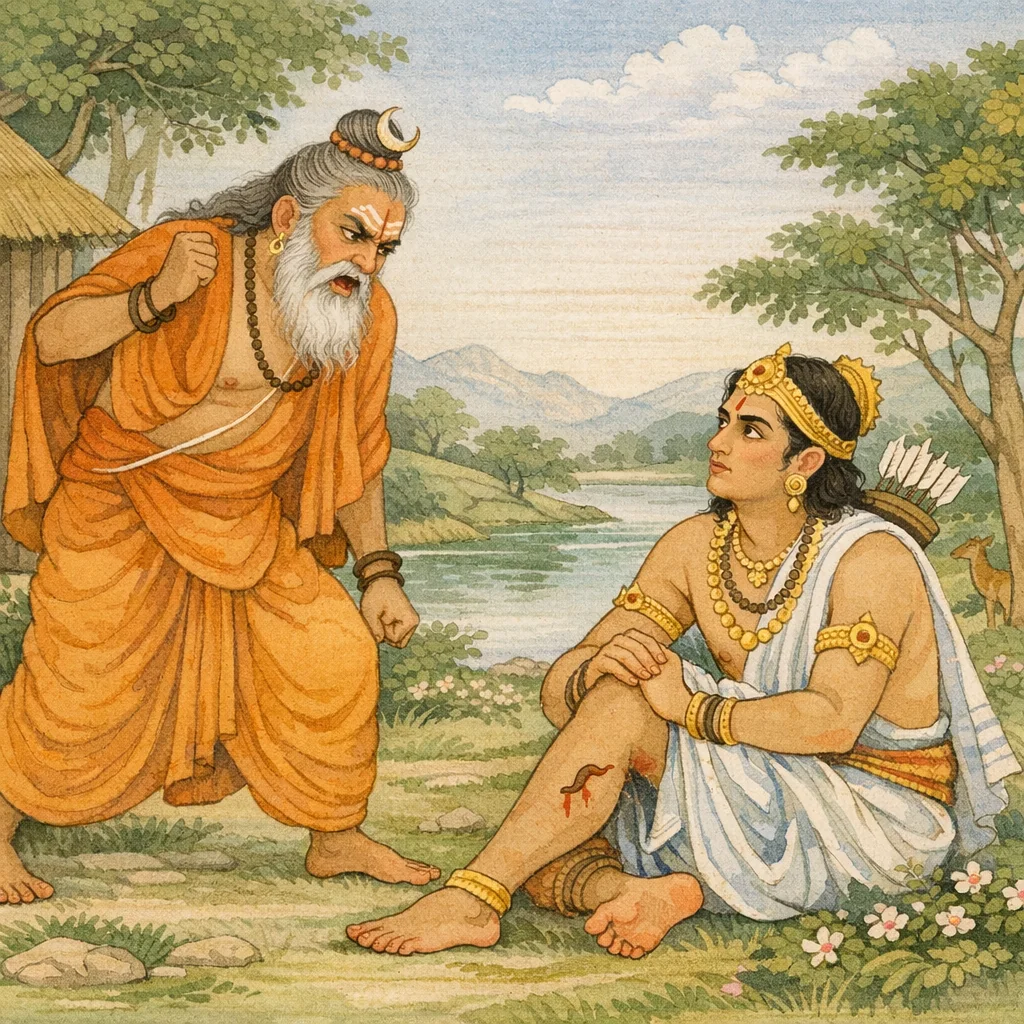
Nārada narrates Karṇa’s period of disciplined service to Paraśurāma (Bhṛgu-descended teacher), emphasizing humility, restraint, and attentive guru-sevā. Pleased, Paraśurāma transmits the brahmāstra together with the procedure for its withdrawal (sanivartanam), marking the completeness of instruction. A critical incident follows: while Paraśurāma rests with his head on Karṇa’s lap, a severe flesh- and blood-consuming worm bites into Karṇa’s thigh. Karṇa, fearing to disturb the sleeping teacher, endures intense pain without movement; blood eventually touches Paraśurāma, who awakens and demands an explanation. The worm is described in striking detail and, upon being seen, dies; a terrifying rākṣasa-form appears, explains he was an asura cursed by Bhṛgu for abducting Bhṛgu’s wife, and is now released due to Paraśurāma’s presence. Paraśurāma then infers from Karṇa’s extraordinary endurance that he is not a brāhmaṇa by conduct-capacity, presses for truth, and Karṇa admits he is a sūta-born (between brāhmaṇa and kṣatriya lineages) known as Rādheya Karṇa. Paraśurāma, angered at the deception motivated by weapon-desire, declares that the brahmāstra will fail to manifest for Karṇa except at the time of his death when faced by an equal, and dismisses him. Karṇa departs and later reports to Duryodhana that he is now fully trained in weapons, linking the episode to the epic’s broader martial and political escalation.
Chapter Arc: परशुराम के आश्रम में कर्ण—ब्रह्मास्त्र सहित समस्त दिव्यास्त्रों का विधिवत् ज्ञान पाकर—अस्त्रविद्या के गर्व और भविष्य की विजय-आकांक्षा में रम रहा है। → आश्रम-जीवन की शान्ति के बीच एक दारुण कीट/असुर कर्ण के समीप आता है और उसके शरीर में असह्य पीड़ा उत्पन्न करता है। कर्ण गुरु-सेवा और अपनी पहचान छिपाए रखने के कारण पीड़ा को दबाकर परशुराम को विचलित नहीं होने देता। → कर्ण के रक्त/घाव से परशुराम को सत्य का संकेत मिलता है—ऐसी धैर्य-क्षमता ब्राह्मण की नहीं, क्षत्रिय की है। कर्ण का छल (ब्राह्मण बनकर शिक्षा लेना) प्रकट होते ही परशुराम क्रोध में शाप देते हैं: असत्य के कारण ब्रह्मास्त्र का ज्ञान निर्णायक क्षण में साथ नहीं देगा, और समान-पराक्रमी प्रतिद्वन्द्वी से सामना होने पर उसकी विद्या/स्मृति डगमगाएगी। → असुर/कीट मुक्त होकर कृतज्ञता प्रकट कर चला जाता है; परशुराम का निर्णय अटल रहता है। कर्ण न्यायपूर्वक प्रणाम कर आश्रम छोड़ता है और दुर्योधन के पास जाकर कहता है कि वह अस्त्र-शस्त्र में सिद्ध हो चुका है। → कर्ण के भीतर अब यह शाप एक छिपा हुआ काल बनकर बैठ जाता है—युद्धभूमि में वह ‘वध-काल’ कब आएगा, और किस ‘सदृश’ वीर के सामने उसकी विद्या डगमगाएगी?
Shlokas
Verse 1
इस प्रकार श्रीमह्ाभारत शान्तिपर्वके अन्तर्गत राजधमनुशासनपर्वमें कर्णको ब्राह्मणका शापनामक दूसरा अध्याय पूरा हुआ ॥/ २ ॥। ऑपन-माज बछ। जज: > कर्णपर्वमें भी यह प्रसंग आया है, वहाँ कर्णके द्वारा बछड़ेके मारे जानेका उल्लेख है; अतः यहाँ भी होमधेनुका बछड़ा ही समझना चाहिये। तृतीयो<थध्याय: कर्णको ब्रद्यास्त्रकी प्राप्ति और परशुरामजीका शाप नारद उवाच कर्णस्य बाहुवीर्येण प्रणयेन दमेन च । तुतोष भृगुशार्दुलो गुरुशुश्रूषया तथा,नारदजी कहते हैं--राजन्! कर्णके बाहुबल, प्रेम, इन्द्रिय-संयम तथा गुरुसेवासे भुगुश्रेष्ठ परशुरामजी बहुत संतुष्ट हुए
Narada said: O King, Paraśurāma—the tiger among the Bhṛgus—was greatly pleased with Karṇa for his strength of arm, his loyal affection, his self-control, and likewise his devoted service to his teacher.
Verse 2
तस्मै स विधिवत कृत्स्नं ब्रह्मास्त्रं सनिवर्तनम् प्रोवाचाखिलमव्यग्रं तपस्वी तत् तपस्विने,तदनन्तर तपस्वी परशुरामने तपस्यामें लगे हुए कर्णको शान्तभावसे प्रयोग और उपसंहार विधिसहित सम्पूर्ण ब्रह्मास्त्रकी विधिपूर्वक शिक्षा दी
Then, following the proper ritual procedure, the ascetic calmly taught him the entire Brahmāstra together with the method of withdrawing it, explaining everything fully and without distraction, as one austere sage instructs another.
Verse 3
विदितास्त्रस्तत: कर्णो रममाणो<55श्रमे भूगो: । चकार वै धर्नुवेदे 4204 कक के : ३ |। ब्रह्मास्त्रका ज्ञान प्राप्त कर्ण परशुरामजीके आश्रममें प्रसन्नतापूर्वक रहने लगा। उस अदभुत पराक्रमी वीरने धनुर्वेदके अभ्यासके लिये बड़ा परिश्रम किया,इति श्रीमहाभारते शान्तिपर्वणि राजधर्मानुशासनपर्वणि कर्णास्त्रप्राप्ति्नाम तृतीयो<5ध्याय:
Thereafter Karṇa, having mastered the weapons, lived contentedly in Bhṛgu’s hermitage. That bull among men applied himself with great effort to the discipline of archery, intent on perfecting his martial knowledge.
Verse 4
ततः कदाचिद् रामस्तु चरन्नाश्रममन्तिकात् । कर्णेन सहितो धीमानुपवासेन कर्शित:,तत्पश्चात् एक समय बुद्धिमान् परशुरामजी कर्णके साथ अपने आश्रमके निकट ही घूम रहे थे। उपवास करनेके कारण उनका शरीर दुर्बल हो गया था। कर्णके ऊपर उनका पूरा विश्वास होनेके कारण उसके प्रति सौहार्द हो गया था। वे मन-ही-मन थकावटका अनुभव करते थे, इसलिये गुरुवर जमदग्निनन्दन परशुरामजी कर्णकी गोदमें सिर रखकर सो गये
Then, on one occasion, Rāma (Paraśurāma), the wise son of Jamadagni, was walking near his hermitage together with Karṇa. Weakened by fasting, he felt fatigue; trusting Karṇa and having grown affectionate toward him, the teacher laid his head upon Karṇa’s lap and fell asleep.
Verse 5
सुष्वाप जामदग्न्यस्तु विश्रम्भोत्पन्नसौहृद: । कर्णस्योत्सड़ आधाय शिर: क्लान्तमना गुरु:,तत्पश्चात् एक समय बुद्धिमान् परशुरामजी कर्णके साथ अपने आश्रमके निकट ही घूम रहे थे। उपवास करनेके कारण उनका शरीर दुर्बल हो गया था। कर्णके ऊपर उनका पूरा विश्वास होनेके कारण उसके प्रति सौहार्द हो गया था। वे मन-ही-मन थकावटका अनुभव करते थे, इसलिये गुरुवर जमदग्निनन्दन परशुरामजी कर्णकी गोदमें सिर रखकर सो गये
Narada said: Then Jāmadagnya (Paraśurāma), the revered teacher, fell asleep, his mind weary. Trusting Karṇa completely and having developed friendly confidence toward him, he placed his head upon Karṇa’s lap and rested.
Verse 6
अथ कृमि: श्लेष्ममेदोमांसशोणितभोजन: । दारुणो दारुणस्पर्श: कर्णस्याभ्याशमागत:,इसी समय लार, मेदा, मांस और रक्तका आहार करनेवाला एक भयानक कीड़ा, जिसका स्पर्श (डंक मारना) बड़ा भयंकर था, कर्णके पास आया
Nārada said: Then a worm—feeding on phlegm, fat, flesh, and blood—terrible in form and with a touch that caused dreadful pain, came close to Karṇa. In the narrative, this moment foreshadows the moral logic of consequence: hidden suffering and bodily affliction arise as the fruit of prior deeds, and even a mighty warrior is not beyond the reach of karmic retribution.
Verse 7
स तस्योरुमथासाद्य बिभेद रुधिराशन: । न चैनमशकत् क्षेप्तुं हन्तुं वापि गुरोर्भयात्
Having reached his thigh, the blood-eater tore it open. Yet, out of fear and reverence for his teacher, he could neither cast him away nor kill him.
Verse 8
उस रक्त पीनेवाले कीड़ेने कर्णकी जाँघके पास पहुँचकर उसे छेद दिया; परंतु गुरुजीके जागनेके भयसे कर्ण न तो उसे फेंक सका और न मार ही सका ।। संदश्यमानस्तु तथा कृमिणा तेन भारत । गुरो: प्रबोधनाशड्की तमुपैक्षत सूर्यज:,भरतनन्दन! वह कीड़ा उसे बारंबार डँसता रहा तो भी सूर्यपुत्र कर्णने कहीं गुरुजी जाग न उठें, इस आशंकासे उसकी उपेक्षा कर दी
Nārada said: O Bhārata, that blood-drinking worm reached Karṇa’s thigh and pierced it. Yet, fearing that his teacher might awaken, Karṇa could neither cast it away nor kill it. Though the creature kept biting him again and again near his thigh, Karṇa—the son of the Sun—endured it in silence, choosing restraint even at the cost of his own pain.
Verse 9
कर्णस्तु वेदनां धैर्यादसह्यां विनिगृह ताम् । अकम्पयन्नव्यथयन् धारयामास भार्गवम्,यद्यपि कर्णको असह्य वेदना हो रही थी तो भी वह धैर्यपूर्वक उसे सहन करके कम्पित और व्यथित न होता हुआ परशुरामजीको गोदमें लिये रहा
Nārada said: Though Karṇa was suffering an unbearable pain, he mastered it through steadfast courage. Without trembling and without showing distress, he continued to support Bhārgava (Paraśurāma) in his lap—revealing a disciplined endurance that values the teacher’s dignity above one’s own bodily anguish.
Verse 10
यदास्य रुधिरेणाडुं परिस्पृष्ट भगूद्वहः । तदाबुद्धयत तेजस्वी संत्रस्तश्चेदमब्रवीत्,जब उसका रक्त परशुरामजीके शरीरमें लग गया, तब वे तेजस्वी भार्गव जाग उठे और भयभीत होकर इस प्रकार बोले--
When his blood splashed onto him and touched him, the illustrious Bhārgava (Paraśurāma) suddenly came to awareness. Startled and shaken, the radiant sage spoke these words—marking a moral turning point where the consequences of violence become immediately visible and demand reflection and response.
Verse 11
अहो<स्म्यशुचितां प्राप्त: किमिदं क्रियते त्वया । कथयस्व भयं त्वक्त्वा याथातथ्यमिदं मम
Nārada said: “Alas, I have fallen into impurity! What is this that you are doing? Tell me—casting aside fear—the truth of this matter exactly as it is.”
Verse 12
“अरे! मैं तो अशुद्ध हो गया! तू यह क्या कर रहा है? भय छोड़कर मुझे इस विषयमें ठीक-ठीक बता ।। तस्य कर्णस्तदा55चष्ट कृमिणा परिभक्षणम् | ददर्श रामस्तं चापि कृमिं सूकरसंनिभम्,तब कर्णने उनसे कीड़ेके काटनेकी बात बतायी। परशुरामजीने भी उस कीड़ेको देखा, वह सूअरके समान जान पड़ता था
Then Karṇa told him that a worm had been gnawing at him. Rāma (Paraśurāma) also saw that very worm—huge and boar-like in appearance. The episode underscores the ethical tension between endurance and deception: Karṇa’s extraordinary forbearance is real, yet it is bound up with concealment, and the revelation becomes a turning point in the teacher–disciple relationship.
Verse 13
अष्टपाद॑ं तीक्ष्णदंष्टं सूचीभिरिव संवृतम् । रोमभि: संनिरुद्धाड्रमलर्क नाम नामतः
Nārada said: “There was one called Malarka—eight-footed, sharp-fanged, as though covered with needles, and thickly enclosed by bristling hairs.”
Verse 14
उसके आठ पैर थे और तीखी दाढ़ें। सूई-जैसी चुभनेवाली रोमावलियोंसे उसका सारा शरीर भरा तथा रुँधा हुआ था। वह “अलर्क' नामसे प्रसिद्ध कीड़ा था ।। स दृष्टमात्रो रामेण कृमि: प्राणानवासृजत् । तस्मिन्नेवासृजि क्लिन्नस्तदद्भुतमिवाभवत्,परशुरामजीकी दृष्टि पड़ते ही उसी रक्तसे भीगे हुए उस कीड़ेने प्राण त्याग दिये, वह एक अद्भुत-सी बात हुई
It had eight feet and sharp fangs. Its whole body was filled and hemmed in by needle-like, piercing bristles; it was the worm famed by the name “Alarka.” The moment Paraśurāma merely looked at it, the worm gave up its life. Soaked in the very blood it had caused to flow, it died right there—an occurrence wondrous and uncanny. The episode underscores the moral weight of violence and the fearful potency attributed to a great ascetic-warrior’s gaze, before which even a small creature meets an immediate end.
Verse 15
ततोअन्तरिक्षे ददृशे विश्वरूप: करालवान् | राक्षसो लोहितग्रीव: कृष्णाड़्रो मेघवाहन:,तदनन्तर आकाशमें सब तरहके रूप धारण करनेमें समर्थ एक विकराल राक्षस दिखायी दिया, उसकी ग्रीवा लाल थी और शरीरका रंग काला था। वह बादलोंपर आरुढ था
Then, in the mid-sky, there appeared a terrifying rākṣasa capable of assuming every kind of form. His neck was blood-red and his body dark; he was borne upon the clouds—an ominous apparition signaling danger and moral disorder in the unfolding account.
Verse 16
४/ /६ ० ८ ३४७ स राम॑ प्राउ्जलि भूत्वा बभाषे पूर्णमानस: । स्वस्ति ते भगुशार्दूल गमिष्येडहं यथागतम्,उस राक्षसने पूर्णमनोरथ हो हाथ जोड़कर परशु-रामजीसे कहा--'भृगुश्रेष्ठी आपका कल्याण हो। मैं जैसे आया था, वैसे लौट जाऊँगा। मुनिप्रवर! आपने इस नरकसे मुझे छुटकारा दिला दिया। आपका भला हो। मैं आपको प्रणाम करता हूँ। आपने मेरा बड़ा प्रिय कार्य किया है'
With palms joined and his heart wholly satisfied, he addressed Rāma: “Welfare to you, O tiger among the Bhṛgus. I shall depart just as I came. O best of sages, you have freed me from this hell; may good be yours. I bow to you—you have accomplished for me a most cherished purpose.”
Verse 17
मोक्षितो नरकादस्माद् भवता मुनिसत्तम | भद्रें तवास्तु वन्दे त्वां प्रियं मे भवता कृतम्,उस राक्षसने पूर्णमनोरथ हो हाथ जोड़कर परशु-रामजीसे कहा--'भृगुश्रेष्ठी आपका कल्याण हो। मैं जैसे आया था, वैसे लौट जाऊँगा। मुनिप्रवर! आपने इस नरकसे मुझे छुटकारा दिला दिया। आपका भला हो। मैं आपको प्रणाम करता हूँ। आपने मेरा बड़ा प्रिय कार्य किया है'
Nārada said: “O best of sages, by you I have been released from this hell. May auspiciousness be yours. I bow to you; you have done what is most dear to me.”
Verse 18
तमुवाच महाबाहुर्जामदग्न्य: प्रतापवान् | कस्त्वं कस्माच्च नरकं प्रतिपन्नो ब्रवीहि तत्,तब महाबाहु प्रतापी जमदग्निनन्दन परशुरामने उससे पूछा--'तू कौन है? और किस कारणसे इस नरकमें पड़ा था? बतलाओ'
Then the mighty-armed, valorous Jāmadagnya (Paraśurāma) addressed him: “Who are you, and for what reason have you fallen into this hell? Tell me that.”
Verse 19
सो<ब्रवीदहमासं प्रागू दंशो नाम महासुर: । पुरा देवयुगे तात भूगोस्तुल्यवया इव,उसने उत्तर दिया--'तात! प्राचीनकालके सत्ययुगकी बात है। मैं दंश नामसे प्रसिद्ध एक महान् असुर था। महर्षि भूगुके बराबर ही मेरी भी अवस्था रही
He replied, “Dear one, in ancient times—during the divine age of old—I was a mighty Asura known as Daṃśa. In those days my age and standing were, as it were, comparable to that of the sage Bhṛgu.”
Verse 20
सो<हं भूगो: सुदयितां भार्यामपहरं बलात् | महर्षेरभिशापेन कृमिभूतो5पतं भुवि,“एक दिन मैंने भृगुकी प्राणप्यारी पत्नीका बलपूर्वक अपहरण कर लिया। इससे महर्षिने शाप दे दिया और मैं कीड़ा होकर इस पृथ्वीपर गिर पड़ा
Nārada said: “I myself once forcibly abducted the dearly beloved wife of Bhṛgu. Because of that wrongdoing, the great seer pronounced a curse, and I fell to the earth, transformed into a worm.”
Verse 21
अब्रवीद्धि स मां क्रुद्धस्तव पूर्वपितामह: । मूत्रश्लेष्माशन: पाप निरयं प्रतिपत्स्यसे,“आपके पूर्व पितामह भृगुजीने शाप देते समय कुपित होकर मुझसे इस प्रकार कहा --ओ पापी! तू मूत्र और लार आदि खानेवाला कीड़ा होकर नरकमें पड़ेगा”
Nārada said: “Then your ancient forefather, enraged, spoke to me: ‘O sinner! You shall fall into hell, becoming a worm that feeds on urine and phlegm.’”
Verse 22
शापस्यान्तो भवेद् ब्रद्नन्नित्येवं तमथाब्रवम् | भविता भार्गवाद् रामादिति मामब्रवीद् भूगुः,“तब मैंने उनसे कहा--'ब्रह्मन! इस शापका अन्त भी होना चाहिये।” यह सुनकर भृगुजी बोले--“'भृगुवंशी परशुरामसे इस शापका अन्त होगा”
Nārada said: “I then told him, ‘O Brāhmaṇa, this curse too should have an end.’ Hearing this, Bhṛgu replied to me: ‘Its end will come through Rāma of the Bhṛgu lineage (Paraśurāma).’”
Verse 23
सो>हमेनां गतिं प्राप्तो यथा न कुशलं तथा । त्वया साधो समागम्य विमुक्त: पापयोनितः,“वही मैं इस गतिको प्राप्त हुआ था, जहाँ कभी कुशल नहीं बीता। साधो! आपका समागम होनेसे मेरा इस पापयोनिसे उद्धार हो गया”
“Thus I came to this state of existence, where no well-being ever befell me. But, O holy one, by coming into your company I have been released from this sinful womb (base birth).”
Verse 24
एवमुक््त्वा नमस्कृत्य ययौ राम॑ महासुर: । राम: कर्ण च सक्रोधमिदं वचनमब्रवीत्,परशुरामजीसे ऐसा कहकर वह महान् असुर उन्हें प्रणाम करके चला गया। इसके बाद परशुरामजीने कर्णसे क्रोधपूर्वक कहा--
Having spoken thus, the mighty asura named Rāma bowed in reverence and departed. Thereafter Paraśurāma, his anger aroused, addressed Karṇa with these words—
Verse 25
अतिदुःखमिदं मूढ न जातु ब्राह्मण: सहेत् क्षत्रियस्थेव ते धैर्य कामया सत्यमुच्यताम्,'ओ मूर्ख! ऐसा भारी दु:ख ब्राह्मण कदापि नहीं सह सकता। तेरा धैर्य तो क्षत्रियके समान है। तू स्वेच्छासे ही सत्य बता, कौन है?”
Nārada said: “This suffering is exceedingly severe, O fool; a brāhmaṇa would never be able to endure it. Your fortitude is like that of a kṣatriya. Therefore, of your own free will, speak the truth—who are you?”
Verse 26
तमुवाच ततः कर्ण: शापाद् भीत: प्रसादयन् । ब्रद्माक्षत्रान्तरे जात॑ सूतं मां विद्धि भार्गव,कर्ण परशुरामजीके शापके भयसे डर गया। अतः उन्हें प्रसन्न करनेकी चेष्टा करते हुए कहा--'भार्गव! आप यह जान लें कि मैं ब्राह्मण और क्षत्रियसे भिन्न सूतजातिमें पैदा हुआ हूँ। भूमण्डलके मनुष्य मुझे राधापुत्र कर्ण कहते हैं। ब्रह्मन! भृगुनन्दन! मैंने अस्त्रके लोभसे ऐसा किया है! आप मुझपर कृपा करें
Then Karṇa, frightened by the curse, spoke to appease him: “O Bhārgava, know me to be a Sūta by birth—born outside the Brahmin and Kshatriya orders.”
Verse 27
राधेय: कर्ण इति मां प्रवदन्ति जना भुवि । प्रसाद कुरु मे ब्रद्वान्नस्त्रलुब्धस्य भार्गव,कर्ण परशुरामजीके शापके भयसे डर गया। अतः उन्हें प्रसन्न करनेकी चेष्टा करते हुए कहा--'भार्गव! आप यह जान लें कि मैं ब्राह्मण और क्षत्रियसे भिन्न सूतजातिमें पैदा हुआ हूँ। भूमण्डलके मनुष्य मुझे राधापुत्र कर्ण कहते हैं। ब्रह्मन! भृगुनन्दन! मैंने अस्त्रके लोभसे ऐसा किया है! आप मुझपर कृपा करें
Karna said: “People on this earth speak of me as Rādheya, as Karṇa. O Brāhmaṇa, O Bhārgava, be gracious to me—I acted out of greed for weapons and their knowledge.”
Verse 28
पिता गुरु्न संदेहो वेदविद्याप्रद: प्रभु: अतो भार्गव इत्युक्त मया गोत्र तवान्तिके,“इसमें संदेह नहीं कि वेद और विद्याका दान करनेवाला शक्तिशाली गुरु पिताके ही तुल्य है; इसलिये मैंने आपके निकट अपना गोत्र भार्गव बताया है”
“There is no doubt that a powerful teacher who bestows the Veda and true learning is equal to one’s father. Therefore, in your presence, I declared my lineage as ‘Bhārgava.’”
Verse 29
तमुवाच भृगुश्रेष्ठ; सरोष: प्रदहन्निव । भूमौ निपतितं दीनं वेपमानं कृताञउ्जलिम्,यह सुनकर भृगुश्रेष्ठ परशुरामजी इतने रोषमें भर गये, मानो वे उसे दग्ध कर डालेंगे। उधर कर्ण हाथ जोड़ दीन भावसे काँपता हुआ पृथ्वीपर गिर पड़ा। तब वे उससे बोले --
Nārada said: Then the foremost of the Bhṛgus (Paraśurāma) addressed him—seething with anger, as though he would burn him to ashes. Meanwhile Karṇa, wretched and trembling, fell to the ground with hands joined in supplication. Then Paraśurāma spoke to him.
Verse 30
यस्मान्मिथ्योपचरितो हास्त्रलो भादिह त्वया । तस्मादेतद्ि ते मूढ ब्रह्मास्त्रं प्रतिभास्यति
Nārada said: “Since you have here treated that weapon with false and improper handling, therefore, O deluded one, this Brahmā-weapon will turn back upon you and appear against you.”
Verse 31
अब्राह्माणे न हि ब्रह्म ध्रुवं तिछ्ठेत् कदाचन,'जो ब्राह्मण नहीं है, उसके हृदयमें ब्रह्मासत्र कभी स्थिर नहीं रह सकता। अब तू यहाँसे चला जा। तुझ मिथ्यावादीके लिये यहाँ स्थान नहीं है, परंतु मेरे आशीर्वादसे इस भूतलका कोई भी क्षत्रिय युद्धमें तेरी समानता नहीं करेगा”
Nārada said: “In one who is not a brāhmaṇa, Brahman is never firmly established. If a man is not truly a brāhmaṇa, the Brahmāstra cannot remain steady within his heart. Therefore depart from here; there is no place here for you, a speaker of falsehood. Yet by my blessing, no kṣatriya on this earth will equal you in battle.”
Verse 32
गच्छेदानीं न ते स्थानमनृतस्येह विद्यते । न त्वया सदृशो युद्धे भविता क्षत्रियो भुवि,'जो ब्राह्मण नहीं है, उसके हृदयमें ब्रह्मासत्र कभी स्थिर नहीं रह सकता। अब तू यहाँसे चला जा। तुझ मिथ्यावादीके लिये यहाँ स्थान नहीं है, परंतु मेरे आशीर्वादसे इस भूतलका कोई भी क्षत्रिय युद्धमें तेरी समानता नहीं करेगा”
Narada said: “Go now; there is no place for falsehood here. For one who lives by untruth, there is no standing in this assembly. Yet by my blessing, no kshatriya on this earth will be your equal in battle.”
Verse 33
एवमुक्त: स रामेण न््यायेनोपजगाम ह । दुर्योधनमुपागम्य कृतास्त्रो$स्मीति चाब्रवीत्,परशुरामजीके ऐसा कहनेपर कर्ण उन्हें न्यायपूर्वक प्रणाम करके वहाँसे लौट आया और दुर्योधनके पास पहुँचकर बोला--'मैंने सब अस्त्रोंका ज्ञान प्राप्त कर लिया”
Thus addressed by Rāma (Paraśurāma), Karṇa approached him with due propriety and respectful conduct. Then, returning and going to Duryodhana, he declared, “I have become fully trained in the use of weapons.”
Verse 306
अन्यत्र वधकालात् ते सदृशेन समीयुष: । 'मूढ़! तूने ब्रह्मास्त्रके लोभसे झूठ बोलकर यहाँ मेरे साथ मिथ्याचार (कपटपूर्ण व्यवहार) किया है, इसलिये जबतक तू संग्राममें अपने समान योद्धाके साथ नहीं भिड़ेगा और तेरी मृत्युका समय निकट नहीं आ जायगा, तभीतक तुझे इस ब्रह्मास्त्रका स्मरण बना रहेगा
Nārada said: “Except at the time of your death—when you meet an opponent equal to yourself—you will not be free of it. Fool! Out of greed for the Brahmāstra you lied and dealt with me here through deceit. Therefore, until you engage in battle with a warrior like yourself and the hour of your death draws near, the memory of this Brahmāstra will remain fixed upon you.”
Frequently Asked Questions
Karṇa must choose between relieving his own extreme pain and maintaining guru-respect by not disturbing Paraśurāma’s sleep; later, he must choose between continued concealment and truthful disclosure when his identity is questioned.
Powerful knowledge is not value-neutral: its stable possession depends on truthful relationship, proper eligibility, and ethical intent; endurance and service are praised, but deception corrodes the legitimacy and reliability of what is obtained.
No explicit phalaśruti is stated in these verses; the meta-commentary is conveyed narratively through the conditional limitation placed on the brahmāstra, illustrating that adharma in acquisition can manifest as failure at the decisive moment.